
MSF Course Michigan 2026 September: Complete Training Guide, Costs & Written Test Prep
MSF course cost, written test tips, and training requirements for Michigan riders. ✏️ Complete 2026 September guide to passing your MSF test and getting licensed.

The MSF course cost in Michigan is one of the first things new riders want to know before committing to motorcycle training, and the good news is that Michigan offers some of the most structured and accessible programs in the country.
Whether you are a complete beginner who has never touched a motorcycle or an experienced rider looking to sharpen your skills, the Motorcycle Safety Foundation Basic RiderCourse is the gold standard for getting your endorsement legally and confidently. Understanding what you will pay, what the course covers, and how the written test works gives you a major head start before you ever arrive at the range.
Michigan law requires anyone operating a motorcycle on public roads to hold a valid motorcycle endorsement on their driver's license. The fastest and most recognized path to that endorsement is completing an MSF-approved course. When you successfully finish the BRC, Michigan Secretary of State offices typically waive the skills road test requirement, meaning your course completion card substitutes for the riding portion of the licensing exam. The MSF written test, however, is still a component you must prepare for carefully, as it covers everything from traffic strategies to emergency braking physics.
Across Michigan, dozens of training sites operated by community colleges, technical schools, and independent training organizations offer the Basic RiderCourse on weekends and weekday schedules. Sites vary by location, class size, and sometimes price. Major metros like Detroit, Grand Rapids, Lansing, and Traverse City each have multiple providers, so most Michigan residents can find a course within a reasonable drive. Comparing providers before registering is smart because availability fills quickly in spring and early summer when riding season begins.
The MSF curriculum is nationally standardized, which means the classroom content, the eCourse materials, and the range exercises follow the same framework regardless of which Michigan provider you choose. The written knowledge test and the riding evaluation use the same scoring rubrics statewide. This consistency is a big advantage for riders who move around or who want to know exactly what to expect when they walk in on day one. Your preparation using an msf course cost comparison tool or practice test platform is directly applicable to any site in the state.
One underappreciated benefit of completing the MSF BRC in Michigan is the insurance discount many carriers offer to graduates. Progressive, State Farm, and several other major insurers reduce premiums by ten to fifteen percent for riders who hold a current MSF completion certificate. Over the life of a policy, that discount can more than offset the original course fee, making the training not just a safety investment but a genuine financial one. Always ask your insurer about available discounts before and after completing the course.
Michigan's terrain and weather create specific riding challenges that make thorough training even more valuable here than in some other states. Riders contend with Great Lakes weather patterns that can shift quickly, pothole-scarred urban roads from freeze-thaw cycles, heavy truck traffic on US-23 and I-94 corridors, and gravel-strewn rural roads throughout the Upper Peninsula. The MSF course addresses hazard avoidance, traction management on low-grip surfaces, and emergency stopping techniques that are directly relevant to these Michigan-specific conditions. Graduating with these skills in muscle memory before hitting the open road is the kind of preparation that saves lives.
This guide covers everything you need to know about the MSF course in Michigan: exact costs, what the written and riding tests involve, how to study for the knowledge exam, and tips from riders who have successfully completed the program. Whether you are searching for the nearest site, comparing the MSF class cost between providers, or drilling MSF practice test questions the night before your exam, you will find actionable answers throughout the following sections.
MSF Course Michigan by the Numbers

MSF Basic RiderCourse: How the Program Is Structured
Before attending in person, students complete a 3-4 hour online module covering motorcycle controls, traffic strategies, and safety fundamentals. This eCourse must be finished and your certificate printed or saved before your first classroom session.
A 3-hour instructor-led classroom session reinforces eCourse concepts, introduces group discussion scenarios, and administers the MSF written test. Questions cover traffic awareness, hazard recognition, braking physics, and protective gear requirements.
Students spend roughly 5 hours on a closed practice range. Exercises begin with basic controls: clutch friction zone, throttle control, and smooth braking. No prior riding experience is needed — MSF-provided motorcycles are typically 250cc or smaller.
The second range day introduces cornering, turning at speed, quick stops, and swerving maneuvers. The day ends with the riding skills evaluation, which is scored on a point-deduction system — fewer than 22 penalty points and you pass.
Graduates receive a DL-5 completion card valid for one year. Take it to a Michigan SOS office to have a motorcycle endorsement added to your license, bypassing the on-road skills test that non-BRC graduates must take.
Understanding the full MSF class cost picture in Michigan requires looking beyond just the registration fee. Michigan is one of a handful of states where the Michigan Department of Transportation actively subsidizes motorcycle safety training, which is why many Michigan BRC sites charge fees far below the national average.
In states like California or New York, riders routinely pay $250 to $350 for the same curriculum. In Michigan, many sites charge between $25 and $50, with some community college programs setting fees around $75 to $100 when including supplemental materials. To see how Michigan compares nationally, check out cost of msf course data for another major state.
The subsidy comes through Michigan's Motorcycle Safety Fund, which is funded by a portion of motorcycle registration fees paid by all Michigan riders. Every time a Michigan resident registers their bike, a small portion goes into this pool to fund training for the next generation of riders. This creates a virtuous cycle: better-trained riders have fewer crashes, which reduces insurance costs and road fatalities, which keeps the fund politically popular and well-supported year after year. It is a model other states have tried to replicate with varying degrees of success.
Beyond the course fee itself, you should budget for protective gear if you do not already own it. The MSF requires all students to arrive with a DOT-approved helmet, over-the-ankle boots with low heels, long pants (no shorts or loose fabric), long sleeves or jacket, and full-fingered gloves. Motorcycles and helmets can sometimes be borrowed from the training site, but gloves and boots are generally your responsibility. Entry-level gear from brands like Bell, HJC, or Joe Rocket can run $150 to $300 for a complete beginner kit.
Some Michigan training providers offer gear rental for students who are unsure whether they will continue riding after the course. If you are truly on the fence about motorcycling as a hobby, renting gear at the site makes sense before investing hundreds in equipment. That said, most students who complete the BRC do continue riding — the course is specifically designed to build genuine confidence and competence, not just check a bureaucratic box. The hands-on range time tends to convert fence-sitters into enthusiasts.
If cost is a primary concern, look into whether your employer offers tuition reimbursement for safety certifications. Some logistics companies, delivery services, and even government agencies fund MSF training for employees who use motorcycles or scooters for work purposes. Military veterans may also qualify for GI Bill coverage of approved safety programs depending on the provider's accreditation status. Calling the site directly to ask about financial assistance is always worthwhile — many training coordinators know about local grants or sponsorships that are not advertised on the main website.
Group discounts occasionally apply if you register with a friend, family member, or co-worker at the same time. Some providers offer a small reduction — $10 to $20 off — for pairs or groups registering simultaneously. Riding clubs and dealership networks sometimes negotiate bulk slots with local training sites, so joining your local motorcycle community through organizations like ABATE of Michigan can occasionally unlock discounted or sponsored training opportunities worth exploring before you pay full price.
Cancellation and rescheduling policies vary significantly by provider. Most Michigan BRC sites require at least 72 hours notice to receive a full refund or reschedule without a penalty fee. Rain does not cancel range sessions unless there is lightning or the pavement is genuinely unsafe — motorcyclists ride in all weather, and the program intentionally exposes students to light rain conditions. Check your site's specific policy during registration so you are not surprised by a $25 rescheduling fee if something comes up the week of your class.
MSF Written Test: What to Know Before You Walk In
The MSF written test administered during the classroom session typically consists of 25 to 50 multiple-choice questions depending on the specific course version your site uses. Questions are drawn from the eCourse content you completed before arriving. Topics include proper lane positioning, how to handle intersections, when to use front versus rear brakes, and how alcohol and fatigue impair riding ability. You must score at least 80 percent to pass, meaning no more than five errors on a 25-question version.
The test is not designed to trick you — it rewards careful reading of the eCourse and honest reflection on the scenarios presented. Most students who complete the online pre-course material thoroughly pass on the first attempt. If you struggle with multiple-choice formats, take several MSF practice test sets the night before to calibrate your pacing. Each question on the actual exam has one clearly correct answer, so process of elimination works well when you are unsure between two options.

Is the MSF BRC Worth Taking in Michigan?
- +Waives the on-road skills test at Michigan SOS — saves time and reduces licensing anxiety
- +MSF class cost in Michigan is heavily subsidized — often $25 to $50, far below national average
- +Motorcycles provided on the range — no need to own a bike before learning the basics
- +Insurance discounts of 10–15% from most major carriers can recoup course cost within months
- +Nationally recognized certificate valid for licensing in all 50 states if you relocate
- +Structured range curriculum builds muscle memory for emergency braking and hazard avoidance
- −Weekend class times are booked weeks or months in advance during spring riding season
- −Weather does not typically cancel range sessions — you may ride in cold or light rain
- −Students with prior riding experience sometimes find the early exercises too basic to hold interest
- −Motorcycles provided are typically 250cc or smaller — may feel very different from your own bike
- −BRC completion card is valid for one year — delay in getting your endorsement means re-testing
- −Some Michigan sites have limited evening or weekday scheduling options for working adults
MSF Course Written Test Prep Checklist
- ✓Complete the full eCourse module in one or two focused sittings, not as background noise
- ✓Take written notes on any statistic, rule, or number that appears in the eCourse material
- ✓Look up the MSF-recommended following distance and memorize the specific two-second rule
- ✓Study the front-versus-rear brake distribution concept — front brake provides roughly 70% of stopping power
- ✓Review the five categories of MSF written test topics: controls, traffic, vision, gear, and impairment
- ✓Take at least two timed MSF practice test sets the day before your classroom session
- ✓Review any questions you miss on practice tests and understand why the correct answer is correct
- ✓Bring your eCourse completion certificate (printed or digital) to the classroom session
- ✓Arrive at the classroom session at least 15 minutes early to settle in and review your notes
- ✓Bring a valid government-issued ID and your Michigan driver's license to the course site
Michigan's State Subsidy Makes the BRC One of the Cheapest in the Nation
Thanks to Michigan's Motorcycle Safety Fund, most in-state riders pay $25 to $50 for a BRC that costs $250 or more in many other states. When you factor in the insurance discount and the waived skills road test, Michigan riders often see a net positive return on their course investment within the first riding season. Register early — spring slots fill within days of opening.
The riding skills evaluation at the end of your BRC range sessions is often the piece students worry about most, but understanding exactly how it is scored makes it far less intimidating. The evaluation uses a point-deduction system rather than a pass/fail checklist. Every error costs a certain number of points, and as long as your total deductions stay below 22, you pass. A perfect run earns zero points — the goal is not perfection, it is consistency and safety within acceptable margins of error.
The specific exercises in the riding evaluation typically include a U-turn within a marked box, a quick stop from approximately 20 miles per hour, a swerve maneuver to simulate dodging an obstacle, and a low-speed cornering exercise. Each exercise targets a specific survival skill that translates directly to real-world riding. The U-turn, for example, tests clutch control and balance at the exact speeds where new riders most commonly drop their bikes — parking lots and driveways. Mastering it on the range prevents that embarrassing and potentially costly real-world experience.
Common deductions during the evaluation include putting a foot down during the U-turn box exercise, braking too late or too abruptly during the quick stop, weaving outside the lane boundaries during the swerve, and failing to look through the turn during cornering exercises. Instructors also deduct points for not wearing full protective gear during the evaluation, so make sure your helmet strap is fastened and your gloves are on before each exercise begins. These seem like small things but they are observed explicitly.
If you fail the riding evaluation — earning 22 or more penalty points — most Michigan sites allow you to retest once during the same course cycle or schedule a retest session within a set window, sometimes 30 to 90 days. The retest may have an additional fee, typically $25 to $75 depending on the provider.
Instructors generally provide specific feedback on which exercises triggered the most deductions so you can focus your practice before returning. Very few students who fail the first attempt fail again — targeted practice on one or two specific exercises is usually all that is needed.
Between the two range days, use the evening to practice any physical skills you can simulate off the bike. Visualizing the U-turn in slow motion, practicing the head-turn-and-look habit before corners, and even pacing out the quick stop distance in a parking lot can help muscle memory consolidate overnight. Sleep is genuinely the most important preparation for range day two. Fatigue degrades fine motor control — the exact skill set the evaluation tests. Eight hours of sleep beats an extra hour of cramming every single time.
For riders who already have some experience, the BRC riding evaluation can feel somewhat basic, and that is intentional. The course is designed for true beginners, and experienced riders sometimes lose points not because they lack skill but because they ignore the specific exercise boundaries or procedures. Read the exercise instructions carefully even if you think you already know how to do a U-turn. Instructors evaluate execution within the defined protocol, not just the general outcome. Following the prescribed technique exactly is the path to a clean evaluation score.
Students who want to explore the msf course written test content in more depth before arriving will find that understanding the theory behind each exercise improves both their written score and their riding performance. When you know why the MSF teaches a particular technique — like the countersteering push at speed or the outside-inside-outside cornering line — you execute it more naturally than if you are simply memorizing a sequence of steps without understanding the physics behind them.

Your MSF Basic RiderCourse completion card is valid for 12 months from the date of issue. If you do not visit a Michigan Secretary of State office to add the motorcycle endorsement to your license within that window, the card expires and you must retake the course. Do not delay your SOS visit — the endorsement appointment can typically be scheduled within one to two weeks of course completion.
Once you have your BRC completion card in hand, the process of converting it into an official Michigan motorcycle endorsement is straightforward but requires a physical visit to a Secretary of State branch office. Michigan does not currently offer online endorsement processing for first-time motorcycle riders. You will need to bring your completion card, your current Michigan driver's license, and payment for the endorsement fee, which is typically included in your standard license renewal or added as a small supplement fee. Call your local branch ahead of time to confirm exact current fees and required documents.
At the SOS office, you will likely need to pass the Michigan written knowledge test for motorcycle operation unless your site has already administered an equivalent MSF written test that satisfies the state requirement. Policies on this vary slightly, and Michigan has updated its procedures several times in recent years. Bring your course completion documentation, including proof of the knowledge test score if your site provided it, so the SOS clerk can confirm what requirements you have already satisfied before assigning additional tests.
Riders who complete the BRC but hold only a Level 1 or Level 2 graduated license under Michigan's GDL system may face additional restrictions. Motorcycle endorsements layer on top of existing license restrictions, meaning a Level 2 holder who earns an endorsement may still be prohibited from carrying passengers or driving after midnight until they advance to a full license. Understanding how your current license level interacts with the motorcycle endorsement rules prevents surprises when you bring a friend along for a ride only to discover you are technically in violation of GDL conditions.
If you are a new Michigan resident who completed an MSF course in another state, check whether your out-of-state completion card is accepted at Michigan SOS offices. Michigan generally accepts valid completion cards from MSF-affiliated courses nationwide, but the card must be current and you must still meet Michigan's knowledge test requirements if they were not satisfied by the originating state's course protocol. International riders from Canada with equivalent training may also qualify under reciprocal agreements Michigan maintains with Ontario.
For riders who want to go beyond the BRC, the MSF offers advanced courses including the Advanced RiderCourse (ARC) and the Skilled RiderCourse (SRC). These are available at select Michigan sites and address highway riding strategies, high-speed cornering, and more complex emergency maneuvers. Some Michigan insurance carriers extend their discount only to BRC holders initially but offer additional reductions for ARC graduates.
If you plan to ride frequently or take long highway trips, investing in an advanced course a season or two after your BRC is a worthwhile upgrade. Look for msf basic rider course test answers and advanced course information together when planning your long-term rider education path.
Michigan's Upper Peninsula presents unique riding considerations that advanced training addresses more thoroughly than the BRC. Gravel roads, deer crossings, and significant temperature swings between morning and afternoon rides on long touring days all require skills that go beyond the BRC baseline. UP riders especially benefit from advanced traction management training and the expanded hazard scanning habits taught in the ARC curriculum. If your Michigan riding takes you north of the Mackinac Bridge regularly, consider scheduling an ARC within your first full riding season.
The long-term return on MSF training investment in Michigan is measurable in multiple ways. State crash data consistently shows that trained and endorsed riders have significantly lower accident rates than those who self-teach or skip formal training. Michigan State Police and NHTSA data both identify the first year of riding as the highest-risk period, precisely when the BRC's skills are freshest and most actively practiced.
Treating your MSF completion not as a finish line but as the beginning of a lifelong learning mindset toward riding is the philosophy the entire MSF curriculum is built around — and the one that produces riders who are still riding safely decades later.
Practical preparation for the MSF written test goes well beyond simply reading the eCourse once. The most successful students treat the knowledge exam the same way they would any certification test: with a structured review plan, spaced repetition, and active recall rather than passive re-reading. Starting your study three to five days before the classroom session gives your brain time to consolidate the material, which research consistently shows produces better retention than an equivalent amount of cramming in one sitting the night before.
One of the most effective study tools available to Michigan riders is the MSF practice test format available on platforms like PracticeTestGeeks. These tests replicate the multiple-choice format, timing pressure, and topic distribution of the actual MSF written test so you walk into the classroom knowing what a passing experience actually feels like. Riders who complete five or more practice test rounds before their classroom session consistently report feeling calm and confident during the actual exam — a psychological advantage that transfers into better focus during the range exercises that follow.
Pay particular attention to questions about protective gear specifications when studying. The MSF written test includes questions about DOT versus Snell versus ECE helmet certifications, why full-face helmets outperform half-helmets in crash studies, the specific hand and foot protection requirements, and how reflective gear elements reduce night visibility risk. These gear questions catch students off guard because they feel less intuitive than traffic and braking questions — but they appear consistently on the exam and are easy points to earn with targeted preparation.
Traffic lane positioning questions are another frequent source of confusion for first-time test-takers. The MSF defines three positions within a lane — left, center, and right — and teaches that the correct position changes based on the specific traffic scenario: blocking a car from lane-sharing when stopped at a light, maximizing visibility when approaching an intersection, or staying out of the oil-drip zone in the center of the lane during rain. Understanding which position is correct in which scenario, and why, is the conceptual key to getting these questions right without memorizing them by rote.
On the morning of your classroom session, eat a real meal, bring water, and arrive at least 15 minutes early. The written test is typically administered early in the classroom session, and there is rarely time to review notes after you arrive. The classroom environment matters more than students expect — sitting near the front, staying off your phone, and engaging with the instructor's scenario questions during the session primes your retrieval for the test that follows. Instructors frequently hint at test topics during discussion without explicitly flagging them, so staying engaged pays dividends.
After completing the written test, you may receive your score immediately or have to wait until the end of the classroom session depending on the site's protocol. If you pass, celebrate briefly — but remember that the riding evaluation, not the written test, is where most BRC failures actually occur.
If you do not pass the written test on the first attempt, ask the instructor which topic areas showed the most errors. Most sites allow a retest the same day or within a short window. Use the specific feedback to focus your review before retesting rather than re-reading everything from scratch.
Riders who combine strong written test preparation with physical range practice — even just mentally walking through each exercise in sequence — tend to have the smoothest overall BRC experience. The knowledge you build through the eCourse and practice tests directly informs how you execute range maneuvers, because you understand the physics and strategy behind each technique rather than just following instructions by rote. This integration of theory and practice is the core philosophy behind why the MSF curriculum separates the knowledge exam from the riding evaluation instead of replacing one with the other.
MSF Questions and Answers

MSF Course 2026–2026 — Motorcycle Safety Foundation Basic RiderCourse Guide

MSF Course California 2026: Complete Training Guide, Costs & Written Test Prep
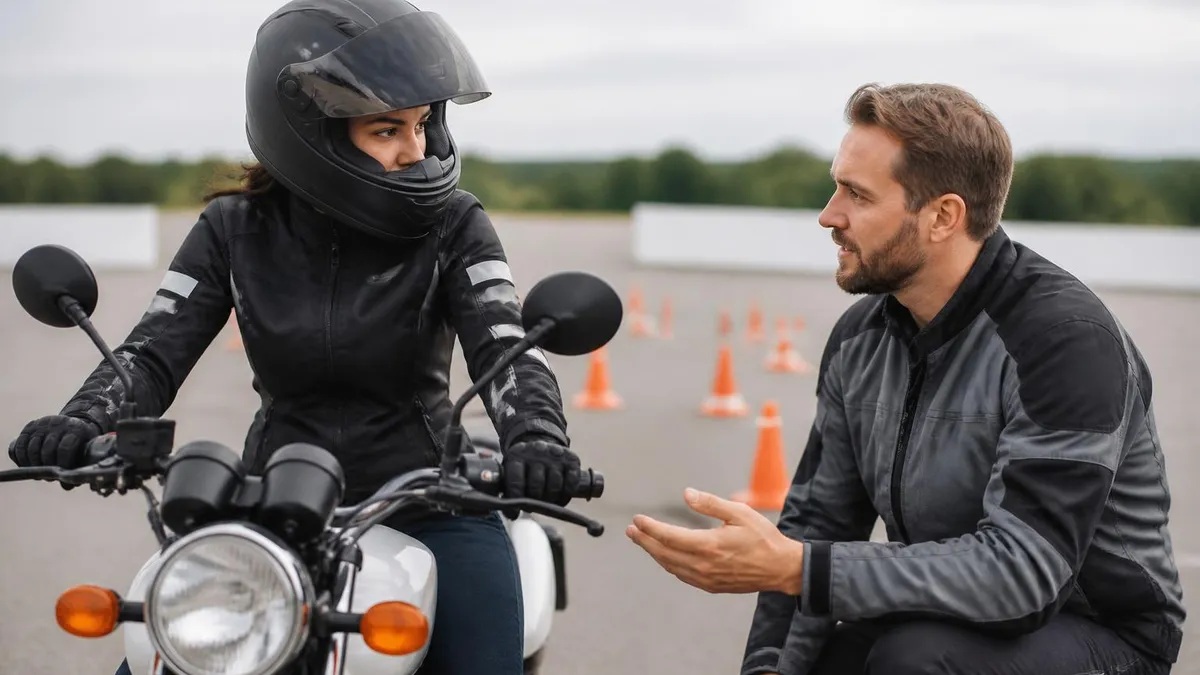
MSF Motorcycle Course: Complete 2026 Training Guide & Test Prep
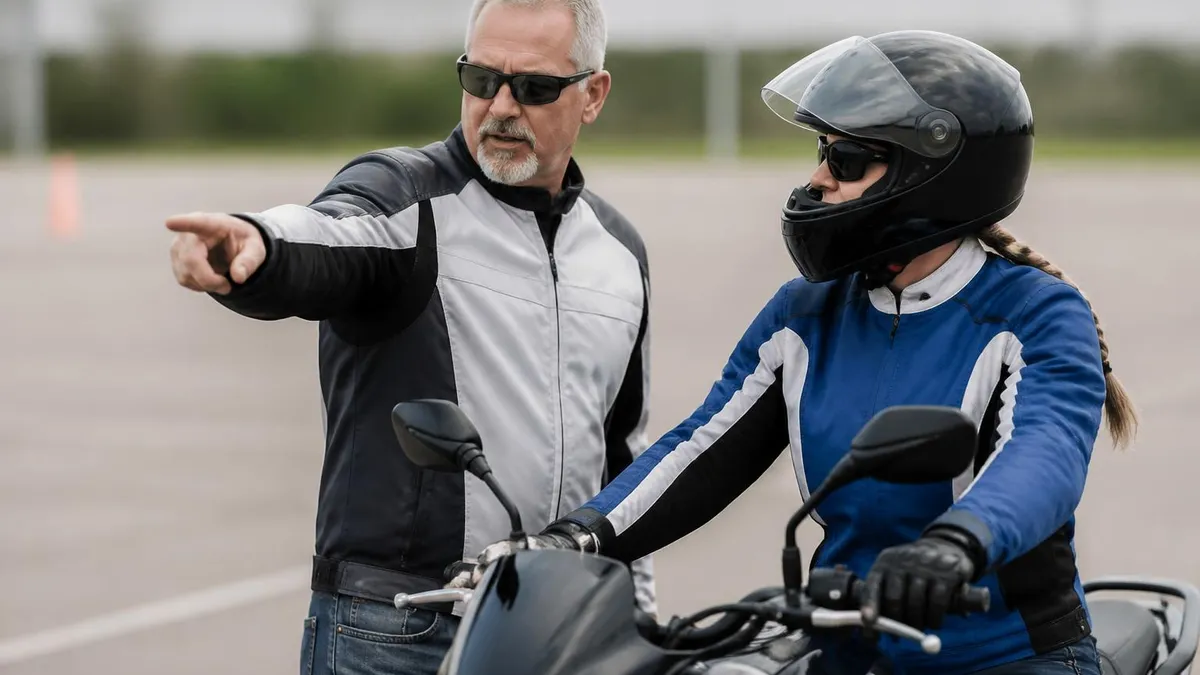
Cheap MSF Course Near Me: 2026 Guide to Affordable Motorcycle Safety Training

MSF Safety Course: Complete 2026 Guide to Training, Testing & Certification
About the Author

Business Consultant & Professional Certification Advisor
Wharton School, University of PennsylvaniaKatherine Lee earned her MBA from the Wharton School at the University of Pennsylvania and holds CPA, PHR, and PMP certifications. With a background spanning corporate finance, human resources, and project management, she has coached professionals preparing for CPA, CMA, PHR/SPHR, PMP, and financial services licensing exams.