
MSF Course PA & Michigan: Complete 2026 September Training Guide, Costs & Written Test Prep
MSF course cost, written test prep, and registration tips for Pennsylvania and Michigan riders. Complete 2026 September guide with practice tests. 🏆

Understanding the msf course cost is one of the first steps every new rider takes before signing up for motorcycle training in Pennsylvania or Michigan. The Motorcycle Safety Foundation's Basic RiderCourse (BRC) is a nationally recognized program that combines classroom instruction with hands-on range practice, helping beginners build the foundational skills they need to ride safely. Whether you're pursuing a license in Pittsburgh, Philadelphia, Detroit, or Grand Rapids, the MSF framework remains consistent — though pricing and provider availability vary by location and season.
Pennsylvania and Michigan both require new motorcycle operators to either complete an approved safety course or pass a state skills test administered by the DMV. For most beginners, completing the MSF Basic RiderCourse is the faster, more practical path. Not only does it waive the skills portion of the licensing exam in both states, but it often comes with insurance discounts from major carriers like Progressive, State Farm, and GEICO — sometimes up to 10–15% on annual premiums, which can offset a significant portion of the course fee within the first policy year.
The MSF written test, sometimes called the knowledge exam or rider theory assessment, covers topics like visual scanning, braking distances, lane positioning, intersection hazards, and gear selection. Many students underestimate how challenging the written component can be, especially if they've never ridden before. Pennsylvania's PennDOT and Michigan's Secretary of State office both accept the MSF course completion card as proof of basic competency, but you still need to pass the written knowledge test at a licensing center to receive your motorcycle endorsement or license.
This guide is designed for riders in Pennsylvania and Michigan who want a clear picture of what the MSF course involves, how much it costs, and how best to prepare for the written test component. We'll walk through course formats, registration timelines, what to bring on range day, and the most effective study strategies for the knowledge exam. You'll also find curated practice tests tailored to MSF curriculum content so you can walk into your licensing appointment with confidence.
One of the most frequently asked questions we see from new riders is whether the msf course cost is worth the investment compared to simply scheduling a skills test through the state DMV. The short answer is almost always yes — the BRC gives you structured coaching, access to motorcycles provided by the site (so you don't need your own bike), and a completion certificate that unlocks the skills test waiver. For riders under 18 in both Pennsylvania and Michigan, completing an approved MSF course is mandatory, not optional.
Throughout this article, we reference real pricing data gathered from training sites in PA and MI, current as of 2026. Costs can range from as low as $150 at community college partnerships to over $350 at private range facilities, depending on whether the site provides motorcycles, helmets, and gear. Some counties and municipalities in Michigan offer subsidized training through traffic safety grants, which can reduce your out-of-pocket cost significantly. Pennsylvania similarly has several county-sponsored programs, particularly in rural areas where access to private training facilities is limited.
By the end of this guide, you'll know exactly what to expect from your MSF course experience, how to study for the knowledge exam, and which practice resources will best prepare you for test day. Whether you're a first-time rider or someone returning to motorcycling after years away, this article has everything you need to get started on the right foot in 2026.
MSF Course in PA & Michigan by the Numbers

MSF Basic RiderCourse Format & Structure
The first module is a self-paced online session lasting approximately 5 hours. Students learn riding theory, traffic laws, gear selection, and risk awareness before ever touching a motorcycle. Completion is required before attending the range.
On the first range day (typically 4–5 hours), students practice starting, stopping, clutch control, and slow-speed maneuvering. Instructors provide motorcycles for students who don't own one, making this accessible to true beginners.
The second range day builds on fundamentals with cornering, quick stops, and swerving exercises. The course ends with a riding evaluation scored by certified instructors. A passing score earns the MSF completion certificate.
Administered separately at a state DMV or Secretary of State office, the written test covers 50 questions on traffic laws, riding strategies, and hazard identification. You must score at least 80% (40 correct answers) to pass.
After passing both the written test and MSF riding evaluation, you visit your state licensing office with your completion card to receive your motorcycle endorsement or Class M license. Processing typically takes one business day.
The msf class cost in Pennsylvania typically ranges from $175 to $275 for the full Basic RiderCourse, depending on whether you attend through a community college affiliate, a ABATE chapter, or a private training center. Community college programs — offered through institutions like Harrisburg Area Community College and Community College of Allegheny County — tend to be the most affordable, often pricing the BRC between $150 and $200. Private range facilities, particularly those near Philadelphia and Pittsburgh, can run closer to $250–$300 because they maintain smaller class sizes and offer more flexible scheduling including weekend and evening sessions.
In Michigan, the cost of msf course follows a similar spectrum. The Michigan Rider Education Program (MREP), which partners with the MSF, offers courses at community colleges and high school campuses statewide. Prices at these partner sites typically fall between $165 and $225. Private operators in the Detroit metro area and Grand Rapids can charge $275–$350, particularly for expedited or small-group sessions.
Michigan also has a unique advantage: some county road commissions and traffic safety councils offer partial or full scholarships to qualifying riders, particularly in rural counties with higher motorcycle fatality rates. Checking with your county health department or local MSF coordinator before registering can save you $50–$100.
It's worth noting that neither Pennsylvania nor Michigan currently offers a universal state subsidy for the MSF BRC, unlike some states (e.g., California, which provides significant rebates). However, both states' DMV systems accept the MSF completion certificate in lieu of the riding skills test, which does save you the skills test fee — typically $10–$25 in PA and $25 in Michigan. Factor in the time savings of avoiding a DMV skills test appointment, which can be scheduled weeks out in busy seasons, and the course pays for itself in convenience alone.
Gear costs are another variable to consider when budgeting for your MSF course. Most training sites in both states require you to wear a DOT-approved helmet, long pants, long-sleeved jacket, ankle-covering footwear, and gloves. If you don't own this gear, renting is rarely available at MSF sites — meaning you'll need to purchase or borrow it. A basic starter set (entry-level helmet, textile jacket, gloves, and boots) can run $150–$400 depending on brand and quality. Factor this into your total training budget, especially if you're new to riding and don't yet own protective equipment.
Insurance savings represent a meaningful long-term return on your MSF investment. Progressive, Allstate, State Farm, and GEICO all offer motorcycle insurance discounts to riders who have completed an MSF-approved course within the past three to five years. The discount percentage varies by carrier and policy type, but 10–15% is typical. On an annual premium of $500, that's $50–$75 back in your pocket every year. Over five years, you've more than recovered the cost of the course — even before accounting for the skills test waiver and the riding competency you've genuinely built.
For riders comparing the cost of msf course across multiple states, it's clear that Pennsylvania and Michigan are mid-range in terms of pricing nationally. Southern states like Texas and Florida often have lower course costs due to higher training volume and more active provider competition, while northeastern states like New York and Massachusetts tend to charge more. If you're on a tight budget, timing matters: courses offered in early spring (March–April) or late fall (October–November) are often discounted by $20–$50 because demand is lower than peak summer months.
Finally, some employers — particularly those in transportation, logistics, and emergency services — will reimburse MSF course fees for employees who ride motorcycles for work purposes. Union contracts in both Pennsylvania and Michigan sometimes include provisions for safety training reimbursement. If you work for a company with a tuition or professional development assistance program, it's worth submitting your MSF receipt for reimbursement consideration. Even if motorcycles aren't part of your job description, many HR departments will approve training that demonstrably improves road safety skills.
MSF Written Test Topics: What You Need to Know
The msf written test dedicates a significant portion of its questions to traffic laws that apply specifically to motorcyclists. This includes right-of-way rules at intersections, lane splitting regulations (prohibited in both PA and MI), passing procedures, following distances, and speed management in varying road conditions. Expect questions about what to do when a traffic signal fails to detect your motorcycle and how to handle railroad crossings safely.
Pennsylvania and Michigan share nearly identical traffic law frameworks for motorcycles, though minor variations exist around helmet laws — PA requires helmets for riders under 21 or without two years of riding experience, while Michigan requires helmets for all riders under 21 and those without basic insurance coverage. Know your state's specific laws cold before test day, as these nuanced differences do appear on state-level knowledge exams.

Is the MSF Basic RiderCourse Worth It? Pros & Cons
- +Waives the DMV riding skills test in both Pennsylvania and Michigan, saving time and scheduling hassle
- +Insurance discounts of 10–15% from major carriers recoup the course fee within 2–3 years
- +Motorcycles are provided at most training sites, so beginners don't need their own bike
- +Structured coaching from certified instructors significantly reduces beginner crash risk
- +Mandatory for riders under 18 in both PA and MI, making it the only legal path to licensure
- +Builds genuine confidence and muscle memory in a controlled, traffic-free environment
- −Course fees of $150–$350 can be a barrier for budget-conscious new riders
- −Popular sessions in spring and summer sell out weeks in advance, requiring early registration
- −Two full days of commitment (or split across three shorter sessions) can conflict with work schedules
- −Gear requirements (helmet, jacket, boots, gloves) add $150–$400 in upfront costs if you own none
- −Range evaluations can cause anxiety for riders who struggle with test pressure or clutch control
- −Some rural areas in PA and MI have limited course locations, requiring long drives to attend
MSF Course Pre-Registration & Test Prep Checklist
- ✓Confirm your state's MSF course completion qualifies for the riding skills test waiver at your local DMV.
- ✓Register for your course session at least 3–4 weeks in advance during spring and summer months.
- ✓Purchase or borrow all required gear: DOT helmet, jacket, gloves, long pants, and ankle boots.
- ✓Complete the online eCourse module fully before your first range day — attendance without it may disqualify you.
- ✓Review the MSF Rider's Handbook or Motorcycle Operator Manual specific to your state before day one.
- ✓Take at least two full msf practice test sessions online to familiarize yourself with question formats and topics.
- ✓Get a good night's sleep before each range day — fatigue significantly impairs clutch and brake coordination.
- ✓Eat a balanced meal before each session; range days are physically demanding and can last 4–6 hours outdoors.
- ✓Bring water, sunscreen, and weather-appropriate layers — range sessions happen in all conditions except severe weather.
- ✓Plan to arrive 15 minutes early to complete paperwork, meet your instructor, and inspect your assigned motorcycle.
Score 80% or Higher — Here's How to Guarantee It
The MSF written test has a passing threshold of 80%, meaning you can only miss 10 out of 50 questions. Students who score below that threshold on their first attempt can retest, but must wait and pay an additional fee. The fastest way to eliminate retests: complete at least three timed msf practice test sessions before your DMV appointment and review every question you got wrong, focusing on the reasoning behind the correct answer rather than just memorizing it. Students who practice this way consistently score 90%+ on their actual exam.
Passing the MSF knowledge exam — also called the msf test or motorcycle written test — requires more than casual reading of the rider's handbook. The questions are written to test application of concepts, not just recall of facts. For example, a question might describe a specific traffic scenario (approaching a T-intersection with a car on the cross street appearing to slow down) and ask which response is safest. The answer requires you to internalize the MSF's SEE strategy and understand threat prioritization, not just recite a definition you memorized the night before.
Pennsylvania administers the motorcycle knowledge test at PennDOT driver's license centers throughout the state. The test is computer-based, timed at 60 minutes (though most applicants finish in 20–30 minutes), and consists of 25 questions drawn from a larger question bank.
Passing requires a score of 76% or better (19 out of 25 correct). Michigan's Secretary of State administers a similar 50-question test with an 80% passing requirement (40 correct). The difference in question count and passing threshold between the two states is important — if you're studying for Michigan, you need to be more thorough in your preparation than for Pennsylvania's shorter exam.
The most effective study approach combines three resources: the state motorcycle operator manual, the MSF Rider's Handbook, and online MSF practice tests. The state operator manual covers traffic laws specific to your jurisdiction, while the MSF Rider's Handbook covers riding strategy and risk management principles tested by both states.
Online practice tests — particularly those modeled on real MSF question formats — expose you to the specific phrasing and scenario types that appear on the actual exam. Studies of test-taker performance show that students who complete five or more timed practice tests score an average of 15 percentage points higher than those who only read study materials without testing themselves.
One underappreciated study strategy is the explanation review method: after each practice test, read the explanation for every question — not just the ones you got wrong. This method reinforces correct reasoning for questions you happened to guess correctly and deepens your understanding of topics you already know. Over repeated sessions, your correct-answer rate improves because you're building conceptual understanding rather than relying on pattern recognition. This is especially important for scenario-based questions, which make up approximately 60% of the MSF written exam content in both Pennsylvania and Michigan.
Timing your study sessions matters as much as the content you study. Cramming the night before your DMV appointment is consistently less effective than spreading study sessions across five to seven days. The brain consolidates information during sleep, meaning concepts reviewed two days before your test are better retained than concepts reviewed the evening before.
A recommended schedule: complete the eCourse in week one, read the state manual and MSF handbook in week two, and spend the final five days before your appointment taking one timed practice test per day and reviewing missed questions. This schedule requires only 30–45 minutes per day in the final week and produces reliably strong exam scores.
If you want deeper preparation, check out our guide to msf course written test content, which breaks down each topic area by frequency of appearance on state knowledge exams. Understanding which topics appear most often — and which are rare — helps you allocate your study time efficiently rather than spending equal effort on high-frequency and low-frequency content areas. Topics like intersection management, braking technique, and protective gear appear on nearly every version of the exam, while topics like cargo loading and passenger operation appear less frequently.
Students who struggle with the written test most commonly report difficulty with questions about braking distances, following distances, and blood alcohol content (BAC) limits. For braking distance questions, remember that stopping distance increases with the square of your speed: doubling your speed quadruples your stopping distance, not doubles it.
For BAC questions in Pennsylvania, the legal limit for motorcycle operators is 0.08%, identical to car drivers, but impairment begins measurably at 0.02–0.04% — well below the legal limit. Michigan uses the same 0.08% threshold. These numerical details appear repeatedly on both states' motorcycle knowledge exams and are worth committing to memory through your practice sessions.

Both Pennsylvania and Michigan MSF providers require proof of eCourse completion before you can participate in range training. If you show up on day one without completing the online module, you will be turned away and may lose your registration fee. Complete the eCourse at least 48 hours before your first scheduled range session to allow the provider's system time to verify your completion record. Most providers recommend completing it one week in advance.
Getting your motorcycle license or endorsement in Pennsylvania after completing the MSF course involves a straightforward but multi-step process. You'll need to bring your MSF completion certificate (issued immediately after passing your range evaluation), your current PA driver's license, proof of identity documents (typically a passport or birth certificate plus a Social Security card), and the applicable fee — currently $10 for a motorcycle endorsement added to an existing PA driver's license. If you don't yet have a PA driver's license, the process requires additional documentation and a full Class M license application instead of a simple endorsement.
In Michigan, the process differs slightly. After passing the MSF course, you receive a completion card that you present at any Secretary of State branch office. Michigan issues a motorcycle endorsement (designated as a Cycle endorsement on your license) for a fee of $25, added to your existing Michigan driver's license.
You must also pass the written knowledge test at the SOS office before the endorsement is issued — the MSF completion card only waives the riding skills test, not the written exam. First-time applicants who don't yet have a Michigan driver's license must complete the full motorcycle license application process, which includes a vision screening and identification verification.
One detail that trips up many new riders in both states: the MSF completion certificate has an expiration date. In Pennsylvania, the certificate is valid for one year from the date of course completion. In Michigan, it's valid for one year as well.
If you complete your MSF course but don't get to the licensing office within that window — due to a gap year, a medical issue, or simply forgetting — you'll need to retake the course or negotiate with your local licensing authority. Don't let your certificate expire; schedule your DMV appointment within the first month after course completion whenever possible.
For riders who want to explore msf basic rider course test answers and deeper preparation resources before committing to a course, our practice test library covers every topic area tested in both states' motorcycle knowledge exams. These resources are particularly useful if you want to assess your baseline knowledge before the course, identify gaps in your understanding of traffic law, or simply build confidence before your DMV appointment. Many riders who use our practice tests report that they feel significantly more prepared than classmates who relied solely on the MSF handbook.
Insurance is another post-licensing consideration that Pennsylvania and Michigan riders often overlook until they're already at the dealership ready to purchase a motorcycle. Both states require liability insurance coverage for registered motorcycles, with minimum limits of 15/30/5 in Pennsylvania (bodily injury and property damage) and 20/40/10 in Michigan.
However, Michigan is a no-fault state, meaning it applies its unique no-fault auto insurance framework to motorcycles in a modified form — a complexity that makes working with an insurance broker experienced in Michigan motorcycle coverage strongly advisable. Getting quotes from at least three carriers before you register your motorcycle can save you $200–$500 annually, especially as a new rider who qualifies for MSF graduate discounts.
Seasonal considerations are particularly relevant for Pennsylvania and Michigan riders planning to take the MSF course. Both states experience harsh winters that close most outdoor training ranges from late November through early March. Course slots for April and May — the first months of riding season — fill extraordinarily fast, often within hours of opening.
If you're planning to start riding in spring, register for your course no later than January or February to secure a spot. Many providers open registration for the upcoming season in December, so checking provider websites in late fall gives you first access to the most desirable weekend sessions.
Finally, consider whether you want to pursue the MSF BRC or the slightly more advanced RiderCoach-level training after your initial certification. The MSF also offers an Experienced RiderCourse (ERC) for riders with at least six months of riding experience who want to sharpen their skills, and an Advanced RiderCourse (ARC) that covers more complex emergency maneuver techniques.
Some insurance carriers extend discounts to riders who complete not just the BRC but also the ERC, recognizing that continuing education significantly reduces crash risk. For riders serious about long-term safety, the MSF curriculum is a multi-year journey, not a one-time checkbox — and Pennsylvania and Michigan both have robust provider networks that make ongoing education accessible statewide.
On the day of your MSF range session, arriving mentally and physically prepared makes a tangible difference in your performance. Instructors consistently report that students who've completed the eCourse thoroughly and reviewed the MSF Rider's Handbook in advance progress through range exercises faster, experience less frustration with clutch control, and score better on the final riding evaluation. The range curriculum is designed to build sequentially — each exercise uses skills introduced in the previous one — so if you struggle with clutch control in the morning, you'll be behind in every subsequent exercise. Preparation eliminates that problem before it starts.
On the range, wear all your gear from the first minute — don't wait until the exercises start. Your instructor will notice and it signals good habits. More practically, wearing your helmet and gloves for the full session means you're accustomed to the restricted vision and grip feel by the time you reach the evaluation exercises. Riders who put on their helmet for the first time during the evaluation often find their spatial awareness compromised by the unfamiliar peripheral restrictions, which affects their lane positioning and cornering judgment.
The braking exercises in the MSF BRC are where many students first experience anxiety. The quick-stop exercise requires you to accelerate to a designated speed (typically 20 mph) and then apply maximum braking force to stop within a marked zone. Students who grip the handlebar too tightly, hold their breath, or look down at the ground instead of ahead tend to brake less effectively and miss the target zone.
The coaching tip that consistently works: focus your eyes 20–30 feet ahead of where you want to stop, apply both brakes simultaneously and smoothly with increasing pressure, and relax your upper body so your arms and hands follow rather than fight the bike's deceleration.
The cornering exercises expose another common beginner mistake: looking at the ground directly in front of the motorcycle rather than through the corner to the exit point. The MSF curriculum teaches the SIPDE process (Scan, Identify, Predict, Decide, Execute) and reinforces the principle that motorcycles go where your eyes lead. If you look at the orange cone marking the entry of a corner, you'll often run over it — a common evaluation error. Practice consciously pointing your eyes at the exit of every turn during the morning exercises so the habit is automatic by evaluation time in the afternoon.
After completing your MSF course and passing the written knowledge test, the practical habits you build for the first 90 days of riding are the most critical for long-term safety. Statistics from the Motorcycle Safety Foundation show that a disproportionate share of new rider crashes occur within the first 12 months of licensure, and most of those within the first 30 days.
Riding conservatively during this period — sticking to lower-speed roads, avoiding highway riding until you're comfortable, and riding only in daylight for your first month — dramatically reduces your exposure to the highest-risk scenarios before your instincts and reactions are fully developed.
Gear maintenance is another practical habit to establish early. A helmet that's been dropped on a hard surface — even once — may look undamaged but has compromised foam inside that no longer provides full protection. Most helmet manufacturers recommend replacing helmets after any significant impact, or every five years regardless of visible damage due to foam degradation from sweat and UV exposure.
Similarly, motorcycle gloves and jacket armor should be inspected for cracking or compression after any crash or fall. Budget for gear replacement as an ongoing cost of riding, not a one-time startup expense. Proper gear is only protective when it's in good condition.
Finally, connect with your local riding community — in Pennsylvania through ABATE of Pennsylvania, and in Michigan through the Michigan Riders Association or local MSF Alumni groups. Experienced riders provide invaluable real-world guidance that supplements the MSF curriculum: local knowledge about road hazards, seasonal conditions, the best practice routes for building skills, and which repair shops understand motorcycle-specific maintenance needs.
Riding with more experienced companions also gives you a safety net during the early months when your hazard-detection skills are still developing. The MSF course is the foundation; your ongoing riding community is the structure you build on top of it.
MSF Questions and Answers

MSF Course 2026–2026 — Motorcycle Safety Foundation Basic RiderCourse Guide

MSF Course California 2026: Complete Training Guide, Costs & Written Test Prep
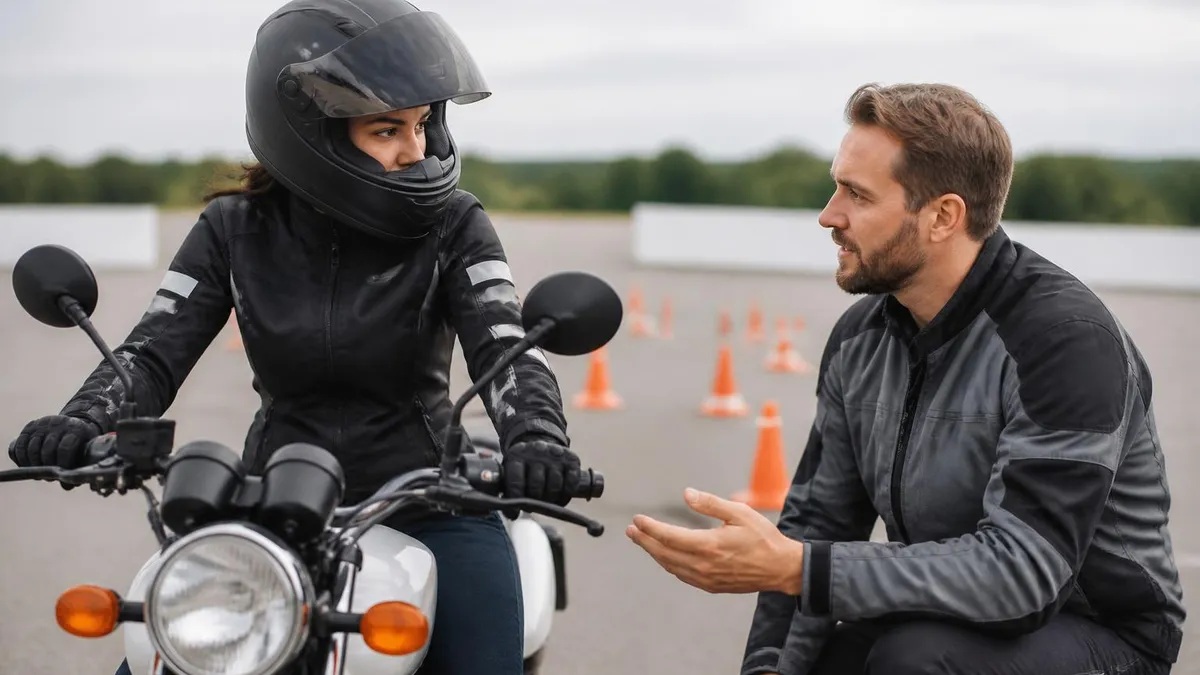
MSF Motorcycle Course: Complete 2026 Training Guide & Test Prep
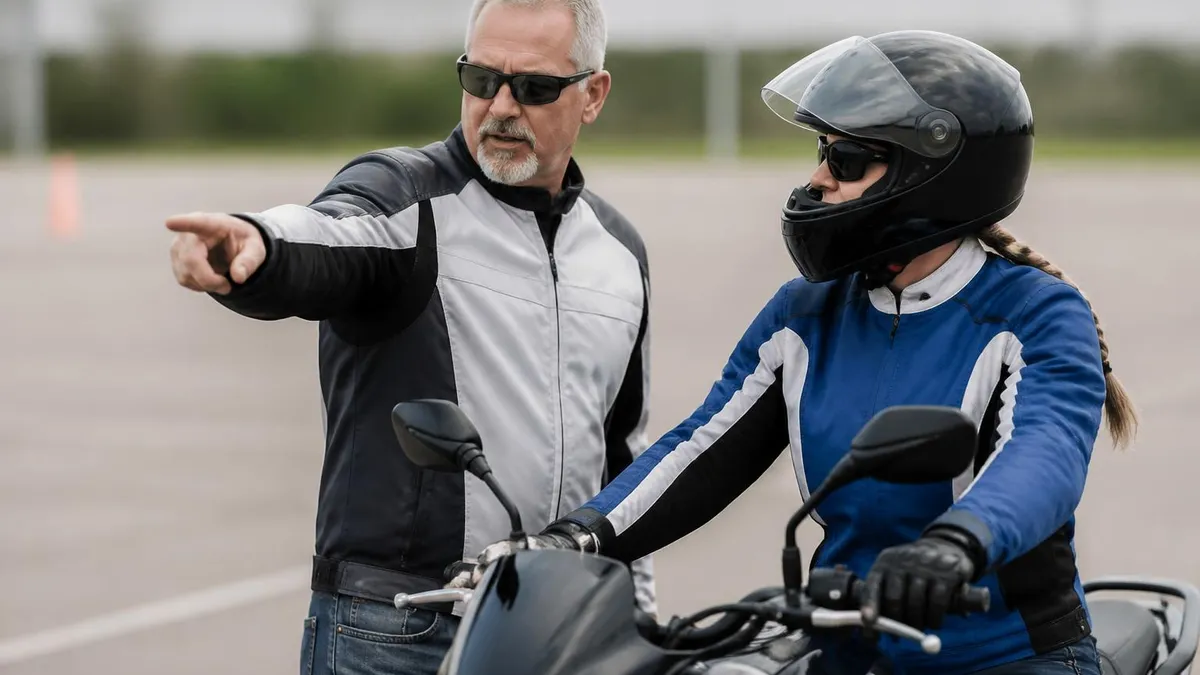
Cheap MSF Course Near Me: 2026 Guide to Affordable Motorcycle Safety Training

MSF Safety Course: Complete 2026 Guide to Training, Testing & Certification
About the Author

Business Consultant & Professional Certification Advisor
Wharton School, University of PennsylvaniaKatherine Lee earned her MBA from the Wharton School at the University of Pennsylvania and holds CPA, PHR, and PMP certifications. With a background spanning corporate finance, human resources, and project management, she has coached professionals preparing for CPA, CMA, PHR/SPHR, PMP, and financial services licensing exams.