
Tattoos and MRI Complication: Risks, Safety Rules, and Pelvic MRI CPT Code Guide
🎯 Tattoos and MRI complication risks explained, plus the pelvic MRI CPT code (72195-72197) and how to find the closest open MRI to your location.

Tattoos and MRI complication concerns come up in nearly every screening conversation, and the honest answer is reassuring without being absolute. Roughly one in three American adults now has a tattoo, and the vast majority complete magnetic resonance imaging with no problem at all. A small minority, however, feel warmth, tingling, or burning over inked skin during a scan. This guide explains why that happens, how to protect yourself, and how the pelvic MRI CPT code on your order fits into the picture.
The physics explains the concern. An MRI scanner combines a powerful static magnet, typically 1.5 or 3 tesla, with rapidly switching gradient fields and radiofrequency pulses. Some tattoo inks contain iron oxide or other metallic compounds, and conductive particles in skin can interact with those fields. The usual result is mild heating or a tugging sensation, not injury. Burns are documented in case reports, yet large surveys of tattooed patients put reactions well under one or two percent. Context matters more than fear.
Location, size, and ink color all influence risk. Large dark tattoos, especially black and some red or brown pigments, tend to contain more metal. Tattoos placed in the scan region, such as a lower abdomen or hip design during a pelvic study, sit closest to the radiofrequency energy. Older amateur or homemade tattoos may use unregulated pigments. Permanent cosmetic makeup, including eyeliner, can also cause irritation or small image distortions near the eyes, so tell the technologist about every design you have.
Tattoos are only one slice of MRI screening. Pacemakers, cochlear implants, aneurysm clips, metal fragments in the eye, and certain neurostimulators can be dangerous or require special conditions. That broader framework is covered in our mri safety and contraindications resources, and it is worth reading alongside this article. Every facility uses a written screening questionnaire for a reason: the magnet is always on, and a missed detail can turn a routine exam into an emergency.
Most patients are surprised to learn how much of the process is administrative. Your physician orders a study using a CPT code, the five-digit number that tells the facility and your insurer exactly which exam to perform. A pelvic MRI is typically billed under 72195, 72196, or 72197 depending on contrast use. Knowing your code helps you compare prices, confirm authorization, and ask whether your tattoo or implant changes anything about the planned protocol before you arrive.
You will also see practical advice on choosing equipment. Open MRI scanners, which use a wider, less enclosed magnet design, appeal to patients with claustrophobia or larger body habitus, and many people search for the closest open MRI to my location before booking. Open systems usually run at lower field strengths, which affects image detail and sometimes tattoo heating. Later sections compare open and closed bores honestly, so you can weigh comfort against diagnostic quality for your specific clinical question.
By the end, you should know what to tell your technologist, which questions to ask your imaging center, and how to read the billing code attached to your order. None of this replaces the judgment of your radiologist or referring physician. If you are unsure whether a tattoo, implant, or device is compatible with MRI, call the facility ahead of time. A five-minute phone call is far cheaper than a rescheduled appointment or a preventable injury.
Tattoos, MRI Safety, and Pelvic MRI by the Numbers
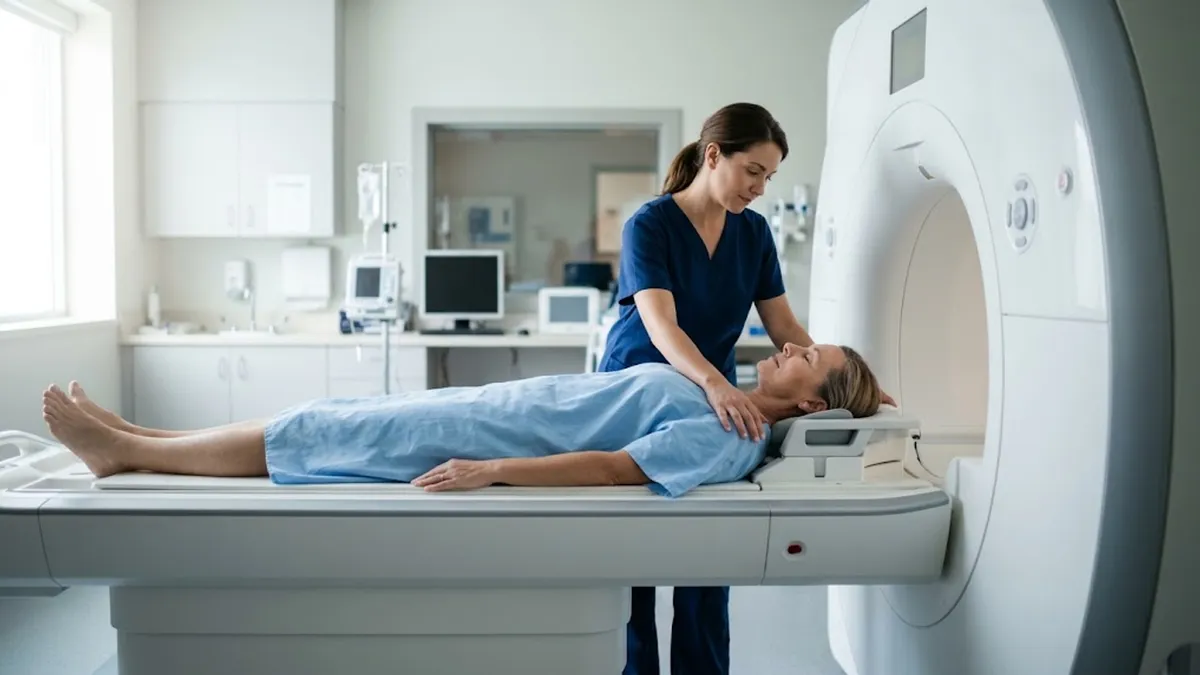
Why Tattoos and MRI Complication Risks Develop
Some inks contain iron oxide, titanium, or other metallic compounds. Radiofrequency pulses can induce tiny electrical currents in these particles, producing mild warmth in the skin. Darker, denser pigments generally carry more metal, which is why black, brown, and some red tattoos appear most often in reports of tingling or burning.
Ferromagnetic particles in ink can feel a faint pull inside the static magnetic field. Patients usually describe a light tugging or pinching, and true injury is extremely rare. Because pigment is embedded in the dermis rather than loose, it cannot migrate, but sensations can still be uncomfortable and should be reported.
A tattoo shaped like a ring, such as an armband or large circular design, can theoretically form a conductive loop where induced current concentrates. Technologists reduce the risk by padding between skin surfaces and avoiding skin-to-skin contact. Foam pads or dry towels also keep tattooed areas away from the bore wall and cables.
Metallic pigment can distort the local magnetic field and create a small dark signal void on images. This matters most for permanent eyeliner near the orbits or a tattoo directly over the target anatomy. Radiologists usually read around it, but telling them in advance prevents confusion about whether a dark spot is disease.
How MRI Centers Screen for Tattoos and Other Metal
Screening begins before you ever see the scanner. Most facilities send a questionnaire when you schedule, then repeat the same questions on arrival and again in the changing room. Expect to be asked about tattoos, permanent makeup, piercings, previous surgeries, shrapnel, and medical devices. Answer every item truthfully even if you assume it is irrelevant. Technologists would much rather document a harmless tattoo than discover an undisclosed implant after you are already positioned inside the bore.
Most centers follow the American College of Radiology safety framework, which divides the MRI suite into four zones. Zone I is the public area, Zone II is where screening happens, Zone III restricts access to screened personnel and patients, and Zone IV is the scanner room itself. You cross into Zone III only after screening is complete. This layered design exists because ferromagnetic objects can become projectiles, and the magnet never switches off during normal operation.
Devices carry standardized labels under ASTM F2503. MR Safe means an item poses no known hazard in any MRI environment, MR Conditional means it is safe only under stated conditions such as a specific field strength, and MR Unsafe means it should never enter the scanner room. Tattoos are not labeled this way, so technologists rely on your history, the tattoo's size and location, and their facility policy to decide whether to proceed and how to monitor you.
Heating is governed by the specific absorption rate, or SAR, which measures radiofrequency energy absorbed per kilogram of tissue. In normal operating mode the scanner limits whole-body SAR to 2 watts per kilogram. Technologists can lower SAR by choosing gentler sequences, adding time between acquisitions, or switching to a lower field strength. If you have a large dark tattoo in the scan region, these adjustments are common, and they rarely compromise image quality in a meaningful way.
You are never helpless during the scan. Every patient receives a squeeze ball or call button that alerts the technologist immediately, and an intercom lets you speak between sequences. Report any warmth, tingling, stinging, or pulling over a tattoo right away rather than waiting for it to pass. The technologist can pause the scan, inspect the skin, apply a cool compress, and decide whether to resume with modified settings or stop altogether.
Fresh tattoos deserve extra caution. Skin that is still healing may be inflamed, and inflammation can magnify discomfort from heating. Many tattoo artists and radiologists suggest postponing elective MRI for several weeks after new ink when the clinical situation allows. If your exam is urgent, such as suspected cancer or stroke, the benefit almost always outweighs the small risk, and the team will simply monitor you more closely and document the tattoo's location.
Clothing matters too. Many facilities provide a gown because some fabrics contain metallic fibers, antimicrobial silver threads, or conductive coatings that heat under radiofrequency energy. Athletic wear, compression garments, and certain medicated patches are common culprits. Remove jewelry, hair clips, hearing aids, and any transdermal patch unless the technologist says otherwise. Combined with careful padding over tattooed skin, these simple steps eliminate most of the avoidable burn risk associated with routine scanning.
Pelvic MRI CPT Code Guide: 72195, 72196, and 72197
CPT 72195 describes magnetic resonance imaging of the pelvis without contrast material. It is the simplest pelvic code and is commonly ordered for hip and pelvic bone pain, suspected stress fractures, sacroiliitis, hernias, and initial evaluation of soft tissue masses. Because no gadolinium is injected, there is no IV start and typically no kidney function requirement, which keeps the visit shorter. Most exams take 30 to 45 minutes. Radiologists also use it to screen for pelvic fractures after trauma.
Price varies widely across the United States. Hospital outpatient departments often charge several times what independent imaging centers do for the same pelvic MRI CPT code, and cash prices can differ by hundreds of dollars within one city. Ask for the self-pay rate, request the facility fee and radiologist fee separately, and confirm that your insurer has authorized 72195 before the appointment so the claim is not denied afterward. Prices of 72195 are usually the lowest of the three codes.
Open MRI vs. Closed MRI: Is the Closest Open MRI to My Location Right for You?
- +The wider, less enclosed design greatly eases claustrophobia and anxiety
- +Accommodates larger body sizes more comfortably than a standard tube
- +Companions or parents can often stay close, which helps children and nervous patients
- +Lower field strength generally means less radiofrequency heating over tattoos
- +Operation is often quieter than high-field closed scanners
- +Easier positioning for patients with pain, limited mobility, or large casts
- −Lower field strength can produce less detailed images
- −Scan times are frequently longer, increasing the chance of motion blur
- −Fewer open units exist, so travel to the closest site may be required
- −Small pelvic lesions and cancer staging often need 1.5T or 3T quality
- −Advanced protocols and some contrast studies may not be available
- −A radiologist may still recommend a repeat scan on a high-field magnet
Closest Open MRI to My Location: Tattoo and Safety Checklist Before You Book
- ✓List every tattoo, including permanent makeup, on your screening form.
- ✓Note the size, color, and age of each tattoo.
- ✓Postpone elective MRI for several weeks after fresh ink.
- ✓Call the center to confirm the open scanner's field strength and bore design.
- ✓Bring implant cards and operative reports for every device.
- ✓Confirm the pelvic MRI CPT code and insurance authorization.
- ✓Wear metal-free clothing or accept the facility gown.
- ✓Ask for dry padding between tattooed skin and the coil or table.
- ✓Keep the call button in hand and report heat right away.
- ✓Avoid crossing your arms or legs to prevent skin-to-skin loops.
Speak up early, speak up often
Pausing a scan costs a few minutes, while a tattoo burn can take weeks to heal. Tell the technologist about every tattoo before you enter the room, and press the call button the moment you feel warmth, tingling, or pulling.
Pelvic MRI With Tattoos: What Patients Should Expect
Pelvic imaging puts tattoos closer to the action than most other exams. Designs on the lower abdomen, hips, buttocks, lower back, or upper thighs all fall within or beside the field of view, where radiofrequency energy is strongest. That does not mean you should avoid the study. It simply means your technologist will ask for the size, color, and age of each design, then tailor padding and scanner settings accordingly before the first image is acquired.
Lower back tattoos are especially common among patients referred for sacroiliac joint, spine, or pelvic pain. Large tribal or solid black pieces across the sacrum may produce a warm sensation, and in rare cases a patient asks to stop. Technologists often place a folded dry towel between the skin and the table or coil. Because the coil sits close to the body in pelvic imaging, even a thin barrier can reduce local heating.
Gynecologic and prostate protocols deserve a special note. Image quality in these exams depends on a phased-array surface coil wrapped around the pelvis and on minimizing bowel and motion artifacts. A tattoo directly over the uterus or prostate region may create a small signal void on the skin surface, but deep anatomy is usually unaffected. Radiologists see this regularly and interpret around it, as long as they know the ink is there.
Billing connects to all of this. A pelvic MRI CPT code of 72197 covers imaging before and after contrast, so an unexpected stop mid-exam can complicate how the study is coded and paid. If a tattoo reaction forces you to end early, the billing outcome depends on what was completed and on facility policy. Ask the front desk how partial or interrupted studies are handled so there are no surprises on your statement.
Documentation helps the next time. Ask the technologist to note any sensation in your record, including which tattoo, which sequence, and how you felt. A future scan may then be planned with lower SAR or extra padding. If a burn or blistering does occur, photograph the area, seek medical care, and request that the facility file an incident report. Serious events can also be reported to the FDA through its MedWatch program.
Consider a hypothetical example. A 34-year-old patient with a large black forearm sleeve and a lower abdominal design is scheduled for a pelvic study to evaluate fibroids. She lists both tattoos on the form, the technologist places dry padding over the abdominal piece, and the scan proceeds at normal settings. Midway, she feels mild warmth, presses the call button, and the sequence pauses. After a cool compress and a lower-SAR protocol, she finishes comfortably.
Compare that with a less fortunate path, which usually involves silence. Patients who ignore rising heat because they fear delaying the exam, or who forget to mention a homemade tattoo, are the ones who end up with first or second degree burns. The lesson is simple and repeated across the radiology literature: communicate early, treat any unusual sensation as a stop signal, and trust that pausing a scan costs minutes while a burn can cost weeks.
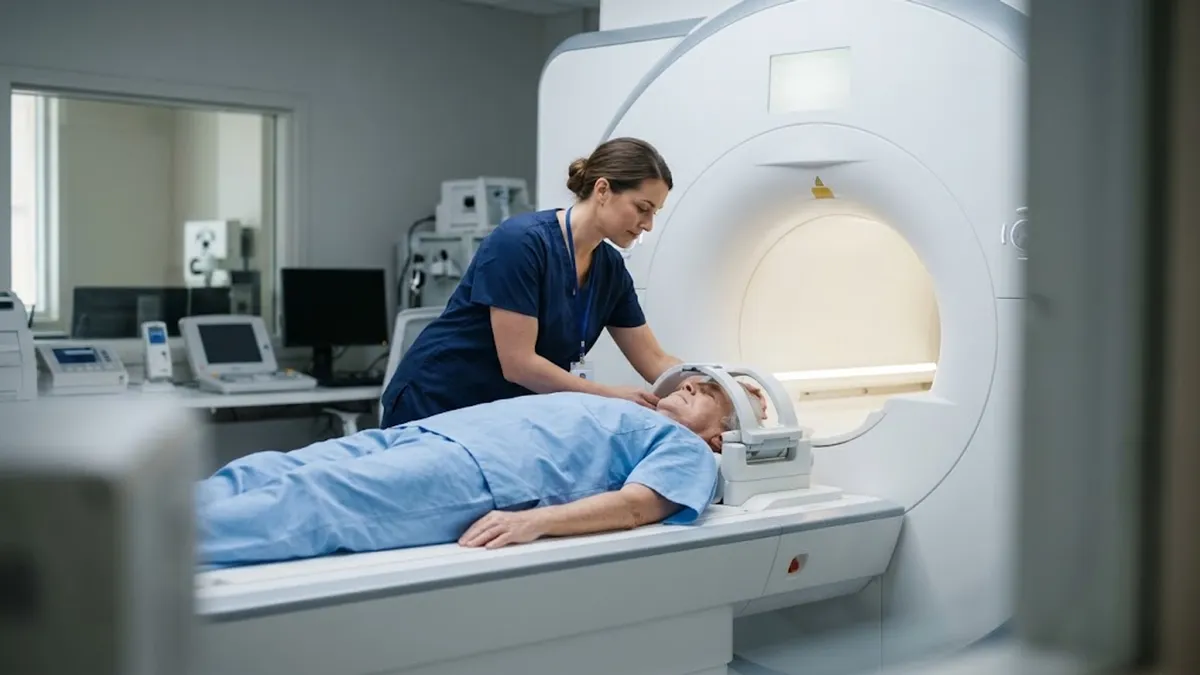
Warmth that builds, stings, or feels like burning is not normal and is not something to endure. Press the call button immediately so the scan can be stopped. Blistering, swelling, or pain after the exam needs prompt medical evaluation.
Finding the Closest Open MRI to My Location and Understanding Other Contraindications
Searching for the closest open MRI to my location is a sensible first step if enclosed spaces make you anxious. Start with your referring physician's preferred network, then check your insurer's imaging directory, which lists in-network sites and often shows cost estimates. Map-based searches work too, but phone the center to verify that the open magnet is currently operating and approved for your exam, because some sites keep older units for limited studies.
Ask specific questions when you call. What is the field strength of the open scanner? Is it a true open design or a wide-bore closed system? Does the site have a radiologist trained in pelvic and gynecologic imaging? Can they accommodate your weight and any mobility limits? Wide-bore 1.5 tesla systems, with openings around 70 centimeters, deliver high image quality and may feel almost as comfortable as a traditional open unit for many patients. Written answers help you compare sites fairly.
Beyond tattoos, several conditions require careful review. Cardiac pacemakers and implantable defibrillators were historically absolute contraindications, but many modern devices are labeled MR Conditional and can be scanned at designated centers with cardiology support. Older cochlear implants, ferromagnetic aneurysm clips, and metallic foreign bodies in the eye remain serious hazards. Bring your implant card or operative report so staff can look up the manufacturer's exact MRI conditions before scheduling.
Pelvic-specific implants deserve attention. Copper and hormonal intrauterine devices are generally considered safe for MRI, though some centers still check for an unusual model. Hip replacements made of titanium or cobalt-chrome are usually safe but produce large artifacts that can obscure nearby structures. Tell your doctor in advance, since a metal artifact reduction protocol or an alternative such as CT may serve the clinical question better than a standard pelvic MRI.
Pregnancy, kidney disease, and size limits round out the list. MRI uses no ionizing radiation and is often preferred for pregnant patients when imaging is needed, though contrast is avoided unless essential. Reduced kidney function affects gadolinium decisions. Most scanners also have table weight limits, commonly between 350 and 550 pounds, and bore diameters that restrict very large body habitus. Open and wide-bore systems frequently solve this problem, so mention your weight when scheduling.
Coil selection is another quiet factor in comfort and image quality. Pelvic exams typically use a multichannel phased-array coil strapped across the hips, and the right coil placement improves signal for the ovaries, uterus, prostate, and rectum. Poor coil fit can make a scan longer, so tell staff if straps feel too tight or pinch tattooed skin. The related MRI coil guide at the end of this article explains the types in detail.
Finally, weigh cost and quality together. A cheaper open unit is not a bargain if the images are too limited and your doctor orders a repeat on a high-field scanner. Ask your referring physician whether your clinical question needs 1.5 or 3 tesla, then choose the most comfortable option that meets that standard. Many patients find that a wide-bore 1.5 tesla scanner, mild sedation prescribed in advance, or music and a prism mirror solves the comfort problem entirely.
Practical Tips Before Your MRI: Tattoos, Codes, and Comfort
Preparation starts at least a week before your appointment. Call the imaging center, give them your order's CPT code, and list every tattoo, implant, and medical device you have. Request written MRI safety instructions and ask whether anything about your history will change the protocol. If you have a large tattoo in the scan region, say so by phone, not just on the form, so the team can plan padding and monitoring in advance.
On the day, arrive early and wear comfortable clothing without metal zippers, snaps, or underwires. Leave jewelry, watches, and credit cards in a locker, since magnetic strips can be erased. Expect to change into a gown. Eat and drink as instructed, which for many pelvic studies means fasting for a few hours and following bladder guidance. Bring a medication list, your implant card, and prior imaging reports so the radiologist can compare studies.
During the scan, stillness is your main job. Motion blurs pelvic images and can force repeat sequences, extending your time in the bore. Breathing normally is fine, and some sequences will ask you to hold your breath for ten to twenty seconds. Earplugs or headphones protect your hearing from the loud knocking, which can exceed 100 decibels. Keep your hands by your sides and do not cross your arms or legs, which can create skin-to-skin loops.
Manage anxiety proactively. Ask for a prism mirror or video goggles, request a fan, and practice slow breathing before you enter. Some patients benefit from a short-acting anti-anxiety medication prescribed by their doctor in advance, though you will then need a ride home. Remember that the technologist can see and hear you throughout. You can request a break at any time, and many centers allow a family member to stay in the room after screening.
Handle the money side early. Confirm that your insurer has authorized the specific pelvic MRI CPT code on your order, whether 72195, 72196, or 72197, and ask for the in-network negotiated rate. Compare at least two facilities, because independent imaging centers frequently cost far less than hospitals. If you are paying cash, request a bundled price covering both the technical fee and the radiologist's interpretation, and ask whether prepayment discounts apply.
After the scan, watch your skin. Mild redness that fades within an hour is usually harmless, but blistering, persistent pain, or a rash over a tattoo warrants prompt medical evaluation. Contact the facility the same day so they can document the event. Ask when results will be ready, which typically takes one to three business days, and whether you will receive a copy of the images on disc or through a patient portal.
If you work in or study imaging, these same safety principles show up on registry exams. Questions about zones, SAR limits, MR Conditional labeling, and projectile hazards are common, and tattoo reactions illustrate how physics translates into patient care. Practicing with scenario-based questions helps the concepts stick far better than rereading definitions. Use the quizzes below to test yourself, review every explanation, and revisit weak areas until you can describe the reasoning, not just recall the answer.
MRI Questions and Answers

MRI Center: How to Choose the Right Imaging Facility

Brachial Plexus MRI: Complete Guide to Imaging, Anatomy, Pathology, and Clinical Applications
Chiari Malformation MRI: Complete Patient Guide

MRI Coil: Complete Guide to Types, Functions, and Clinical Applications

MRI Safety and Accidents: Real Cases, Risks, and Screening Failures
How this page was made: written with AI tools and published by Nathan Beja, founder of Practice Test Geeks, who is responsible for its content. Exam facts are checked against the official sources listed below. Not reviewed by a subject-matter expert. Editorial policy
Sources & references
Exam facts on this page (fees, format, dates, passing scores) are checked against these official sources; the date is our last check. Editorial policy
- arrt.org — Passing score, score release, fees, exam information · verified Oct 2026
- assets-us-01.kc-usercontent.com — Renewal, score validity, test delivery, eligibility, exam format, test dates, time limit · verified Oct 2026