
MRI Center: How to Choose the Right Imaging Facility 2026
Compare MRI centers, machine types, and pricing. Learn how to choose an accredited imaging facility and prepare for your scan with confidence. 🎓
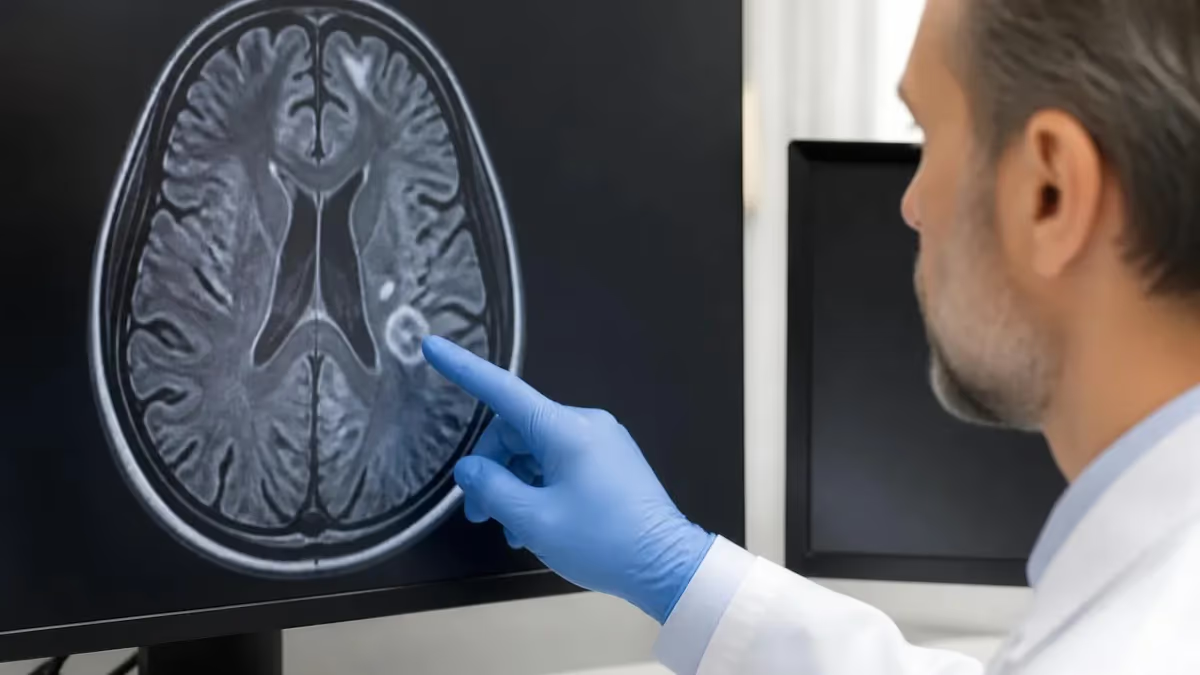
Finding the right MRI center matters more than most patients realize. Where you go shapes the image quality your radiologist reviews, the comfort you feel during the scan, the price you pay, and how fast results reach your doctor. Walk into the wrong place and you might lie in a tight bore for an hour with a noisy machine, then wait two weeks for a report. Practice with the free MRI - Magnetic Resonance Imaging practice test on PracticeTestGeeks (200+ questions with answer explanations).
Walk into the right one and the whole thing feels almost routine. This guide breaks down what an MRI center actually does, the different kinds you can choose from, what to look for before you book, and how to prepare so the scan goes smoothly. Whether your doctor handed you a referral this morning or you are shopping around for the best price, you will leave with a clear plan.
If you want to test what you already know about magnetic resonance imaging, our magnetic resonance overview pairs nicely with this read. We will keep the jargon light and the practical advice heavy, with checklists you can use the next time you call to book.
An MRI center, sometimes called an imaging center or diagnostic imaging clinic, is a medical facility built around magnetic resonance imaging equipment. Some centers focus only on MRI. Others house a mix of modalities, CT, ultrasound, X-ray, mammography, and sometimes nuclear medicine.
The common thread is the magnet at the heart of the building, usually a 1.5 Tesla or 3 Tesla superconducting magnet cooled by liquid helium and shielded by tons of steel and copper to keep stray radio signals out. The room you scan in is called a Faraday cage, and it is built precisely so outside noise does not muddy the images.
Centers operate independently, as part of a hospital network, or under a franchise. Hospital-affiliated centers tend to handle complex cases, trauma follow-ups, oncology imaging, and inpatients who need scans on short notice. Standalone outpatient centers compete on price, scheduling speed, parking, and patient experience.
Both kinds employ MRI technologists, radiologists, and front-desk staff who handle scheduling, insurance, and intake. Technologists are typically registered with the American Registry of Radiologic Technologists and hold a specific MRI credential, which you can verify online before your visit.
Free MRI - Magnetic Resonance Imaging Study Tools
Interactive MRI - Magnetic Resonance Imaging resources on PracticeTestGeeks, free to start:
- Free MRI Knowledge Questions and Answers — 11 questions with instant scoring and answer explanations
- MRI - Magnetic Resonance Imaging flashcards — review key terms and concepts card by card
- MRI - Magnetic Resonance Imaging study guide — topic-by-topic overview of what the exam covers
- MRI - Magnetic Resonance Imaging cheat sheet — one-page printable summary for last-minute review
MRI by the Numbers
Not every center offers the same machine. Closed-bore MRI is the workhorse, a long cylinder with a narrow opening that delivers the best image quality. Wide-bore systems keep the same magnet strength but widen the tunnel to around 70 centimeters, which helps larger patients and anyone who gets nervous in tight spaces.
Open MRI machines use a different magnet design with no enclosed tunnel, perfect for severe claustrophobia and pediatric scans, though resolution can be lower. Some boutique centers run a stand-up MRI, where patients are scanned upright. That helps spine and weight-bearing joint problems that hide when you lie flat.
Field strength matters too. A 1.5T scanner is the standard for general imaging and produces excellent diagnostic images for most body parts. A 3T scanner doubles the field strength, sharpens detail, and shortens scan times for some sequences. It shines in neurology, prostate imaging, and musculoskeletal work where small structures need to be seen clearly.
Higher is not always better though. Implants, metal hardware, and certain artifacts behave worse at 3T, so the right machine depends on what is being imaged. Your referring doctor or radiologist can recommend the field strength most appropriate for your case if you ask.
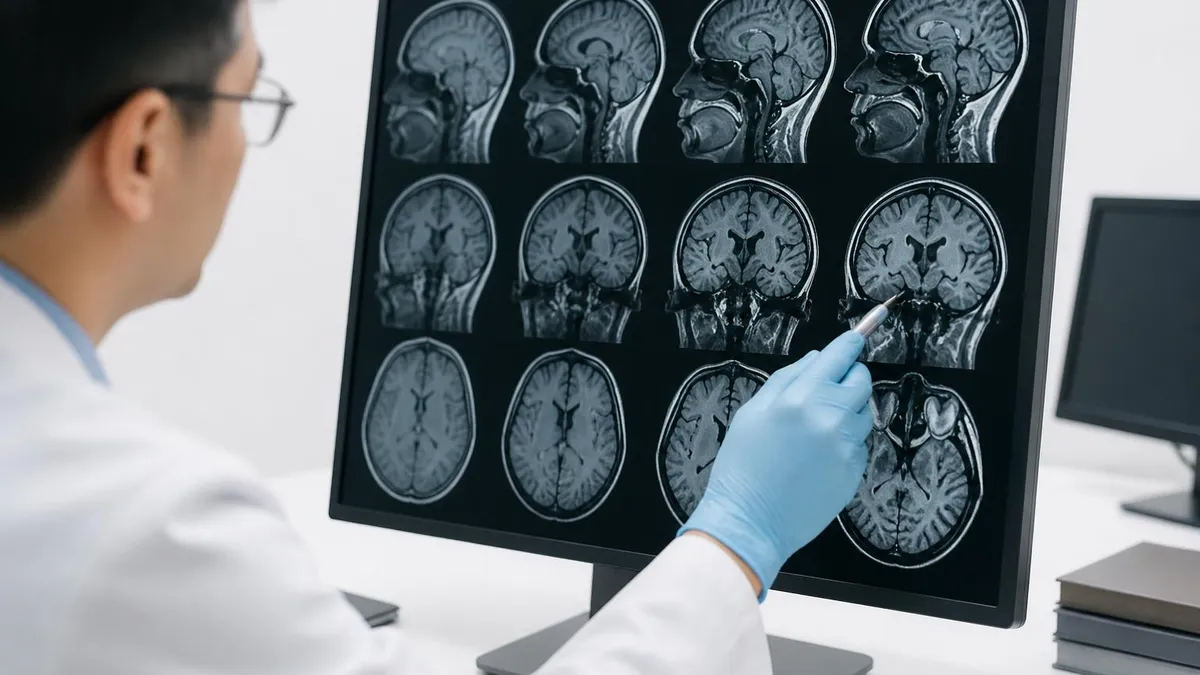
Types of MRI Machines You Will See
The workhorse system used at most centers. Excellent image quality, widely available, and supports nearly every clinical sequence including contrast-enhanced studies, MR angiography, and cardiac work.
Same magnet strength but a wider opening around 70 centimeters. Better for larger patients, those with mild claustrophobia, and anyone who finds standard bores too tight for comfort.
Doubles the signal-to-noise ratio of 1.5T. Sharper neuro, prostate, and small-joint detail with faster scan times for some sequences. Not always ideal for patients with metal implants.
No tunnel at all, just two horizontal plates with the magnet above and below. Lower field strength (0.3T to 0.7T) but a lifeline for severe claustrophobia and pediatric patients.
Upright scanning under load for weight-bearing spine and joint studies that hide when patients lie flat. Useful for chronic back pain and unstable knee or ankle injuries.
Small dedicated scanner for wrists, elbows, knees, and ankles. The rest of the body stays outside the magnet so it feels less confining. Quick, comfortable, often cheaper than a full-body scan.
Choosing a center starts with what your doctor ordered. If the referral says contrast-enhanced abdominal mri cpt code, you need a center that stocks gadolinium, has an IV-trained tech, and runs the right protocols. If it says functional MRI or MR spectroscopy, your list of options shrinks fast, only larger academic or hospital-based centers do these reliably.
Always check that the center is accredited by the American College of Radiology or an equivalent body. ACR accreditation means the equipment, staff qualifications, and image quality have all been independently reviewed. The badge often appears on the center's homepage, but you can also search the ACR's public directory.
Next, look at radiologist credentials. The tech runs the scan, but a board-certified radiologist reads it and writes the report your doctor uses to make decisions. Subspecialty fellowships matter for tricky cases. A musculoskeletal radiologist will catch a subtle labral tear that a generalist could miss.
A neuroradiologist sees brain MRIs every day and notices small white-matter changes that signal early disease. Most centers list their radiologists online, including fellowships and years of practice. If yours does not, ask the scheduler. A good center answers that question without hesitation.
Ask about turnaround time. A good outpatient center sends a preliminary report to your referring doctor within 24 to 48 hours and a final read within three business days. Slower than that and your treatment plan stalls. Same-day reads exist at hospital centers when the scan is urgent.
Confirm that the center will release images on a CD or through a patient portal so you can take them to a second-opinion appointment without rescanning. Repeated scans cost money and expose you to extra contrast if dye is used.
Center Types Compared
Hospital-based imaging departments stay open 24 hours a day, seven days a week, and serve as the backbone for trauma, emergency, and inpatient scanning. They integrate with the hospital electronic health record, so your primary doctor and any specialists in that network see the report and the actual images the moment the radiologist signs off.
The trade-off is cost. Hospital bills include a facility fee that funds the broader operation, including the emergency room, intensive care, and surgical suites. That fee can double or even triple the price of the exact same MRI compared to a freestanding outpatient site. Insurance often picks it up after prior authorization, but high-deductible plans feel the difference.
Cost varies wildly. A brain MRI without contrast can run from about 400 dollars at a cash-pay outpatient center to over 3,500 dollars at a major hospital, even though the physics is identical. Outpatient centers strip out facility fees and pass the savings on.
Hospitals charge those fees because they keep the lights on for an entire campus, including emergency rooms and intensive care. If your insurance has a high deductible, calling three or four centers for a cash price almost always saves money. Some centers even offer prompt-pay discounts.
Insurance coverage depends on your plan and the reason for the scan. Most insurers require prior authorization for MRI, which the referring office handles by submitting clinical notes that prove the test is medically necessary. Watch for in-network status.
A center can be cheap on paper but cost you more if it is out of network and your plan refuses to pay anything toward the bill. Always ask for a written estimate that includes the technical fee, the professional fee (the radiologist read), and any contrast charges.
Bundled pricing has spread across the outpatient world. A center that quotes 599 dollars for a knee MRI usually means that price includes the scan, the read, and a CD. If contrast is needed, expect an extra 150 to 400 dollars depending on the agent. Ask up front. Surprise bills for contrast are a common complaint patients raise after the fact.
Preparation depends on the body part and whether you are getting contrast. For most scans you can eat and drink normally. For abdominal or pelvic studies you may be asked to fast for four hours so the bowel is quiet. Diabetics on metformin sometimes need to pause the drug around contrast administration, your center will give specific instructions.
Wear comfortable clothes without metal. Sweatpants, a T-shirt with no zippers, and slip-on shoes work. You will probably change into a gown anyway, but skipping metal at home saves time at intake. Leave watches, jewelry, and hairpins at home or in the car.
Bring a list of every implant, surgery, and metal object that may be inside you. Pacemakers, cochlear implants, certain aneurysm clips, drug pumps, and shrapnel can all be magnetic hazards. Modern implants are usually MRI-conditional, meaning they can be scanned within specific parameters, but the tech needs the device card or model number to confirm.
If you have any doubt, call ahead and email the relevant device documentation. You can read more in our deep dive on MRI safety, which covers what to disclose and why. The five minutes spent prepping that information up front can save your entire appointment.
Tell the front desk if you have claustrophobia, severe back pain that makes lying still hard, or anxiety. Some centers offer mild oral sedation, music through MRI-safe headphones, or video goggles. A few have prism mirrors that let you see out of the bore. If you have had bad experiences before, ask about a wide-bore or open machine.
What to Bring to Your MRI Appointment
- ✓Photo ID and insurance card
- ✓Your written referral or order from the doctor
- ✓List of all implants, surgeries, and metal objects in your body
- ✓Device cards for pacemakers, stents, pumps, or neurostimulators
- ✓Prior MRI reports or CDs for comparison
- ✓Comfortable clothing without zippers, buttons, or underwire
- ✓List of current medications, including last metformin dose if applicable
- ✓Glasses case if you wear glasses (you will remove them for the scan)
- ✓Payment method for any copay or cash-pay portion
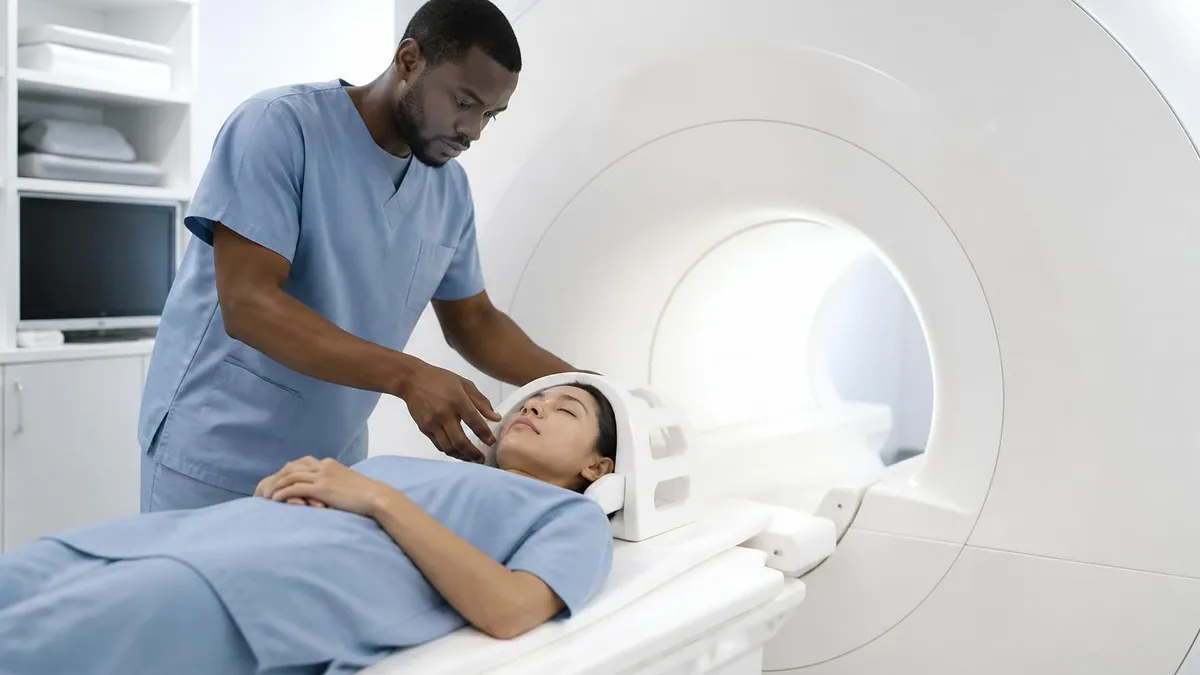
On the day of the scan, arrive 20 to 30 minutes early. The intake form runs long because the safety screening matters more than the paperwork at most medical offices. The tech reviews your form, asks follow-up questions, and physically inspects you for any missed metal.
Then you change, lock up your belongings, and get walked to the scanner room. If you need contrast, the tech places an IV first, often in the antecubital vein at the inside of the elbow. The line stays in until the end of the scan.
The scan itself runs 15 to 60 minutes depending on the body part and how many sequences are ordered. A simple knee study takes maybe 20 minutes. A multiparametric prostate or pelvic study can stretch past an hour. You lie on a padded table that slides into the magnet bore.
Earplugs and headphones cut the noise, which can hit 110 decibels during certain sequences. Many centers pipe in your music of choice through MRI-safe audio. Holding still is the single most important thing you can do. Motion blurs the images and forces repeat sequences.
Between sequences the tech checks in by intercom. You hold a squeeze-bulb panic button the whole time and can stop the scan if you need to. After the last sequence the table slides out, the IV (if any) comes out, and you can leave. There is no recovery time for a standard MRI.
Drive home, go to work, eat lunch, life goes on. Mild side effects from gadolinium contrast include a metallic taste during injection and a brief cool sensation up the arm. Serious reactions are very rare in healthy kidneys.
Most centers upload images to a regional or national image-sharing network so your doctor can pull them up the same day. You should also receive a patient-portal login or a CD on the way out. The radiologist's written report follows within a couple of days.
If results are urgent, call the center after 48 hours rather than waiting passively. Doctors are busy and reports occasionally fall through cracks during transcription or routing. A quick check-in protects you from a stalled treatment plan.
Bring the report and images to your follow-up appointment. Even if your doctor has remote access, having the CD in hand lets a specialist scroll through frames in the exam room. Second opinions are easier when you carry the raw images.
Avoid the temptation to read the report and self-diagnose. MRI reports use technical language that often sounds worse than the actual clinical picture, a tiny meniscal fissure may need nothing, while a routine-sounding lesion description can prompt urgent follow-up. Let a physician contextualize what you see.
A high-quality MRI center shows itself in small ways. The phone is answered within three rings by someone who can read your order. The scheduler offers an appointment within a week, not a month. The intake area is calm and the screening form is thorough.
Techs introduce themselves by name and explain what each sequence will sound and feel like. The bore has fresh linens and a clean ventilation system, important when you are lying inside a tube for an hour. Image-sharing is on a modern platform, not a fax machine.
Red flags include high-pressure upselling for unnecessary contrast, technologists who skip the safety checklist, scanners older than 10 years (ask about install date and field strength), no on-site radiologist coverage for emergencies, and no easy way to get your own images.
Online reviews help but read between the lines. Patients complain about parking and waiting rooms more than they praise image quality, which they cannot really judge. The best signal is whether your referring doctor recommends a specific center and reads images from there often.
Outpatient Imaging Center vs Hospital Radiology
- +Significantly lower cash and insurance prices
- +Faster scheduling, often within a week
- +Quieter environment focused on imaging only
- +Easy parking and shorter walk to the scanner
- +Patient-portal access to images and reports
- −May not stock all contrast types or specialty coils
- −No on-site sedation team for severe claustrophobia
- −Cannot handle inpatients or trauma cases
- −Some plans treat them as out-of-network
- −Less flexibility for complex multi-modality work-ups
Pros and Cons at a Glance
| Pros | Cons |
|---|---|
| Significantly lower cash and insurance prices | May not stock all contrast types or specialty coils |
| Faster scheduling, often within a week | No on-site sedation team for severe claustrophobia |
| Quieter environment focused on imaging only | Cannot handle inpatients or trauma cases |
| Easy parking and shorter walk to the scanner | Some plans treat them as out-of-network |
| Patient-portal access to images and reports | Less flexibility for complex multi-modality work-ups |
Children, pregnant patients, and people with specific medical cos deserve extra thought when picking a center. Pediatric MRI works best at facilities with dedicated pediatric coils, child-life specialists who explain the scan in age-appropriate language, and the option of sedation or general anesthesia for kids who cannot lie still.
Some centers run mock scanners, a fake MRI in a quiet room where children practice holding still while listening to the actual scan sounds. That single rehearsal often eliminates the need for sedation. Worth asking about if your child is anxious.
Pregnant patients can usually have an MRI without contrast at any point during pregnancy if the test is medically necessary. Gadolinium contrast crosses the placenta and is generally avoided unless the benefit clearly outweighs the small theoretical risk. Centers should ask about pregnancy status as part of intake.
Bariatric patients should ask up front about table weight limits, which typically run 350 to 550 pounds, and bore diameter, which makes a real difference in comfort for anyone over a 50 inch waist. A wide-bore 70 cm system handles more body types comfortably.
If you have any reason to expect anxiety, work with the scheduler on coping plans, the right machine, and a chaperone if it helps. Centers see all kinds of patients every day and have heard every concern before. They are not judging.
Scheduling an MRI works better when you call rather than book online. The scheduler can read your specific order, flag missing prior authorizations, and offer the right machine for the body part. They can also fit you in around shorter slots when other patients cancel.
Ask about cancellation policies. A reputable center waives cancellation fees if you reschedule more than 24 hours in advance. If you need to fast or stop a medication, the scheduler should walk you through the prep over the phone and send written instructions by email or portal.
If you are scheduling around a flare-up, post-surgical follow-up, or a worsening symptom, mention the urgency. Most centers reserve same-week appointments for clinical urgency that the referring doctor confirms. The squeaky wheel really does get oiled here.
Time of day matters too. Early morning slots run on schedule because the scanner has been cool overnight and no one is behind. Late afternoon slots can run 30 to 60 minutes late because complicated earlier scans push everything back. Schedule first thing if you are tight on time.
An MRI scan can feel high stakes because the results often guide a big medical decision. Choosing the right center turns the experience from anxious to manageable. Use the checklist below, ask the questions that matter, and trust the technologists, they run MRIs every day.
When you are ready to test your knowledge of magnets, sequences, and safety rules, jump into the practice tests on this page. A few rounds of multiple-choice will lock in the concepts faster than rereading any guide. Good luck with your scan.
Sample MRI - Magnetic Resonance Imaging Practice Questions
Try these questions from our free MRI - Magnetic Resonance Imaging practice tests. The correct answer and an explanation follow each question.
A 'DC offset' or 'center dot' artifact seen as a bright spot in the center of the image is related to:
- A. Patient positioning off-isocenter
- B. A small DC current offset in the receiver causing a spike in the center of k-space
- C. Excessive TR causing saturation effects
- D. B1 field inhomogeneity
Answer: B. A small DC current offset in the receiver causing a spike in the center of k-space
A DC offset artifact occurs when a constant voltage offset in the MR receiver chain introduces a spike at the origin of k-space (DC component), appearing as a bright dot at image center.
Which safety zone in an MRI facility is defined as the area that requires screening and controlled access due to the fringe magnetic field?
- A. Zone I
- B. Zone II
- C. Zone III
- D. Zone IV
Answer: C. Zone III
Zone III is the area where the fringe field poses risk and requires restricted access; only screened individuals may enter.
In k-space, what does the center of k-space primarily determine?
- A. Image contrast
- B. Image resolution
- C. Slice position
- D. Echo time
Answer: A. Image contrast
The center of k-space contains low spatial frequencies that carry the bulk of image contrast and overall signal intensity.
The magnetic field's intensity is changed by this gradient coil from right to left.
- A. Z
- B. X
- C. Y
Answer: B. X
In a standard MRI coordinate system, the X-axis typically corresponds to the right-to-left (or left-to-right) direction across the patient. The X-gradient coil is engineered to produce a linear change in the magnetic field strength along this X-axis. This gradient is primarily used for spatial encoding, particularly for frequency encoding, in the right-to-left dimension.
Take the full MRI - Magnetic Resonance Imaging practice test
MRI Questions and Answers
How this page was made: written with AI tools and published by Nathan Beja, founder of Practice Test Geeks, who is responsible for its content. Exam facts are checked against the official sources listed below. Not reviewed by a subject-matter expert. Editorial policy
Sources & references
Exam facts on this page (fees, format, dates, passing scores) are checked against these official sources; the date is our last check. Editorial policy
- arrt.org — Passing score, score release, fees, exam information · verified Oct 2026
- assets-us-01.kc-usercontent.com — Renewal, score validity, test delivery, eligibility, exam format, test dates, time limit · verified Oct 2026