
Pigmented Villonodular Synovitis MRI: Imaging Guide for PVNS Diagnosis
🎯 Pigmented villonodular synovitis MRI guide: protocols, blooming artifact, T1/T2 signal patterns, diffuse vs localized PVNS, and treatment planning.
Pigmented villonodular synovitis MRI is the single most important imaging study for diagnosing this rare but locally aggressive proliferative disorder of the synovium, and understanding its signal characteristics is essential for any radiologist, technologist, or orthopedic clinician working with joint pathology. Pigmented villonodular synovitis, now formally renamed tenosynovial giant cell tumor by the World Health Organization, produces hemosiderin-laden synovial tissue that creates a distinctive blooming artifact on gradient echo sequences, making MRI not just useful but truly diagnostic in most cases.
The condition typically affects young to middle-aged adults between 20 and 50 years old, with the knee accounting for roughly 80 percent of cases, followed by the hip, ankle, shoulder, and elbow. Patients often present with months or years of progressive joint swelling, intermittent pain, and limited range of motion, frequently after being misdiagnosed with chronic ligamentous injury, meniscal tear, or early osteoarthritis. By the time MRI is ordered, significant synovial proliferation and bone erosion may already be present.
What makes pigmented villonodular synovitis so distinctive on MRI is the paramagnetic effect of iron deposited as hemosiderin within the proliferating synovium. This iron causes profound T2 shortening and magnetic susceptibility artifact that radiologists call blooming, particularly on gradient recalled echo sequences. When you see a hypointense, lobulated, mass-like synovial process with blooming artifact on GRE in a young adult with chronic joint symptoms, the diagnosis is essentially confirmed before any biopsy is performed.
The disease exists in two recognized forms: a diffuse type that involves the entire synovial lining of a joint and a localized or focal type that presents as a discrete intra-articular nodule, often resembling a giant cell tumor of tendon sheath when extra-articular. The diffuse form is far more aggressive, recurs more frequently after surgery, and produces more extensive bone erosions, while the localized form is often curable with simple arthroscopic excision. MRI reliably distinguishes between these two patterns.
Beyond initial diagnosis, MRI plays a critical role in surgical planning, recurrence surveillance, and response assessment for newer targeted therapies such as pexidartinib, a CSF1R inhibitor approved for symptomatic tenosynovial giant cell tumor not amenable to surgery. Radiologists are now expected to quantify tumor volume, document neurovascular involvement, and identify subtle areas of residual disease in postoperative joints where scar tissue can mimic recurrence. A thorough understanding of MRI protocols and pitfalls is therefore indispensable.
This guide walks through everything you need to know about imaging PVNS, including optimal pulse sequences, characteristic signal patterns, anatomic distribution, differential diagnosis, and how to communicate findings to referring orthopedic surgeons. We will also cover common reporting errors, the role of contrast enhancement, and how to follow patients after synovectomy. For background on contrast use in joint imaging, see this overview of MRI With and Without Contrast: How It Works, What to Expect.
Whether you are preparing for registry examinations, building a musculoskeletal MRI practice, or simply trying to make sense of a complicated joint study, mastering the appearance of pigmented villonodular synovitis will sharpen your overall approach to synovial pathology. The same iron-detection principles that diagnose PVNS also apply to hemophilic arthropathy, amyloid arthropathy, synovial chondromatosis, and post-traumatic hemosiderosis, making this a high-yield topic with broad clinical reach.
PVNS MRI by the Numbers
Essential MRI Protocol for Suspected PVNS
Provides anatomic detail and shows PVNS as intermediate-to-low signal lobulated synovial thickening. Useful for identifying bone erosions, marrow involvement, and the relationship of the lesion to cortex and adjacent neurovascular structures.
Heterogeneous signal with characteristic low-signal hemosiderin foci against a brighter fluid-filled joint background. Effusion volume, popliteal cyst extension, and reactive marrow edema near erosions are best assessed on this sequence.
The single most important sequence for PVNS. Hemosiderin produces dramatic blooming artifact that appears far more extensive than on spin echo sequences. Use TE of 15-25 ms at 1.5T or 10-15 ms at 3T for optimal sensitivity.
PVNS enhances avidly and heterogeneously after gadolinium administration. Enhancement helps differentiate active synovial proliferation from chronic fibrotic scar and is particularly valuable when assessing for postoperative recurrence.
Optional but increasingly used at 3T. SWI is even more sensitive than GRE for detecting small hemosiderin deposits and can identify subtle residual disease after synovectomy that conventional sequences might miss entirely.
The defining MRI feature of pigmented villonodular synovitis is the paramagnetic effect of hemosiderin, an iron storage molecule that accumulates within the proliferating synovial cells and the macrophages of chronic hemarthroses. Iron creates strong local magnetic field inhomogeneity, which dramatically shortens T2 relaxation times and produces signal loss that is most pronounced on gradient echo sequences. This phenomenon, called blooming artifact, scales with echo time and field strength and is what allows confident diagnosis on MRI alone.
On T1-weighted spin echo images, PVNS typically appears as lobulated, frond-like synovial thickening with intermediate to low signal intensity. Areas of denser hemosiderin deposition show more profound hypointensity, while regions with predominantly fibrous or cellular proliferation may approach skeletal muscle signal. The mass-like nature of the synovium, especially when filling joint recesses such as the suprapatellar pouch, posterior knee, or intercondylar notch, is a key clue that distinguishes PVNS from simple effusion.
T2-weighted images with fat suppression reveal a heterogeneous mixture of signal intensities. Fluid components and active synovial proliferation tend to be moderately hyperintense, while hemosiderin-rich areas remain strikingly hypointense. This salt-and-pepper appearance against a bright joint effusion background is highly characteristic. Reactive bone marrow edema near erosions may also be visible and helps guide attention to areas of cortical breach.
Gradient recalled echo sequences are where PVNS truly announces itself. The blooming artifact causes hemosiderin deposits to appear two to three times larger than on spin echo images, transforming subtle foci into unmistakable hypointense masses. This sensitivity makes GRE indispensable for both initial diagnosis and detection of residual disease after surgery. A negative GRE sequence in a patient with suspected PVNS should prompt reconsideration of the diagnosis.
Post-contrast imaging is not strictly required for diagnosis but adds important information. PVNS enhances avidly because the proliferating synovium is highly vascular, and the pattern is typically heterogeneous and intense. Enhancement helps distinguish active disease from fluid, fibrous scar, or simple effusion, particularly in postoperative joints where landmarks have been disrupted. For more on contrast strategies and safety, the MRI Medical Abbreviation: What MRI Stands For and Why It Matters article offers useful background.
Higher field strength imaging at 3 Tesla enhances both the diagnostic confidence and the sensitivity for small lesions. Susceptibility-weighted imaging, increasingly available on modern scanners, exceeds even GRE in detecting microscopic hemosiderin and is particularly useful for tracking minimal residual disease. However, the same susceptibility effects can be exaggerated near metallic surgical hardware, so technologists must carefully optimize sequence parameters in postoperative patients.
Bone erosions are common in PVNS, particularly in tight joints such as the hip and ankle where synovial pressure has nowhere to dissipate. Erosions tend to be well-corticated with sclerotic margins, sometimes containing extensions of the hemosiderin-rich synovial tissue. Recognizing these subarticular cysts and pressure erosions is important because their distribution often correlates with disease bulk and helps surgeons plan synovectomy and reconstruction.
MRI Practice Test Questions
Prepare for the MRI - Magnetic Resonance Imaging exam with our free practice test modules. Each quiz covers key topics to help you pass on your first try.
MRI Knowledge
MRI Exam Questions covering Knowledge. Master MRI Test concepts for certification prep.
MRI Physics
Free MRI Practice Test featuring Physics. Improve your MRI Exam score with mock test prep.
MRI Anatomy and Pathology
MRI Test Prep for MRI Anatomy and Pathology. Practice MRI Quiz questions and boost your score.
MRI Anatomy and Positioning
MRI Questions and Answers on MRI Anatomy and Positioning. Free MRI practice for exam readiness.
MRI Contrast Agents
Free MRI Quiz on MRI Contrast Agents. MRI Exam prep questions with detailed explanations.
MRI Patient Care and Positioning
MRI Practice Questions for MRI Patient Care and Positioning. Build confidence for your MRI certification exam.
Diffuse vs Localized PVNS on MRI
Diffuse pigmented villonodular synovitis involves the entire synovial lining of a joint, producing extensive lobulated thickening that fills multiple compartments simultaneously. On MRI, you typically see disease throughout the suprapatellar pouch, intercondylar notch, posterior recesses, and along the cruciate ligaments. The disease is locally aggressive, with frequent bone erosions on both sides of the joint and a propensity for extra-articular extension through capsular defects, particularly into the popliteal fossa or along tendon sheaths.
Recurrence after surgical synovectomy is the rule rather than the exception, with rates approaching 50 percent at five years even after open total synovectomy. MRI surveillance every 6 to 12 months for several years after surgery is therefore standard. Targeted therapy with CSF1R inhibitors such as pexidartinib is increasingly used for patients with diffuse disease who are poor surgical candidates or who have already failed multiple operations, and MRI quantifies tumor volume response.
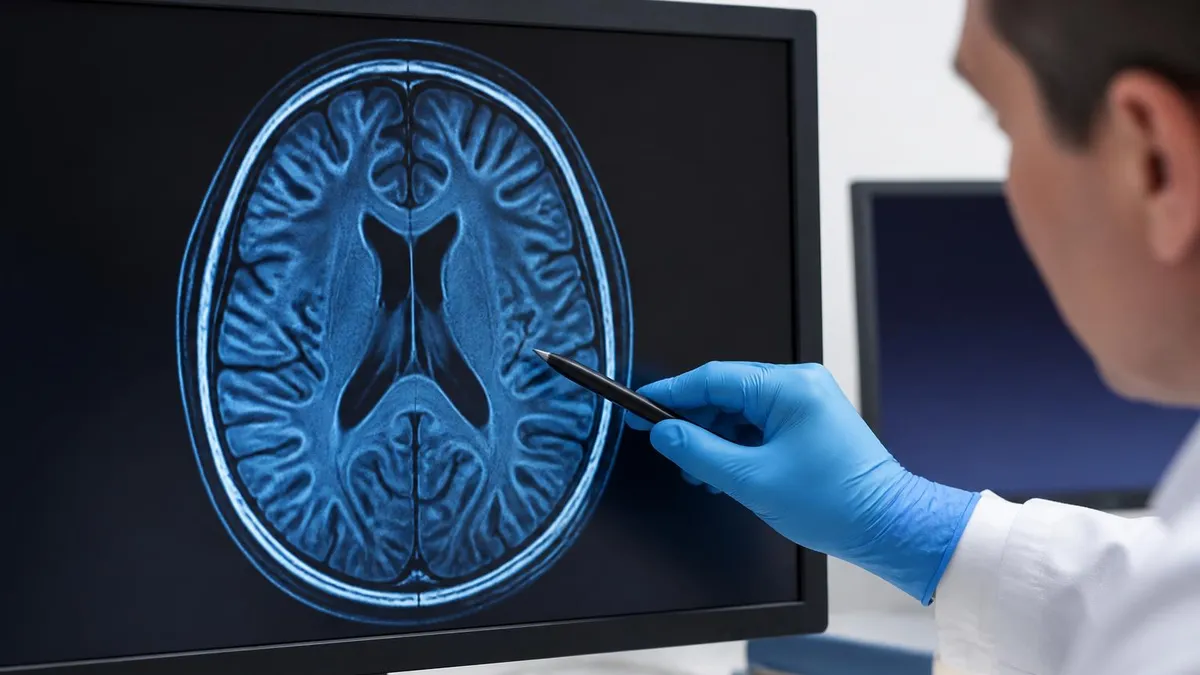
MRI Versus Other Imaging Modalities for PVNS
- +MRI is highly sensitive and specific, with diagnostic accuracy approaching 95 percent when GRE sequences are included
- +Provides excellent soft tissue contrast to map the full extent of synovial disease in all joint compartments
- +Identifies bone erosions, marrow edema, and neurovascular involvement essential for surgical planning
- +Quantifies tumor volume for monitoring response to systemic therapy such as pexidartinib
- +Differentiates active synovial proliferation from postoperative fibrosis using contrast enhancement
- +No ionizing radiation, making it ideal for repeated surveillance in young patients
- +Susceptibility-weighted imaging at 3T detects subtle residual disease invisible on other modalities
- −Imaging time of 30 to 45 minutes can be difficult for patients with significant joint pain
- −Metallic surgical hardware from prior procedures degrades GRE and SWI sequences considerably
- −Hemosiderin from prior hemarthrosis, hemophilia, or trauma can mimic PVNS on imaging
- −Tissue confirmation via biopsy or arthroscopy is still required before definitive treatment
- −Contrast administration is contraindicated in patients with severe renal impairment
- −Subtle localized lesions in fatty regions such as Hoffa pad can be missed without fat suppression
- −Cost and limited access to MRI in some healthcare systems delay diagnosis significantly
PVNS MRI Reporting Checklist
- ✓Confirm presence of lobulated synovial thickening with characteristic low T1 and T2 signal
- ✓Document blooming artifact on gradient recalled echo sequences and its anatomic distribution
- ✓Classify as diffuse versus localized based on extent of synovial involvement
- ✓Identify and measure all bone erosions, noting cortical breach and subchondral cysts
- ✓Assess for extra-articular extension into popliteal fossa, tendon sheaths, or muscle planes
- ✓Evaluate involvement of cruciate ligaments, menisci, and articular cartilage integrity
- ✓Describe enhancement pattern on post-contrast sequences if contrast was administered
- ✓Comment on adjacent neurovascular structures, especially in hip and popliteal locations
- ✓Measure total lesion volume or longest dimensions for treatment response baseline
- ✓Provide differential diagnosis if findings are atypical and recommend tissue confirmation
Always Include GRE in Your Joint MRI Protocol
Standard knee MRI protocols often omit gradient recalled echo sequences in favor of more cartilage-sensitive options, but this is the single most common reason PVNS gets missed on initial imaging. Adding a 2-3 minute axial or sagittal GRE sequence to any joint MRI in a patient with unexplained chronic effusion will catch nearly every case of pigmented villonodular synovitis at first presentation.
The differential diagnosis for pigmented villonodular synovitis on MRI is shorter than for most joint pathologies, but several conditions can convincingly mimic it and deserve careful consideration before a definitive report is issued. The most common look-alike is chronic hemarthrosis, particularly in patients with hemophilia, anticoagulation, or repeated joint trauma. Hemophilic arthropathy produces hemosiderin staining of the synovium that creates blooming artifact indistinguishable from PVNS, so clinical history is essential.
Synovial chondromatosis is another important differential, especially in the hip and elbow. This condition produces multiple cartilaginous nodules within the synovium that may calcify or ossify. On MRI, the lesions typically show low T1 and intermediate to high T2 signal with low-signal foci representing calcifications. The lack of true blooming on GRE and the presence of ring-and-arc mineralization on radiographs help distinguish synovial chondromatosis from PVNS in most cases.
Amyloid arthropathy occurs in long-term hemodialysis patients and produces synovial thickening with low T1 and low T2 signal that can superficially resemble PVNS. However, amyloid deposits do not contain iron and therefore do not bloom on gradient echo sequences. The clinical context of chronic kidney disease, bilateral symmetric joint involvement, and characteristic carpal tunnel involvement makes amyloid recognizable in most circumstances.
Rheumatoid arthritis with extensive pannus formation can occasionally simulate PVNS, particularly when long-standing disease leads to hemosiderin deposition within chronically inflamed synovium. The bilateral and symmetric distribution of rheumatoid disease, marginal erosions, and clinical evidence of systemic inflammation usually clarify the diagnosis. When uncertainty persists, the relative prominence of blooming artifact favors PVNS over rheumatoid pannus.
Less common mimics include hemangioma of the synovium, melanotic schwannoma, and metastatic melanoma involving the joint, all of which can produce paramagnetic effects. Synovial sarcoma despite its name does not actually arise from synovium and rarely involves the joint cavity. Each of these conditions has distinguishing clinical and imaging features, but a low threshold for arthroscopic biopsy remains appropriate when atypical features are present.
Common reporting pitfalls include underestimating disease extent by relying solely on spin echo sequences, missing posterior compartment involvement in the knee, and failing to distinguish post-surgical fibrosis from recurrent active disease. Always review the entire joint including dependent recesses, popliteal fossa, and bursae. Use contrast when prior surgery has been performed. Read more about common knee and joint findings in this guide to Common MRI Findings: Brain, Spine and Joints Guide.
Finally, communication with the referring orthopedic surgeon is critical. PVNS reports should include not just the diagnosis but practical surgical considerations such as the location of extra-articular extension, proximity to neurovascular structures, and whether disease crosses the joint capsule. These details directly influence whether an arthroscopic versus open synovectomy is feasible and shape patient counseling about recurrence risk and the likelihood of needing future joint replacement.
After arthroscopic or open synovectomy, residual hemosiderin from surgical hemorrhage can persist for many months and produce blooming on GRE that mimics recurrent PVNS. Always compare with prior studies, use post-contrast enhancement to identify active disease, and consider follow-up imaging at 3-6 months before concluding that recurrence has occurred.
Treatment planning for pigmented villonodular synovitis is a multidisciplinary effort, and MRI is the central piece of evidence guiding every decision. For localized PVNS, the standard of care is arthroscopic excision with marginal resection, and MRI provides the precise lesion location, size, and pedicle attachment that allow the surgeon to plan portal placement and minimize unnecessary tissue disruption. Success rates exceed 90 percent when the lesion is fully visualized and completely excised in a single procedure.
Diffuse PVNS is more challenging. Open total synovectomy through anterior and posterior approaches offers the most thorough disease clearance but carries higher morbidity including stiffness, infection, and prolonged rehabilitation. Arthroscopic synovectomy is less morbid but historically associated with higher recurrence rates. Modern combined arthroscopic-posterior approaches aim to achieve thorough clearance while preserving function, and MRI maps the disease distribution that determines whether such an approach is feasible.
For patients with recurrent disease, joint destruction, or poor surgical candidacy, systemic therapy has become an important option. Pexidartinib, a CSF1R inhibitor, was the first FDA-approved drug for symptomatic tenosynovial giant cell tumor not amenable to surgery. Response assessment uses tumor volume score, a semi-quantitative MRI-based system that estimates the proportion of synovial space occupied by disease in each joint compartment. Radiologists must learn this scoring system to support oncology decision-making.
Radiation synovectomy with intra-articular injection of yttrium-90 or other radioisotopes remains an option in some centers, particularly in Europe, for residual disease after incomplete surgical excision. The treatment can reduce recurrence rates but carries small risks of radiation-induced complications and is generally reserved for adults with established refractory disease. MRI is used to confirm appropriate target volume and monitor response.
Postoperative follow-up imaging is essential because of the high recurrence rate, particularly for diffuse disease. Most protocols recommend baseline MRI at 6 weeks to document the postoperative anatomy, then surveillance at 6, 12, and 24 months, and annually thereafter for at least 5 years. Recurrent disease typically appears as new or enlarging hemosiderin-rich synovium with avid enhancement, while postoperative scar shows minimal blooming and either no enhancement or thin linear enhancement only.
Communicating treatment-relevant findings clearly is essential. Reports should explicitly state whether disease appears diffuse or localized, document any neurovascular proximity that might complicate surgery, and note prior interventions and their current effect on imaging interpretation. For technologists, optimizing sequences for each clinical scenario, including knowing when to extend the field of view to capture popliteal extension, is part of providing diagnostic-quality studies. A solid foundation in The History of MRI: From Discovery to Modern Medicine can help contextualize why certain sequences exist.
Patient counseling benefits enormously from radiologist input. Surgeons and oncologists routinely reference imaging during informed consent discussions, and patients increasingly access their own reports through online portals. Writing clearly, avoiding excessive jargon, and including a one-sentence impression that captures the diagnosis and its significance helps patients understand their disease and make informed decisions about treatment, follow-up, and lifestyle adjustments they may need to consider.
Practical preparation for diagnosing and reporting pigmented villonodular synovitis begins with mastering the basic physics of magnetic susceptibility. Iron is paramagnetic, meaning it creates local distortions in the static magnetic field that dephase nearby protons and cause signal loss. The effect is exaggerated on gradient recalled echo sequences because GRE does not use a 180-degree refocusing pulse, so dephasing accumulates rather than being recovered. Longer echo times and higher field strengths amplify the effect proportionally.
Technologists should know how to optimize protocols for suspected PVNS. A standard knee MRI should include axial and sagittal proton density fat-saturated sequences, sagittal T1 spin echo, coronal T2 fat-saturated, and crucially an axial or sagittal gradient echo sequence with TE of approximately 15 to 25 milliseconds at 1.5T or 10 to 15 milliseconds at 3T. For hip imaging, large field of view coronal sequences and dedicated small-FOV high-resolution axial sequences provide the necessary detail.
When in doubt about the diagnosis, recommend additional imaging rather than committing to a definitive call. A focused contrast-enhanced study, susceptibility-weighted imaging at 3T, or referral to a musculoskeletal subspecialist can clarify ambiguous findings. Tissue confirmation through arthroscopic biopsy remains the gold standard before initiating treatment with surgery or systemic therapy, and well-organized imaging that clearly documents the suspected diagnosis facilitates this next step.
For trainees and registry candidates, key facts to memorize include the 80 percent knee predilection, the 20-50 age range, the role of CSF1 gene rearrangement in pathogenesis, the diffuse versus localized classification with implications for recurrence, and the central importance of GRE in diagnosis. Knowing the typical MRI signal characteristics, the pattern of bone erosion, and the role of pexidartinib for refractory disease covers most examination questions encountered on board-style assessments.
Practical reporting tips include using a standardized template that prompts you to comment on each joint compartment systematically. Many radiology groups now use structured reporting for synovial disease that captures location, extent, bone erosions, neurovascular involvement, and a baseline tumor volume estimate. Structured reports improve communication with surgeons and oncologists and create a longitudinal record useful for response assessment during therapy or surveillance after surgery.
Recognize the limitations of MRI as well. Patients with metallic hardware from prior surgery, severe claustrophobia, or implanted devices may not be candidates for the optimal protocol. In these cases, ultrasound can sometimes identify synovial thickening and increased Doppler flow but lacks the specificity of MRI. CT arthrography is another option for evaluating bone erosions and joint architecture but adds radiation exposure and contrast risk and does not show the distinctive hemosiderin signal.
Finally, stay current with emerging imaging techniques. Quantitative susceptibility mapping, ultrashort echo time sequences, and machine learning-based segmentation are all being investigated for PVNS evaluation. These tools may eventually enable fully automated tumor volume calculation, more reproducible response assessment, and earlier detection of recurrence. The fundamentals of recognizing hemosiderin-driven signal changes will remain central no matter how the technology evolves over the coming decade.
MRI Questions and Answers

About the Author

Medical Laboratory Scientist & Clinical Certification Expert
Johns Hopkins UniversityDr. Sandra Kim holds a PhD in Clinical Laboratory Science from Johns Hopkins University and is certified as a Medical Technologist (MT) and Medical Laboratory Scientist (MLS) through ASCP. With 16 years of clinical laboratory experience spanning hematology, microbiology, and molecular diagnostics, she prepares candidates for ASCP board exams, MLT, MLS, and specialist certification tests.
Join the Discussion
Connect with other students preparing for this exam. Share tips, ask questions, and get advice from people who have been there.
View discussion (8 replies)