
How Much Does an MRI Machine Cost? 2026 September Pricing Guide
✍🏼 MRI machine cost in 2026 September: new $1M-$3M, refurbished $250K-$1M. Full pricing for 1.5T, 3T, install, service contracts, and 10-year TCO.
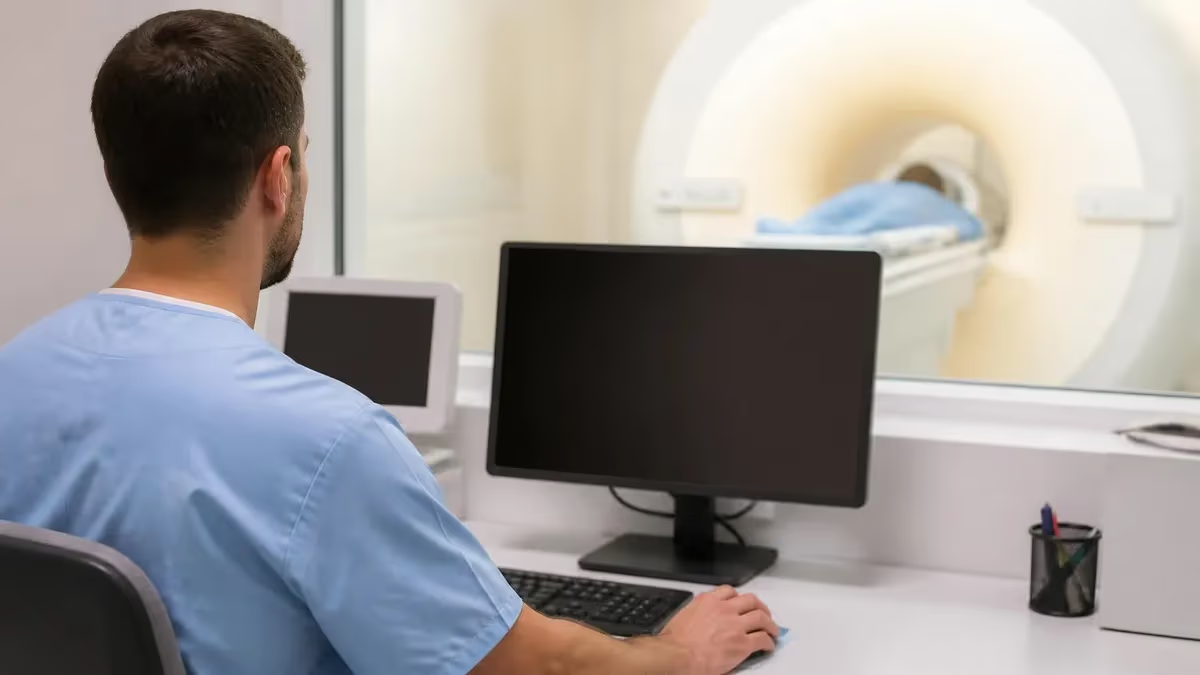
A new MRI machine costs $1M-$3M for the magnet alone. Total installed cost (with siting, RF shielding, cryogen fill, and labor) runs $2M-$5M. Refurbished 1.5T systems sell for $250K-$700K, and refurbished 3T systems run $700K-$1.5M. Annual service contracts cost 10-15% of capital, or roughly $100K-$300K per year. Over a 10-year lifetime, the total cost of ownership for a single 1.5T scanner lands between $4M and $8M. These prices have stayed remarkably stable for over five years, with most variation driven by field strength, bore size, and software options rather than base hardware inflation.
You can't really walk into a showroom and ask “how much does an MRI machine cost?” the way you'd ask about a car. The honest answer is: it depends on field strength, bore size, vendor, software package, and whether you're buying new or refurbished. But there are clear ranges, and once you understand the components driving those ranges, the pricing makes sense.
Most hospitals and outpatient imaging centers running a standard MRI machine spend between $2 million and $3 million all-in for a new 1.5T installation. Step up to 3T and you're looking at $3M-$5M installed. The base scanner is the biggest line item, but it's far from the only one. Site preparation, shielding, helium, training, and the first year of service add hundreds of thousands of dollars on top of the magnet price.
This guide walks through every cost component. Whether you're a hospital administrator weighing capital purchase against leasing, an imaging center owner running the math on refurbished options, or simply curious why these machines carry seven-figure price tags, you'll get straight numbers and the reasoning behind them.
MRI Market Snapshot (US, 2026)
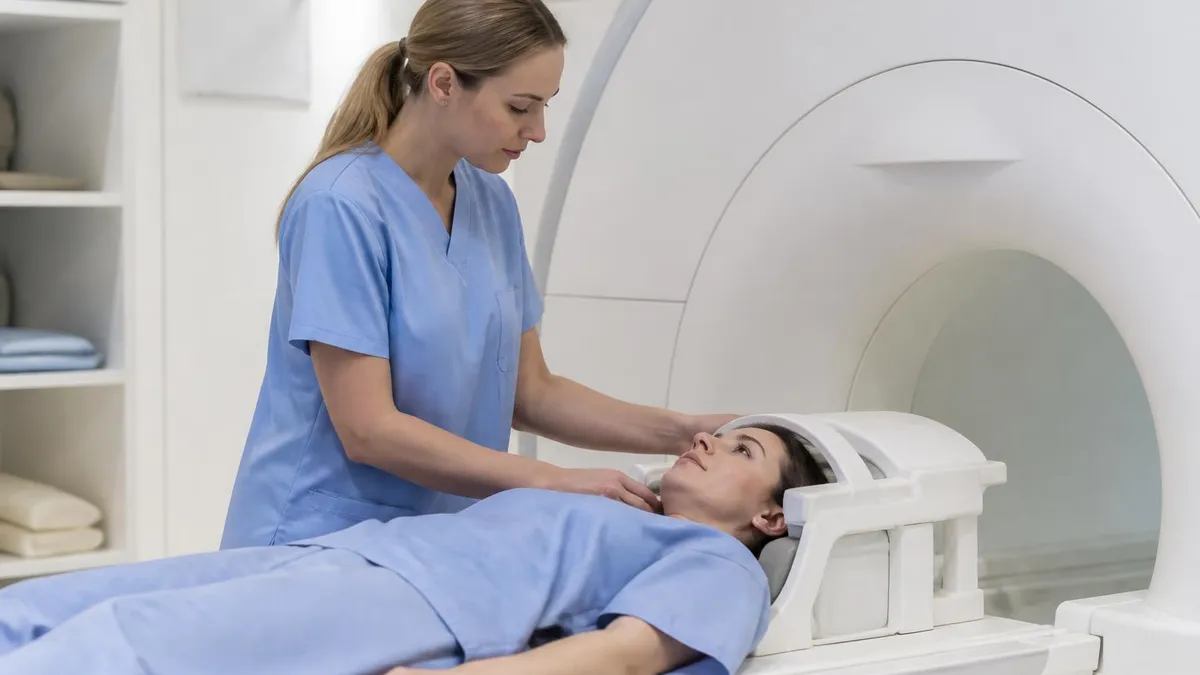
The US installed base of around 12,000 scanners is dominated by 1.5T workhorses. They handle the vast majority of clinical imaging, from brain and spine to musculoskeletal, abdomen, and breast. The 3T tier sits at roughly 18% and grows steadily, mostly driven by academic medical centers, neurology programs, and research facilities. Open MRI, 7T research systems, and portable low-field scanners together account for less than 2% of the installed base, but they fill specific niches that closed 1.5T and 3T can't cover well.
Why so many 1.5T machines? They hit the sweet spot of image quality, throughput, patient comfort, and cost. A 1.5T scanner can image essentially every body part well enough for clinical diagnosis, runs cooler and quieter than 3T, and costs roughly half as much when you factor in install and shielding. For an imaging center doing knee MRIs, lumbar spine, and brain MRIs all day long, 1.5T is almost always the right call.
MRI Cost by Field Strength
The 1.5T scanner is the clinical workhorse of MRI imaging. It handles roughly 90% of routine clinical work, and it's the default choice for outpatient imaging centers, community hospitals, and most diagnostic facilities.
- New magnet price: $1.0M-$1.8M
- Total installed cost: $2.0M-$3.0M
- Common uses: brain, spine, knee, shoulder, abdomen, pelvis, breast, cardiac
- Bore size options: 60cm standard or 70cm wide-bore (+$200K)
Top examples on the market in 2026: GE Optima MR450w, Siemens Magnetom Sola, Philips Ingenia 1.5T, Canon Vantage Orian. All four manufacturers offer roughly equivalent image quality at this field strength, and the choice often comes down to existing service relationships, training continuity, and software ecosystem rather than raw specs.
If you're starting an outpatient imaging center, 1.5T is almost always the right answer. It scans almost every type of study, throughput is excellent, helium consumption is manageable, and patients tolerate it well. The economics also favor 1.5T heavily — lower capital cost, lower service contract, and lower siting requirements than 3T.
Field strength is the single biggest cost driver, but it's not the only one. The magnet itself accounts for maybe 40-60% of total installed cost. The rest goes to siting, shielding, install labor, training, software, and the first cryogen fill. If you're budgeting for an MRI purchase, you need to look at the full installed cost, not just the magnet sticker price — that's where most first-time buyers get blindsided.
The other thing to remember: an MRI is a 10-15 year capital commitment. Buying decisions made today will shape your service contract, helium budget, and software upgrade path for over a decade. The math on a refurbished scanner that saves you $1M up front but costs $250K more per year in service compared to new is worth running carefully. Same applies to choosing OEM vs independent service, and to the decision between buying outright versus leasing.
MRI Machine Cost Components Breakdown
- 1.5T new: $1.0M-$1.8M
- 3T new: $1.8M-$3.0M
- Share of total cost: 40-60%
- RF Faraday cage: $100K-$300K
- Magnetic shielding: $30K-$200K
- Total siting: $200K-$500K
- Initial helium fill: $50K-$150K
- Helium recovery system: $80K-$200K
- Annual top-off (no recovery): $5K-$30K
- Install labor: $50K-$150K
- Workstation + software: $50K-$200K
- Initial staff training: $20K-$75K
- OEM full coverage: $150K-$300K/yr
- Independent (ISO): $80K-$200K/yr
- Ratio to capital cost: 10-15%/yr
- Open MRI (0.3-0.5T): $200K-$500K
- Closed 60cm bore: $1M-$3M
- Wide-bore 70cm: $1.2M-$3.2M
Site preparation is where most first-time buyers blow their budget. The MRI room isn't just a regular exam room with a magnet plopped in. It needs an RF Faraday cage to block radio interference, magnetic shielding to keep the field from bleeding into adjacent spaces, a cryogen vent to handle a quench event, dedicated HVAC, upgraded power, and structural reinforcement for the magnet's weight (often 6-12 tons). All of that runs $200K-$500K depending on the building.
Then there's the cryogen system. Modern superconducting magnets are cooled to -269°C with liquid helium. A new install needs an initial fill of $50K-$150K worth of helium, plus annual top-offs if your scanner doesn't have a closed-loop helium recovery system. Modern machines reclaim 70-90% of helium boil-off, which can cut your annual cryogen cost by tens of thousands of dollars over the scanner's lifetime. If you're buying refurbished, check whether the recovery system is current — older recovery hardware can be a hidden cost sink.
Why MRI Machines Cost So Much
- ✓Powerful superconducting magnet cooled to -269°C with liquid helium
- ✓Precision-engineered RF coils for body region imaging
- ✓Computer hardware and software licensing (per modality, per protocol)
- ✓FDA Class II medical device regulatory compliance
- ✓Decades of R&D investment by GE, Siemens, Philips, Canon
- ✓Specialized manufacturing facilities (only a handful exist worldwide)
- ✓Service contracts and ongoing OEM support infrastructure
- ✓Spare parts inventory held globally for 10-15 year service life
- ✓Site survey, shielding engineering, and acceptance testing
- ✓Training programs for radiographers and service engineers
People often look at the seven-figure sticker price and assume MRI manufacturers are gouging buyers. They're not. The economics are tough on both sides. There are essentially four major MRI manufacturers in the world — GE Healthcare, Siemens Healthineers, Philips Healthcare, and Canon Medical — each running specialized factories that produce maybe a few hundred to a few thousand scanners per year. Compare that to consumer electronics, which roll millions of units off automated lines, and you understand why per-unit cost stays high.
Add in regulatory compliance (every model needs FDA 510(k) clearance), continuous R&D to keep up with AI reconstruction and faster imaging protocols, a global service network, and a 15-year spare-parts commitment, and the cost structure makes sense. The good news for buyers is that competition between the four big players keeps prices stable. List prices have barely moved in 5 years, and aggressive negotiation routinely cuts 10-25% off list, especially on multi-unit deals.
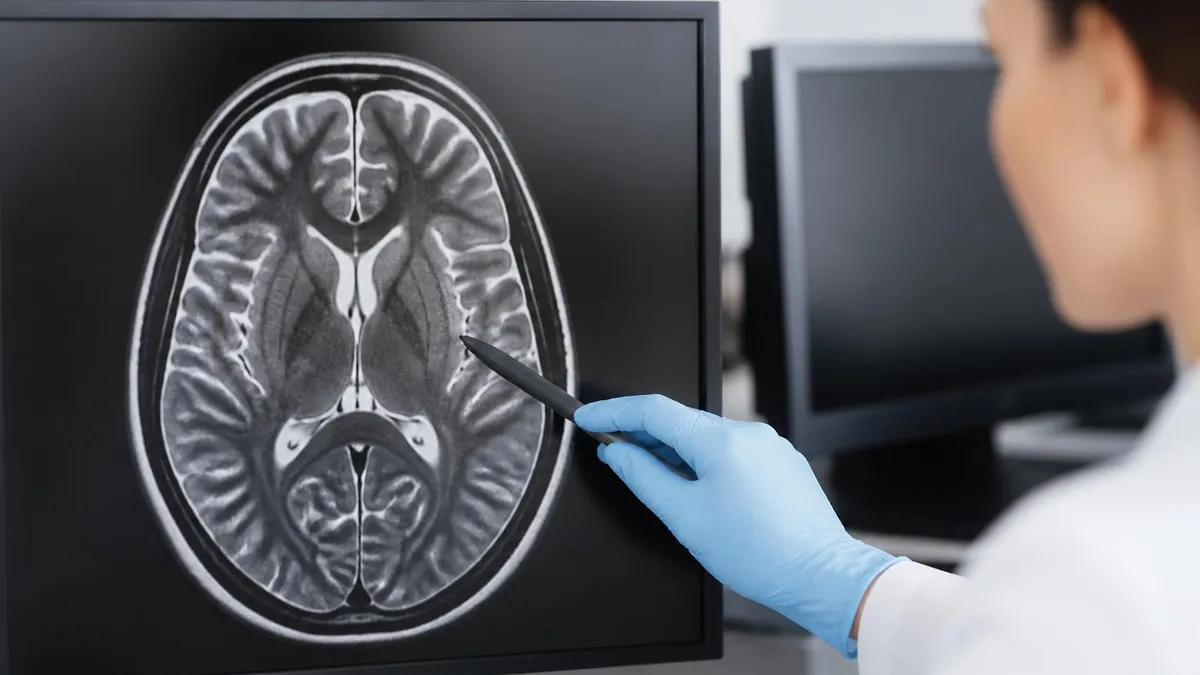
Major MRI Manufacturers (2026)
GE Healthcare and Siemens Healthineers are the two market leaders globally, with roughly equal share in the US.
- GE Healthcare lineup: Signa Premier (3T flagship), Signa Voyager (1.5T premium), Optima MR450w (1.5T mid-range), Pioneer (3T value tier)
- Siemens Healthineers lineup: Magnetom Vida and Lumina (3T flagship), Magnetom Sola (1.5T workhorse), Magnetom Free.Star (helium-free, low-cost option), Magnetom Terra (7T research)
Both vendors offer comprehensive service networks, AI image reconstruction add-ons (GE AIR Recon, Siemens Deep Resolve), and helium recovery systems. Pricing is competitive between them, and most large health systems negotiate with both before signing.
Most MRI purchases include 12-24 months of OEM warranty bundled into the capital price. After that warranty expires, your annual service contract jumps to 10-15% of the original capital cost — and stays there every year for the rest of the scanner's life. On a $2.5M install, that's $250K-$375K per year, or $2.5M-$3.75M over 10 years. Plan for it from day one. Many imaging centers underestimate this and end up squeezed when the warranty runs out and the OEM service quote arrives. Independent service organizations (ISOs) can cut that bill 30-50%, but you lose direct OEM support and parts priority.
Service contracts deserve serious attention because they end up driving more of your lifetime cost than the magnet itself. The OEM (GE, Siemens, Philips, Canon) will offer you a full-coverage contract with 24/7 phone support, parts, labor, software updates, and guaranteed response times. That's the gold standard, and it's what most large hospitals choose. But it's also the most expensive option — typically 10-15% of capital cost per year. Over a 10-year scanner life, that's another $1.5M-$3M on top of the original purchase price, before you've imaged a single patient beyond what the warranty covers.
The alternative is an independent service organization (ISO). Companies like Block Imaging, Crothall Healthcare, and TriMedx employ field engineers (often former OEM techs) and stock major parts. Their contracts run 30-50% cheaper than OEM, but you lose direct manufacturer support, software updates may lag, and parts priority drops behind OEM customers in supply-chain crunches.
For a high-volume hospital where downtime equals lost revenue, ISO risk often isn't worth the savings. For a low-volume imaging center running a refurbished scanner, ISO is usually the right call. Many hospital systems run a hybrid — OEM coverage on their newest 3T flagship scanners, ISO coverage on older 1.5T workhorses where parts are widely available and software updates matter less.
If you're comparing MRI to other imaging modalities while planning your equipment mix, the MRI vs CT scan economics differ significantly. CT scanners cost $250K-$2.5M, install faster (8-12 weeks), have lower service costs (5-8% of capital per year), and don't need RF shielding or cryogen systems. The trade-off is they expose patients to ionizing radiation and don't visualize soft tissue as well. Most full-service diagnostic facilities run both, and the throughput and reimbursement profile of each modality drives the purchase mix — CT for trauma, lung, and bone work, MRI for soft tissue, brain, spine, and joint detail.
Service Contract Options Compared
- Annual cost: $150K-$300K
- Best for: New scanners, high-volume sites
- Includes: Parts, labor, 24/7 support, software updates
- Response time: 4-8 hours guaranteed
- Annual cost: $80K-$200K
- Best for: Older scanners, refurbished systems
- Savings vs OEM: 30-50%
- Trade-off: Lower parts priority, no OEM software
- Cost model: Pay per incident only
- Best for: Very low-volume, very reliable scanners
- Risk: One major failure can cost $100K+
- Common use: Backup scanners, end-of-life systems
- Cost model: OEM coverage on critical, ISO on rest
- Best for: Hospital systems with multiple scanners
- Savings vs full OEM: 15-25%
- Complexity: Higher admin overhead
Now let's talk total cost of ownership over a typical 10-year service life. People focus on the magnet sticker price, but capital is only one chunk of what you'll actually spend. Here's how the math works for a 1.5T scanner installed today and operated for a decade.
Capital (machine plus install) runs $2-$3M. Service contracts at $100K-$300K per year add up to $1M-$3M over 10 years. Helium refills cost $40-$100K every 5-10 years if you have a recovery system, more if you don't. Software upgrades and AI reconstruction subscriptions add $25-$75K per year. A quench event — rare but possible — can run $50-$200K to clean up. Add it all together and you're looking at $4M-$8M in 10-year TCO for a single 1.5T scanner. For a 3T, multiply by roughly 1.5x.
10-Year Total Cost of Ownership (1.5T)
That number sounds painful until you run the revenue math on the other side. A 1.5T scanner running 12-20 patients per day at a Medicare-blended reimbursement of $300-$500 per scan generates roughly $3,600-$10,000 per day in revenue. At 250 working days per year, that's $900K-$2.5M in annual revenue per scanner. Payback on a new 1.5T typically lands at 2-5 years; refurbished systems can pay back in 1-3 years. That's why imaging centers exist as standalone businesses — the unit economics work even after factoring in radiologist reads, technologist salaries, and overhead.
MRI Installation Timeline (Order to First Scan)
Site Survey & Design
Construction & Buildout
Magnet Delivery & Installation
Acceptance Testing
Staff Training & First Patients
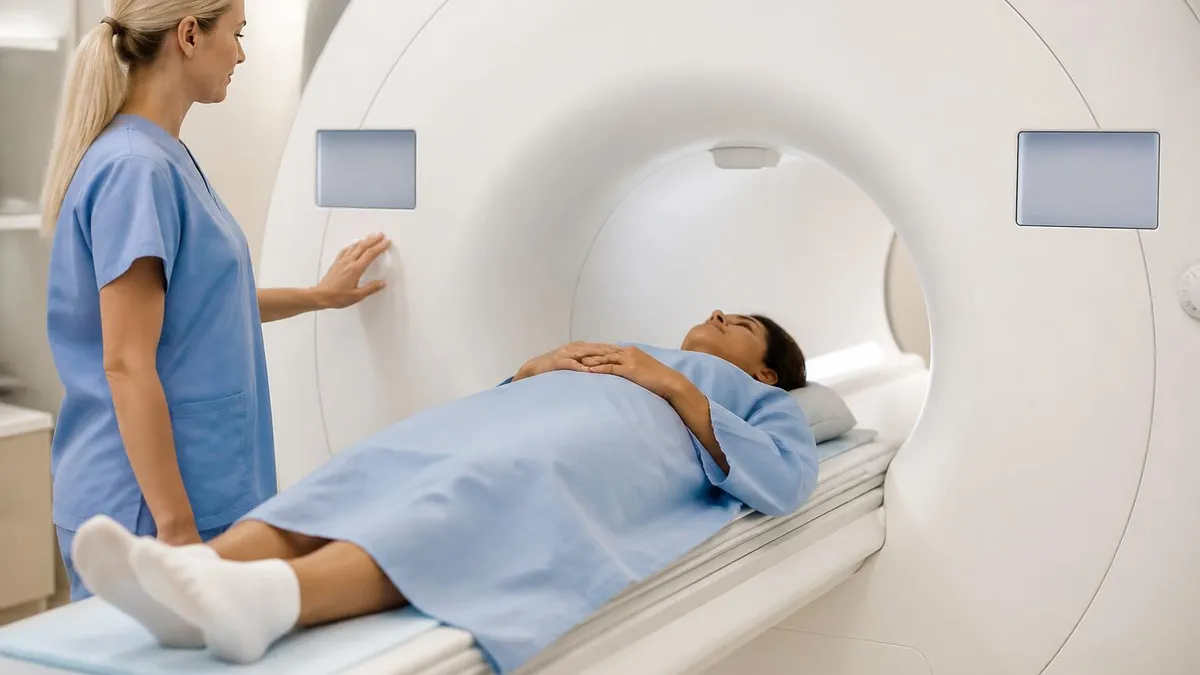
Once the scanner is up and running, the operational work begins. MRI safety protocols dominate day-to-day operations, screening every patient for ferromagnetic implants, training all staff on Zone 1-4 access controls, and maintaining the quench plan. Safety incidents on MRI are rare but expensive — a metal cylinder dragged into a magnet can cost six figures in damage and downtime.
The other operational side is throughput. Most imaging centers schedule 20-30 minute slots per scan, which works out to 12-20 patients per day per scanner. New AI reconstruction software (GE AIR Recon DL, Siemens Deep Resolve, Philips SmartSpeed) can cut routine scan times by 30-50%, which lets you push throughput to 18-25 patients per day. That's a real revenue lever — an extra 5 patients per day at $400 per scan adds $500K per year per scanner.
Buying New MRI: Pros and Cons
- +Latest technology and image quality
- +Full OEM warranty (typically 1-3 years)
- +Longest service life (10-15 years)
- +Best resale value when you eventually upgrade
- +Latest AI reconstruction and faster scan protocols
- +Strongest helium recovery (lower long-term cost)
- +Most current software, longest update support
- −Highest upfront capital cost ($2M-$5M installed)
- −Long lead time (4-9 months) from order to first scan
- −Service contract starts at 10-15% of capital after warranty
- −Risk of overspecifying (3T when 1.5T fits 95% of needs)
- −Software upgrade subscriptions add $25-$75K per year
- −Capital ties up cash that could fund other equipment
Buying Refurbished MRI: Pros and Cons
- +50-80% cost savings vs new equivalent
- +Faster delivery (8-16 weeks vs 4-9 months)
- +Proven, mature technology with known service history
- +Lower risk of software bugs (well-tested platforms)
- +Better fit for low-volume sites (faster payback)
- +Independent service options widely available
- +Easier to finance with lower asset value
- −Shorter remaining service life (5-10 years typical)
- −Older AI and reconstruction software
- −Risk of end-of-life parts availability
- −OEM may discontinue software updates
- −Lower image quality than current-generation scanners
- −Shorter warranties (12-24 months vs 1-3 years)
- −Lower resale value when you eventually retire it
Beyond buying outright, several financing models exist. Equipment leasing is the most common alternative to capital purchase — 5-10 year terms with monthly payments of $20K-$60K depending on the scanner and term length. Leasing keeps capital free for other investments, makes payments tax-deductible, and often bundles service into the monthly fee. The downside: you pay a premium over outright purchase, and at lease end you either return the scanner or buy it out at fair market value.
Pay-per-scan is another model gaining traction. The vendor or a third-party operator places the scanner at your facility and you pay per study performed. No capital cost, no service contract to manage, but you give up margin on every scan. Imaging-as-a-service (IaaS) goes further — the contractor owns the scanner, employs the technologists, and you pay a per-scan fee that covers everything. Useful for hospitals that don't want imaging operations as a core function.
MRI Financing Options Compared
- Upfront cost: $2M-$5M
- Best for: Hospitals with capital budget
- Pros: Lowest lifetime cost, asset on balance sheet
- Cons: Ties up large capital
- Monthly cost: $20K-$60K
- Term length: 5-10 years
- Pros: No upfront capital, tax-deductible
- Cons: 10-20% premium over purchase
- Cost model: Per study performed
- Best for: New imaging centers, low volume
- Pros: Zero upfront, no service hassle
- Cons: Lower margin per scan
- Cost model: Per-scan turnkey fee
- Best for: Hospitals outsourcing imaging
- Pros: Zero ops overhead
- Cons: Lowest margin retained
Newer technologies are reshaping the cost curve. AI image reconstruction packages like GE AIR Recon DL, Siemens Deep Resolve, and Philips SmartSpeed cost $50K-$200K as add-ons but cut scan times by 30-50%. That throughput gain often pays back in under a year on a busy scanner. Helium-free or low-helium designs (Siemens Magnetom Free.Star, Philips Ingenia Ambition) cut cryogen costs to near zero over the scanner's lifetime, though they currently top out at 1.5T.
At the high end, 7T research scanners run $5M-$10M+ and require massive shielding investment. There are fewer than 100 installed in the US, mostly at academic medical centers doing neuroscience and high-resolution research. At the other extreme, Hyperfine's Swoop portable 0.064T MRI sells for $250K and runs on a wall outlet, imaging at the bedside in ICUs and ERs in exchange for lower image quality.
If you're a buyer comparing models, watch for the common mistakes. Underestimating site prep is the most expensive one — budget at least 20% of magnet cost for siting, more if your building wasn't originally designed for MRI. The room weight load, ceiling height, door clearances, and proximity to elevators all matter. A bad site choice can add hundreds of thousands of dollars in structural reinforcement and rerouting.
Always get the vendor site survey done before you sign the purchase order, not after. Choosing OEM service when ISO would suffice is the second classic mistake. On a refurbished 1.5T running routine outpatient work, ISO often delivers 95% of OEM uptime at 60% of the cost. The math is straightforward: $100K per year saved over 10 years is $1M back in your pocket.
Common MRI Buyer Mistakes to Avoid
- ✓Underestimating site preparation cost (budget at least 20% of magnet price for siting)
- ✓Choosing OEM service when an ISO would handle a refurbished system at 30-50% lower cost
- ✓Buying 3T when 1.5T fits 95% of your clinical case mix
- ✓Ignoring the helium recovery system spec at purchase time (saves $200K+ over 10 years)
- ✓Forgetting software subscription costs ($25K-$75K per year per advanced package)
- ✓Not negotiating multi-unit deals (10-25% per-unit savings on 2-3 scanner orders)
- ✓Skipping the vendor site survey before signing the purchase order
- ✓Underspecifying coil sets, then paying premium prices for them later as add-ons
Buying 2-3 scanners at once typically saves 10-25% per unit, plus better service contract pricing. If you're considering a full body MRI screening service, also factor in protocol licensing fees and longer scan times in your throughput model — whole-body protocols can take 60-90 minutes per patient and limit you to 6-8 patients per day. That changes the entire revenue picture compared to routine 30-minute outpatient work.
The other often-missed cost driver is coil sets. The base scanner price includes a standard coil package, but specialized coils (breast, cardiac, multi-channel head, knee) can add $50K-$300K each. Many imaging centers under-budget here and discover after delivery that their scanner can't run a planned study type without a $150K coil purchase. Get a complete coil list as part of your purchase order, not as a follow-up.
The economics of owning an MRI depend entirely on reimbursement. Medicare 2026 pays roughly $300 for a brain MRI and $300 for a knee MRI under the technical component (TC) of the global fee. Commercial insurance pays 1.5-3x Medicare rates depending on contract negotiation.
At 12-20 patients per day across mixed payers, expect $3,600-$10,000 per day in technical revenue per scanner. At 250 working days per year, that's $900K-$2.5M in annual technical revenue — enough to pay back a refurbished scanner in 1-3 years and a new scanner in 2-5 years. Compare this to the MRI scan cost a patient sees on their bill, which can run higher due to facility fees and professional component charges.
Eventually every scanner reaches end of life. After 10-15 years of clinical service, most hospitals retire their MRI — either because reliability drops, software is no longer supported, or a clinical case for higher field strength emerges.
Decommissioning isn't free either. Helium evacuation has to be done by a certified technician (you can't just vent superconducting helium), magnet removal often requires temporary wall demolition again, and room conversion to a different clinical use can cost $30K-$100K. The retired scanner usually sells to a refurbisher for $50K-$300K depending on age, model, and condition.
Some scanners get donated to programs like RAD-AID, which deploys MRI capability to low-resource healthcare settings worldwide — that's a meaningful tax write-off and a useful end-of-life path for hospitals that don't want to deal with the resale market. Either way, plan for $50K-$100K in net retirement cost when you build your 10-year financial model.
It's not a huge number relative to capital, but it surprises buyers who haven't budgeted for it. The good news is the next scanner is usually a straightforward upgrade in the same room, often using the same shielding, with a much shorter install timeline than the original buildout. Many hospitals plan their replacement cycle around 10-12 years to balance technology refresh with capital efficiency, and they negotiate trade-in credits with the OEM as part of the new purchase.
MRI Machine Cost Questions and Answers
About the Author

Medical Laboratory Scientist & Clinical Certification Expert
Johns Hopkins UniversityDr. Sandra Kim holds a PhD in Clinical Laboratory Science from Johns Hopkins University and is certified as a Medical Technologist (MT) and Medical Laboratory Scientist (MLS) through ASCP. With 16 years of clinical laboratory experience spanning hematology, microbiology, and molecular diagnostics, she prepares candidates for ASCP board exams, MLT, MLS, and specialist certification tests.
Join the Discussion
Connect with other students preparing for this exam. Share tips, ask questions, and get advice from people who have been there.
View discussion (8 replies)