
MRI Facilities Near Me: How to Find, Compare, and Choose the Right Imaging Center
MRI facilities near me — 📝 compare hospital vs outpatient centers, costs, scanner strength, wait times, and accreditation to pick the right imaging center.
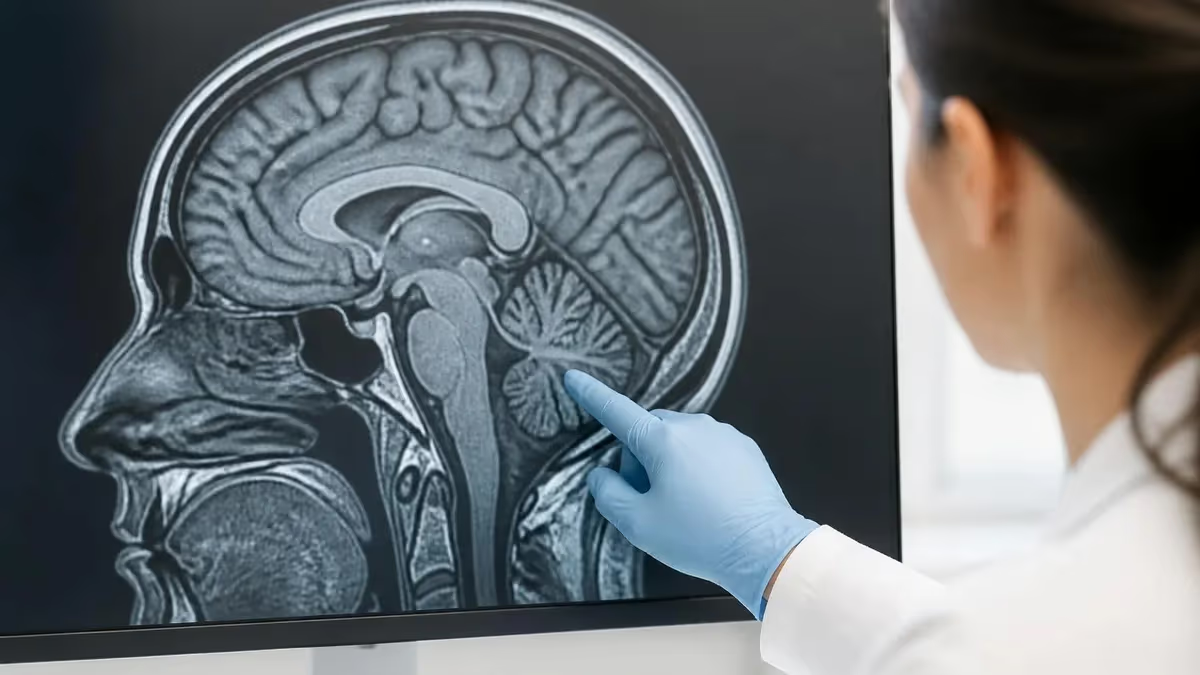
Searching for mri facilities near me usually starts after a doctor hands you a referral and says "get this scanned soon." What most patients don't realize is that the imaging center you choose can change the price by thousands of dollars, the wait time by weeks, the image quality dramatically, and even the final diagnosis.
Two facilities sitting within a mile of each other can charge $400 and $3,200 for the exact same lumbar spine MRI — and the cheaper one might actually have the newer scanner. This guide walks you through how to find and evaluate every option in your zip code.
The U.S. has roughly 12,000 MRI scanners spread across hospitals, hospital-affiliated outpatient centers, freestanding imaging chains like RadNet and SimonMed, mobile MRI trucks, and specialty orthopedic or neurology practices. Each of these settings has different pricing structures, scheduling windows, scanner strengths (typically 1.5T or 3T, with a growing number of 7T research magnets), and radiologist subspecialties. Knowing the difference between a hospital-based scan and a freestanding outpatient scan is the single biggest factor in what you'll pay out of pocket.
Insurance plays a huge role too. A high-deductible plan with $5,000 left to meet means the hospital's $3,000 facility fee comes straight out of your pocket, while the same scan at an in-network freestanding center might be $450 total. Patients with Medicare typically pay 20% coinsurance after the Part B deductible, which is roughly the same dollar amount everywhere — but the underlying allowed charge still differs. Self-pay and cash-pay rates are often dramatically lower than billed insurance rates, especially at independent centers that advertise transparent pricing.
Quality matters as much as price. The American College of Radiology (ACR) accreditation is the gold standard, and you can verify it for free on the ACR website. Accredited facilities meet strict requirements for equipment, technologist credentials, radiologist qualifications, image quality, safety protocols, and quality control. A facility without ACR accreditation isn't automatically bad, but it's a yellow flag worth investigating — especially for complex studies like cardiac MRI, MR enterography, or breast MRI where subspecialty reading matters enormously.
Beyond price and accreditation, you'll want to consider scanner type. A 3 Tesla magnet produces higher resolution images and is generally preferred for brain, pituitary, prostate, and musculoskeletal imaging. A 1.5T magnet is the workhorse for most studies and is actually preferred for patients with certain implants, claustrophobia issues that benefit from wider bores, or larger body habitus where a wide-bore 1.5T may be more comfortable. Open MRI units, typically 0.3T to 1.2T, sacrifice image quality for patient comfort and are appropriate only for limited indications.
Scheduling and turnaround also vary widely. Hospital outpatient departments often book three to six weeks out for non-urgent scans, while independent centers frequently offer same-week or even same-day appointments. Some facilities offer 24/7 scheduling, evening and weekend slots, and Spanish-language scheduling. Report turnaround can range from two hours at high-volume outpatient centers to four or five business days at smaller practices — a meaningful difference when you're waiting on a cancer staging study or a post-surgical follow-up.
This guide will help you build a short list of three to five candidate facilities, compare them objectively on the metrics that actually matter, ask the right questions when you call, and avoid the common traps that lead patients to overpay or get a substandard study. By the end you'll know exactly what to look for, what to ask, and how to confirm you're getting a high-quality scan at a fair price within driving distance of your home.
MRI Facilities by the Numbers
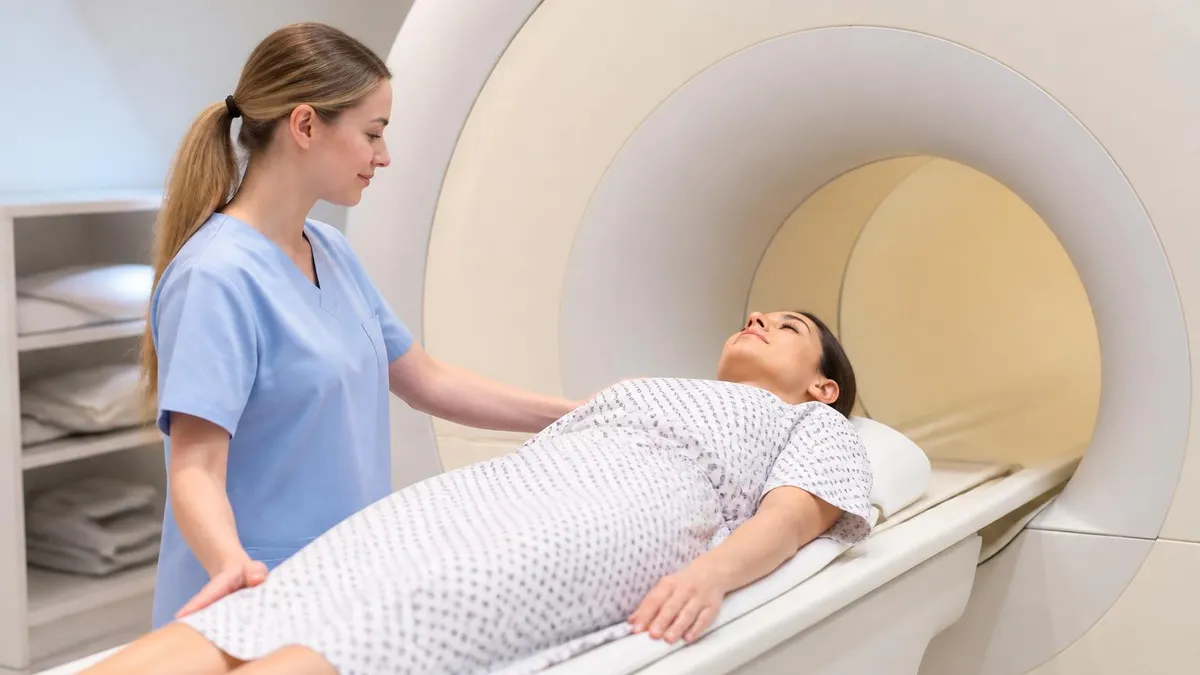
Types of MRI Facilities You'll Find Near You
Located inside or attached to a hospital. Highest cost because of facility fees. Best for complex cases, contrast allergies, sedation needs, and inpatients. Subspecialty radiologists are usually on site.
Independent or chain-owned imaging centers like RadNet, SimonMed, Akumin, and local operators. Typically 40–70% cheaper than hospitals. Often faster scheduling, evening hours, and transparent cash pricing.
In-house MRI inside an orthopedic group, spine center, or neurology clinic. Radiologists are subspecialty trained in that body system. Convenient for follow-up imaging with the treating physician.
Trailer-mounted scanners that visit small hospitals, rural clinics, and nursing homes on a weekly schedule. Image quality is comparable to fixed units. Useful in underserved areas and for inpatient overflow.
University-affiliated hospitals with research-grade 3T and even 7T scanners. Best choice for rare diseases, advanced sequences like MR spectroscopy, fetal MRI, and second-opinion reads on complex pathology.
Understanding how MRI pricing actually works is the most valuable thing you can do before booking. The sticker price you see — sometimes called the chargemaster rate — is rarely what anyone actually pays. Insurance companies negotiate contracted rates that are typically 30 to 70 percent lower. Self-pay patients negotiate cash rates that are sometimes even lower than insurance contracted rates. And Medicare pays a fixed national fee schedule rate that has nothing to do with the sticker price. Three different patients on the same scanner in the same hour can pay three wildly different amounts.
The single biggest pricing variable is whether the facility bills as a hospital outpatient department (HOPD) or as a freestanding office. Hospitals add a facility fee on top of the technical fee, which can double or triple the total cost. A brain MRI without contrast might run $450 at a freestanding center and $2,800 at the hospital across the street — using identical equipment, identical software, and a radiologist from the same physician group. This is one of the most important things to verify before scheduling.
Contrast adds cost. Gadolinium-based contrast typically adds $150 to $400 to the bill. Your doctor's order will specify whether contrast is required, and you shouldn't change that on your own — but it's reasonable to ask the ordering physician whether a non-contrast study would answer the clinical question. For some indications (most musculoskeletal injuries, routine brain screening, lumbar spine pain) contrast is genuinely unnecessary and skipping it saves money without sacrificing diagnostic value.
Multi-part studies multiply quickly. A "complete spine MRI" is actually three separate exams: cervical, thoracic, and lumbar. Each is billed individually. If your symptoms localize to one region, ask your physician whether scanning all three levels is medically necessary. Similarly, MRI of "both knees" is two studies, not one. Reading the CPT codes on your order before you call to schedule prevents nasty billing surprises later. Common codes include 70551–70553 for brain, 72141–72158 for spine, and 73721–73723 for joints.
The No Surprises Act, in effect since January 2022, gives self-pay and uninsured patients the right to a Good Faith Estimate before any non-emergency service. The estimate must be provided in writing within one to three business days of scheduling, and if the final bill exceeds the estimate by more than $400, you can dispute it through the federal Patient-Provider Dispute Resolution process. Always request the Good Faith Estimate in writing. Reputable facilities provide it automatically; the ones that resist are exactly the ones you should avoid.
If you have insurance, call your plan's member services line before scheduling and ask three specific questions: Is this facility in-network for my plan? Is prior authorization required for this specific CPT code? And what is my remaining deductible and coinsurance for outpatient diagnostic imaging? Document the rep's name, the date and time, and the reference number for the call. This protects you if the claim is later denied or processed at out-of-network rates due to an error on the insurer's side.
Finally, ask the facility directly whether they offer a prompt-pay or cash discount. Many freestanding centers will offer 20 to 40 percent off the contracted insurance rate if you pay in full at the time of service and skip the insurance claim entirely. For patients with high deductibles, this is frequently cheaper than running it through insurance. Compare both options before you decide which way to pay — the math sometimes surprises people, especially in January when deductibles reset.
MRI Practice Test Questions
Prepare for the MRI - Magnetic Resonance Imaging exam with our free practice test modules. Each quiz covers key topics to help you pass on your first try.
MRI Knowledge
MRI Exam Questions covering Knowledge. Master MRI Test concepts for certification prep.
MRI Physics
Free MRI Practice Test featuring Physics. Improve your MRI Exam score with mock test prep.
MRI Anatomy and Pathology
MRI Test Prep for MRI Anatomy and Pathology. Practice MRI Quiz questions and boost your score.
MRI Anatomy and Positioning
MRI Questions and Answers on MRI Anatomy and Positioning. Free MRI practice for exam readiness.
MRI Contrast Agents
Free MRI Quiz on MRI Contrast Agents. MRI Exam prep questions with detailed explanations.
MRI Patient Care and Positioning
MRI Practice Questions for MRI Patient Care and Positioning. Build confidence for your MRI certification exam.
Scanner Types Compared: What's Near You
The 1.5T magnet is the most widely available scanner in the United States and the workhorse of clinical MRI. It produces excellent diagnostic-quality images for the vast majority of routine studies — brain, spine, abdomen, pelvis, and most musculoskeletal indications. Scan times tend to be a few minutes longer than 3T but image artifacts from metal implants, motion, and patient breathing are generally less severe. Most accredited freestanding centers have at least one 1.5T scanner available.
Wide-bore 1.5T units (70 cm bore vs. the older 60 cm) are particularly important for larger patients, claustrophobic patients, and shoulder imaging where positioning matters. If you have any history of claustrophobia or you're above average size, specifically ask the scheduler whether the scanner is a wide-bore 1.5T. The difference in comfort is significant and the difference in image quality compared to a true open MRI is night and day in favor of the wide-bore.
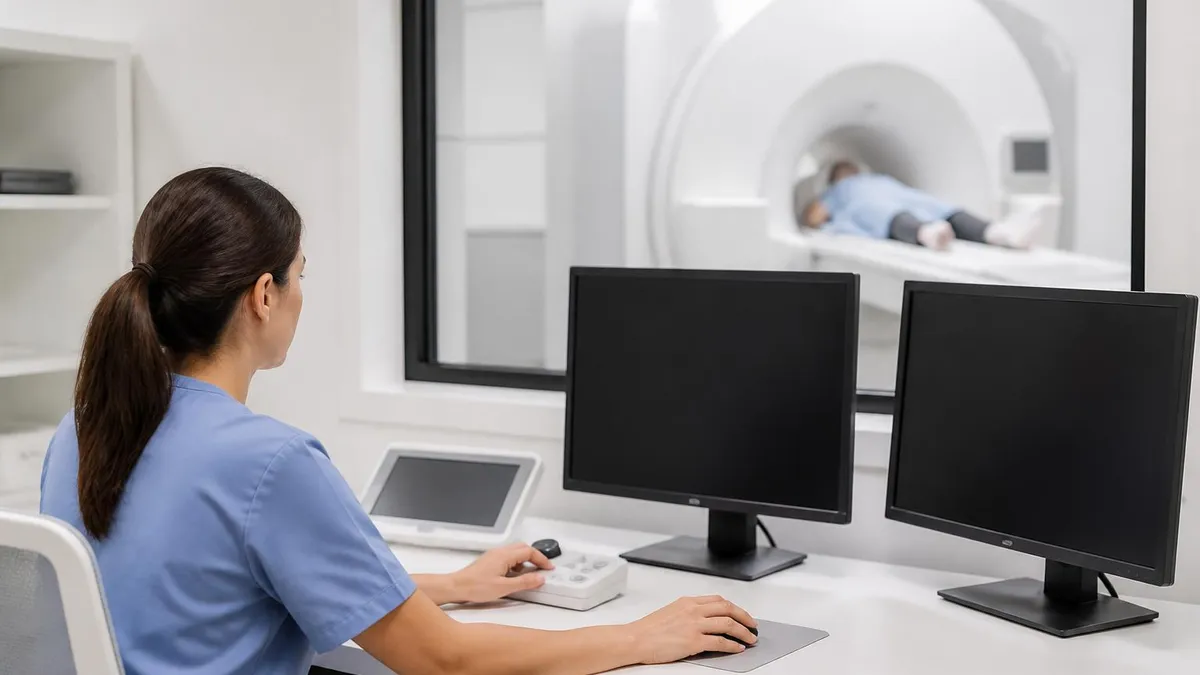
Freestanding Imaging Center vs Hospital MRI: Which Is Right for You?
- +Freestanding centers cost 40–70% less for the same scan
- +Same-week or same-day scheduling is common
- +Evening and Saturday appointment availability
- +Transparent cash-pay pricing displayed online
- +Shorter check-in, less paperwork, faster turnaround
- +Free parking and easier physical access
- +Cash discounts of 20–40% commonly available
- −No on-site emergency staff if a contrast reaction occurs
- −Limited sedation options for anxious patients
- −May not handle complex cases or unusual implants
- −Some independent centers lack subspecialty radiologists
- −Fewer scanner options if a particular sequence is needed
- −Inpatient overflow and stat reads not always available
- −Older equipment at some lower-cost facilities — verify model year
Pros and Cons at a Glance
| Pros | Cons |
|---|---|
| Same-week or same-day scheduling is common | No on-site emergency staff if a contrast reaction occurs |
| Evening and Saturday appointment availability | Limited sedation options for anxious patients |
| Transparent cash-pay pricing displayed online | May not handle complex cases or unusual implants |
| Shorter check-in, less paperwork, faster turnaround | Some independent centers lack subspecialty radiologists |
| Free parking and easier physical access | Fewer scanner options if a particular sequence is needed |
Pre-Visit Checklist Before You Book an MRI Facility
- ✓Confirm the facility is in-network with your specific insurance plan, not just the parent company
- ✓Verify prior authorization is approved by your insurer before the appointment date
- ✓Request a written Good Faith Estimate if you're paying cash or self-pay
- ✓Ask whether the bill will be hospital outpatient or freestanding — this changes price dramatically
- ✓Check ACR accreditation status on the American College of Radiology website
- ✓Confirm the scanner field strength (1.5T or 3T) matches what your ordering physician wants
- ✓Ask whether a subspecialty radiologist will read your study, especially for cardiac or breast MRI
- ✓Disclose every implant, surgical clip, tattoo, and metal exposure during the safety screening call
- ✓Arrange transportation home if you'll be sedated, and bring a current medication list
- ✓Request your images and report on a CD or via patient portal within 48 hours of the scan
Always ask: Is this billed as hospital outpatient or freestanding office?
The same MRI on the same scanner can cost $450 or $2,800 depending purely on how it's billed. Hospital outpatient departments add a separate facility fee that doesn't exist at freestanding centers. Ask this question before you schedule, get the answer in writing on your Good Faith Estimate, and you'll avoid the single biggest billing trap in outpatient imaging.
Quality and accreditation should be non-negotiable when you choose an MRI facility. The American College of Radiology (ACR) accreditation is the most rigorous and most widely recognized program in the United States. To earn ACR accreditation, a facility must submit clinical images for peer review, demonstrate technologist and radiologist credentials, document quality control procedures, pass a phantom test for image quality, and renew every three years. You can search the ACR's free online database by facility name or zip code in about thirty seconds.
The Intersocietal Accreditation Commission (IAC) offers a comparable program that's also recognized by Medicare and most private insurers for reimbursement purposes. The Joint Commission accredits hospital-based imaging departments as part of their broader hospital accreditation. Any of these three is acceptable — what you don't want is a facility with no accreditation at all, because that means no independent body has verified their image quality, safety protocols, or staff qualifications. Medicare actually requires accreditation for advanced imaging reimbursement under the MIPPA law.
Beyond accreditation, look at who reads your study. A general radiologist can read most routine MRI competently, but subspecialty reads matter enormously for certain studies. Cardiac MRI should be read by a fellowship-trained cardiac imager. Breast MRI requires a radiologist who reads a high volume — ideally one who also reads mammography for the same patient population. Pediatric MRI should go to a pediatric radiologist. Musculoskeletal MRI of an athlete's shoulder benefits from an MSK fellowship-trained reader. Ask the scheduler who reads which studies.
Technologist credentials are equally important. The American Registry of Radiologic Technologists (ARRT) offers an advanced certification specifically in MRI. Technologists with the (MR) credential have passed a rigorous exam covering MRI physics, safety, anatomy, and pathology. Some facilities also employ technologists certified through the American Registry of Magnetic Resonance Imaging Technologists (ARMRIT). Either credential indicates a technologist who understands MRI safety screening, sequence optimization, and how to recognize and prevent the common pitfalls that produce non-diagnostic studies.
Safety culture is a quiet but critical factor. The MRI environment is unique because the magnetic field is always on, even when the scanner isn't actively imaging. Projectile accidents involving oxygen tanks, IV poles, scissors, and even floor buffers have killed and injured patients in facilities with poor safety culture. Ask whether the facility follows the ACR Manual on MR Safety, has zone-based access control, screens every person entering Zone IV with a metal detector or ferromagnetic detector, and has a designated MR Medical Director and MR Safety Officer on staff.
Patient reviews can supplement but never replace objective quality measures. Google, Yelp, and Healthgrades reviews mostly reflect waiting room experience, parking, and front-desk friendliness — all real concerns, but unrelated to image quality. Look for review patterns that mention scan accuracy, radiologist communication, willingness to compare prior studies, and how the facility handles incidental findings. A facility with five stars on parking but multiple complaints about "they missed something my second opinion found" is not the place to go for a complex study.
Finally, consider continuity of care. If you're being followed for a known condition — multiple sclerosis, a brain tumor, a torn rotator cuff, a Crohn's flare — getting follow-up MRIs at the same facility means the radiologist can directly compare with your prior studies on the same scanner with the same protocol. Subtle changes are far easier to detect on comparison than on a standalone read. The convenience of a closer facility usually loses to the diagnostic value of true side-by-side comparison.
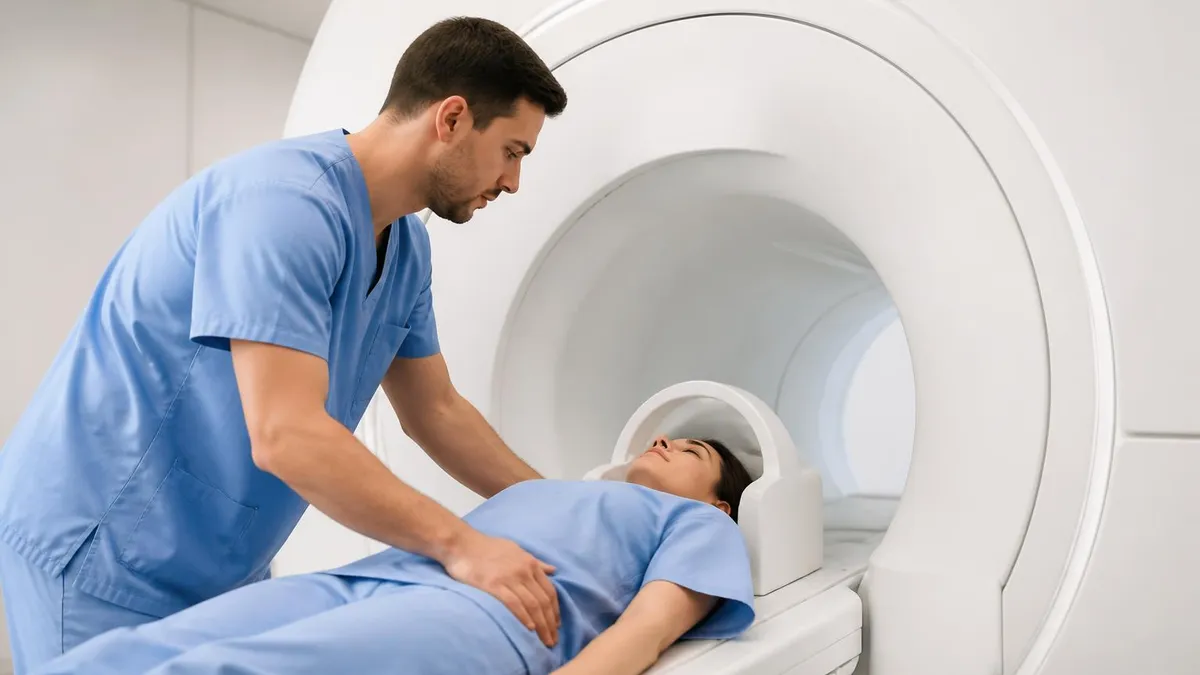
Every honest answer on the safety screening form matters. Aneurysm clips, pacemakers, cochlear implants, neurostimulators, certain stents, retained shrapnel, and even some tattoos require special handling or may contraindicate MRI entirely. A facility that doesn't do thorough screening is a facility you should leave. If you have any implant, bring the manufacturer's MRI conditional labeling card. When in doubt, the technologist will hold the scan and verify — that's exactly what should happen.
Finding MRI facilities near you starts with a structured search, not just a Google query. Begin with your insurance company's provider finder tool — every major insurer offers one on their member portal. Filter by "outpatient diagnostic imaging" or "MRI" and your zip code. This gives you the universe of in-network options, which is the only universe that matters financially unless you have an exceptionally rich plan or you're paying cash. Sort the list by distance and you'll typically see 10 to 30 facilities within 20 miles in most metro areas.
Next, cross-reference that list with the ACR accreditation database at acraccreditation.org. Eliminate any facility without current accreditation in MRI specifically (some facilities are accredited only for CT or mammography). For each remaining candidate, search the facility name plus "price transparency" or "cash pay" to find their published self-pay rates. Many freestanding chains now publish standardized pricing online. Hospitals are also required to publish chargemaster data, though the files are often nearly unreadable spreadsheets.
Tools like FAIR Health Consumer (fairhealthconsumer.org), Healthcare Bluebook, and Turquoise Health let you look up the typical price for a specific CPT code in your zip code. These give you a reference point so you know whether the quotes you're getting are reasonable. A bilateral knee MRI without contrast (CPT 73721) running $2,400 at one facility and $475 at another isn't a fluke — it's the hospital-versus-freestanding pricing differential you need to navigate around. Knowing the regional median lets you negotiate or walk away with confidence.
If you're rural or in a smaller market, your options narrow but the principles stay the same. Mobile MRI units that visit a regional hospital weekly often offer the same image quality as urban centers, sometimes at lower cost. Critical Access Hospitals frequently partner with academic medical centers for radiologist reads, so a small-town scanner may still get a subspecialty interpretation.
Don't dismiss a mobile or rural unit just because the building is modest — ask about scanner model, accreditation, and who reads the study. If you need a baseline understanding of what radiologists look at, our guide to what a normal MRI looks like walks through the appearance of cpt codes for mri and knee studies on common sequences.
For specialized studies, geography matters less than expertise. Cardiac MRI, prostate MRI with PI-RADS scoring, MR enterography for Crohn's disease, breast MRI for high-risk screening, fetal MRI, and MR spectroscopy for brain tumors all benefit from going to a center with high volume in that specific exam. It's worth driving an hour or two to an academic medical center for one of these studies, even if a closer facility technically offers it. Ask the ordering physician where they would send a family member for the same study.
Telehealth has changed second opinions. Many academic radiology departments now offer formal second-opinion reads — you mail in your CD, an academic subspecialty radiologist re-interprets the study, and you get a written report within a week. Cost is typically $200 to $500, and many insurance plans cover it for complex cases. This is a powerful option when a local read is ambiguous, when surgery hinges on the interpretation, or when an incidental finding needs an expert eye.
Once you've narrowed to three candidate facilities, make three phone calls. Ask each: total out-of-pocket cost with your insurance plan, total cash-pay cost as an alternative, next available appointment, scanner make and field strength, who reads your study, and how you'll receive your report and images. Within twenty minutes you'll have everything needed to make an informed choice. Document the answers in a simple comparison sheet so you can decide based on facts rather than which website's stock photography you liked most.
On the day of your scan, arrive 30 minutes early. Most facilities ask you to complete safety screening forms in person even if you filled them out online, and they will not start the scan until screening is verified. Bring a photo ID, your insurance card, the physician's order, a list of all medications and supplements, any prior imaging on CD or USB if you have it, and the manufacturer card for any implant. If you've had surgery in the last six weeks, bring the operative report or be ready to describe what hardware was placed.
Wear comfortable clothing with no metal — no zippers, no underwire bras, no metallic threads in athletic wear, no hair pins, no jewelry. Many facilities provide gowns and lockers, which is the safest option. Leave watches, fitness trackers, hearing aids, and removable dentures with the technologist or in a locker outside Zone IV. Modern color cosmetics and some permanent makeup contain iron oxide pigments that can heat up in the magnet — discuss with the technologist if this applies to you.
If you struggle with claustrophobia, plan for it openly. Ask your ordering physician for a low-dose anxiolytic like alprazolam or lorazepam to take 30 to 45 minutes before the scan. Arrange a driver because you cannot drive afterward. Many facilities offer headphones with your choice of music, prism glasses that let you see outside the bore, blankets and warming, and a squeeze ball for emergency communication. A practice run — lying in the scanner for two minutes before the actual study begins — helps many patients tolerate the full exam.
During the scan, the most important thing you can do is stay perfectly still. MRI is exquisitely sensitive to motion, and a study ruined by motion usually has to be repeated, which costs you another appointment and sometimes another out-of-pocket charge. Breathe normally unless the technologist asks for breath holds. The clicking, banging, and humming noises are loud but completely normal — they're the gradient coils switching, which is how the scanner localizes signal in space. Earplugs and headphones reduce noise to safe levels.
After the scan, hydrate well, especially if you received gadolinium contrast. Contrast clears through the kidneys and adequate hydration accelerates elimination. There are no activity restrictions afterward — you can return to work, exercise, or drive (unless you took anxiolytics). Watch for delayed reactions to contrast, which are rare but possible: hives, swelling, shortness of breath, or unusual fatigue should be reported to your physician. For more on what radiologists actually look for during interpretation, our overview of common MRI findings across brain, spine and joints explains the typical pathology patterns.
Reports usually reach your ordering physician within 24 to 72 hours, sometimes faster for stat reads or slower for complex studies requiring comparison with priors. You're entitled to your own copy under HIPAA — most facilities now release reports and images directly to patients through a portal as soon as they're finalized. Request both the written report and the actual image files (DICOM format on a CD or downloadable). The images matter because if you get a second opinion or change facilities, the new radiologist needs the source files, not just the report.
If your results are abnormal or unexpected, don't panic and don't Google your way to a self-diagnosis. Schedule a follow-up with the ordering physician promptly. Radiology reports use specific technical language that can sound alarming out of context — words like "lesion," "mass," or "signal abnormality" cover a huge range from completely benign to serious. Your physician will integrate the imaging with your symptoms, exam, labs, and history. That clinical correlation is what turns a report into a diagnosis and a plan.
Sample MRI - Magnetic Resonance Imaging Practice Questions
Try these questions from our free MRI - Magnetic Resonance Imaging practice tests. The correct answer and an explanation follow each question.
A 'DC offset' or 'center dot' artifact seen as a bright spot in the center of the image is related to:
- A. Patient positioning off-isocenter
- B. A small DC current offset in the receiver causing a spike in the center of k-space
- C. Excessive TR causing saturation effects
- D. B1 field inhomogeneity
Answer: B. A small DC current offset in the receiver causing a spike in the center of k-space
A DC offset artifact occurs when a constant voltage offset in the MR receiver chain introduces a spike at the origin of k-space (DC component), appearing as a bright dot at image center.
What does a high b-value in diffusion-weighted imaging (DWI) indicate?
- A. Shorter echo time and less diffusion weighting
- B. Stronger diffusion-sensitizing gradients and greater sensitivity to restricted diffusion
- C. Lower magnetic field strength required
- D. Faster acquisition with less motion sensitivity
Answer: B. Stronger diffusion-sensitizing gradients and greater sensitivity to restricted diffusion
The b-value reflects the strength and duration of diffusion-sensitizing gradients; higher b-values increase diffusion contrast but also reduce SNR.
What term describes an object becoming a high-speed projectile when brought near a strong MRI magnetic field?
- A. Quenching effect
- B. Missile effect
- C. Gradient artifact
- D. Susceptibility effect
Answer: B. Missile effect
The missile effect (or projectile effect) occurs when ferromagnetic objects are rapidly accelerated toward the bore by the strong static magnetic field.
For MRI of the shoulder, the patient should be positioned with the arm in which orientation to best center the glenohumeral joint?
- A. Arm elevated above the head
- B. Arm at the side in neutral or slight external rotation, shoulder centered in the coil
- C. Arm crossed over the chest
- D. Arm in full internal rotation only
Answer: B. Arm at the side in neutral or slight external rotation, shoulder centered in the coil
Positioning the shoulder with the arm at the side in neutral or slight external rotation and centering the glenohumeral joint within the dedicated shoulder coil optimizes image quality.
Take the full MRI - Magnetic Resonance Imaging practice test
MRI Questions and Answers
About the Author

Medical Laboratory Scientist & Clinical Certification Expert
Johns Hopkins UniversityDr. Sandra Kim holds a PhD in Clinical Laboratory Science from Johns Hopkins University and is certified as a Medical Technologist (MT) and Medical Laboratory Scientist (MLS) through ASCP. With 16 years of clinical laboratory experience spanning hematology, microbiology, and molecular diagnostics, she prepares candidates for ASCP board exams, MLT, MLS, and specialist certification tests.
Join the Discussion
Connect with other students preparing for this exam. Share tips, ask questions, and get advice from people who have been there.
View discussion (8 replies)