
St. Louis MEPS: Location, Process & What to Expect 2026 September
Prepare for the St. Louis MEPS: Location, Process & certification. Practice questions with answer explanations covering all exam domains. 📗
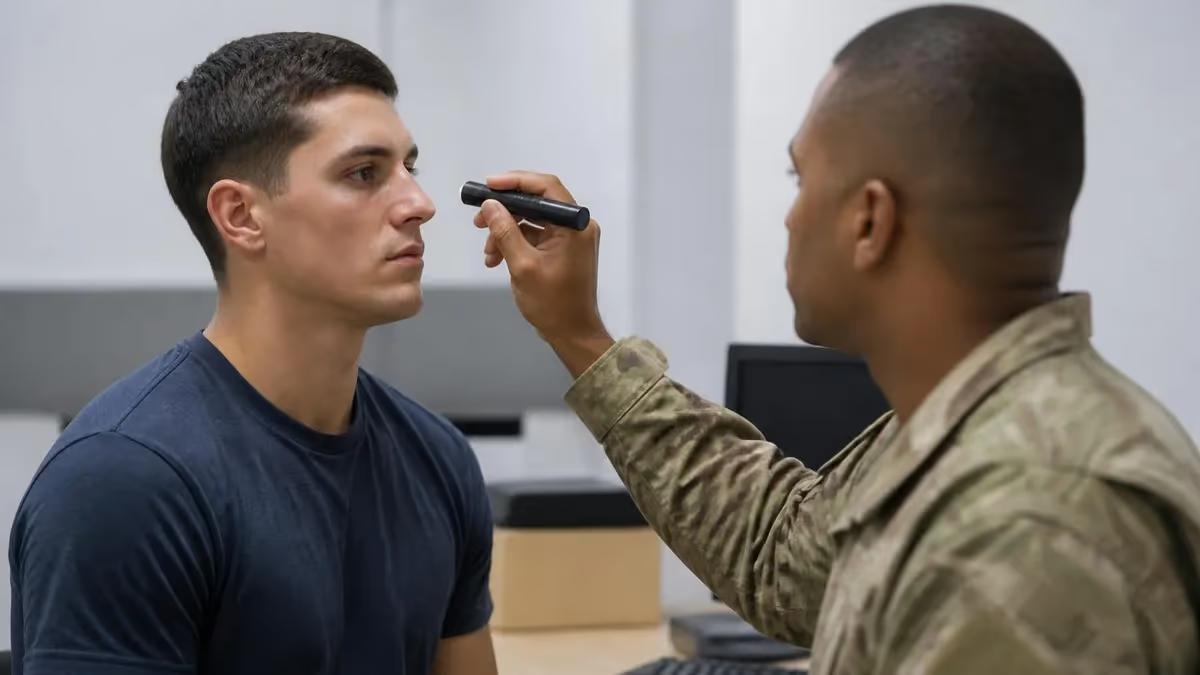
The St. Louis Military Entrance Processing Station is one of approximately 65 MEPS locations operating across the United States, and it serves as the gateway for military service for recruits throughout Missouri and the surrounding region. Every person who enlists in the Army, Navy, Marine Corps, Air Force, Space Force, or Coast Guard goes through a MEPS before they can ship to basic training. The physical, medical, and administrative processing that happens at MEPS is the formal transition point from civilian life to military service.
If you’ve already met with a recruiter and you’re getting ready for your MEPS appointment, you probably have a lot of questions about what actually happens there. The process can feel opaque from the outside. Understanding what is meps and what to expect at each stage reduces anxiety significantly and helps you arrive prepared. MEPS isn’t designed to be a gotcha—it’s a structured screening process that’s been standardized across all branches of the military.
The St. Louis MEPS serves applicants from Missouri, including those processed through the St. Louis recruiting district and surrounding areas. Your recruiter coordinates your MEPS appointment, arranges transportation to the station, and handles the hotel booking if you’re staying overnight. You don’t book or pay for any of this yourself—it’s all arranged through the recruiting office.
Your primary job before MEPS is to show up on time, rested, and with the required documents your recruiter gives you. Recruits from Kansas City and southern Illinois may also be routed through St. Louis MEPS depending on their branch and the district’s current routing assignments—your recruiter confirms the specific station for your appointment.
Processing at St. Louis MEPS runs on a set schedule. Applicants who are staying overnight typically arrive at the contracted hotel in the early evening, get a government-provided meal voucher for dinner, and go through a brief check-in process with the liaison from MEPS.
The actual processing day starts early—often 4:30 or 5:00 AM for the bus to MEPS—and runs through most of the day. Some applicants complete everything in one day; others have a second day for additional testing or documentation. By the time you leave, you’ve either been cleared for enlistment or given specific issues to resolve before you can proceed.
This guide covers everything you need to know about the St. Louis MEPS experience: what the meps meaning is in terms of the actual process, what the medical examination entails, how the ASVAB fits in, what documentation you need, what to pack, what happens at the end of processing, and how to handle potential disqualifications or deferrals.
One thing that trips up first-time MEPS visitors is not knowing what to expect emotionally as well as logistically. The day is long, the environment is unfamiliar, and there are medical and administrative decisions happening simultaneously. Recruits who come in knowing the process—even at a high level—move through MEPS with noticeably less anxiety than those encountering it cold.
Talking to your recruiter ahead of time, asking questions about anything unclear, and reading guides like this one are legitimate forms of preparation that pay off on processing day. MEPS staff see hundreds of recruits every week and are generally patient with questions—but the smoother you can move through each station, the better the day goes for everyone. Preparation isn’t cheating—it’s exactly what the military wants to see from candidates who are serious about service.
The St. Louis MEPS day follows a predictable structure, though exact timing varies by day and how many applicants are being processed simultaneously. Understanding the sequence of events helps you mentally prepare for a long day that starts earlier than most people expect.
The day typically begins before sunrise. A Department of Defense-contracted bus picks up applicants from the hotel and transports them to the MEPS facility. You’ll go through a security check at the entrance, hand over any prohibited items, and get assigned to a processing group. The facility is organized to move applicants through a series of stations—most of the morning is dedicated to medical processing, and administrative and occupational components happen in the afternoon.
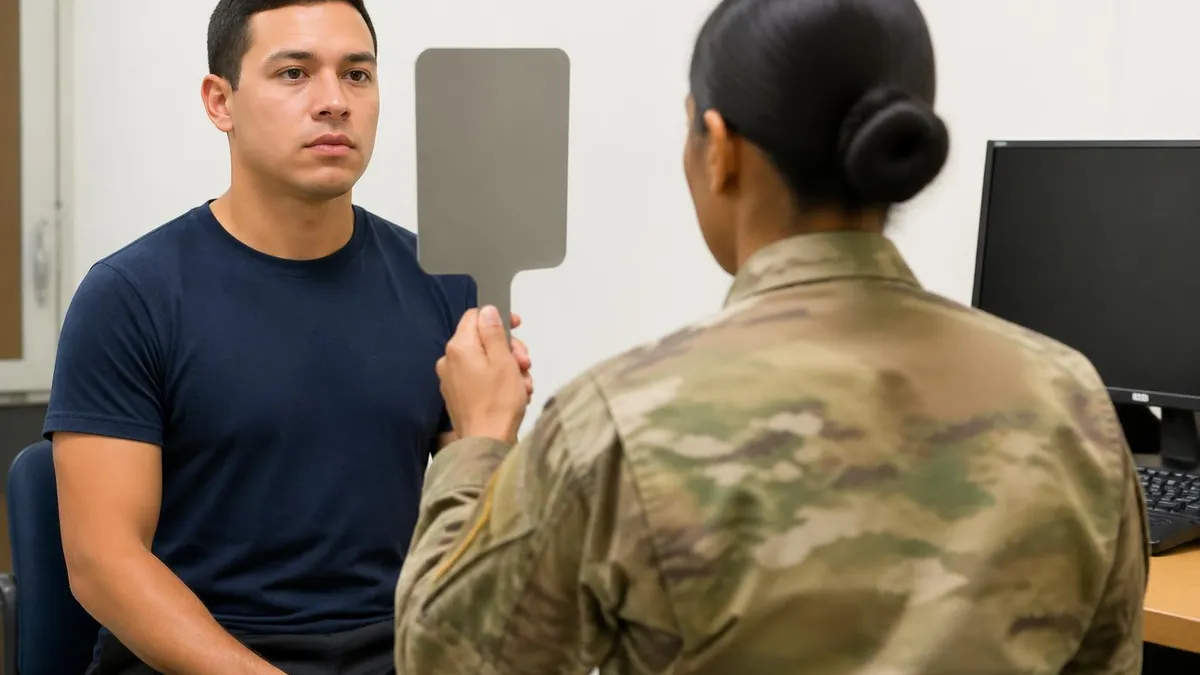
Medical processing is the most extensive part of MEPS. You’ll complete a medical history questionnaire (if you haven’t already done it digitally before your appointment), provide a urine specimen for drug screening, have your blood drawn for lab work, and go through a series of physical measurements and evaluations. Vision testing, hearing testing, blood pressure, and orthopedic screening are all part of the physical exam. At some point during the day, you’ll meet one-on-one with a MEPS physician for a review of your medical history and any conditions flagged during the physical.
The ASVAB is handled at MEPS only if you haven’t already taken it at a recruitment office. Many recruits take the ASVAB at their recruiter’s office before their MEPS appointment, in which case MEPS simply verifies those scores rather than re-administering the test. If you’re taking the ASVAB at MEPS, that happens in the morning as a dedicated testing block. ASVAB results determine which military occupational specialties (MOS for Army, rating for Navy, AFSC for Air Force) you’re eligible for, so these scores matter significantly for your job options.
Job counseling and contract signing happen after the medical and testing portions are complete. A career counselor from your branch meets with you to discuss available jobs based on your ASVAB scores, physical qualifications, security clearance eligibility, and service needs. This is where you formally select your MOS or rating and sign your enlistment contract. Many recruits find this part of MEPS more stressful than the medical exam—you’re making real decisions about your military career. Come prepared with a clear sense of what jobs interest you and ask questions if anything in the contract is unclear.
The oath of enlistment concludes the processing day for applicants who are shipping to basic training. For those who are enlisting in the Delayed Entry Program (DEP) and not shipping immediately, the oath may be taken on a separate date. After the oath, the meps military process is officially complete—you’re a member of the US armed forces.
One aspect of MEPS that surprises many recruits is the amount of waiting involved. Processing isn’t a fast-moving conveyor belt—groups of applicants cycle through stations at different speeds, and waiting for lab results, physician reviews, or career counselor availability creates periods where you’re simply sitting in a waiting area. This is completely normal.
The staff at MEPS are processing multiple applicants simultaneously across all branches, and the thoroughness of the screening takes time. Bring patience as deliberately as you bring your documents. First-time recruits who expect a two-hour process and get an eight-hour process feel more frustrated than those who arrive knowing the full day is spoken for.

St. Louis MEPS Processing: Day-by-Day Breakdown
| Section | Questions | Time |
|---|---|---|
| Evening Before (Hotel Check-In) | — | — |
| Processing Day Morning (Medical & ASVAB) | — | — |
| Processing Day Afternoon (Admin & Contract) | — | — |
| Day 2 (If Required) | — | — |
Key Components of MEPS Processing
The MEPS medical exam is the most consequential part of processing. It follows standards set by DoDI 6130.03 (Medical Standards for Military Service Appointment) and screens for conditions that would prevent you from safely performing military duties.
Common disqualifying conditions include certain vision problems (correctable by surgery or within correctable ranges), hearing loss beyond established thresholds, uncontrolled chronic conditions, current prescription medications that are disqualifying, recent surgeries with incomplete recovery, and significant mental health history. Many conditions that might seem disqualifying can receive a waiver depending on severity, branch requirements, and available MOS slots. Waivers are not guaranteed, but they’re more common than most recruits expect.
Bring all relevant medical documentation with you: glasses or contacts prescriptions, records of past surgeries, documentation of any diagnosed conditions, and a list of current medications. Medical reviewers rely on records you provide to make accurate determinations.
Arriving at St. Louis MEPS well-prepared makes a meaningful difference in how smoothly your processing day goes. The rules and requirements exist to protect the integrity of the screening process, and knowing them in advance prevents avoidable setbacks.
Document preparation is the most controllable variable. Your recruiter will give you a specific list of documents to bring, and you should follow it exactly. Universally required documents include your Social Security card or official document showing your SSN, your birth certificate (original or certified copy), a valid state-issued photo ID or passport, your selective service registration confirmation (for male applicants ages 18–25), and any medical records pertinent to your history. If you wear glasses or contact lenses, bring your most recent prescription. Recruits who forget required documents face delays or rescheduling.
Physical preparation in the days before MEPS matters more than most recruits realize. Stay well-hydrated, get a full night of sleep before your hotel arrival, and eat a normal meal the night before. Don’t exercise excessively in the 24 hours before MEPS—orthopedic screening and certain lab values can be affected by acute physical exertion. Avoid alcohol for at least 24 hours before MEPS. If you take prescription medication, take it as prescribed and bring documentation from your physician.
What you wear and what you pack for the processing day affects your efficiency. Wear comfortable, loose clothing—you’ll be changing into a medical gown multiple times during the physical exam, and form-fitting clothes make this awkward and slow. Avoid clothing with excessive logos, offensive graphics, or anything that might draw unnecessary attention. Bring a book or something quiet to occupy your time during waiting periods—MEPS involves significant waiting between processing stations.
Leave certain items at home or in the hotel room: cell phones may need to be left with the hotel or with MEPS security during processing (policies vary—check with your recruiter), excessive jewelry or accessories slow down the medical exam process, and food is generally provided at MEPS so you don’t need to pack meals. Don’t bring weapons, controlled substances, or anything that could trigger a security concern at the entrance check.
One important mindset note: be honest on every form and in every interview at MEPS. The medical history questionnaire asks about conditions, treatments, and history that you might be tempted to omit if you’re worried it’ll disqualify you. Don’t. MEPS reviewers have access to medical records in many cases, and concealment of a known disqualifying condition is grounds for separation from the military after enlistment. Conditions you disclose honestly may be waiverable; conditions you concealed and that are later discovered create far larger legal and career problems than the original medical issue would have.
If you have a specific medical condition you’re concerned about, talk to your recruiter before your MEPS appointment. Recruiters know which conditions commonly receive waivers, which are hard blocks, and how to gather the medical documentation that gives your waiver request the best chance. Going into MEPS without having had that conversation with your recruiter means entering a high-stakes day without information you could have had.

MEPS Study Tips
What's the best study strategy for MEPS?
Focus on weak areas first. Use practice tests to identify gaps, then study those topics intensively.
How far in advance should I start studying?
Most successful candidates begin 4-8 weeks before the exam. Create a structured study schedule.
Should I retake practice tests?
Yes! Take each practice test 2-3 times. Focus on understanding why answers are correct, not memorizing.
What should I do on exam day?
Arrive 30 min early, bring required ID, read questions carefully, flag difficult ones, and review before submitting.
St. Louis MEPS Preparation Checklist
- ✓Confirm your appointment date and hotel details with your recruiter
- ✓Gather required documents: SSN card, birth certificate, photo ID, selective service confirmation
- ✓Compile medical records for any surgeries, diagnosed conditions, or prescriptions
- ✓Bring current glasses or contacts prescription if applicable
- ✓Get a full night of sleep before the hotel arrival night
- ✓Avoid alcohol for at least 24 hours before your processing day
- ✓Pack a change of comfortable, loose-fitting clothes for the processing day
- ✓Bring documentation of any current prescription medications
- ✓Review 3–5 military job options you'd accept before job counseling
Completing MEPS doesn’t mean your military journey starts immediately. Most recruits who process at St. Louis MEPS leave that day either as active members of the Delayed Entry Program (DEP) or, if they’re direct shippers, heading to basic training within days or weeks. What happens next depends on your contract terms and your branch’s current training pipeline capacity.
The Delayed Entry Program is where most recruits spend the period between MEPS and shipping. DEP members are technically enlisted but haven’t started active duty. You remain in the civilian world, maintain contact with your recruiter, and may be expected to attend periodic DEP meetings or physical training sessions to stay prepared.
DEP periods typically run anywhere from a few weeks to about a year, depending on job availability and training school scheduling. Your ship date is the date you travel to the Military Entrance Processing Station one final time (or proceed directly to the training base, depending on branch) and begin active duty.
If MEPS produced a medical deferral or a condition requiring a waiver, the post-MEPS process involves working with your recruiter and the military’s medical waiver authorities. Waivers are submitted by your recruiter and processed through the branch’s medical review board. Depending on the condition, waiver approval can take weeks to months. Recruit into the DEP while the waiver is pending is common—your recruiter will guide you through the process specific to your branch and situation.
Some recruits don’t receive a final determination at MEPS on their processing day. If additional medical records are needed, if a specialist consultation is required, or if a borderline measurement needs a second physician review, you may be deferred to a second MEPS appointment. This isn’t a rejection—it’s additional due diligence. Work with your recruiter immediately after any deferral to understand what information or documentation will resolve the issue and schedule your follow-up appointment as quickly as possible.
After you ship to basic training, the experience you had at St. Louis MEPS effectively closes. Your military file follows you through training and assignment, and any medical conditions documented during MEPS processing will be part of your permanent military health record. The screening done at MEPS exists to ensure both that you can safely perform military duties and that the military has accurate baseline health information about you from the start of service.
Use the time between MEPS and your ship date productively. The DEP period isn’t a waiting room—it’s an opportunity to build the physical fitness, mental resilience, and practical knowledge that basic training will demand from day one. Recruits who arrive at basic training having studied military customs and courtesies, practiced physical fitness consistently, and maintained contact with their recruiter and fellow DEP members are better prepared than those who treat the gap as a break.
Your recruiter can provide resources, recommend reading, and connect you with local DEP groups or informal PT sessions. Basic training starts the clock on your military career—the work you do in the months before you ship determines how that clock starts.

MEPS Processing: What Works in Your Favor and What to Watch Out For
- +Entirely free to the applicant — hotel, meals, transport, and processing all covered by DoD
- +All branches processed at one location — one appointment covers Army, Navy, Marines, Air Force, and more
- +Pass/fail determination same day for most applicants — you leave knowing where you stand
- +Waivers available for many medical conditions — a first-pass deferral isn't necessarily a final rejection
- +Job counseling is included — you negotiate your contract with an official representative, not just a recruiter
- −Processing starts extremely early — 4:30–5:00 AM departures require arriving the night before
- −Long days with significant waiting between stations — patience is mandatory
- −Medical disqualifications can happen without warning — undisclosed conditions discovered at MEPS complicate enlistment
- −Job availability depends on military needs, not just your preferences — your ideal MOS may not be available
- −Waiver processing takes time — medical deferrals can delay enlistment by weeks or months



St. Louis MEPS Questions and Answers
About the Author
Retired Military Officer & Armed Forces Test Preparation Specialist
United States Army War CollegeColonel Steven Harris (Ret.) served 28 years in the US Army, earning a Master of Arts in Military Science from the Army War College and a Bachelor of Science in Criminal Justice. He has coached thousands of military enlistment and officer candidate program applicants through the ASVAB, AFQT, AFCT, OAR, and officer selection assessment processes across all military branches.
Join the Discussion
Connect with other students preparing for this exam. Share tips, ask questions, and get advice from people who have been there.
View discussion (8 replies)