
Lto Non Pro Exam Reviewer: What Is LTO and How to Pass the Written Test 2026
📝 The LTO non pro exam reviewer covers 40 questions; you need 30 correct to pass. See topics, format, study plan, free quizzes and what LTO means.

The LTO non pro exam reviewer is a study guide for the Land Transportation Office's written test for a non-professional driver's license in the Philippines. The exam has 40 questions, and you need at least 30 correct answers (75%) to pass. A good reviewer covers road signs, traffic rules, driver duties, penalties, and defensive driving.
Lto Non Pro Exam Reviewer: Key Facts (Updated October 2026)
| Fact | Details | Source |
|---|---|---|
| Administered by | Land Transportation Office (LTO), Philippines | Land Transportation Office |
| Non-professional written exam | 40 questions; at least 30 correct answers needed to pass | Philippine government publication (LTO Memorandum Circular AHS-2008-949) |
| Professional written exam | 60 questions; at least 45 correct answers needed to pass | Philippine government publication (LTO Memorandum Circular AHS-2008-949) |
| Practical driving exam | You start with 100 points, lose points for errors, and need at least 70 to pass | Land Transportation Office |
| CDE Online Validation Exam (renewal) | 25 questions; 80% (at least 20 correct) earns the certificate | LTO Online Portal |
| CDE exam delivery and time limit | Taken online by logging in to an LTMS account; no time limit | LTO Online Portal |
If you searched for a lto non pro exam reviewer, you probably want to know exactly what the test asks and how to prepare in a few days rather than a few months. This guide explains the format, the passing marks, the topics that appear most often, and a realistic study plan. It also clears up a confusing point: the acronym LTO means different things in different industries, so we define it first.
So, what is LTO? In this context, LTO stands for Land Transportation Office, the Philippine government agency under the Department of Transportation that registers motor vehicles and issues driver's licenses. People also ask what does LTO mean or what is an LTO because the same letters appear elsewhere. In restaurants, LTO means limited time offer. In other fields it can mean something else entirely. Here, we only cover the driving agency and its exams.
Food readers sometimes land here by mistake, so a quick note helps. What is LTO food? It is a menu item sold for a short window, such as a seasonal sandwich. What is LTO on a burger? It is a promotional burger that disappears after the campaign ends. What does LTO stand for in food? Limited time offer. None of that affects your license test, and the rest of this article focuses on driving.
Similarly, someone typing how to review NBME exams wants medical school study tips, which is a different world from driver testing. Still, the core habits transfer well. Spaced repetition, timed practice sets, and error logs work for any multiple-choice exam. The difference is scale: the LTO written test is short, tests rules you see on the road every day, and rewards memorizing specific numbers such as speed limits, distances, and fines.
The LTO exam is also not one single test. Applicants face a written exam, a practical driving test, and, for renewals, an online validation exam. A non-professional applicant takes the 40-question written test and then drives with an examiner. A professional applicant answers 60 questions instead. Understanding which version applies to you saves time, because a reviewer built for the wrong exam wastes study hours on questions you will never see.
For deeper reading on violations, pair this guide with our lto exam reviewer page on fines and penalties, which breaks down the amounts you may need to recall. Then use the free quizzes linked below to test yourself. Most learners improve fastest when they alternate reading with short quizzes, because retrieving an answer from memory strengthens it more than rereading the same page for the third or fourth time.
LTO Non Pro Exam by the Numbers
What Is the LTO Non Pro Exam Format?
| Section | Questions | Time | Weight | Notes |
|---|---|---|---|---|
| Non-professional written exam | 40 | Not specified | Pass: 30 correct (75%) | LTO Memorandum Circular AHS-2008-949 |
| Professional written exam | 60 | Not specified | Pass: 45 correct (75%) | For professional license applicants |
| CDE Online Validation Exam | 25 | No time limit | Pass: 20 correct (80%) | Taken online through an LTMS account |
| Total | 40 | No official time limit stated for the written exam | 100% |
What Topics Does an LTO Non Pro Exam Reviewer Cover?
A solid reviewer covers five areas: road signs and pavement markings, traffic rules and right of way, driver duties and responsibilities, violations and penalties, and road safety with defensive driving. Questions are multiple choice, and each has a single best answer. Because the test has only 40 items, every category matters. Skipping a topic like pavement markings can cost five or six points, which may be the gap between passing and retaking.
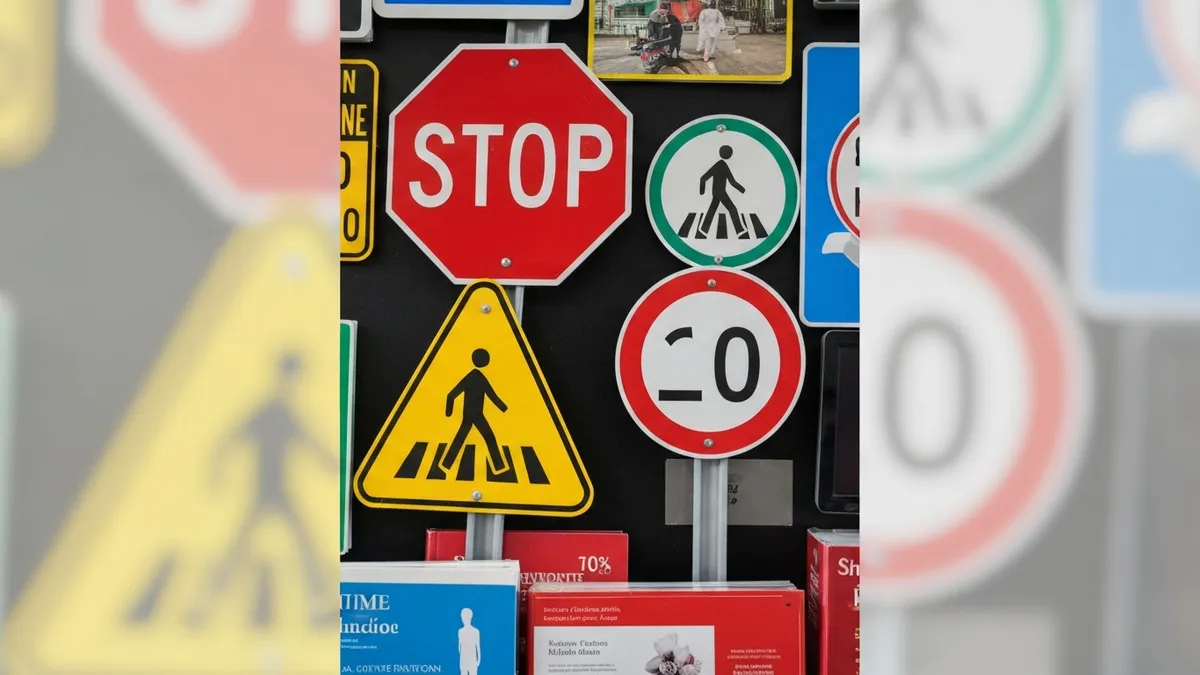
Road signs are the most visual section. Expect to identify regulatory signs such as stop, yield, and no entry, warning signs such as sharp curves and pedestrian crossings, and informational signs for directions and services. Pavement markings add another layer: a solid yellow center line prohibits passing, while a broken line allows it when safe. Draw each sign from memory after studying it, then compare against the official image to find the details you missed.
Traffic rules form the backbone of the written test. You should know who has right of way at intersections, how to handle a four-way stop, when to signal, and how far before a turn you must signal. Speed limits matter as well, and they differ by road type. Memorize the numbers exactly as published, because answer choices often differ by only ten kilometers per hour and the wrong option looks equally plausible.
Driver duties and responsibilities cover what a license holder must carry and do. Examples include carrying your license while driving, reporting accidents, keeping your vehicle roadworthy, and never driving under the influence of alcohol or drugs. Questions here often use short scenarios, such as what to do after a minor collision. Read the whole scenario before choosing, since one phrase like injured passenger can change the correct answer completely.
Violations and penalties are the section most people underestimate. You may be asked about the penalty for driving without a license, disregarding a traffic sign, or beating a red light. Fines change when agencies update their schedules, so check current figures against official LTO publications before your exam date. Treat any reviewer older than a couple of years with caution, since outdated amounts are the most common source of wrong answers.
Defensive driving and road safety questions reward common sense plus vocabulary. You should understand following distance, blind spots, driving in rain, night driving, and fatigue management. A typical question asks what to do when a vehicle behind you tailgates, and the safest answer is usually to keep your lane, hold a steady speed, and let it pass rather than brake abruptly.
Learn the reasoning behind each answer so you can handle rephrased versions on test day. For a broader view of the agency itself, read what is lto and how a pdf reviewer for civil service exam helps you pass the lto exam, which explains how PDF reviewers fit into a study routine.
Finally, understand how the questions are worded. LTO items tend to be direct, with little trick language, but they like absolute words such as always, never, and only. When a choice contains an absolute, check whether any exception exists in real driving. Eliminate two clearly wrong options first, then compare the remaining two against what you studied. This simple elimination routine raises accuracy even when you are unsure, and it keeps you calm under pressure.
What Does LTO Stand For and What Does LTO Mean?
LTO stands for Land Transportation Office. It is the Philippine agency responsible for registering vehicles, licensing drivers, and enforcing land transport laws, and it operates under the Department of Transportation. When people ask what is LTO or what is an LTO in a driving context, this is the answer. Its district and extension offices handle student permits, driver's licenses, renewals, and vehicle registration across the country.
Knowing the agency helps your studying because the exam draws directly from its rules and publications. When you ask what does LTO mean on a government form, it points to this office. Official announcements, memorandum circulars, and the online LTMS portal are the most reliable places to confirm current requirements. Anything a reviewer says about fees, schedules, or procedures should be checked against those official channels before you pay or book.
Is a PDF Reviewer Better Than Online Practice Quizzes?
- +A PDF reviewer works offline, so you can study on a bus or at a waiting area.
- +You can print it, highlight it, and write notes in the margins.
- +It gathers signs, rules, and penalties into one organized document.
- +It is easy to share with a friend who is studying for the same exam.
- +It gives a fixed, finite list, which makes progress easy to measure.
- +It works well for final review the night before the exam.
- −PDF files can contain outdated fines or rules that nobody has corrected.
- −It gives no instant feedback, so you may repeat the same mistake unnoticed.
- −Static questions encourage memorizing answers instead of understanding rules.
- −Image quality of road signs is often poor in scanned or copied files.
- −It cannot randomize question order, so you may memorize the sequence.
- −It does not track your scores or show which topics are your weakest.
How Do You Prepare With an LTO Exam Reviewer? A Checklist
- ✓Confirm whether you are taking the non-pro, professional, or renewal exam.
- ✓Take a 40-question baseline practice test with no notes.
- ✓Sort every missed question into signs, rules, duties, penalties, or safety.
- ✓Start an error log with the topic, the right answer, and why you missed it.
- ✓Make flashcards for speed limits, distances, and penalty amounts.
- ✓Review flashcards on day one, day three, and day seven.
- ✓Verify any fine or fee against an official LTO source.
- ✓Finish each week with a timed 40-question mock exam.
- ✓Aim for 34 or more correct so you have a margin above 30.
- ✓Prepare your documents and appointment details the night before.
30 correct answers out of 40
The non-professional written exam needs at least 30 correct answers out of 40 questions. Aim for 34 or higher in your practice sets so that a few careless mistakes on exam day will not cost you the pass.
How Do You Study With an LTO Non Pro Exam Reviewer With an Answer Key?
The best way to use an LTO non pro exam reviewer with an answer key is to treat the key as feedback, not as a shortcut. Read each question, commit to an answer in your head, and only then check the key. If you glance at the answer first, your brain records recognition rather than recall, and recognition fades quickly under test pressure. This small discipline makes the same hour of study noticeably more effective.
Start with a baseline. Take one full 40-question practice set cold, with no notes, and score it. Anything under 30 correct means you would not pass today, but that is useful information rather than a failure. Sort every missed question into a category: signs, rules, duties, penalties, or safety. Your weakest category should get the largest share of your next three study sessions, and your strongest should get only a quick review.
Keep an error log in a notebook or spreadsheet. For each wrong answer, write the question topic, the correct answer, and one sentence explaining why you missed it. Common reasons include misreading a number, confusing two similar signs, and ignoring a word like never. After a week, patterns emerge. If three of your errors involve distances, you know exactly what to drill. This log also becomes a compact final review sheet for the night before.
Use spaced repetition for facts that must be exact. Write speed limits, penalty amounts, and distance rules on flashcards, and review them on day one, day three, and day seven. Cards you get right move to a longer interval, while missed cards return the next day. Ten minutes of flashcards on a bus or during a lunch break beats a single two-hour cram session, because memory consolidates between sessions rather than during them.
If you want a second opinion on structure, the lto exam reviewer non pro guide lays out a complete outline of topics and common question styles. Compare it with the reviewer you already use. Where the two disagree on a number or rule, stop and verify with an official LTO source. Disagreements between reviewers are warning signs, and resolving them teaches you more than passively reading either document from start to finish.
Do not rely on one source of questions. Memorizing a single list of 40 or 100 questions lets you recognize those exact items but leaves you exposed when wording changes. Mix a PDF reviewer, free online quizzes, and the official LTO handbook. Exposure to many phrasings forces you to learn the underlying rule. When you can explain why three wrong options are wrong, you understand the topic well enough to handle any rewording on test day.
Finish each week with a timed mock exam. Set a timer for around thirty minutes, answer all 40 questions in one sitting, and aim for 34 or higher so you have a safety margin above the 30-point pass mark. Track your scores on a simple chart. A steady upward trend over two weeks is a better predictor of success than any single high score, and it keeps your motivation strong.
Fees, fines, and document requirements can change without much notice, and many reviewers circulate outdated numbers. Confirm every amount and requirement on the official LTO portal or at your district office before booking, paying, or answering practice questions from memory.
How Hard Is the LTO Non Pro Exam?
The LTO non pro exam is considered easy to moderate for people who prepare, because it asks 40 questions drawn from rules you can learn in a week. The pass mark is 30 correct answers, which is 75 percent. That is a real threshold, though, and applicants who skip studying often score in the high twenties. Most failures come from careless mistakes and outdated reviewers rather than from the difficulty of the concepts.
Official pass rates are not widely published, so be wary of any site claiming a precise number. What you can say is that preparation time matters. Learners who complete three or four full practice sets generally feel comfortable, while those who read a handbook once often report surprises on road signs and penalty questions. Treat the 75 percent requirement as a clear target and build your study plan backward from it.
The practical driving exam is a separate challenge. You start with 100 points, examiners deduct points for errors such as improper signaling or failing to check mirrors, and you need at least 70 to pass. Nervousness causes more lost points than lack of skill. Practice the maneuvers with a licensed instructor or experienced driver, and rehearse your mirror, signal, and shoulder-check routine until it becomes automatic and calm.
Professional applicants face a tougher written test. The professional exam has 60 questions, and you need 45 correct answers to pass, which is again 75 percent but over a larger set. More questions mean more topics, including duties tied to commercial driving. If you plan to move from a non-professional to a professional license later, begin with the non-pro material, then add the extra topics gradually rather than learning everything at once.
To understand how these exams fit together, read what is lto and what does pdc lto mean? complete guide to the lto exam and driver's license in the philippines. It explains what PDC means and how it connects to the exams described here. Knowing the sequence of steps prevents wasted trips to the office and surprises about prerequisites, which are among the most common frustrations applicants describe.
Edge cases deserve attention. If you fail the written exam, you generally must wait before retaking it, and rules on waiting periods and fees can change, so confirm with your district office. If you are renewing a valid license, the CDE online exam replaces the usual route, but only when you meet eligibility. Reading the official announcement for your exact situation takes five minutes and prevents costly mistakes.
Overall, think of difficulty as a function of effort. A learner who studies thirty minutes a day for ten days, takes four mock exams, and reviews an error log will probably clear the pass mark comfortably. A learner who studies only the night before may still pass but risks the stress and cost of a retake. The exam rewards steady, boring preparation more than cleverness, which is good news for almost everyone.
What Are the Best Tips for LTO Exam Day?
Exam day preparation starts the evening before. Gather your documents, confirm your appointment time and location, and review only your error log rather than learning new material. Cramming new facts the night before tends to push out what you already know. Eat a normal dinner, set two alarms, and plan to arrive early. Rushing into the testing room with a pounding heart costs you focus on the first several questions, which are worth just as much as the last.
Bring what the process requires, and verify the list on the official LTO or LTMS site, since requirements can change. Typical items include valid identification, application forms, a medical certificate, and proof of a completed driving course where applicable. Make photocopies and keep everything in one folder. Missing a single document can send you home and force you to rebook. A short checklist the night before takes five minutes and removes the most avoidable source of stress.
During the written test, read every question completely before looking at the choices. Mark the ones you are unsure about and move on rather than spending three minutes on one item. With 40 questions, you can afford to miss ten, so one stubborn question should never drain your time or composure. Return to marked items at the end with a fresh view, and trust your first instinct unless you spot a clear misreading.
Manage nerves with a simple breathing routine: inhale for four seconds, hold for four, exhale for four. Do it twice before you start and again if you feel your mind going blank. Anxiety narrows attention and makes familiar signs look unfamiliar. A calm applicant who studied for five days will often outperform an anxious one who studied for ten, so treat composure as a skill to practice, not a personality trait.
For the practical exam, treat the examiner as a passenger who needs to feel safe. Adjust your seat and mirrors before moving, fasten your seatbelt, signal early, and come to full stops where required. Drive smoothly rather than quickly. Remember that you begin with 100 points and need 70, so you have a cushion of 30 points, but several small errors add up. Consistent routine habits protect that cushion better than any single clever move.
If you do not pass, treat it as data. Ask which section felt weakest, review your error log, and book the next attempt only after you can score above the pass mark on three consecutive practice sets. Check the current waiting period and fees with your district office. Many applicants pass on the second attempt after focusing on a single weak category, such as penalties, so a setback is rarely a long-term obstacle.
Finally, keep learning after you pass. The exam tests minimum knowledge, but real driving demands judgment. Keep your reviewer notes, revisit defensive driving habits every few months, and stay current on rule changes through official announcements. When your license comes up for renewal, you may face the 25-question CDE online validation exam, and the same habits you built now, steady practice and an error log, will carry you through it with confidence.
LTO Questions and Answers

LTO Practice Test and Exam Guide

What Is LTO and How a PDF Reviewer for Civil Service Exam Helps You Pass the LTO Exam

LTO Exam Reviewer — Complete Guide 2026

What Is LTO and What Does PDC LTO Mean? Complete Guide to the LTO Exam and Driver's License in the Philippines
LTO Traffic Violations Philippines 2026 — Fines and Penalties Guide

Everything You Need to Know About the Land Transportation Office (LTO)

What Is LTO? Complete General Exam Review and PT Final Exam Reviews Guide for 2026

LTO Driver's License Renewal Guide Philippines 2026

LTO Driver's License Requirements: What Is LTO, What Does LTO Stand For, and How to Get Licensed in 2026
How this page was made: written with AI tools and published by Nathan Beja, founder of Practice Test Geeks, who is responsible for its content. Exam facts are checked against the official sources listed below. Not reviewed by a subject-matter expert. Editorial policy
Sources & references
Exam facts on this page (fees, format, dates, passing scores) are checked against these official sources; the date is our last check. Editorial policy
- elibrary.judiciary.gov.ph — Exam format, passing score · verified Oct 2026
- portal.lto.gov.ph — Test delivery, exam format, passing score, time limit · verified Oct 2026