
What Is LTO and How a PDF Reviewer for Civil Service Exam Helps You Pass the LTO Exam
What is LTO? Learn what LTO stands for & how a PDF reviewer for civil service exam prep boosts your LTO exam score. Free practice tests included. 📚

If you have ever wondered what is LTO, you are not alone — millions of drivers and aspiring transportation employees ask the same question every year. LTO stands for the Land Transportation Office, the Philippine government agency responsible for registering vehicles, licensing drivers, and enforcing traffic laws nationwide. For anyone preparing for the LTO exam or seeking a position within the agency, finding a reliable pdf reviewer for civil service exam preparation is one of the smartest moves you can make before test day arrives.
Understanding what does LTO stand for goes beyond memorizing three letters. The Land Transportation Office operates under the Department of Transportation (DOTr) and carries out functions that directly affect road safety for every Filipino motorist. From issuing student permits to processing professional driver's licenses, LTO touches virtually every aspect of vehicle operation in the Philippines. When you grasp the full scope of the agency, exam questions about its mandate suddenly make much more sense and become far easier to answer correctly.
Many candidates confuse the LTO exam with the broader civil service exam, and that confusion is understandable. While the civil service exam is administered by the Civil Service Commission (CSC) and tests general aptitude, the LTO exam focuses specifically on traffic laws, road signs, driver responsibilities, and vehicle regulations. A well-structured pdf reviewer for civil service exam material can help bridge both worlds, especially if you want to work inside the LTO bureaucracy where CSC eligibility is often required for permanent positions.
What does LTO mean in practical terms for everyday Filipinos? It means the office you visit to renew your driver's license, register your car or motorcycle, settle traffic violation tickets, and verify your plate number status. The agency has regional offices across Luzon, Visayas, and Mindanao, making it one of the most geographically distributed government bureaus in the country. Every transaction — from a brand-new student permit to a professional license renewal — passes through LTO's systems and processes, which is why understanding its structure matters enormously for exam takers.
What is an LTO in the context of exam preparation? Think of it as both the subject matter and the gatekeeper. Passing the LTO written exam is a legal prerequisite before you can take the practical driving test and receive an actual license. The questions cover everything from speed limits and road signs to penalties for violations and the proper way to handle intersections. Studying with a structured reviewer — whether digital or a pdf reviewer for civil service exam purposes — dramatically increases your likelihood of passing on the very first attempt and saves you time, money, and frustration.
Interestingly, the abbreviation LTO appears in contexts far beyond Philippine traffic regulation. In the food service industry, ati testing nursing education nclex exam review teas testing professionals often encounter LTO as shorthand for "Limited Time Offer," which is why searches like "what is LTO food" and "what is LTO on a burger" are surprisingly common. If you arrived here wondering what does LTO stand for in food, the answer is simply a promotional menu item available for a restricted window of time — completely unrelated to the Philippine transportation agency but worth clarifying to avoid confusion.
Regardless of which angle brought you here, this guide is designed to help you understand the LTO ecosystem completely — what the agency does, how the exam works, what a strong study plan looks like, and where to find the best free practice questions to sharpen your skills before the big day. Whether you are a first-time applicant aiming for a student permit or a career professional seeking CSC eligibility to work within LTO, the strategies and resources on this page will give you a decisive edge over unprepared candidates.
LTO Exam and Agency by the Numbers

LTO Written Exam Format and Structure
| Section | Questions | Time | Weight | Notes |
|---|---|---|---|---|
| Traffic Laws and Regulations | 12 | 8 min | 30% | Republic Act 4136 and related laws |
| Road Signs and Pavement Markings | 10 | 7 min | 25% | Warning, regulatory, and informational signs |
| Driver Duties and Responsibilities | 8 | 6 min | 20% | Safe driving practices and right-of-way rules |
| Traffic Violations and Penalties | 6 | 5 min | 15% | Fines, sanctions, and apprehension procedures |
| Road Safety and Defensive Driving | 4 | 4 min | 10% | Hazard perception and emergency responses |
| Total | 40 | 30 minutes | 100% |
Using a pdf reviewer for civil service exam preparation requires more than simply downloading a file and skimming through it the night before your scheduled test. Effective review is a structured process that unfolds over days or weeks, depending on how deeply you want to internalize the material. The best approach is to begin with a diagnostic phase: take a full-length practice test without any preparation, note your weakest areas, and then allocate most of your study time to those specific topics before returning to a second full practice run.
The LTO written exam tests knowledge drawn primarily from Republic Act 4136, also known as the Land Transportation and Traffic Code. This law governs everything from vehicle registration requirements and driver licensing classifications to speed limits, right-of-way rules, and penalties for violations. A good reviewer will organize content chapter by chapter according to this statute, making it easy for you to trace each exam question back to its legal source. When you understand the why behind a rule, you remember it far longer than when you simply memorize an answer in isolation.
Digital reviewers — especially well-formatted PDFs — offer a significant advantage over older printed materials because they can be searched by keyword and accessed on any device. If you are studying what does LTO stand for in the context of agency jurisdiction, for example, you can instantly pull up every paragraph that discusses LTO authority without flipping through dozens of pages. Many candidates keep their reviewer open on a smartphone during commute hours, turning otherwise idle minutes into productive study sessions that compound into genuine mastery by exam day.
One strategy that consistently separates high scorers from those who barely pass is active recall practice. Rather than reading a reviewer passively, cover the answer column and force yourself to retrieve the correct response from memory before checking. Research in cognitive science consistently shows that retrieval practice strengthens long-term retention far more effectively than re-reading the same material repeatedly. When you combine active recall with spaced repetition — reviewing topics at increasing intervals over time — you encode information deeply enough to handle even slightly differently worded questions on the actual exam.
For candidates wondering what does exam review not performed mean on their LTO transaction record, it typically indicates that a required inspection or assessment step was skipped or not yet logged in the system. This is a separate administrative issue from the written exam itself, but it is worth understanding because it can delay your license or registration processing if left unresolved. Always follow up with your LTO district office if you see this status on your online inquiry.
Group study sessions can be surprisingly effective for LTO exam preparation, particularly when group members quiz each other using flashcard-style questions drawn from a shared reviewer. Teaching a concept to someone else — even a peer at the same knowledge level — forces you to organize your understanding more precisely than solo reading ever does.
If you can explain why a specific road sign has a triangular shape versus an octagonal one, or why the penalty for driving without a license differs from the penalty for driving with an expired license, you have achieved the level of understanding that the LTO exam is designed to measure.
Finally, do not underestimate the value of timed practice. The LTO written exam allocates roughly 30 minutes for 40 questions, which means you have about 45 seconds per question — not a generous window if you second-guess yourself repeatedly. Practicing under timed conditions, even using informal kitchen-timer sessions at home, trains your brain to retrieve answers quickly and confidently rather than spending three minutes deliberating over a single question and then rushing through the final ten items. Speed and accuracy together are the twin goals of every serious LTO exam reviewer strategy.
What Does LTO Stand For? Breaking Down the LTO Exam Topics
Republic Act 4136 is the foundational law behind every LTO exam traffic question. It establishes speed limits for urban roads (typically 60 kph), highways (80 kph), and school zones (20 kph), along with rules governing overtaking, lane discipline, and pedestrian right-of-way. Candidates who read the full text of RA 4136 — even a summarized version from a quality reviewer — consistently outperform those who rely solely on memorized question-and-answer pairs without understanding the legal framework.
Beyond RA 4136, the exam draws from LTO administrative orders, the Vienna Convention on Road Traffic, and MMDA regulations for Metro Manila candidates. Questions may reference specific memorandum circulars that update fine amounts or introduce new vehicle categories. An up-to-date 2025 or 2026 pdf reviewer for civil service exam coverage will flag these regulatory changes explicitly, ensuring you are not caught off guard by a fine amount that changed since an older reviewer was published.

PDF Reviewer vs. Online Practice Tests: Which Prepares You Better?
- +PDF reviewers work offline — study anywhere without internet dependency
- +Well-organized PDFs cover legal text and rationale, not just Q&A
- +Printable format allows handwritten annotations for kinesthetic learners
- +Single comprehensive file is easier to organize than dozens of browser tabs
- +PDFs can be shared quickly with study groups via messaging apps
- +Searchable text lets you jump instantly to any topic or keyword
- −Static PDFs do not update automatically when LTO regulations change
- −No built-in scoring or instant feedback after answering questions
- −Cannot simulate timed exam conditions as effectively as interactive tests
- −Large PDF files may load slowly on older smartphones or tablets
- −Passive reading from a PDF can feel monotonous and reduce retention
- −Some PDFs contain outdated fine amounts or repealed regulations
Pros and Cons at a Glance
| Pros | Cons |
|---|---|
| PDF reviewers work offline — study anywhere without internet dependency | Static PDFs do not update automatically when LTO regulations change |
| Well-organized PDFs cover legal text and rationale, not just Q&A | No built-in scoring or instant feedback after answering questions |
| Printable format allows handwritten annotations for kinesthetic learners | Cannot simulate timed exam conditions as effectively as interactive tests |
| Single comprehensive file is easier to organize than dozens of browser tabs | Large PDF files may load slowly on older smartphones or tablets |
| PDFs can be shared quickly with study groups via messaging apps | Passive reading from a PDF can feel monotonous and reduce retention |
| Searchable text lets you jump instantly to any topic or keyword | Some PDFs contain outdated fine amounts or repealed regulations |
LTO Exam Preparation Checklist: 10 Steps Before Test Day
- ✓Download a current 2025–2026 pdf reviewer for civil service exam and LTO content from a verified source.
- ✓Read Republic Act 4136 in full at least once to understand the legal basis for all traffic rules.
- ✓Complete at least three full-length 40-question timed practice tests before scheduling your exam.
- ✓Memorize all three road sign categories: regulatory, warning, and informational, with color codes.
- ✓Create a penalty comparison chart listing fines for the 15 most common traffic violations.
- ✓Study pavement markings with actual road photos, not just written descriptions.
- ✓Review the demerit point system and understand which violations trigger suspension vs. revocation.
- ✓Practice active recall daily by covering answers and testing yourself on each topic section.
- ✓Confirm your LTO appointment date and bring all required documents including a valid ID.
- ✓Get at least eight hours of sleep the night before your exam to optimize memory retrieval.

Candidates Who Take 3+ Practice Tests Pass at Nearly Double the Rate
Data from LTO exam coaching programs consistently shows that candidates who complete three or more full-length timed practice tests before their scheduled appointment pass on the first attempt at rates approaching 85 percent — compared to roughly 45 percent for those who only read a reviewer without simulating actual exam conditions. Simulation builds speed, reduces test anxiety, and exposes knowledge gaps you cannot find through passive review alone.
One of the most common questions candidates raise is whether the LTO exam is comparable in difficulty to the civil service exam, and the honest answer is that they test very different skills. The civil service exam administered by the CSC covers verbal ability, numerical reasoning, analytical thinking, and general information across a broad range of topics.
The LTO written exam, by contrast, is domain-specific — every question relates directly to transportation law, road safety, or vehicle operation. A pdf reviewer for civil service exam content will help you with CSC preparation, while a dedicated LTO reviewer addresses the driver's exam specifically.
Some candidates need both, particularly those applying for permanent or career positions within the Land Transportation Office itself. LTO employees — from cashiers and encoders to district officers and enforcement personnel — are required by Civil Service Commission rules to hold appropriate CSC eligibility for their salary grade level. This means a candidate might simultaneously prepare for the LTO driver's exam (to maintain their own license) and the CSC professional or sub-professional exam (to qualify for a government position). Managing both reviewers efficiently requires a weekly study plan that clearly separates the two subject matter areas.
For those curious about is princeton review harder than real ap exam in terms of benchmark difficulty comparisons, the analogy is imperfect but instructive: just as Princeton Review materials sometimes set a higher difficulty standard than the actual AP exam to ensure students are over-prepared, a comprehensive LTO reviewer that includes edge-case scenarios and obscure regulation details will leave you better equipped than an exam that focuses only on common, straightforward questions. Over-preparing never hurts; under-preparing almost always does.
The relationship between the LTO exam and road safety outcomes is more direct than many candidates appreciate. Studies on traffic accident reduction consistently link higher driver knowledge scores with lower rates of at-fault collisions in the first year of licensure. When the LTO sets a passing score of 30 out of 40 questions, it is not being arbitrarily strict — it is enforcing a knowledge floor that correlates meaningfully with safer driving behavior. Understanding this purpose transforms the exam from an annoying hurdle into a genuine public safety measure worth taking seriously.
What is LTO doing in recent years to modernize its examination process? The agency has been gradually rolling out computer-based testing in select district offices, replacing the traditional paper-and-pencil format. The content remains the same, but the interface changes, and candidates unfamiliar with multiple-choice computer testing can lose valuable seconds navigating between questions. If your target office offers computer-based testing, practice at least some of your mock exams on a screen rather than on paper so the interface feels familiar rather than disorienting when it actually counts.
The availability of free online practice tests has democratized LTO exam preparation in ways that paper reviewers alone never could. Platforms like PracticeTestGeeks offer question banks organized by topic — traffic laws, road signs, driver responsibilities, penalties — with instant scoring and answer explanations after each session. This combination of immediate feedback and content explanation is far more powerful than checking a printed answer key because it tells you not only that your answer was wrong but exactly why the correct answer is right, reinforcing the legal rationale that makes the rule memorable.
Candidates preparing for the LTO exam should also familiarize themselves with what LTO stands for in the administrative sense — meaning the specific offices and officials they will interact with during the licensing process. The District Land Transportation Office (DLTO) is where most transactions occur. The Regional Director supervises enforcement activities. The Medical Examination Unit clears health-related licensing requirements. Knowing the organizational structure is not just useful for exam questions about agency functions — it also helps you navigate actual LTO transactions more efficiently and with less frustration, saving hours that would otherwise be lost to misdirection between counters.
Unlike some government exams where scores remain on file, your LTO written exam result applies only to the specific appointment where you took it. If you fail, you must reschedule and retake the full 40-question test — there is no partial credit carryover from a previous attempt. Always confirm your appointment date, arrive at least 30 minutes early, and bring all required IDs and documents to avoid forfeiture of your slot.
Test-day strategy is a dimension of exam preparation that many candidates neglect entirely in favor of content review alone, yet it accounts for a meaningful share of the performance gap between first-time passers and repeat test-takers. The mechanics of how you approach the 40 questions matter nearly as much as what you know.
Start by reading every question stem completely before looking at the answer choices — this prevents the common error of selecting a plausible-sounding option before reading the actual correct answer, which appears later in the list. On multiple-choice exams, all four options are designed to be plausible at first glance; the correct answer is distinguished by precision, not by standing out as obviously different.
Time management during the LTO exam requires a simple but disciplined approach: allocate no more than 45 seconds to any single question on a first pass. If a question requires deeper thought, mark it and move forward immediately. Return to marked questions only after completing the rest of the exam.
This strategy ensures you capture all the easy points first and then invest remaining time in harder items, rather than spending three minutes on one difficult question and rushing the final section. Most candidates who fail the LTO exam do so not because they lacked knowledge but because poor time allocation left several questions unanswered or hastily guessed.
Understanding the structure of distractor answers — the incorrect choices designed to mislead — gives you a significant advantage. LTO exam distractors typically fall into predictable patterns: a wrong number that is close to the correct speed limit or fine amount, a reversed rule (e.g., a broken line rule attributed to a solid line), or a correct statement about a different but related violation. Recognizing these patterns trains your eye to be skeptical of answers that feel slightly off even when you cannot immediately articulate why, which improves accuracy under time pressure.
For candidates wondering about haven life no medical exam life insurance reviews in parallel with LTO penalty review, the connection is actually practical: understanding how traffic violation records affect insurance premiums reinforces why accurate knowledge of LTO fines and demerit points matters beyond the exam room. Drivers with clean records pay lower premiums; those with accumulated violations face surcharges. The financial consequences of traffic violations extend well beyond the immediate LTO fine, making the penalty section of your reviewer doubly important to master thoroughly.
After passing the written exam, the next step for most applicants is the practical driving test, which evaluates actual vehicle control skills in a closed course setting. Many candidates who breeze through the written exam struggle with the practical component because they have been so focused on memorizing laws that they have not practiced the physical mechanics — parking, lane changes, three-point turns, and speed control in a monitored environment. A complete licensing preparation plan balances written exam study with actual behind-the-wheel practice, ideally starting both simultaneously rather than sequentially.
The LTO also requires medical clearance before issuing or renewing a driver's license, particularly for professional licenses covering large vehicles. The medical exam checks vision (minimum 20/40 corrected), color blindness screening, and basic fitness indicators. Candidates with known vision issues should have an up-to-date prescription and bring appropriate corrective lenses to both the medical exam and the driving test. Failing the medical clearance step resets the entire application process, so it pays to address any health concerns proactively before scheduling your LTO appointment.
Finally, remember that passing the LTO exam is the beginning of a responsibility, not the end of a process. The laws you study for the exam are the laws you are expected to follow every single time you sit behind the wheel.
The statistics on road fatalities in the Philippines are sobering — thousands of lives are lost to preventable traffic accidents every year, and a significant percentage of those accidents involve violations of the exact rules tested on the LTO written exam. Treating your reviewer as a genuine safety education tool, rather than a temporary hoop to jump through, is the mindset shift that turns a passing score into a lifetime of safer driving habits.
Building a daily study habit in the two weeks before your LTO exam appointment is far more effective than cramming all your review into one or two marathon sessions. Cognitive science research consistently shows that spaced, repeated exposure to material — even in short 20-to-30-minute daily sessions — produces stronger and more durable memory than a single eight-hour cram session the day before.
Set a specific time each day dedicated exclusively to LTO review, whether that is during a lunch break, before dinner, or in the thirty minutes before bed, and protect that time the same way you would protect a work meeting or doctor's appointment.
Topic rotation is another evidence-based strategy that dramatically improves exam performance. Instead of spending three consecutive days on road signs and then three days on penalties, interleave the topics: study road signs on Monday, penalties on Tuesday, driver duties on Wednesday, then cycle back to road signs on Thursday.
This interleaving feels harder and less satisfying in the moment — a phenomenon psychologists call the desirable difficulty effect — but it forces your brain to work harder during retrieval, which is precisely the cognitive exercise that builds lasting memory. Candidates who interleave topics consistently outperform those who block-study single subjects until they feel mastered.
Mnemonics and visual memory aids are particularly useful for the road signs section, which requires recognizing specific shapes, colors, and symbols quickly and accurately. Creating a mental image that links a sign's shape to its meaning — for example, visualizing an octagonal STOP sign as having eight sides because you need eight letters to spell the word "absolute" as in an absolute command — transforms abstract regulatory categories into memorable story fragments.
This kind of elaborative encoding makes retrieval faster under time pressure because you have multiple memory pathways pointing to the same answer rather than a single rote-memorized association that can fail under stress.
Peer accountability partnerships are an underused but highly effective tool for LTO exam preparation. Find one other person preparing for the same exam — a colleague, a family member, or someone you connect with through an online LTO preparation group — and schedule weekly check-ins where you quiz each other, compare practice scores, and discuss questions you both found confusing. The social commitment of a study partner makes it significantly harder to skip review sessions, and explaining a concept you thought you understood to someone else reliably reveals gaps in your knowledge that solo study would never expose.
Mock exam conditions matter more than most candidates realize. Take at least one full practice test sitting at a desk or table, away from your phone, with a 30-minute timer running, in silence or with ambient background noise similar to an LTO testing room. Do not pause the timer to look something up; mark the question as uncertain, give your best answer, and keep moving forward.
When the timer expires, score your test and review every incorrect answer with the same seriousness you would bring to a post-mortem analysis of a real failure. This simulation builds the mental stamina and emotional regulation needed to perform calmly when real stakes are involved.
After the exam, regardless of whether you pass or need to retake it, take time to reflect honestly on which sections proved hardest and why. Candidates who treat a failed first attempt as useful diagnostic data — rather than as a discouraging defeat — almost always pass on their second attempt because they now know precisely which topics needed more attention.
The LTO exam is not designed to be impossible; its 75-percent passing score requirement is achievable for any candidate who approaches preparation systematically, uses quality review materials, and practices under realistic conditions at least three times before the actual appointment.
Whether your goal is earning your first student permit, upgrading from a non-professional to a professional driver's license, or qualifying for a government career within the Land Transportation Office itself, the investment you make in thorough preparation will pay dividends far beyond the exam room. The knowledge encoded through careful study of traffic laws, road signs, and driver responsibilities becomes the cognitive toolkit you carry every time you drive — protecting not only your own safety but the safety of every pedestrian, cyclist, and fellow motorist who shares the road with you.
Sample LTO - Exam Reviewer Practice Questions
Try these questions from our free LTO - Exam Reviewer practice tests. The correct answer and an explanation follow each question.
What is a 'civil traffic infraction' compared to a criminal traffic violation?
- A. It involves a higher fine
- B. It does not result in jail time and is less serious
- C. It always leads to license suspension
- D. It requires a jury trial
Answer: B. It does not result in jail time and is less serious
Civil traffic infractions are less serious offenses that typically result in fines but not jail time.
Under what circumstance is a driver permitted to pass on the right?
- A. When the vehicle ahead is turning left and there is a clear lane to the right
- B. Anytime traffic is moving slowly
- C. When the road has only one lane in each direction
- D. Whenever the driver ahead is traveling below the speed limit
Answer: A. When the vehicle ahead is turning left and there is a clear lane to the right
Passing on the right is generally permitted when the vehicle ahead is making or preparing to make a left turn and there is sufficient road width.
In the event of a small vehicle fire, you decide to use a portable fire extinguisher. Which of the following correctly describes the "PASS" method for operating it?
- A. Push the lever, Aim at the top of the flames, Squeeze the handle, Sweep side to side.
- B. Pull the pin, Aim at the base of the fire, Squeeze the lever, Sweep from side to side.
- C. Pass the extinguisher to someone else, Alert the authorities, Secure the area, Stop the fire.
- D. Point the nozzle, Activate the alarm, Spray continuously, Stand back.
Answer: B. Pull the pin, Aim at the base of the fire, Squeeze the lever, Sweep from side to side.
The PASS acronym is a universal guide for using a fire extinguisher. It stands for: Pull the pin to break the tamper seal. Aim the nozzle at the base of the fire, not at the flames. Squeeze the lever slowly and evenly. Sweep the nozzle from side to side to cover the source of the fire.
When is it legal to pass another vehicle on the right?
- A. Never — passing on the right is always illegal
- B. When the vehicle ahead is turning left and there is a clear lane to the right
- C. Whenever you are in a hurry
- D. Only on highways with three or more lanes
Answer: B. When the vehicle ahead is turning left and there is a clear lane to the right
Passing on the right is permitted when the vehicle ahead is turning left and a clear lane exists to the right.
LTO Questions and Answers

LTO License Renewal Guide Philippines 2026 — Requirements and Process
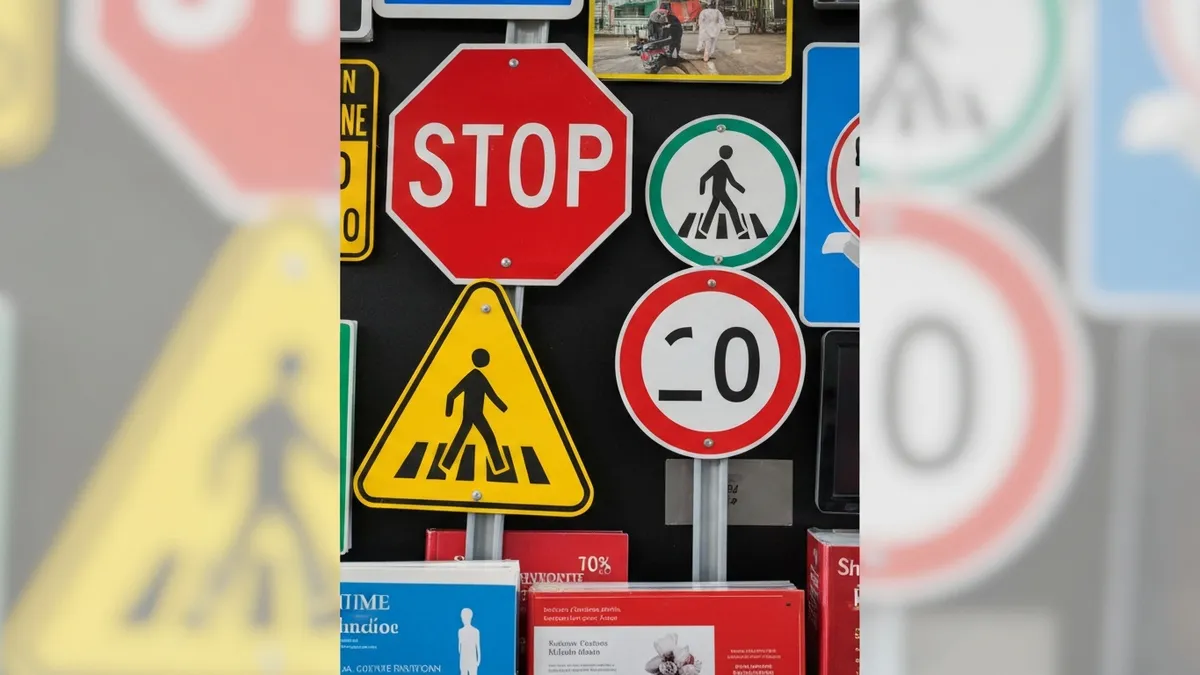
LTO Traffic Violations Philippines 2026 — Fines and Penalties Guide

LTO Plate Number Tracker: What Is LTO, What Does LTO Stand For, and How to Track Your Vehicle Registration in 2026

LTO Dress Code and What Is LTO: Complete Guide to the Philippines Land Transportation Office

LTO License Restriction Codes Philippines — Complete Guide 2026
About the Author

Educational Psychologist & Academic Test Preparation Expert
Columbia University Teachers CollegeDr. Lisa Patel holds a Doctorate in Education from Columbia University Teachers College and has spent 17 years researching standardized test design and academic assessment. She has developed preparation programs for SAT, ACT, GRE, LSAT, UCAT, and numerous professional licensing exams, helping students of all backgrounds achieve their target scores.
Join the Discussion
Connect with other students preparing for this exam. Share tips, ask questions, and get advice from people who have been there.
View discussion (8 replies)