
Online LPN Schools: Complete 2026 Guide to Accredited Programs, Requirements & NCLEX-PN Prep
Find the best online LPN schools for 2026. Compare accredited programs, admission requirements, costs, and NCLEX-PN prep strategies. 🧠

Choosing among online lpn schools is one of the most important decisions you will make on your path to becoming a Licensed Practical Nurse. The healthcare industry is expanding rapidly, and LPN roles remain among the most accessible entry points into clinical nursing.
Online programs have evolved dramatically over the past decade, offering flexible hybrid models that pair web-based coursework with local clinical rotations, making it possible for working adults, parents, and career changers to complete their training without relocating or quitting their current jobs. Understanding what separates an excellent program from a mediocre one can save you thousands of dollars and months of frustration.
Accreditation is the single most critical filter when evaluating any nursing school. Programs approved by the Accreditation Commission for Education in Nursing (ACEN) or granted state board of nursing approval guarantee that your diploma will be recognized when you sit for the NCLEX-PN licensing exam. Enrolling in an unaccredited program can bar you from licensure entirely, regardless of your GPA or clinical performance. Before you submit a single application, verify accreditation status on the ACEN website and cross-reference with your state's board of nursing database to confirm the program is approved for practice in your home state.
The structure of online LPN programs typically runs 12 to 18 months for full-time students, though part-time tracks can extend the timeline to 24 months. Most curricula divide learning into two distinct phases: the online academic component, which covers anatomy, pharmacology, medical-surgical nursing, and patient care theory, and the in-person clinical component, which is conducted at hospitals, long-term care facilities, or outpatient clinics near your home. Schools typically partner with local healthcare facilities to place students, but you should confirm that clinical sites are available in your area before enrolling, especially if you live in a rural region.
Tuition for online LPN programs varies significantly based on the institution type. Community colleges and vocational schools tend to offer the most affordable options, with total program costs ranging from $8,000 to $20,000. Private career colleges and for-profit institutions can charge anywhere from $20,000 to $45,000 for the same credential, though they sometimes offer more flexible scheduling.
Federal financial aid, including Pell Grants and subsidized loans through FAFSA, is available for students attending accredited institutions. Additionally, many healthcare employers offer tuition reimbursement programs that can offset a substantial portion of program costs if you commit to working for them after graduation.
Admission requirements for online LPN programs are generally more accessible than those for registered nurse programs, but they are not trivial. Most programs require a high school diploma or GED, a minimum GPA of 2.0 to 2.5, and passing scores on a pre-admission exam such as the TEAS or HESI A2. Some programs also require current CPR certification, documented immunizations, a background check, and drug screening before clinical placement. Understanding these prerequisites allows you to prepare systematically and avoid delays caused by missing documentation once you are ready to apply.
NCLEX-PN preparation should begin well before you finish your final clinical rotation. The exam tests competencies across basic care and comfort, pharmacology, coordinated care, psychosocial integrity, and more, using an adaptive format that adjusts question difficulty in real time based on your performance. Students who integrate practice questions throughout their program — rather than cramming only in the final weeks — consistently achieve higher first-attempt pass rates. Building a study habit early, familiarizing yourself with the NCSBN test plan categories, and taking timed practice exams are all evidence-based strategies that translate directly into NCLEX-PN success.
This guide walks you through everything you need to evaluate accredited online LPN programs effectively, from understanding curriculum structure and clinical hour requirements to comparing costs, navigating financial aid, and building a realistic NCLEX-PN study plan that fits your schedule and learning style. Whether you are just beginning your research or have already narrowed your options to two or three programs, the information here will help you make a confident, well-informed decision.
LPN: upcoming dates and official changes
- Apr 1, 2026: The 2026 NCLEX-PN Test Plan became effective April 1, 2026, and applies through March 31, 2029. (National Council of State Boards of Nursing (NCSBN); state nursing regulatory bodies issue LPN/LVN licenses)
Facts verified Oct 17, 2026 against National Council of State Boards of Nursing (NCSBN); state nursing regulatory bodies issue LPN/LVN licenses. Dates that have passed are removed automatically.
- The NCLEX-PN is a computerized adaptive examination containing between 85 and 150 items. (ncsbn.org)
- The NCLEX-PN passing standard is -0.18 logits through March 31, 2029. (National Council of State Boards of Nursing (NCSBN); state nursing regulatory bodies issue LPN/LVN licenses)
- The NCLEX-PN registration fee for U.S. licensure is currently $200 USD, separate from state licensure fees. (National Council of State Boards of Nursing (NCSBN); state nursing regulatory bodies issue LPN/LVN licenses)
- NCLEX-PN retakes require the same registration fee as initial attempts, determined by the registration date. (National Council of State Boards of Nursing (NCSBN); state nursing regulatory bodies issue LPN/LVN licenses)
- NCSBN permits up to eight NCLEX-PN attempts annually with at least 45 test-free days between examinations, subject to stricter jurisdictional restrictions. (National Council of State Boards of Nursing (NCSBN); state nursing regulatory bodies issue LPN/LVN licenses)
- The NCLEX-PN is delivered at domestic and international test centers. (National Council of State Boards of Nursing (NCSBN); state nursing regulatory bodies issue LPN/LVN licenses)
- NCLEX-PN candidates must meet the eligibility requirements established by the nursing regulatory body where they seek licensure. (ncsbn.org)
- Official NCLEX-PN results are sent by the nursing regulatory body within six weeks after the examination. (National Council of State Boards of Nursing (NCSBN); state nursing regulatory bodies issue LPN/LVN licenses)
Facts verified Oct 17, 2026 against National Council of State Boards of Nursing (NCSBN); state nursing regulatory bodies issue LPN/LVN licenses. Dates that have passed are removed automatically.
LPN Exam at a Glance
Facts verified Oct 17, 2026 against National Council of State Boards of Nursing (NCSBN); state nursing regulatory bodies issue LPN/LVN licenses. Dates that have passed are removed automatically.
Online LPN Schools by the Numbers
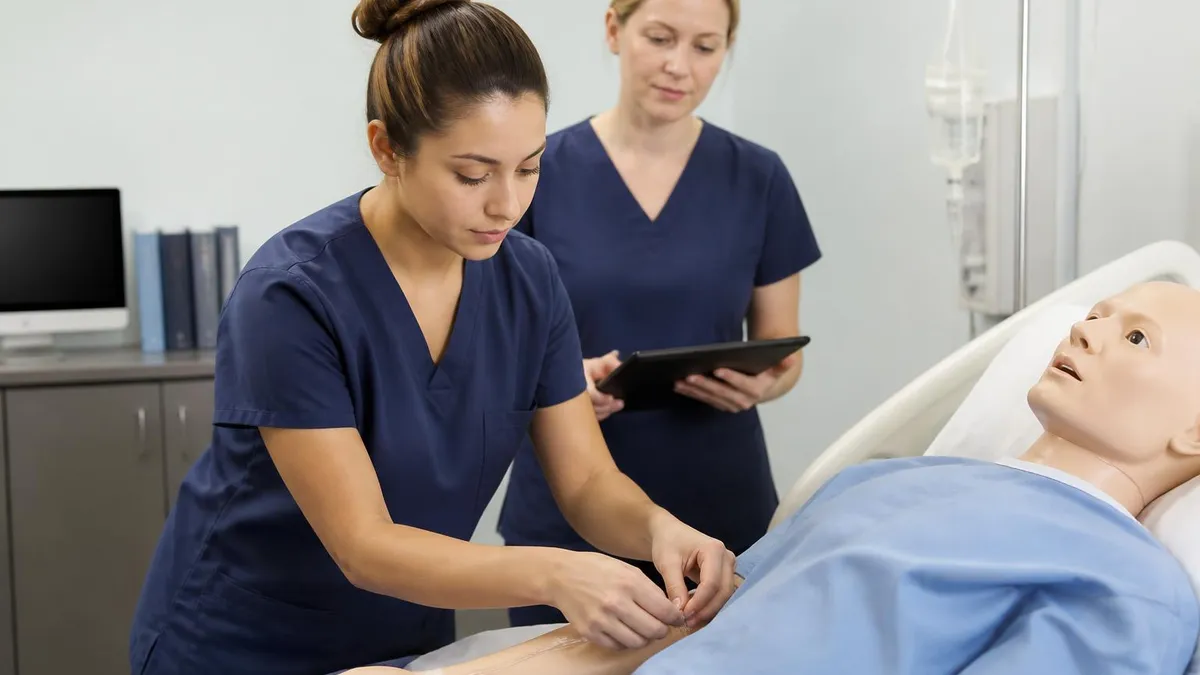
Types of Online LPN Program Structures
Didactic coursework is delivered entirely online via a learning management system, while clinical rotations are arranged at partnered facilities near your home. This is the most common model among community college LPN programs and offers the most scheduling flexibility for working adults.
Designed for students who can commit to full-time enrollment, accelerated programs compress theory and clinical hours into a year or less. Coursework is intense, typically requiring 30 to 40 hours per week between online learning and clinical shifts. Ideal for career changers who want to enter the workforce quickly.
Part-time programs allow students to maintain employment while completing prerequisites and online coursework, typically spanning two years. Clinical hours are scheduled on evenings and weekends where possible. This path suits parents or individuals with significant work obligations who cannot step back from full-time employment.
Private career colleges often offer rolling enrollment with monthly or quarterly start dates, making it easier to begin quickly without waiting for a traditional semester. Costs are generally higher, but scheduling and student support services are more intensive, including dedicated academic advisors and job placement assistance.
Accreditation is a non-negotiable baseline for any online LPN school worth your time and tuition dollars. In the United States, practical nursing programs can receive accreditation through ACEN or through state board of nursing approval, which is itself required in every state before a program can produce licensure-eligible graduates. The National League for Nursing Commission for Nursing Education Accreditation (CNEA) also accredits some programs. When a school prominently features accreditation on its website, always verify the claim by searching the accrediting body's official directory, as some institutions misrepresent their approval status on marketing materials.
State-specific approval requirements add another layer of complexity for online students. Even if a program is ACEN-accredited, each state board of nursing must independently approve the program for graduates who intend to sit for NCLEX-PN in that state. If you plan to study in one state but practice in another, research reciprocity agreements and endorsement pathways before enrolling. The Nurse Licensure Compact (NLC), which currently includes more than 40 participating states, allows LPNs to hold a single multistate license, which can simplify interstate practice significantly for graduates of approved programs.
Admission requirements for online LPN schools typically include academic, health, and character components. On the academic side, expect to submit high school transcripts or a GED certificate, along with scores from a standardized pre-admission test. The ATI TEAS is the most widely used, and most programs require a composite score of at least 58 to 65. Some programs substitute the HESI A2 or their own placement test. If your score falls below the program's cutoff, many schools allow a retake after a 60-day waiting period, and most offer TEAS preparation resources through their library or student services portals.
Health documentation requirements exist primarily to protect patients during clinical rotations. Programs universally require current CPR certification at the Basic Life Support (BLS) level through the American Heart Association or Red Cross. You will also need proof of vaccinations against influenza, hepatitis B, MMR, varicella, and Tdap, along with a current tuberculosis (TB) test or chest X-ray. Some clinical sites require an N95 respirator fit-test. Gathering these documents early is smart because TB tests require a 48 to 72-hour read window, and hepatitis B requires a three-shot series over six months if you have not previously been vaccinated.
Background checks and drug screening are standard prerequisites for clinical placement, not just for graduation. Most online LPN programs use a third-party vendor such as CastleBranch or Certiphi to conduct federal and state criminal background checks. Certain felony convictions can disqualify a candidate from clinical placement entirely, and state boards of nursing independently review criminal history as part of the licensure application. If you have a prior conviction, the American Nurses Association recommends consulting directly with your state board before investing in a program to understand your specific eligibility pathway and any petition requirements.
Financial aid eligibility depends entirely on attending an accredited institution. For federal financial aid purposes, the school must hold Title IV eligibility, which requires regional or national accreditation recognized by the U.S. Department of Education. ACEN accreditation qualifies programs for Title IV funding.
Complete the FAFSA as early as October 1 for the upcoming academic year to maximize your grant eligibility before institutional funds are exhausted. Pell Grants for 2025-2026 award up to $7,395 per year, which can cover a meaningful portion of community college LPN program tuition. Work-study opportunities through the Federal Work-Study program are also available at many participating institutions and can offset living expenses while you study.
Scholarship resources specifically targeted at nursing students include the HRSA Nursing Workforce Diversity grants, state-specific nursing scholarship programs administered through state nurses associations, and employer-sponsored tuition assistance programs offered by major hospital systems and long-term care chains. Organizations like the American Association of Colleges of Nursing and specialty nursing associations also maintain scholarship databases updated annually. Combining multiple funding sources — grants, scholarships, employer reimbursement, and modest loans — is the most effective strategy for minimizing debt burden upon graduation from an online LPN program.
LPN Practice Test Questions
Prepare for the LPN - Certified Practical Nurse exam with our free practice test modules. Each quiz covers key topics to help you pass on your first try.
LPN - Certified Practical Nurse Basic Care...
LPN Exam Questions covering - Certified Practical Nurse Basic Care and Comfort. Master LPN Test concepts for certification prep.
LPN - Certified Practical Nurse Coordinate...
Free LPN Practice Test featuring - Certified Practical Nurse Coordinated Care. Improve your LPN Exam score with mock test prep.
LPN - Certified Practical Nurse Health Pro...
LPN Mock Exam on - Certified Practical Nurse Health Promotion and Maintenance. LPN Study Guide questions to pass on your first try.
LPN - Certified Practical Nurse Pharmacolo...
LPN Test Prep for - Certified Practical Nurse Pharmacological Therapies. Practice LPN Quiz questions and boost your score.
LPN - Certified Practical Nurse Physiologi...
LPN Questions and Answers on - Certified Practical Nurse Physiological Adaptation. Free LPN practice for exam readiness.
LPN - Certified Practical Nurse Psychosoci...
LPN Mock Test covering - Certified Practical Nurse Psychosocial Integrity. Online LPN Test practice with instant feedback.
LPN - Certified Practical Nurse Reduction ...
Free LPN Quiz on - Certified Practical Nurse Reduction of Risk Potential. LPN Exam prep questions with detailed explanations.
LPN - Certified Practical Nurse Safety and...
LPN Practice Questions for - Certified Practical Nurse Safety and Infection Control. Build confidence for your LPN certification exam.
LPN Ethical, Legal & Professional Standards
LPN Test Online for Ethical, Legal & Professional Standards. Free practice with instant results and feedback.
LPN Health Evaluation & Monitoring
LPN Study Material on Health Evaluation & Monitoring. Prepare effectively with real exam-style questions.
Online vs. Hybrid vs. Campus-Based LPN Programs
Hybrid online LPN programs deliver all theory content — anatomy and physiology, pharmacology, medical-surgical nursing, and nursing fundamentals — through a digital learning management system such as Canvas or Blackboard. Students watch recorded lectures, complete interactive modules, submit assignments, and take proctored exams online on a flexible schedule that can fit around work or family obligations. Most programs require live synchronous sessions weekly or biweekly via Zoom for case discussions and skills demonstrations.
Clinical rotations in hybrid programs are arranged locally and are non-negotiable. Schools partner with hospitals, skilled nursing facilities, and community health clinics in your geographic area, and you must complete a minimum number of supervised clinical hours — typically 500 to 600 — before you can graduate. These hours are scheduled directly with the clinical site and generally cannot be completed entirely on weekends, so you need some weekday availability even in a hybrid program. Confirm clinical site availability in your specific zip code before enrolling.

Pros and Cons of Pursuing an Online LPN Program
- +Flexible scheduling allows you to maintain employment while completing didactic coursework
- +Lower total cost compared to traditional campus programs, especially at community colleges
- +Geographic freedom to choose programs in any state offering clinical placement in your area
- +Self-directed online learning builds time-management skills valued by healthcare employers
- +Wider program selection means you can compare accreditation, pass rates, and cost across dozens of schools
- +Many programs offer rolling or quarterly enrollment starts, reducing wait time to begin
- −Clinical rotations still require in-person attendance and some weekday availability
- −Self-discipline is essential — online formats lack the forced structure of in-person classes
- −Technology requirements including a reliable computer, high-speed internet, and webcam add upfront costs
- −Limited immediate access to instructors for quick questions compared to campus office hours
- −Some employers and state boards scrutinize online program credentials more carefully than traditional ones
- −Clinical site availability varies by region, and rural students may face placement challenges
NCLEX-PN Readiness Checklist for Online LPN Students
- ✓Verify your program is ACEN-accredited and state board-approved before enrolling
- ✓Gather all health documentation — immunizations, TB test, BLS certification — at least 60 days before clinicals start
- ✓Complete the FAFSA by October 1 to maximize grant eligibility for the upcoming academic year
- ✓Confirm clinical site availability in your zip code with the program's clinical coordinator
- ✓Purchase an NCLEX-PN review book or subscription (Saunders, UWorld, or ATI) at the start of your program
- ✓Complete at least 50 NCLEX-style practice questions per week throughout your entire program
- ✓Schedule a TEAS or HESI A2 prep course if your science background is more than five years old
- ✓Apply for your ATT (Authorization to Test) through your state board within two weeks of graduation
- ✓Register for the NCLEX-PN through Pearson VUE within 30 days of receiving your ATT
- ✓Complete a dedicated 4-to-6-week NCLEX-PN review course after program completion before your exam date
First-Attempt Pass Rate Is a Program's Most Honest Metric
When comparing online LPN schools, ask each program for its NCLEX-PN first-attempt pass rate for the most recent graduating cohort. Programs with pass rates at or above the national average of 85% demonstrate that their curriculum, clinical preparation, and student support systems are working. Programs with rates below 75% are a red flag, regardless of how attractive their tuition or scheduling flexibility appears.
Understanding the full cost of an online LPN program requires looking beyond tuition alone. Many students focus exclusively on the sticker price advertised on a school's website but overlook fees that can add $2,000 to $5,000 to the total cost of attendance.
Common additional expenses include application fees ($25 to $150), technology fees ($200 to $500 per semester), clinical placement fees ($300 to $800), background check and drug screening costs ($100 to $200), uniforms and nursing equipment such as a stethoscope and blood pressure cuff ($200 to $400), liability insurance ($50 to $100 per year), and NCLEX-PN exam registration fees ($200). Building a complete budget before you enroll helps you plan financing accurately and avoids surprises mid-program.
Community colleges consistently offer the lowest-cost path to an LPN credential. In-state students at community colleges can often complete an LPN program for $8,000 to $15,000 in total tuition, with the added benefit of Title IV financial aid eligibility and strong transfer pathways to RN programs later. States like Texas, Ohio, and Florida have extensive community college LPN programs with strong NCLEX-PN pass rates and active clinical partnerships with major hospital systems. Searching the ACEN program directory filtered by state and institution type is the most efficient way to identify community college options in your region.
For-profit career colleges occupy the higher end of the cost spectrum, with programs frequently totaling $25,000 to $45,000. While the scheduling flexibility and rolling enrollment at these institutions can be genuinely valuable for students with complex personal obligations, the return on investment requires careful calculation.
An LPN earning the national median salary of approximately $54,000 per year will find it substantially harder to repay $40,000 in loans than a peer who completed the same credential for $12,000 at a community college. The loan-to-income ratio is a practical financial health metric: aim to borrow no more than your expected first-year gross salary.
Employer tuition reimbursement programs are among the most underutilized funding sources available to aspiring LPNs. Major long-term care chains such as Brookdale Senior Living, Sunrise Senior Living, and Genesis HealthCare, as well as large hospital systems including HCA Healthcare and CommonSpirit Health, offer tuition assistance ranging from $2,500 to $10,000 per year for employees pursuing nursing credentials.
Many of these programs require a service commitment of one to two years post-graduation, but for students who plan to work in healthcare anyway, this represents essentially free money. Contact the HR department of any healthcare employer in your area — even part-time positions sometimes qualify for tuition benefits.
Scholarship databases specifically for nursing students include NursingScholarship.org, the Foundation of the National Student Nurses Association scholarship fund, and state-level programs administered through state nurses associations. The U.S. Department of Health and Human Services Health Resources and Services Administration (HRSA) also administers the Nursing Workforce Diversity Program, which provides scholarships to students from disadvantaged backgrounds pursuing nursing education. Award amounts range from $1,000 to $20,000 depending on the program, and many scholarships require only a short essay and two letters of recommendation, making the time-to-return ratio on applications extremely favorable.
Calculating the return on investment of an LPN credential requires comparing total program cost against post-graduation earning potential. The Bureau of Labor Statistics projects employment of LPNs to grow approximately 5 percent between 2023 and 2033, adding roughly 55,000 new positions to the workforce.
Specialties including geriatrics, home health, and correctional health services command premium wages, with experienced LPNs in high-demand metropolitan markets earning $65,000 to $75,000 annually. Factoring in overtime opportunities common in nursing — which can add $8,000 to $15,000 per year — an LPN who graduates with $15,000 in debt can achieve a positive ROI within two to three years of employment.
LPN-to-RN bridge programs represent another dimension of the financial equation worth considering from day one. Many online LPN programs have articulation agreements with associate degree in nursing (ADN) or bachelor of science in nursing (BSN) programs that allow LPN graduates to skip foundational nursing courses and earn an RN credential in 12 to 18 additional months.
Registered nurses earn a median salary of approximately $86,000 nationally, meaning the LPN credential can function as a funded stepping stone rather than an endpoint. Planning your education pathway with this trajectory in mind from the outset can significantly improve the long-term financial return of your initial LPN investment.
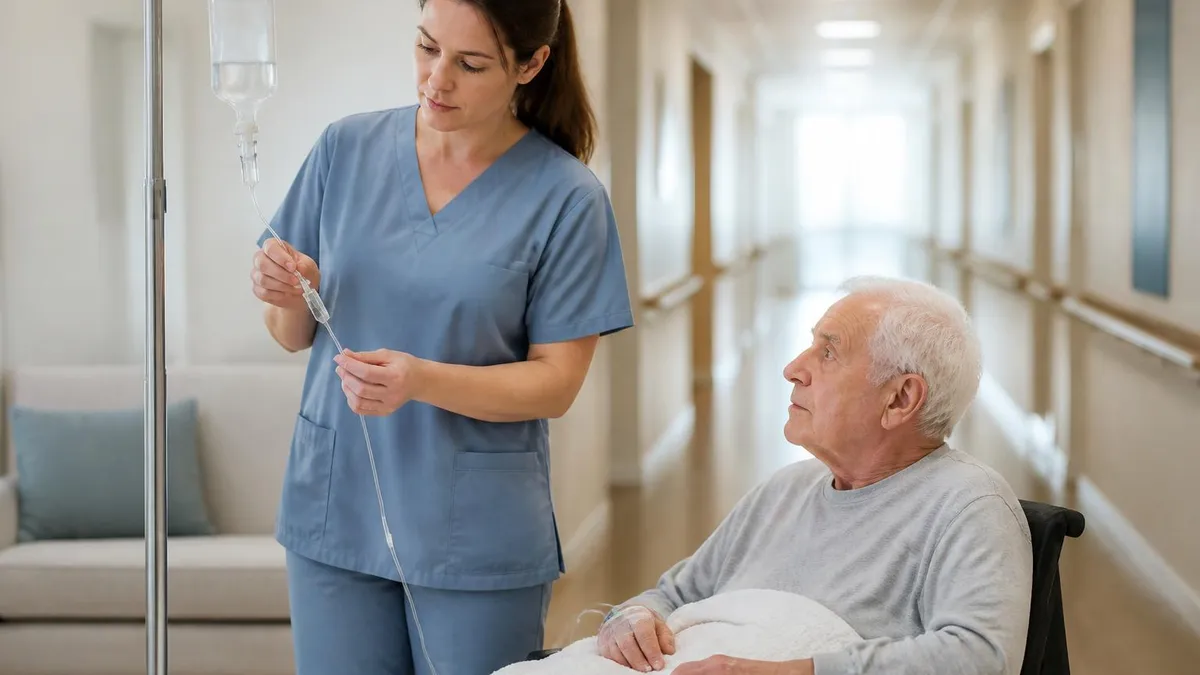
Not every school advertising an online LPN program is accredited or state board-approved. Enrolling in an unaccredited program means you may be ineligible to sit for the NCLEX-PN exam even after completing all coursework and clinical hours — leaving you with debt and no path to licensure. Always verify accreditation directly on the ACEN website and confirm state board approval with your specific state before submitting any application or deposit.
Career outcomes after completing an accredited online LPN program are consistently strong, particularly in long-term care, home health, and outpatient clinic settings. Approximately 40 percent of all LPNs work in skilled nursing facilities and extended care settings, where demand consistently outpaces supply in most U.S. markets. Home health is the fastest-growing practice setting for LPNs, driven by an aging Baby Boomer population that increasingly prefers to age in place rather than transition to institutional care. Physician offices, correctional facilities, and school health programs round out the major employment sectors, each offering distinct scheduling profiles and patient populations.
Specialty certifications can meaningfully boost an LPN's earning potential and job market competitiveness. The National Association for Practical Nurse Education and Service (NAPNES) offers certified LPN credentials in long-term care (LPN-C) and pharmacology (LPN-C Pharmacology). The American Nurses Credentialing Center (ANCC) and specialty organizations offer wound care, IV therapy, and gerontology certifications accessible to LPNs with qualifying clinical experience. Earning a specialty certification typically requires 2,000 or more hours of relevant clinical practice and passing a separate exam, but the credential can support salary negotiations of $3 to $7 per hour above base rates in many markets.
Geographic variation in LPN salaries is substantial and should factor into your program selection if you have flexibility about where you practice after graduation. According to BLS data, the top-paying states for LPNs include Alaska ($69,380 median), Massachusetts ($65,740), California ($65,230), Nevada ($63,080), and New Jersey ($62,500). High-cost-of-living adjustments partially offset these premiums, but states with strong Certificate of Need laws limiting healthcare facility supply, or with strong nursing unions, tend to sustain higher LPN wages over time.
Rural Health Clinics and Federally Qualified Health Centers in medically underserved areas also offer loan forgiveness incentives through the NHSC Loan Repayment Program that can eliminate up to $50,000 in student loans over two years of qualifying service.
The LPN-to-RN bridge pathway deserves explicit discussion for any student considering an online LPN program as a long-term career strategy. Bridge programs vary in their structure: some offer an LPN to ADN pathway completing the RN credential in approximately 18 months, while LPN to BSN programs can take two to three years.
Many bridge programs are also available in hybrid online formats, maintaining the scheduling flexibility that made the initial LPN program attractive. Some states, notably Texas and California, have invested significantly in building articulation agreements between community college LPN programs and ADN completion programs, creating a clearly mapped pathway from entry-level nursing to registered nurse licensure.
Travel LPN positions represent an increasingly attractive option for graduates seeking both higher compensation and geographic variety in their early career. Travel nursing agencies place LPNs in short-term assignments — typically 13 weeks — at facilities experiencing staffing shortages, offering hourly rates 20 to 40 percent above local market rates plus housing stipends and travel reimbursement.
Most travel positions require at least one year of post-licensure experience, so new graduates typically spend their first year building a skills base in a permanent position before transitioning to travel assignments. The financial upside can be significant: experienced travel LPNs in high-demand specialties like long-term care or correctional health can earn $60,000 to $75,000 annually including stipends.
Continuing education requirements for LPN license renewal vary by state but universally exist. Most states require 15 to 30 contact hours of approved continuing education every two years as a condition of license renewal, with some states mandating specific topics such as pain management, cultural competency, or medication error prevention.
Online LPN programs that include continuing education resources or alumni access to CE modules add tangible long-term value beyond the initial credential. Planning ahead for CE costs — typically $50 to $200 per renewal cycle for online CE modules — is a minor but real component of the lifetime cost of maintaining your LPN license.
Building your professional network begins before graduation, not after. Clinical rotations are your first opportunity to establish relationships with charge nurses, directors of nursing, and unit managers who make hiring decisions. Treating every clinical shift as an extended working interview — demonstrating reliability, asking thoughtful questions, and exhibiting strong communication skills — is the most direct path to a job offer upon graduation. Joining the National Federation of Licensed Practical Nurses (NFLPN) as a student member provides access to networking events, job boards, and professional development resources that can accelerate your transition from student to licensed clinician.
Building an effective NCLEX-PN study plan while still enrolled in your online LPN program is one of the highest-use activities you can invest time in as a student. The NCLEX-PN uses Next Generation NCLEX (NGN) question formats introduced in 2023, including case studies, extended multiple response, matrix grids, and bow-tie questions that require higher-order clinical reasoning rather than simple recall. Familiarizing yourself with these formats early — not just in the final weeks before your exam — dramatically reduces test-day anxiety and improves your ability to apply content knowledge under timed conditions.
The NCSBN test plan divides NCLEX-PN content into four major client needs categories: Safe and Effective Care Environment (which covers coordinated care and safety), Health Promotion and Maintenance, Psychosocial Integrity, and Physiological Integrity (which encompasses basic care and comfort, pharmacology, reduction of risk potential, and physiological adaptation). Each category is weighted differently in the exam blueprint, with Physiological Integrity representing the largest single share at approximately 38 to 62 percent of total questions. Allocating study time proportionally to these weights is more efficient than studying all topics equally.
High-quality NCLEX-PN question banks significantly outperform reading textbooks alone as a study method. Research on nursing licensure exam preparation consistently shows that students who answer 2,000 or more practice questions before their exam date achieve substantially higher first-attempt pass rates than those who read primarily without practicing.
Products like UWorld, ATI NCLEX-PN, and the Saunders Comprehensive Review question bank offer thousands of rationale-rich questions that teach you both the correct answer and the reasoning process behind it. The rationale is often more educational than the question itself — reviewing why wrong answers are wrong is a critical component of effective NCLEX-PN preparation.
Time management during the actual NCLEX-PN exam is a skill that must be practiced explicitly. The exam allows up to five hours for a maximum of 150 questions, but the adaptive algorithm can conclude the exam in as few as 85 questions if you demonstrate sustained competency. This means you should never rush through early questions trying to finish quickly — the algorithm is measuring your sustained performance across all items. Practicing with timed question blocks of 50 to 75 questions under realistic testing conditions builds the mental endurance needed to maintain focus through a two-to-four-hour examination session.
Pharmacology is consistently identified as the most challenging content area by LPN students taking the NCLEX-PN, and for good reason. The exam tests not just drug names and classifications but also nursing implications, patient monitoring parameters, adverse effects, and safe administration considerations across dozens of drug families.
A systematic approach to pharmacology — studying drugs by class rather than memorizing individual agents in isolation — helps you apply logical reasoning to unfamiliar drugs you may encounter on exam day. For example, understanding the general nursing implications for all beta-blockers prepares you to answer questions about specific agents you have never seen before.
Integrated review courses offered by ATI, Hurst, and Kaplan provide structured post-graduation review experiences that many students find invaluable. These programs typically run four to six weeks and combine video lectures, live review sessions, practice question banks, and predictive readiness assessments.
The NCLEX-PN readiness predictor assessments offered by ATI and UWorld have demonstrated reasonable correlation with actual NCLEX-PN outcomes, making them useful for identifying whether you are ready to schedule your exam or need additional focused preparation in specific content areas. Most programs advise scheduling your NCLEX-PN within 60 to 90 days of program completion while content is still fresh, but only after achieving a readiness predictor score in the high-probability-of-passing range.
Your mental and physical health during NCLEX-PN preparation matters as much as your study strategy. Nursing school and NCLEX-PN prep are notoriously demanding, and students who neglect sleep, nutrition, and stress management in the weeks before their exam frequently underperform relative to their practice test scores. Sleep consolidates memory — studying late into the night before your exam is counterproductive. Establishing a consistent sleep schedule, exercising at least three times per week, and maintaining social connections with peers who understand the demands of nursing school are evidence-based strategies for sustaining cognitive performance across a demanding study period.
LPN Questions and Answers
LPN Program Online: Complete 2026 Guide to Accredited Online LPN Programs

LPN Practice Test PDF (Free Printable 2026)

LPN to RN Bridge Programs Online: Complete 2026 Guide

Travel LPN: Complete 2026 Guide to Becoming a Travel Licensed Practical Nurse
Macomb LPN Program: Complete 2026 Guide to Specific LPN Programs, Admission Requirements, Cost & Career Outcomes
About the Author

Registered Nurse & Healthcare Educator
Johns Hopkins University School of NursingDr. Sarah Mitchell is a board-certified registered nurse with over 15 years of clinical and academic experience. She completed her PhD in Nursing Science at Johns Hopkins University and has taught NCLEX preparation and clinical skills courses for nursing students across the United States. Her research focuses on evidence-based exam preparation strategies for healthcare certification candidates.