
LPN to RN Bridge Programs Online: Complete 2026 Guide
Explore LPN to RN bridge programs online in 2026. 💡 Compare formats, costs, timelines, and top accredited schools to advance your nursing career.
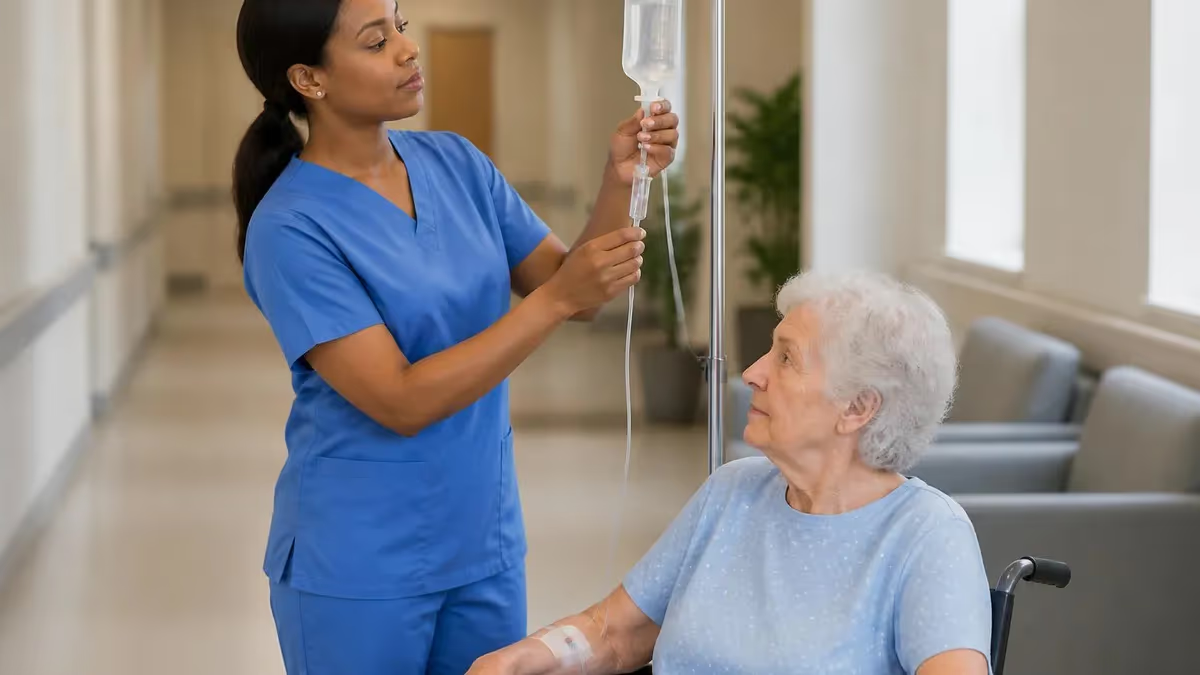
lpn to rn bridge programs online have become one of the most efficient pathways for working nurses who want to advance their careers without stepping away from the bedside. These programs recognize the clinical hours and theoretical knowledge LPNs already possess, allowing them to build directly on that foundation rather than starting from scratch. In 2026, accredited online bridge programs are available in nearly every state, and enrollment has surged as healthcare systems push hard to increase their registered nurse workforce in response to a nationally documented shortage.
The difference between an LPN and an RN extends well beyond a title change. Registered nurses are authorized to perform comprehensive assessments, initiate and modify care plans, administer a broader range of medications, and supervise other nursing staff.
That expanded scope translates directly into higher earning potential — the median annual salary for RNs sits roughly $30,000 above what most LPNs earn — and it opens doors to specialty areas, management roles, and graduate education. For LPNs who feel constrained by their current scope of practice, bridging to RN is often the single highest-return investment they can make in their career.
Online bridge programs work by delivering didactic coursework through a learning management system while students complete required clinical hours at approved sites near their homes. This hybrid model means a nurse in rural Montana can earn an accredited RN credential from a program based in another state without uprooting her family or quitting her job. Most programs require 18 to 36 months to complete, depending on whether the student enrolls full-time or part-time, and the credit load typically ranges from 30 to 60 semester hours beyond what the student already holds as an LPN.
Accreditation is the single most important factor to verify before enrolling. Programs accredited by the Accreditation Commission for Education in Nursing (ACEN) or the Commission on Collegiate Nursing Education (CCNE) meet nationally recognized standards and are recognized by state boards of nursing for licensure eligibility. Attending a non-accredited program can disqualify you from sitting for the NCLEX-RN, rendering your coursework worthless for licensure purposes. Always cross-check the program against the ACEN or CCNE directory before submitting an application.
Cost varies considerably across program types. Community college ADN bridge programs typically run $8,000 to $18,000 in total tuition, while online BSN completion programs at private universities can reach $30,000 to $50,000. Many employers actively support LPN-to-RN transitions through tuition reimbursement programs, and federal Title VIII nursing workforce grants provide additional aid. Veterans can use GI Bill benefits at most accredited programs. Factoring in these resources, the out-of-pocket cost for a motivated LPN is often far lower than the sticker price suggests.
Admission requirements generally include an active, unrestricted LPN license, a minimum GPA from your PN program (commonly 2.5 to 3.0), current BLS certification, and — for some programs — a specified number of recent clinical practice hours. Some schools also require entrance exam scores from the ATI TEAS, HESI A2, or NLN PAX. Understanding these requirements early prevents wasted time on applications to programs for which you are not yet eligible and allows you to address any gaps, such as refreshing clinical hours or retaking prerequisite science courses.
Choosing between an Associate Degree in Nursing (ADN) bridge and a Bachelor of Science in Nursing (BSN) bridge is a strategic decision that depends on your timeline, budget, and long-term goals. An ADN bridge gets you to RN licensure faster and at lower cost, while a BSN is increasingly required for hospital employment and is the minimum entry point for most graduate nursing programs. Many LPNs choose the ADN route first, then complete an RN-to-BSN online program within a few years — a two-step strategy that manages cost and time while ultimately reaching the BSN goal.
LPN to RN Bridge Programs by the Numbers
Your LPN to RN Bridge Program Roadmap
Verify Your LPN License & Transcripts
Research & Compare Accredited Programs
Complete Prerequisites & Entrance Exams
Submit Application & Secure Clinical Site
Complete Coursework & Clinical Hours
Apply for NCLEX-RN & Graduate
Admission requirements for LPN to RN bridge programs vary more than most prospective students expect, and understanding those requirements in detail can mean the difference between a smooth application cycle and a frustrating year of waiting. The baseline nearly every program shares is an active, unrestricted LPN or LVN license.
If your license has lapsed, has any disciplinary notations, or is restricted in any way, you must resolve those issues with your state board before any accredited program will consider your application. Boards of nursing take candidate character seriously, and programs are required to vet licensure status as a condition of their own accreditation.
Academic prerequisites form the second major hurdle. Practical nursing programs cover foundational science, but RN-level curricula demand a more rigorous command of anatomy and physiology, microbiology, chemistry, and statistics. Most bridge programs require that these courses were completed within the last five to seven years with a grade of C or better. If your practical nursing coursework is older, or if you originally took abbreviated survey courses, plan on retaking full-semester versions of these subjects before applying. Many community colleges offer these courses entirely online, making it possible to fulfill prerequisites while continuing to work as an LPN.
GPA requirements generally fall between 2.5 and 3.0 on a 4.0 scale, measured against your PN program transcript. Competitive programs at universities with limited cohort seats may favor applicants above 3.2. If your GPA is below the minimum, some programs allow you to demonstrate academic readiness through strong entrance exam scores. The ATI TEAS (Test of Essential Academic Skills) is the most widely required exam, and a composite score above the 65th percentile is typically competitive. The HESI A2 and NLN PAX are accepted as alternatives at some institutions.
Work experience requirements differ across program types. Some programs require as few as six months of recent LPN practice; others specify one full year, with documentation showing direct patient care rather than administrative or supervisory roles only. Programs with this requirement want to ensure that bridge students bring a meaningful clinical foundation into their advanced coursework. If you have been working in a primarily administrative capacity, consider requesting a temporary shift back to direct care assignments while you complete your application preparation.
Letters of recommendation are required by roughly half of all bridge programs, typically two or three letters from supervisors, physicians, or nursing educators who can speak to your clinical competence, professional reliability, and readiness for advanced practice. A form letter from a coworker carries little weight; a detailed letter from a charge nurse or director of nursing describing specific patient care situations where you demonstrated sound clinical judgment is far more persuasive. Give your recommenders at least four to six weeks and provide them with a copy of your personal statement so their letters align with your overall narrative.
Personal statements or essays are increasingly part of the application process, even for community college ADN programs that were once purely metrics-based. Admissions committees use these essays to assess motivation, self-awareness, and communication skills. A strong personal statement explains why you became an LPN, identifies specific limitations of your current scope that motivate you to advance, and articulates a clear vision for how RN practice aligns with your career goals. Vague statements about wanting to help people or earn more money are easy to spot and do little to differentiate your application from hundreds of others.
Financial aid eligibility is tied to your enrollment status and the program's accreditation. Full-time enrollment unlocks the maximum federal Pell Grant and subsidized loan amounts. Many LPNs enroll part-time to maintain their clinical positions, which reduces aid eligibility but preserves income. Some hospital systems offer conditional tuition reimbursement agreements where they fund your bridge program in exchange for a two- to three-year employment commitment after graduation. Evaluate these agreements carefully: they can dramatically reduce your out-of-pocket cost, but the repayment penalties for breaking the agreement early can be substantial, sometimes requiring repayment of the full funded amount plus interest.
For a deeper look at this topic, see our guide to lpn to rn bridge programs online.
If you want the full picture, the lpn to rn bridge programs online guide walks through it step by step.
LPN Practice Test Questions
Prepare for the LPN - Certified Practical Nurse exam with our free practice test modules. Each quiz covers key topics to help you pass on your first try.
LPN - Certified Practical Nurse Basic Care...
LPN Exam Questions covering - Certified Practical Nurse Basic Care and Comfort. Master LPN Test concepts for certification prep.
LPN - Certified Practical Nurse Coordinate...
Free LPN Practice Test featuring - Certified Practical Nurse Coordinated Care. Improve your LPN Exam score with mock test prep.
LPN - Certified Practical Nurse Health Pro...
LPN Mock Exam on - Certified Practical Nurse Health Promotion and Maintenance. LPN Study Guide questions to pass on your first try.
LPN - Certified Practical Nurse Pharmacolo...
LPN Test Prep for - Certified Practical Nurse Pharmacological Therapies. Practice LPN Quiz questions and boost your score.
LPN - Certified Practical Nurse Physiologi...
LPN Questions and Answers on - Certified Practical Nurse Physiological Adaptation. Free LPN practice for exam readiness.
LPN - Certified Practical Nurse Psychosoci...
LPN Mock Test covering - Certified Practical Nurse Psychosocial Integrity. Online LPN Test practice with instant feedback.
LPN - Certified Practical Nurse Reduction ...
Free LPN Quiz on - Certified Practical Nurse Reduction of Risk Potential. LPN Exam prep questions with detailed explanations.
LPN - Certified Practical Nurse Safety and...
LPN Practice Questions for - Certified Practical Nurse Safety and Infection Control. Build confidence for your LPN certification exam.
LPN Ethical, Legal & Professional Standards
LPN Test Online for Ethical, Legal & Professional Standards. Free practice with instant results and feedback.
LPN Health Evaluation & Monitoring
LPN Study Material on Health Evaluation & Monitoring. Prepare effectively with real exam-style questions.
Online, Hybrid, and Campus LPN to RN Bridge Formats
Fully online LPN to RN bridge programs deliver all didactic content — lectures, readings, simulations, and assessments — through a learning management system such as Canvas or Blackboard. Students arrange their own clinical placements at approved facilities near their homes, and the program's clinical coordinator confirms site compliance. This format offers maximum scheduling flexibility and is ideal for LPNs in rural areas or those with family obligations that make campus attendance impossible. Many top programs, including those at Western Governors University and Excelsior University, operate entirely online.
The tradeoff with fully online formats is the self-discipline they demand. Without scheduled in-person sessions, procrastination becomes a real academic risk. Students who thrive in online programs typically establish structured weekly routines, designate a dedicated study space, and engage actively in virtual discussion boards and study groups. Technical requirements are minimal — a reliable internet connection, a webcam, and a modern laptop — but the soft skills of self-management and proactive communication with instructors are essential for success in this format.

Is an Online LPN to RN Bridge Program Right for You?
- +Complete coursework on your own schedule without leaving your current nursing job
- +Access top-rated programs regardless of your geographic location or state
- +Lower tuition overall, especially compared to private campus-based universities
- +Employer tuition reimbursement and federal aid apply equally to online programs
- +Develop the self-directed learning skills increasingly valued in advanced nursing roles
- +Clinical hours completed locally mean no relocation or long commutes to affiliate sites
- −Requires significant self-discipline — no mandatory class times to enforce a study routine
- −Clinical placement coordination falls on the student in many fully online programs
- −Limited immediate access to faculty and simulation labs compared to campus programs
- −Some state boards have specific distance education restrictions that may affect eligibility
- −Online programs can feel isolating without proactive effort to build peer connections
- −Technology failures, poor internet connectivity, or outdated hardware can disrupt progress
Pros and Cons at a Glance
| Pros | Cons |
|---|---|
| Complete coursework on your own schedule without leaving your current nursing job | Requires significant self-discipline — no mandatory class times to enforce a study routine |
| Access top-rated programs regardless of your geographic location or state | Clinical placement coordination falls on the student in many fully online programs |
| Lower tuition overall, especially compared to private campus-based universities | Limited immediate access to faculty and simulation labs compared to campus programs |
| Employer tuition reimbursement and federal aid apply equally to online programs | Some state boards have specific distance education restrictions that may affect eligibility |
| Develop the self-directed learning skills increasingly valued in advanced nursing roles | Online programs can feel isolating without proactive effort to build peer connections |
| Clinical hours completed locally mean no relocation or long commutes to affiliate sites | Technology failures, poor internet connectivity, or outdated hardware can disrupt progress |
How to Choose the Right LPN to RN Bridge Program
- ✓Verify ACEN or CCNE accreditation status directly on the accrediting body's official website.
- ✓Confirm the program is approved by your state board of nursing for RN licensure eligibility.
- ✓Request the most recent three-year NCLEX-RN first-time pass rate and compare it to the national average.
- ✓Ask how clinical placements are handled — program-arranged versus student-arranged affects your timeline significantly.
- ✓Calculate total cost including tuition, fees, textbooks, clinical uniforms, and NCLEX registration, not tuition alone.
- ✓Confirm whether your current employer offers tuition reimbursement and verify that the program qualifies.
- ✓Check the program's credit transfer policy to ensure your LPN coursework is accepted at maximum value.
- ✓Review the program's graduation rate and time-to-completion data — high attrition can signal poor student support.
- ✓Assess instructor accessibility: look for programs where faculty respond to emails within 24–48 hours and hold regular virtual office hours.
- ✓Evaluate the learning management system with a demo account before enrolling to confirm it is intuitive and technically compatible with your devices.
NCLEX-RN Pass Rate Is Your Most Important Selection Criterion
A program's three-year average NCLEX-RN first-time pass rate tells you more about its quality than any marketing material. The national average for first-time test takers consistently runs between 82% and 88%. Programs that fall below 75% are under pressure from their state boards and may be at risk of losing approval status. Always ask for this number, and walk away from any program that refuses to provide it.
The financial case for completing an LPN to RN bridge program is compelling enough to justify careful cost analysis. The median annual salary for licensed practical nurses nationally is approximately $54,000, while registered nurses earn a median of roughly $84,000 — a difference of $30,000 per year. Over a 20-year career, that gap compounds into $600,000 in additional lifetime earnings, before accounting for the higher retirement contributions and career advancement opportunities that come with RN status. Even the most expensive bridge programs pay for themselves within 18 to 24 months of RN employment.
Tuition for online ADN bridge programs at community colleges typically ranges from $8,000 to $18,000 depending on in-state versus out-of-state rates and the number of credits required. Online BSN completion programs, which award a bachelor's degree rather than an associate degree, generally run $20,000 to $50,000 in total tuition at accredited schools. Some institutions, such as Western Governors University, use a competency-based flat-rate tuition model — currently around $4,500 per six-month term — meaning motivated students who progress quickly can complete the program at lower total cost than a per-credit model would suggest.
Federal financial aid remains available to students enrolled at least half-time in accredited programs. The Free Application for Federal Student Aid (FAFSA) should be submitted as early as October 1 for the following academic year. Pell Grants, which do not require repayment, provide up to approximately $7,400 per year for eligible low- to moderate-income students. Federal Direct Subsidized Loans accrue no interest while the student is enrolled at least half-time. Unsubsidized loans are also available regardless of income, though interest accrues from disbursement. Most bridge students qualify for a combination of these sources that substantially offsets tuition costs.
Employer tuition reimbursement is perhaps the most underutilized funding source in nursing education. Major hospital systems, including those operated by HCA Healthcare, Ascension, CommonSpirit, and Tenet, offer formal educational assistance programs that can reimburse $3,000 to $10,000 or more per calendar year toward an accredited bridge program. These programs typically require a service commitment after graduation — commonly two years — and may require you to maintain employment during the program. The enrollment documentation process can be cumbersome, but the financial benefit is significant enough to warrant the administrative effort.
Nursing scholarships specifically designated for LPNs pursuing RN licensure are available through multiple national organizations. The American Association of Colleges of Nursing, the National League for Nursing, and state nurses associations all administer award programs. The Nurse Corps Scholarship Program administered by the Health Resources and Services Administration (HRSA) pays tuition, fees, and a monthly stipend in exchange for a two-year service commitment at an eligible shortage facility after graduation. This program is particularly attractive for bridge students willing to work in rural or underserved communities upon licensure.
Veterans pursuing bridge programs can apply VA education benefits, including the Post-9/11 GI Bill, which covers tuition, housing allowance, and a book stipend at approved schools. The Montgomery GI Bill is an alternative for veterans who contributed to the benefit. VA benefits do not count against your federal financial aid eligibility and can be stacked with institutional scholarships, creating funding packages that fully cover program costs for qualifying veterans. Check the VA's WEAMS database to confirm that your target program is approved for benefit use before enrolling.
The return on investment calculation should also account for the non-monetary benefits of RN licensure. Registered nurses gain access to specialty certification pathways, clinical ladder programs, and leadership development tracks that are closed to LPNs. Advanced practice nursing — nurse practitioner, certified registered nurse anesthetist, clinical nurse specialist — all require RN licensure and a master's degree as entry points.
For LPNs who ultimately aspire to any of these roles, the bridge program is not just a salary upgrade; it is the foundational step in a career trajectory that can reach six-figure incomes and significant professional autonomy within 10 to 15 years.
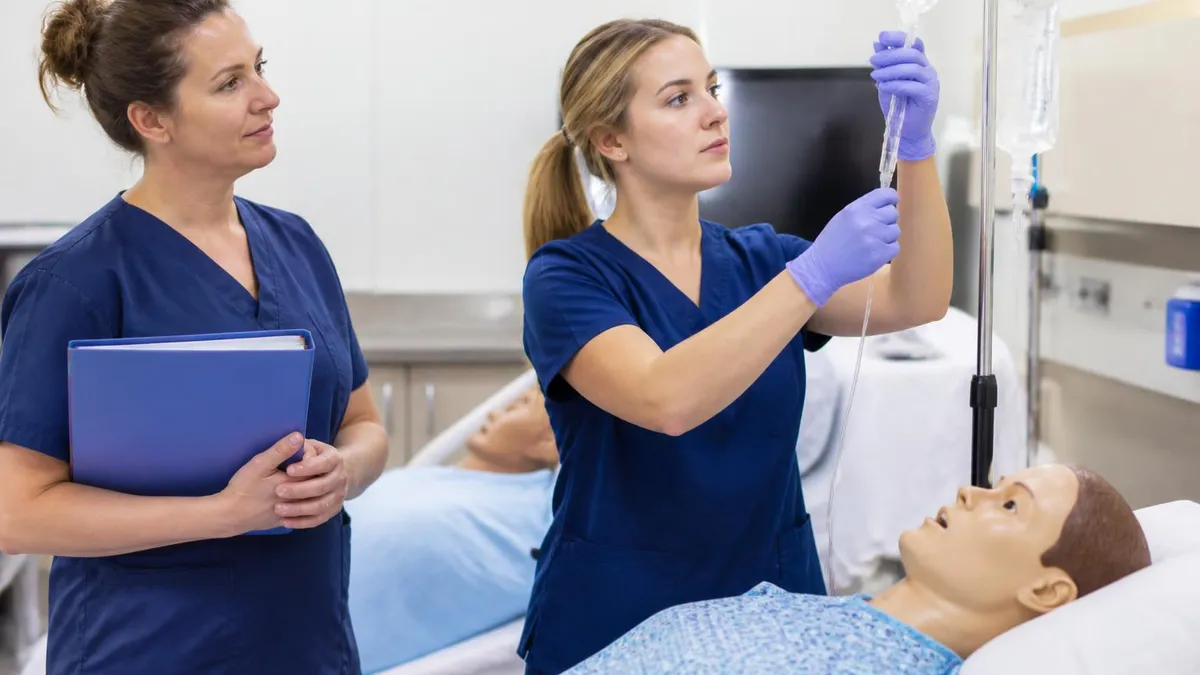
Several states, including California, New York, and Texas, have specific regulatory requirements governing distance education programs for nursing. An online program that is fully approved in one state may not automatically satisfy the clinical education or faculty supervision requirements of another. Before enrolling in any out-of-state online program, contact your state board of nursing to confirm that the specific program you are considering is accepted for RN licensure in your state. Discovering this issue after completing the program can prevent you from sitting for NCLEX-RN in your home state.
Preparing for the NCLEX-RN after completing an LPN to RN bridge program requires a strategic approach that builds on your existing clinical knowledge while addressing the conceptual gaps between LPN and RN-level nursing. The NCLEX-RN uses Next Generation NCLEX (NGN) format, introduced in April 2023, which emphasizes clinical judgment measurement across six cognitive skills: recognize cues, analyze cues, prioritize hypotheses, generate solutions, take actions, and evaluate outcomes. Understanding this framework is essential, because the exam tests how you think through patient situations, not just whether you can recall isolated facts.
The NCLEX-RN is a computerized adaptive test (CAT) that adjusts question difficulty based on your responses. The exam can be as short as 75 questions or as long as 145 questions, with the length determined by the algorithm's confidence in your competency level rather than by a fixed structure. Most candidates complete the exam in two to three hours. The passing standard is set by the National Council of State Boards of Nursing (NCSBN) and is periodically updated; as of 2026, the logit passing standard is -0.18, meaning you must consistently answer above the median difficulty correctly to pass.
A structured study plan of 8 to 12 weeks is optimal for most bridge program graduates. Begin by completing a comprehensive diagnostic practice exam to identify your weakest content areas. Prioritize pharmacology, safe and effective care environment, and physiological integrity, which together account for the majority of NCLEX-RN content. Use a primary review resource — Saunders Comprehensive Review, Lippincott's Q&A Review, or the ATI Comprehensive Predictor — alongside daily practice questions to build both content knowledge and test-taking stamina.
Active learning strategies outperform passive reading for NCLEX-RN preparation. Rather than highlighting textbook passages, work through case studies that require you to apply knowledge to patient scenarios. Practice writing your own rationales for why correct answers are correct and why distractors are wrong. This process, called elaborative interrogation, significantly improves long-term retention and trains the clinical reasoning skills that NGN questions directly assess. Study groups where members explain concepts to each other in their own words are particularly effective for this purpose.
Simulation-based practice remains valuable even after completing bridge program clinical hours. Online simulation platforms such as i-Human Patients, Shadow Health, and vSim present interactive patient scenarios that require you to gather assessment data, prioritize nursing diagnoses, select interventions, and evaluate outcomes — precisely the cognitive sequence the NCLEX-RN NGN format tests. Allocating two to three hours per week to simulation practice in the final four weeks before your exam date can meaningfully improve performance on the clinical judgment measurement items that now constitute a larger portion of the test.
Test-taking strategy deserves explicit attention during your preparation. Common errors include misreading questions due to anxiety, selecting answers that address a secondary problem before the primary safety concern, and changing answers based on anxiety rather than new information. Practice under timed, exam-like conditions at least twice per week during your final preparation month. Take full-length practice exams of 75 to 145 questions in a single session, in a quiet environment, without your phone, to simulate the actual test experience and build the concentration stamina the real exam demands.
The day before and morning of the exam, prioritize sleep and nutrition over last-minute cramming. Research consistently shows that sleep deprivation impairs working memory and executive function — exactly the cognitive capacities the NCLEX-RN measures most heavily. Arrive at the testing center early, bring required identification, and practice the brief mindfulness grounding technique of your choice during the biometric check-in process. Candidates who approach the exam in a calm, confident state perform better than those who walk in anxious and over-stimulated, even when knowledge levels are equivalent.
Practical preparation for success in an LPN to RN bridge program begins long before your first class session. The LPNs who complete their bridge programs most efficiently are those who invest deliberate effort in three specific areas before enrollment: clinical skill refresh, academic writing readiness, and time management system design. Each of these areas addresses a known attrition risk, and addressing them proactively puts you significantly ahead of peers who enter the program assuming their existing clinical experience will carry them through.
Refreshing your clinical skills before bridge program coursework begins is especially important if you have been working in a specialized area — such as long-term care or home health — where your exposure to acute care scenarios has been limited. RN-level bridge curricula introduce obstetric nursing, pediatric nursing, psychiatric nursing, and community health nursing as new clinical content domains. Reviewing basic anatomy and physiology, normal lab values, and common medication classifications before your first semester will reduce cognitive overload during those early weeks when the volume of new content can feel overwhelming.
Academic writing is a skill that many LPNs, having completed shorter practical nursing programs, have not practiced extensively. RN-level programs — particularly BSN bridge programs — require evidence-based practice papers, care plan analyses, and literature reviews written in APA format. If your academic writing skills are rusty, take an online college writing course or work through a free APA formatting tutorial before your program starts. Learning to integrate clinical evidence into written arguments is not just a program requirement; it is a foundational competency for RN professional practice and ongoing nursing education.
Time management is the single most frequently cited challenge among LPN to RN bridge students who struggle or withdraw. Most bridge students are working nurses with family responsibilities, and the addition of 15 to 20 hours per week of coursework and study time is a significant life adjustment. Before enrollment, map out your current weekly commitments in a time audit. Identify two to four dedicated study windows of at least two hours each. Communicate your enrollment to your family and employer so they can provide support rather than creating competing demands during critical study periods.
Building a peer support network within your program cohort pays dividends throughout the bridge experience. Online programs in particular require intentional effort to form these connections because casual encounters between classmates don't happen naturally. Join your program's virtual discussion boards from day one, introduce yourself in orientation forums, and propose a study group in the first week. Students who study with peers report higher motivation, better retention through teaching-back exercises, and faster recovery from difficult exam results because they have a community of people experiencing the same challenges.
Communicating proactively with your clinical preceptor is another practical strategy that significantly improves the quality of your bridge clinical hours. Unlike your LPN clinical experiences, RN bridge rotations are designed to develop your ability to independently manage complex patient assignments, initiate assessments, and communicate with the interdisciplinary team as an equal contributor. Arrive at each clinical shift with specific learning objectives for that day, ask your preceptor for feedback at the midpoint and end of every shift, and maintain a reflective clinical log that records what you observed, what decisions you made, and what you would do differently.
Maintaining your LPN license currency throughout your bridge program is a detail that occasionally trips up students who become so focused on coursework that they forget their existing renewal deadlines. If your LPN license lapses during your bridge program, you may lose your clinical placement at facilities that require active licensure for student nurses, and some programs require proof of current licensure as an ongoing enrollment condition. Set a calendar reminder 90 days before your LPN renewal deadline and complete the required continuing education hours well in advance so a last-minute compliance issue cannot derail your bridge program progress.
Sample Certified Practical Nurse Practice Questions
Try these questions from our free Certified Practical Nurse practice tests. The correct answer and an explanation follow each question.
During the alarm stage of Selye's General Adaptation Syndrome (GAS), which physiological response should the LPN anticipate in a client experiencing acute stress?
- A. Decreased heart rate and blood pressure.
- B. Pupil constriction and increased salivation.
- C. Increased blood glucose and heart rate.
- D. Decreased respiratory rate and muscle relaxation.
Answer: C. Increased blood glucose and heart rate.
The alarm stage of GAS is the 'fight or flight' response. The body releases hormones like adrenaline and cortisol, which cause an increase in heart rate, blood pressure, and blood glucose levels to provide the body with immediate energy to respond to the stressor.
How should a nurse administer oral medications?
- A. Ask the patient to take the medication with their meal
- B. Ensure the patient can swallow and monitor for reactions
- C. Give the patient the medication without checking swallowing ability
- D. Provide the medication after meals
Answer: B. Ensure the patient can swallow and monitor for reactions
When administering oral medications, it is paramount for the nurse to first ensure the patient can swallow safely to prevent aspiration, which can lead to serious respiratory complications. After administration, continuous monitoring for any adverse reactions or the desired therapeutic effects is essential. This ensures the medication's safety and effectiveness while prioritizing patient well-being.
During shift handoff, the LPN uses SBAR to communicate patient status. What does the 'R' in SBAR stand for?
- A. Report
- B. Recommendation
- C. Response
- D. Reassessment
Answer: B. Recommendation
In the SBAR communication tool, 'R' stands for Recommendation—the action the communicating nurse is requesting or suggesting.
An LPN is caring for a patient who disagrees with the physician's recommended treatment plan. What is the most appropriate response?
- A. Encourage the patient to accept the physician's decision
- B. Inform the charge nurse and document the patient's concerns
- C. Contact the physician on the patient's behalf to relay concerns
- D. Tell the patient to discuss it at their next appointment
Answer: C. Contact the physician on the patient's behalf to relay concerns
The LPN should contact the physician to relay the patient's concerns, supporting patient advocacy while ensuring the provider can address the disagreement directly.
LPN Questions and Answers
LPN Program Online: Complete 2026 Guide to Accredited Online LPN Programs

LPN Practice Test PDF (Free Printable 2026)
Macomb LPN Program: Complete 2026 Guide to Specific LPN Programs, Admission Requirements, Cost & Career Outcomes
LPN Entrance Exam Guide 2026: TEAS, HESI, PAX & Kaplan Prep

LPN License Verification: Complete State-by-State Guide for 2026
About the Author

Registered Nurse & Healthcare Educator
Johns Hopkins University School of NursingDr. Sarah Mitchell is a board-certified registered nurse with over 15 years of clinical and academic experience. She completed her PhD in Nursing Science at Johns Hopkins University and has taught NCLEX preparation and clinical skills courses for nursing students across the United States. Her research focuses on evidence-based exam preparation strategies for healthcare certification candidates.
Join the Discussion
Connect with other students preparing for this exam. Share tips, ask questions, and get advice from people who have been there.
View discussion (7 replies)