
LPN to RN Programs Online: Complete 2026 Guide to Bridge Programs, Requirements & Career Advancement
Explore LPN to RN programs online in 2026. Compare bridge programs, admission requirements, costs, timelines, and career outcomes for working nurses. ✏️
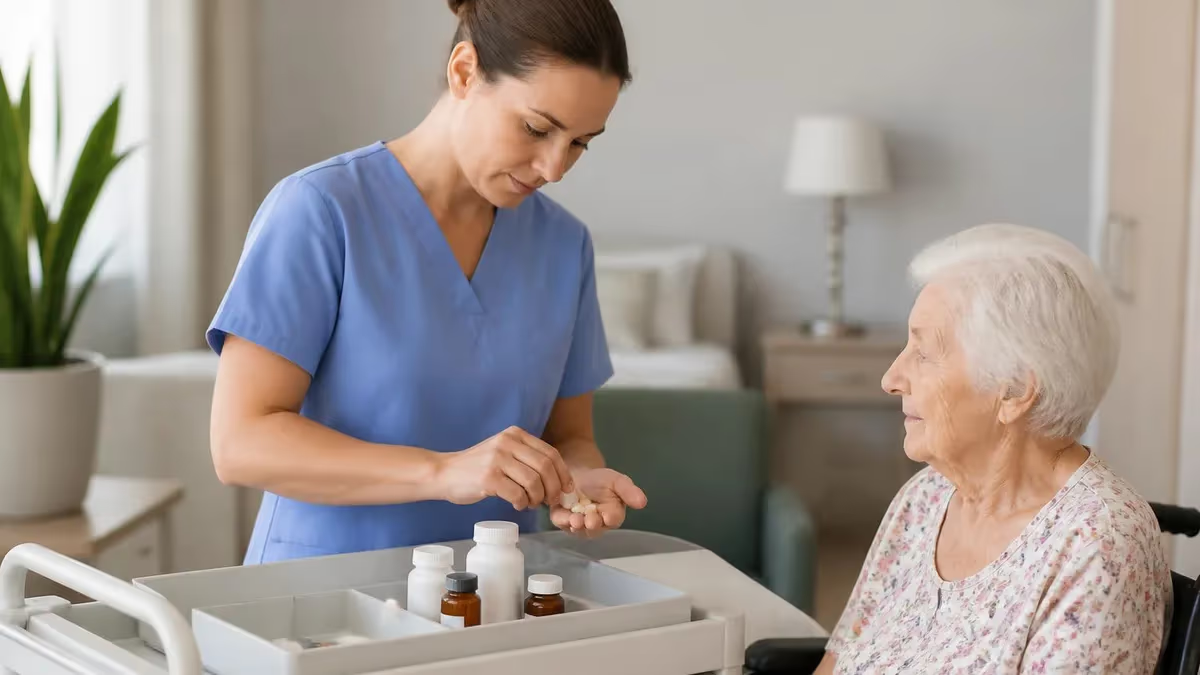
If you are a licensed practical nurse ready to expand your scope of practice and earning potential, lpn to rn programs online offer one of the most efficient pathways to achieving that goal. These bridge programs are specifically designed for working nurses who cannot step away from their jobs to attend full-time, on-campus programs. By completing coursework through accredited online platforms, LPNs can earn an Associate Degree in Nursing (ADN) or even a Bachelor of Science in Nursing (BSN) while continuing to care for patients and earn a paycheck.
The demand for registered nurses has never been stronger. According to the U.S. Bureau of Labor Statistics, RN employment is projected to grow by 6 percent through 2032, adding roughly 177,400 new positions nationwide. For LPNs already embedded in healthcare settings, the transition to RN is a natural and highly strategic career move. Online bridge programs recognize prior clinical training and academic coursework, which means many LPNs can complete the academic portion of an RN program in as few as 12 to 18 months, significantly faster than starting from scratch.
Online LPN-to-RN programs vary considerably in structure, cost, and prestige. Some are offered by community colleges and lead to an ADN, which qualifies graduates to sit for the NCLEX-RN exam. Others are university-based programs that award a BSN, opening doors to management, specialty nursing, and advanced practice roles. Understanding the differences between these program types — and knowing what accreditation to look for — is critical before you invest time and tuition dollars.
Accreditation is arguably the most important factor to research when evaluating any online nursing program. Programs accredited by the Accreditation Commission for Education in Nursing (ACEN) or the Commission on Collegiate Nursing Education (CCNE) meet rigorous quality standards and are recognized by state boards of nursing across the country. Without proper accreditation, your degree may not qualify you to sit for the NCLEX-RN, and your investment could be wasted. Always verify a program's accreditation status before applying.
Beyond accreditation, prospective students should examine clinical placement policies closely. Even though coursework is delivered online, RN programs require hands-on clinical hours in real healthcare environments. Some programs arrange clinical placements for students; others require students to locate their own sites. If you are currently employed as an LPN, your existing employer may be willing to serve as a clinical site, which can simplify this requirement considerably and allow you to deepen your practice in a familiar environment.
Financial planning is another essential step. Tuition for online LPN-to-RN programs ranges from roughly $8,000 at community colleges to over $40,000 at private universities. However, many nurses qualify for employer tuition reimbursement, federal financial aid, nursing scholarships, and loan forgiveness programs tied to service in underserved communities. The National Health Service Corps, for instance, offers substantial loan repayment in exchange for working in shortage areas after graduation.
This comprehensive guide will walk you through everything you need to know: program types, admission requirements, typical timelines, cost breakdowns, the pros and cons of online study, and practical strategies for managing the demands of school alongside a nursing career. Whether you are just beginning to explore your options or are ready to submit applications, the information here will help you make a confident, well-informed decision about your future as a registered nurse.
LPN to RN Bridge Programs by the Numbers
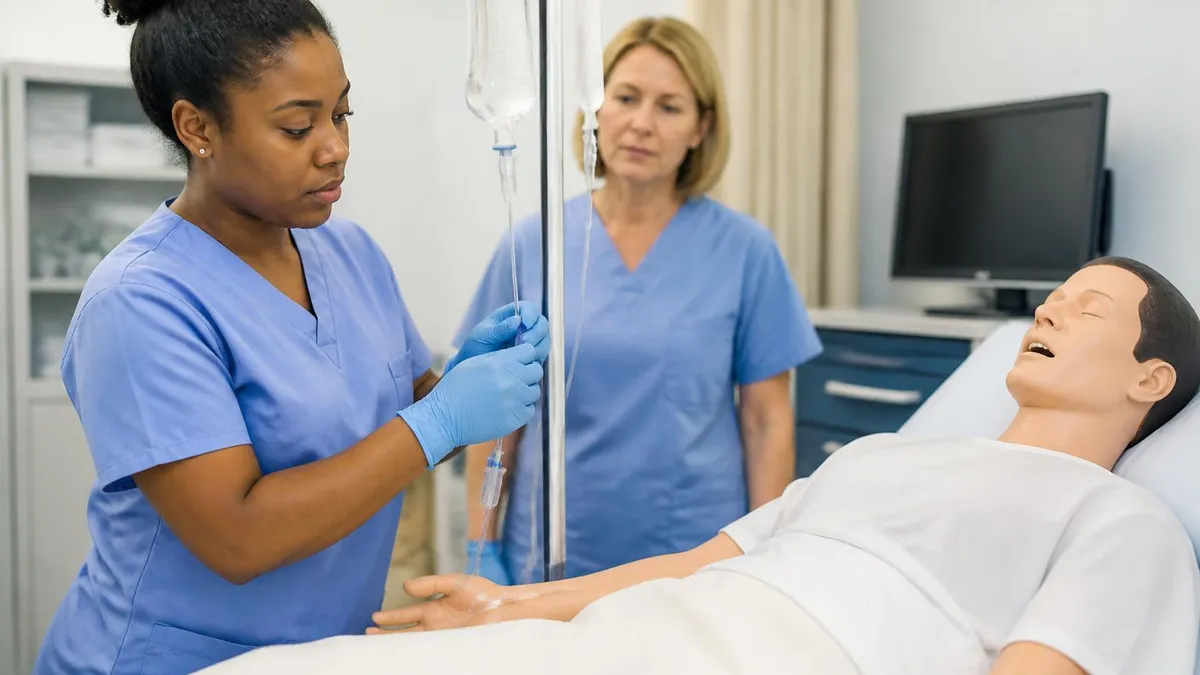
Types of LPN-to-RN Bridge Programs Online
Leads to an Associate Degree in Nursing, the fastest path to NCLEX-RN eligibility. Typically offered by community colleges, these programs take 12 to 18 months for LPNs with accepted transfer credits and cost significantly less than university programs.
Awards a Bachelor of Science in Nursing, which is increasingly preferred by hospitals and required for Magnet-status facilities. Programs range from 2 to 3 years online and open doors to leadership, specialty, and advanced practice nursing roles.
A two-step approach where LPNs first complete an ADN to become licensed RNs, then enroll in an RN-to-BSN completion program. This pathway lets nurses start earning RN wages quickly while continuing education toward a bachelor's degree.
Intensive programs compressed into 12 months or fewer, designed for LPNs who can handle a heavier course load. These programs demand strong time management skills but minimize the period between enrollment and sitting for the NCLEX-RN.
Admission requirements for LPN-to-RN programs online vary by institution, but most programs share a common set of baseline criteria. Understanding these requirements in advance allows you to build a timeline for completing any prerequisites and strengthens your application when the time comes. Rushing into a program without meeting prerequisites can result in course overload or academic difficulty once enrolled, so it is worth investing time upfront to prepare thoroughly.
Most online bridge programs require an active, unencumbered LPN or LVN license in the state where clinical hours will be completed. Some programs accept licenses from any state, particularly if they are affiliated with the Nurse Licensure Compact (NLC), which allows nurses to practice across member states on a single license. As of 2026, 41 states participate in the NLC, which gives online students significant flexibility when choosing programs outside their home state.
In addition to licensure, programs typically require a minimum amount of clinical experience as an LPN — usually between six months and two years of full-time equivalent work. This requirement ensures students bring practical knowledge to higher-level coursework and can integrate academic concepts with real patient care scenarios. Some programs waive this requirement for LPN graduates with strong academic records, but active clinical experience generally strengthens both your application and your readiness for RN-level coursework.
Academic prerequisites commonly include college-level courses in anatomy and physiology, microbiology, chemistry, nutrition, and statistics. Many LPN programs already cover some of these subjects, but the depth required for RN programs is typically greater. Community college transcripts from your LPN program may satisfy some prerequisites, but you may need to complete additional coursework at an accredited institution before applying. GPA requirements generally range from 2.5 to 3.0, though competitive programs may prefer higher.
Letters of recommendation from clinical supervisors, physicians, or nursing educators carry significant weight in the application process. Admissions committees want to see evidence that you perform well under pressure, communicate effectively with multidisciplinary teams, and demonstrate the kind of professional judgment that RN practice demands. Request letters from recommenders who have directly supervised your clinical work and can speak to specific examples of your performance.
Most programs also require a personal statement or essay explaining your motivation for advancing your education and your long-term career goals. This is your opportunity to articulate why now is the right time, what you bring to the program as a practicing LPN, and how an RN credential will help you serve patients and communities more effectively. Admissions committees read hundreds of essays; a concrete, specific narrative backed by genuine clinical experience will stand out from generic statements about passion for healthcare.
Finally, background checks and drug screenings are standard requirements for clinical placement. Convictions or disciplinary actions on your nursing license can complicate or disqualify your application, depending on the program and state board requirements. If you have a history that could raise questions, consult with a nursing licensing attorney before investing in an application. Some boards offer guidance on how past issues will be evaluated, and addressing any concerns proactively shows transparency and responsibility that admissions committees respect.
LPN Practice Test Questions
Prepare for the LPN - Certified Practical Nurse exam with our free practice test modules. Each quiz covers key topics to help you pass on your first try.
LPN - Certified Practical Nurse Basic Care...
LPN Exam Questions covering - Certified Practical Nurse Basic Care and Comfort. Master LPN Test concepts for certification prep.
LPN - Certified Practical Nurse Coordinate...
Free LPN Practice Test featuring - Certified Practical Nurse Coordinated Care. Improve your LPN Exam score with mock test prep.
LPN - Certified Practical Nurse Health Pro...
LPN Mock Exam on - Certified Practical Nurse Health Promotion and Maintenance. LPN Study Guide questions to pass on your first try.
LPN - Certified Practical Nurse Pharmacolo...
LPN Test Prep for - Certified Practical Nurse Pharmacological Therapies. Practice LPN Quiz questions and boost your score.
LPN - Certified Practical Nurse Physiologi...
LPN Questions and Answers on - Certified Practical Nurse Physiological Adaptation. Free LPN practice for exam readiness.
LPN - Certified Practical Nurse Psychosoci...
LPN Mock Test covering - Certified Practical Nurse Psychosocial Integrity. Online LPN Test practice with instant feedback.
LPN - Certified Practical Nurse Reduction ...
Free LPN Quiz on - Certified Practical Nurse Reduction of Risk Potential. LPN Exam prep questions with detailed explanations.
LPN - Certified Practical Nurse Safety and...
LPN Practice Questions for - Certified Practical Nurse Safety and Infection Control. Build confidence for your LPN certification exam.
LPN Ethical, Legal & Professional Standards
LPN Test Online for Ethical, Legal & Professional Standards. Free practice with instant results and feedback.
LPN Health Evaluation & Monitoring
LPN Study Material on Health Evaluation & Monitoring. Prepare effectively with real exam-style questions.
Online vs. Hybrid vs. Campus-Based LPN-to-RN Programs
Fully online LPN-to-RN programs deliver all didactic coursework through a learning management system, allowing students to complete lectures, readings, and exams on their own schedule. This asynchronous format is ideal for nurses who work irregular shifts or have significant family obligations. However, students must be self-disciplined and proactive about reaching out to instructors because the in-person accountability structure is absent.
Clinical hours remain an in-person requirement even in fully online programs. Students typically arrange clinical placements at approved healthcare facilities near their home. Some programs maintain a network of affiliated clinical sites and can assist with placement, while others expect students to independently secure their sites. Confirming clinical support before enrolling is critical, particularly if you live in a rural area where approved sites may be limited.
Pros and Cons of Online LPN-to-RN Bridge Programs
- +Flexibility to study around nursing shifts and family schedules without leaving your job
- +Lower tuition costs at community college-based programs compared to on-campus equivalents
- +Faster completion timelines for LPNs who receive credit for prior nursing education
- +Access to high-quality programs regardless of geographic location or proximity to a nursing school
- +Ability to apply clinical concepts immediately in your current nursing role during coursework
- +Many programs offer strong student support services including online tutoring, academic advising, and NCLEX prep
- −Requires significant self-discipline and time management without the structure of on-campus classes
- −Clinical placement coordination can be challenging, especially in rural or underserved areas
- −Limited face-to-face interaction with instructors may slow feedback on complex nursing concepts
- −Technology requirements including reliable high-speed internet and a modern computer add hidden costs
- −Some employers or state boards may scrutinize online degrees more carefully than traditional programs
- −Balancing full-time nursing work with accelerated coursework leads to burnout risk if not carefully managed
Pros and Cons at a Glance
| Pros | Cons |
|---|---|
| Flexibility to study around nursing shifts and family schedules without leaving your job | Requires significant self-discipline and time management without the structure of on-campus classes |
| Lower tuition costs at community college-based programs compared to on-campus equivalents | Clinical placement coordination can be challenging, especially in rural or underserved areas |
| Faster completion timelines for LPNs who receive credit for prior nursing education | Limited face-to-face interaction with instructors may slow feedback on complex nursing concepts |
| Access to high-quality programs regardless of geographic location or proximity to a nursing school | Technology requirements including reliable high-speed internet and a modern computer add hidden costs |
| Ability to apply clinical concepts immediately in your current nursing role during coursework | Some employers or state boards may scrutinize online degrees more carefully than traditional programs |
| Many programs offer strong student support services including online tutoring, academic advising, and NCLEX prep | Balancing full-time nursing work with accelerated coursework leads to burnout risk if not carefully managed |
Checklist: Applying to an Online LPN-to-RN Bridge Program
- ✓Verify your LPN license is current, active, and free of disciplinary actions in your state.
- ✓Confirm the program is accredited by ACEN or CCNE before spending time on the application.
- ✓Request official transcripts from your LPN program and all previous college coursework.
- ✓Complete any missing prerequisite courses such as anatomy, microbiology, or statistics at an accredited college.
- ✓Accumulate the required clinical work experience (usually 6–24 months) before applying.
- ✓Identify potential clinical placement sites near your home and confirm they accept nursing students.
- ✓Request letters of recommendation from a direct clinical supervisor and a nursing faculty member.
- ✓Write a compelling personal statement focusing on specific patient care experiences and career goals.
- ✓Submit the FAFSA to determine federal financial aid eligibility and deadlines for your target programs.
- ✓Research employer tuition reimbursement policies and apply for nursing-specific scholarships early.
Your LPN Experience Is a Competitive Advantage
Unlike pre-licensure nursing students who enter RN programs with no clinical background, LPNs bring measurable patient care experience to bridge programs. Admissions committees value this, and many programs award academic credit for prior learning, shortening your program by one or even two semesters. Always ask about prior learning assessment (PLA) policies before assuming you must repeat foundational coursework you have already mastered in clinical practice.
The cost of completing an online LPN-to-RN bridge program is one of the first practical questions nurses ask, and rightfully so. Tuition is only one piece of the total financial picture. Community college LPN-to-ADN programs are typically the most affordable option, with tuition ranging from $8,000 to $15,000 total for the bridge portion. Public university LPN-to-BSN programs tend to fall in the $20,000 to $35,000 range, while private or for-profit institutions can exceed $45,000. Understanding the full cost — including fees, books, equipment, and technology — helps you compare programs accurately.
Federal financial aid is available to most students enrolled in accredited degree programs at least half-time. The Free Application for Federal Student Aid (FAFSA) opens the door to Pell Grants, subsidized and unsubsidized federal loans, and work-study opportunities. Because many nurses are working adults with established incomes, not all qualify for need-based grants, but federal loans offer lower interest rates and more flexible repayment options than private loans, making them preferable even when grants are not available.
Employer tuition reimbursement is among the most underutilized financial resources available to working nurses. Many hospitals, long-term care facilities, and health systems offer annual tuition reimbursement of $2,500 to $10,000 per year in exchange for a commitment to remain employed with the organization for a specified period after graduation — typically one to two years. If your current employer does not offer this benefit, some nurses strategically change employers to one that does before beginning their bridge program.
Nursing scholarships are available from a wide array of sources including the American Nurses Foundation, the National Student Nurses Association, state nursing associations, and specialty nursing organizations focused on areas like oncology, pediatrics, or critical care. Many scholarships go unclaimed each cycle because nurses do not apply. Dedicate time each semester to researching and submitting scholarship applications; even smaller awards of $500 to $2,000 add up meaningfully over the course of a multi-year program.
The Public Service Loan Forgiveness (PSLF) program is relevant for nurses who plan to work at nonprofit hospitals, government-operated health systems, or other qualifying public service employers after graduation. After making 120 qualifying monthly payments under an income-driven repayment plan while employed full-time by a qualifying employer, the remaining federal loan balance is forgiven tax-free. For nurses carrying $20,000 or more in student loans, PSLF can represent a significant financial benefit that effectively reduces the net cost of their education.
The National Health Service Corps (NHSC) Loan Repayment Program offers another powerful incentive for nurses willing to practice in Health Professional Shortage Areas (HPSAs). In exchange for a two-year full-time service commitment at an NHSC-approved site, nurses can receive up to $50,000 in tax-free loan repayment. Part-time service options also exist. Many rural and urban underserved communities rely heavily on nurses committed to these areas, and the financial benefit can be life-changing for new RNs carrying significant educational debt.
Finally, consider the return on investment carefully before borrowing heavily. The median annual salary difference between LPNs ($54,620) and RNs ($81,220) represents roughly $26,600 in additional income per year, according to BLS data. A bridge program costing $20,000 in net tuition, after grants and scholarships, could pay for itself within the first year of RN employment. When you factor in the career longevity, advancement potential, and salary trajectory of the RN credential, the financial case for completing a bridge program is compelling for the vast majority of practicing LPNs.
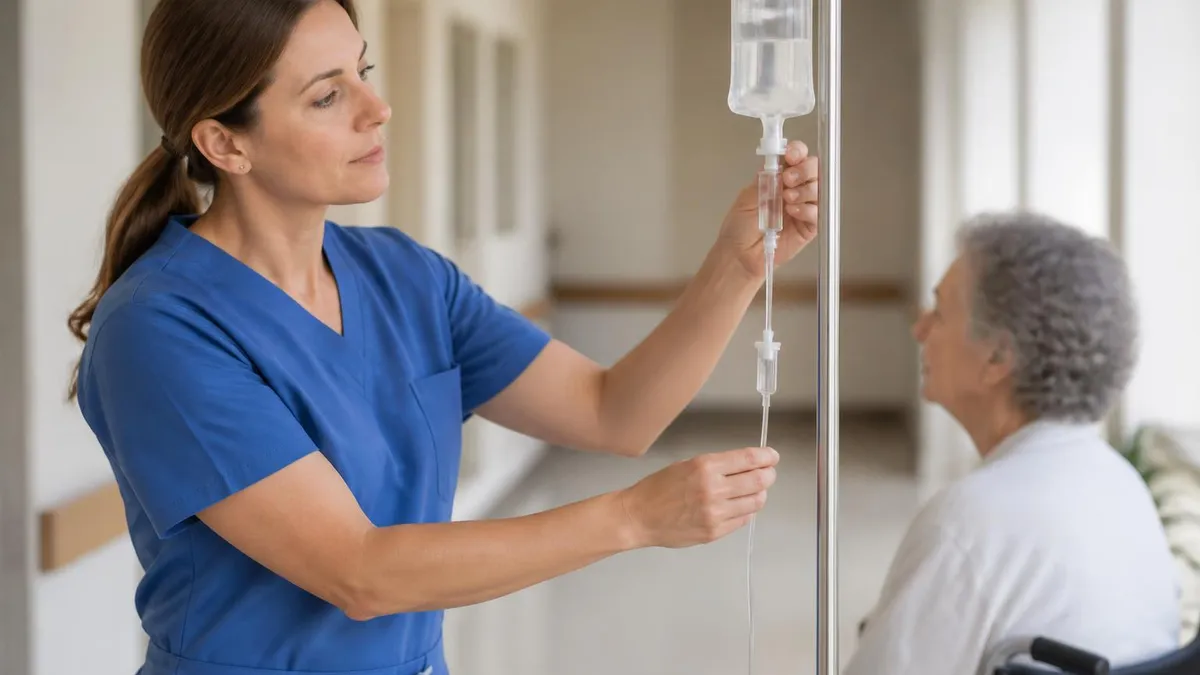
Not all online LPN-to-RN programs are approved by every state board of nursing. Even if a program is nationally accredited, your state board may have additional approval requirements that determine whether graduates can sit for the NCLEX-RN in that state. Before enrolling, contact your state board of nursing directly and confirm that the program you are considering is approved for graduates who plan to seek licensure in your state.
Graduating from an online LPN-to-RN bridge program and passing the NCLEX-RN exam opens a substantially wider range of career opportunities than LPN licensure alone. Registered nurses are authorized to perform a broader scope of clinical tasks, including initiating nursing care plans, administering blood products, performing comprehensive patient assessments, and supervising LPNs and nursing assistants. This expanded scope translates directly into more challenging, higher-compensated positions across virtually every healthcare setting.
Hospital nursing remains the largest employer of RNs, with positions available in medical-surgical units, intensive care, emergency departments, labor and delivery, oncology, and dozens of specialty areas. Many hospitals now require or strongly prefer RNs with BSN degrees, particularly those pursuing Magnet recognition from the American Nurses Credentialing Center (ANCC). Magnet hospitals are associated with higher nurse satisfaction, better patient outcomes, and competitive compensation packages, making BSN completion a strategic credential for nurses who want to work in elite clinical environments.
Beyond hospital nursing, RNs are in strong demand in outpatient clinics, home health agencies, school systems, correctional facilities, occupational health programs, and insurance companies. Public health nursing at the county or state level offers another avenue that increasingly values RN credentials and often comes with stable government employment benefits. For nurses who prefer variety and autonomy, travel nursing — contracting with agencies to fill short-term staffing needs at facilities across the country — can yield premium pay rates that far exceed permanent staff salaries.
The RN credential also serves as the foundation for advanced practice nursing roles that require graduate-level education. Nurse practitioners (NPs), certified registered nurse anesthetists (CRNAs), clinical nurse specialists (CNSs), and certified nurse-midwives (CNMs) are all advanced practice registered nurse (APRN) roles that require an active RN license and typically a Master of Science in Nursing (MSN) or Doctor of Nursing Practice (DNP). For LPNs with long-term ambitions in primary care, anesthesia, or specialty practice, the LPN-to-RN bridge is the essential first step in a multi-phase educational journey.
Nurse leadership and management are natural pathways for experienced RNs who demonstrate strong organizational and interpersonal skills. Charge nurse, unit manager, director of nursing, and chief nursing officer roles typically require RN licensure and progressively more experience. Many healthcare systems actively develop internal talent pipelines for leadership roles, offering mentorship programs, management training, and tuition support for nurses who want to move into administrative careers without leaving direct patient care entirely.
Case management is a growing specialty that uses RN clinical knowledge in a coordinating role focused on care transitions, resource utilization, and discharge planning. Case managers work with patients, families, physicians, and payers to ensure care is delivered efficiently and that patients have the support they need to recover successfully. This role is well-suited for nurses who enjoy problem-solving, advocacy, and communication, and it is often available in both hospital and insurance industry settings with competitive compensation.
Nursing informatics is another high-growth specialty that combines clinical expertise with technology implementation and data analysis. As healthcare systems invest heavily in electronic health records and clinical decision support tools, nurses who can bridge the gap between clinical workflows and information technology are increasingly valuable. Many informatics positions are remote-eligible, pay well above staff nurse salaries, and require the RN credential as a foundation. For tech-savvy nurses, this represents an exciting career evolution that emerged directly from earning an RN credential through a bridge program.
If you want the full picture, the lpn to rn programs online guide walks through it step by step.
Successfully completing an online LPN-to-RN bridge program while working as a nurse requires deliberate strategy, not just determination. The most common reason nurses struggle or withdraw from bridge programs is underestimating the weekly time commitment. Most programs recommend dedicating 15 to 20 hours per week to coursework, in addition to clinical hours and your existing work schedule. Before starting, map out a realistic weekly calendar that accounts for study blocks, clinical shifts, family time, and adequate sleep — then stress-test it honestly.
Time management tools are your most valuable allies as a student nurse. Many successful bridge students use digital calendars to schedule non-negotiable study blocks the same way they schedule work shifts. Others use the Pomodoro technique — 25-minute focused study intervals separated by short breaks — to maintain concentration during demanding reading assignments. The specific method matters less than the consistency. Building a routine in the first two weeks of the program pays dividends throughout the entire curriculum.
Active learning strategies are far more effective than passive re-reading when preparing for nursing exams, particularly the NCLEX-RN style questions that dominate nursing program assessments. Practice questions that require you to apply knowledge to clinical scenarios build the reasoning skills that determine NCLEX-RN success. Free and low-cost NCLEX practice resources are widely available; incorporating 20 to 30 practice questions per day into your study routine from the first day of your bridge program builds both knowledge and test-taking endurance over time.
Peer study groups are valuable even in online programs where students never meet in person. Most learning management systems include discussion boards, and many students organize study sessions via video conferencing tools. Explaining concepts to peers reinforces your own understanding and exposes gaps in knowledge that solo studying misses. Seek out classmates who are committed and focused; even two or three reliable study partners can significantly improve your academic performance and reduce the isolation that online students sometimes experience.
Communicating proactively with faculty is a habit that distinguishes successful online students from those who struggle silently. If a concept is unclear, email your instructor before falling behind on assignments that build on that concept. Most online nursing faculty are experienced clinicians who are genuinely invested in student success and respond well to thoughtful questions. Waiting until you are weeks behind before reaching out makes recovery much harder and squanders the expertise your faculty bring to the program.
Self-care and stress management are not optional extras for nurses in bridge programs — they are clinical necessities. Nurses who ignore their own health while studying for healthcare credentials perform worse academically, experience more clinical errors, and are at higher risk for burnout and compassion fatigue. Regular exercise, adequate sleep, healthy nutrition, and deliberate mental health practices like mindfulness or journaling all contribute to the cognitive resilience you need to perform well in a rigorous academic program while maintaining professional responsibilities.
Finally, keep your long-term goal visible throughout the program. The months of hard work and sacrifice involved in completing an online bridge program can feel overwhelming when deadlines pile up and fatigue sets in. Tracking your progress milestones — completing a semester, passing a skills check-off, receiving a strong grade on a clinical evaluation — reminds you that you are advancing steadily toward a credential that will meaningfully improve your professional life, your earning potential, and your ability to advocate for and protect the patients who depend on your expertise.
Sample Certified Practical Nurse Practice Questions
Try these questions from our free Certified Practical Nurse practice tests. The correct answer and an explanation follow each question.
The LPN is caring for a 6-year-old child with nephrotic syndrome. Which finding is the primary characteristic of this condition?
- A. Hypertension and hematuria
- B. Massive proteinuria, hypoalbuminemia, and generalized edema (anasarca)
- C. Oliguria and elevated creatinine
- D. Polyuria and polydipsia
Answer: B. Massive proteinuria, hypoalbuminemia, and generalized edema (anasarca)
Nephrotic syndrome is defined by the triad of massive proteinuria (>3.5 g/day), hypoalbuminemia (<3 g/dL), and generalized edema from reduced oncotic pressure.
An LPN is admitting a new client to a substance abuse treatment facility. During the initial interview, the client becomes defensive and states, 'I don't have a problem. I can quit anytime I want.' What is the LPN's most appropriate action?
- A. Confront the client with evidence of their substance abuse problem.
- B. Document the client's statement as denial and continue the admission process.
- C. Explain the negative health consequences of continued substance use.
- D. Agree with the client to build rapport and trust.
Answer: B. Document the client's statement as denial and continue the admission process.
Denial is a common coping mechanism in clients with substance use disorders. The LPN's role is to remain non-judgmental, accurately document the client's statements and behaviors, and proceed with the established admission protocol. Confronting the client can create a barrier to the therapeutic relationship.
A client with rheumatoid arthritis (RA) asks about managing morning joint stiffness. The LPN's best recommendation is:
- A. Apply ice packs to stiff joints for 20 minutes each morning
- B. Take a warm shower or apply warm compresses to stiff joints before activity
- C. Avoid all movement until stiffness resolves spontaneously
- D. Increase dietary protein to rebuild inflamed joint tissue
Answer: B. Take a warm shower or apply warm compresses to stiff joints before activity
Warm therapy (shower, warm compress) increases circulation and reduces viscosity of synovial fluid, helping relieve the characteristic morning stiffness of RA.
A client is receiving TPN and the TPN bag is empty. A new bag is not available for 30 minutes. The LPN should:
- A. Stop all IV infusions until the new TPN bag arrives
- B. Infuse D10W at the same rate as the TPN to prevent rebound hypoglycemia until the new bag arrives
- C. Increase oral intake to compensate for the delay
- D. Flush the central line with heparin and clamp it until the new bag arrives
Answer: B. Infuse D10W at the same rate as the TPN to prevent rebound hypoglycemia until the new bag arrives
Abruptly stopping TPN without a dextrose infusion can cause rebound hypoglycemia (the pancreas continues producing insulin from the previous high dextrose load). D10W maintains glucose until the new bag is prepared.
LPN Questions and Answers
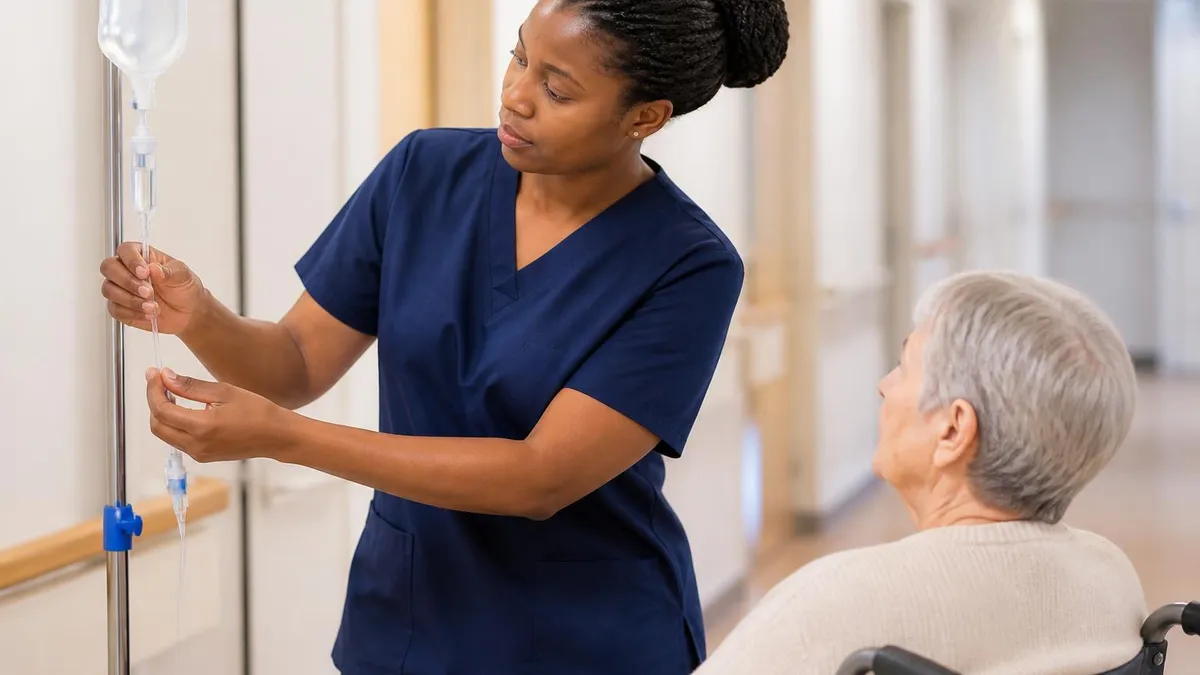
LPN Program Online: Complete 2026 Guide to Accredited Online LPN Programs

LPN Practice Test PDF (Free Printable 2026)
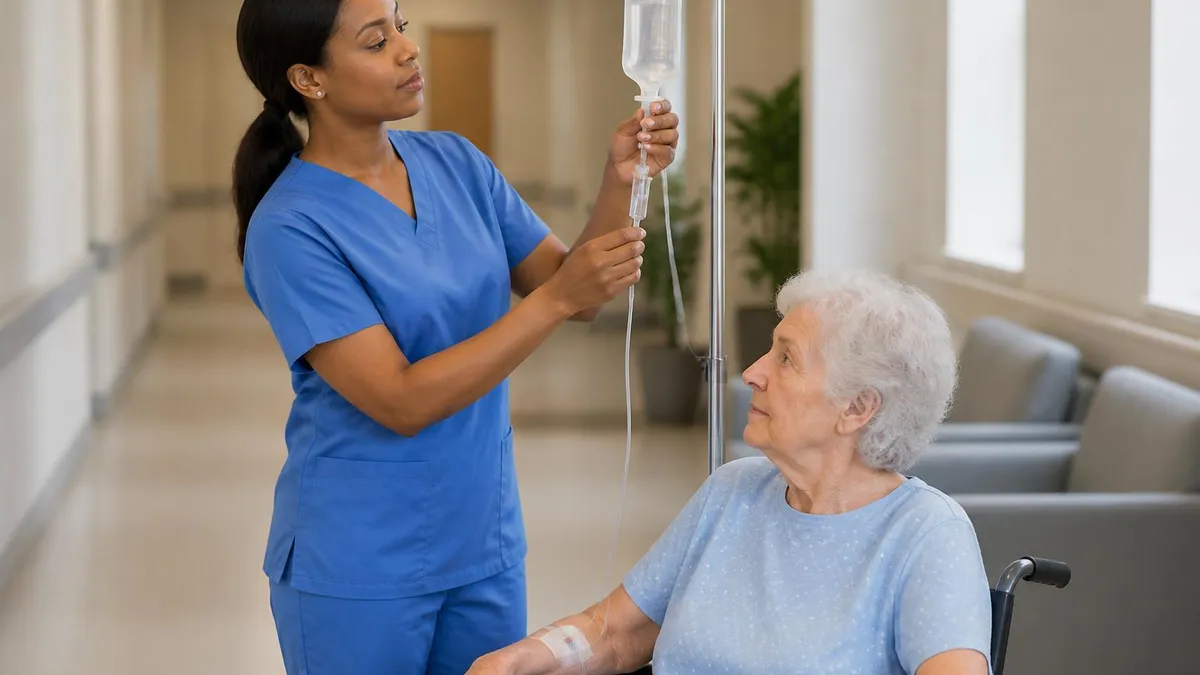
LPN to RN Bridge Programs Online: Complete 2026 Guide
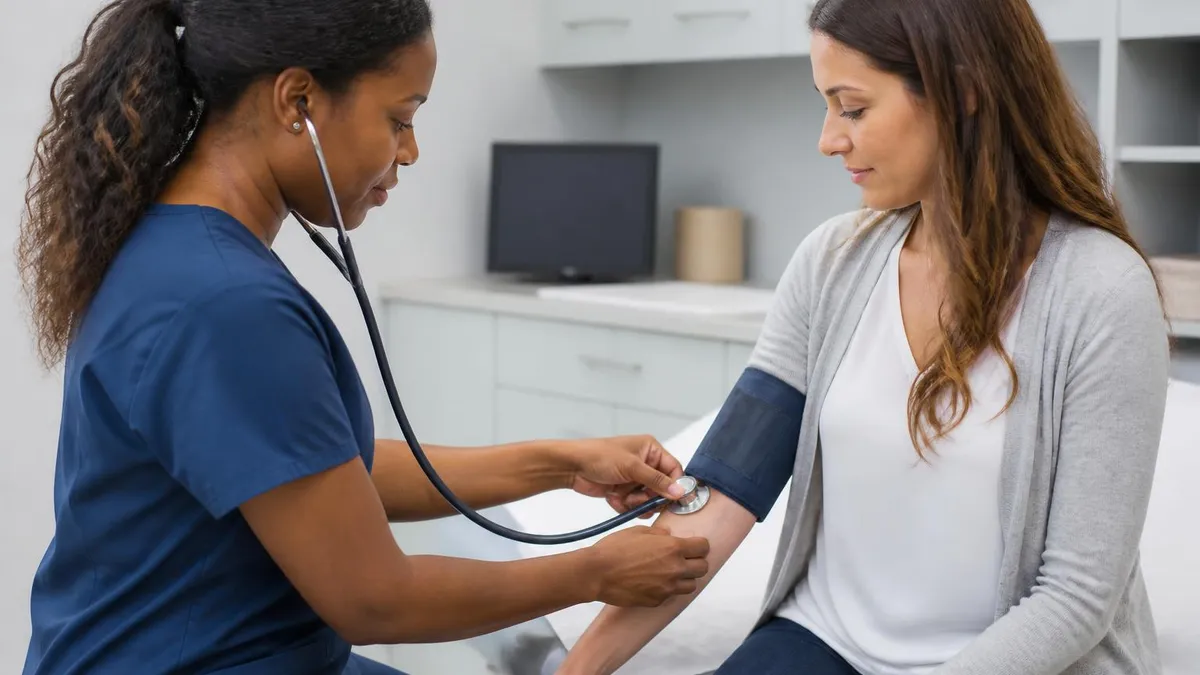
Travel LPN: Complete 2026 Guide to Becoming a Travel Licensed Practical Nurse
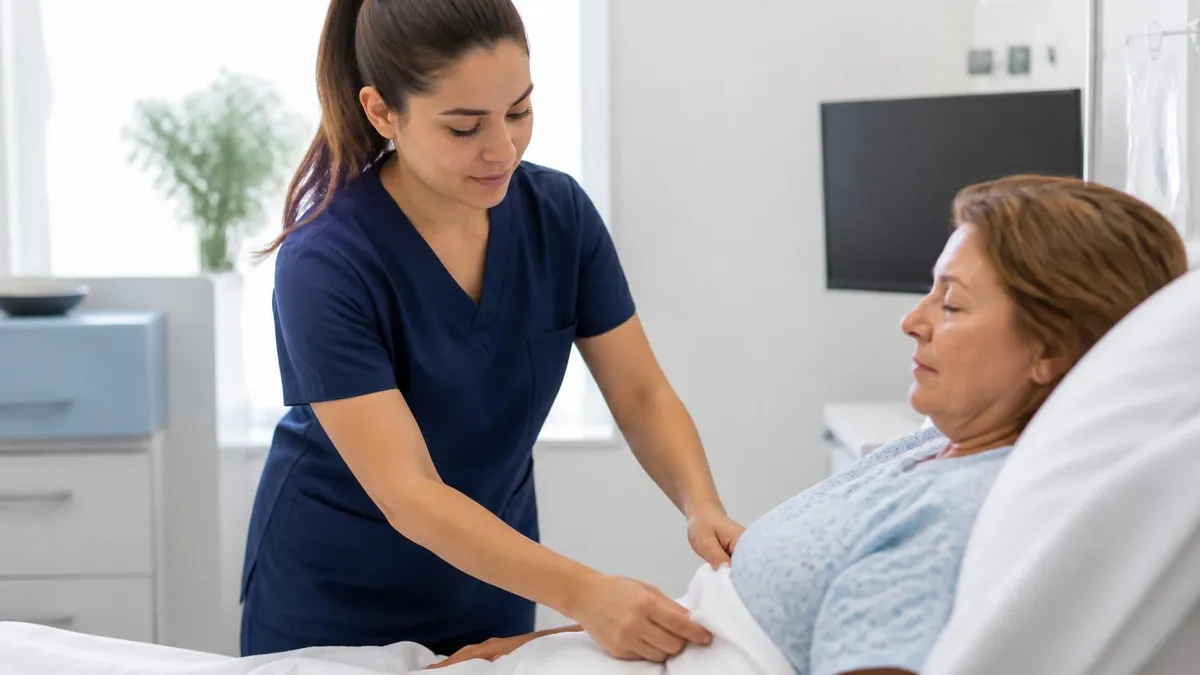
Macomb LPN Program: Complete 2026 Guide to Specific LPN Programs, Admission Requirements, Cost & Career Outcomes
About the Author

Registered Nurse & Healthcare Educator
Johns Hopkins University School of NursingDr. Sarah Mitchell is a board-certified registered nurse with over 15 years of clinical and academic experience. She completed her PhD in Nursing Science at Johns Hopkins University and has taught NCLEX preparation and clinical skills courses for nursing students across the United States. Her research focuses on evidence-based exam preparation strategies for healthcare certification candidates.
Join the Discussion
Connect with other students preparing for this exam. Share tips, ask questions, and get advice from people who have been there.
View discussion (7 replies)