
LPN Program Online: Complete 2026 Guide to Accredited Online LPN Programs
💯 Find the best LPN program online for 2026. Compare accredited schools, costs, prerequisites, and career outcomes for online practical nursing programs.
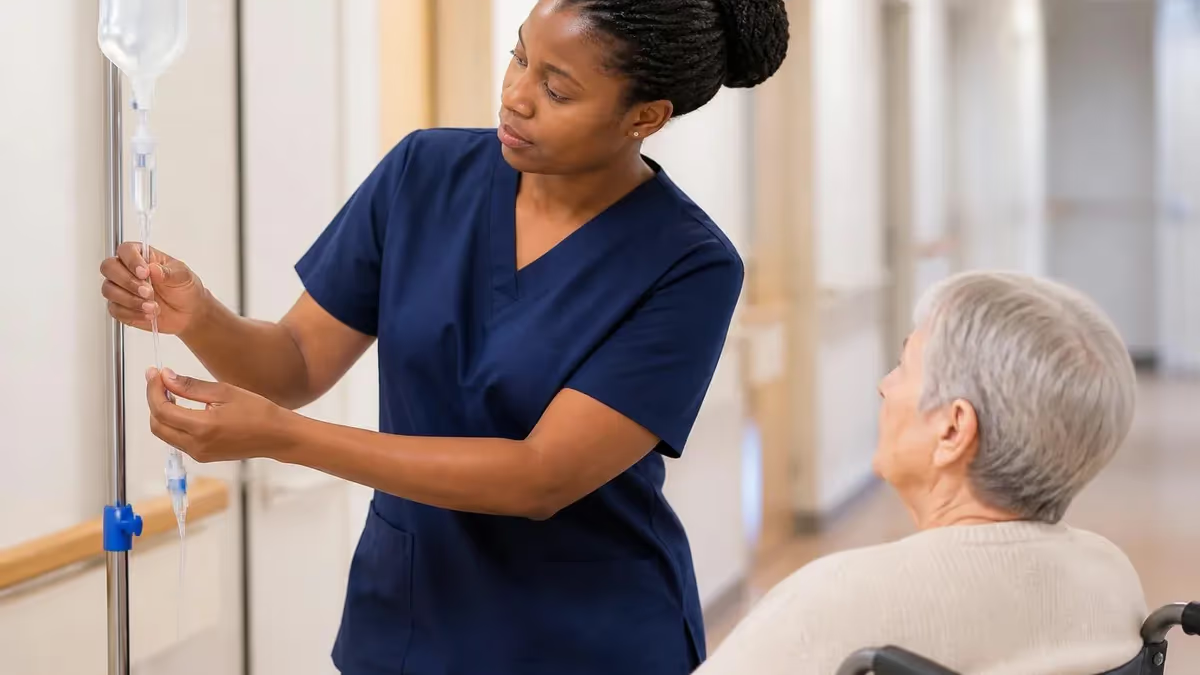
An LPN program online gives working adults a flexible path into practical nursing without leaving their jobs or relocating. Unlike traditional programs that demand full-time attendance at fixed hours, online LPN programs let you complete nursing theory and foundational coursework on your own schedule. Before you dive in, bookmark our lpn program online resource to reinforce every concept you study.
This guide breaks down everything you need to know — from accreditation requirements to real cost figures to what the NCLEX-PN licensing exam looks like once you graduate. Whether you're a CNA looking to advance or a career-changer entering healthcare for the first time, the right online program can get you licensed in 12 to 18 months.
Online LPN programs typically take between 12 and 18 months to complete when pursued full-time, though part-time options can stretch to 24 months. The curriculum splits into two distinct phases: the online didactic phase, where you absorb anatomy, physiology, pharmacology, medical-surgical nursing concepts, and legal-ethical principles through recorded lectures and interactive modules; and the clinical phase, where you apply those skills with real patients under RN supervision.
Both phases are mandatory — no state board of nursing allows a purely online pathway without hands-on clinical hours. The exact balance between online and in-person time differs by program, but most dedicate 60–70% of total hours to online coursework and 30–40% to clinical rotations at approved facilities near your home.
Accreditation is the single most important factor when comparing programs. You want a school accredited by either the Accreditation Commission for Education in Nursing (ACEN) or the Commission on Collegiate Nursing Education (CCNE). Programs outside these bodies may not qualify you to sit for the NCLEX-PN, which means your diploma would hold no professional value. Always confirm a program's accreditation status on the ACEN or CCNE directory before paying an application fee.
Tuition for online LPN programs varies widely. Community-college-based programs average $8,000 to $15,000 for the entire program, while private for-profit schools can charge $20,000 to $35,000. Financial aid, including Pell Grants and Title IV loans, is available at accredited institutions. Some healthcare employers also offer tuition reimbursement for employees pursuing nursing credentials, so check with HR before enrolling.
The job outlook for LPNs is strong. The U.S. Bureau of Labor Statistics projects a 5% increase in LPN employment from 2022 to 2032, adding roughly 54,000 new positions. Median annual pay sits at approximately $59,730, with the highest earners — typically those working in specialty units or home health — clearing $75,000 per year. An online program can get you into this career faster and more affordably than many people expect.
State licensing rules add another layer of complexity. Each state's board of nursing sets its own minimum clinical hour requirements, often ranging from 300 to 600 hours. If you enroll in an out-of-state online program, you must confirm that its clinical curriculum meets the requirements of the state where you plan to work. Some states have reciprocity agreements through the Nurse Licensure Compact (NLC), allowing a single license to cover 40+ participating states — a major advantage for LPNs who want maximum career mobility.
This guide is organized to walk you through every major decision point: accreditation, curriculum structure, clinical placement, costs, scheduling, and exam preparation. By the end, you'll have a clear picture of which online LPN program fits your circumstances — and you'll know exactly how to move from enrollment to your first nursing paycheck.
LPN Programs Online: Key Numbers

How Online LPN Programs Are Structured
Theory-based coursework completed remotely via learning management systems. Covers anatomy, physiology, pharmacology, nutrition, mental health nursing, and professional ethics — typically 60–70% of total program hours.
Mandatory hands-on training at approved healthcare sites near the student. Ranges from 300 to 600 hours depending on state requirements. Students practice patient assessments, medication administration, wound care, and IV therapy under RN supervision.
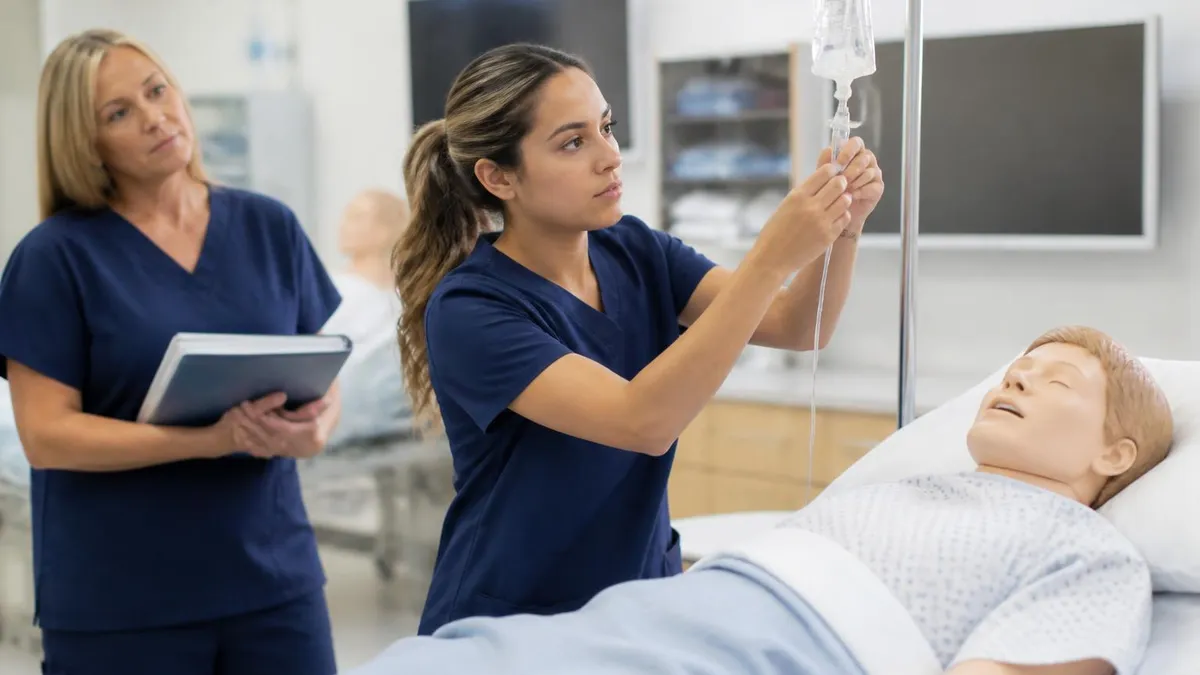
Many online programs require periodic on-campus or regional simulation lab attendance. Students practice skills on high-fidelity mannequins before entering live clinical settings, ensuring safe, competent patient care from day one.
Integrated throughout the program via ATI, HESI, or proprietary readiness assessments. Exit exams predict NCLEX-PN pass likelihood. Most programs require a minimum readiness score before they allow students to graduate and test.
Choosing an accredited online LPN program is non-negotiable if you want to sit for the NCLEX-PN and obtain your license. Accreditation by the ACEN or CCNE signals that an independent body has reviewed the curriculum, faculty qualifications, student outcomes, and clinical partnerships against national nursing education standards. Without this stamp of approval, your application to the state board may be rejected outright, meaning years of tuition payments and study time yield nothing actionable. The ACEN website maintains a searchable directory where you can confirm any program's status in under a minute.
Beyond national accreditation, you should verify that the online program you select is specifically approved by the state board of nursing in the state where you intend to take the NCLEX-PN and practice. State approval is separate from national accreditation. A school can be ACEN-accredited but lack approval in certain states. If you're in Texas, for example, check the Texas Board of Nursing's approved programs list independently of the ACEN directory.
Admission prerequisites for online LPN programs are generally modest compared to associate or bachelor's degree nursing programs. Most schools require a high school diploma or GED, a minimum GPA of 2.5 to 3.0, and completion of prerequisite courses in English, algebra, and sometimes basic biology or anatomy. Some programs require a certified nursing assistant (CNA) credential or a minimum number of documented healthcare work hours — often 500 to 1,000 — to ensure students arrive with foundational patient care experience.
Criminal background checks and drug screenings are universal requirements. Clinical sites are hospitals, nursing homes, and outpatient clinics that work with vulnerable populations, and they routinely require students to submit to these screenings before allowing access. A felony conviction does not automatically disqualify you from nursing licensure, but it does require a formal petition to the state board, which can delay your timeline significantly. Address any record-related concerns with an attorney and your target state's board before enrolling.
Immunization and health documentation requirements mirror those of traditional hospital employees. Expect to provide proof of MMR vaccination, hepatitis B series, varicella immunity, annual flu shot, and tuberculosis testing. You'll also need current CPR certification at the BLS Healthcare Provider level. Some clinical sites add N95 mask fit-testing to the list. Gather these documents early — missing even one item can delay your clinical placement by an entire semester.
Reference letters and personal statements are increasingly common for competitive programs. Schools want evidence that applicants understand the demands of nursing and have realistic expectations. A strong personal statement focuses on patient interactions you've had in a caregiver, volunteer, or healthcare worker role. Vague statements about wanting to help people carry less weight than specific, vivid stories from direct experience.
Finally, check technology requirements carefully. Online coursework requires a reliable computer, stable broadband internet, a webcam for proctored exams, and often specific software for simulation or virtual clinical tools. Programs increasingly use remote proctoring services such as Honorlock or ProctorU, so you'll need a private, quiet space for exams. If your current home setup is inadequate, factor in the cost of upgrades before comparing total program prices.
LPN Practice Test Questions
Prepare for the LPN - Certified Practical Nurse exam with our free practice test modules. Each quiz covers key topics to help you pass on your first try.
LPN - Certified Practical Nurse Basic Care...
LPN Exam Questions covering - Certified Practical Nurse Basic Care and Comfort. Master LPN Test concepts for certification prep.
LPN - Certified Practical Nurse Coordinate...
Free LPN Practice Test featuring - Certified Practical Nurse Coordinated Care. Improve your LPN Exam score with mock test prep.
LPN - Certified Practical Nurse Health Pro...
LPN Mock Exam on - Certified Practical Nurse Health Promotion and Maintenance. LPN Study Guide questions to pass on your first try.
LPN - Certified Practical Nurse Pharmacolo...
LPN Test Prep for - Certified Practical Nurse Pharmacological Therapies. Practice LPN Quiz questions and boost your score.
LPN - Certified Practical Nurse Physiologi...
LPN Questions and Answers on - Certified Practical Nurse Physiological Adaptation. Free LPN practice for exam readiness.
LPN - Certified Practical Nurse Psychosoci...
LPN Mock Test covering - Certified Practical Nurse Psychosocial Integrity. Online LPN Test practice with instant feedback.
LPN - Certified Practical Nurse Reduction ...
Free LPN Quiz on - Certified Practical Nurse Reduction of Risk Potential. LPN Exam prep questions with detailed explanations.
LPN - Certified Practical Nurse Safety and...
LPN Practice Questions for - Certified Practical Nurse Safety and Infection Control. Build confidence for your LPN certification exam.
LPN Ethical, Legal & Professional Standards
LPN Test Online for Ethical, Legal & Professional Standards. Free practice with instant results and feedback.
LPN Health Evaluation & Monitoring
LPN Study Material on Health Evaluation & Monitoring. Prepare effectively with real exam-style questions.
Online LPN Program Types: Comparing Your Options
Community colleges offer the most affordable route to an LPN credential, with tuition typically ranging from $8,000 to $15,000 for the full program. These schools are locally rooted, meaning clinical partnerships are established within commuting distance, and in-person simulation labs are scheduled on evenings and weekends to accommodate working students. Financial aid availability is broad, including Pell Grants, institutional scholarships, and state workforce development funds.
The trade-off is selectivity — community college LPN programs often have competitive waitlists because of high demand and limited clinical slots. Applying early and meeting every prerequisite with a strong GPA increases your chances significantly. Many community colleges also offer bridge programs that allow LPN graduates to continue directly into an RN associate degree, making the initial investment even more valuable long-term.
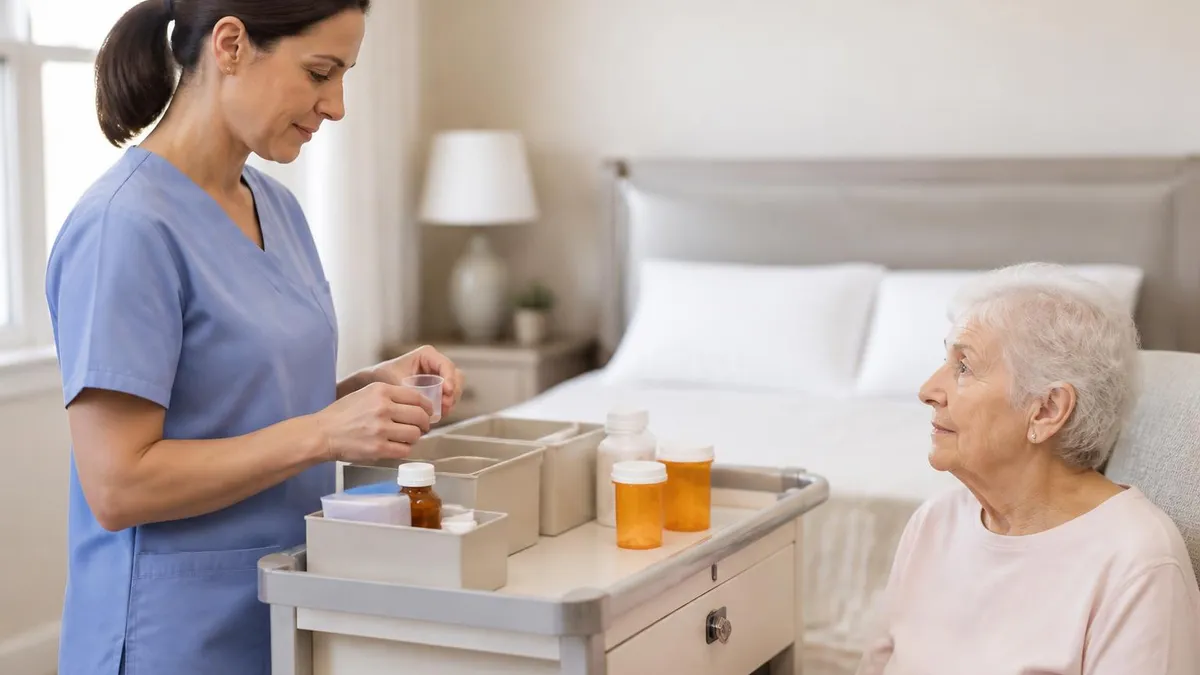
Online LPN Program: Pros and Cons
- +Study on your own schedule — evening and weekend coursework fits around full-time work
- +Eliminates commuting to campus for lecture-based content, saving 5–10 hours per week
- +Often more affordable than in-person programs when factoring out relocation costs
- +Access to nationally recognized programs even if your local options are limited
- +Technology tools like virtual simulations reinforce clinical concepts before patient contact
- +Self-paced modules let faster learners move ahead and struggling learners review at will
- −Clinical rotations are still in-person — you must arrange transportation to approved sites
- −Requires strong self-discipline; without a set class schedule, procrastination is a real risk
- −Some employers and state boards scrutinize online program credentials more heavily than traditional ones
- −Technology failures — internet outages, software glitches — can disrupt proctored exams
- −Limited spontaneous peer interaction makes study groups and mentorship harder to develop
- −Clinical placement coordination can be complicated, especially in rural or underserved areas
Pros and Cons at a Glance
| Pros | Cons |
|---|---|
| Study on your own schedule — evening and weekend coursework fits around full-time work | Clinical rotations are still in-person — you must arrange transportation to approved sites |
| Often more affordable than in-person programs when factoring out relocation costs | Requires strong self-discipline; without a set class schedule, procrastination is a real risk |
| Access to nationally recognized programs even if your local options are limited | Some employers and state boards scrutinize online program credentials more heavily than traditional ones |
| Technology tools like virtual simulations reinforce clinical concepts before patient contact | Technology failures — internet outages, software glitches — can disrupt proctored exams |
| Self-paced modules let faster learners move ahead and struggling learners review at will | Limited spontaneous peer interaction makes study groups and mentorship harder to develop |
LPN Online Program Enrollment Checklist
- ✓Verify program accreditation through the ACEN or CCNE official directory
- ✓Confirm state board of nursing approval for the state where you plan to practice
- ✓Request the program's NCLEX-PN first-time pass rate (should be ≥80%)
- ✓Complete prerequisite coursework in English, math, and basic sciences
- ✓Schedule CNA certification if the program requires prior healthcare experience
- ✓Gather immunization records: MMR, hepatitis B, varicella, TB test, annual flu shot
- ✓Obtain current BLS Healthcare Provider CPR certification card
- ✓Submit criminal background check and drug screening documentation
- ✓Test your home tech setup: reliable internet, webcam, quiet exam space
- ✓Complete FAFSA and compare financial aid packages before accepting an offer
Always Ask for the School's NCLEX-PN First-Time Pass Rate
State boards of nursing publish program-level NCLEX-PN pass rates annually. Any accredited online LPN program with a first-time pass rate below 80% should raise serious concerns about curriculum quality, faculty support, and student preparation. The national average hovers near 87% — programs that consistently exceed this benchmark are producing well-prepared graduates. Don't rely solely on marketing materials; go directly to your state board's website for verified data.
Clinical training is the most logistically challenging aspect of any online LPN program, but it's also the most professionally significant. Unlike classroom instruction, clinical rotations place you in real healthcare environments where your decisions directly affect patient safety and comfort. Most online programs partner with a network of approved clinical sites — hospitals, long-term care facilities, outpatient clinics, and community health centers — within a reasonable radius of enrolled students. Your program's clinical coordinator will help match you to available sites based on your location, availability, and the specific rotation requirements of your curriculum.
Typical clinical hour requirements for LPN programs range from 300 to 600 hours, broken into rotations across different care settings. You might spend six weeks on a medical-surgical floor mastering vital signs and basic wound care, then transition to a pediatrics or obstetrics unit for a new perspective on patient populations, and finish with community or home health rotations. This variety deliberately mirrors the breadth of the NCLEX-PN's content framework, ensuring that your exam preparation is grounded in real-world experience rather than textbook abstraction.
NCLEX-PN preparation begins from your very first course and intensifies in the final months. The exam uses computer adaptive testing (CAT) — question difficulty adjusts dynamically based on your responses. It tests clinical judgment, not just recall: your ability to prioritize care, recognize deteriorating conditions, and select appropriate interventions with partial information.
Study strategies with the highest documented effectiveness include ATI or HESI comprehensive review courses, Saunders NCLEX-PN Review books, and consistent practice with full-length adaptive question banks. Start these resources early — students who begin focused exam prep halfway through the program consistently outperform those who start only in the final weeks.
Active recall and spaced repetition dramatically outperform passive re-reading or highlighting as study techniques. Instead of reading your pharmacology notes for the fifth time, close the book and try to recite the mechanism, side effects, and nursing considerations for each drug class from memory. Then check your accuracy. Research on medical education consistently shows that retrieval practice produces stronger long-term retention than any amount of re-exposure. Build a daily practice of writing out or speaking aloud the concepts you studied the day before.
Time management during clinical rotations is a skill in itself. You'll be balancing 8-to-12-hour clinical shifts, online coursework deadlines, and often a part-time job or family responsibilities. Creating a weekly master schedule that maps all fixed commitments — clinical days, assignment due dates, exam dates — before the start of each term prevents the panic of last-minute cramming. Block 90-minute focused study sessions in the early morning or late evening, whichever aligns with your natural energy cycle, and protect those blocks as non-negotiable.
Simulation labs, whether on-campus or through virtual reality platforms like vSim, are increasingly used by online programs to bridge the gap between theory and clinical practice. Before you perform a nasogastric tube insertion or Foley catheter placement on a real patient, you'll have practiced the steps dozens of times in a controlled environment where mistakes carry no consequences. This deliberate rehearsal reduces anxiety and builds muscle memory. Instructors can pause simulations to debrief decisions in real time — a level of immediate corrective feedback rarely possible during live clinical rotations.
Post-graduation, most LPN licensing boards require you to submit a complete set of clinical hour documentation along with your NCLEX-PN application. Start keeping a detailed clinical log from your first rotation day, recording the date, facility name, supervising RN or physician name, and the specific skills you practiced. Disorganized or incomplete documentation is one of the most common reasons licensing applications are delayed. A simple spreadsheet updated after every clinical shift takes five minutes and saves enormous headaches at graduation.
An online LPN program can hold ACEN national accreditation but still lack approval from your specific state board of nursing. Before enrolling, contact your state's board directly and confirm that the program you're considering is on their approved list. Graduating from a non-approved program means you cannot apply to sit for the NCLEX-PN in that state — no exceptions. This verification takes five minutes and can save you tens of thousands of dollars in wasted tuition.
Career outcomes for LPN graduates are consistently strong, particularly for those who complete accredited programs with high NCLEX-PN pass rates and strong clinical networks. According to the Bureau of Labor Statistics, the median annual salary for licensed practical nurses in the United States was $59,730 in 2023, but that median masks significant variation by setting, experience, and geography. LPNs working in specialty long-term care facilities or home health agencies frequently earn $65,000 to $72,000 annually, while those in rural critical access hospitals may earn less but enjoy greater autonomy and variety in their daily responsibilities.
Geographic location is arguably the single biggest lever on LPN salary. States with high costs of living and unionized healthcare environments — California, New York, Massachusetts, Alaska — consistently offer the highest LPN wages, often $70,000 or above for experienced nurses. States in the Southeast and Midwest tend to pay less, though lower housing costs offset some of that difference. If salary is your primary career driver, research median LPN wages in your target state before selecting a program, since the return on your tuition investment varies significantly by market.
Specialization accelerates career advancement for LPNs. Certifications in IV therapy, wound care, gerontology, or dialysis nursing command salary premiums and open doors to supervisor or charge nurse roles within long-term care and post-acute settings. Organizations like the National Association for Practical Nurse Education and Service (NAPNES) and the National Federation of Licensed Practical Nurses (NFLPN) offer specialty certification pathways and professional development resources that can distinguish your resume from other applicants within a year or two of graduation.
The bridge from LPN to RN is a well-traveled road that many online LPN graduates pursue within three to five years of licensure. LPN-to-RN bridge programs, available at both the associate (ADN) and bachelor's (BSN) degree levels, typically grant credit for prior LPN coursework and clinical hours, reducing the total time and cost of earning an RN license. The salary jump from LPN to RN averages $25,000 to $35,000 annually, making the investment highly worthwhile for nurses who want long-term career growth without returning to school from scratch.
Employer tuition assistance programs deserve special attention from any LPN considering an online program. Major healthcare employers — HCA Healthcare, Ascension, CommonSpirit, Kindred, and most large hospital systems — offer tuition reimbursement ranging from $2,500 to $10,000 per year for employees pursuing nursing credentials. If you're already working in healthcare in any capacity, enrolling as an employee before beginning an LPN program can substantially reduce your out-of-pocket expenses. Some employers even guarantee a position at a specific pay grade upon graduation, eliminating the uncertainty of the post-graduation job search.
Professional networking through clinical rotations is more valuable than most students realize at the time. The nurses, physicians, and administrators you work with during your rotations become your earliest professional references and, frequently, your first employers. Approach every clinical day as a long job interview — ask thoughtful questions, volunteer for additional tasks, and be the student who stays calm under pressure and communicates clearly. A strong recommendation from a clinical supervisor carries significantly more weight with hiring managers than any GPA figure.
The Nurse Licensure Compact (NLC), now covering more than 40 states, allows LPNs to hold a single license valid in all compact states simultaneously. If you pursue your license in an NLC member state, you gain immediate access to a much larger job market without going through separate licensure applications for each state. This is particularly advantageous for travel nursing, which pays LPNs 30–50% above standard rates in exchange for 13-week assignments at facilities experiencing staffing shortages. For graduates seeking both adventure and accelerated savings, travel LPN work is an underutilized option worth exploring early in your career.
Preparing effectively for the NCLEX-PN while completing an online LPN program requires a structured, consistent approach that balances content review with intensive practice testing. The NCLEX-PN tests clinical judgment across eight client needs categories: basic care and comfort, coordinated care, health promotion and maintenance, pharmacological therapies, physiological adaptation, psychosocial integrity, reduction of risk potential, and safety and infection control. Your final semester should include dedicated review sessions for each category, using both your program's HESI or ATI predictor exams and independent practice question banks to identify knowledge gaps early.
Medication administration is one of the most tested and clinically consequential competencies on the NCLEX-PN. LPNs administer medications under physician orders and the supervision of an RN, but they bear direct responsibility for verifying the five rights — right patient, right drug, right dose, right route, right time — on every administration. The exam probes this knowledge through scenario-based questions that present partial information and require you to identify what additional verification steps are needed before proceeding. Spending two to three hours per week on pharmacology practice questions throughout your program pays outsized dividends on exam day.
Legal and ethical nursing concepts account for a meaningful portion of NCLEX-PN questions and often trip up students who focus exclusively on clinical skills. Topics like informed consent, mandatory reporting of suspected abuse, advance directives, scope of practice boundaries, and HIPAA compliance appear in both multiple-choice and Next Generation NCLEX (NGN) format questions.
Understanding the LPN's specific scope of practice — distinct from both CNA and RN roles — is essential. LPNs can assess stable patients, administer non-IV medications, and perform basic wound care, but they can't independently assess unstable patients, conduct initial admission assessments, or accept verbal orders in most states. Know these boundaries cold before exam day.
The Next Generation NCLEX (NGN) format introduced in 2023 includes case study-based item types that test clinical judgment across six cognitive skills: recognize cues, analyze cues, prioritize hypotheses, generate solutions, take action, and evaluate outcomes. These items are more complex than traditional multiple-choice questions and require practice with the specific format to perform well. Most current NCLEX-PN review resources include NGN-specific practice sections, and using them consistently from the middle of your program — rather than only in the final weeks — significantly improves comfort with the format.
Study groups, even virtual ones conducted over video call, provide accountability and expose you to interpretations of clinical scenarios you might not reach independently. Explaining a concept aloud to a peer cements your own understanding far more effectively than reading it again silently. Weekly virtual study sessions of 60 to 90 minutes, focused on one or two content areas at a time, create a productive rhythmic structure without overwhelming anyone's schedule. Many online LPN programs have student-organized Discord servers or Facebook groups where cohort members connect for exactly this purpose.
Self-care is a clinical necessity, not a luxury. Nursing students who sleep fewer than seven hours perform demonstrably worse on exam questions due to impaired memory consolidation. Physical exercise — even 30-minute walks three times per week — reduces cortisol and improves cognitive focus.
Programs that are hard to complete are hard for a reason: they must prepare you to function safely under real pressure. Building healthy habits now is also directly relevant to the prevention counseling you'll provide patients after graduation. Practice what you'll soon be preaching.
After passing the NCLEX-PN and receiving your license, the first 90 days of practice function as an intensive bridge between student and independent professional. New LPNs typically work alongside experienced nurses during an orientation period that may last four to twelve weeks depending on the employer. Use this period aggressively — ask why experienced nurses make specific decisions, observe their prioritization under pressure, and flag any situations where your training feels insufficient. The habits and clinical reflexes you develop in your first year of practice will shape your nursing career for decades to come.
Sample Certified Practical Nurse Practice Questions
Try these questions from our free Certified Practical Nurse practice tests. The correct answer and an explanation follow each question.
An 8-year-old child is admitted with diabetic ketoacidosis (DKA). Which laboratory finding is most consistent with this diagnosis?
- A. Blood glucose 320 mg/dL, pH 7.20, positive serum ketones, bicarbonate 10 mEq/L
- B. Blood glucose 320 mg/dL, pH 7.40, negative ketones, bicarbonate 24 mEq/L
- C. Blood glucose 60 mg/dL, pH 7.30, positive ketones
- D. Blood glucose 320 mg/dL, pH 7.35, sodium 125 mEq/L
Answer: A. Blood glucose 320 mg/dL, pH 7.20, positive serum ketones, bicarbonate 10 mEq/L
DKA is characterized by hyperglycemia (>250 mg/dL), metabolic acidosis (pH <7.30, bicarbonate <18 mEq/L), and positive serum or urine ketones.
Which action by the LPN best reduces the risk of a surgical site infection in a postoperative client?
- A. Change the dressing using sterile technique
- B. Apply antibiotic ointment from the supply cart
- C. Remove the dressing to allow air exposure
- D. Irrigate the wound with tap water
Answer: A. Change the dressing using sterile technique
Using sterile technique during dressing changes is the standard evidence-based practice to prevent surgical site infections.
When performing a head-to-toe assessment, the LPN notes the patient has periorbital edema. This finding is most associated with which condition?
- A. Cushing's syndrome
- B. Nephrotic syndrome
- C. Addison's disease
- D. Hyperthyroidism
Answer: B. Nephrotic syndrome
Periorbital edema is a classic sign of nephrotic syndrome due to significant protein loss and decreased oncotic pressure.
An LPN receives an order that seems unsafe. After clarifying with the physician, the LPN still believes it is dangerous. What is the best action?
- A. Administer the medication as ordered since the physician confirmed it
- B. Refuse to carry out the order and notify the charge nurse or supervisor
- C. Ask another nurse to administer the medication
- D. Document concerns and administer the medication anyway
Answer: B. Refuse to carry out the order and notify the charge nurse or supervisor
LPNs have both a legal and ethical obligation to refuse orders they believe are unsafe and must escalate to the charge nurse or supervisor.
LPN Questions and Answers

LPN Practice Test PDF (Free Printable 2026)
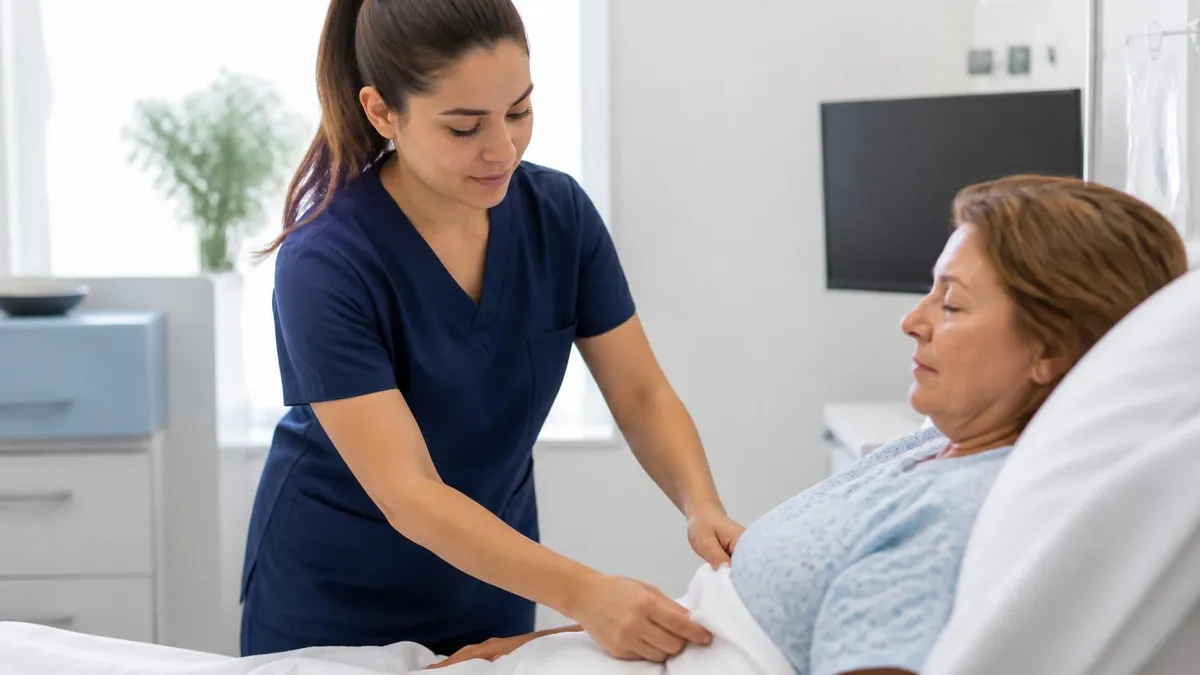
Macomb LPN Program: Complete 2026 Guide to Specific LPN Programs, Admission Requirements, Cost & Career Outcomes
LPN Entrance Exam Guide 2026: TEAS, HESI, PAX & Kaplan Prep
LPN License Verification: Complete State-by-State Guide for 2026
How to Get an LPN License: Complete 2026 Step-by-Step Guide
About the Author

Registered Nurse & Healthcare Educator
Johns Hopkins University School of NursingDr. Sarah Mitchell is a board-certified registered nurse with over 15 years of clinical and academic experience. She completed her PhD in Nursing Science at Johns Hopkins University and has taught NCLEX preparation and clinical skills courses for nursing students across the United States. Her research focuses on evidence-based exam preparation strategies for healthcare certification candidates.
Join the Discussion
Connect with other students preparing for this exam. Share tips, ask questions, and get advice from people who have been there.
View discussion (7 replies)