
West Virginia LPN Board of Nursing: Complete Guide to Licensure, Requirements & Renewal
West Virginia LPN board of nursing explained: licensure steps, renewal rules, NCLEX-PN tips & fees. Everything future LPNs need. ✅
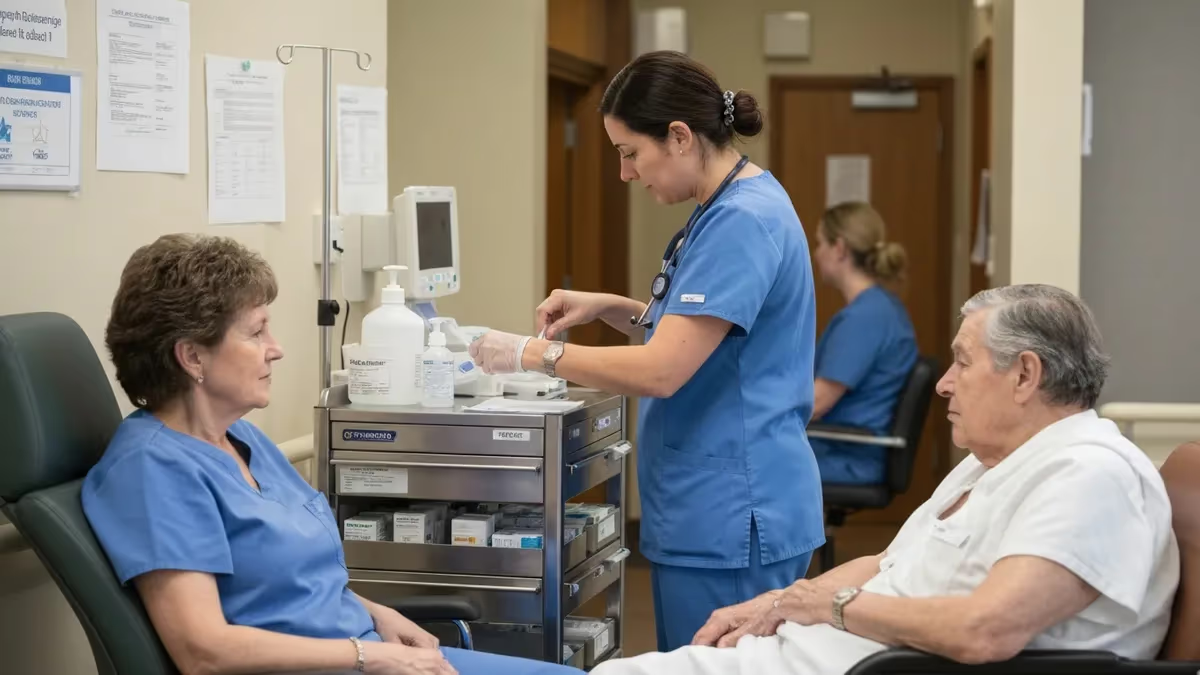
The West Virginia LPN Board of Nursing is the state regulatory authority responsible for licensing, overseeing, and disciplining licensed practical nurses throughout the Mountain State. Whether you are a nursing school graduate preparing to sit for the NCLEX-PN or a working LPN moving from another state, understanding how this board operates is the first concrete step toward a legally valid, rewarding nursing career in West Virginia. The board sets the standards that protect both patients and practitioners alike.
Formally known as the West Virginia Board of Examiners for Licensed Practical Nurses (WV BELPN), the agency was established to ensure that every LPN practicing in the state meets consistent competency standards. The board operates separately from the West Virginia Board of Registered Nursing, which means LPNs have a dedicated oversight body whose rules, fee schedules, and continuing education requirements are tailored specifically to practical nurse practice — not layered on top of a broader nursing framework.
Candidates who want to learn more about the full pathway to licensure — from approved program completion through endorsement and first renewal — can find a comprehensive breakdown at the west virginia lpn board resource page, which covers national requirements alongside state-specific nuances. Knowing both the big picture and the West Virginia details puts you in the strongest position to move forward without delays or unexpected fees.
One thing that surprises many applicants is how tightly the board ties licensure to NCLEX-PN performance. West Virginia uses Pearson VUE exclusively for scheduling, score reporting, and eligibility verification. Before you can book your exam date, the board must confirm your application is complete and transmit an Authorization to Test (ATT). Missing a single document — even a minor one like a notarized photo or a criminal background check receipt — can freeze your ATT and delay your start date by weeks.
The board also enforces a strict 90-day window between your ATT issue date and your exam date. If you do not test within that window, your authorization expires and you must reapply with the board, potentially paying fees again. This makes proactive document management critically important. Building a checklist and tracking each submission confirmation individually is strongly recommended for every applicant regardless of whether they are a fresh graduate or an experienced LPN seeking endorsement.
West Virginia LPN licensure is valid for two years and tied to the licensee's birth month. Renewal windows open 90 days before the expiration date, and the board sends reminder notices to the address on file — another reason to keep your contact information current at all times. Failure to renew on time results in a lapsed license, and practicing on a lapsed license carries serious disciplinary consequences including fines and mandatory reinstatement hearings that can shadow your record for years.
This guide walks you through every aspect of interacting with the West Virginia LPN Board of Nursing, from your initial application and NCLEX-PN preparation through continuing education requirements, license renewal, and what to do if you need to report or respond to a disciplinary matter. By the end, you will have a clear, actionable understanding of exactly what the board expects and how to stay in good standing throughout your nursing career.
West Virginia LPN Licensure by the Numbers
Key Facts at a Glance
| Item | Value | Details |
|---|---|---|
| Initial Application Fee | $75 | Paid to WV BELPN |
| License Renewal Cycle | 2 Years | Tied to birth month |
| Continuing Education Required | 24 CE Hours | Per renewal period |
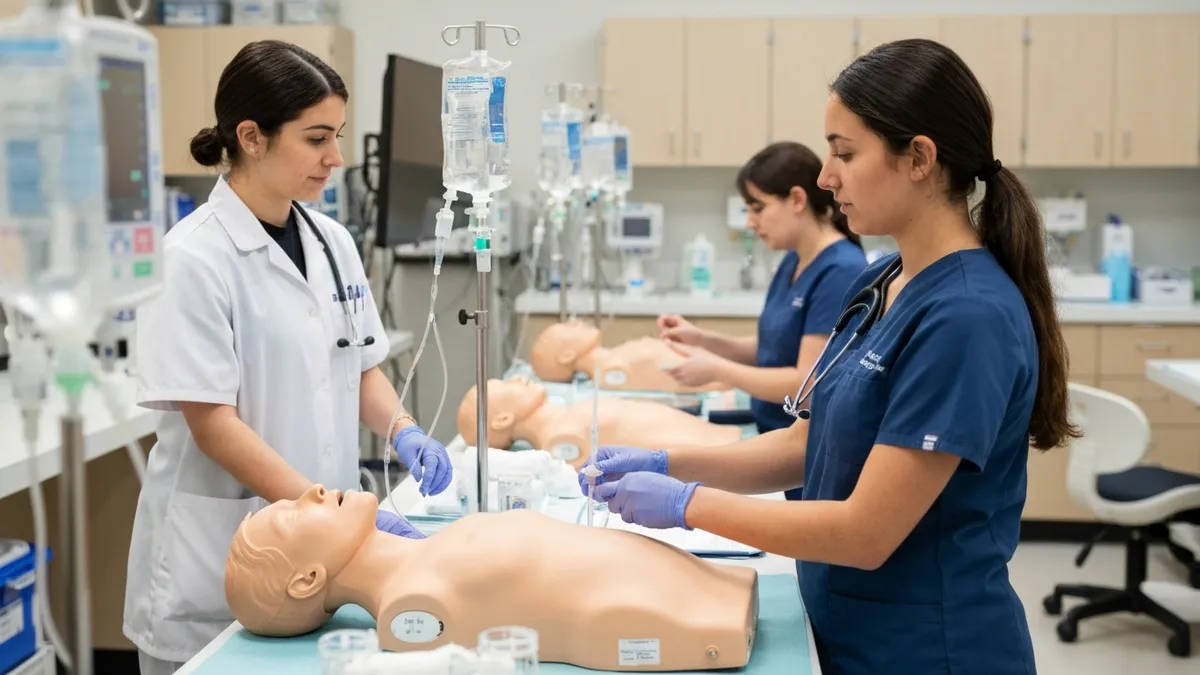
How to Get Your West Virginia LPN License: Step-by-Step
Complete an Approved LPN Program
Submit Your Licensure Application
Pass the Criminal Background Check
Receive Your ATT and Schedule the NCLEX-PN
Pass the NCLEX-PN Exam
Receive Your License and Begin Practice
Preparing effectively for the NCLEX-PN is the single biggest factor in determining how quickly you move from graduation to active licensure. The National Council Licensure Examination for Practical Nurses tests clinical decision-making across eight major client need categories, with the heaviest weight placed on Safe and Effective Care Environment and Physiological Integrity. West Virginia candidates sit for exactly the same exam as all other US-educated candidates, so national preparation resources are fully applicable to your study plan.
The exam uses computerized adaptive testing, meaning the difficulty of each question adjusts in real time based on your previous answers. The minimum number of questions you can answer is 85, and the maximum is 150. The exam ends when the computer determines with 95 percent statistical confidence that your ability is either clearly above or clearly below the passing standard, or when you reach the 150-question ceiling or the five-hour time limit. Most candidates finish between 85 and 115 questions, though the number of questions answered is not a reliable indicator of passing or failing.
One of the most effective preparation strategies is regular, focused practice testing under realistic conditions. Timing yourself strictly, reviewing every wrong answer immediately, and identifying your weakest content categories are all practices that correlate strongly with first-attempt pass rates. The NCSBN publishes a detailed test plan that outlines exactly which topics and subtopics appear on the exam — downloading and studying this document should be among your very first preparation steps, as it prevents you from spending study time on content that carries little or no exam weight.
Pharmacology is consistently one of the most challenging areas for LPN candidates. Expect questions about drug classifications, mechanisms of action, nursing implications, and patient safety checks such as the five rights of medication administration. West Virginia LPNs in clinical settings frequently encounter medication management responsibilities, which means pharmacological competence is tested rigorously on the exam and in day-to-day practice. Targeted practice with pharmacology question banks will pay dividends both on test day and throughout your career.
The ATT process itself requires careful attention. After your school submits your transcripts and the board processes your application and background check — a sequence that can take three to six weeks — Pearson VUE sends your ATT to the email address you registered with. Check your spam folder regularly during this period, as automated emails from Pearson VUE are sometimes filtered. Set a calendar reminder for the ATT expiration date immediately upon receipt so you do not accidentally let it lapse.
West Virginia does not currently participate in the Enhanced Nurse Licensure Compact (eNLC) for LPNs, which means if you hold a compact license from another state, it is not automatically valid for practice in West Virginia. You must apply for endorsement and obtain a West Virginia-specific license before legally working as an LPN in the state. This distinction is especially important for travel nurses and LPNs relocating from compact states such as Virginia or Ohio, both of which border West Virginia and are common sources of cross-border employment inquiries.
Candidates who fail the NCLEX-PN on their first attempt must wait 45 days before retesting. West Virginia follows the NCSBN's standard retake policy, which allows unlimited attempts but requires a new ATT and application for each attempt. The board does not charge an additional application fee for retakes within the same licensure cycle, but Pearson VUE charges its standard exam registration fee each time. After three failed attempts, the board may require completion of additional remediation coursework before issuing another ATT, so consistent first-attempt preparation is strongly in your financial and professional interest.
LPN Endorsement, Compact Licensure & Reciprocity in West Virginia
LPNs who hold a valid, unrestricted license in another US state or territory can apply for licensure by endorsement with the West Virginia Board. You must submit the standard application, pay the $75 fee, provide official transcripts from your original nursing program, and authorize a background check. The board also requires a Certificate of Licensure or License Verification form completed by your current state board, sent directly to WV BELPN — not through the applicant.
Processing times for endorsement applications typically run four to six weeks, though incomplete submissions can extend this significantly. West Virginia does not issue temporary practice permits during the endorsement review period, which means you cannot legally practice as an LPN in the state until your West Virginia license number is issued and appears on the public verification portal. Planning your employment start date around this timeline is essential to avoid gaps in employment that could affect your income and benefits eligibility.
West Virginia LPN Licensure: Advantages and Challenges
- +Dedicated LPN board means rules are tailored specifically to practical nurse practice
- +Online application portal reduces paperwork and allows real-time status tracking
- +Two-year renewal cycle gives ample time to complete 24 continuing education hours
- +Strong demand for LPNs in rural West Virginia healthcare settings and long-term care facilities
- +Board-approved programs throughout the state offer accessible entry points to the profession
- +License verification is publicly available online, simplifying employer hiring processes
- −West Virginia is not a compact state, limiting multi-state practice flexibility for LPNs
- −No temporary practice permit during endorsement review, creating potential employment gaps
- −Background check processing through WVSP and FBI can add two to four weeks to timelines
- −The 90-day ATT window creates pressure to schedule promptly after application approval
- −Lapsed licenses require a formal reinstatement process that can take several months
- −Limited test center locations may require travel for candidates in remote areas of the state
West Virginia LPN License Renewal Checklist
- ✓Confirm your renewal window is open — it begins 90 days before your license expiration date.
- ✓Log into your WV BELPN online portal account and navigate to the renewal section.
- ✓Verify that your mailing address, email, and phone number are current before submitting.
- ✓Complete 24 contact hours of board-approved continuing education during the renewal period.
- ✓Ensure at least 2 of your CE hours cover drug diversion or substance use disorder awareness.
- ✓Gather CE completion certificates and be ready to upload them if selected for audit.
- ✓Pay the renewal fee online — the standard renewal fee is $50 for active status.
- ✓Review your employment history and report any disciplinary actions from other states or employers.
- ✓Do not allow your license to lapse — renew before the expiration date even if the portal is slow.
- ✓Print or save a digital copy of your renewal confirmation as proof until your new wallet card arrives.
Keep Your Contact Information Updated at All Times
The West Virginia LPN Board sends renewal reminders, audit notices, and disciplinary correspondence exclusively to the address and email on file. If you move or change your email, update your board profile within 30 days — failure to receive a notice is not a legal defense against a lapsed license or missed audit deadline. Log into the portal at least once per quarter to verify your information is accurate.
Disciplinary matters handled by the West Virginia Board of Examiners for Licensed Practical Nurses follow a formal legal process governed by the West Virginia Administrative Procedures Act. When the board receives a complaint against a licensed LPN — whether from a patient, employer, coworker, or another licensing authority — it assigns the case to an investigator who gathers documentation, interviews witnesses, and reviews medical records as applicable. The LPN named in the complaint is notified and given an opportunity to respond in writing before any formal action is taken.
The most common grounds for disciplinary action in West Virginia include practicing while impaired by alcohol or controlled substances, falsifying patient records or licensure applications, practicing outside the authorized scope of LPN practice, engaging in patient abuse or neglect, and failing to report another nurse's impairment or misconduct. The board takes substance abuse and diversion cases especially seriously, as controlled substance theft and medication diversion are persistent issues in healthcare settings across the country, and West Virginia's opioid crisis has heightened regulatory awareness of these risks.
Disciplinary outcomes range from letters of concern and reprimand — which are administrative actions that do not restrict the license — to probation with conditions, suspension, and revocation. Revocation is reserved for the most serious violations, such as criminal convictions involving patient harm or controlled substances. In many cases, the board offers a consent agreement that allows the LPN to continue practicing under specified conditions, such as random drug testing, supervision requirements, or completion of a remediation program. These consent agreements are public records and appear on the board's online license verification system.
Background check requirements are particularly strong in West Virginia. All initial applicants must submit to both a state criminal history check through the West Virginia State Police and a federal FBI check through fingerprinting. The board has explicit criteria for evaluating conviction histories, considering factors such as the nature and severity of the offense, the time elapsed since the conviction, evidence of rehabilitation, and the relationship between the offense and nursing practice.
A past conviction does not automatically disqualify an applicant, but certain offenses — particularly those involving violence, sexual misconduct, or controlled substances — trigger mandatory board review before any license is issued.
LPNs who are subject to disciplinary action in another state are required to report that action to the West Virginia board within 30 days, even if the West Virginia license was not involved. This reciprocal reporting obligation ensures that the board has a complete picture of a licensee's professional standing across all jurisdictions. Failure to report an out-of-state disciplinary action is itself a grounds for disciplinary action in West Virginia, so transparency with the board is always the prudent choice.
If you believe you have been the subject of an unfair complaint or are facing a board hearing, it is strongly advisable to retain an attorney who specializes in professional licensing defense before responding to the board's investigation. The board's investigative staff are experienced professionals, and a poorly worded response to an initial inquiry can inadvertently complicate your defense. Many licensing defense attorneys offer initial consultations at no charge, making it easy to understand your options before committing to a strategy.
Reinstatement of a lapsed or surrendered license follows a separate process from the standard renewal pathway. Applicants must submit a reinstatement application, pay a reinstatement fee that is typically higher than the standard renewal fee, complete any outstanding continuing education requirements, and in some cases pass a refresher competency evaluation. The board evaluates reinstatement applications on a case-by-case basis, and candidates with disciplinary histories may face additional scrutiny. Planning ahead and renewing on time is always far easier — and less expensive — than navigating a reinstatement proceeding.

Practicing as an LPN in West Virginia after your license has expired is considered unauthorized practice of nursing, a serious violation that can result in civil penalties, criminal referral, and permanent disqualification from licensure. If your renewal is delayed for any reason, stop practicing immediately and contact the WV BELPN office to request guidance on your specific situation before returning to work.
West Virginia's healthcare landscape offers meaningful career opportunities for LPNs willing to work in a state that has some of the highest rates of chronic illness and healthcare need in the nation. Conditions like diabetes, heart disease, and substance use disorder are prevalent across the Mountain State, and LPNs play a frontline role in managing these populations in long-term care facilities, home health agencies, rural health clinics, and hospital step-down units. Demand for LPNs in West Virginia has remained consistently strong and is projected to grow over the next decade as the state's aging population continues to expand.
According to Bureau of Labor Statistics data, the mean annual wage for LPNs in West Virginia is approximately $49,000 to $52,000, which is modestly below the national average but must be considered against West Virginia's significantly lower cost of living. When adjusted for purchasing power, West Virginia LPN compensation is competitive with many higher-wage states, particularly in areas like Morgantown, where the presence of West Virginia University's health system supports higher-paying positions for experienced practical nurses. Specialty areas such as dialysis, IV therapy, and long-term care management typically command salary premiums of 10 to 20 percent above the state average.
Continuing education requirements for West Virginia LPN renewal are 24 contact hours per two-year cycle. The board accepts CE from a wide range of providers, including online courses, in-person workshops, employer-sponsored training, and college coursework. At least two of the required hours must specifically address drug diversion, substance use disorder, or controlled substance safety — a requirement introduced in response to West Virginia's ongoing opioid crisis. Employers in healthcare settings often cover CE costs as part of benefit packages, so inquiring about tuition reimbursement and professional development allowances during job negotiations is worthwhile.
LPNs seeking to advance their careers in West Virginia have several upward pathways available. The LPN-to-RN bridge program offered by institutions including West Virginia University, Mountwest Community and Technical College, and BridgeValley CTC allows experienced LPNs to earn an Associate Degree in Nursing (ADN) in as few as 12 to 18 months by recognizing prior LPN education and clinical experience. Completing this bridge opens access to registered nurse licensure, a substantial salary increase, and expanded scope of practice that includes independent assessment and care plan development.
Travel nursing is another growing opportunity for West Virginia LPNs, particularly those willing to work in underserved rural communities. Several national travel staffing agencies actively recruit West Virginia-licensed LPNs for short-term assignments at critical access hospitals, federally qualified health centers, and skilled nursing facilities throughout Appalachia. Travel assignments typically offer weekly pay rates 30 to 50 percent higher than permanent staff positions, along with housing stipends and travel reimbursement. Given that West Virginia is not currently a compact state, travel LPNs working in West Virginia from another state must hold a valid West Virginia license before their first shift.
Specialty certifications can also significantly boost an LPN's earning potential and employability in West Virginia. Certifications such as the Certified Medication Aide (CMA), IV therapy certification, and wound care certification are recognized by employers across the state and often tied directly to higher hourly rates and advancement opportunities. The National Association for Practical Nurse Education and Service (NAPNES) and the American Association of Medical Assistants (AAMA) offer board-recognized credentials that West Virginia LPNs can pursue through approved training programs, many of which are available fully online to accommodate working nurses.
For nurses already working in the field, staying current with the West Virginia LPN board's regulatory updates is an ongoing responsibility. The board periodically revises scope of practice guidelines, updates CE requirements, and issues guidance documents in response to changes in state law or national nursing standards. Subscribing to the board's email notification service and checking the official website at least quarterly ensures you are never caught off guard by a policy change that could affect your practice, your renewal, or your employment eligibility in the state.
Effective NCLEX-PN preparation requires more than simply reading a textbook — it demands active, strategic engagement with exam-style questions that mimic the clinical reasoning challenges you will face on test day. One of the most important things you can do in your final weeks before the exam is shift from passive review to active recall. Close the review book, open a question bank, and force yourself to reason through clinical scenarios without looking up answers. This approach builds the kind of rapid decision-making the NCLEX-PN rewards.
Time management during the exam itself is a skill that must be practiced deliberately. The NCLEX-PN allows up to five hours for up to 150 questions, but most candidates who struggle with time do so because they spend too long on difficult questions rather than making a best-informed choice and moving on.
Practice under timed conditions — aim to spend no more than 60 to 75 seconds per question on average. If you find yourself stuck after 90 seconds, apply the process of elimination to reduce your options to two and commit to the better answer. Indecision costs more time than a wrong answer.
Prioritization questions are among the most frequently missed question types on the NCLEX-PN. These questions ask you to determine which patient to assess first, which action to take before another, or which finding requires immediate notification of the charge nurse. The key framework for answering these questions is the ABCs — airway, breathing, circulation — combined with Maslow's hierarchy, which places physiological needs above psychological and safety needs. Practicing with large volumes of prioritization questions before the exam dramatically improves performance on this critical question type.
Select-all-that-apply (SATA) questions have become a significant part of the NCLEX-PN since the exam's transition to the Next Generation NCLEX (NGN) format. Unlike traditional multiple-choice questions, SATA items require you to identify every correct answer — there is no partial credit for getting some right. Approach SATA questions by treating each answer option as an independent true-or-false statement rather than trying to find the single best answer. This mindset shift reduces the tendency to second-guess correct choices once you have identified a clear first answer.
The Next Generation NCLEX format introduced in 2023 added new question types including extended drag-and-drop, matrix grid, bow-tie, and extended multiple-response items. These question types are designed to assess clinical judgment more deeply than traditional formats. If you are sitting for the NCLEX-PN in 2025 or 2026, ensure your practice resources explicitly cover NGN-format questions. Many question banks have been updated to include NGN items, but older print resources may not reflect these changes and could leave you underprepared for a significant portion of the exam.
In the 72 hours before your exam date, your preparation strategy should shift from content review to confidence maintenance. Avoid cramming entirely new material — focus instead on reviewing your strongest content areas to build positive momentum, get at least eight hours of sleep each night, and ensure you know the exact location of your Pearson VUE test center and can arrive 30 minutes early.
Bring two forms of identification that match exactly what you registered with, including at least one government-issued photo ID. Arriving stressed, late, or with mismatched ID documents can result in being turned away and forfeiting your exam fee.
After you pass and receive your West Virginia LPN license, your professional development journey continues rather than ends. The most successful LPNs treat licensure as the beginning of a career-long learning process, regularly participating in CE activities that align with their specialty interests, staying engaged with professional associations like the West Virginia Nurses Association, and seeking mentorship from experienced RNs and nurse practitioners in their practice settings. Building these habits early in your career creates a foundation of clinical excellence and professional accountability that serves both your patients and your long-term career trajectory throughout your time in West Virginia nursing.
Sample Certified Practical Nurse Practice Questions
Try these questions from our free Certified Practical Nurse practice tests. The correct answer and an explanation follow each question.
Which of the following actions by an LPN best exemplifies effective coordination of care for a client being transferred to a skilled nursing facility?
- A. Providing a detailed, written, and verbal report to the receiving nurse using a standardized format.
- B. Wishing the client well as they leave the unit.
- C. Telling the client's family to call the new facility with any questions.
- D. Personally packing all of the client's belongings.
Answer: A. Providing a detailed, written, and verbal report to the receiving nurse using a standardized format.
A structured and comprehensive hand-off report is crucial for ensuring continuity of care. It provides the receiving facility with all necessary information about the client's current status, needs, medications, and plan of care, preventing errors and gaps in treatment. The other options are either insufficient or not the primary responsibility for care coordination.
What is the purpose of pharmacology in nursing?
- A. To understand how medications work
- B. To prescribe medications
- C. To assess blood pressure
- D. To offer alternative treatments
Answer: B. To prescribe medications
Pharmacology is the scientific study of drugs and their effects, which is foundational to medication management in nursing. While LPNs do not prescribe, this knowledge is essential for understanding drug actions, safe administration, and monitoring patient responses. For advanced practice nurses, pharmacology directly informs their ability to prescribe medications, making it a critical aspect of comprehensive patient care within the broader nursing scope.
A newborn is born with a cleft lip and palate. Which nursing action is the priority in the neonatal period?
- A. Prepare the infant for immediate surgical repair before discharge
- B. Ensure adequate nutrition by using specialized cleft feeder and positioning
- C. Avoid all oral feeding until surgery to prevent aspiration
- D. Apply topical antiseptic to the cleft to prevent infection
Answer: B. Ensure adequate nutrition by using specialized cleft feeder and positioning
Before surgical repair (done at 2–3 months for cleft lip), the priority is ensuring adequate nutrition using a specialized cleft palate feeder and upright positioning to reduce regurgitation and aspiration.
A patient reports pain rated 7/10 with movement and 3/10 at rest. Which nursing action is most appropriate before administering PRN analgesics?
- A. Administer the maximum PRN dose immediately
- B. Assess the character, location, and precipitating factors of pain
- C. Wait until the pain is consistently rated above 5/10
- D. Apply a cold pack to the area without further assessment
Answer: B. Assess the character, location, and precipitating factors of pain
A thorough pain assessment including character, location, and triggers guides safe and effective pain management decisions.
LPN Questions and Answers

LPN Requirements 2026: Complete Guide to Becoming a Licensed Practical Nurse

LPN IV Certification: Complete 2026 Guide to Training, Requirements & Cost

LPN Programs in Florida: Complete 2026 Guide to Accredited Schools, Costs, Requirements & Licensure

LPN Salary Wisconsin 2026: Average Pay, Top Cities, and How to Earn More

LPN Duties: Complete Guide to Daily Responsibilities and Scope of Practice
About the Author

Registered Nurse & Healthcare Educator
Johns Hopkins University School of NursingDr. Sarah Mitchell is a board-certified registered nurse with over 15 years of clinical and academic experience. She completed her PhD in Nursing Science at Johns Hopkins University and has taught NCLEX preparation and clinical skills courses for nursing students across the United States. Her research focuses on evidence-based exam preparation strategies for healthcare certification candidates.
Join the Discussion
Connect with other students preparing for this exam. Share tips, ask questions, and get advice from people who have been there.
View discussion (7 replies)