
LPN Requirements 2026 October: Complete Guide to Becoming a Licensed Practical Nurse
LPN requirements explained: ✅ education, NCLEX-PN exam, clinical hours, background checks, and state licensing steps to become a Licensed Practical
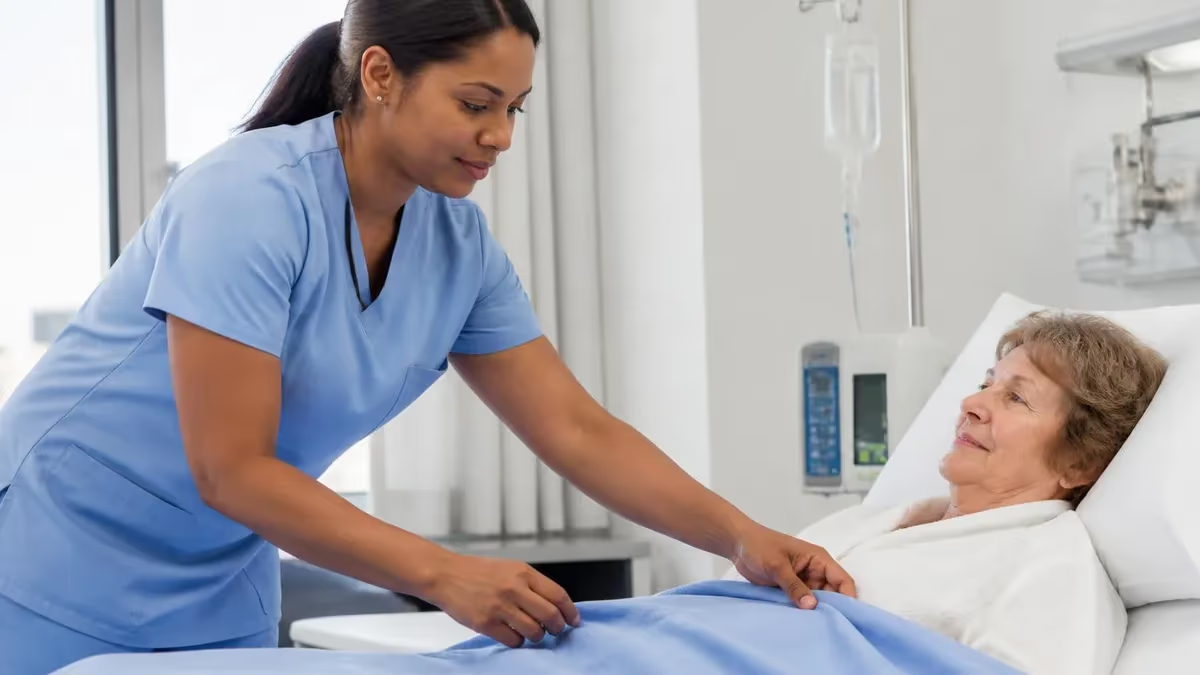
Understanding the full scope of lpn requirements is the first and most important step toward launching a career as a Licensed Practical Nurse. Every state in the U.S. enforces a specific combination of educational milestones, clinical training hours, background screening, and standardized examination performance before issuing a license. Although the core framework looks similar nationwide, individual state boards of nursing add their own nuances, which is why prospective students must verify rules carefully before enrolling in any program or scheduling their NCLEX-PN exam.
At the foundation, every aspiring LPN must hold a high school diploma or GED, complete a state-approved practical nursing program, pass the NCLEX-PN exam, and clear a criminal background check. These four pillars are non-negotiable. Most candidates also need to demonstrate English proficiency, submit fingerprints, pay licensure fees ranging from $100 to $300, and provide proof of immunizations and CPR certification before they can practice on the floor of a hospital, clinic, or long-term care facility.
Practical nursing programs typically last 12 to 18 months and combine roughly 400 hours of classroom theory with 400 to 700 hours of supervised clinical practice. The curriculum covers anatomy, physiology, pharmacology, nutrition, mental health nursing, maternity care, pediatrics, and gerontology. Hands-on rotations at hospitals, nursing homes, and outpatient clinics give students real exposure to medication administration, wound care, vital signs assessment, and patient documentation in electronic health record systems used daily across the industry.
Beyond the diploma, candidates must register with Pearson VUE, pay the $200 NCLEX-PN testing fee, and submit an Authorization to Test through their state board. The exam itself uses computerized adaptive testing, ranging from 85 to 150 questions across four major client-need categories. A passing standard is reset every three years by the National Council of State Boards of Nursing (NCSBN), and the current passing logic measures performance against the difficulty level of items answered, not a fixed raw score.
State-specific add-ons matter enormously. California requires applicants to pass the California-specific Nursing Practice Act test, Texas mandates a Jurisprudence Exam, and New York demands two hours of infection-control coursework. Florida and Illinois both insist on HIV/AIDS education. Failing to complete these supplements—even after passing NCLEX-PN—will delay your license issuance. The accredited LPN programs available in your region generally bundle these state extras into the curriculum, so attending a local school often simplifies compliance.
Background checks run through the FBI and state criminal database screen for felonies, misdemeanors involving moral turpitude, drug-related convictions, and patient-abuse history. Most boards review each application individually, allowing applicants with old or minor offenses to petition for licensure with documentation of rehabilitation. Honesty is critical: deliberately omitting a conviction is grounds for permanent denial. Applicants with concerns should request a pre-licensure determination from their state board before investing tuition dollars into a nursing program they may not ultimately be allowed to enter.
Finally, expect to invest 18 to 24 months from enrollment to first paycheck, with total costs averaging between $10,000 and $30,000 depending on whether you attend a community college, vocational school, or hospital-based diploma program. The payoff is meaningful—LPNs earned a median wage of $59,730 in 2024 according to the Bureau of Labor Statistics, with strong projected growth in long-term care, home health, and rehabilitation facilities through 2032.
LPN Requirements by the Numbers
Key Facts at a Glance
| Item | Value | Details |
|---|---|---|
| Program Length | 12-18 mo | Full-time pace |
| Total Training Hours | 1,100+ | Classroom + clinical |
| NCLEX-PN Fee | $200 | Plus state fees |
| NCLEX-PN Questions | 85-150 | Adaptive format |
Step-by-Step Path to Meet LPN Requirements
Earn High School Diploma or GED
Apply to an Approved LPN Program
Complete 12-18 Months of Training
Apply for Licensure & Take NCLEX-PN
Receive State License & Begin Working
The coursework and clinical hours that make up LPN training are designed to produce a competent bedside nurse capable of delivering safe care under the supervision of an RN or physician. Each accredited program follows a curriculum approved by the state board of nursing, which means that even though textbooks and instructors vary, the foundational knowledge map is identical across schools. This consistency is what makes a license earned in Ohio transferable, through endorsement, to dozens of other states later in your career.
The classroom portion typically runs around 400 hours and covers anatomy and physiology, microbiology, basic pharmacology, nutrition, growth and development, ethics, and legal aspects of nursing. Students also study communication, leadership fundamentals, and basic research literacy so they can interpret evidence-based protocols. Most programs use exam-style assessments after every unit, mirroring the format that learners will encounter on the NCLEX-PN. Quiz banks like the free LPN practice test PDF are often distributed by instructors as supplemental review material.
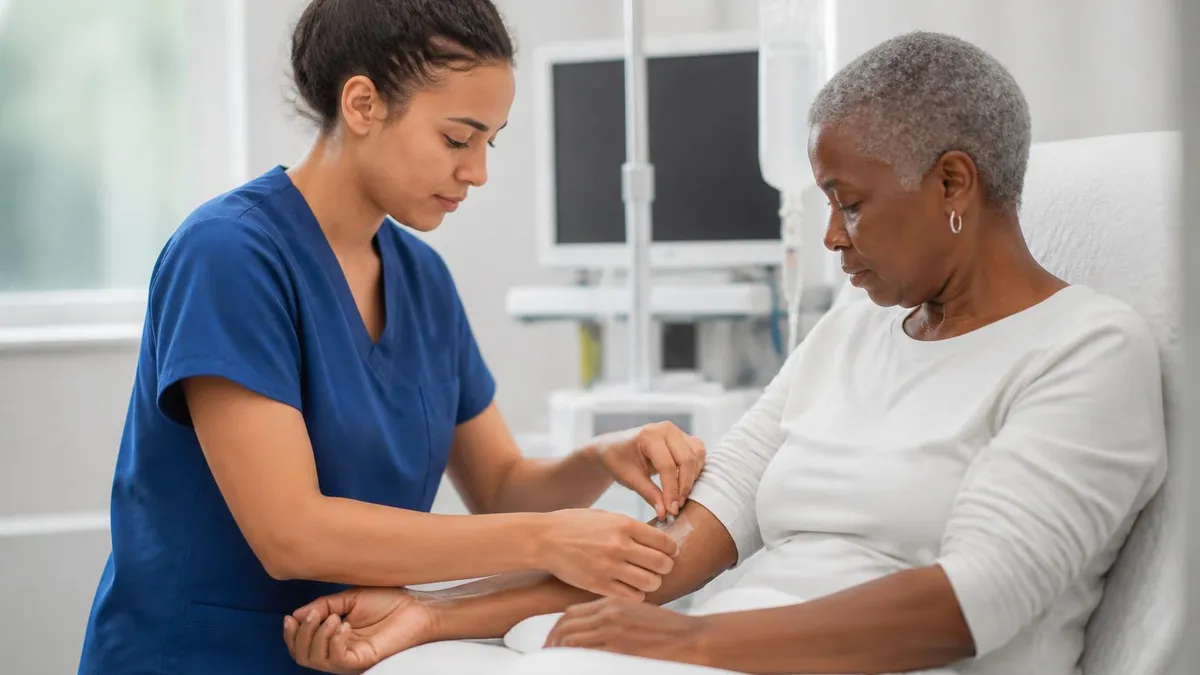
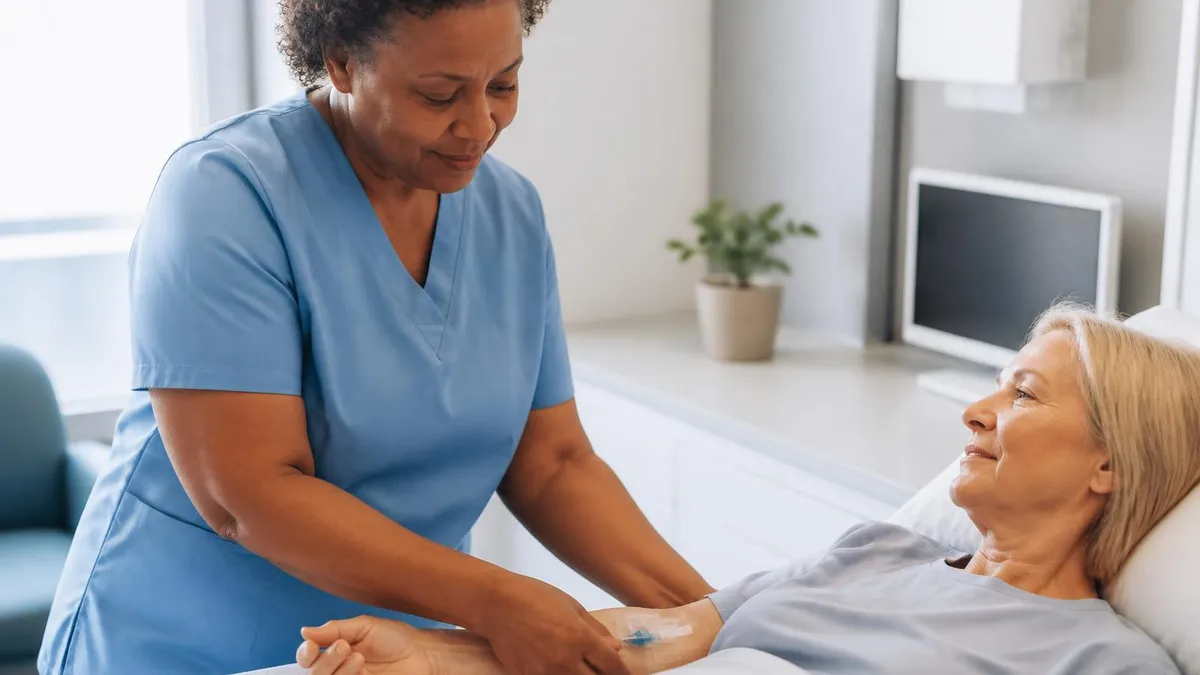
Clinical rotations form the second pillar—usually 400 to 700 hours of hands-on practice. Students rotate through medical-surgical units, pediatrics, maternity, mental health, and long-term care. Under the direct supervision of clinical instructors and preceptors, learners administer oral medications, change sterile dressings, insert urinary catheters, monitor IV infusions where state law permits, and document assessments in real electronic health records. These rotations create the muscle memory and clinical judgment that NCLEX-PN questions ultimately measure.
Pharmacology stands out as the most demanding course in nearly every program. LPNs must understand drug classifications, mechanisms of action, side effects, contraindications, and patient teaching for hundreds of medications. Beta-blockers, anticoagulants, insulin, opioid analgesics, antibiotics, and psychotropic drugs receive especially deep coverage because medication errors are a leading cause of harm in healthcare. Many schools require students to maintain a 78% or higher in pharmacology to progress, reflecting the high stakes of the topic on both the exam and the job.
Skills lab time complements clinical rotations. Inside a controlled simulation environment, students practice everything from sterile glove technique and tracheostomy care to nasogastric tube insertion and CPR on high-fidelity manikins. Faculty observe each procedure, give immediate feedback, and require check-offs before a student is allowed to perform the skill on a real patient. Repetition in the lab dramatically reduces anxiety when learners face the same procedures during their first weeks of employment.
Mental health and gerontology rotations deserve special attention because the LPN workforce is heavily concentrated in long-term care, assisted living, and behavioral health settings. Roughly 35% of LPNs work in nursing homes or residential care facilities, where therapeutic communication, dementia care, fall prevention, and end-of-life support are daily responsibilities. Programs that offer extended rotations in skilled nursing facilities generally produce graduates who feel more confident on day one of their first job.
Finally, every program includes a capstone or practicum experience near the end of the curriculum. Students assume a near-full patient load under preceptor oversight, demonstrating that they can manage time, prioritize multiple residents, document accurately, and communicate professionally with physicians, families, and interdisciplinary team members. Passing the capstone signals readiness to sit for NCLEX-PN, and most schools will not release transcripts to the state board until this final hurdle is cleared.
LPN Practice Test Questions
Prepare for the LPN - Certified Practical Nurse exam with our free practice test modules. Each quiz covers key topics to help you pass on your first try.
LPN - Certified Practical Nurse Basic Care...
LPN Exam Questions covering - Certified Practical Nurse Basic Care and Comfort. Master LPN Test concepts for certification prep.
LPN - Certified Practical Nurse Coordinate...
Free LPN Practice Test featuring - Certified Practical Nurse Coordinated Care. Improve your LPN Exam score with mock test prep.
LPN - Certified Practical Nurse Health Pro...
LPN Mock Exam on - Certified Practical Nurse Health Promotion and Maintenance. LPN Study Guide questions to pass on your first try.
LPN - Certified Practical Nurse Pharmacolo...
LPN Test Prep for - Certified Practical Nurse Pharmacological Therapies. Practice LPN Quiz questions and boost your score.
LPN - Certified Practical Nurse Physiologi...
LPN Questions and Answers on - Certified Practical Nurse Physiological Adaptation. Free LPN practice for exam readiness.
LPN - Certified Practical Nurse Psychosoci...
LPN Mock Test covering - Certified Practical Nurse Psychosocial Integrity. Online LPN Test practice with instant feedback.
LPN - Certified Practical Nurse Reduction ...
Free LPN Quiz on - Certified Practical Nurse Reduction of Risk Potential. LPN Exam prep questions with detailed explanations.
LPN - Certified Practical Nurse Safety and...
LPN Practice Questions for - Certified Practical Nurse Safety and Infection Control. Build confidence for your LPN certification exam.
LPN Ethical, Legal & Professional Standards
LPN Test Online for Ethical, Legal & Professional Standards. Free practice with instant results and feedback.
LPN Health Evaluation & Monitoring
LPN Study Material on Health Evaluation & Monitoring. Prepare effectively with real exam-style questions.
NCLEX-PN Exam: What LPN Requirements Demand
The NCLEX-PN is delivered as a computerized adaptive test (CAT) that adjusts difficulty based on each response. Candidates answer between 85 and 150 questions, with a hard time limit of five hours including an optional break. The exam ends as soon as the computer determines with 95% confidence whether the test-taker is above or below the passing standard, which is recalibrated by NCSBN every three years to reflect entry-level practice expectations.
Question types include multiple-choice, multiple-response, ordered-response, fill-in-the-blank calculations, hot-spot images, audio clips, and chart-based exhibits. The 2023 Next Generation NCLEX (NGN) update added case-study clusters that test clinical judgment using a six-step model: recognize cues, analyze cues, prioritize hypotheses, generate solutions, take action, and evaluate outcomes. Roughly 10% of LPN test items now follow this enhanced format.

Pros and Cons of Pursuing LPN Licensure
- +Short training timeline of 12-18 months gets you working faster than RN or BSN paths
- +Lower tuition cost—often under $15,000 total compared to $40,000+ for an associate degree in nursing
- +Strong job demand in long-term care, home health, and rehabilitation facilities nationwide
- +Median salary of $59,730 in 2024 with overtime and shift differential opportunities
- +Clear ladder to RN through LPN-to-RN bridge programs that grant prior-credit recognition
- +Hands-on patient care role rather than mostly administrative or supervisory duties
- +License transferable between most states through endorsement or the Nurse Licensure Compact
- −Limited scope of practice compared to RNs—some IV medications and assessments are restricted
- −Lower lifetime earnings ceiling than ADN, BSN, or advanced practice nursing roles
- −Physically demanding work with frequent lifting, long shifts, and high patient ratios
- −Limited employment in acute-care hospitals as many systems shift to RN-only floors
- −Continuing education and licensure renewal fees recur every 1-2 years depending on state
- −Emotional toll of end-of-life care, especially in nursing homes and hospice settings
- −Background check and criminal history rules can disqualify applicants with prior felonies
Complete LPN Requirements Pre-Licensure Checklist
- ✓Earn a high school diploma or GED with passing grades in biology and English
- ✓Pass the TEAS or HESI entrance exam with a score above your target program's cutoff
- ✓Enroll in a state-board-approved practical nursing program accredited by ACEN or NLN
- ✓Complete all classroom coursework with a minimum 75-78% in every nursing course
- ✓Finish 400-700 hours of supervised clinical rotations across required care settings
- ✓Obtain current BLS/CPR certification through American Heart Association or Red Cross
- ✓Submit fingerprints for FBI and state criminal background check (typically $50-$75)
- ✓Complete state-specific add-ons such as HIV/AIDS, infection control, or jurisprudence
- ✓Apply to your state board of nursing with transcripts, fees, and proof of immunizations
- ✓Register for NCLEX-PN through Pearson VUE and schedule the exam after receiving ATT
Most candidates underestimate state-specific extras
While the federal framework requires only education, NCLEX-PN, and a background check, more than 30 states layer on additional mandates—from jurisprudence exams in Texas to mandatory child-abuse reporting courses in Pennsylvania. Always check your state board's website before enrolling, because missing one supplemental requirement can delay your license issuance by 60 to 90 days even after you pass NCLEX-PN.
LPN requirements vary significantly from state to state, and these differences become especially important when candidates plan to relocate, work travel assignments, or pursue licensure by endorsement. Each state board of nursing has the legal authority to define scope of practice, set continuing education requirements, and add jurisdictional examinations. Failing to research these distinctions can result in costly delays, repeat coursework, or even denial of licensure in a destination state. A small upfront investment in research pays large dividends down the road.
California stands as one of the most regulated jurisdictions. The Board of Vocational Nursing and Psychiatric Technicians requires applicants to complete 1,530 hours of training—well above the national average—plus pass a state-specific Nursing Practice Act exam. California also restricts certain IV-therapy duties to LPNs who hold an additional IV-certification credential. Applicants from other states must submit notarized transcripts, fingerprint cards through Live Scan, and proof of equivalent training before endorsement is granted.
Texas, by contrast, accepts the standard NCLEX-PN but adds a separate Texas Nursing Jurisprudence Examination that tests knowledge of the Texas Nursing Practice Act, Board rules, and disciplinary process. The fee is modest at $35, but the exam can be repeated only after a 60-day waiting period if failed. Texas also distinguishes itself by participating in the Nurse Licensure Compact (NLC), which allows multistate practice privileges for residents whose primary state of residence is also a compact member.
Florida requires applicants to complete 2 hours of HIV/AIDS education and submit to a livescan background check costing approximately $75. New York demands coursework in child abuse reporting and infection control, both of which must be repeated periodically for license renewal. Illinois requires a sexual harassment prevention training and an additional 1-hour Alzheimer's disease course. Each of these state-specific mandates is non-waivable, even for endorsement candidates with decades of practice in another jurisdiction.
The Nurse Licensure Compact (NLC) deserves dedicated study for any LPN considering travel nursing or remote telehealth roles. As of 2026, 41 states participate, granting multistate privileges that allow LPNs to practice in person or via telehealth in any other compact state without obtaining a separate license. Eligibility requires a clean criminal record, residency in a compact state, federal fingerprint clearance, and continued compliance with the home-state board's continuing education rules. Non-compact states still require traditional endorsement applications, which take 4-12 weeks.
Continuing education (CE) requirements also differ significantly. California demands 30 hours of CE every two years, with specific topics on implicit bias and elder abuse mandated within those hours. Florida requires 24 hours every biennium plus separate domestic violence and medical errors courses. Some states like Colorado have no CE mandate but do require active practice hours to qualify for renewal. Always plan your CE early in the renewal cycle to avoid scrambling at the last minute, especially because audited LPNs must provide documentation within 30 days of request.
Renewal fees range from $40 in Arkansas to over $190 in California, and late renewal can trigger reinstatement fees, mandatory CE catch-up, or even temporary lapse of practice privileges. Some states also require fingerprint re-submission every five to ten years to update criminal background data. Setting calendar reminders 90 days before your license expires—not the day of—gives you ample time to complete CE, gather documentation, pay fees, and address any board questions without disrupting your employment.
Not every school advertising LPN training is state-board approved. Enrolling in an unaccredited program means you cannot sit for NCLEX-PN and your tuition is largely non-refundable. Always verify program approval on your state board's website—usually under the "Approved Programs" or "Education" tab—before signing any enrollment contract or making payment.
Once you've met every LPN requirement and your license is issued, the next phase—building a sustainable career—begins. Most new graduates accept their first job in long-term care, skilled nursing facilities, or home health, where demand is high and onboarding programs are most generous. The Bureau of Labor Statistics projects 5% job growth for LPNs through 2032, adding roughly 54,400 openings per year nationally to replace retirees and fill new positions in expanding elder-care services. Knowing where to look strategically can shorten your job search.
Salary varies widely by setting. Skilled nursing facilities pay an average of $54,000 annually, while home-health agencies can offer $58,000-$62,000 with mileage reimbursement. Hospital-based LPNs—though their numbers are shrinking—earn closer to $63,000 with benefits such as tuition reimbursement for RN bridge programs. Travel LPNs commanding 13-week contracts often gross $80,000-$95,000 annually after housing stipends and tax-free per-diem allowances are added. The overall investment in LPN training typically pays back within 12-18 months of full-time employment.
Career-ladder mobility is one of the most attractive aspects of the LPN credential. LPN-to-RN bridge programs run from 12 to 24 months and accept many credits earned in your original practical nursing program. Most community colleges offer LPN-to-ADN paths, while online universities provide LPN-to-BSN options that allow full-time work alongside study. Bridge graduates report sitting for NCLEX-RN with confidence because they already passed NCLEX-PN and have years of hands-on patient experience under their belts.
Specialty certifications expand earning power without requiring an RN license. The IV Therapy Certification adds about $2-$5 per hour in states that allow LPN IV administration. Wound, Ostomy, and Continence Nursing (WOCN) credentials, gerontological certification, hospice and palliative care certification, and rehab nursing certification all open doors to specialized units that pay above average. Each typically requires 1,000-2,000 hours of relevant practice plus successful completion of a national examination.
Networking is the unsung secret of LPN career advancement. Joining the National Association of Licensed Practical Nurses (NALPN) and your state LPN chapter provides access to job boards, mentorship programs, legislative advocacy, and continuing education at discounted rates. Many LPNs report that 60-70% of their career moves originated from peer referrals rather than online job postings, which makes maintaining strong relationships with classmates, preceptors, and former colleagues a wise long-term strategy.
Employer-paid benefits significantly affect net compensation. Look beyond hourly wage when evaluating offers. Tuition reimbursement, sign-on bonuses, retention bonuses, retirement matching, paid time off, shift differentials, and health insurance can collectively add $10,000-$25,000 in annual value. Ask the recruiter for a full benefits summary in writing before accepting—and verify any sign-on bonus is paid in installments rather than as a single check that must be repaid if you leave early. Many LPNs are surprised by clawback clauses tucked into bonus agreements.
Finally, plan your professional development calendar early. Set aside two hours each month for CE, attend at least one regional nursing conference per year, and document every certification, in-service, and continuing education unit. A well-maintained portfolio not only satisfies state audit requirements but also serves as the foundation for promotions, RN-program applications, and specialty roles. The most successful LPNs treat their license as a living credential that requires intentional investment rather than a one-time achievement to be celebrated and forgotten.
Meeting every LPN requirement is just the entry ticket—passing NCLEX-PN on the first attempt and launching a strong career require focused, evidence-based preparation. The most successful candidates start studying for the licensure exam during their final semester rather than waiting until after graduation. Spreading review across 8-12 weeks instead of cramming improves retention dramatically and reduces test-day anxiety. A consistent 2-3 hours per day, six days a week, has been shown in NCSBN studies to outperform marathon weekend sessions in nearly every measured outcome.
Begin with a comprehensive diagnostic test that mirrors the NCLEX-PN format. Identify the two or three weakest content categories—usually pharmacology, physiological adaptation, or pediatrics—and devote 50-60% of your study time to those areas. Use the official NCSBN learning extension or a reputable third-party question bank that includes detailed rationales for both correct and incorrect answers. Reading rationales is where deep learning happens; simply clicking next on the right answer does not build the clinical judgment NCLEX-PN measures.
Active recall and spaced repetition outperform passive re-reading by wide margins. Create flashcards for high-yield medications, lab values, and disease presentations, and review them daily using an app like Anki that schedules cards based on your performance history. Pair this with concept mapping for complex pathologies—linking signs, symptoms, labs, and interventions visually helps you answer multi-step priority questions. Many top scorers report that drawing one concept map per study session accelerated their progress more than any other technique.
Simulate full-length exam conditions at least twice before your test date. Sit in a quiet room, set a five-hour timer, and complete 150 questions without phones, music, or snacks. The first simulation reveals your current ability level; the second, scheduled one week before the real exam, builds stamina and confirms readiness. Treat both simulations as if they were the real thing—anything less robs you of the most valuable preparation data available. Review every missed question carefully, regardless of how confident you felt.
Sleep, nutrition, and stress management are non-negotiable in the final two weeks. Aim for 7-9 hours of sleep, hydrate consistently, and avoid heavy carbohydrate meals on test day to prevent afternoon energy crashes. Practice deep breathing or progressive muscle relaxation if test anxiety surfaces. The NCLEX-PN allows two optional breaks; use the first after question 60 to refuel and reset mentally. Many candidates report that the strategic break was the difference between a passing and failing performance.
The morning of the exam, eat a balanced breakfast with protein and complex carbs, arrive at Pearson VUE 30 minutes early, and bring two forms of valid identification with matching names. Locker your phone, jacket, and watch; testing centers provide noise-reduction headphones and an erasable note board. Read each question stem twice, identify the keyword ("first," "priority," "contraindicated," "client teaching"), and eliminate distractors systematically. Trust the preparation you've completed and resist the urge to second-guess answers once submitted.
After the exam, regardless of how it felt, avoid the temptation to debrief with classmates—doing so spreads anxiety and rarely changes the outcome. Quick Results arrive in 48 hours through Pearson VUE in participating states, and your official license shows up in Nursys within two weeks of passing. Whether you pass on attempt one or need a retake, every minute of structured study moves you closer to the rewarding bedside career that the LPN credential makes possible.
Sample Certified Practical Nurse Practice Questions
Try these questions from our free Certified Practical Nurse practice tests. The correct answer and an explanation follow each question.
A nurse is caring for a patient who had an ischemic stroke 2 hours ago. The physician is considering tPA administration. Which assessment finding would be a contraindication?
- A. Blood glucose of 110 mg/dL
- B. Blood pressure of 148/88 mmHg
- C. Patient on warfarin with an INR of 2.8
- D. Onset of symptoms within 3 hours
Answer: C. Patient on warfarin with an INR of 2.8
An INR greater than 1.7 due to anticoagulation therapy is a contraindication to tPA because of the significantly increased risk of hemorrhagic conversion.
A client has a PICC (peripherally inserted central catheter) line. The nurse notes the catheter appears to have pulled out approximately 2 cm since insertion. The LPN should:
- A. Advance the catheter back to the original position using sterile technique
- B. Irrigate the line and continue using it, as displacement is expected with movement
- C. Do not use the line — notify the charge nurse and anticipate repositioning confirmation
- D. Remove the PICC line and replace it immediately at the bedside
Answer: C. Do not use the line — notify the charge nurse and anticipate repositioning confirmation
A PICC line that has migrated must not be used for infusion until catheter position is confirmed by X-ray. Never advance a catheter that has partially withdrawn — it is now contaminated.
A client with stable angina asks the nurse about sexual activity. The LPN's best response is:
- A. You should avoid sexual activity indefinitely after a cardiac diagnosis
- B. Sexual activity is generally safe if you can climb two flights of stairs without symptoms
- C. You must complete cardiac rehab before any sexual activity
- D. Sexual activity should only occur in the morning when energy is highest
Answer: B. Sexual activity is generally safe if you can climb two flights of stairs without symptoms
The ability to climb two flights of stairs (or achieve 5 METs on a stress test) without chest pain or dyspnea is a general guideline indicating sufficient cardiac reserve for sexual activity.
A client returns from a bronchoscopy procedure. Which assessment finding requires the LPN to notify the charge nurse immediately?
- A. Mild throat soreness
- B. Absence of gag reflex
- C. Blood pressure 118/76 mmHg
- D. Heart rate of 78 bpm
Answer: B. Absence of gag reflex
Absence of the gag reflex after bronchoscopy indicates the local anesthetic is still active and the client is at high risk for aspiration.
LPN Questions and Answers

About the Author

Registered Nurse & Healthcare Educator
Johns Hopkins University School of NursingDr. Sarah Mitchell is a board-certified registered nurse with over 15 years of clinical and academic experience. She completed her PhD in Nursing Science at Johns Hopkins University and has taught NCLEX preparation and clinical skills courses for nursing students across the United States. Her research focuses on evidence-based exam preparation strategies for healthcare certification candidates.
Join the Discussion
Connect with other students preparing for this exam. Share tips, ask questions, and get advice from people who have been there.
View discussion (7 replies)