
LPN Wages 2026 September: Complete Guide to Licensed Practical Nurse Salaries
Discover LPN wages by state, setting, and experience. ✏️ See average salaries, top-paying specialties, and how to maximize your LPN income in 2026 September.
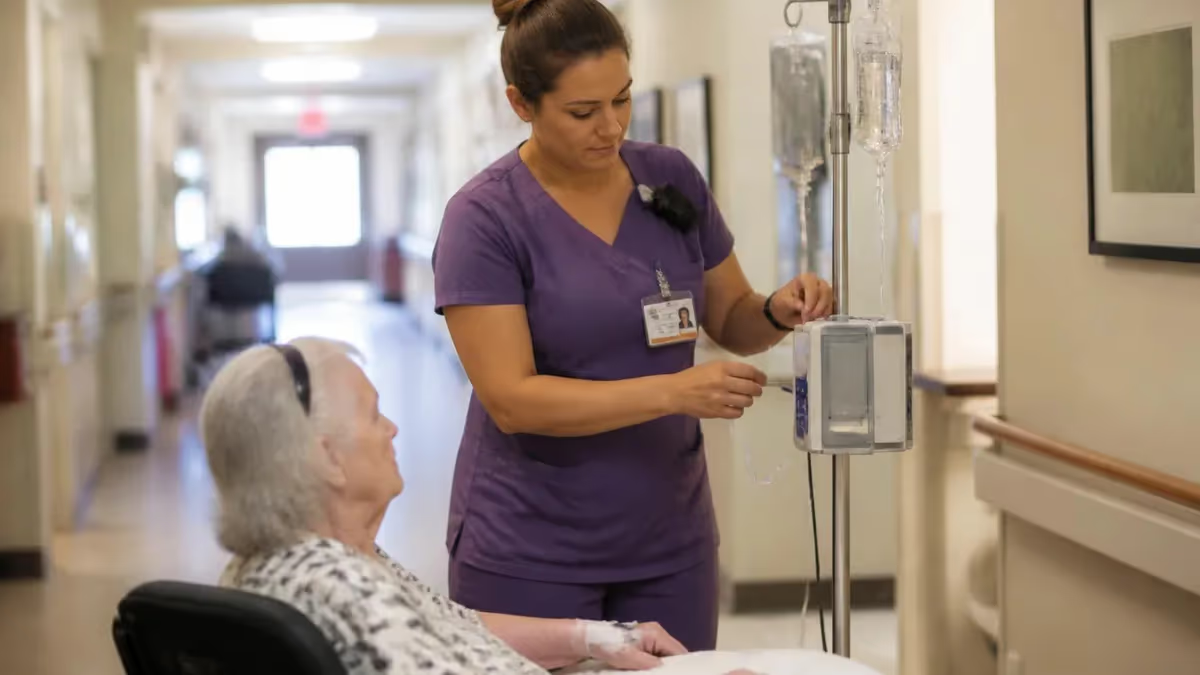
Understanding LPN wages is one of the most important steps you can take before committing to a nursing career path. Licensed Practical Nurses earn a national median salary of approximately $59,730 per year according to the Bureau of Labor Statistics, but that figure barely tells the full story. Depending on where you work, which healthcare setting you choose, and how many years of experience you bring to the table, your annual take-home pay could range from just over $45,000 to well above $75,000 — a gap that makes careful career planning absolutely essential.
The demand for LPNs continues to grow steadily across the United States, driven by an aging population that requires more ongoing medical care, increased utilization of long-term care facilities, and a nationwide push to expand access to primary care services. The Bureau of Labor Statistics projects employment of LPNs to grow by approximately 5 percent over the next decade, adding tens of thousands of new positions to an already substantial workforce. That sustained demand gives current and aspiring LPNs significant use when negotiating starting salaries and annual raises.
Geography plays a commanding role in determining how much an LPN earns. States like California, Alaska, Washington, and Massachusetts consistently rank among the highest-paying for LPNs, with average annual wages frequently exceeding $65,000. By contrast, states in the South and Midwest often report median wages closer to $45,000 to $52,000. However, cost of living adjustments can flip this picture considerably — an LPN earning $55,000 in a rural Southern state may enjoy a more comfortable standard of living than a counterpart earning $68,000 in San Francisco or New York City.
Your work setting is another powerful determinant of LPN compensation. Home health agencies, outpatient surgical centers, and correctional facilities have historically paid LPNs at the higher end of the spectrum, while nursing homes and physician offices tend to cluster around or slightly below the national median. Understanding these differences enables you to make strategic career moves — accepting a position in a higher-paying specialty even for a year or two can build both earnings history and clinical skills that boost your lifetime earning potential.
Experience and certifications create a compounding effect on LPN wages over time. Entry-level LPNs typically start at $17 to $20 per hour, but nurses who acquire specialty certifications in areas like IV therapy, wound care, or gerontology often see their hourly rates jump by $2 to $5 within just a few years. Shift differentials for evening, overnight, and weekend work can add another 10 to 20 percent to a base salary, meaning an LPN willing to work non-traditional hours can significantly outpace peers who prefer standard daytime schedules.
Before diving into the detailed breakdowns below, it helps to recognize that lpn wages are not static — they respond dynamically to local labor markets, facility-specific budgets, union agreements, and broader economic conditions. The information in this article draws on the most current BLS data, state-level wage surveys, and industry compensation reports available as of 2026, giving you the most accurate and actionable salary intelligence possible to guide your career decisions.
Whether you are a nursing student weighing your options, a newly licensed LPN hunting for your first position, or an experienced nurse considering a move to a higher-paying specialty or state, this comprehensive guide covers every major factor that influences LPN compensation. Read through each section carefully, consult the data tables and comparisons, and use the insights to negotiate confidently and plan strategically for a rewarding nursing career.
LPN Wages by the Numbers

Top-Paying States for LPN Wages
California consistently leads the nation in LPN wages, driven by high cost of living, strong union representation, and strong healthcare infrastructure in cities like Los Angeles, San Francisco, and San Diego. Many California LPNs also benefit from mandatory nurse-to-patient ratio laws that reduce workload and increase per-nurse value.
Alaska's remote geography creates persistent staffing shortages that push wages well above national averages. LPNs who are willing to work in rural or isolated communities can command premium pay, signing bonuses, and housing stipends. The state also has no income tax, making the effective take-home pay even more attractive.
Washington State benefits from a large healthcare network anchored by major hospital systems in Seattle and Spokane. The state's progressive labor policies and active nursing unions help maintain above-average LPN wages. Telehealth and home health expansions have also created new high-paying opportunities in recent years.
Boston's concentration of world-class medical institutions — including Harvard-affiliated hospitals — drives strong demand for skilled LPNs across the Greater Boston area. Massachusetts also has a strong long-term care sector with above-average reimbursement rates, which translates directly into higher wages for nursing staff at all levels.
Nevada's rapidly growing population, concentrated in Las Vegas and Reno, has created an ongoing shortage of healthcare workers that benefits LPNs significantly. The state has invested heavily in expanding healthcare infrastructure, and the absence of state income tax boosts the real value of LPN paychecks compared to higher-tax states with similar nominal wages.
The work setting where an LPN is employed has an enormous influence on their actual wages, often overshadowing even geographic location. Home health and hospice care agencies rank among the highest-paying employers for LPNs nationwide, with median hourly rates ranging from $22 to $32 depending on the region. These roles demand independent judgment, strong patient communication skills, and comfort working with minimal direct supervision — qualities that employers reward with premium compensation packages and mileage reimbursement.
Government and correctional facilities represent another high-paying segment of the LPN job market. Federal correctional institutions and state prison systems typically offer LPNs salaries that are 10 to 20 percent above the private-sector average, along with comprehensive benefits packages that include defined-benefit pensions, generous paid leave, and subsidized health insurance. While these environments present unique challenges, the financial security they offer is difficult to match in most traditional clinical settings.
Long-term care and skilled nursing facilities employ the largest share of the LPN workforce — roughly 38 percent according to BLS data — but they don't always rank at the top of the wage scale. Average wages in nursing homes hover around $52,000 to $58,000 annually, which is slightly below what LPNs can earn in home health or government roles. However, nursing homes frequently offer benefits like loan forgiveness programs, tuition reimbursement for LPN-to-RN bridge programs, and predictable scheduling that many nurses value highly.
Physician offices and outpatient clinics tend to pay LPNs at the lower end of the spectrum, with median wages often falling between $45,000 and $54,000 per year. The trade-off is that these settings typically offer the most predictable hours — generally standard weekday daytime shifts — with minimal weekend and holiday obligations. For LPNs with family responsibilities or health limitations that make shift work difficult, the stability of an office setting may justify accepting slightly lower base pay.
Specialty hospitals — including psychiatric facilities, rehabilitation centers, and pediatric hospitals — occupy an interesting middle ground in the LPN wage landscape. These facilities often pay at or slightly above the general hospital median, but they also offer faster career advancement opportunities because specialty skills are highly transferable and in consistently short supply. An LPN who builds expertise in psychiatric nursing or pediatric care over three to five years can use that specialty knowledge into significantly higher-paying supervisory or lead nursing positions.
Outpatient surgical centers and endoscopy clinics have emerged as increasingly attractive employers for LPNs over the past decade, offering wages that frequently match or exceed those of inpatient hospital floors without the heavy physical demands of acute care nursing. These settings prioritize efficient workflow and strong patient education skills, and they often offer performance-based bonuses tied to patient satisfaction scores and procedure volume — adding an additional income stream beyond base salary.
Travel LPN contracts deserve special mention as a wage-maximizing strategy. Travel LPNs who accept short-term assignments (typically 13 weeks) at facilities experiencing staffing shortages can earn $30 to $40 per hour in base pay, with additional tax-free housing and meal stipends that effectively raise total compensation to the equivalent of $70,000 to $95,000 annually. While travel nursing requires flexibility and adaptability, it represents one of the fastest paths to dramatically higher earnings available to licensed practical nurses at any experience level.
LPN Wages by Experience Level and Specialty
New LPN graduates entering the workforce in 2026 can expect starting wages between $17.50 and $21.00 per hour, translating to approximately $36,400 to $43,700 annually for full-time work. Entry-level wages vary significantly by state and setting — a new LPN in California may start at $22 to $24 per hour, while a counterpart in Mississippi or Arkansas might begin closer to $17. Most facilities offer a 3 to 6 percent raise after a 90-day probationary period upon satisfactory performance review.
Building your resume strategically during the first two years of practice is the most effective way to accelerate past entry-level wages. New LPNs who seek out positions in high-acuity settings — such as skilled nursing facilities that handle post-surgical patients or home health agencies serving complex chronic disease populations — develop clinical competencies faster than peers in lower-acuity roles. Those accelerated skills make a compelling case for faster promotions and above-average raises when annual performance reviews arrive.

LPN Career: Financial Advantages and Limitations
- +Median salary of $59,730 is achievable with just 12–18 months of education
- +Travel LPN contracts can push total compensation above $90,000 annually
- +Shift differentials add 10–20% to base pay for evenings, nights, and weekends
- +Specialty certifications reliably add $2–$5 per hour to base wage rates
- +Strong job security with 5% projected growth and persistent staffing shortages
- +Multiple high-paying settings — home health, government, corrections — offer premium wages
- −Earnings ceiling is lower than RN or NP roles without additional education
- −Rural and Southern states pay $12,000–$15,000 less than top-paying coastal states
- −Physician office settings often pay $8,000–$14,000 below home health or government roles
- −High-paying travel nursing requires 13-week relocations away from home and family
- −Specialty certification exams cost $200–$500 and require ongoing renewal fees
- −Wage growth tends to plateau after 8–10 years without a degree advancement pathway
How to Maximize Your LPN Wages
- ✓Obtain at least one specialty certification (IV therapy, wound care, or gerontology) within the first two years of licensure.
- ✓Apply for shift differential pay by requesting evening or overnight assignments that carry a 10–20% wage premium.
- ✓Research the top-paying LPN employers in your region before accepting your first or next position.
- ✓Negotiate your starting salary before accepting an offer — most facilities have a $1–$3 per hour range of flexibility.
- ✓Ask specifically about annual merit increases, cost-of-living adjustments, and how long they take to kick in.
- ✓Explore travel LPN contracts once you have 18–24 months of experience in a specific clinical setting.
- ✓Enroll in an LPN-to-RN bridge program through an employer that offers tuition reimbursement to invest in future earning potential.
- ✓Join a professional nursing organization to access salary benchmarking data and wage negotiation resources.
- ✓Request a formal wage review if your salary falls more than 5% below the current BLS median for your state and setting.
- ✓Consider relocating to a higher-paying state if the wage differential would offset moving costs within 12–18 months.
Travel LPN Contracts: The Fastest Path to $75,000+
LPNs with as little as 18 months of experience in a skilled nursing or home health setting can qualify for travel nursing contracts that pay $30–$40 per hour in base wages, plus tax-free housing and meal stipends. Combined, these packages frequently push total annual compensation to $75,000–$95,000 — far above what most permanent LPN positions offer — while simultaneously building a diverse clinical resume that commands higher wages in future permanent roles.
Comparing LPN wages to those of other nursing and allied health roles provides useful context for evaluating the return on your educational investment. Registered Nurses (RNs) earn a national median of approximately $81,220 per year — roughly 36 percent more than the LPN median — but they also require two to four additional years of education to earn an Associate Degree in Nursing (ADN) or a Bachelor of Science in Nursing (BSN). The wage gap is real, but so is the LPN's ability to enter the workforce and start earning sooner, often while continuing to study for bridge programs part-time.
Certified Nursing Assistants (CNAs), who occupy the tier directly below LPNs in the nursing hierarchy, earn a national median of just $35,760 per year — approximately $23,970 less than the LPN median. For CNAs considering career advancement, the LPN pathway offers a compelling combination of manageable education requirements (typically 12 to 18 months of accredited coursework) and a substantial salary increase that frequently pays for itself within two years of graduating and passing the NCLEX-PN examination.
Medical Assistants (MAs) represent another common comparison point, since many healthcare facilities employ both LPNs and MAs in similar outpatient roles. MAs earn a national median of approximately $40,700 annually — about $19,000 less than LPNs — despite often performing overlapping administrative and clinical tasks in physician office settings. LPNs hold a distinct scope-of-practice advantage that allows them to administer medications, perform more complex clinical procedures, and function independently in ways that MAs are not licensed to do, justifying the wage premium.
Nurse Practitioners (NPs), who sit near the top of the advanced practice nursing wage scale, earn a national median exceeding $124,000 per year. While this figure may seem aspirational for an LPN just starting out, it illustrates the full earning trajectory available within nursing for those willing to pursue continued education. Many practicing NPs began their careers as LPNs or CNAs, and the LPN credential remains a recognized stepping stone toward RN and advanced practice licensure throughout the United States.
Physical Therapy Assistants (PTAs), a commonly considered alternative career for students weighing healthcare options, earn a national median of approximately $59,440 — nearly identical to the LPN median wage. However, PTA programs typically require two years of specialized training, similar to the LPN pathway, and the scope of practice is narrower, limited almost exclusively to rehabilitation settings. LPNs have access to a much wider range of employment settings and geographic markets, which provides greater career flexibility and wage negotiation use over time.
Home Health Aides (HHAs) and Personal Care Aides, who work in direct patient care roles similar in some respects to LPN home health duties, earn a national median of just $30,180 per year — less than half the LPN median. This comparison underscores how significantly the LPN license improves earning potential compared to unlicensed or minimally credentialed healthcare roles. For anyone currently working as a home health aide and considering a career upgrade, the LPN credential offers one of the most efficient and financially rewarding paths forward available in the healthcare workforce.
When evaluating these wage comparisons holistically, the LPN credential stands out as a high-value investment: it requires less time and tuition than an RN degree, it pays substantially more than unlicensed or less-credentialed roles, and it provides a recognized bridge toward advanced nursing credentials that can ultimately push lifetime earnings well above the current LPN median. Understanding where you stand within this broader wage landscape helps you make informed decisions about which additional credentials, specialties, or geographic moves will deliver the greatest return on your career investment.

Bureau of Labor Statistics median wage figures are calculated from employer surveys that lag the current market by 12–18 months. In 2026, many facilities are offering starting wages 5–10% above the published BLS median due to ongoing nursing shortages. Always cross-reference BLS data with current job postings in your specific region and setting to get the most accurate picture of what employers are actually paying today.
Negotiating your LPN salary effectively requires preparation, confidence, and a clear understanding of your market value — three things that many new nurses underestimate or overlook entirely. The first and most important step is research: before you walk into any salary negotiation or accept any job offer, you need to know the current median wage for LPNs in your specific state, the type of facility you're considering, and the experience level you're bringing. BLS data, state nursing association wage surveys, and platforms like Indeed and Glassdoor all provide useful benchmarks.
Timing matters enormously in salary negotiations. The optimal moment to negotiate is after you have received a formal job offer but before you have signed any paperwork. At this point, the employer has already invested time and resources in selecting you, which gives you significantly more use than you would have during the application or interview phase. Express genuine enthusiasm for the role, then ask directly whether there is flexibility in the base wage — most hiring managers expect this question and have a range they're authorized to offer.
Specialty certifications and demonstrated clinical skills are your most powerful negotiating tools beyond raw experience. If you hold an IV therapy certification, a wound care credential, or a documented history of working with complex patient populations like ventilator-dependent patients or those with multiple chronic conditions, name these credentials explicitly during salary discussions. Quantify your value wherever possible: if you have consistently received high patient satisfaction scores, mention that. If you have cross-trained in multiple units, highlight the scheduling flexibility that provides.
Benefits negotiation deserves equal attention alongside base wage discussions. Signing bonuses, relocation assistance, shift differential policies, continuing education reimbursement, and loan forgiveness eligibility are all components of total compensation that can be worth thousands of dollars annually. An employer who cannot meet your base wage target may be able to offer a $3,000 to $5,000 signing bonus, tuition reimbursement worth $5,000 per year, or enhanced shift differential pay that effectively closes the gap between their offer and your target salary.
Annual performance reviews are recurring opportunities to renegotiate your wages, and LPNs who treat them as such consistently out-earn peers who accept standard percentage increases passively. Come to your review with documented evidence of your contributions: patient outcomes you improved, procedures you mastered, colleagues you trained, or scheduling problems you solved. Frame your wage increase request as a market adjustment — not just a reward for time served — by citing current regional wage data and comparing your compensation to recently hired LPNs at similar experience levels.
Union membership, where available, provides a structured framework for wage negotiation that individual nurses often cannot replicate on their own. Unionized LPNs typically earn 10 to 20 percent more than their non-union counterparts in the same settings, benefit from automatic cost-of-living adjustments, and have access to formal grievance procedures if wage commitments are not honored. If you are considering a position at a unionized facility, review the collective bargaining agreement carefully to understand the wage scales, step increases, and bonus structures that apply to your role.
Finally, remember that switching employers strategically — especially in the first five years of your career — is one of the most effective wage-growth levers available to LPNs. Research consistently shows that nurses who change employers every three to four years tend to earn 10 to 20 percent more over their careers than nurses who remain loyal to a single employer.
This doesn't mean job-hopping recklessly, but it does mean staying actively aware of the market, maintaining your professional network, and being willing to pursue opportunities that offer meaningful compensation improvements when your current employer reaches the limits of their pay scale.
Planning your LPN career for maximum long-term earnings requires thinking beyond just your next job and considering the full arc of your professional development over the next five to fifteen years. The most financially successful LPNs tend to share a set of common career management habits: they invest early in certifications, they actively pursue settings that pay above the median, they treat every employer as a temporary arrangement unless the compensation and growth opportunities are genuinely excellent, and they consistently work toward additional credentials that expand their scope of practice and earning potential.
Building financial literacy alongside clinical expertise is a habit that pays dividends throughout your nursing career. Understanding how shift differentials, overtime rules, and benefits are calculated allows you to make apples-to-apples comparisons between job offers that may look very different on paper. A position offering $26 per hour with mandatory overtime, free health insurance, a 6 percent 401(k) match, and a $2,500 annual education stipend may be worth significantly more in total compensation than a $29-per-hour role with no benefits and no retirement contribution.
Geographic mobility is a career asset that many LPNs underutilize. If you are willing and able to relocate, even temporarily, the wage differential between the lowest-paying and highest-paying states for LPNs represents a potential income gain of $15,000 to $20,000 per year — a gap that accumulates dramatically over a multi-decade career. LPNs who spend five years early in their career in a high-wage state, build their savings, and then return to a lower cost-of-living area with a stronger financial foundation often achieve significantly better financial outcomes than peers who stayed home throughout their working lives.
Continuing education investments should be evaluated as financial decisions using the same rigor you would apply to any major purchase. Before enrolling in a certification course or bridge program, research the specific wage premium that credential commands in your target job market.
In general, certifications with the strongest wage premiums for LPNs include IV therapy certification ($1–$3 per hour), wound ostomy and continence nursing certification ($2–$4 per hour), and gerontological nursing certification ($1–$3 per hour). Bridge programs that lead to RN licensure command the largest wage premium of all — typically $15,000 to $25,000 more per year — making them the single highest-return educational investment available to working LPNs.
Mentorship from experienced LPNs and nurses can accelerate your career development and help you avoid costly mistakes in job selection, salary negotiation, and credential planning. Seek out nurses who have successfully transitioned from LPN roles to higher-paying positions and ask them directly about the specific decisions that made the biggest difference. Professional nursing organizations, state nursing associations, and hospital-based mentorship programs are excellent places to find experienced mentors who are willing to share their career navigation strategies.
Social media and professional networking platforms have become surprisingly effective tools for LPN salary intelligence. Online nursing communities, Facebook groups dedicated to LPN and traveling nurse professionals, and LinkedIn connections with nurses in your target settings and geographic markets provide real-time wage information that supplements official survey data. These informal networks can tell you which facilities are currently offering signing bonuses, which travel agencies are paying the highest package rates, and which specialty certifications are most in demand in your region — intelligence that gives you a meaningful edge in the job market.
Ultimately, achieving above-average LPN wages is less about luck and more about intentional career management. Every credential you earn, every negotiation you undertake, every strategic job move you make, and every continuing education course you complete adds incrementally to your earning power and long-term financial security. The nurses who retire comfortably and report the highest career satisfaction are almost always those who approached their professional development as deliberately as their clinical training — with clear goals, consistent effort, and a willingness to advocate for the compensation they deserve.
LPN Questions and Answers

LPN Jobs Near Me 2026: How to Find Licensed Practical Nurse Jobs

MA to LPN Bridge Program: Complete 2026 Guide to Transition from Medical Assistant to Licensed Practical Nurse

LPN Requirements 2026: Complete Guide to Becoming a Licensed Practical Nurse

What Does LPN Stand For? Meaning, Role & Career Guide

NCLEX LPN Exam Guide 2026: Pass Rates, Format, Study Plan & Practice Questions
About the Author

Registered Nurse & Healthcare Educator
Johns Hopkins University School of NursingDr. Sarah Mitchell is a board-certified registered nurse with over 15 years of clinical and academic experience. She completed her PhD in Nursing Science at Johns Hopkins University and has taught NCLEX preparation and clinical skills courses for nursing students across the United States. Her research focuses on evidence-based exam preparation strategies for healthcare certification candidates.
Join the Discussion
Connect with other students preparing for this exam. Share tips, ask questions, and get advice from people who have been there.
View discussion (7 replies)