
IV Certification for LPN: Complete 2026 September Guide to Training, Requirements & Career Advancement
IV certification for LPN explained: requirements, training cost, state rules & career benefits. 🎓 Learn how to advance your nursing career today.

Pursuing IV certification for LPN is one of the most impactful steps a Licensed Practical Nurse can take to expand clinical skills, increase earning potential, and meet the growing demands of modern healthcare settings. Intravenous therapy is a cornerstone of acute patient care, covering everything from medication delivery and hydration management to blood transfusions and total parenteral nutrition. For LPNs who want to remain competitive in an evolving job market, gaining formal IV certification signals both competence and commitment to patient safety.
The scope of LPN practice regarding IV therapy varies significantly from state to state. In some states, LPNs are permitted to initiate peripheral IV lines, administer IV medications, and perform IV push techniques once they have completed an approved training program. In other states, LPNs may only maintain existing IV lines or monitor infusion rates but cannot independently start lines. Understanding your specific state's Nurse Practice Act is the very first step before enrolling in any certification course, because training without regulatory authority has no practical value at the bedside.
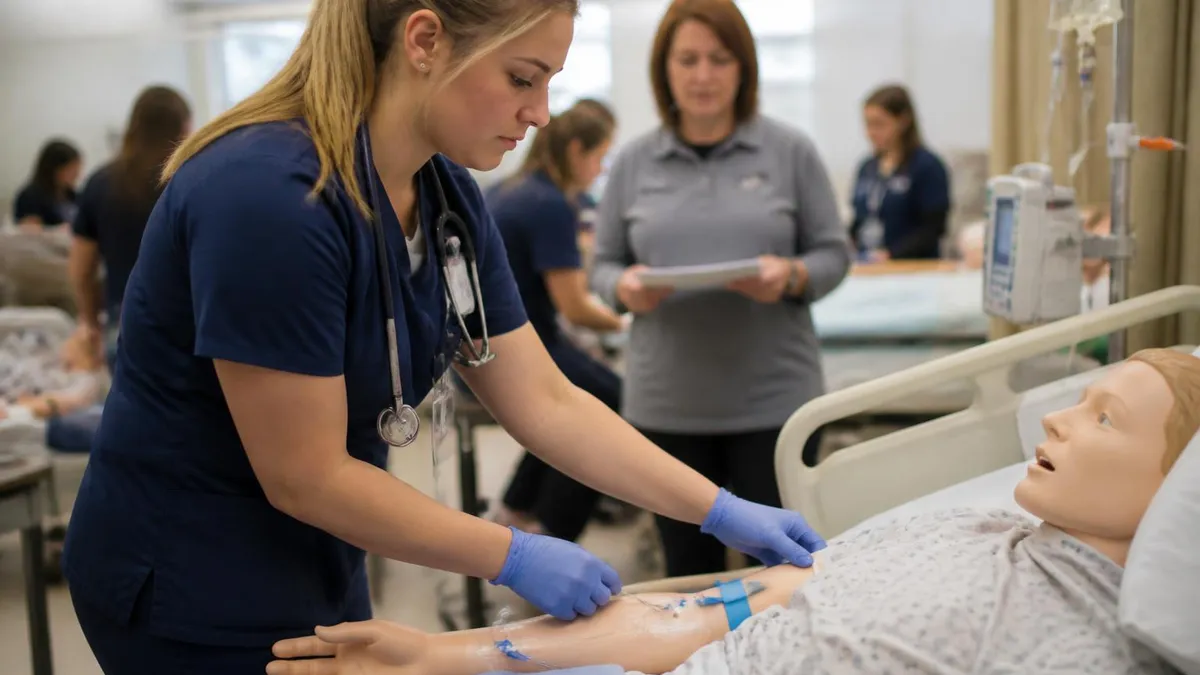
IV certification courses for LPNs are offered through community colleges, hospital-based education departments, vocational nursing schools, and approved private training organizations. A typical program includes a blend of didactic classroom instruction covering anatomy of the venous system, infection control principles, fluid and electrolyte balance, and pharmacology of IV medications. This classroom foundation is paired with hands-on clinical lab time where students practice venipuncture on simulation arms, learn how to troubleshoot infiltration and phlebitis, and master the correct technique for priming IV tubing and operating infusion pumps.
The time investment for IV certification is manageable for working nurses. Most programs range from 8 to 24 hours of instruction, often structured as a single intensive weekend course or spread across two to three weekday sessions. Some hospital employers offer in-house IV therapy training as part of new-hire onboarding, allowing LPNs to complete certification at no personal cost while earning regular wages. Online hybrid programs have also expanded access, letting nurses complete the theory portion at home before attending a shorter in-person skills day at a lab or clinical site.
Cost is another important consideration. Independent IV certification programs typically charge between $150 and $400, depending on the provider, geographic location, and whether course materials and equipment are included in the fee. Some nurses choose to pursue certification through their professional association or a community college continuing education department, where costs may be lower and credits more formally recognized. Employer-sponsored training eliminates out-of-pocket expenses entirely, making it worthwhile to check with your facility's education department before paying for an external program.
Nurses who complete IV certification open doors to higher-acuity positions in medical-surgical units, infusion clinics, home health agencies, skilled nursing facilities, and outpatient chemotherapy centers. These settings rely heavily on staff who can manage IV access safely and efficiently, and many post job listings that specifically require or prefer LPN candidates with documented IV competency. Combined with a broader career development strategy — such as pursuing an iv certification for lpn pathway or advancing toward RN licensure — IV certification can meaningfully accelerate your nursing career trajectory.
This comprehensive guide covers everything you need to know about IV certification for LPNs in 2026: state-by-state scope of practice, training program options, costs, what to expect during the course, how to maintain your certification, and how to leverage your new credential to land higher-paying positions. Whether you are a newly licensed LPN evaluating your next professional move or an experienced nurse looking to formalize skills you already practice on the job, this resource will give you the clarity and confidence to take action.
LPN IV Certification by the Numbers

Understanding State Scope of Practice for LPN IV Therapy
In these states, LPNs may initiate peripheral IV lines, administer IV push medications, and manage IV infusions independently after completing an approved certification program. Examples include Texas, Florida, Ohio, and Pennsylvania.
Some states restrict LPNs to maintaining existing IV lines and monitoring infusion rates but prohibit starting new lines or giving IV push drugs. Always verify your specific state board of nursing guidance before practicing.
Even in permissive states, individual employers may further restrict IV practice based on facility policy, patient population, or accreditation requirements. Always confirm both state law and employer policy before performing IV procedures.
Many states require that IV-certified LPNs perform certain IV tasks under the supervision or delegation of a Registered Nurse or physician. Know your supervision requirements to avoid practicing outside your legal authority.
Choosing the right IV certification program is a decision that deserves careful research rather than a quick online search. The quality of training varies considerably across providers, and a certificate from a program that lacks state board recognition may not satisfy your employer's credentialing requirements.
Begin by contacting your State Board of Nursing to ask whether they maintain a list of approved IV therapy training programs or specify required curriculum components. Many states publish this information on their websites, and a quick phone call to the board's education department can save you from wasting money on a course that does not count.
Hospital-based training programs are often the gold standard for IV certification. Large health systems frequently run structured competency courses developed by their own clinical educators, reviewed by infection control specialists, and aligned with facility-specific policies on IV access and medication administration. Nurses who complete hospital-based programs benefit from training on the exact infusion pumps, IV tubing sets, and documentation systems they will use on the job. If you are currently employed at a hospital or long-term care facility, ask your nurse educator or manager whether an in-house IV certification course is available before looking at external options.
Community college continuing education departments are another excellent option, particularly for LPNs who want a formally documented course transcript. These programs typically charge between $150 and $300, meet state curriculum requirements, and often include a written examination plus a practical skills assessment before issuing a certificate of completion. Some community colleges partner with regional hospitals to provide clinical lab time using real medical equipment, which provides a more realistic hands-on experience than simulation alone. Check whether the college's program is approved by your state board or recognized by major employers in your area.
Private training organizations have proliferated in recent years, offering weekend intensives and hybrid online-plus-skills-day formats that appeal to nurses with busy schedules. These programs can be convenient and cost-effective, but due diligence is essential. Before enrolling, verify that the organization is accredited by a recognized body such as the Accreditation Council for Continuing Medical Education (ACCME) or a state-specific approval authority. Read reviews from past participants, confirm the instructor credentials, and ask explicitly whether local hospitals accept the certificate. A program that looks polished online but lacks institutional recognition is not worth the investment.
Online-only IV certification programs should be approached with caution. While online modules can effectively deliver the theoretical portion of IV training — covering venous anatomy, fluid balance, pharmacology, and documentation standards — intravenous therapy is an inherently hands-on skill.
Venipuncture technique, catheter stabilization, air bubble removal from tubing, and troubleshooting infiltration or phlebitis all require supervised practice on physical models or real patients. Reputable hybrid programs use online learning only for didactic content and require an in-person skills day with return demonstration before issuing a certificate. Be skeptical of any program offering a fully online IV certification with no hands-on requirement.
Regardless of which program format you choose, look for courses that cover the full range of IV therapy competencies rather than focusing solely on peripheral line insertion. Comprehensive programs include instruction on central line maintenance (even if LPNs cannot insert central lines, they often monitor and maintain them), blood product administration basics, IV medication compatibility, recognition and management of adverse reactions such as anaphylaxis and speed shock, and proper documentation practices. This breadth of knowledge will make you a more capable nurse and a stronger candidate when applying to positions that require IV-certified LPNs.
After completing your program, keep meticulous records of your certification. Maintain copies of your course completion certificate, any competency checklists signed off by your instructor, and your examination score reports. Store these documents both digitally and in physical form, because you may be asked to produce them during credentialing at a new employer, during a state board audit, or when applying for specialty certifications that build on IV therapy competency. Organized documentation is a professional habit that pays dividends throughout your nursing career and demonstrates the same attention to detail that IV therapy itself demands.
What You Learn in an LPN IV Certification Course
The didactic portion of IV certification covers the foundational science that every LPN must understand before touching a patient's vein. You will study the anatomy of the peripheral venous system — identifying optimal catheter insertion sites including the cephalic, basilic, and median antecubital veins — as well as the physiology of fluid and electrolyte balance. Instructors explain how IV fluids like normal saline, lactated Ringer's, and dextrose solutions affect osmolarity and cellular hydration, and why choosing the wrong solution can cause dangerous imbalances in vulnerable patients.
Pharmacology of IV medications occupies a significant portion of classroom time. You will learn how different drugs are classified for IV administration, the difference between IV piggyback and IV push delivery, and the critical importance of medication compatibility when mixing drugs in the same IV line. Instructors also address infection control principles specific to IV therapy — hand hygiene protocols, sterile technique for site preparation, proper use of chlorhexidine swabs, and the Centers for Disease Control guidelines for preventing catheter-associated bloodstream infections (CLABSI), which remain a leading cause of preventable hospital harm.
Is IV Certification Worth It for LPNs? Pros and Cons
- +Expands your clinical scope and allows you to perform higher-acuity nursing tasks
- +Increases earning potential — IV-certified LPNs often command $2–$5 per hour more
- +Opens access to higher-demand work settings such as infusion clinics, home health, and med-surg units
- +Strengthens NCLEX-PN preparation by deepening pharmacology and physiology knowledge
- +Short training time — most programs complete in one to three days
- +Demonstrates professional initiative and commitment to lifelong learning to employers
- −Not permitted in all states — some nurse practice acts strictly limit LPN IV authority
- −Out-of-pocket cost of $150–$400 if employer does not sponsor training
- −Requires periodic recertification, typically every one to two years, to maintain credential
- −Some employers still restrict IV tasks regardless of certification due to facility policy
- −Skills may deteriorate if the clinical setting does not provide regular IV therapy opportunities
- −Quality of training programs varies widely — poor programs may not be recognized by employers
LPN IV Certification Preparation Checklist
- ✓Verify your state's nurse practice act to confirm LPNs are permitted to perform IV therapy.
- ✓Check your employer's IV policy to understand facility-specific restrictions or requirements.
- ✓Confirm whether your employer offers sponsored in-house IV certification training at no cost.
- ✓Research state-approved programs and verify recognition by your state board of nursing.
- ✓Review venous anatomy, fluid and electrolyte balance, and IV pharmacology before class.
- ✓Gather required materials including proof of LPN licensure, current CPR certification, and a valid photo ID.
- ✓Complete all online pre-course modules before the in-person skills lab session.
- ✓Practice hand hygiene and sterile technique until both feel automatic before handling IV supplies.
- ✓Bring a calculator and review IV drip-rate calculation formulas before the written exam.
- ✓Save all certificates, competency checklists, and score reports to a secure digital folder.
- ✓Add your IV certification to your nursing resume and update your professional portfolio.
- ✓Schedule your recertification date before your current certificate expires to avoid a lapse.
State Law Trumps Everything — Check Before You Enroll
Before investing time or money in IV certification, verify your state's Nurse Practice Act directly with your State Board of Nursing. Even an excellent training program provides zero career benefit if state law prohibits LPNs from performing IV therapy in your jurisdiction. A five-minute phone call to your board's education division can prevent a costly enrollment mistake.
Understanding the true cost and return on investment of IV certification helps LPNs make an informed decision about whether and when to pursue this credential. The direct financial cost of certification ranges from zero — when an employer covers training as part of onboarding or continuing education benefits — to approximately $400 for a comprehensive private training program that includes all materials, lab supplies, and examination fees. Community college programs typically fall in the $150 to $250 range, while hospital-based programs may charge nominal registration fees of $50 or less to cover administrative costs.
Beyond the program fee, prospective students should account for indirect costs such as transportation, time off work if the course runs during a scheduled shift, childcare or other personal obligations, and any study materials needed for exam preparation. Some nurses invest in IV therapy textbooks or NCLEX-style pharmacology review books to reinforce their theoretical preparation before the course begins. These supplementary expenses typically add $30 to $80 to the total investment, bringing the realistic all-in cost for self-funded students to somewhere between $200 and $500.
The financial return on this investment can be substantial. LPNs who work in acute care settings where IV therapy is a core responsibility often negotiate higher base salaries or shift differentials that account for their expanded clinical capabilities. In infusion therapy clinics — freestanding centers where patients receive IV antibiotics, chemotherapy, hydration, or biologic medications on an outpatient basis — IV-certified LPNs frequently earn $2 to $5 more per hour than the area average for general LPN roles. Over a full year of full-time work, that differential translates to $4,000 to $10,000 in additional annual income.
Home health agencies that provide IV therapy services represent another high-paying niche for certified LPNs. These agencies depend on nurses who can independently manage complex IV regimens in patients' homes, where there is no immediate RN or physician backup. Because home IV therapy demands advanced clinical judgment alongside technical IV skills, agencies often offer premium pay, mileage reimbursement, and flexible scheduling — all of which can make home health a financially and professionally rewarding choice for motivated LPNs with solid IV competency.
The time investment in maintaining certification must also be factored into the ROI calculation. Most programs require recertification every one to two years, which typically means completing a shorter refresher course or demonstrating continued competency through an employer-based skills check. For nurses who perform IV therapy regularly, recertification is straightforward because their hands-on practice keeps skills sharp. For nurses who work in settings where IV therapy is infrequent, maintaining proficiency may require deliberate practice and targeted review before a competency reassessment.
One often-overlooked dimension of the ROI calculation is career flexibility. LPNs with IV certification can fill staffing needs across a broader range of clinical environments than their non-certified peers, making them more attractive for per-diem and travel nursing assignments where facilities need nurses who can hit the ground running with minimal orientation.
This flexibility can be especially valuable during periods of personal financial need or when exploring different nursing specialties before committing to a long-term position. The certification signals to staffing agencies and hiring managers that you possess both the skills and the professional initiative to be a reliable, adaptable team member.
For nurses evaluating longer-term career pathways, IV certification also provides a meaningful foundation for pursuing specialty credentials in infusion therapy nursing. The Infusion Nurses Society (INS) offers the Certified Registered Nurse Infusion (CRNI) credential, which is primarily designed for RNs but reflects a body of knowledge that IV-certified LPNs who later advance their education can work toward. Building deep competency in IV therapy as an LPN creates a head start for those who eventually pursue an RN or BSN degree, ensuring that clinical experience reinforces academic learning in meaningful and practical ways.
Performing IV therapy procedures outside your state-authorized scope of practice — even with a completion certificate from a training program — constitutes unlicensed practice and can result in suspension or permanent revocation of your LPN license. Never perform IV procedures that your State Board of Nursing has not explicitly authorized for LPNs, regardless of employer pressure or informal workplace norms. When in doubt, contact your state board directly before acting.
IV certification unlocks a wider range of career opportunities for Licensed Practical Nurses than many nurses realize when they first enter the profession. The most immediate impact is eligibility for positions in settings that require or strongly prefer IV-competent staff. Medical-surgical units in hospitals, for example, manage a constant stream of patients receiving IV antibiotics, IV fluids, blood products, and IV pain medications. LPNs who can safely manage these therapies under RN supervision are far more valuable on a med-surg floor than LPNs who cannot, and this value is reflected in hiring preferences and compensation offers.
Infusion therapy clinics are perhaps the most specialized and lucrative niche available to IV-certified LPNs. These outpatient centers provide scheduled IV treatments — including chemotherapy administration support, IVIG therapy for immune disorders, IV iron for anemia management, biologic infusions for autoimmune conditions, and long-term IV antibiotic courses for chronic infections — to patients who do not require hospitalization.
The pace in an infusion clinic is typically more predictable than an acute care floor, staffing ratios are often more favorable, and the patient relationships tend to be longer-term and more collaborative. Many infusion clinic LPNs report high job satisfaction alongside competitive compensation.
Home health nursing is another rapidly expanding sector where IV-certified LPNs find strong demand. The shift toward home-based care — driven by patient preference, insurance cost-containment pressures, and the growth of telehealth infrastructure — has created a significant need for nurses who can deliver IV medications, manage PICC line dressings, and assess for complications in patients' homes. Home health IV nursing requires excellent clinical judgment, strong patient education skills, and the ability to work independently without immediate backup, making it a natural fit for experienced LPNs who are confident in their IV competency and communication skills.
Skilled nursing facilities (SNFs) and long-term care (LTC) settings represent the largest single employer category for LPNs in the United States, and IV certification enhances value in these environments as well. Residents in SNFs frequently require IV antibiotics for wound infections, IV diuretics for fluid management, and IV hydration during acute illness episodes. Facilities that have IV-certified LPNs on staff can manage a broader range of clinical needs in-house without transferring residents to acute care hospitals, which is both clinically preferable for patients and financially beneficial for facilities under value-based care payment models.
Correctional health nursing is a less commonly discussed but increasingly important employment sector for LPNs. Correctional facilities house large populations with high rates of chronic illness, substance use disorders, and infectious diseases, many of which require IV therapy interventions. LPNs with IV certification who work in correctional health settings play a critical role in delivering care to a medically underserved population, and these positions often come with competitive government or contractor salaries, defined benefit retirement plans, and structured schedules that appeal to nurses seeking work-life balance.
Travel nursing is another pathway that IV-certified LPNs can explore with greater confidence than their non-certified counterparts. Travel nursing agencies place nurses in short-term assignments — typically 13 weeks — at hospitals, clinics, and long-term care facilities across the country that are experiencing staffing shortages.
Facilities posting travel LPN positions increasingly list IV certification as a preferred or required qualification, because travel nurses are expected to function independently with minimal orientation. Certified LPNs who are comfortable with IV therapy can command higher hourly rates and gain access to more desirable assignment locations, making travel nursing an exciting option for those who enjoy variety and geographic flexibility.
For LPNs who ultimately aspire to advance their education, IV certification is a practical investment that compounds over time. Nurses who develop deep IV competency as LPNs enter RN bridge programs with a level of clinical confidence and technical fluency that accelerates their mastery of advanced nursing concepts. The pharmacology, pathophysiology, and clinical decision-making skills developed through IV therapy practice directly reinforce the content covered in RN licensure preparation and beyond, making certified LPNs strong candidates for academic success in bridge programs such as the LPN-to-RN or LPN-to-BSN track.
Preparing strategically for your IV certification course gives you a meaningful advantage on both the written examination and the practical skills assessment. Start your preparation at least one to two weeks before the course begins by reviewing the anatomy of the upper extremity venous system.
Being able to visualize and name the major peripheral veins — cephalic, basilic, accessory cephalic, and median antecubital — before class allows you to focus cognitive energy on technique and clinical reasoning rather than basic anatomy during limited lab time. A standard nursing anatomy textbook or even a well-illustrated YouTube video on peripheral venous anatomy can get you up to speed quickly.
Pharmacology review is equally important pre-course preparation. IV medications carry higher risk than oral or intramuscular drugs because they act immediately and cannot be retrieved once administered. Spend time reviewing the pharmacology of commonly IV-administered drug classes including antibiotics, analgesics, anticoagulants, electrolyte replacement solutions, and vasopressors. Focus especially on understanding onset of action, potential adverse effects, and the signs of adverse reactions such as anaphylaxis, extravasation, and speed shock. Your IV certification exam will almost certainly include pharmacology questions, and strong preparation in this area lifts your overall score while reinforcing skills you use every day as a nurse.
During the hands-on lab component, approach each practice attempt with deliberate intention rather than simply going through the motions. Before inserting a catheter on the simulation arm, verbalize your checklist aloud — hand hygiene, tourniquet placement, site selection rationale, skin preparation, catheter gauge selection — as if you were explaining your actions to a student or evaluator. This verbalization strategy, known as thinking aloud, dramatically accelerates skill acquisition and prepares you for the real-world habit of narrating IV procedures to patients, which reduces anxiety, increases cooperation, and improves overall patient experience.
Infection control deserves special attention during your certification preparation because healthcare-associated bloodstream infections represent one of the most serious and preventable patient safety hazards in modern healthcare. The CDC's central line bundle and the INS Standards of Practice for vascular access provide the evidence base for proper IV infection prevention techniques.
Even though LPNs typically manage peripheral rather than central lines, understanding the principles behind bundle compliance — consistent hand hygiene, maximal sterile barrier precautions where applicable, chlorhexidine site preparation, proper securement and dressing management, and daily assessment of line necessity — equips you to contribute actively to your facility's CLABSI prevention efforts.
After you receive your IV certification, the most important thing you can do is find immediate opportunities to apply your skills in a supervised clinical environment. Skills deteriorate rapidly without practice — research on procedural skill retention shows measurable decline within six months for infrequently performed tasks.
If your current position does not provide regular IV therapy opportunities, consider requesting cross-training to a unit where IV skills are exercised daily, picking up per-diem shifts in an infusion clinic, or volunteering for additional training at your facility. Consistent practice is the bridge between certification competency and clinical mastery, and employers notice the difference between nurses who are merely certified and those who are truly proficient.
Maintaining a professional development portfolio is a habit that pays dividends throughout a nursing career, and IV certification is an ideal occasion to establish or update yours. Your portfolio should include your current LPN license, your IV certification with expiration date, any continuing education certificates related to IV therapy or pharmacology, letters of recommendation from supervising RNs or clinical educators who have observed your IV practice, and a competency narrative describing your IV experience in terms of patient populations, volumes of procedures, and types of infusions managed.
A well-organized portfolio makes job interviews more concrete and compelling, giving hiring managers specific evidence of your clinical capabilities rather than a generic list of self-reported skills.
Finally, connect with a professional organization to stay current with evolving best practices in infusion therapy. The Infusion Nurses Society publishes updated standards of practice for vascular access every few years, and their educational resources — including the Journal of Infusion Nursing — provide ongoing learning opportunities for nurses at every career stage.
Professional engagement keeps your knowledge current, connects you with a community of nurses who share your clinical interests, and demonstrates to employers that you take your professional development seriously. In a field where evidence-based guidelines change as new research emerges, staying engaged with professional literature is not optional — it is part of providing safe, competent, patient-centered IV therapy care.
LPN Questions and Answers

MA to LPN Bridge Program: Complete 2026 Guide to Transition from Medical Assistant to Licensed Practical Nurse

LPN Requirements 2026: Complete Guide to Becoming a Licensed Practical Nurse

What Does LPN Stand For? Meaning, Role & Career Guide

NCLEX LPN Exam Guide 2026: Pass Rates, Format, Study Plan & Practice Questions

LPN IV Certification: Complete 2026 Guide to Training, Requirements & Cost
About the Author

Registered Nurse & Healthcare Educator
Johns Hopkins University School of NursingDr. Sarah Mitchell is a board-certified registered nurse with over 15 years of clinical and academic experience. She completed her PhD in Nursing Science at Johns Hopkins University and has taught NCLEX preparation and clinical skills courses for nursing students across the United States. Her research focuses on evidence-based exam preparation strategies for healthcare certification candidates.
Join the Discussion
Connect with other students preparing for this exam. Share tips, ask questions, and get advice from people who have been there.
View discussion (7 replies)