
NCLEX LPN Exam Guide 2026 September: Pass Rates, Format, Study Plan & Practice Questions
NCLEX LPN exam guide: 🧠 format, pass rates, content categories, study plan, and free practice questions to help you pass on your first attempt.

The nclex lpn exam, officially known as the NCLEX-PN, is the final licensing hurdle every aspiring practical nurse in the United States must clear before stepping onto a hospital floor or long-term care unit. Administered by the NCSBN through Pearson VUE testing centers, the exam uses a computer-adaptive testing engine that adjusts difficulty in real time based on each candidate's responses. Passing it converts months of clinical rotations and classroom theory into a legally recognized credential.
For 2026 candidates, understanding the structure of the NCLEX-PN matters more than ever because the test now includes Next Generation NCLEX (NGN) case studies that measure clinical judgment using real-world patient scenarios. These case studies use new item types like extended drag-and-drop, matrix multiple response, bowtie, and trend questions that go beyond traditional four-option multiple choice. Candidates who only drill basic recall questions often struggle when the adaptive engine pushes them into harder NGN items.
The minimum number of questions on the NCLEX-PN is 85, and the maximum is 150, with a hard time limit of five hours. The test ends when the engine is 95 percent confident in your ability level, when you run out of time, or when you reach 150 questions. Roughly 25 of those questions are unscored pretest items mixed in randomly, so you cannot tell which ones count. Pacing, stamina, and consistency across all five hours determine whether the algorithm closes your test as a pass or a fail.
According to NCSBN reporting, the first-time pass rate for U.S.-educated NCLEX-PN candidates has hovered between 79 and 83 percent in recent reporting periods, while repeat testers see far lower success rates near 39 to 45 percent. This gap underscores why preparation strategy, not just study volume, drives outcomes. The candidates who pass typically rehearse with adaptive question banks, not just static review books, because they need to build pattern recognition under exam-like conditions.
This guide walks through every piece of the nclex lpn picture: the eight client-needs content categories, the registration and Authorization to Test process, scoring rules, the smartest study schedule, common mistakes that derail repeat testers, and a curated set of free practice questions you can take immediately.
You will also see a study calendar you can copy, a checklist for exam day, and an FAQ that answers the questions most candidates type into Google the week before their test. Whether you graduated from an accredited diploma program at a community college or a hospital-based diploma school, the path forward is the same. Start by reviewing the official LPN practice test PDF to baseline your current weak areas.
The NCLEX-PN is not designed to be memorized; it is designed to measure whether you can think like a safe entry-level nurse. Once you internalize that distinction, your study sessions shift from highlighting textbook chapters to running rationales, prioritizing patient assignments, and identifying which interventions would harm a patient. That mindset shift is the single biggest predictor of a first-attempt pass.
By the end of this guide you will know exactly how many hours to budget, which client-needs categories carry the heaviest weight, and how to build a 12-week ramp that mirrors how the NCSBN actually tests you. Bookmark this page, take a practice quiz at the end of each section, and treat the exam like a clinical assignment rather than an academic test.
NCLEX-PN 2026 by the Numbers

NCLEX-PN Exam Format & Content Distribution
| Section | Questions | Time | Weight | Notes |
|---|---|---|---|---|
| Safe & Effective Care Environment — Coordinated Care | 29 | Adaptive | 18–24% | Care coordination, advocacy, delegation |
| Safe & Effective Care Environment — Safety & Infection Control | 17 | Adaptive | 10–16% | Standard precautions, emergency response |
| Health Promotion & Maintenance | 11 | Adaptive | 6–12% | Growth, development, prevention |
| Psychosocial Integrity | 11 | Adaptive | 9–15% | Coping, mental health, end-of-life |
| Physiological Integrity — Basic Care & Comfort | 13 | Adaptive | 7–13% | Mobility, nutrition, hygiene |
| Physiological Integrity — Pharmacological Therapies | 17 | Adaptive | 10–16% | Medication administration & calculations |
| Physiological Integrity — Reduction of Risk Potential | 14 | Adaptive | 9–15% | Complications, diagnostic monitoring |
| Physiological Integrity — Physiological Adaptation | 11 | Adaptive | 7–12% | Acute, chronic, life-threatening conditions |
| Total | 150 | 5 hours | 100% |
The eight content categories above are grouped under four broader client-needs umbrellas defined by the NCSBN test plan, and understanding the weighting tells you exactly where to put your study hours. Coordinated Care and Pharmacological Therapies together account for almost a third of every NCLEX-PN, which is why repeat testers who fail typically score below the passing line on those two domains. Spending equal time on every category is a strategic mistake; you should weight your prep to match the published distribution.
Coordinated Care covers concepts like client rights, advocacy, informed consent, ethical practice, supervising assistive personnel, and quality improvement. LPNs in 2026 work increasingly in long-term care, home health, rehab, and outpatient clinics where they routinely supervise CNAs and medical assistants. The NCLEX tests whether you know what an LPN can safely delegate, what must be escalated to an RN, and what falls under physician orders. Master the five rights of delegation and you will answer most of these items correctly.
Safety and Infection Control measures whether you can prevent harm in the clinical environment. Expect questions about fall prevention, restraint use, fire safety using the RACE acronym, hazardous material handling, surgical asepsis, and isolation precautions including airborne, droplet, and contact categories. The exam frequently tests which personal protective equipment to remove first when leaving a patient room, and which diseases require negative-pressure rooms. Memorize the CDC tier-one and tier-two precautions until they are reflexive.
Health Promotion and Maintenance focuses on patient teaching across the lifespan. You will see growth and development questions ranging from infant reflexes to geriatric cognitive screening, plus prenatal care, immunization schedules, and disease prevention counseling. Even though it is only six to twelve percent of the test, missing these items hurts because they tend to appear in clusters when the engine identifies a knowledge gap. Review Erikson, Piaget, and the CDC immunization chart before your test date.
Psychosocial Integrity addresses coping, mental health, substance use, abuse, grief, and end-of-life care. Therapeutic communication questions trip up many candidates because two answer choices often sound caring but only one reflects validated nursing communication theory. Always pick the response that reflects feelings, avoids false reassurance, and remains open-ended. Practice rewording every casual conversational reply into a therapeutic one until that pattern becomes second nature.
The four Physiological Integrity subcategories collectively make up around forty-five percent of the exam, so this is where the bulk of your study time should land. Basic Care and Comfort covers ADLs, mobility, sleep, and pain. Pharmacological Therapies covers safe medication administration, drug classifications, side effects, and dosage calculations. Reduction of Risk Potential covers post-procedure monitoring and lab values. Physiological Adaptation covers acute, chronic, and life-threatening conditions across all body systems. Consider building a separate flashcard deck for each subdomain.
If you need to brush up on the credential basics before going deeper, the explainer at what does LPN stand for walks through scope of practice and licensure across states. Use it to clarify which interventions you are legally permitted to perform as an LPN, because the NCLEX will absolutely test scope-of-practice boundaries through delegation and assignment questions.
LPN Practice Test Questions
Prepare for the LPN - Certified Practical Nurse exam with our free practice test modules. Each quiz covers key topics to help you pass on your first try.
LPN - Certified Practical Nurse Basic Care...
LPN Exam Questions covering - Certified Practical Nurse Basic Care and Comfort. Master LPN Test concepts for certification prep.
LPN - Certified Practical Nurse Coordinate...
Free LPN Practice Test featuring - Certified Practical Nurse Coordinated Care. Improve your LPN Exam score with mock test prep.
LPN - Certified Practical Nurse Health Pro...
LPN Mock Exam on - Certified Practical Nurse Health Promotion and Maintenance. LPN Study Guide questions to pass on your first try.
LPN - Certified Practical Nurse Pharmacolo...
LPN Test Prep for - Certified Practical Nurse Pharmacological Therapies. Practice LPN Quiz questions and boost your score.
LPN - Certified Practical Nurse Physiologi...
LPN Questions and Answers on - Certified Practical Nurse Physiological Adaptation. Free LPN practice for exam readiness.
LPN - Certified Practical Nurse Psychosoci...
LPN Mock Test covering - Certified Practical Nurse Psychosocial Integrity. Online LPN Test practice with instant feedback.
LPN - Certified Practical Nurse Reduction ...
Free LPN Quiz on - Certified Practical Nurse Reduction of Risk Potential. LPN Exam prep questions with detailed explanations.
LPN - Certified Practical Nurse Safety and...
LPN Practice Questions for - Certified Practical Nurse Safety and Infection Control. Build confidence for your LPN certification exam.
LPN Ethical, Legal & Professional Standards
LPN Test Online for Ethical, Legal & Professional Standards. Free practice with instant results and feedback.
LPN Health Evaluation & Monitoring
LPN Study Material on Health Evaluation & Monitoring. Prepare effectively with real exam-style questions.
How NCLEX LPN Scoring & the CAT Algorithm Work
The NCLEX-PN uses a computer-adaptive testing engine, often called CAT, which selects each new question based on your performance on the prior one. After you answer, the algorithm recalibrates an estimate of your ability and chooses the next item from a massive bank that targets your current skill level. There is no fixed test form, and you cannot skip questions or return to earlier items.
This design means the test feels punishingly hard for everyone, because the algorithm intentionally drives you toward questions you have roughly a fifty percent chance of answering correctly. Feeling overwhelmed is not a sign you are failing — it is a sign the engine is working. Trust the process, slow down on each item, and resist the urge to predict your outcome based on perceived question difficulty.

Should You Schedule Your NCLEX-PN Soon After Graduation?
- +Clinical knowledge from rotations remains fresh in long-term memory
- +Study momentum from final exams carries directly into NCLEX prep
- +Faster path to a paying LPN role with full hourly wages
- +Avoids the documented pass-rate drop tied to long delays between graduation and test date
- +Employers often hold conditional job offers contingent on quick licensure
- +Federal and private loan repayment clocks start sooner once you are earning
- −Burnout from finals can lead to rushed, undisciplined NCLEX preparation
- −You may underestimate how different NCLEX-style questions are from school exams
- −Less time to complete a full adaptive question bank with 2,000+ items
- −Insufficient practice with Next Generation case studies before test day
- −Higher financial pressure if you fail and must wait 45 days to retest
- −Pharmacology and lab values often need a dedicated review block schools rush through
12-Week NCLEX LPN Study Checklist
- ✓Take a diagnostic 75-question practice exam in week one to identify your weakest two client-needs categories
- ✓Block 15 to 20 study hours per week, splitting time between content review and timed practice questions
- ✓Complete 75 NCLEX-style practice questions every weekday with full rationale review
- ✓Build flashcard decks for top-50 medications, including high-alert drugs and look-alike sound-alike pairs
- ✓Memorize normal adult and pediatric lab values until recall is automatic under timed pressure
- ✓Practice at least 30 Next Generation NCLEX case studies before scheduling your exam
- ✓Take one full-length 150-question adaptive simulation every weekend in weeks 8 through 12
- ✓Review delegation and assignment scenarios using the five rights of delegation framework
- ✓Drill therapeutic communication patterns until you can identify the best response in under 60 seconds
- ✓Schedule your Pearson VUE appointment only after scoring 65 percent or higher on three consecutive timed simulations
- ✓Stop all new content study 48 hours before your exam and focus only on rest and light review
- ✓Prepare two forms of identification, your ATT email, and confirm your testing center address the night before
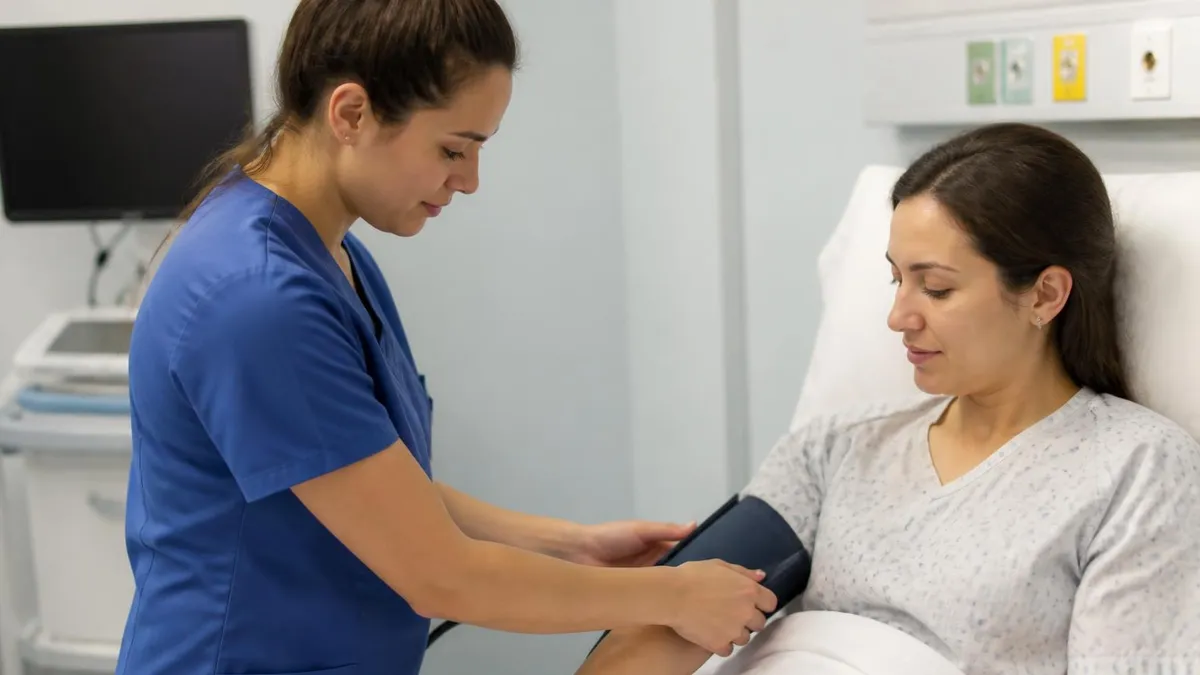
Practice rationales out loud, not silently
Candidates who explain why each wrong answer is wrong — aloud, in a complete sentence — consistently outperform those who silently click through rationales. Speaking the logic forces you to encode the reasoning into long-term memory and exposes weak spots immediately. Do this on every practice question for the final four weeks before your exam.
Registering for the NCLEX-PN is a two-step process that confuses many first-time candidates because it requires coordinating with both your state board of nursing and NCSBN through Pearson VUE. Start by applying for licensure with the board in the state where you intend to practice; this generally costs between fifty and two hundred dollars depending on the state. The board reviews your transcripts, criminal background check, and program completion documents before deciding whether you are eligible to test.
Once your state board approves you, separately register with Pearson VUE and pay the two-hundred-dollar exam fee. Pearson VUE forwards your registration to NCSBN, which cross-references it against the board's eligibility list. Only after both records match will you receive an Authorization to Test, commonly called the ATT, by email. The ATT contains your candidate identification number and a validity window — usually ninety days — within which you must schedule and sit your exam.
Do not register with Pearson VUE before your board approval is in motion. If your ATT expires without you testing, you forfeit the exam fee and must reregister. Most candidates schedule their appointment three to six weeks after applying so the timing aligns with their study runway. Pearson VUE testing centers fill up quickly in graduation months like May, August, and December, so book your slot the moment your ATT lands in your inbox.
On the day of the exam, arrive at least thirty minutes early and bring one form of acceptable government-issued photo identification with a signature, such as a driver's license or passport. The name on your ID must match the name on your ATT exactly — even a missing middle initial can cause you to be turned away. You cannot bring food, drinks, watches, phones, hats, jewelry, or study materials into the testing room; lockers are provided for personal items.
The check-in process includes a palm-vein scan, signature capture, and photograph. You will also be required to empty your pockets and roll up your sleeves. Two optional preprogrammed breaks are scheduled, one after two hours and one after three and a half hours, but you can take an unscheduled break at any time. The clock continues to run during all breaks, including bathroom trips, so manage them strategically.
Once you begin, you cannot skip questions or return to earlier ones. Take a slow breath before each item, read every word of the stem twice, and eliminate clearly wrong options first. Trust your preparation and remember that consistent accuracy across the entire exam is what triggers the algorithm to close your test as a pass. Walking out of the room is not a verdict — it is just the algorithm pausing to render its decision.
Official results are released by your state board, typically within six business days of your test date. Many states post results through their licensing portals, while others mail letters. NCSBN also offers an unofficial Quick Results service for a small fee, available 48 hours after testing in participating states. Resist the urge to refresh portals every hour; the data does not move faster because you check. For broader career planning while you wait, browse a directory of LPN programs near me to see continuing education and bridge-to-RN options.
Before your scored questions begin, Pearson VUE shows a short interactive tutorial that demonstrates Next Generation NCLEX item types like bowtie, matrix, and drag-and-drop. Skipping it because you feel rushed is one of the most common avoidable mistakes. Practice each item type during the tutorial so your first NGN question is not also the first time you have used that interface.
Effective NCLEX-PN preparation is not about reading more textbook chapters; it is about training your brain to think in the structured pattern the exam rewards. That pattern is called the nursing process — assessment, diagnosis, planning, implementation, evaluation — combined with Maslow's hierarchy and the ABCs of airway, breathing, and circulation. Almost every priority question on the exam can be answered by applying these three frameworks systematically before looking at the answer choices.
Build a question-bank routine that mimics the exam environment. Sit at a desk, set a timer for sixty to seventy-five questions, and resist all distractions for the entire block. Do not look up rationales mid-block. After the timer ends, spend twice as long reviewing your answers as you spent taking them. Track your performance by category in a simple spreadsheet so you can see exactly which subdomains are trending up and which need another round of focused review.
Pharmacology is the single most common reason candidates fail their first attempt. The NCSBN test plan emphasizes safe medication administration, and questions often hide critical information in the stem about renal function, allergies, or competing drug therapies. Build a deck of about two hundred high-yield medications organized by drug class, and for each one know the indications, mechanism, three most common side effects, three serious adverse effects, and key nursing considerations. Add lab values that must be checked before administration, such as potassium levels before digoxin.
Dosage calculation questions appear on nearly every NCLEX-PN, and they are pure points if you are practiced. Master dimensional analysis, IV drip rate calculations including drop factors, weight-based pediatric dosing, and titration adjustments. Many candidates lose points not because they cannot do the math but because they round prematurely or pick the wrong unit. Always carry calculations to the third decimal before rounding, and double-check the unit requested in the question.
Therapeutic communication and psychosocial questions are where strong test-takers separate themselves. The right answer almost always acknowledges feelings, avoids false reassurance, and stays open-ended. Eliminate any answer that minimizes the patient's experience, gives medical advice the patient did not ask for, or asks a why question. Practice rewriting casual conversational replies into therapeutic ones during daily life so the pattern becomes automatic.
Finally, develop a test-day stamina plan well before exam day. The full five hours of computer-adaptive testing is mentally exhausting, and candidates who have only practiced in twenty-minute bursts hit a wall around question one hundred. In the final three weeks, complete at least two full-length 150-question simulations under realistic timing. Track your accuracy by quartile to see whether your performance dips in hours three and four, then adjust your snack and bathroom-break strategy accordingly.
If you are still comparing program costs as you wait for your test date, the breakdown of LPN program cost can help you plan for licensure fees and any continuing education you may want to bundle alongside your NCLEX preparation. Treat NCLEX prep as the final required course in your program, not as an optional add-on, and you will treat it with the urgency it deserves.
In the final two weeks before your exam, shift from learning new content to refining test-taking technique. Your brain needs consolidation time more than it needs additional facts at this stage. Stop introducing new study materials seven to ten days before your test. Instead, review the rationale notes you have built throughout your prep, focusing on the ones you flagged as confusing or repeatedly wrong. Repeated exposure to your own weakest areas is more valuable than skimming new content.
Sleep is the most underrated NCLEX preparation tool. Multiple studies on test performance show that consistent seven-to-nine-hour sleep schedules in the two weeks before a major exam outperform last-minute cramming by a wide margin. Set a firm bedtime, avoid screens for the last hour before sleep, and treat caffeine after 2 PM as off-limits during your final week. A well-rested brain pattern-matches NCLEX questions faster and more accurately than a tired one.
The night before the exam, lay out everything you need on a single surface: your ATT email printed and saved on your phone, two forms of government-issued ID, directions to the testing center, and a small snack and water bottle for breaks. Do not study after 6 PM the night before. Watch a familiar comfort show, take a walk, or read fiction. Trust that the work is already done and resist any urge to cram new mnemonics into a tired brain.
On exam morning, eat a real breakfast that combines protein, complex carbohydrates, and a little healthy fat. Skip the venti caffeinated drink that will spike and crash you mid-exam — a normal cup of coffee is fine if you drink coffee daily. Arrive at the testing center thirty minutes early so you can clear security, store your belongings, and start the exam from a calm baseline rather than a rushed one.
During the exam itself, use a simple two-pass mental rhythm. First pass: read the stem twice, identify what the question is actually asking, and apply your priority framework. Second pass: evaluate each answer choice against that framework and eliminate the obviously wrong options. If you are still down to two choices, pick the one that is safer, more conservative, and aligned with the nursing process. Then move on and do not second-guess.
If the test ends at 85 questions or anywhere short of 150, do not panic. Early termination simply means the algorithm reached its confidence threshold — in either direction — and many candidates who finish early pass. The opposite is equally true: going to 150 questions does not mean failure. It means the engine needed every minute to render its decision. The only signal that matters is the official result released by your state board within six business days.
If you do not pass on your first attempt, take a deep breath. NCSBN allows retesting after a 45-day waiting period, and the diagnostic profile your state board sends will tell you exactly which content areas dragged your score down. Treat that report as a study syllabus, focus your next prep cycle on those domains, and book your retest with a clear plan rather than a vague determination to try harder. Many successful LPNs needed two attempts. What matters is the license at the end, not the number of tries it took to earn it.
LPN Questions and Answers




About the Author

Registered Nurse & Healthcare Educator
Johns Hopkins University School of NursingDr. Sarah Mitchell is a board-certified registered nurse with over 15 years of clinical and academic experience. She completed her PhD in Nursing Science at Johns Hopkins University and has taught NCLEX preparation and clinical skills courses for nursing students across the United States. Her research focuses on evidence-based exam preparation strategies for healthcare certification candidates.
Join the Discussion
Connect with other students preparing for this exam. Share tips, ask questions, and get advice from people who have been there.
View discussion (7 replies)