
LPN Courses Near Me: Find Local Practical Nursing Programs in 2026 September
✏️ Find accredited LPN courses near me in 2026 September. Compare local practical nursing programs, costs, schedules, admission requirements, and clinical placements.
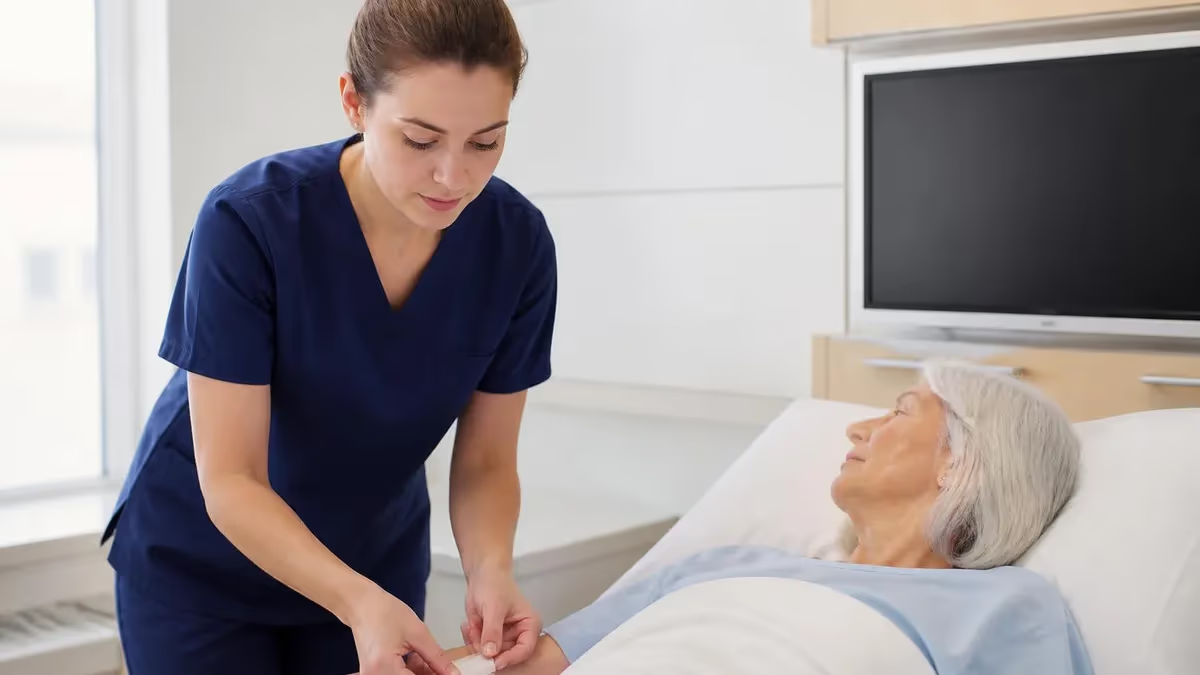
Searching for lpn courses near me is the first concrete step toward a stable, well-paying nursing career that you can launch in roughly twelve to eighteen months. Practical nursing programs are offered at community colleges, technical institutes, vocational schools, hospital-based training centers, and even some adult education divisions of public school districts. The closer your program, the easier your clinical rotations and study schedule become, since travel time often eats into homework hours and hands-on lab practice during the demanding final term.
Local LPN courses combine classroom theory, skills lab simulations, and supervised clinical hours at nearby hospitals, long-term care facilities, and outpatient clinics. Most full-time tracks run between forty-eight and sixty-four weeks, while part-time evening or weekend pathways stretch to twenty-four months. By choosing a school within a thirty-minute commute, you preserve energy for studying pharmacology, fundamentals of nursing, maternal-child health, and the dozens of procedural checkoffs required before sitting for the NCLEX-PN licensure examination administered nationally.
Tuition varies dramatically by region and school type. A community college LPN program may charge anywhere from $4,000 to $15,000 total, while private career colleges often range from $20,000 to $35,000 once books, uniforms, malpractice insurance, immunizations, background checks, and certification fees are added. Federal Pell Grants, state workforce vouchers, employer tuition reimbursement, and Workforce Innovation and Opportunity Act funds frequently cover much of the cost for students who apply early and meet income or residency criteria.
Accreditation matters more than proximity alone. Look for programs approved by your state board of nursing and ideally accredited by the Accreditation Commission for Education in Nursing (ACEN) or the Commission for Nursing Education Accreditation (CNEA). Without state board approval, graduates cannot sit for the NCLEX-PN, which means no license, no employment, and no return on investment. Always verify approval status directly on your state board website before paying a deposit or signing an enrollment agreement document.
Beyond accreditation, evaluate first-time NCLEX-PN pass rates, employer hiring partnerships, faculty-to-student ratios in clinical settings, and the variety of placement sites. Programs that rotate students through medical-surgical floors, rehabilitation centers, pediatric clinics, and psychiatric units produce graduates who feel confident on day one. A nearby school with weak clinicals can leave you underprepared, while a slightly farther program with strong partnerships may pay dividends throughout your entire forty-year nursing career.
If you want a head start before classes begin, working through a structured LPN Practice Test PDF helps you gauge baseline knowledge in math, dosage calculations, anatomy, and basic care concepts. This guide walks through how to locate quality programs, what admission committees expect, how to finance training, and what your first year of coursework actually looks like once you accept a seat in the cohort.
Whether you are a high school graduate, a career changer leaving retail or food service, a certified nursing assistant ready to advance, or a parent seeking flexible schedules, an LPN program exists within driving distance for nearly every American zip code. Read on for a practical roadmap that turns vague online searches into a confirmed seat, a financial aid package, and a clear path to licensure that pays back tuition within the first year of bedside employment.
LPN Programs in the United States by the Numbers
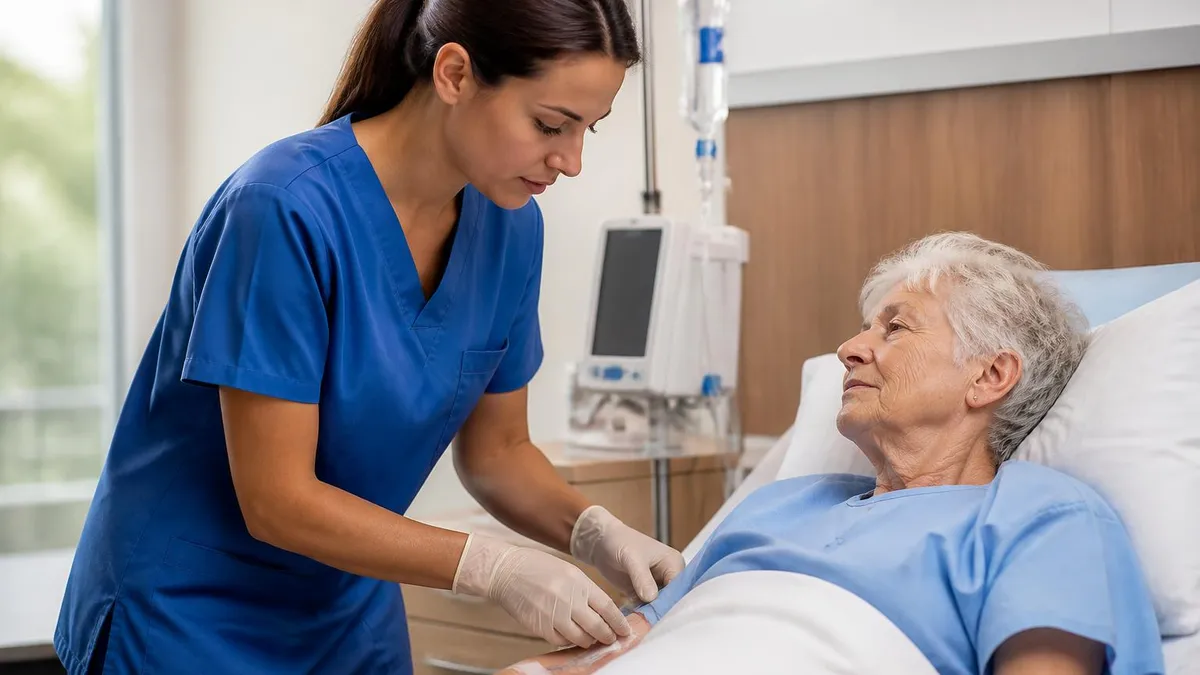
How to Find LPN Courses Near Me — Step by Step
Use Your State Board of Nursing Directory
Filter by Commute and Schedule
Verify Accreditation Status
Compare NCLEX-PN Pass Rates
Attend Information Sessions
Submit Applications Early
Admission requirements for LPN programs are designed to identify candidates likely to complete the demanding curriculum and pass the NCLEX-PN on the first attempt. While each school sets specific thresholds, most share a common framework. A high school diploma or GED is non-negotiable, and many programs require a minimum cumulative GPA of 2.5 or higher. Some institutions also require a college-level math, English, or biology course be completed before applying to ensure baseline academic readiness for the accelerated nursing coursework ahead.
Entrance exams play a major role in the selection process. The Test of Essential Academic Skills (TEAS) and the Health Education Systems Inc. Admission Assessment (HESI A2) are the two most common. Both evaluate reading comprehension, mathematics, science, and English usage. Competitive applicants typically score above the sixty-fifth percentile. Plan to study for six to eight weeks using official prep guides, online question banks, and timed practice exams to build pace, stamina, and confidence under realistic test conditions.
Health and background documentation can take longer than students expect. Programs require a recent physical exam, proof of immunizations including hepatitis B, MMR, varicella, Tdap, and annual influenza, plus a negative two-step tuberculosis screen. CPR certification at the Basic Life Support healthcare provider level is mandatory. Criminal background checks and drug screens are processed through approved vendors, and any past convictions must be disclosed honestly because clinical sites will reject students with discrepancies.
Some programs require prerequisite coursework completed at the college level before formal admission. Common prerequisites include anatomy and physiology, basic nutrition, medical terminology, and developmental psychology. While not every school requires these, completing them strengthens an application and reduces workload during the program itself. Community colleges often allow you to knock out prerequisites during the semester you are waiting for cohort placement, turning a delay into productive academic momentum that boosts your GPA.
Letters of recommendation, personal essays, and admissions interviews factor into selection at competitive schools. Recommenders should include a healthcare supervisor, a former teacher, or a community leader who can speak to your work ethic and reliability. Personal essays should articulate why nursing, why now, and what specific patient population you hope to serve. Interview questions often probe situational judgment, time management strategies, and how you respond to stressful or emotionally challenging clinical scenarios.
Certified nursing assistants and medical assistants frequently enjoy admission preferences because they have already demonstrated stamina in healthcare environments. If you are not yet a CNA, consider earning that certification first. Many states allow CNA training in four to twelve weeks, providing income, exposure, and resume credibility. Comparing program costs ahead of time using a resource like LPN Program Cost helps you budget the full prerequisite-to-licensure timeline accurately.
Finally, residency requirements affect community college tuition rates significantly. In-district students may pay one-third the rate charged to out-of-district or out-of-state applicants. Establishing residency through a lease, utility bills, voter registration, or a state driver license at least twelve months before applying can save thousands of dollars. Some states also offer reciprocity agreements with neighboring states, so always confirm tuition tiers and residency rules before assuming you cannot afford a particular nearby program.
LPN Practice Test Questions
Prepare for the LPN - Certified Practical Nurse exam with our free practice test modules. Each quiz covers key topics to help you pass on your first try.
LPN - Certified Practical Nurse Basic Care...
LPN Exam Questions covering - Certified Practical Nurse Basic Care and Comfort. Master LPN Test concepts for certification prep.
LPN - Certified Practical Nurse Coordinate...
Free LPN Practice Test featuring - Certified Practical Nurse Coordinated Care. Improve your LPN Exam score with mock test prep.
LPN - Certified Practical Nurse Health Pro...
LPN Mock Exam on - Certified Practical Nurse Health Promotion and Maintenance. LPN Study Guide questions to pass on your first try.
LPN - Certified Practical Nurse Pharmacolo...
LPN Test Prep for - Certified Practical Nurse Pharmacological Therapies. Practice LPN Quiz questions and boost your score.
LPN - Certified Practical Nurse Physiologi...
LPN Questions and Answers on - Certified Practical Nurse Physiological Adaptation. Free LPN practice for exam readiness.
LPN - Certified Practical Nurse Psychosoci...
LPN Mock Test covering - Certified Practical Nurse Psychosocial Integrity. Online LPN Test practice with instant feedback.
LPN - Certified Practical Nurse Reduction ...
Free LPN Quiz on - Certified Practical Nurse Reduction of Risk Potential. LPN Exam prep questions with detailed explanations.
LPN - Certified Practical Nurse Safety and...
LPN Practice Questions for - Certified Practical Nurse Safety and Infection Control. Build confidence for your LPN certification exam.
LPN Ethical, Legal & Professional Standards
LPN Test Online for Ethical, Legal & Professional Standards. Free practice with instant results and feedback.
LPN Health Evaluation & Monitoring
LPN Study Material on Health Evaluation & Monitoring. Prepare effectively with real exam-style questions.
LPN Courses Near Me — Program Format Options
Full-time day programs are the fastest route to licensure, condensing all classroom theory, lab simulations, and clinical rotations into twelve to fifteen months. Students attend classes Monday through Friday from roughly eight in the morning until three or four in the afternoon, with clinical days adding evening or weekend hours during later terms. The intensive structure mimics a real nursing job and prepares graduates for the pace of bedside practice.
The trade-off is reduced flexibility for outside work or family obligations. Most full-time students limit employment to ten or fewer hours weekly, often as a CNA at a partner facility. Financial aid, student loans, employer sponsorships, and family support typically cover living costs. Graduates exit faster, start earning a nursing salary sooner, and recoup tuition costs within roughly twelve months of passing the NCLEX-PN licensure exam.
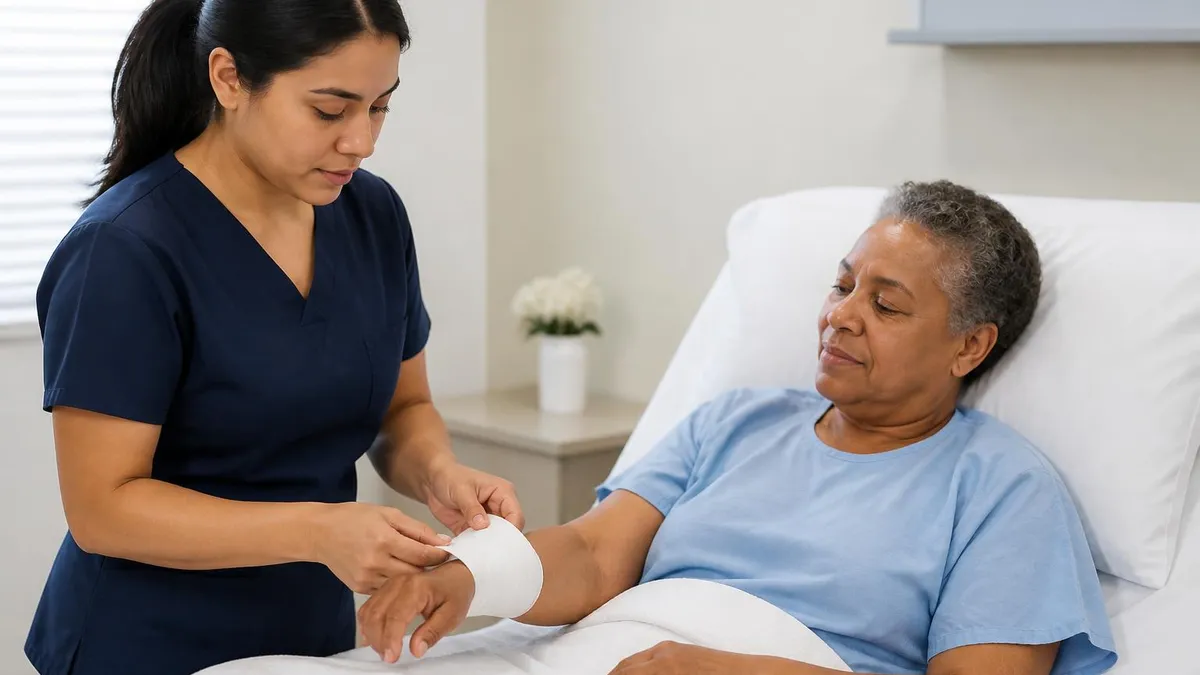
Pros and Cons of Choosing a Local LPN Program
- +Shorter commute preserves study time and reduces transportation costs
- +Clinical rotations occur at familiar local hospitals and facilities
- +Easier to coordinate childcare, work schedules, and family obligations
- +Networking opportunities with local employers who hire graduates directly
- +In-district community college tuition rates lower total program cost
- +Faculty often have established relationships with regional nursing leaders
- +Greater likelihood of finding job placement in the same community after graduation
- −Limited program selection may force compromises on schedule or specialty
- −Smaller cohorts can mean fewer elective rotations or specialty placements
- −Local programs may have longer waitlists in healthcare-shortage regions
- −Less curriculum variety compared to large metropolitan training hubs
- −Reputation of nearby program may not match prestigious distant alternatives
- −Bridge program transferability sometimes weaker at smaller rural schools
LPN Courses Near Me Enrollment Checklist
- ✓Verify state board of nursing approval for every program on your shortlist
- ✓Request first-time NCLEX-PN pass rates for the past three graduating cohorts
- ✓Complete the TEAS or HESI A2 entrance exam at least sixty days before deadlines
- ✓Gather official high school and any college transcripts in sealed envelopes
- ✓Schedule a physical exam, immunization review, and two-step tuberculosis screening
- ✓Obtain Basic Life Support healthcare provider CPR certification through American Heart Association
- ✓Complete a criminal background check and drug screen through approved vendor
- ✓Submit FAFSA early in October to maximize federal grant and loan eligibility
- ✓Tour skills labs and meet faculty during program information sessions
- ✓Confirm clinical rotation locations fall within an acceptable driving distance
Choose Accreditation Over Convenience
A program located three minutes from your house is worthless if it lacks state board approval. Always verify approval status on the official state board website before paying any deposit. Graduates of unapproved programs cannot sit for the NCLEX-PN, which means tuition, time, and effort are entirely wasted. Confirm accreditation in writing, not just verbally during a sales-focused enrollment conversation.
Financing an LPN program is more manageable than most prospective students realize, particularly when you start the funding conversation early. Tuition at a public community college LPN program averages between $4,000 and $15,000 in total, depending on residency status and whether fees, books, uniforms, and clinical supplies are bundled or charged separately. Private career colleges typically charge $20,000 to $35,000 for the same credential, though they sometimes offer accelerated schedules and stronger career placement services that justify the higher overall investment.
The Free Application for Federal Student Aid, known as the FAFSA, opens each October first and unlocks Pell Grants for eligible low-income students. Pell Grants currently provide up to $7,395 per academic year and do not require repayment. Subsidized and unsubsidized federal Direct Loans cover remaining costs at fixed interest rates, with payments deferred until six months after graduation. Many LPN students complete training with under $10,000 in loans, repayable within two years.
State-level workforce programs frequently subsidize practical nursing training because LPNs address persistent shortages in long-term care, home health, and rural primary care settings. Workforce Innovation and Opportunity Act funds, Trade Adjustment Assistance, and state-specific nursing scholarships can cover full tuition for qualifying applicants. Contact your local American Job Center or workforce development board to inquire about active grants. These funds often go unclaimed simply because students do not know they exist.
Employer tuition reimbursement is another underused funding source. Major nursing home chains, hospitals, and home health agencies frequently sponsor CNAs and unit clerks who commit to working as LPNs for two or three years post-graduation. Some employers pay tuition upfront while others reimburse semester by semester. Read service commitment contracts carefully, because leaving early may trigger repayment with interest. Even with restrictions, these programs effectively eliminate the financial barrier to entering the nursing workforce.
Scholarships specific to nursing students multiply each year as healthcare organizations work to expand the pipeline. The National Association of Licensed Practical Nurses, the National Black Nurses Association, the Hispanic Scholarship Fund, and various state nursing associations award amounts ranging from $500 to $5,000. Local civic groups like the Rotary Club, Kiwanis, and Elks Lodge often fund nursing students from their communities. Apply broadly because each smaller award accumulates and reduces the loan principal you will eventually need to repay.
Budget for hidden costs that catch first-year students off guard. Beyond tuition, expect to spend roughly $400 on uniforms and shoes, $200 on a stethoscope and basic equipment, $800 on textbooks, $150 on background checks and drug screens, $200 on immunizations if your insurance does not fully cover them, and $300 on NCLEX-PN application and testing fees. Comparing nearby schools using resources like LPN Programs Near Me simplifies side-by-side cost analysis dramatically.
Finally, consider the opportunity cost of training time. Full-time programs limit work hours, while evening tracks preserve income but extend duration. Calculate total cost as tuition plus foregone wages minus financial aid. A faster, slightly more expensive program may produce higher lifetime earnings if you reach licensed employment sooner. Run the numbers honestly, build a realistic monthly budget, and identify your break-even date so financial pressure does not derail academic success during the demanding final clinical term.
Many LPN programs fill cohorts six to nine months before classes begin and stop accepting applications once seats are confirmed. Missing a deadline by even one day typically means waiting an entire semester or full year for the next cohort. Mark every program deadline on a calendar, submit materials at least three weeks early, and confirm receipt by email to avoid losing your seat.
Clinical rotations are the heart of any LPN program and the part of training that most directly prepares you for licensed practice. Most state boards require between five hundred and seven hundred fifty supervised clinical hours across the curriculum, distributed throughout multiple healthcare settings. These rotations occur at partner facilities your school has formally contracted with, and the quality, variety, and supervisor expertise at those sites dramatically influence your confidence and competency upon graduation and entry to your first paid nursing role.
The typical clinical sequence begins with fundamentals at a skilled nursing facility, where you practice bed baths, transfers, vital signs, and basic medication administration on stable elderly residents. As skills develop, rotations expand to medical-surgical units, where you encounter postoperative patients, intravenous therapy, wound care, and acute symptom management. Each site assigns a clinical instructor responsible for evaluating performance, signing off on procedural competencies, and providing the daily feedback that transforms theoretical knowledge into reliable, safe bedside practice.
Maternal-child clinicals introduce labor and delivery observation, postpartum care, newborn assessment, and pediatric medication safety. Some programs include short pediatric rotations at children's hospitals or community pediatric clinics. Mental health clinicals occur at inpatient psychiatric units, partial hospitalization programs, or community behavioral health centers. These specialty experiences expose students to therapeutic communication, crisis de-escalation, and the unique medication considerations that apply when treating patients with depression, anxiety, schizophrenia, or substance use disorders.
Long-term care and rehabilitation rotations occupy a substantial portion of LPN clinicals because skilled nursing facilities remain the largest employer of practical nurses nationwide. Here students manage medication passes for fifteen to thirty residents, document carefully in electronic health records, communicate with families, supervise certified nursing assistants, and coordinate with registered nurses, physical therapists, and dietary staff. The pace teaches time management, prioritization, and the practical communication skills no textbook can adequately convey to nursing students.
Home health rotations, though shorter, expose students to community-based nursing where the LPN often functions with significant autonomy. Visits include wound care, catheter changes, medication setup, vital sign monitoring, and patient teaching. Students see firsthand how social factors like housing stability, food security, and transportation affect health outcomes far more than clinical interventions alone. This perspective shapes a more holistic understanding of patient care that informs every future clinical decision throughout your nursing career.
Clinical evaluations are graded against specific competency checklists. Common skills include sterile dressing changes, urinary catheter insertion, nasogastric tube management, tracheostomy care, blood glucose monitoring, subcutaneous and intramuscular injections, and accurate documentation. Failing to demonstrate a required skill triggers remediation, additional practice in the lab, and a second attempt. Programs are increasingly strict about competency standards because the NCLEX-PN tests these same procedures and clinical judgment scenarios through next-generation case study formats.
To understand what an LPN actually does after licensure, browse What Does LPN Stand For for a thorough breakdown of role definitions, scope of practice, and career paths. Knowing exactly what daily work looks like helps you engage more meaningfully during clinical rotations, ask the right questions of preceptors, and identify the practice setting that best matches your personality, lifestyle, and long-term professional aspirations before you graduate and accept your first nursing position.
Success in an LPN program demands habits that begin on day one and persist through the final NCLEX-PN exam day. Build a study schedule that allocates two to three hours daily for content review outside of class, expanding to four or five hours during exam weeks. Use spaced repetition flashcards for pharmacology drug categories, lab values, and disease processes. Active recall consistently outperforms passive rereading, so quiz yourself frequently using practice questions rather than highlighting and rereading textbook chapters that quickly fade from memory.
Form a small study group with two to four reliable classmates. Group members should commit to attending sessions, contributing prepared material, and respecting time limits. Effective groups quiz each other on care plans, swap mnemonics for cranial nerves or insulin onset times, and debrief tough clinical days. Avoid groups that devolve into venting or socializing because they consume study time without producing measurable academic gains. Quality always beats quantity when selecting study partners during nursing school.
Master dosage calculations early. Many programs require a passing score of ninety or ninety-five percent on math exams each semester, and a single failure can dismiss you from the program entirely. Practice ratio-proportion, dimensional analysis, and the formula method until conversions between milligrams, micrograms, milliliters, drops per minute, and units per hour become automatic. Free online drills and dedicated dosage calculation workbooks build the speed and accuracy required for both classroom testing and bedside medication safety.
Take care of your physical and mental health throughout the program. Nursing students who skip sleep, eat fast food at the wheel, and skip exercise burn out by the second term. Schedule meals, prioritize seven hours of sleep nightly, and walk or stretch daily even when overwhelmed. Mental health support through campus counseling centers, peer groups, or telehealth platforms helps process the emotional weight of patient deaths, family conflicts, and the impostor syndrome that affects most new nursing students.
Engage actively in clinical rotations. Volunteer for difficult procedures, ask preceptors thoughtful questions, and document every new skill in a personal log. The students who graduate with confidence are not always those with the highest GPA — they are the ones who treated every clinical day as a hands-on interview. Faculty notice initiative, and these clinical impressions translate directly into letters of recommendation, employer referrals, and faster job offers immediately following graduation and licensure.
Begin NCLEX-PN preparation roughly three months before graduation. Use a comprehensive question bank like UWorld, Kaplan, or Saunders with at least 1,500 practice questions. Aim to complete sixty to seventy-five questions daily, reviewing rationales for both correct and incorrect answers. Track weak content areas in a notebook and revisit them deliberately. The NCLEX-PN is a computerized adaptive test of clinical judgment, not memorization, so practicing application questions matters far more than rereading textbook chapters during the final preparation phase.
Finally, plan your post-graduation timeline. Apply for an authorization to test through your state board immediately upon program completion, schedule the exam within four to six weeks while content remains fresh, and submit applications to employers before licensure arrives so you can begin orientation the moment your license number posts. Many graduates accept positions contingent on passing the NCLEX-PN, allowing them to start working within seven to ten days of receiving official notification of passing results.
LPN Questions and Answers

About the Author

Registered Nurse & Healthcare Educator
Johns Hopkins University School of NursingDr. Sarah Mitchell is a board-certified registered nurse with over 15 years of clinical and academic experience. She completed her PhD in Nursing Science at Johns Hopkins University and has taught NCLEX preparation and clinical skills courses for nursing students across the United States. Her research focuses on evidence-based exam preparation strategies for healthcare certification candidates.
Join the Discussion
Connect with other students preparing for this exam. Share tips, ask questions, and get advice from people who have been there.
View discussion (7 replies)