
LPN Clinicals: What to Expect, How to Prepare, and How to Succeed 2026 September
LPN clinicals explained — hours, settings, what you do, and how to prepare. Your complete guide to succeeding in hands-on nursing training. ✅
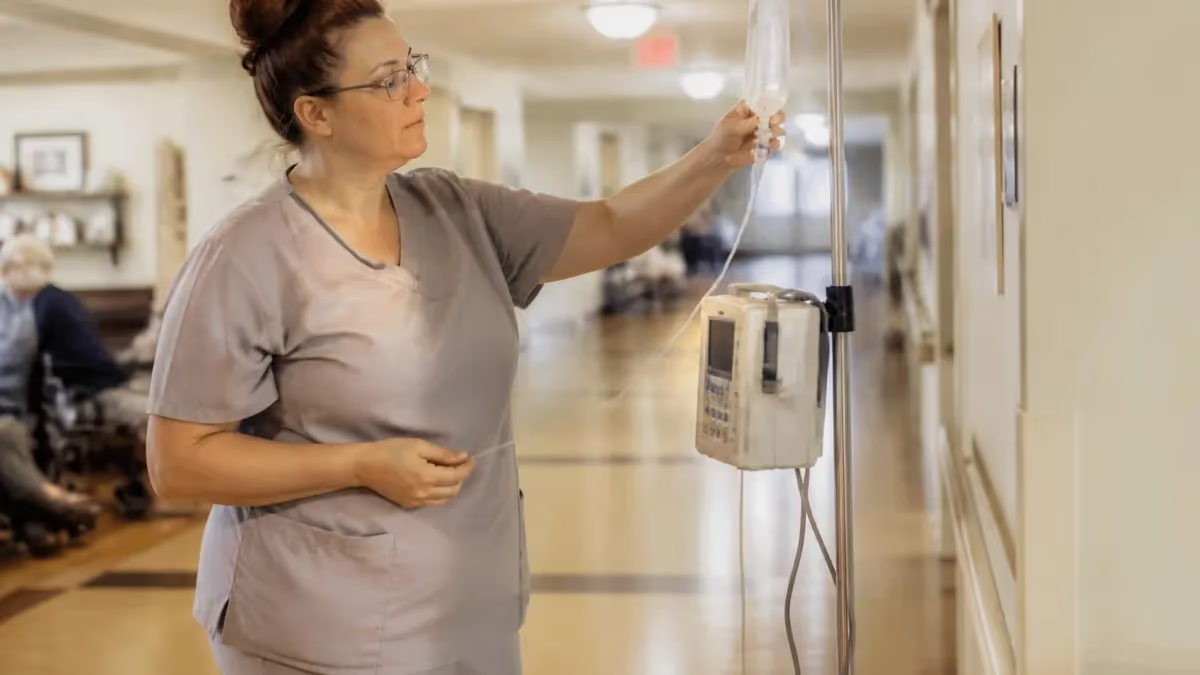
LPN clinicals are the hands-on, real-world training component of every Licensed Practical Nurse program in the United States. Unlike classroom lectures or lab simulations, clinicals place student nurses directly in hospitals, long-term care facilities, and community health settings where real patients receive actual care. Most accredited LPN programs require between 300 and 600 clinical hours before a student can sit for the NCLEX-PN licensing exam, and how well you perform during those hours often determines how prepared you feel on exam day and beyond. Understanding what lpn clinicals involve before you begin can dramatically reduce anxiety and improve your outcomes.
The clinical portion of your LPN program is where theoretical knowledge meets real human need. You will encounter patients experiencing pain, fear, confusion, and vulnerability — and your job is to respond with competence, compassion, and professionalism. Many students describe their first clinical day as the most challenging and simultaneously the most rewarding experience of their nursing education. The gap between what you study in a textbook and what you see in a patient's room can feel enormous at first, but skilled clinical instructors are there specifically to help you bridge that gap safely and effectively.
Clinical rotations in LPN programs are typically organized by care setting rather than medical specialty. You might spend several weeks in a skilled nursing facility learning how to manage wound care, medication administration, and activities of daily living for elderly residents, then rotate to a hospital medical-surgical unit where acuity levels are higher and care plans change rapidly. Some programs also include community health clinics, pediatric settings, or maternal health environments depending on what partnerships the nursing school has established with local healthcare providers.
Your clinical instructor plays a central role in shaping how much you learn during each rotation. These are licensed nurses, often with advanced credentials, who observe your practice, correct your technique, sign off on competencies, and evaluate your critical thinking in real time. Unlike a classroom professor, your clinical instructor sees you under pressure — when a patient is uncomfortable, when a task takes longer than expected, or when you encounter a procedure you have only read about. Their feedback in those moments is some of the most valuable professional development you will receive during your entire LPN program.
Preparation before each clinical shift matters enormously. Students who review their patient assignment the evening before, look up unfamiliar diagnoses, and arrive knowing the medications their patients are taking consistently perform better than those who show up unprepared. Most programs provide a clinical preparation worksheet that guides your pre-shift research, and completing it thoroughly is not just a formality — it is a safety practice that directly affects patient outcomes and your own confidence at the bedside.
The emotional dimension of LPN clinicals is something many students underestimate. You will witness suffering, connect with people during some of the most difficult moments of their lives, and occasionally be present when a patient passes away. Processing these experiences in a healthy way — through journaling, peer support, or conversations with your instructor — is essential for avoiding burnout and developing the professional resilience that sustains a long nursing career. Programs that include structured debriefing sessions after difficult clinical experiences help students integrate what they have witnessed and continue learning without being overwhelmed.
Passing your clinical rotations with strong evaluations requires consistent effort, professional behavior, and a genuine willingness to learn from every encounter. Students who treat each shift as an opportunity rather than an obligation, who ask questions rather than pretending to know, and who demonstrate genuine care for their patients almost always receive the strongest clinical evaluations — and enter the workforce as nurses their colleagues are glad to have on the team.
LPN Clinicals by the Numbers

How LPN Clinical Rotations Are Structured
The first one to two weeks of clinicals focus on facility orientation, safety protocols, documentation systems, and meeting your care team. You shadow experienced nurses and begin practicing basic skills under direct supervision before taking on patient assignments independently.
During the core rotation weeks, you take on increasing patient responsibility with your clinical instructor observing and evaluating your assessments, interventions, and communication. Competency sign-offs happen during this phase for skills like catheterization, wound care, and IV management.
By the final weeks of each rotation, students are expected to manage their patient assignment with minimal prompting, prioritize care effectively, and document accurately. Your instructor observes from a greater distance and evaluates your clinical judgment rather than technique alone.
Each rotation ends with a formal clinical evaluation that scores your performance across competency domains. Scores feed into your overall program grade and determine whether you advance to the next rotation or require remediation before continuing your LPN training.
During a typical LPN clinical shift, your responsibilities begin before you even enter the patient's room. Most programs require students to complete a pre-clinical preparation form the night before each shift, reviewing the patient's admitting diagnosis, current medications, recent lab values, and care plan goals.
This research takes between 30 and 60 minutes for a two-patient assignment, but it is time that pays enormous dividends at the bedside. Students who arrive knowing their patients' conditions ask better questions, catch potential medication errors more readily, and earn significantly more positive feedback from their clinical instructors and the unit staff they work alongside.
Morning clinical shifts typically begin with a handoff report from the outgoing nursing staff. As a student, you listen carefully during report and begin forming your mental picture of each patient — their baseline status, what changed overnight, what the goals are for today's shift, and what concerns might require monitoring. Many clinical instructors quiz students immediately after report to assess whether they were actively listening and thinking critically about what they heard. Being caught unprepared during this moment is a common source of student anxiety, but strong pre-clinical preparation makes the handoff report feel much more manageable.
Basic care and comfort skills form the backbone of LPN clinical practice. You will assist patients with bathing, oral hygiene, positioning, ambulation, and meals while simultaneously assessing skin integrity, pain levels, and cognitive status. These are not simple tasks — a bath is also a head-to-toe skin assessment, an opportunity to observe mobility limitations, and a chance to notice changes in mental status that might indicate infection or medication side effects. The most skilled LPN students learn early that every hands-on care interaction is also a clinical assessment, and they document what they find accurately and promptly.
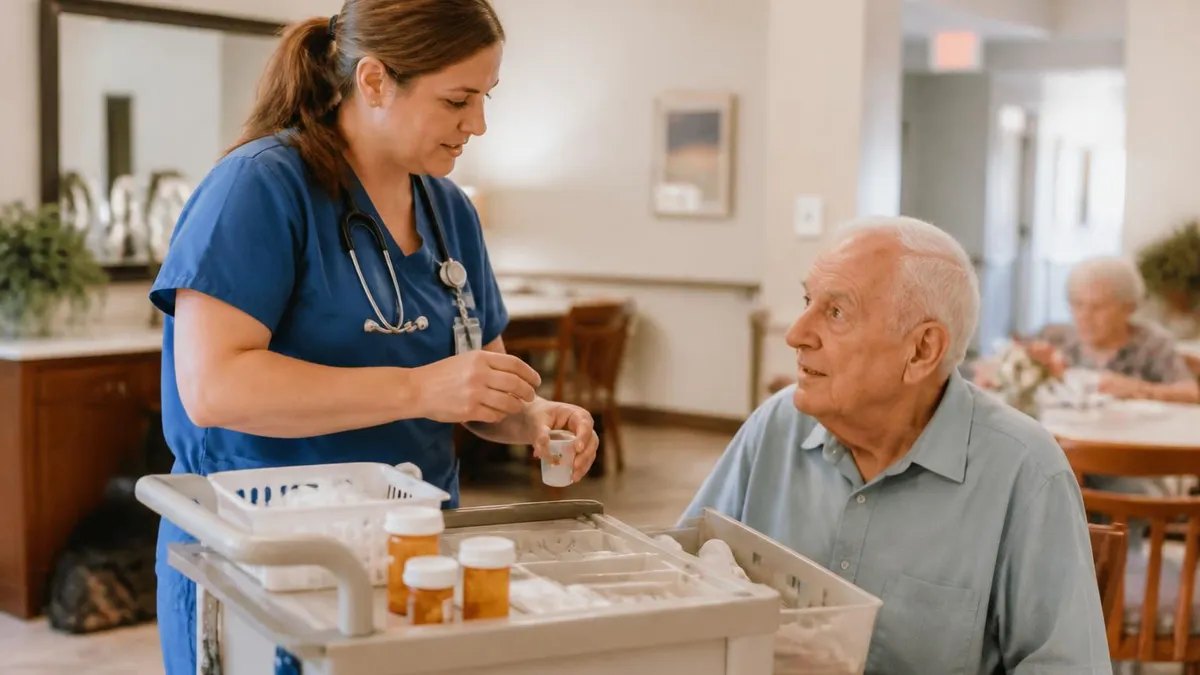
Medication administration is one of the most closely supervised clinical skills in any LPN program. Before administering any medication, students are expected to complete the five rights — right patient, right drug, right dose, right route, right time — and often a sixth or seventh right depending on the program's policies.
Clinical instructors observe medication passes carefully, watching for the kinds of shortcuts that can lead to errors in real practice. Students who take medication administration seriously during clinicals, who ask questions when uncertain, and who refuse to administer anything they do not fully understand demonstrate exactly the kind of professional judgment that makes safe nurses.
Documentation is another critical clinical skill that many students underestimate until they are in the middle of it. Nursing documentation in electronic health record systems must be accurate, timely, and use correct clinical terminology. Charting that a patient "seemed okay" is not acceptable — you need to document specific vital signs, observable behaviors, patient statements, and your nursing interventions with the time each occurred. Most facilities now use computerized charting systems, and LPN programs typically partner with facilities that use common platforms so students gain experience with the software they will encounter in real jobs after graduation.
Communication with the interdisciplinary care team is a clinical skill that develops gradually over the course of your rotations. Early in your program, you may feel intimidated speaking with physicians, respiratory therapists, or social workers about your patients. But clear, professional communication is essential to patient safety, and clinical instructors deliberately create opportunities for students to practice it. Using structured communication tools like SBAR — Situation, Background, Assessment, Recommendation — helps LPN students organize their thoughts and present clinical information in the format that other healthcare professionals expect and respect.
By the end of your clinical rotations, you should feel comfortable performing the essential skills of LPN practice: completing head-to-toe assessments, administering medications safely, implementing care plan interventions, communicating clearly with patients and team members, and documenting your work accurately. These are the same skills the NCLEX-PN tests in its clinical judgment questions, which is why students with strong clinical performance consistently report feeling more prepared for the licensing exam than those who struggled during their rotations.
LPN Clinical Settings: Hospitals, SNFs, and Community Health
Hospital-based LPN clinicals typically take place on medical-surgical units where patients are recovering from surgeries, managing chronic illness exacerbations, or receiving diagnostic workups. The pace is fast, patient acuity is higher than in long-term care, and care plans change frequently based on physician orders and patient response. Students assigned to hospital rotations gain experience with IV therapy, post-operative care, wound management, and acute pain assessment — skills that translate directly to inpatient nursing careers.
In hospital settings, LPN students work alongside RNs who supervise or co-manage the patient assignment. This gives students exposure to the collaborative RN-LPN relationship that defines most inpatient nursing environments. You will learn how scope-of-practice boundaries work in real time, when to escalate a concern to the supervising RN, and how to communicate clinical information clearly under time pressure. Many students find that hospital rotations build the fastest confidence because the environment demands quick thinking and decisive action.
Pros and Cons of LPN Clinical Training
- +Builds real hands-on skills that no simulation or lecture can fully replicate in a classroom setting
- +Provides direct exposure to the facilities and care teams where you may work after graduation
- +Develops clinical judgment and critical thinking under realistic conditions with a safety net
- +Strengthens NCLEX-PN preparation by connecting exam content to real patient scenarios
- +Creates professional networking opportunities with nurses, physicians, and healthcare employers
- +Builds confidence through progressive independence as competencies are demonstrated and signed off
- −Clinicals are physically and emotionally demanding, requiring stamina across long shifts
- −Schedules are often inflexible, making it difficult to balance work, family, and school
- −Geographic limitations mean students may need to travel to assigned facilities they did not choose
- −Performance anxiety during evaluations can mask actual competency, affecting clinical grades
- −Exposure to illness, death, and patient suffering can cause compassion fatigue without good support
- −Limited control over the types of cases encountered during any given rotation
LPN Clinical Preparation Checklist
- ✓Review your patient assignment and primary diagnoses the evening before each clinical shift.
- ✓Look up all medications your patients are taking, including common side effects and nursing implications.
- ✓Check recent lab values and identify any results that fall outside normal ranges.
- ✓Arrive at least 15 minutes early to review the facility layout and gather necessary supplies.
- ✓Bring your clinical preparation worksheet, stethoscope, penlight, and program-required materials.
- ✓Dress in full compliance with your program's uniform and appearance standards — instructors notice.
- ✓Introduce yourself to every patient professionally, explaining your student role clearly and respectfully.
- ✓Perform a complete head-to-toe assessment at the start of your shift and document your findings promptly.
- ✓Communicate any patient concerns or changes in condition to your clinical instructor immediately.
- ✓Complete all required competency documentation before the end of your clinical shift.
Your Instructor Grades Your Thinking, Not Just Your Technique
Clinical evaluations in LPN programs assess critical thinking and professional judgment as heavily as hands-on skill. Students who verbalize their reasoning — explaining why they are checking a blood pressure before administering an antihypertensive, or why they are repositioning a patient every two hours — consistently earn stronger evaluations than students who perform tasks silently and correctly. Talk through your clinical thinking out loud. Your instructor wants to see how your mind works, not just your hands.
Excelling during LPN clinicals requires a combination of preparation, professional attitude, and the willingness to be taught. The students who stand out in every clinical group share a recognizable set of behaviors: they arrive prepared, they stay engaged throughout the shift, they seek out learning opportunities rather than waiting for tasks to be assigned, and they treat every member of the care team — from the housekeeping staff to the attending physician — with equal respect and professionalism. These behaviors are noticed by clinical instructors, staff nurses, and facility administrators alike, and they frequently translate into job offers after graduation.
Managing time effectively during clinical shifts is one of the most commonly cited challenges for LPN students. When you are responsible for multiple patients, each with their own medication schedules, care needs, and documentation requirements, the hours can disappear quickly.
Developing a systematic approach to organizing your shift — batching tasks when possible, prioritizing safety-sensitive activities first, and building documentation time into your schedule rather than leaving it all for the end — is a skill that separates competent students from exceptional ones. Many experienced nurses recommend drawing a simple time grid at the start of each shift to visualize when tasks must occur.
Asking questions is one of the most important professional skills you can practice during clinical rotations. Many student nurses are reluctant to ask questions because they fear appearing unprepared or incompetent. In reality, the opposite is true — clinical instructors and experienced nurses almost universally report that students who ask thoughtful, focused questions demonstrate better clinical judgment than those who proceed silently with incomplete understanding. The question that feels embarrassing to ask is almost always the question that prevents a medication error, an assessment omission, or a communication failure. Normalize asking questions early in your program.
Receiving critical feedback gracefully is another clinical competency that deserves deliberate practice. Your instructor will correct you — sometimes in front of patients or other students — and how you respond to that correction affects both your learning and your professional reputation. Students who respond to feedback with defensiveness or visible frustration create an environment where instructors become reluctant to correct them, which ultimately harms learning. Students who thank their instructor for the correction, ask clarifying questions, and visibly implement the feedback immediately demonstrate the professional maturity that makes great nurses and great colleagues.
Building relationships with the staff nurses on your clinical unit pays dividends throughout your rotation and sometimes beyond it. Staff nurses who know your name, trust your professionalism, and see you as a genuine contributor to patient care are more likely to include you in interesting procedures, share clinical pearls from their experience, and provide informal mentorship during your shifts.
This does not require anything beyond consistent reliability, respectful communication, and genuine curiosity about what they know. Many LPN graduates trace their first nursing jobs back to informal relationships formed during clinical rotations with nurses who later advocated for them during the hiring process.
Self-assessment after every clinical shift is a practice that accelerates learning faster than almost anything else a student can do. Taking ten minutes at the end of each shift to honestly evaluate what went well, what you would do differently, and what questions were left unanswered creates a feedback loop that compounds over months of clinical training. Many programs require reflective journals for exactly this reason, but students who take the reflection seriously rather than completing it minimally as a requirement extract dramatically more learning from their clinical hours than those who do not.
Remember that clinical rotations are not about performing perfectly — they are about learning safely. The clinical environment is designed with supervision structures specifically because student nurses are still developing their judgment, and errors are expected to occur in a supported, correctable way.
The goal is to make your mistakes during supervised training rather than in your first weeks of independent practice as a licensed nurse. Students who embrace this framing feel less shame when they make errors and learn from those errors more completely, entering the nursing workforce with honest self-knowledge about their strengths and the areas where they are still growing.
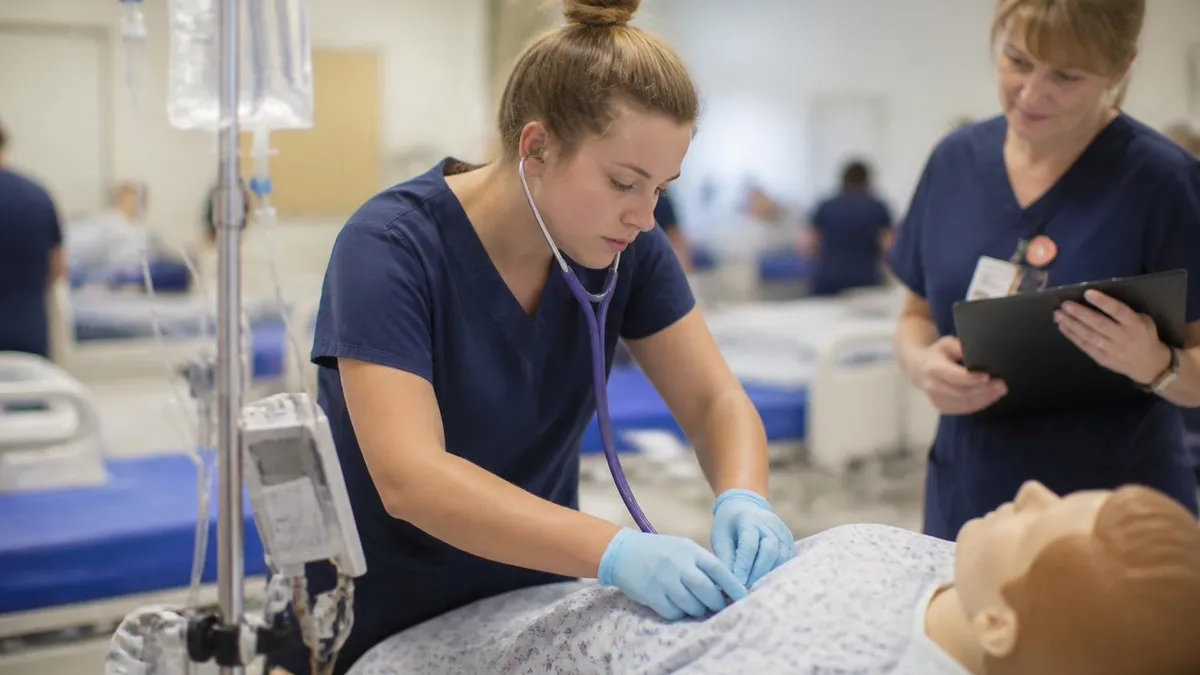
Most LPN programs have zero-tolerance or near-zero-tolerance attendance policies for clinical rotations. Missing even one clinical day without approved documentation — medical emergency, family crisis, or other program-approved reason — can result in clinical failure, program dismissal, or mandatory remediation that delays graduation. Unlike classroom absences, missed clinical hours often cannot be made up within the regular academic calendar. Review your program's attendance policy during orientation and plan your schedule accordingly to protect your clinical standing.
The connection between strong clinical performance and NCLEX-PN success is well-documented and makes intuitive sense: the licensing exam is designed to test clinical judgment — the same judgment that clinicals are specifically designed to develop. The NCLEX-PN Next Generation format, introduced in 2023, places even greater emphasis on recognizing clinical cues, analyzing information from multiple sources, and selecting appropriate nursing actions in complex patient scenarios.
Students who have seen real patients with those conditions, made real decisions about their care, and received real feedback about the quality of their clinical judgment are significantly better equipped to answer those questions correctly under exam conditions.
Connecting your clinical experiences explicitly to NCLEX-PN content throughout your rotations accelerates exam preparation in a way that passive studying cannot replicate. When you care for a patient with congestive heart failure and monitor their fluid balance, you are building the clinical memory that makes a NCLEX question about fluid overload immediately recognizable and solvable.
When you administer insulin to a diabetic patient and learn to monitor for hypoglycemia, you are encoding the pharmacology content that the exam will test. Keeping a brief clinical log that notes what diagnoses, medications, and interventions you encountered each week helps you identify gaps in your clinical exposure that you can address through additional study before exam day.
Many LPN programs now incorporate NCLEX-style practice questions into their clinical post-conferences specifically to help students make this connection explicit. After a shift, the clinical instructor may present a scenario similar to a patient the group cared for and walk through the NCLEX-style reasoning process together. Students who participate actively in these discussions — rather than passively listening — develop clinical reasoning skills faster and report higher confidence entering the NCLEX-PN. If your program does not include this type of structured clinical-to-exam connection, you can create it yourself by practicing with targeted question banks after each rotation.
The basic care and comfort domain of the NCLEX-PN is one of the areas most directly tested from clinical experience. Questions in this domain cover hygiene, positioning, pain management, nutrition, elimination, and rest — exactly the skills you practice most frequently during clinical rotations in skilled nursing facilities and hospital settings. Students who have genuinely mastered these skills through repeated clinical practice answer basic care and comfort questions quickly and confidently, freeing cognitive resources for the more complex clinical judgment items that require more careful analysis.
Coordinated care questions on the NCLEX-PN test your understanding of how the LPN role fits within the larger healthcare team — when to delegate, when to escalate, when to communicate changes in patient status, and how to prioritize care across multiple patients. These are not abstract concepts that can be fully learned from a textbook.
They are judgment calls that clinical rotations train you to make through real experience with real supervision. Students who have genuinely practiced coordinating care during their clinical hours approach these NCLEX questions with a concrete mental model that makes the correct answer recognizable rather than a guess between equally plausible options.
Using NCLEX-PN practice resources alongside your clinical training — rather than saving all exam preparation for after clinicals end — is one of the most effective strategies for building integrated clinical knowledge. When you encounter a patient with a condition you have been studying in practice questions, the clinical experience makes the abstract content concrete and memorable.
When you review a practice question that covers a skill you just performed in clinical, the exam content reinforces your procedural learning and helps you articulate the reasoning behind what you did. This integration of experience and study is the foundation of genuine nursing competence.
After your final clinical rotation is complete and you are preparing to sit for the NCLEX-PN, your clinical experiences should be one of your most important study resources. Reviewing the diagnoses, medications, procedures, and clinical situations you encountered during your rotations — and making sure you understand the nursing implications of each — provides a personalized study guide built on your actual learning experiences. Combined with comprehensive practice question work targeting your weaker content areas, this clinical review strategy positions you to approach the NCLEX-PN with the kind of grounded, experience-based confidence that translates into a passing score.
Practical preparation for LPN clinicals starts weeks before your first shift. Begin by thoroughly reviewing your program's clinical handbook — every requirement, every competency, every policy that governs your performance during rotations. Know what you are expected to demonstrate, when evaluations occur, and what the consequences of unsatisfactory performance look like. Students who understand the evaluation framework going in can orient their preparation and behavior toward meeting those specific expectations rather than hoping their general effort will be sufficient.
Investing in quality clinical equipment before your rotations begin pays dividends throughout your program. A reliable stethoscope appropriate for nursing practice — not the cheapest option and not necessarily the most expensive — allows you to hear heart, lung, and bowel sounds clearly enough to develop real assessment skills. A pen with multiple ink colors allows you to organize your clinical notes efficiently.
A small, high-quality nursing drug reference guide or a reliable clinical app on your phone gives you quick access to medication information during clinical preparation. These tools become extensions of your professional practice, and becoming familiar with them before your first clinical day removes one source of friction from an already demanding environment.
Developing strong study habits specifically oriented toward clinical application strengthens your performance during rotations. Instead of memorizing isolated nursing facts, practice applying knowledge to clinical scenarios. When studying a medication, mentally run through the five rights and identify what assessments you would complete before administration. When reviewing a diagnosis, visualize the patient in front of you and identify what signs and symptoms you would expect to observe, what comfort interventions you would implement, and what changes in condition you would need to escalate. This applied, scenario-based study approach is also the most effective preparation for NCLEX-PN clinical judgment questions.
Taking care of your physical and mental health during clinical training is not optional — it is a professional obligation. LPN students who are chronically sleep-deprived, poorly nourished, or managing unaddressed emotional distress make more errors, communicate less effectively, and learn more slowly than students who prioritize their own wellbeing. Clinical shifts are physically demanding, often requiring six to eight hours of continuous movement, lifting, and focused attention. Arriving well-rested, having eaten a substantial meal, and being mentally present is the foundation of safe clinical practice and effective learning.
Building a peer support network with your fellow clinical students creates resources that benefit everyone in the group. Students who share preparation strategies, quiz each other on medications before shifts, debrief together after challenging clinical experiences, and support each other through difficult evaluations consistently perform better as a group than cohorts where students compete rather than collaborate. The nursing profession itself is fundamentally collaborative, and the professional relationships you build during your LPN program often become the network of colleagues, references, and mentors that supports your entire career.
Approaching each clinical rotation with clearly defined personal learning goals — beyond simply passing the evaluation — transforms the experience from a performance requirement into a genuine developmental opportunity. Before each new rotation, identify two or three specific skills or knowledge areas you want to strengthen, and actively seek out opportunities to practice them during your shifts. Tell your clinical instructor what you are working on — most instructors will actively create opportunities for you to practice those skills and will observe you more carefully during those moments, providing the targeted feedback that produces the fastest skill development.
When your LPN clinicals are complete and you step into your first nursing position, you will draw on everything you learned during those supervised hours. The confidence to introduce yourself to a new patient, the judgment to recognize when a clinical change requires escalation, the professional habits that make you a reliable member of the care team — all of it was built during clinical training. Treat every hour of your clinical rotation as an investment in the nurse you are becoming, because that is exactly what it is.
LPN Questions and Answers

LPN Requirements 2026: Complete Guide to Becoming a Licensed Practical Nurse
LPN IV Certification: Complete 2026 Guide to Training, Requirements & Cost

LPN Programs in Florida: Complete 2026 Guide to Accredited Schools, Costs, Requirements & Licensure

LPN Salary Wisconsin 2026: Average Pay, Top Cities, and How to Earn More
LPN Duties: Complete Guide to Daily Responsibilities and Scope of Practice
About the Author

Registered Nurse & Healthcare Educator
Johns Hopkins University School of NursingDr. Sarah Mitchell is a board-certified registered nurse with over 15 years of clinical and academic experience. She completed her PhD in Nursing Science at Johns Hopkins University and has taught NCLEX preparation and clinical skills courses for nursing students across the United States. Her research focuses on evidence-based exam preparation strategies for healthcare certification candidates.
Join the Discussion
Connect with other students preparing for this exam. Share tips, ask questions, and get advice from people who have been there.
View discussion (7 replies)