
10 Ton HVAC Unit Sizing Guide: How to Calculate, Choose, and Install the Right Tonnage for Homes and Commercial Buildings
📚 Complete guide to 10 ton HVAC unit sizing, costs, and installation. Learn how to calculate tonnage, compare unit sizes, and avoid oversizing mistakes.

A 10 ton hvac unit cost is one of the most common commercial-grade systems installed in light commercial buildings, large custom homes, restaurants, retail spaces, and small office complexes across the United States. Understanding HVAC unit sizes is the single most important step in designing a comfortable, efficient, and code-compliant heating and cooling system. Whether you are replacing an aging rooftop package unit or specifying equipment for new construction, choosing the right tonnage prevents short cycling, humidity problems, and premature compressor failure that plague oversized installations every single day.
One ton of cooling equals 12,000 BTUs per hour, which traces back to the energy required to melt one ton of ice over twenty-four hours. A 10 ton unit therefore delivers 120,000 BTUs of cooling capacity, enough to condition roughly 4,000 to 6,000 square feet of typical commercial space depending on insulation, occupancy, ventilation loads, glazing, and climate zone. Residential systems rarely exceed five tons, while large industrial buildings may use multiple 20 or 25 ton rooftop units linked through a variable refrigerant flow design.
Sizing an HVAC system is never as simple as multiplying square footage by a rule of thumb. Modern Manual J load calculations consider window orientation, attic insulation R-values, infiltration rates, internal heat gains from people and equipment, duct losses, and local design temperatures. Skipping this analysis is the leading cause of comfort complaints. An oversized 10 ton unit installed where a properly calculated 7.5 ton would suffice will cycle on and off rapidly, fail to dehumidify, and waste thousands of dollars in energy over its lifespan.
This guide walks through every aspect of HVAC unit sizing, from the basic math behind tonnage calculations to real-world commercial specification decisions. We will cover residential sizes from 1.5 to 5 tons, light commercial sizes from 6 to 25 tons, the differences between split systems and rooftop package units, SEER2 efficiency expectations, electrical requirements, and the typical installed cost ranges for each tier. By the end, you will know exactly how to evaluate a contractor proposal and avoid the most expensive mistake in HVAC: buying too much equipment.
Industry data from ACCA, AHRI, and the Department of Energy consistently shows that more than half of residential and small commercial HVAC systems in the United States are oversized by at least one full ton. For homeowners, that translates to roughly 15 to 25 percent higher electric bills, shorter equipment life, and persistent humidity issues during shoulder seasons. For commercial property owners, oversizing means uneven temperatures across zones, frozen evaporator coils, and tenant complaints that erode lease renewals and net operating income.
The rules around tonnage are also changing. The 2023 SEER2 transition reset minimum hvac regulations new refrigerants like R-454B are replacing R-410A through 2025 and 2026, and updated building energy codes now require Manual J documentation for permits in most states. Anyone specifying or selling HVAC equipment in 2026 needs current knowledge of these rules. Before you sign a proposal, take some time to read our hvac solutions for context on how sizing fits into the larger system design picture.
Throughout this article we focus on real numbers, real load calculations, and real installation details rather than vague marketing claims. You will see CFM-per-ton airflow targets, refrigerant line set lengths, breaker amperage tables, and ducting velocity ranges. The goal is to make you confident enough to challenge a contractor who proposes oversized equipment and to understand exactly what you are buying when the price tag on a 10 ton package unit reaches twenty-five thousand dollars installed.
HVAC Unit Sizes by the Numbers
Key Facts at a Glance
| Item | Value | Details |
|---|---|---|
| Required Airflow | 4,000 CFM | 400 CFM per ton standard |
| Installed Cost | $18K–$28K | Package unit, 2026 pricing |
| Minimum SEER2 | 14.3 | 2026 federal standard |
HVAC Unit Sizes by Tonnage Range
Small to mid-size homes from 600 to 1,800 square feet. Most commonly installed as split systems with an outdoor condenser and indoor air handler or furnace coil combination running on standard 240V single-phase power.
Larger homes from 1,800 to 3,500 square feet, often with multiple zones. Five tons is the practical residential ceiling before specifications shift to commercial-grade equipment with three-phase electrical requirements and roof curbs.
Small offices, restaurants, retail stores, and large custom homes from 2,400 to 6,000 square feet. The 10 ton hvac unit sits at the top of this tier and is the most common rooftop package size sold in North America today.
Mid-size offices, schools, medical buildings, and warehouses. These units almost always require three-phase 460V power, structural roof support analysis, and zoned VAV ductwork to deliver air to multiple thermal zones efficiently.
Anchor retail, industrial spaces, and multi-tenant facilities. Often deployed as multiple smaller units rather than one large unit to provide redundancy, zone control, and easier service access during peak cooling demand periods.
Calculating the correct HVAC unit size starts with a Manual J hvac manual j calculation or ASHRAE-based commercial load calculation. These are not optional steps. They are required by the International Residential Code, the International Energy Conservation Code, and most state amendments thereof. Manual J considers the building envelope as a thermodynamic system and tallies every source of heat gain and loss across the design day, producing a sensible cooling load and a latent cooling load expressed in BTUs per hour.
The old rule of thumb of 400 to 600 square feet per ton is dangerous and outdated. A well-insulated new construction home in a moderate climate may need only one ton per 1,000 square feet, while a poorly insulated 1970s building in Phoenix or Houston might require one ton per 350 square feet. Using square footage alone routinely produces equipment that is one to two tons larger than necessary, which is precisely why the industry has moved toward computerized Manual J software like Wrightsoft and Cool Calc.
For a 10 ton hvac unit, the typical commercial calculation begins with the building envelope. You measure exterior wall area, multiply by the assembly U-factor, and apply the design temperature difference. Window areas are calculated separately because they conduct heat at five to ten times the rate of insulated walls. Roof and slab assemblies contribute their own loads, and infiltration is estimated based on building tightness testing or assumed air changes per hour for the construction type.
Internal loads matter just as much as the envelope in commercial buildings. A restaurant kitchen with six cooks, a hood system, and twelve burners generates an enormous sensible and latent load that residential calculations never address. Office spaces have computer and lighting loads typically ranging from 1 to 3 watts per square foot. Retail spaces have variable occupancy and significant solar gain through display windows. Each of these factors gets a line item in the load calculation worksheet before tonnage is selected.
Ventilation requirements per ASHRAE Standard 62.1 add another layer. Outdoor air brought in for occupant ventilation must be cooled and dehumidified, which in humid climates can add 10 to 30 percent to the total cooling load. A 10 ton system serving a restaurant may dedicate two of its ten tons just to conditioning makeup air for the kitchen exhaust. Ignoring ventilation loads is one of the most common errors in light commercial design and a frequent source of post-occupancy comfort complaints.
Once you have a calculated load, equipment selection follows ACCA Manual S guidelines. The installed equipment should not exceed the calculated cooling load by more than 15 percent for cooling-dominated climates, or 25 percent if dehumidification is the priority. For our 10 ton example, this means the calculated load must fall between 102,000 and 120,000 BTUs per hour. Anything lower means you should drop down to a 7.5 or 8.5 ton unit instead. Selecting the right contractor matters here, so vet candidates carefully using guidance from our article on HVAC contractors.
Heating loads are calculated separately using Manual J Section 7. In northern climates, heating loads often dictate equipment selection more than cooling loads, especially for heat pump installations. A 10 ton heat pump in Minneapolis might only meet 60 percent of the design heating load at 5°F outdoor, requiring auxiliary electric resistance or gas backup. Properly balancing the cooling capacity with the heating capacity is the hardest part of cold-climate commercial hvac design and where many contractors cut corners.
HVAC Practice Test Questions
Prepare for the HVAC - Heating Ventilation and Air Conditioning exam with our free practice test modules. Each quiz covers key topics to help you pass on your first try.
HVAC Air Conditioning
HVAC Exam Questions covering Air Conditioning. Master HVAC Test concepts for certification prep.
HVAC Code Compliance
Free HVAC Practice Test featuring Code Compliance. Improve your HVAC Exam score with mock test prep.
HVAC Electrical Controls
HVAC Test Prep for Electrical Controls. Practice HVAC Quiz questions and boost your score.
HVAC Energy Efficiency
HVAC Questions and Answers on Energy Efficiency. Free HVAC practice for exam readiness.
HVAC Heating Systems
HVAC Mock Test covering Heating Systems. Online HVAC Test practice with instant feedback.
HVAC Load Calculations
Free HVAC Quiz on HVAC Load Calculations. HVAC Exam prep questions with detailed explanations.
HVAC Tools and Equipment
HVAC Practice Questions for HVAC Tools and Equipment. Build confidence for your HVAC certification exam.
HVAC Refrigeration
HVAC Test Online for Refrigeration. Free practice with instant results and feedback.
HVAC Safety Practices
HVAC Study Material on Safety Practices. Prepare effectively with real exam-style questions.
HVAC System Design
Free HVAC Test covering System Design. Practice and track your HVAC exam readiness.
HVAC Thermodynamics
HVAC Exam Questions covering Thermodynamics. Master HVAC Test concepts for certification prep.
10 Ton HVAC Unit Configurations Explained
Rooftop package units are the most common 10 ton hvac unit configuration in North America. Everything lives in one cabinet on the roof: compressor, condenser coil, evaporator coil, blower, gas heat section, and controls. Air enters and leaves through a roof curb that connects to the supply and return ductwork below. Manufacturers like Carrier, Trane, Lennox, York, and Daikin all produce 10 ton rooftop units in standard footprints around 90 by 50 inches.
The advantages are significant: no interior mechanical room needed, factory-charged and tested as a complete assembly, easier service access from the roof, and standardized roof curbs that simplify replacement decades later. The disadvantages include structural roof loads of 1,200 to 1,800 pounds, exposure to weather and ultraviolet degradation, and the requirement for crane lifts during installation and replacement. Most light commercial buildings choose this configuration for cost and simplicity reasons.

Pros and Cons of Choosing a 10 Ton HVAC Unit
- +Sufficient capacity for most light commercial buildings up to 6,000 square feet
- +Standardized roof curb dimensions simplify replacement decades later
- +Available from every major manufacturer with strong parts support nationwide
- +Single-stage and two-stage compressor options for matching variable loads
- +Factory-tested package configurations reduce field installation errors
- +Compatible with most building automation systems via standard control protocols
- +Reasonable cost per ton compared to multiple smaller units serving same area
- −Requires three-phase 208/230V or 460V power not available in all buildings
- −Adds 1,200–1,800 pounds of structural load to the roof assembly
- −Crane lift required for installation and eventual replacement
- −Single point of failure if not paired with redundant backup capacity
- −Larger refrigerant charge means more impact if a leak develops
- −May be oversized for buildings under 4,000 square feet causing humidity issues
- −Higher minimum SEER2 standards have driven up purchase prices significantly
10 Ton HVAC Unit Installation Checklist
- ✓Verify Manual J or commercial load calculation supports 10 tons before ordering
- ✓Confirm structural engineer has approved the roof for unit weight plus snow load
- ✓Check electrical service has spare capacity for 60-80 amp three-phase circuit
- ✓Order roof curb matched to specific manufacturer and model footprint dimensions
- ✓Plan crane access route and schedule lift before delivery to the jobsite
- ✓Inspect ductwork for sufficient capacity at 4,000 CFM with under 0.5 inch static pressure
- ✓Install vibration isolation pads and flexible duct connections at all unit interfaces
- ✓Run condensate drain line with proper slope and primary plus secondary drain pan
- ✓Charge refrigerant per AHRI rating plate and document subcooling and superheat
- ✓Commission economizer, demand controlled ventilation, and BAS integration before turnover
Bigger is almost never better
Industry research consistently shows that oversizing HVAC equipment by even one ton increases energy consumption 10 to 15 percent, shortens compressor life by 20 to 30 percent, and creates persistent indoor humidity problems above 60 percent relative humidity. Always specify the smallest unit that meets the calculated Manual J load within ACCA Manual S tolerances. The savings compound every year the equipment operates.
Installed costs for HVAC units in 2026 vary dramatically by tonnage, configuration, and efficiency rating. A basic 2 ton residential split system with a 14.3 SEER2 single-stage condenser starts around $6,500 installed, while a premium 5 ton inverter-driven heat pump can reach $18,000 or more. The jump to commercial-grade equipment is significant. A 6 ton package unit typically lands between $12,000 and $16,000 installed. A 10 ton hvac unit will run $18,000 to $28,000 installed depending on efficiency tier, gas heat capacity, and roof curb requirements.
SEER2 efficiency ratings reset in 2023 to use updated test procedures that better reflect real-world operating conditions. The federal minimum SEER2 for split systems is 14.3 in the northern region and 15.2 in the southern region. Package units are held to 13.4 SEER2 minimum nationally. Heat pump minimum efficiency is 14.3 SEER2 with a 7.5 HSPF2 heating efficiency. These minimums mean every new system sold in the United States today is at least 30 percent more efficient than equipment from twenty years ago.
For commercial 10 ton equipment, efficiency is also measured in IEER, the Integrated Energy Efficiency Ratio, which captures part-load performance more accurately than full-load SEER. ASHRAE 90.1-2022 sets minimum IEER ratings around 14.8 for 10 ton air-cooled equipment, with high-efficiency options reaching 18 to 20 IEER. The premium for high-efficiency equipment is typically 15 to 25 percent of base cost but pays back in three to seven years through reduced energy bills in cooling-dominated climates.
hvac regulationss are also reshaping pricing. R-410A is being phased down under the AIM Act, with R-454B and R-32 becoming the dominant residential and light commercial refrigerants by 2026. These mildly flammable A2L refrigerants require updated installation practices, ventilation, and leak detection in some applications. New equipment manufactured after January 2025 must use A2L refrigerants, and existing R-410A systems will see rising refrigerant prices as supply tightens through the decade.
Beyond equipment costs, total installed cost includes ductwork, electrical, controls, and commissioning. For a 10 ton commercial retrofit, expect ductwork modifications to add $4,000 to $12,000, electrical service upgrades to add $2,000 to $8,000, building automation integration to add $3,000 to $10,000, and Manual J or ASHRAE load calculation engineering fees of $500 to $2,500. The fully loaded project cost for a 10 ton replacement on an existing commercial building easily reaches $35,000 to $50,000 in 2026 dollars.
Operating costs depend on efficiency, climate, and utilization. A typical 10 ton commercial system in a southern climate consumes 25,000 to 40,000 kilowatt-hours annually. At a commercial rate of $0.12 per kWh, that translates to $3,000 to $4,800 in annual cooling electricity alone. Heat pump heating adds another $1,500 to $3,500, while gas heat sections consume 500 to 1,200 therms annually. Preventive maintenance through an annual hvac maintenance service can reduce these operating costs by 10 to 25 percent over the equipment lifetime.
Rebates and tax incentives can substantially reduce upfront costs. The Inflation Reduction Act provides 25C tax credits up to $2,000 annually for qualifying residential heat pumps and 179D commercial deductions up to $5 per square foot for qualifying commercial efficiency improvements. State and utility rebates often add another $500 to $5,000. Always check the AHRI Directory for qualifying model numbers and the ENERGY STAR Most Efficient list before purchase to maximize available incentives.
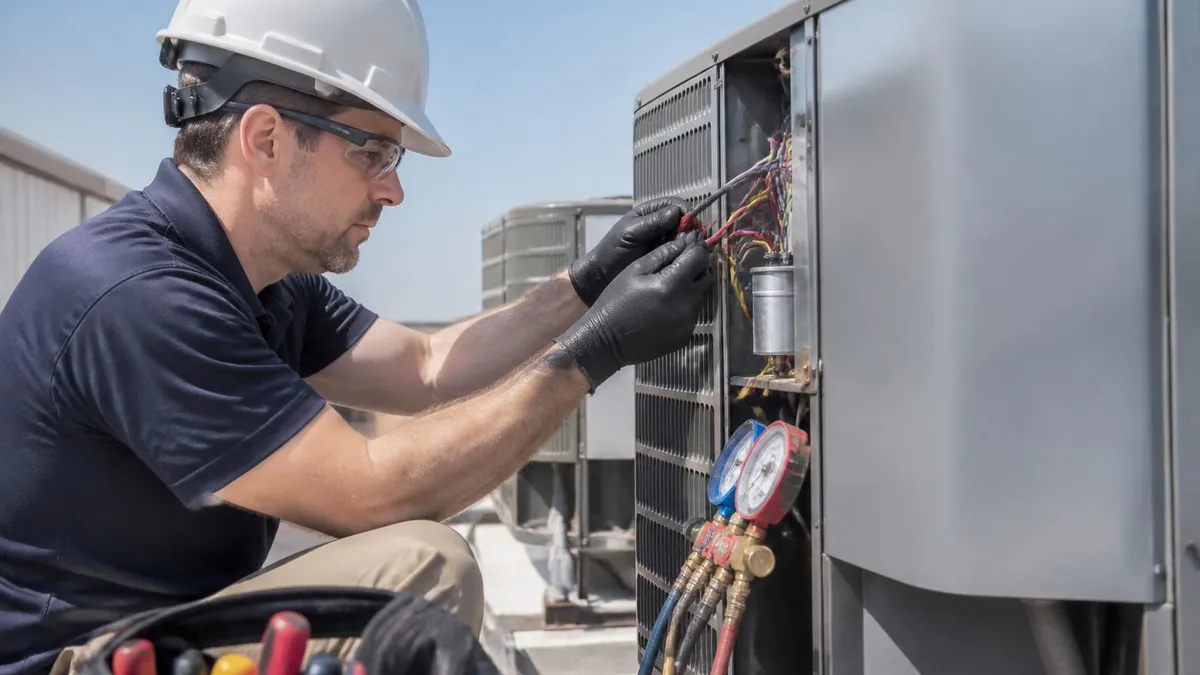
The single most expensive mistake in HVAC sizing is buying a larger unit than the load calculation supports. Oversized equipment short cycles, fails to remove humidity, wears out compressors prematurely, and can increase energy costs by 20 to 35 percent. Always demand a written Manual J or ASHRAE load calculation before signing a contract for any new HVAC installation regardless of building type or tonnage.
The most common HVAC sizing mistake by far is using square footage rules of thumb. Contractors quoting based on 400 square feet per ton or any similar shortcut are doing the building owner a disservice. Two homes of identical square footage can have load calculations that differ by 50 percent based on insulation levels, window orientation, and infiltration rates. The same applies to commercial buildings, where occupancy density and ventilation requirements can swing the load by even larger margins.
Another widespread mistake is failing to account for ductwork in load calculations. Ducts running through unconditioned attics or crawl spaces lose 15 to 30 percent of their capacity through conduction and leakage. A perfectly sized 10 ton unit feeding leaky attic ductwork in Phoenix may only deliver 7 tons of cooling to the conditioned space. Manual D hvac duct sizing calculator and Manual T register selection must be paired with Manual J load calculations for the system to perform as designed. Skipping these companion calculations is a hallmark of low-bid installations.
Equipment matching between condenser and evaporator coil is critical and frequently botched. The AHRI Certificate of Reference Number documents the exact coil and condenser combination that achieves the published capacity and SEER2 rating. Mixing a 10 ton condenser with a mismatched coil can reduce capacity by 15 percent and efficiency by 20 percent, while also voiding manufacturer warranties. Always verify the AHRI matchup before accepting equipment delivery on any new installation project.
Climate-specific oversizing is a regional problem. In hot, dry climates like Las Vegas or Albuquerque, latent loads are low and slight oversizing has minimal humidity consequences. In hot, humid climates like Houston, Orlando, or New Orleans, oversizing by even 15 percent leaves homes feeling clammy and damp because the compressor cycles off before sufficient moisture is removed from indoor air. Two-stage and variable-speed compressors mitigate this somewhat by running at lower capacity during part-load conditions, which is why they are nearly mandatory in humid southern climates.
Failure to consider future loads or building changes is another classic mistake. A 10 ton hvac unit specified today should account for reasonable future changes, including planned tenant build-outs, equipment additions, or insulation upgrades. Adding 20 percent capacity reserve for future occupant changes is acceptable, but doing so should be a documented design decision, not the contractor padding their proposal to upsell larger equipment. Building owners deserve transparency about which load assumptions drove the selected tonnage.
Neglecting commissioning is the final and most expensive mistake. A properly sized system that is not commissioned can perform worse than an oversized system that was. Commissioning verifies refrigerant charge, airflow at every register, static pressure across the air handler, economizer operation, demand-controlled ventilation, and BAS integration. ASHRAE Guideline 0 commissioning typically adds 1 to 3 percent to project cost but verifies that the building actually receives the performance specified on the design drawings. Sourcing reliable components through quality channels like HVAC parts and supply distributors is part of ensuring commissioning success.
Finally, undersized return air ductwork is a sneaky problem that plagues thousands of new installations annually. A 10 ton unit requires 4,000 CFM of return air at sub-0.25 inch static pressure on the return side. Many installers reuse existing returns that were sized for smaller equipment, creating starved blowers, noise complaints, and reduced cooling capacity. Always specify return air sizing along with supply air sizing, and verify it during commissioning with a manometer measurement before the building is occupied.
Practical tips for specifying and buying a 10 ton hvac unit start with the load calculation. Demand a written Manual J or ASHRAE-compliant calculation as part of every proposal. The contractor should provide a printout showing block loads, room-by-room loads for residential, zone loads for commercial, and equipment selection per Manual S. If the contractor cannot or will not provide this, hire a different contractor. The calculation is not optional, and most jurisdictions require it for permit issuance.
Get at least three written proposals for any equipment over 5 tons. Each proposal should include the AHRI matched system number, expected SEER2 and IEER ratings, total installed cost itemized by equipment, labor, controls, and ductwork, and a written start-up and commissioning plan. Beware of proposals that are dramatically lower than others. Discount bids almost always reflect cut corners on commissioning, refrigerant charge verification, or warranty terms that surface as problems within the first two years of operation.
Verify contractor licensing and insurance before signing anything. State HVAC contractor licenses vary widely, but most require demonstrated competency in load calculation, refrigerant handling under EPA Section 608, and gas piping where applicable. Verify general liability insurance of at least $1 million and workers compensation coverage. Ask for three recent references with similar tonnage and configuration to your project, and actually call those references to ask about post-installation support and warranty service.
Read the warranty terms carefully because they vary dramatically. Standard manufacturer warranties on 10 ton commercial equipment are typically one year parts and labor, five years on the compressor, and ten years on the heat exchanger if gas heat is included. Extended warranties from manufacturers and third parties can extend coverage to ten years parts and labor for around 5 to 10 percent of equipment cost. For commercial buildings where unplanned downtime is expensive, the extended warranty is often a wise investment.
Schedule installation during shoulder seasons when possible. Spring and fall installations cost less and ensure equipment is ready before peak cooling season. Summer installations face contractor capacity constraints, longer lead times for special-order equipment, and rushed commissioning that can leave performance issues undiscovered. Planning a 10 ton replacement six months before the equipment fails completely is far better than emergency replacement during a July heat wave when prices and lead times peak together.
Maintain careful documentation from day one. Keep the AHRI certificate, manufacturer installation manual, commissioning report, refrigerant charge log, and annual maintenance records in a single folder with the building owner manuals. This documentation supports warranty claims, makes future service much easier for new technicians, and adds value at building sale time. Many building automation systems can store this documentation digitally tied to the equipment record for permanent retention.
Finally, invest in operator training and ongoing maintenance contracts. A 10 ton hvac unit is a $20,000 to $30,000 asset that should deliver fifteen to twenty years of reliable service. Annual maintenance contracts run $400 to $1,200 for commercial units and pay for themselves through reduced repairs, lower energy bills, and longer equipment life. Training building staff on basic operation, filter changes, and recognizing early warning signs of trouble adds another layer of protection against the costly surprises that come with neglected HVAC equipment.
Sample HVAC Practice Questions
Try these questions from our free HVAC practice tests. The correct answer and an explanation follow each question.
What is 'economizer mode' in a commercial air handling unit?
- A. Running the chiller at reduced capacity
- B. Using outdoor air for free cooling when conditions are favorable
- C. Bypassing the filter section to reduce static pressure
- D. Modulating the heating coil to save energy
Answer: B. Using outdoor air for free cooling when conditions are favorable
Economizer mode uses outdoor air instead of mechanical cooling when outside conditions (temperature/enthalpy) are suitable, reducing energy costs.
Which document provides the minimum ventilation requirements adopted by most US state and local building codes for commercial buildings?
- A. SMACNA HVAC Systems and Equipment
- B. ASHRAE 62.1
- C. ACCA Manual Q
- D. NFPA 90A
Answer: B. ASHRAE 62.1
ASHRAE 62.1 'Ventilation for Acceptable Indoor Air Quality' is the industry standard referenced by the International Mechanical Code and adopted by most US jurisdictions.
A commercial building uses a '4-pipe' fan coil unit system. What does this mean?
- A. Four separate refrigerant circuits per unit
- B. Separate chilled water and hot water supply/return pipes allowing simultaneous heating and cooling in different zones
- C. Four stages of compressor capacity
- D. Four duct connections per unit
Answer: B. Separate chilled water and hot water supply/return pipes allowing simultaneous heating and cooling in different zones
A 4-pipe FCU system has dedicated chilled water and hot water circuits, enabling independent heating or cooling in each zone simultaneously.
In a commercial rooftop unit, what component is responsible for controlling the refrigerant flow rate to the evaporator coil?
- A. Condenser fan motor
- B. Electronic expansion valve (EEV) or thermostatic expansion valve (TXV)
- C. Economizer damper actuator
- D. Supply air static pressure sensor
Answer: B. Electronic expansion valve (EEV) or thermostatic expansion valve (TXV)
The expansion valve meters refrigerant into the evaporator, maintaining the correct superheat and preventing liquid flood-back to the compressor.
HVAC Questions and Answers
HVAC Repair Portland: The Complete 2026 Homeowner's Guide to Furnace, AC, and Heat Pump Service in the Rose City

HVAC Tune Up Service: The Complete Guide to Professional HVAC Maintenance and Why It Pays for Itself
HVAC Solutions: The Complete Guide to Heating, Cooling, and Indoor Air Quality Systems for Homes and Buildings
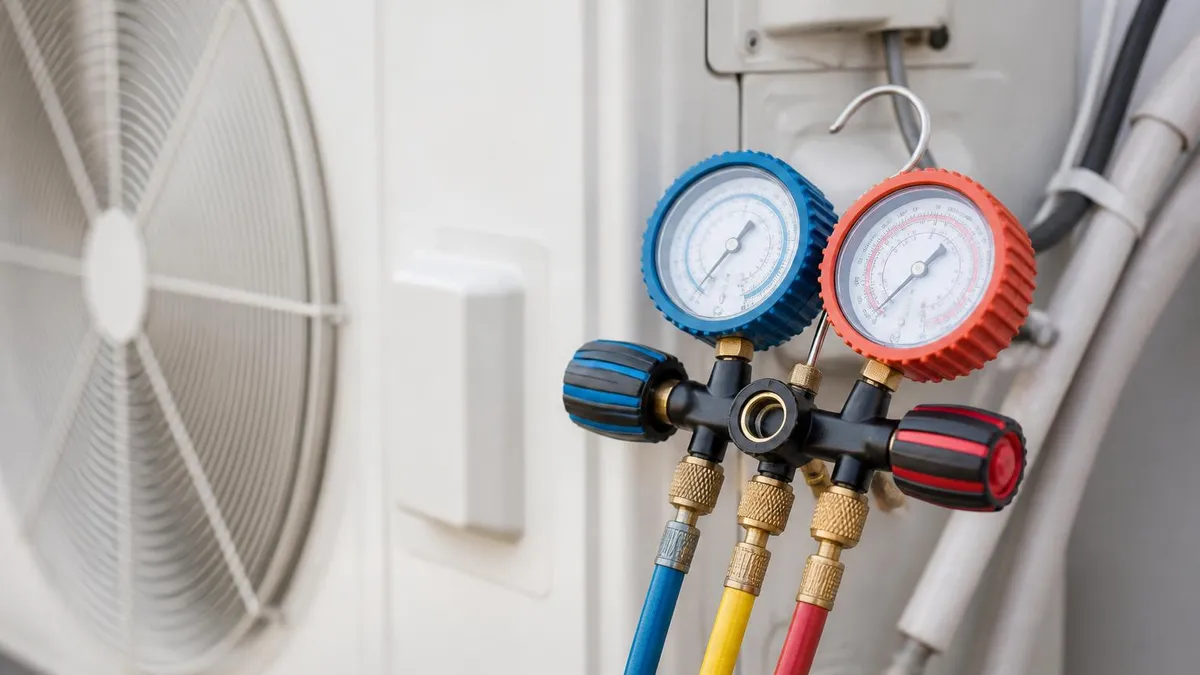
Certified HVAC Contractors: How to Find, Vet, and Hire the Right Professional for Your Home or Business
HVAC Parts and Supply: The Complete Guide to Sourcing, Identifying, and Buying Heating and Cooling Components in 2026
About the Author

NATE Certified HVAC Technician & Licensing Exam Trainer
Universal Technical InstituteMike Johnson is a NATE-certified HVAC technician and EPA 608 universal-certified refrigerant handler with a Bachelor of Science in HVAC/R Technology. He has 19 years of commercial and residential HVAC installation and service experience and specializes in preparing technicians for NATE certification, EPA 608, A2L refrigerant safety, and state HVAC contractor licensing examinations.