
Freon for HVAC: The Complete Guide to Refrigerants, R-22 Phase-Out, R-410A, and the New A2L Standards
Freon for HVAC explained: R-22 phase-out, R-410A pricing, new A2L refrigerants, leak signs, recharge costs, and EPA 608 rules homeowners and techs ❓
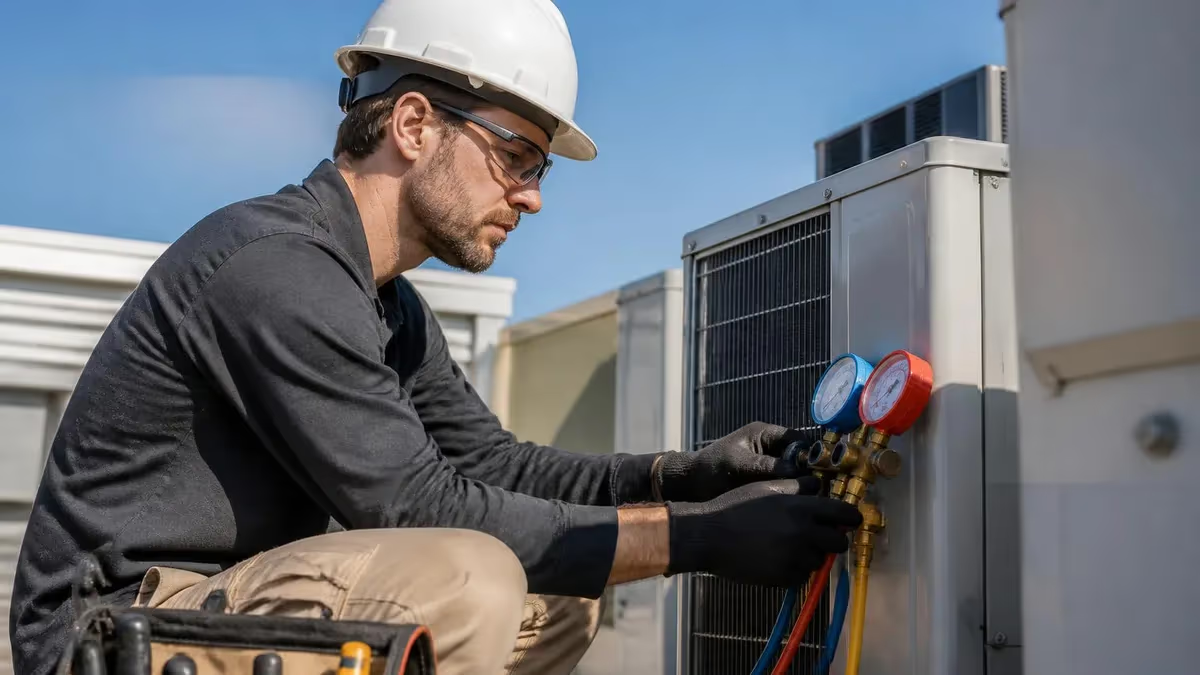
Understanding freon for HVAC systems is one of the most confusing parts of owning, servicing, or studying air conditioning equipment. The word "Freon" is technically a brand name owned by Chemours, but it has become the everyday term homeowners and even technicians use to describe any refrigerant circulating through a residential or commercial system. Whether your unit was installed in 2002 or 2026, the chemistry inside those copper lines is the engine that absorbs heat from your home and releases it outside.
The refrigerant landscape has changed dramatically over the past two decades. R-22, the old standard nicknamed "Freon 22," was phased out of production in 2020 under the Montreal Protocol because of its ozone-depleting potential. R-410A, often sold under the brand Puron, took its place and dominated the market for almost twenty years. Now, starting January 1, 2025, the EPA's AIM Act has forced manufacturers to transition again, this time to lower-GWP A2L refrigerants like R-32 and R-454B.
For homeowners, this matters because the type of refrigerant in your system directly affects repair costs, parts availability, and how long your equipment will stay viable. An R-22 leak in 2026 can cost $150 to $200 per pound to recharge, assuming a technician can even find the refrigerant. An R-410A recharge is far cheaper, while a new R-454B system requires technicians trained on flammable refrigerant handling and updated leak detection equipment.
HVAC technicians face their own challenges. EPA Section 608 certification is mandatory to purchase or handle any refrigerant, and the rules around A2L refrigerants now include UL standards for installation, brazing precautions, and required leak sensors on certain equipment. Misidentifying a refrigerant type, mixing two refrigerants in one system, or venting any of them into the atmosphere can result in fines, equipment failure, and serious safety hazards.
This guide breaks down everything you need to know about freon and modern HVAC refrigerants. We will cover the major refrigerant types still in service, what each one costs in 2026, how to spot a leak, what EPA rules apply, and what to expect hvac emergency repair mc lean system needs a recharge or full replacement. If you are studying for your EPA 608 exam or preparing for a certification test, the technical details here will reinforce what you need to know.
You will also find a comparison of A2L safety classifications, a checklist for diagnosing low refrigerant, and a breakdown of when retrofitting an old R-22 unit makes financial sense versus replacing it entirely. For students looking to deepen their foundational knowledge, our guide to CFM HVAC Basics pairs well with this refrigerant overview because airflow and refrigerant charge work together to determine system capacity.
By the time you finish reading, you will be able to identify which refrigerant your system uses, estimate realistic repair pricing, and make informed decisions about replacement timing. Whether you are a homeowner facing a surprise refrigerant quote, a student preparing for a certification exam, or a working tech wanting a refresher on the new A2L rules, this guide gives you the practical information you need.
HVAC Refrigerant by the Numbers
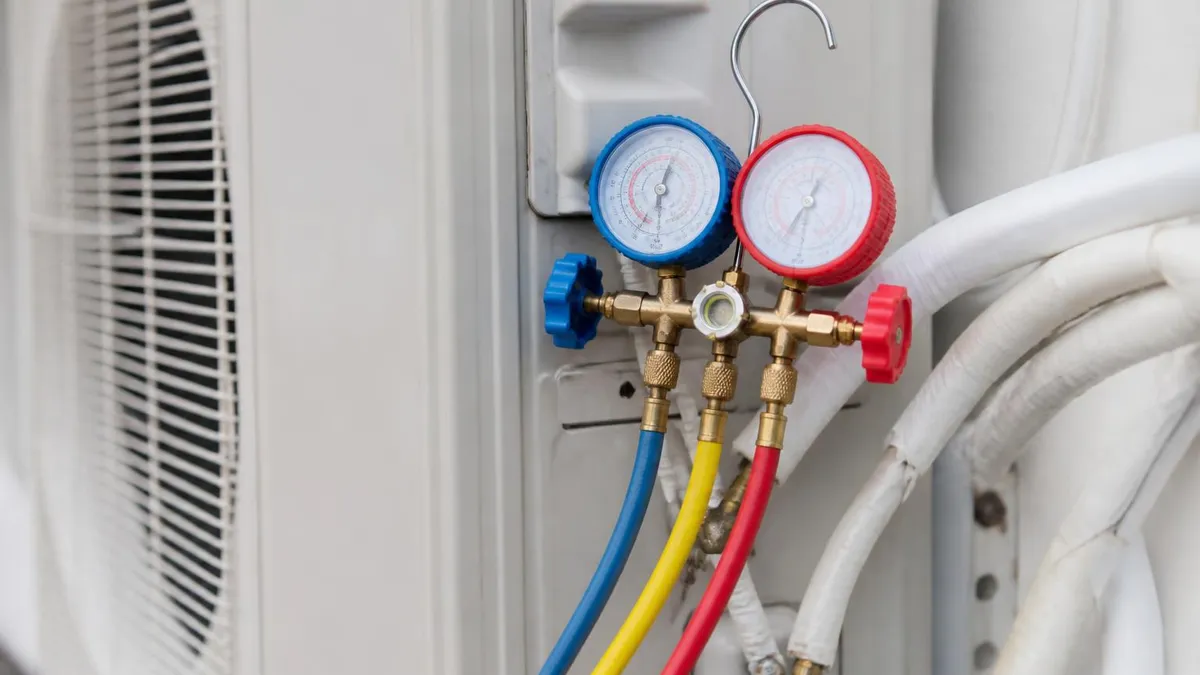
Major HVAC Refrigerant Types You Will Encounter
An HCFC refrigerant used in residential AC from the 1950s through 2010. Production banned in 2020. Still found in older systems but expensive to service and increasingly hard to source legally.
An HFC blend that replaced R-22 in new equipment from 2010 to 2024. Higher operating pressures than R-22, requires different gauges and tools. Still serviceable and widely available.
A single-component A2L refrigerant with lower GWP and better efficiency. Mildly flammable, classified A2L. Popular in mini-splits and ductless systems from major Asian manufacturers.
A blend of R-32 and R-1234yf, replacing R-410A in most new US split systems starting 2025. Lower GWP at 466, A2L classification, requires updated leak detection.
Used primarily in automotive AC and some commercial chillers. R-1234yf has nearly zero GWP and is the current standard in new vehicles and select commercial equipment.
To understand why refrigerant choice matters, you need to understand the basic vapor-compression cycle that every air conditioner and heat pump relies on. Refrigerant is a fluid engineered to change phase between liquid and gas at convenient temperatures and pressures. As it cycles through your system, it absorbs heat from inside your home as it evaporates and releases that heat outside as it condenses. The compressor and metering device control the pressure changes that make this phase change happen.
The evaporator coil sits in the indoor air handler. Liquid refrigerant enters the coil at low pressure, immediately boils into a gas as warm indoor air passes over it, and absorbs heat in the process. That cold gas then travels through the suction line to the outdoor unit, where the compressor squeezes it into a hot, high-pressure vapor. The condenser coil outside releases that heat into the atmosphere, the refrigerant turns back into liquid, and the cycle repeats hundreds of times per hour.
Each refrigerant has a unique pressure-temperature relationship that determines how the system must be designed. R-22 operated at around 70 PSI on the low side and 250 PSI on the high side in typical conditions. R-410A pushes that to roughly 120 PSI low and 400 PSI high, which is why you cannot simply swap one for the other. The new A2L refrigerants like R-454B operate at pressures very similar to R-410A, which helped manufacturers reuse much of the existing compressor and coil technology.
The amount of refrigerant in a system is called the charge, and it is measured in pounds and ounces. A typical 3-ton residential AC holds between 6 and 12 pounds of refrigerant depending on lineset length and design. Charge accuracy is critical. An undercharge causes poor cooling and frozen evaporator coils, while an overcharge causes high head pressure, compressor stress, and eventually failure. Proper charging requires a manifold gauge set, an accurate scale, and sometimes superheat or subcooling calculations.
Refrigerant does not get "used up" like fuel. A sealed system should hold the same charge for the lifetime of the equipment, typically 15 to 25 years. If your AC needs refrigerant added, there is a leak somewhere in the system. Adding refrigerant without finding and repairing the leak is both an EPA violation for systems over 50 pounds and a waste of money for the homeowner, because the new charge will simply escape through the same hole.
Common leak points include Schrader valve cores, brazed joints at the evaporator coil, flare fittings at the service valves, and tiny corrosion pinholes in copper coils. Formicary corrosion, caused by indoor air pollutants reacting with copper, has become a leading cause of evaporator leaks in homes with newer construction materials and tightly sealed envelopes. Understanding airflow ties directly into refrigerant performance, which is why our hvac installation leeds emphasizes line set sizing and brazing quality during install.
The phase-change physics also explain why latent heat removal, also known as dehumidification, depends on refrigerant temperature. A system running with low charge cannot pull humidity from the air effectively, so you end up with a clammy 73-degree house instead of a comfortable 76-degree house. Proper charge, airflow, and metering device function together determine both sensible and latent cooling capacity.
HVAC Practice Test Questions
Prepare for the HVAC - Heating Ventilation and Air Conditioning exam with our free practice test modules. Each quiz covers key topics to help you pass on your first try.
HVAC Air Conditioning
HVAC Exam Questions covering Air Conditioning. Master HVAC Test concepts for certification prep.
HVAC Code Compliance
Free HVAC Practice Test featuring Code Compliance. Improve your HVAC Exam score with mock test prep.
HVAC Electrical Controls
HVAC Test Prep for Electrical Controls. Practice HVAC Quiz questions and boost your score.
HVAC Energy Efficiency
HVAC Questions and Answers on Energy Efficiency. Free HVAC practice for exam readiness.
HVAC Heating Systems
HVAC Mock Test covering Heating Systems. Online HVAC Test practice with instant feedback.
HVAC Load Calculations
Free HVAC Quiz on HVAC Load Calculations. HVAC Exam prep questions with detailed explanations.
HVAC Tools and Equipment
HVAC Practice Questions for HVAC Tools and Equipment. Build confidence for your HVAC certification exam.
HVAC Refrigeration
HVAC Test Online for Refrigeration. Free practice with instant results and feedback.
HVAC Safety Practices
HVAC Study Material on Safety Practices. Prepare effectively with real exam-style questions.
HVAC System Design
Free HVAC Test covering System Design. Practice and track your HVAC exam readiness.
HVAC Thermodynamics
HVAC Exam Questions covering Thermodynamics. Master HVAC Test concepts for certification prep.
Comparing Freon for HVAC: R-22, R-410A, and R-454B
R-22 has not been manufactured in or imported into the United States since January 1, 2020. The only legal supply now is reclaimed and recycled refrigerant, which has driven 2026 prices to $150-$200 per pound at the wholesale level and often $250-$400 per pound installed by a contractor. A typical 3-ton residential leak requiring a 7-pound recharge can therefore cost $1,750-$2,800.
Beyond cost, availability is becoming a real problem. Many supply houses now require proof that the customer owns a working R-22 system before selling. Contractors increasingly recommend full system replacement rather than recharge once an R-22 unit develops a leak, especially if the unit is more than 12 years old. The math almost always favors replacement when factoring in efficiency gains from newer SEER2 equipment.

Replacing an R-22 System vs Recharging It
- +New systems use legal, currently-manufactured refrigerant with stable supply
- +SEER2 efficiency gains often cut cooling bills by 30-50% versus old units
- +Federal and utility rebates can offset $1,500-$3,000 of replacement cost
- +Warranty coverage typically restarts at 10 years parts on new equipment
- +Modern variable-speed compressors improve humidity control and comfort
- +Avoids repeat refrigerant charges if the leak source is hard to find
- −Upfront replacement cost runs $6,000-$14,000 versus $1,500-$3,000 recharge
- −Permit and code upgrade requirements can add $500-$1,500 to install cost
- −Disposal of old equipment requires EPA-certified refrigerant recovery
- −New A2L systems require techs trained on flammable refrigerant handling
- −Ductwork may need modification or replacement for new equipment sizing
- −Initial learning curve for homeowners using new thermostats and controls
How to Tell If Your Freon for HVAC Is Low
- ✓Warm air blowing from supply vents even when the thermostat calls for cooling
- ✓Ice or frost visible on the copper suction line or evaporator coil
- ✓Hissing or bubbling sounds near the indoor coil or outdoor service valves
- ✓Higher than usual electric bills with longer compressor run times
- ✓Indoor humidity staying above 60% even when AC runs continuously
- ✓Outdoor unit running but indoor airflow feels weak or barely cool
- ✓Visible oil stains on copper lines, fittings, or the outdoor condenser
- ✓System short-cycling or tripping the breaker repeatedly during operation
- ✓Thermostat reading 5+ degrees above setpoint after 30 minutes of runtime
- ✓Manifold gauge readings well below the target subcooling or superheat range
EPA Section 608 Certification Is Required for Refrigerant Purchase
Under EPA Section 608, anyone who purchases or handles HVAC refrigerant must hold an active 608 certification. This applies to R-22, R-410A, R-32, R-454B, and every other regulated refrigerant. Homeowners cannot legally buy refrigerant in quantities suitable for HVAC service, and small "top-off" cans sold for DIY use are limited to specific automotive applications. Hiring a certified technician is the only legal route for residential refrigerant service.
The regulatory landscape governing HVAC refrigerants in the United States is built on three major pillars: the Clean Air Act of 1990, the Montreal Protocol implementation rules, and the more recent American Innovation and Manufacturing Act of 2020. Together these establish what refrigerants can be sold, who can handle them, how they must be recovered during service, and what the long-term phase-down schedule looks like for high-GWP HFCs.
EPA Section 608 of the Clean Air Act is the most important rule for working technicians. It requires certification at one of four levels: Type I for small appliances under 5 pounds of charge, Type II for high-pressure systems including residential AC, Type III for low-pressure systems like centrifugal chillers, and Universal for all categories. The certification exam is administered by EPA-approved organizations and is a one-time, lifetime credential. Penalties for handling refrigerant without certification can reach $50,000 per violation per day.
Recovery rules require that any refrigerant removed from a system during service or disposal must be captured in DOT-certified cylinders, not vented to atmosphere. Recovery equipment must meet specific efficiency standards depending on the size and pressure of the system. For systems with charges over 50 pounds, leak rate thresholds trigger mandatory repair within 30 days, and chronic leakers must be retrofitted or retired.
The AIM Act of 2020 added the HFC phase-down schedule that is now reshaping the residential market. Production and import of HFCs like R-410A are being reduced 85% by 2036 on a stepped schedule. Sector-based rules under the Technology Transitions program prohibit the use of refrigerants with GWP above 700 in new residential AC and heat pump equipment manufactured after January 1, 2025. This is what drove the industry-wide shift to R-454B and R-32.
A2L refrigerants introduce new safety requirements that did not apply to R-22 or R-410A. UL 60335-2-40 covers equipment design, and installation must follow updated ASHRAE 15 and IMC 2024 provisions. These include charge limit calculations based on room volume, required leak detection sensors in equipment over certain capacities, and updated brazing procedures using inert gas purges. Service technicians need refrigerant recovery machines rated for flammable refrigerants and updated leak detectors.
State and local rules add another layer. California's CARB regulations move faster than federal EPA rules in several areas, and a handful of municipalities have additional permitting requirements for A2L installations. Always check local code before quoting or installing new equipment, especially in jurisdictions that have adopted the 2024 IMC or IRC editions early. If you are evaluating contractors for a planned installation, our guide to certified HVAC contractors covers the credentials to verify before signing any agreement.
Finally, recordkeeping matters more than many techs realize. EPA requires service records be kept for at least three years showing refrigerant added or recovered, leak repair details, and equipment identification. For commercial systems, this paperwork is regularly audited. Even residential service tickets should document refrigerant type, quantity, and reason for service to protect both the tech and the customer in the event of warranty or compliance questions.
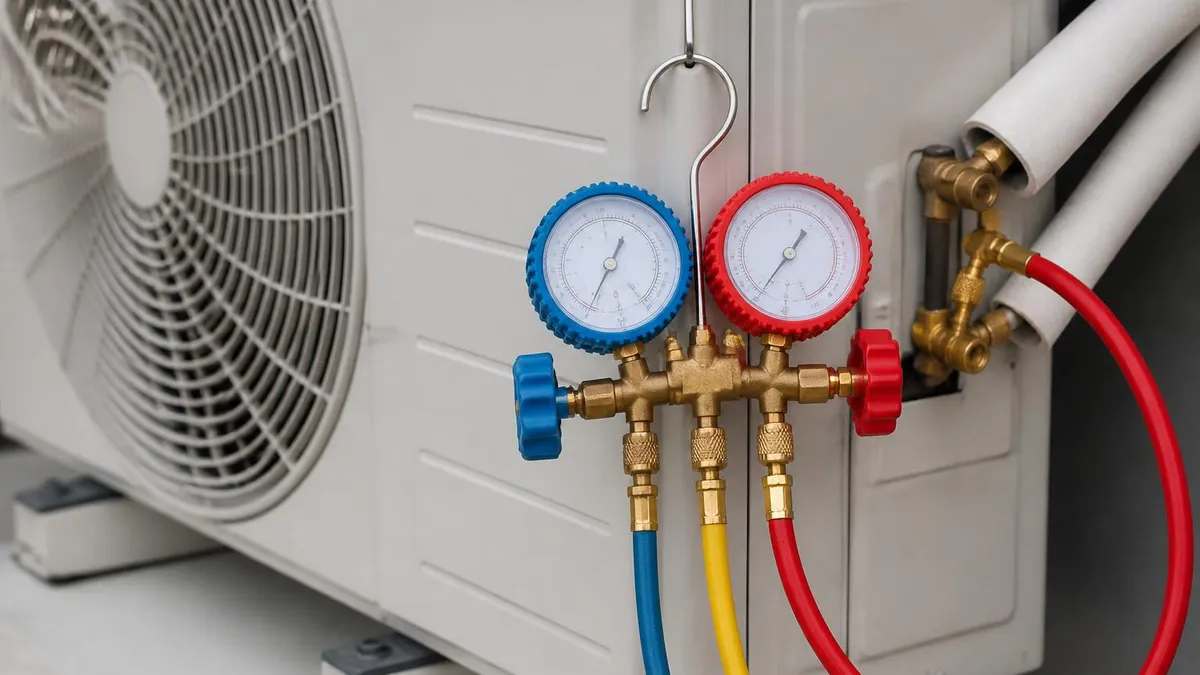
Never add R-410A or R-454B to a system designed for R-22, and never add R-22 to a 410A or A2L system. The pressures, lubricants, and chemical compatibility are completely different. Mixing refrigerants contaminates the entire charge, can damage the compressor within hours, and creates a hazardous mixture that must be recovered and disposed of by a certified specialist at significant cost.
When your HVAC system loses refrigerant, you have three main paths forward: recharge and repair, retrofit to a different refrigerant, or replace the equipment entirely. The right choice depends on the age of the system, the refrigerant type, the location and severity of the leak, and your long-term plans for the property. Each path carries different costs and different risks, and a good technician should walk you through all three before quoting work.
Recharge and repair is the simplest path when the leak is accessible and the system is less than 10 years old. A typical repair involves finding the leak with a sniffer or UV dye, replacing the failed component such as a Schrader core or flare fitting, evacuating the system to remove moisture, and recharging by weight to manufacturer specifications. Total cost ranges from $400 to $2,500 depending on refrigerant type and leak location, with most R-410A repairs landing around $800 to $1,500.
Evaporator coil leaks are the most expensive repair short of full replacement. The coil itself runs $800 to $1,500 in parts, plus 4 to 8 hours of labor and a full refrigerant recharge. For an R-22 system, this work can easily exceed $3,500, which is why most contractors recommend replacement when the evaporator fails on a 12+ year old unit. The labor is essentially the same as installing a new air handler, so paying for old equipment seldom makes financial sense.
Retrofitting an R-22 system to use a drop-in replacement refrigerant like MO99 or R-407C is sometimes proposed as a middle path. The problem is that drop-ins almost always reduce capacity by 5-15%, can cause oil compatibility issues with the original compressor, and void any remaining warranty. Most reputable contractors no longer recommend retrofits because the long-term reliability is poor and the upfront cost is significant for what is essentially a stopgap measure.
Full system replacement is the most expensive option upfront but often the best long-term value. A modern 14-16 SEER2 system uses 30-50% less electricity than a 10 SEER R-22 unit, qualifies for federal tax credits and utility rebates, and resets the warranty clock to 10 years on most major components. The installation also gives you the chance to fix oversized or undersized equipment, replace deteriorated ductwork, and upgrade thermostats and zoning if desired.
For homeowners trying to budget realistically, expect $6,000 to $9,000 for a basic 3-ton single-stage replacement, $9,000 to $14,000 for a variable-speed high-efficiency system, and up to $20,000+ for full ducted heat pump conversions with electrical and ductwork upgrades. Financing through manufacturers or utility programs often makes monthly payments lower than the electric bill savings, so the cash flow impact can be neutral or positive from month one.
If you are not sure whether your local market pricing is fair, our guide to finding HVAC repair near you walks through how to get competitive bids and what red flags to watch for. Always get at least three quotes for any job over $3,000, verify EPA certifications and state contractor licenses, and ask specifically what refrigerant the new equipment uses so you understand future serviceability.
For HVAC students and working techs preparing for certification or just trying to sharpen their refrigerant knowledge, a few practical study habits make a real difference. Start by memorizing the pressure-temperature charts for the refrigerants you work with most. R-410A and R-454B both have published P-T tables that any tech should be able to reference quickly, and being able to estimate saturation temperature from a gauge reading is a fundamental troubleshooting skill that separates good techs from great ones.
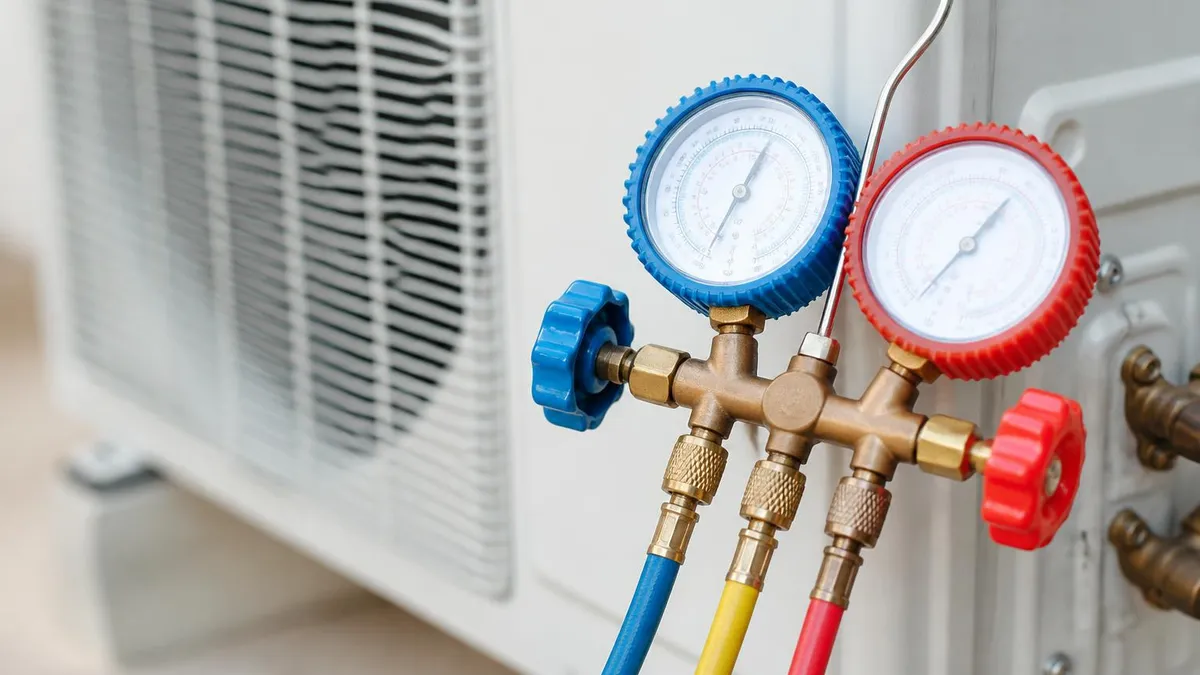
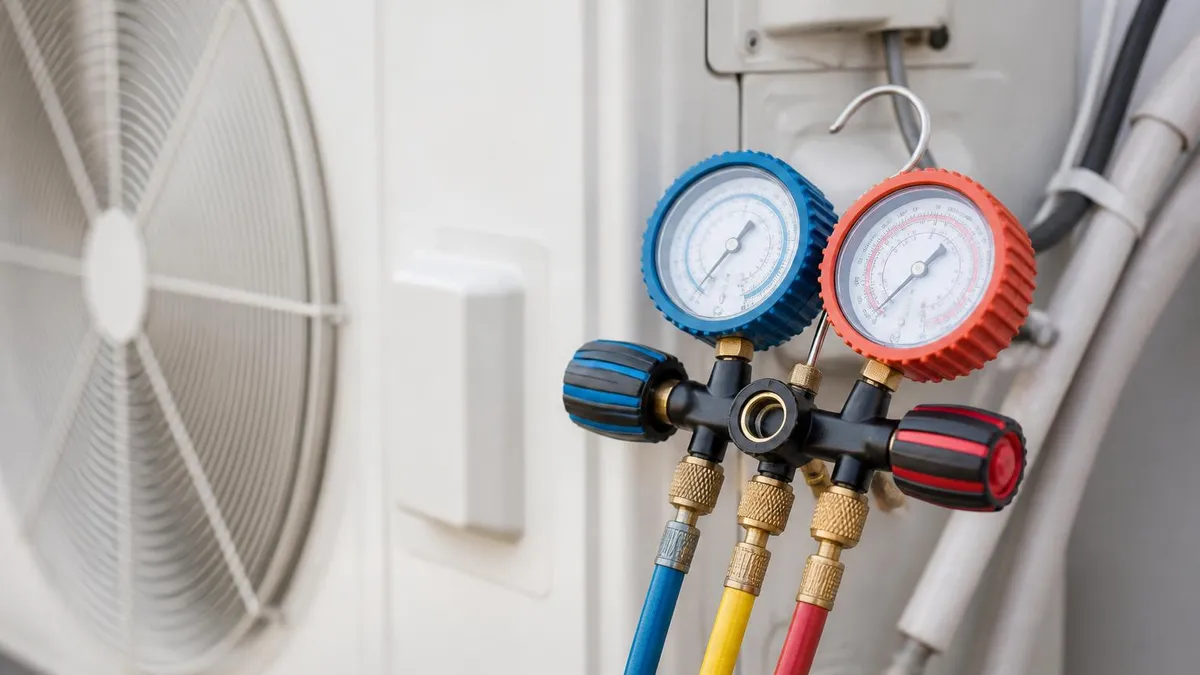
Get hands-on with a manifold gauge set as early as possible. Reading high-side and low-side pressures, calculating superheat at the evaporator outlet, and calculating subcooling at the condenser outlet are skills that take dozens of repetitions to internalize. If you are in trade school, ask your instructor for extra lab time. If you are a new tech in the field, ride along with a seasoned technician and watch how they interpret gauge readings against ambient conditions and equipment specs.
For EPA 608 exam prep specifically, focus on the recovery requirements, the differences between Type I, II, and III certifications, and the leak rate thresholds for commercial equipment. The exam draws heavily on regulatory specifics rather than complex thermodynamics, so practice tests that mirror the question style are extremely effective. Most candidates pass on the first attempt with 20-40 hours of focused study and a few full-length practice exams.
Tool investment is another area where new techs sometimes underspend. A quality digital manifold gauge, a refrigerant scale, a reliable electronic leak detector, and a high-vacuum micron gauge are non-negotiable for proper refrigerant work. Buying cheap analog gauges may save $200 upfront but will cost you accuracy and credibility on every call. Plan to invest $1,500-$2,500 in refrigerant-specific tools during your first year on the job.
Stay current with industry training as the A2L transition continues. Major manufacturers offer free or low-cost certification courses specific to their R-454B and R-32 equipment, and these credentials carry weight when applying for service positions with established dealers. Trade associations like ACCA, RSES, and HARDI also offer continuing education that keeps you sharp on code changes, new equipment, and best practices.
For homeowners, the most practical takeaway is to schedule annual preventive maintenance. A spring tune-up that includes refrigerant pressure check, coil cleaning, and electrical inspection typically costs $90-$200 and catches small problems before they become refrigerant leaks or compressor failures. Many utility companies and contractors offer maintenance plans that bundle two visits per year for $150-$300, which usually pays for itself in extended equipment life and reduced emergency calls.
Finally, document everything. Keep your installation paperwork, model and serial numbers, refrigerant type, and warranty information in one place. When you eventually need service or sell the home, having complete records makes the process smoother and helps the next technician work efficiently. Refrigerant type and original charge weight are typically on the data plate of the outdoor unit, but a clearly labeled folder in a kitchen drawer is far easier to find than a faded sticker in a sun-baked condenser.
HVAC Questions and Answers
HVAC Technician Jobs Near Me: How to Find, Land, and Grow in Local HVAC Careers
CFM HVAC Basics: How Airflow, Sizing, and System Performance Work Together
Certified HVAC Contractors: How to Find, Vet, and Hire the Right Professional for Your Home or Business
Best HVAC Repair in Bandon, OR: Local Services Near Me Guide
HVAC Installations: The Complete Guide to Planning, Pricing, and Getting It Right the First Time
About the Author

NATE Certified HVAC Technician & Licensing Exam Trainer
Universal Technical InstituteMike Johnson is a NATE-certified HVAC technician and EPA 608 universal-certified refrigerant handler with a Bachelor of Science in HVAC/R Technology. He has 19 years of commercial and residential HVAC installation and service experience and specializes in preparing technicians for NATE certification, EPA 608, A2L refrigerant safety, and state HVAC contractor licensing examinations.