
New HVAC Refrigerant: The Complete 2026 Guide to R-454B, R-32, and the Phasedown of R-410A
new hvac refrigerant guide: R-454B and R-32 replace R-410A in 2026. Learn GWP, A2L safety, retrofit rules, and what it means for your AC. 🗨️
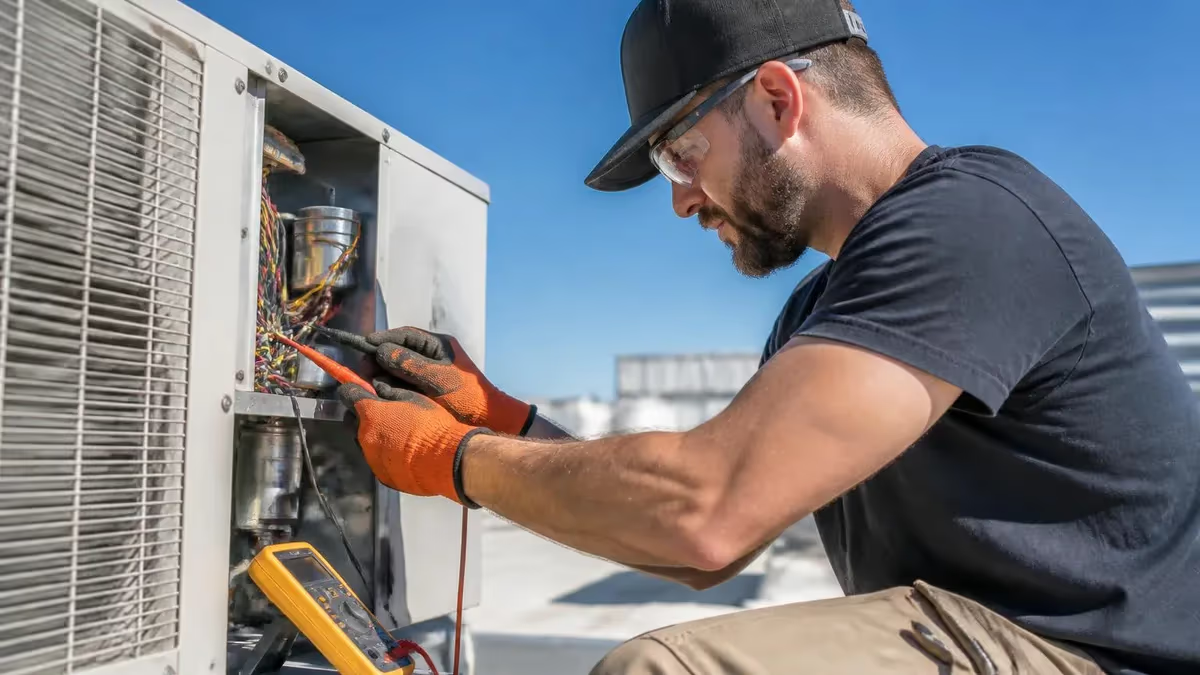
If you are shopping for a heat pump, central air conditioner, or ductless mini-split in 2026, you have probably heard that a new HVAC refrigerant is replacing the R-410A that has dominated residential cooling for the past two decades. The two chemicals taking its place — R-454B (sold under the trade names Puron Advance, Opteon XL41, and Solstice 454B) and R-32 — are mildly flammable A2L blends with a global warming potential roughly 75 percent lower than the gas they replace. This shift is the biggest refrigerant change in a generation.
The change is not optional and it is not gradual. Under the Environmental Protection Agency's Technology Transitions Rule, manufacturers were required to stop producing new residential air conditioners and heat pumps charged with R-410A on January 1, 2025. By 2026, distributors are clearing their last inventory, and the equipment sitting on dealer lots and showroom floors is almost entirely A2L-compatible. Homeowners replacing systems this year are buying into the new platform whether they planned to or not.
For HVAC technicians, contractors, and engineers, the transition means new training requirements, new tooling, new leak detection standards, and updated building codes. ASHRAE 15-2022 and UL 60335-2-40 govern how much A2L refrigerant can be installed in a given room volume, and the 2024 International Mechanical Code adopted these provisions wholesale. Apprentices preparing for state HVAC licensing exams need to know charge limits, ignition source clearances, and ventilation requirements that were never part of the curriculum five years ago.
This guide walks through everything that has changed: the chemistry behind the new refrigerants, why R-410A is being phased down, what A2L mildly flammable classification actually means in practice, how installation and service procedures differ, and what homeowners should expect to pay for repairs and replacements. We will also cover retrofitting questions, equipment compatibility, and the regulatory timeline through 2036, when even lower-GWP alternatives may begin to appear.
The transition is driven by the American Innovation and Manufacturing Act of 2020, which directs the EPA to phase down hydrofluorocarbon production and consumption by 85 percent over fifteen years. R-410A, with a GWP of 2,088, is a major target. R-454B has a GWP of 466, and R-32 sits at 675. Both fall under the AIM Act's interim cap and qualify for new equipment manufacturing through at least 2036, giving the industry a stable platform for the next decade of installations.
If you are a homeowner trying to decide whether to repair an aging R-410A unit or replace it with a new A2L system, the math has shifted. R-410A is still legal to service indefinitely, but reclaimed supply is tightening and prices have roughly tripled since 2023.
A pound of R-410A that cost $8 at the wholesaler in 2022 now runs $25 to $40 at retail, and a major leak repair on an older system can easily exceed the cost of putting that money toward a new unit. For broader system context, our HVAC Solutions guide walks through how refrigerant choice fits into the full picture of hvac services phoenix and indoor air quality decisions.
Whether you are a student preparing for the EPA 608 certification, a contractor updating your service truck, or a property owner trying to make sense of quotes that suddenly look different from last year's, the sections below break the new refrigerant landscape into clear, practical pieces. We will explain what is mandatory, what is optional, what changes in your wall, and what stays exactly the same.
The New HVAC Refrigerant Transition By The Numbers
The R-410A to A2L Refrigerant Transition Timeline
2020 — AIM Act Signed
2023 — Technology Transitions Rule
January 1, 2025 — Manufacturing Stops
2026 — Mainstream A2L Adoption
2029 — Installation Sell-Through Ends
2036 — Full Phasedown Target
The two refrigerants competing to replace R-410A in American homes are R-454B and R-32, and the choice between them mostly reflects which manufacturer built your equipment. Carrier, Trane, Lennox, Rheem, and most major North American brands selected R-454B, branded as Puron Advance or Opteon XL41. Daikin, the largest HVAC manufacturer in the world, standardized on R-32 across its global lineup, including the Goodman, Amana, and Daikin labels sold in the United States. Both refrigerants meet EPA and code requirements, and homeowners generally cannot mix them in a single system.
R-454B is a near-azeotropic blend of 68.9 percent R-32 and 31.1 percent R-1234yf, an HFO with a GWP of less than 1. The blend was engineered specifically to behave similarly to R-410A in terms of operating pressures, compressor displacement, and capacity, which made it easier for manufacturers to adapt existing equipment designs. Its GWP of 466 puts it well under the EPA's 700 threshold, and its mass flow rate and discharge temperatures are close enough to R-410A that many heat exchangers required only minor tweaks.
R-32, by contrast, is a single-component refrigerant rather than a blend, which simplifies servicing because there is no risk of fractionation if a partial charge is recovered. It operates at slightly higher pressures and discharge temperatures than R-410A, requiring redesigned compressors and modified electronic expansion valves. Its volumetric capacity is about 20 percent higher than R-410A, meaning a smaller charge can do the same cooling work — Daikin's R-32 systems typically hold 20 to 30 percent less refrigerant by weight than equivalent R-410A units.
From an hvac energy efficiency news standpoint, both new refrigerants enable equal or slightly better SEER2 and HSPF2 ratings than R-410A equivalents. Manufacturers have used the transition as an opportunity to redesign coils, fans, and controls, and most 2026 model-year systems hit the new federal minimum SEER2 of 14.3 in the North and 15.2 in the South with room to spare. High-efficiency variable-speed units now routinely achieve SEER2 ratings of 18 to 22, with some flagship models pushing past 24.
Reliability data on A2L systems is still maturing because they have only been in widespread residential service since 2023, but field reports from Europe and Japan — where R-32 has been the dominant refrigerant since 2015 — suggest comparable or better longevity than R-410A platforms. Compressor failure rates, coil corrosion patterns, and electronic component reliability all track within normal industry ranges. Most manufacturers continue to offer 10-year parts warranties and limited lifetime compressor coverage on their premium A2L lineups.
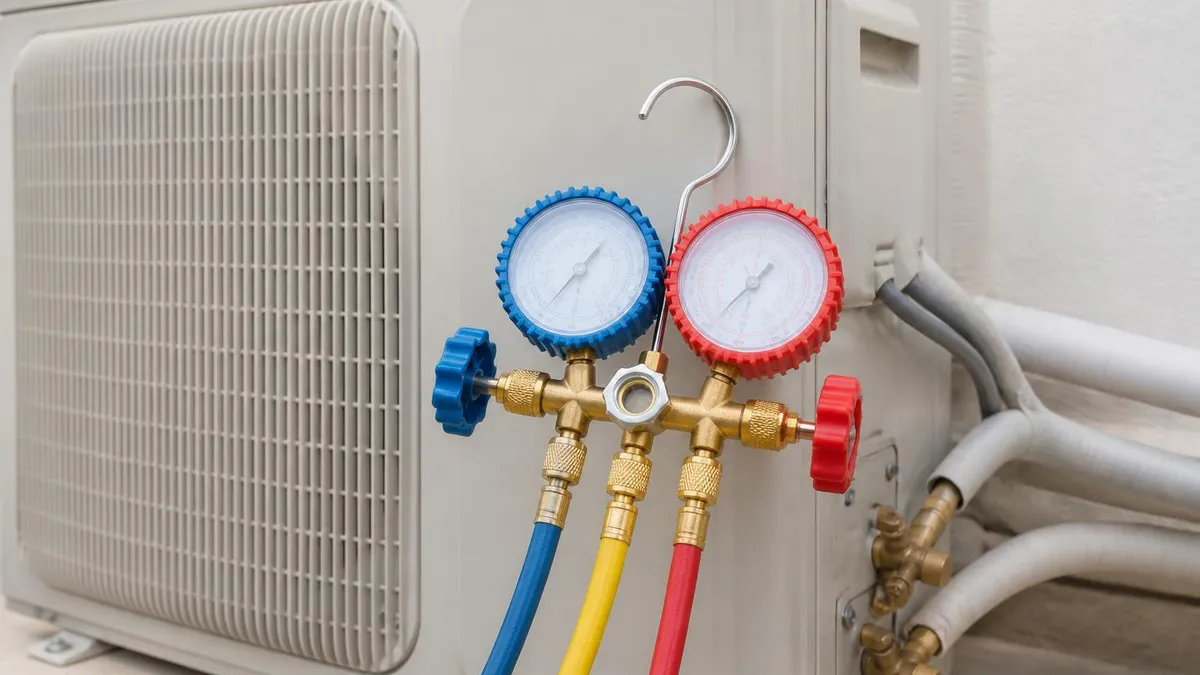
One subtle but important difference is oil compatibility. R-454B and R-32 both use POE (polyolester) lubricants, the same oil class used in R-410A systems, which means service tools and recovery equipment do not need new oil management. However, A2L-rated recovery machines, manifold gauges, and leak detectors are required by code because the equipment must be designed to avoid creating ignition sources around mildly flammable refrigerant.
Existing R-410A tools generally cannot be used on A2L systems without violating manufacturer instructions and UL listings. If you are deciding whether to repair an existing system or replace it, our hvac maintenance service guide covers the diagnostic steps that determine which path makes sense.
For homeowners, the practical takeaway is that R-454B and R-32 systems perform essentially the same in terms of comfort, efficiency, and reliability. The differences matter most to the technicians installing and servicing the equipment. Choose the contractor first, then accept whichever refrigerant their preferred equipment brand uses — both are good long-term choices.
HVAC Practice Test Questions
Prepare for the HVAC - Heating Ventilation and Air Conditioning exam with our free practice test modules. Each quiz covers key topics to help you pass on your first try.
HVAC Air Conditioning
HVAC Exam Questions covering Air Conditioning. Master HVAC Test concepts for certification prep.
HVAC Code Compliance
Free HVAC Practice Test featuring Code Compliance. Improve your HVAC Exam score with mock test prep.
HVAC Electrical Controls
HVAC Test Prep for Electrical Controls. Practice HVAC Quiz questions and boost your score.
HVAC Energy Efficiency
HVAC Questions and Answers on Energy Efficiency. Free HVAC practice for exam readiness.
HVAC Heating Systems
HVAC Mock Test covering Heating Systems. Online HVAC Test practice with instant feedback.
HVAC Load Calculations
Free HVAC Quiz on HVAC Load Calculations. HVAC Exam prep questions with detailed explanations.
HVAC Tools and Equipment
HVAC Practice Questions for HVAC Tools and Equipment. Build confidence for your HVAC certification exam.
HVAC Refrigeration
HVAC Test Online for Refrigeration. Free practice with instant results and feedback.
HVAC Safety Practices
HVAC Study Material on Safety Practices. Prepare effectively with real exam-style questions.
HVAC System Design
Free HVAC Test covering System Design. Practice and track your HVAC exam readiness.
HVAC Thermodynamics
HVAC Exam Questions covering Thermodynamics. Master HVAC Test concepts for certification prep.
Understanding A2L New HVAC Refrigerant Safety Classification
ASHRAE Standard 34 classifies refrigerants by toxicity (A for low, B for higher) and flammability (1 for none, 2L for mildly flammable, 2 for flammable, 3 for highly flammable). R-410A is A1 — non-flammable and low-toxicity. R-454B and R-32 are A2L, meaning they are still low-toxicity but can ignite under specific conditions involving high concentration, sustained heat sources, and limited ventilation. The 2L designation was added in 2010 specifically to describe HFCs and HFOs that burn slowly and require significant energy to ignite.
Burning velocity is the key technical difference. A2L refrigerants have a maximum burning velocity below 10 centimeters per second, compared to over 100 cm/s for propane (A3). In practical terms, an A2L leak in a typical room rarely reaches a flammable concentration before air movement dilutes it, and even when ignited, the flame propagates slowly enough that it often self-extinguishes. This is why the EPA, ASHRAE, and IMC concluded A2L refrigerants are acceptable for residential occupancies with appropriate charge limits and safeguards.
New HVAC Refrigerant vs Sticking with R-410A: Trade-offs
- +Roughly 75 percent lower global warming potential reduces environmental impact
- +R-454B and R-32 enable equal or better SEER2 efficiency ratings than R-410A
- +Long-term supply security — production protected through at least 2036 under AIM Act
- +Smaller refrigerant charges, especially with R-32, reduce environmental risk from any leak
- +Manufacturer warranties on new A2L equipment typically include 10-year parts coverage
- +Compatible with existing POE oil and most copper line set sizes used for R-410A
- −New A2L-rated tools, gauges, and recovery machines required for service work
- −Equipment costs run 10 to 12 percent higher than equivalent R-410A units sold in 2024
- −Existing R-410A line sets must be flushed and pressure-tested before reuse with A2L
- −Building codes require ventilation, leak detection, or charge limits in tight spaces
- −Technicians need supplemental A2L safety training beyond standard EPA 608 certification
- −Mixing or topping off A2L systems with R-410A is prohibited and damages equipment
Installer Checklist for New HVAC Refrigerant Systems
- ✓Verify current EPA Section 608 certification and complete manufacturer A2L safety training
- ✓Inspect and update service vehicle with A2L-rated recovery machine, vacuum pump, and gauges
- ✓Calculate minimum room volume for indoor unit and confirm charge falls within UL 60335-2-40 limits
- ✓Pressure-test and triple-evacuate existing line sets before reuse — never assume R-410A lines are clean
- ✓Verify refrigerant brand matches equipment specification — never substitute R-32 for R-454B or vice versa
- ✓Install required leak detection sensors if system charge exceeds base limit for the served space
- ✓Maintain at least 12 inches clearance between indoor unit and open flame or electrical ignition sources
- ✓Use only A2L-listed brazing torches and follow nitrogen purge procedures during line set work
- ✓Document refrigerant type, charge weight, and code compliance on the installation paperwork and permit
- ✓Educate the homeowner on leak detection alarm response and emergency ventilation procedures
No — A2L refrigerants are not drop-in replacements for R-410A.
Despite similar operating pressures, R-454B and R-32 require equipment specifically designed and listed for A2L use. The compressor windings, electrical components, and safety interlocks are different. Charging an R-410A system with R-454B will void the warranty, violate UL listings, and may create safety hazards. If your R-410A unit needs replacement, plan a full system swap — not a refrigerant conversion.
The new HVAC refrigerant transition has measurable cost implications for homeowners, and understanding the price drivers helps you budget realistically and recognize when a quote is reasonable versus inflated. According to industry surveys from ACCA and ARI, average installed prices for residential central air conditioners rose roughly 10 to 12 percent between mid-2024 and early 2026 directly attributable to the refrigerant transition, on top of normal inflation in labor, copper, and steel. A typical 3-ton 16-SEER2 central AC installation that ran $7,500 in 2023 commonly bids at $8,800 to $9,400 in 2026.
Several factors drive the increase. Manufacturers invested billions retooling production lines, redesigning components for A2L compatibility, and adding leak detection electronics to applicable models. Equipment lists prices reflect this amortization. Distributors carry parallel inventories during the transition, increasing carrying costs. Contractors have absorbed real expenses re-equipping service trucks — a fully A2L-equipped tool kit replacement runs $2,500 to $4,500 per technician — and supplemental training adds another $300 to $800 per technician annually.
Service and repair costs on existing R-410A systems are climbing faster than new equipment prices. R-410A refrigerant itself has roughly tripled at retail since 2022, with technicians now charging $80 to $130 per pound installed compared to $35 to $50 just three years ago. A significant refrigerant leak repair that runs 4 to 6 pounds of recharge can easily push the bill past $1,000 even before parts and labor for the leak fix itself. For an aging unit, this often makes replacement the more economical decision.
On the positive side, federal incentives soften the upgrade math considerably. The Inflation Reduction Act's 25C tax credit covers 30 percent of qualified heat pump installation costs up to $2,000 per year, available through 2032. State-level rebates from utilities and energy offices stack on top, often adding $500 to $2,500 more. ENERGY STAR and CEE-tier qualifying A2L heat pumps are eligible, and most 2026 mainstream models meet these thresholds. The effective post-incentive price difference between repairing an old R-410A unit and installing a new A2L heat pump is often smaller than the sticker comparison suggests.
Operating costs typically favor A2L equipment as well. Higher minimum SEER2 ratings combined with redesigned variable-speed compressors mean a new 2026 heat pump uses 15 to 25 percent less electricity than a 2015-era R-410A unit doing equivalent work. For a household running 1,800 cooling hours per year, that translates to $180 to $400 in annual savings depending on local electricity rates. Over a 12-year equipment lifecycle, fuel savings often offset the upfront premium for the refrigerant transition.
Service plan costs have edged up modestly. Most maintenance agreements run $200 to $400 per year for a single system, with A2L-equipped systems typically priced at the higher end of that range to cover the extra inspection of leak detection sensors and the marginally longer service visit. Annual maintenance is more important than ever for A2L systems because catching small leaks before they trigger sensor alarms saves both refrigerant and homeowner anxiety.
For homeowners weighing repair versus replace decisions on aging R-410A units, the practical rule of thumb is simple: if repair costs exceed 30 percent of replacement cost and the system is more than 10 years old, replacement usually wins on a 5-year total cost basis. If you are 12 or more years in and facing a compressor or coil failure, replacement is almost always the right call. The refrigerant transition does not change this calculus dramatically, but it does shift the inflection point one or two years earlier than it would have been under the old R-410A regime.
The EPA has not banned servicing existing R-410A equipment, and reclaimed R-410A will remain available for the foreseeable future. However, virgin R-410A production is winding down rapidly under the AIM Act, and reclaimed supply depends entirely on technicians properly recovering refrigerant from retired systems. Prices have already tripled since 2022 and may climb further. Plan major repairs accordingly, and never expect your contractor to top off a leaky system year after year — the economics no longer work.
Retrofit questions come up constantly: can existing copper line sets be reused, can outdoor pads stay in place, can the existing electrical service handle the new equipment, and can technicians convert an R-410A system to A2L refrigerant? The short answers are yes, yes, usually, and no. Understanding why helps you have realistic conversations with contractors and avoid being upsold on unnecessary work — or being undersold on work that genuinely needs doing.
Line set reuse is the most common question. Copper refrigerant lines installed for R-410A systems are generally compatible with R-454B and R-32 because operating pressures and tubing sizes are similar. However, the lines must be properly cleaned and verified before reuse. Best practice is to pressure-test the line set with dry nitrogen to 500 psig, hold for at least ten minutes to confirm no leaks, flush with an approved solvent to remove residual R-410A oil and contaminants, and triple-evacuate to 500 microns or better before charging the new system.
If the existing line set is over 50 feet long, severely corroded, kinked, or undersized for the new equipment's specifications, replacement is usually the right call. Many manufacturers void warranties on new equipment if the installer does not document proper line set preparation, so reputable contractors document this work carefully. Expect to see the pressure test, flush procedure, and evacuation results recorded on the installation paperwork.
Outdoor pads, electrical disconnects, and refrigerant line covers can typically remain in place if they are structurally sound and properly sized. The outdoor unit footprint for A2L equipment is similar to R-410A units in the same capacity range, though some manufacturers' newest designs are slightly larger to accommodate redesigned condenser coils. Existing concrete or composite pads should be inspected for cracking, settling, and proper drainage. Electrical disconnects rated for the equipment amperage and matched to local code remain valid.
Direct refrigerant conversion of an existing R-410A system to R-454B or R-32 is not permitted and not technically feasible. The compressor, expansion valve, evaporator coil, condenser coil, electronic controls, and safety interlocks in an R-410A system are not designed or listed for A2L service. Any contractor offering to convert your existing unit is operating outside manufacturer specifications, UL listings, and likely EPA rules. Walk away and find a different contractor — our guide on hvac contractors covers what credentials to look for.
For homeowners with a relatively young R-410A system — say, five to seven years old and in good condition — there is no urgent reason to replace it. Continue routine maintenance, watch for leaks, and address repairs on their merits. The system will give you many more years of service, and reclaimed R-410A will be available throughout its useful life. The transition is a forward-looking change, not a mandate to scrap functional equipment.
If you are planning a major renovation, addition, or new construction project where new ductwork and equipment selection are on the table, the calculus is straightforward: install A2L equipment now. There is no benefit to a fresh R-410A installation in 2026, even where leftover inventory makes it technically possible. You would be locking in higher long-term service costs and a system platform with limited future-proofing. A2L is the modern standard, and the installed base will only grow from here.
Practical preparation for the new HVAC refrigerant era looks a little different depending on whether you are a homeowner, a working technician, or an apprentice studying for licensing exams. For each group, there is a clear set of priorities that pay off in real installations, real service calls, and real test results. The transition rewards people who do their homework and punishes people who try to wing it with outdated information.
For homeowners, the most valuable single step is finding a contractor who has invested in A2L training and equipment. Ask directly: what brand of A2L refrigerant does your preferred equipment use, what training have your technicians completed, and what leak detection equipment do you carry? A contractor with confident, specific answers has done the work. A contractor who deflects or offers vague reassurances likely has not. Reputable companies will share their EPA 608 certifications, manufacturer training credentials, and provide documentation on installed equipment.
Get at least three written quotes for any major system replacement, and verify each quote specifies the refrigerant type, the SEER2 and HSPF2 ratings, the manufacturer warranty terms, and what is included in line set work. Beware of quotes that are dramatically lower than competitors — often the difference reflects shortcuts on line set preparation, undersized equipment, missing leak detection components, or use of off-brand parts. The refrigerant transition has not changed the fundamental rules of HVAC installation: do it right or do it twice.
For technicians already in the field, prioritize A2L safety training and tool upgrades during your next slow season. Many manufacturers offer free or heavily subsidized A2L training to their dealer network, and trade associations like ACCA, RSES, and HVAC Excellence run online and in-person programs throughout the year. Budget for tool replacement in stages — a recovery machine, vacuum pump, and electronic leak detector first, then manifold gauges, hoses, and refrigerant scales as inventory turns over. A complete A2L-rated tool kit can be assembled for $3,000 to $5,000 over six to twelve months.
For apprentices and students preparing for licensing exams, the curriculum has shifted significantly. Modern exam preparation must cover ASHRAE 15-2022 charge limits, UL 60335-2-40 safety requirements, A2L-specific service procedures, ignition source identification, and the relevant sections of the 2026 IMC. Older study guides published before 2023 are not adequate. Practice questions specifically built around A2L scenarios are the best way to internalize the rules and recognize the patterns testers favor.
Recordkeeping has also become more important. Documentation of subcooling hvac weight, line set preparation, leak detection sensor calibration, and homeowner education is now expected on every A2L installation. Many state inspectors verify this paperwork during permit inspections, and missing or sloppy documentation can delay sign-off or trigger callbacks. Build documentation into your standard installation checklist from day one rather than treating it as paperwork to scramble through at the end of the job.
Finally, stay current with industry updates. The EPA continues to issue guidance documents, ASHRAE publishes updates to Standard 15 and 34 on a regular cycle, and individual states adopt or modify the IMC at different paces. Subscribing to one or two reputable industry newsletters and checking your state's HVAC licensing board website quarterly is enough to stay ahead of regulatory changes.
The refrigerant transition is the biggest change in two decades, but it will not be the last — staying engaged with industry developments is the only durable strategy. For replacement parts and tool sourcing, our HVAC Parts and Supply guide is a useful reference.
HVAC Questions and Answers
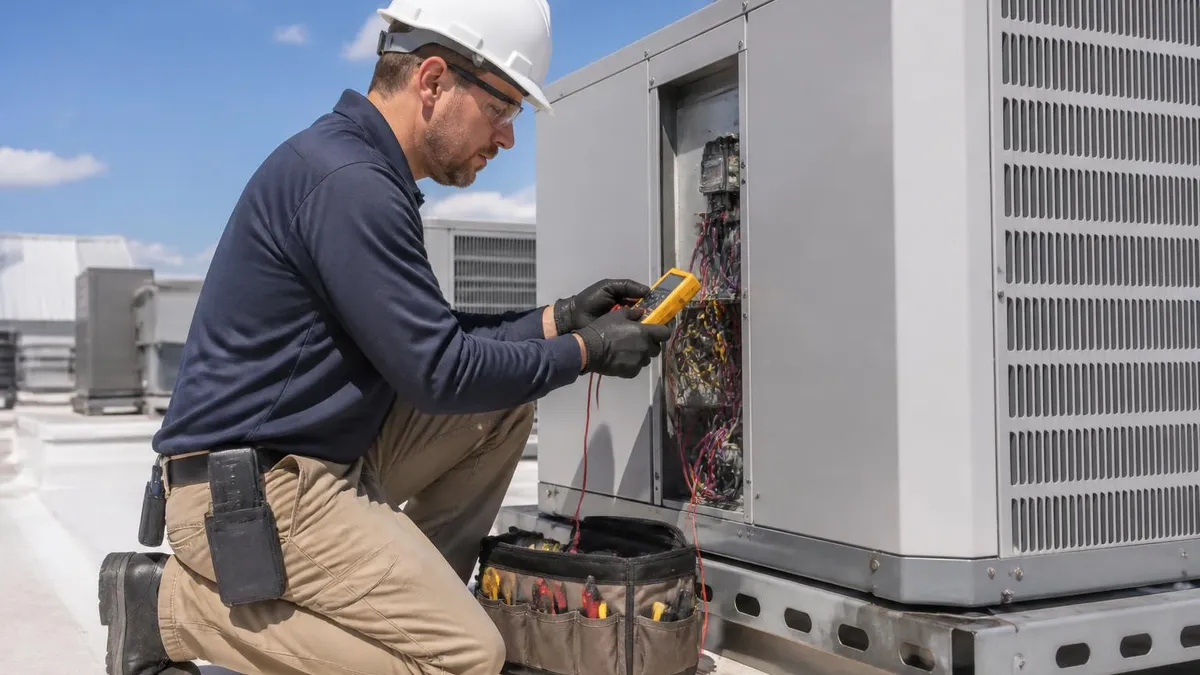
HVAC Repair Portland: The Complete 2026 Homeowner's Guide to Furnace, AC, and Heat Pump Service in the Rose City
HVAC Tune Up Service: The Complete Guide to Professional HVAC Maintenance and Why It Pays for Itself
HVAC Solutions: The Complete Guide to Heating, Cooling, and Indoor Air Quality Systems for Homes and Buildings
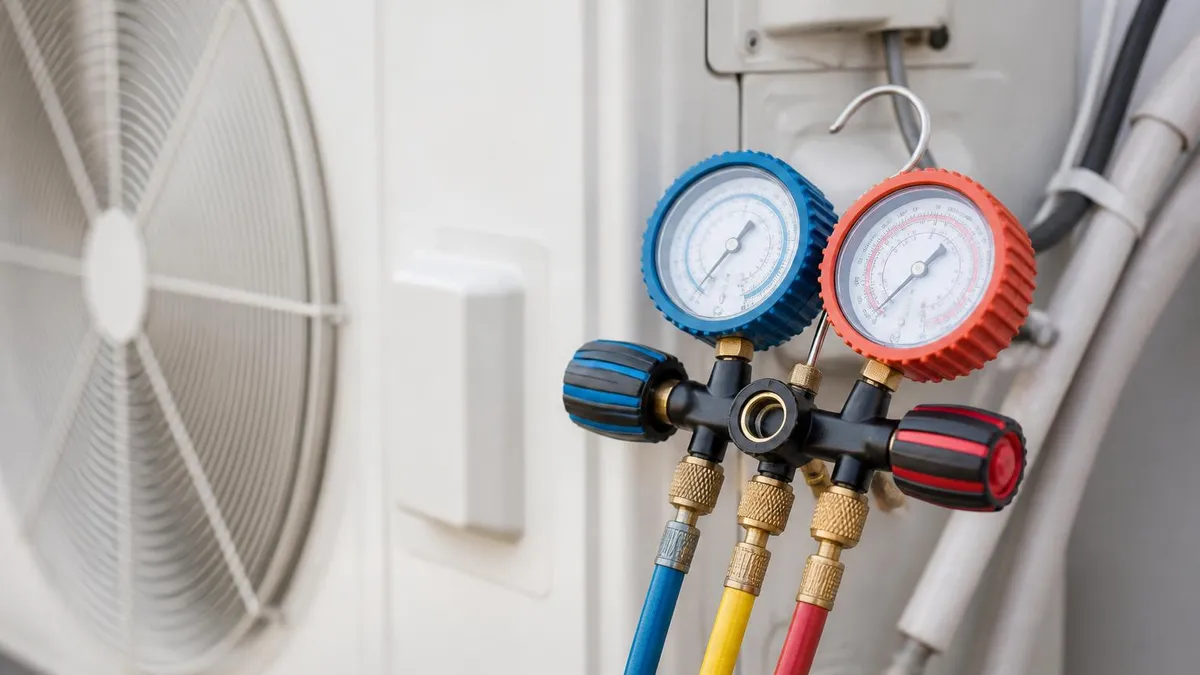
Certified HVAC Contractors: How to Find, Vet, and Hire the Right Professional for Your Home or Business
HVAC Parts and Supply: The Complete Guide to Sourcing, Identifying, and Buying Heating and Cooling Components in 2026
About the Author

NATE Certified HVAC Technician & Licensing Exam Trainer
Universal Technical InstituteMike Johnson is a NATE-certified HVAC technician and EPA 608 universal-certified refrigerant handler with a Bachelor of Science in HVAC/R Technology. He has 19 years of commercial and residential HVAC installation and service experience and specializes in preparing technicians for NATE certification, EPA 608, A2L refrigerant safety, and state HVAC contractor licensing examinations.