
HVAC Company Guide: How to Choose, Start, or Work for a Quality HVAC Contractor
Company HVAC guide covering how to choose a contractor, 📗 start your own business, hire crews, price jobs, and meet licensing rules in 2026 October.

A company hvac business sits at the intersection of skilled trades, regulated contracting, and customer service, and choosing or running one well means understanding all three layers at the same time. Whether you are a homeowner shopping for service, a technician thinking about going independent, or an owner trying to scale past two trucks, the same fundamentals apply: licensing, insurance, equipment knowledge, pricing math, and reputation. This guide walks through every angle you need to evaluate, build, or work for an HVAC company in 2026.
The U.S. HVAC contracting market crossed $140 billion in annual revenue in 2025, driven by aging residential systems, stricter refrigerant rules under the AIM Act, and a wave of heat pump conversions tied to Inflation Reduction Act incentives. That growth has been uneven. Established companies with strong service contracts are thriving, while undercapitalized operators are struggling with refrigerant cost increases and tighter EPA certification enforcement. The companies winning right now share a few specific traits this article will detail.
Most HVAC companies fall into one of four operating models: residential service and replacement, commercial service, new construction installation, or design-build mechanical contracting. Each model has different margins, different licensing requirements, different equipment investments, and a very different daily rhythm. A residential service company might run twelve trucks doing six calls each at $85 to $250 average ticket. A commercial mechanical contractor might run three crews on month-long projects worth $400,000 each. Knowing which model fits your goals is the first decision.
For consumers, picking the right HVAC company is about more than the lowest quote. Manufacturer certifications like NATE, Trane Comfort Specialist, or Carrier Factory Authorized Dealer status reflect ongoing training requirements that most fly-by-night operators cannot meet. State contractor licenses, EPA Section 608 certifications, and verifiable general liability and workers compensation insurance separate legitimate companies from unlicensed handymen. The cheapest bid often signals missing overhead that legitimate companies must carry by law.
For technicians considering starting their own shop, the leap is bigger than most expect. Tools and a truck are the smallest line item. The real costs are a contractor license bond, $1 million general liability insurance, workers compensation, vehicle insurance, accounting software, dispatch software, parts inventory, and roughly six months of working capital before consistent cash flow arrives. Most one-truck operators who fail in year one underestimated overhead, not technical skill. The math has to work before the marketing does.
This guide is structured to serve all three audiences. Sections one through four cover what defines a quality HVAC company and how to evaluate one as a customer. Sections five through eight cover starting, licensing, and structuring a new HVAC business. The closing sections cover hiring, pricing, marketing, and the operational habits that separate the companies billing $300,000 a year from the ones billing $5 million. If you are studying for licensing, the linked HVAC Inspection and code articles are worth bookmarking alongside this one.
One final framing note before we dig in: the HVAC industry is consolidating quickly. Private equity rollups acquired more than 800 independent HVAC companies between 2023 and 2025, and that pace is accelerating. The companies being acquired share clear financial fundamentals, documented systems, and recurring revenue from maintenance agreements. Whether you want to be acquired, compete against acquired shops, or just hire a reliable contractor, understanding these dynamics will inform every decision you make this year.
The HVAC Company Industry by the Numbers

Four Main HVAC Company Business Models
Focuses on homeowner repairs, tune-ups, and system replacements. High call volume, smaller ticket sizes averaging $400 to $9,000, and strong dependence on maintenance agreements for predictable revenue.
Services restaurants, offices, retail, and light industrial buildings. Service contracts dominate, work orders are larger, and after-hours emergency response commands premium rates of $185 to $295 per hour.
Partners with builders and general contractors to install systems in new homes or buildings. Lower margins around 12 to 18 percent but high volume, with crews running coordinated rough-in and trim-out phases.
Engineers and installs full mechanical systems for commercial projects. Requires PE licensing on staff, six-figure project minimums, and the longest sales cycles in the trade — often 9 to 18 months from bid to install.
Choosing a quality HVAC company starts with verifying credentials before you even discuss your equipment problem. Every legitimate contractor should provide a state license number, EPA Section 608 universal technician certification, proof of general liability insurance with coverage of at least $1 million, and current workers compensation. These four documents take five minutes to verify online through your state contractor board and the company's insurance carrier. Skipping verification is how homeowners end up with $14,000 installs that void the manufacturer warranty.
Manufacturer certifications matter more than most consumers realize. Brands like Carrier, Trane, Lennox, Daikin, and Mitsubishi run factory authorized dealer programs that require ongoing training, technical proficiency testing, customer satisfaction scoring, and warranty fulfillment standards. A Carrier Factory Authorized Dealer or Trane Comfort Specialist designation means the company carries extended warranties, has factory-trained technicians on staff, and can be audited by the manufacturer. These programs filter out roughly 80 percent of contractors who cannot meet the standards.
Reviews tell you something, but they tell you the wrong things if you read them wrong. Star averages are easy to manipulate, and most one-star reviews come from price disputes rather than poor workmanship. What you want to read is the company's response pattern, the specificity of positive reviews, and whether technicians are mentioned by name across multiple reviews. A company with 47 reviews mentioning specific techs by name has consistent staffing and culture. A company with 800 generic five-star reviews from accounts that posted them all in one week has bought them.
The estimate process itself is diagnostic. A quality HVAC company performs a Manual J load calculation before recommending replacement equipment, measures static pressure on existing ductwork, inspects the electrical panel, and asks about comfort issues room by room. They do not arrive, glance at the nameplate, and quote a same-tonnage replacement. If a contractor proposes equipment without measuring anything, they are guessing, and the guess will usually be wrong by half a ton in one direction or the other. Oversized equipment short-cycles and fails early.
Pricing transparency separates professional companies from churn-and-burn operations. Flat-rate pricing, written line-item proposals, financing options through reputable lenders like Wells Fargo or Synchrony, and clear warranty terms are all green flags. Pressure to sign today, vague itemization, cash-only discounts, and salespeople who refuse to leave a written quote are all red flags. A reputable proposal should specify equipment model numbers, indoor and outdoor unit details, refrigerant line set length, electrical work scope, permit handling, and warranty terms in plain language.
Permits are where the cheapest bidders cut corners and where homeowners pay later. Every HVAC install in every U.S. jurisdiction except a handful of rural counties requires a mechanical permit and inspection. Companies that quote $1,500 less than competitors are often skipping the permit. When you sell the home five years later, that unpermitted install becomes a buyer negotiation point, a code compliance issue, and sometimes a forced reinstall. The right HVAC Duct Installation work always carries documentation.
Finally, evaluate the company's depth before you sign. Ask how many trucks they run, how many technicians are NATE certified, who answers the phone at 2 a.m. when your heat fails in January, and whether they self-perform or subcontract installs. A two-truck shop can do excellent work, but if both technicians are on vacation when your compressor fails, you wait. A larger company with rotating on-call coverage, in-house warehouse parts inventory, and dedicated install crews delivers more reliable response times during the peak weeks when systems actually fail.
HVAC Practice Test Questions
Prepare for the HVAC - Heating Ventilation and Air Conditioning exam with our free practice test modules. Each quiz covers key topics to help you pass on your first try.
HVAC Air Conditioning
HVAC Exam Questions covering Air Conditioning. Master HVAC Test concepts for certification prep.
HVAC Code Compliance
Free HVAC Practice Test featuring Code Compliance. Improve your HVAC Exam score with mock test prep.
HVAC Electrical Controls
HVAC Test Prep for Electrical Controls. Practice HVAC Quiz questions and boost your score.
HVAC Energy Efficiency
HVAC Questions and Answers on Energy Efficiency. Free HVAC practice for exam readiness.
HVAC Heating Systems
HVAC Mock Test covering Heating Systems. Online HVAC Test practice with instant feedback.
HVAC Load Calculations
Free HVAC Quiz on HVAC Load Calculations. HVAC Exam prep questions with detailed explanations.
HVAC Tools and Equipment
HVAC Practice Questions for HVAC Tools and Equipment. Build confidence for your HVAC certification exam.
HVAC Refrigeration
HVAC Test Online for Refrigeration. Free practice with instant results and feedback.
HVAC Safety Practices
HVAC Study Material on Safety Practices. Prepare effectively with real exam-style questions.
HVAC System Design
Free HVAC Test covering System Design. Practice and track your HVAC exam readiness.
HVAC Thermodynamics
HVAC Exam Questions covering Thermodynamics. Master HVAC Test concepts for certification prep.
Company HVAC Licensing, Insurance, and Bonding
Forty-three U.S. states require a state-level HVAC contractor license. The remaining states delegate licensing to municipalities or counties. Requirements vary widely: California's C-20 license requires four years of journey-level experience and passing trade and law exams, while Texas requires a Class A or Class B license tied to refrigerant tonnage capacity. Florida splits Class A and Class B by unlimited versus 25-ton commercial work.
Application costs typically run $150 to $500, exam fees add $75 to $200, and most states require continuing education hours every two to four years. Some states require a business entity license separate from the qualifying individual license. Always check both. Operating without proper licensure can void homeowner insurance claims, expose the company to treble damages in some jurisdictions, and result in personal liability for the qualifier.

Starting Your Own HVAC Company: Honest Tradeoffs
- +Average net margins of 6 to 12 percent on residential service work outperform most trades
- +Recurring revenue from maintenance agreements smooths seasonal cash flow
- +Equipment manufacturer programs offer co-op marketing dollars and lead generation
- +Skilled technician shortage means experienced owners can command premium pricing
- +Geographic protection — customers want local response, not national franchises
- +Exit multiples of 4 to 7 times EBITDA make established companies highly sellable
- −Capital requirements of $80,000 to $250,000 for trucks, tools, software, and reserves
- −Workers compensation and liability insurance costs rise sharply with crew growth
- −Refrigerant price volatility under AIM Act phase-down compressing replacement margins
- −Technician hiring is the hardest part of scaling and gets harder every year
- −Seasonal cash flow swings can wipe out undercapitalized one-truck operators
- −Customer acquisition costs through Google Ads exceed $400 per booked call in major metros
Company HVAC Startup Checklist for New Owners
- ✓Form an LLC or S-Corp with your state and obtain a federal EIN before any business activity.
- ✓Secure your state HVAC contractor license with the required qualifying individual on file.
- ✓Bind general liability insurance at $1 million minimum and workers compensation coverage.
- ✓Purchase or lease a properly stocked service van with brand decals and DOT compliance.
- ✓Open a business checking account and a separate sales tax remittance account.
- ✓Set up dispatch software such as ServiceTitan, Housecall Pro, or FieldEdge from day one.
- ✓Establish accounts with two HVAC supply houses for parts and equipment availability.
- ✓Build a basic website with local SEO targeting your service area and primary equipment brands.
- ✓Register your Google Business Profile and request reviews from your first ten paying customers.
- ✓Set flat-rate pricing using a published price book — never quote service work hourly to homeowners.
- ✓Apply for manufacturer dealer programs with at least one major brand for warranty and co-op support.
- ✓Document every service call with photos, invoices, and customer signatures from job one forward.
Recurring revenue is the single biggest predictor of HVAC company value
Acquirers paying premium multiples consistently target companies with 25 percent or more of revenue coming from maintenance agreements. A $2 million revenue company with 800 active maintenance plans is worth roughly twice what a $2 million revenue company with no plans is worth. Build the maintenance book from day one, even when it feels like it slows down new sales.
Pricing is where most HVAC companies lose money without realizing it. The math has to start with your fully burdened hourly cost — wages, payroll taxes, benefits, workers compensation, vehicle costs, tool depreciation, and overhead absorbed per billable hour. For most residential service shops in 2026, fully burdened technician cost runs $58 to $82 per hour. To net 15 percent at the company level, you need to bill that hour at $185 to $245 once you account for non-billable hours, callbacks, and overhead. Companies billing $125 per hour are slowly bleeding to death.
Flat-rate pricing solved this problem for the trades twenty years ago and is now the industry standard. Instead of quoting hours, you publish a price book with line items: capacitor replacement, contactor replacement, condensate pump installation, thermostat installation, refrigerant leak search, and so on. Each line includes the part, labor, overhead allocation, and target margin. Technicians present the price from a tablet, customers sign before work begins, and there are no surprises. Companies using flat rate consistently bill 30 to 45 percent more per call than hourly-billing competitors.
Maintenance agreements are the operational and financial backbone of profitable HVAC companies. A standard residential plan at $189 to $249 per year covers two visits (spring AC tune, fall heat tune), priority scheduling, and a parts and labor discount. The math works because tune-up visits during shoulder seasons fill technician schedules when emergency work is slow, drive replacement opportunities, and create predictable monthly billing when sold on auto-renewing credit cards. A 1,000-plan book generates roughly $215,000 in annual recurring revenue plus the upsell pipeline.
Replacement sales drive the majority of profit in residential HVAC. A typical 3-ton 16 SEER2 heat pump install in 2026 sells for $11,500 to $16,500 depending on region, with cost of goods (equipment, refrigerant, line set, electrical, permits) running 38 to 48 percent. That leaves $6,500 to $9,500 gross margin per install to cover commission, overhead, and profit. Companies running structured sales processes with in-home design consultants close 55 to 70 percent of opportunities. Companies sending technicians to quote close 25 to 35 percent and leave money on the table on the ones they close.
Commercial service operates on different math entirely. Hourly rates of $145 to $225 with two-hour minimums, premium after-hours rates of $250 to $395, and emergency response fees of $185 are standard. Commercial work is contract-driven, with annual service agreements covering quarterly preventive maintenance and discounted rates on demand work. A single mid-size building can generate $8,000 to $25,000 annually under contract, and a portfolio of 60 buildings provides revenue stability residential shops cannot match.
Growth strategy diverges sharply between revenue tiers. Below $1 million, the founder is still on tools and growth is constrained by sales capacity. Between $1 million and $3 million, the focus shifts to hiring an office manager, dispatcher, and dedicated sales lead so the owner can recruit and train. Above $3 million, systems matter more than effort — KPI dashboards, weekly accountability meetings, technician scorecards, and structured career paths replace the founder-everywhere model. Companies that fail to make this transition stall at $1.5 million and burn out the owner.
Marketing spend should run 6 to 12 percent of revenue for growing companies. The mix typically includes Google Local Service Ads (highest intent, $35 to $85 per booked call), Google Search Ads ($65 to $220 per booked call), direct mail to existing customer lists ($1.20 to $2.40 per piece with 1 to 3 percent response), Facebook for replacement campaigns, and review generation systems. The companies winning local search invest heavily in ongoing content and on-page optimization — our HVAC SEO guide breaks down exactly how that works in 2026.
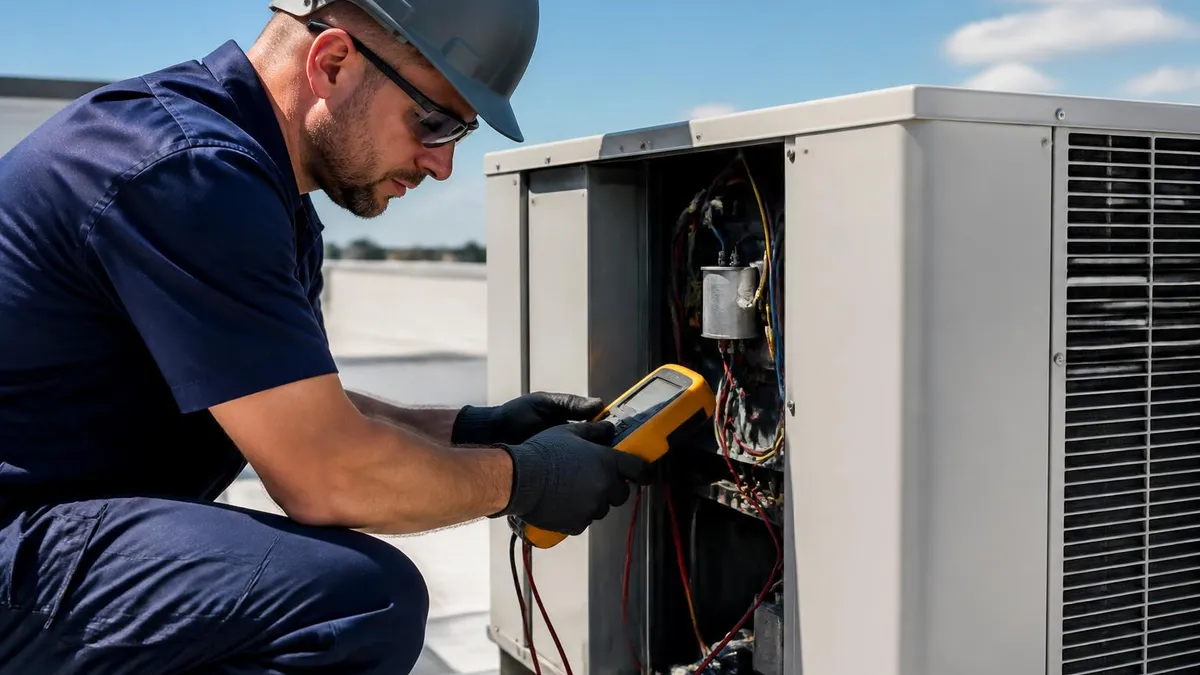
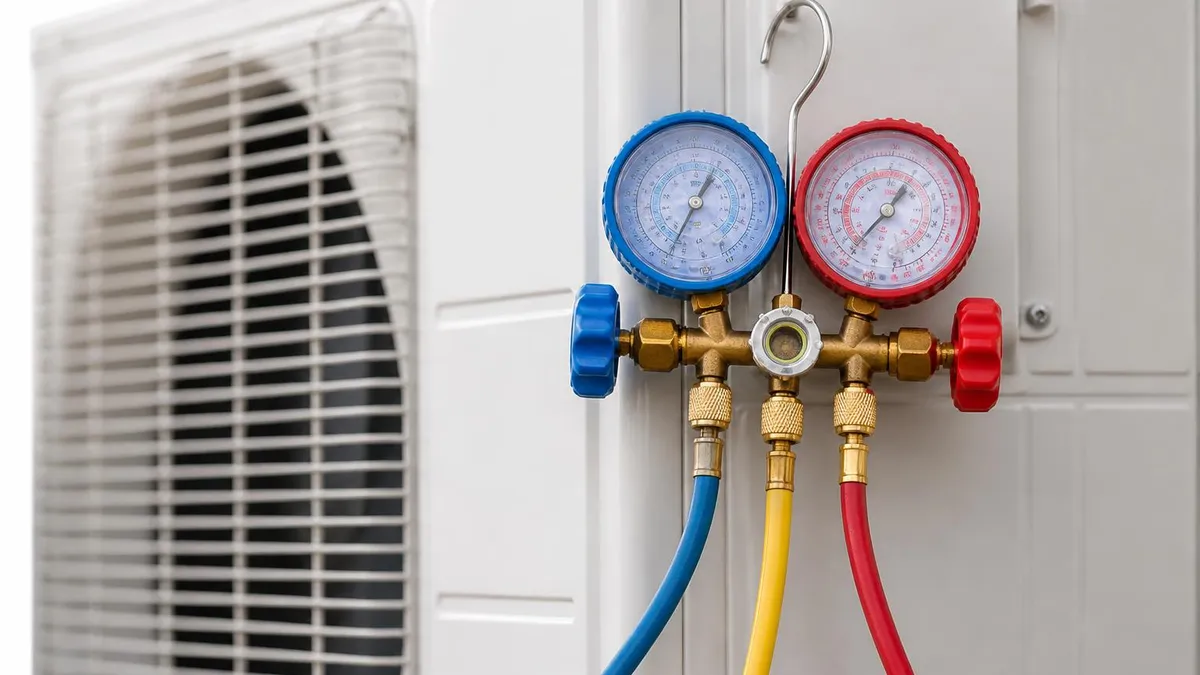
As of January 2025, new residential and light commercial air conditioning systems can no longer be manufactured with R-410A refrigerant. The replacement refrigerants A2L (R-32 and R-454B) are mildly flammable and require updated technician training, leak detection equipment, and storage protocols. Companies still selling R-410A new-construction systems are working through limited 2024 inventory only.
Hiring is the single hardest problem in HVAC contracting right now, and it will get harder. The Bureau of Labor Statistics projects 42,500 HVAC technician job openings per year through 2034 against a graduating pool from trade schools and apprenticeships of fewer than 24,000 annually. Companies that solve hiring through structured apprenticeships, in-house training programs, and aggressive retention practices will dominate their markets. Companies relying on craigslist ads and prayer will stagnate at whatever crew size they have today.
The most effective recruitment strategy in 2026 is growing your own technicians. Hire someone with mechanical aptitude but no HVAC experience, pair them with a senior technician as a helper for 12 to 18 months, sponsor their EPA 608 certification, pay for their state apprentice registration, and promote them to junior technician at $24 to $32 per hour once they can run basic service calls solo. Total investment runs $35,000 to $50,000 over 18 months, and you produce a loyal tech earning your company $180,000 to $260,000 per year.
Compensation has shifted dramatically since 2022. Senior service technicians in major metros now earn $32 to $48 per hour base plus performance pay tied to revenue, callbacks, and customer reviews. Total compensation for top techs in companies running structured pay-for-performance plans regularly exceeds $110,000 annually. Companies still paying flat hourly wages without spiff structures lose their best people to competitors within 18 months. The compensation arms race is real, and the answer is not lower wages but higher revenue per technician.
Retention beats recruitment every time. The cost of replacing a fully-trained service technician — recruiting time, lost productivity during ramp-up, customer disruption, and potential customer loss — runs $35,000 to $75,000 per departure. Companies with strong retention invest in modern, well-stocked vans, take-home vehicles, paid training time, clear promotion paths, weekly one-on-ones with managers, and culture that respects family time. Mandatory weekend on-call with no rotation kills retention faster than any other single factor.
Office staff scales differently than technicians but is equally critical. A typical pattern: at one to two trucks the owner answers calls and dispatches. At three to four trucks a dedicated customer service representative handles inbound calls, booking, and outbound follow-up. At six to eight trucks a dispatcher is added. At ten-plus trucks the structure includes a CSR team, a dispatcher, an installation coordinator, a service manager, and a sales manager. Each role is added when the existing staff is spending more than 20 percent of their time on the function the new role will absorb.
Training cannot be ad hoc if you want consistent service quality. The companies producing the best customer experiences run weekly Saturday morning technical training, monthly all-hands sales training, quarterly manufacturer-led equipment training, and annual safety recertification. Training is paid time. Cutting training to save labor cost is the most common mistake of stalled mid-sized companies, and it shows up in callback rates and customer reviews within 90 days. The right HVAC Tape selection matters as much as soldering technique, and both have to be taught.
Company culture is the invisible infrastructure that holds everything together. Technicians work alone in customer homes all day, and what they choose to do when nobody is watching is determined by the standards the company sets and the leaders the company hires.
The best HVAC companies have clearly written values, hire and fire on those values, recognize wins publicly, address shortfalls privately, and create a workplace where careers are built, not just paychecks earned. Culture is the moat. Equipment, pricing, and marketing can all be copied. A team that genuinely loves the company they work for cannot be replicated by competitors.
Whether you are hiring an HVAC company or building one, the practical habits that drive long-term results are surprisingly mundane. Document everything. Photograph every install start and finish. Record every diagnosis with measurements, not opinions. Track every truck's parts inventory weekly. Run weekly P&L reviews instead of waiting for the quarterly accountant report. The companies that win this trade in 2026 are not the most charismatic operators — they are the most disciplined ones who treat the business as a business rather than a job they happen to own.
For homeowners shopping for a company, the practical advice condenses to a simple sequence. Get three estimates from licensed, insured, and manufacturer-certified contractors. Insist on Manual J load calculations and written line-item proposals. Verify state licensure and insurance certificates directly with the issuing bodies. Read responses to negative reviews, not just star averages. Ask who pulls the permit and who handles the inspection. Avoid pressure-to-sign sales tactics. The right contractor will give you space to think and provide written answers to written questions.
For technicians thinking about going independent, run the numbers before quitting your job. Build a spreadsheet with realistic first-year revenue projections, fully-loaded operating costs, and personal living expenses. Stress-test what happens if revenue is 60 percent of plan and what happens if a key piece of equipment fails in month three. Most successful single-truck startups began with six months of operating reserves in the bank and a clear list of warm leads from former customers or referral sources. The technicians who jump without preparation make up the bulk of the 38 percent of HVAC startups that close within three years.
For existing company owners, the path to the next revenue tier is almost always about systems and people rather than more marketing spend. Marketing without operational capacity creates angry customers and burned-out staff. Before adding lead sources, audit your conversion rates, average ticket sizes, technician productivity, and callback rates.
Improving close rate from 32 percent to 48 percent has the same effect as doubling your marketing budget — at a fraction of the cost. The bottleneck is rarely where owners think it is, and a one-day operations review with a coach or peer group often surfaces issues that years of grinding had hidden.
Refrigerant transition is the single biggest technical shift the industry will navigate in the next five years. Companies that invest in A2L training, certified leak detection equipment, updated brazing techniques, and proper refrigerant storage will charge premium rates for the work. Companies that skip the training will lose warranty status, face liability issues, and eventually exit the new install market. The transition window is short — most major manufacturers will be A2L-only on new equipment by 2027, and EPA enforcement of refrigerant management is tightening every quarter.
Heat pump conversions represent the largest single growth category in residential HVAC through 2030. Inflation Reduction Act tax credits of up to $2,000 plus state and utility rebates often totaling $8,000 to $14,000 are driving conversion demand far above natural replacement cycles. Companies that have built genuine expertise in cold-climate heat pump design, electrical service upgrades, and rebate paperwork are booking 6 to 10 weeks out in heating shoulder seasons. For details on which credits apply, our Tax Credit for Installing New HVAC guide tracks the current rules.
Finally, longevity in this business comes from playing a long game. The HVAC contractors who built businesses worth tens of millions of dollars almost universally describe a 15-to-25 year journey of slow, deliberate growth, quality reputation building, and reinvestment of profits back into equipment, people, and systems. Quick wins are mostly illusions. The customers you serve well in 2026 will be your referral source in 2036. Treat every interaction — customer, employee, supplier, inspector — as a deposit into a reputation account that compounds for decades.
HVAC Questions and Answers

About the Author

NATE Certified HVAC Technician & Licensing Exam Trainer
Universal Technical InstituteMike Johnson is a NATE-certified HVAC technician and EPA 608 universal-certified refrigerant handler with a Bachelor of Science in HVAC/R Technology. He has 19 years of commercial and residential HVAC installation and service experience and specializes in preparing technicians for NATE certification, EPA 608, A2L refrigerant safety, and state HVAC contractor licensing examinations.