
Best HVAC System Brand: The Complete 2026 Guide to Choosing the Right Manufacturer for Your Home
Discover the best HVAC system brand for your home. 🎓 Compare Carrier, Trane, Lennox, Rheem, and Daikin by efficiency, warranty, reliability, and value.
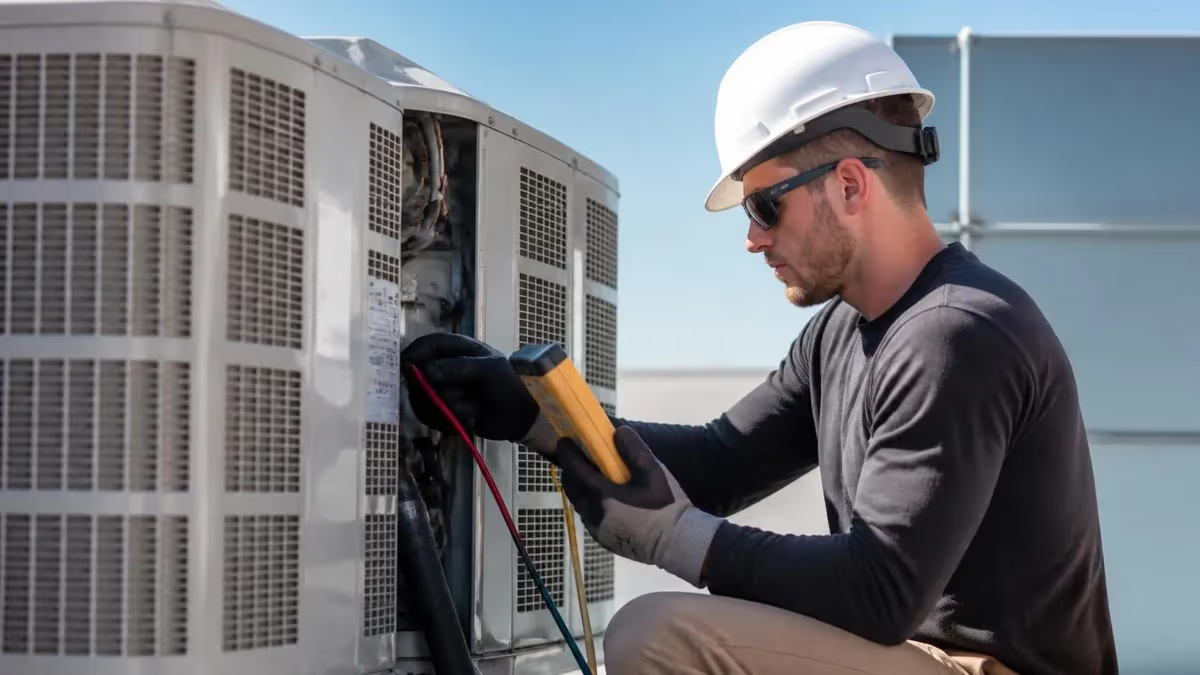
Choosing the best HVAC system brand is one of the most important decisions a homeowner faces when investing in long-term home comfort. With dozens of manufacturers competing across the residential heating and cooling industry, narrowing down the right brand requires careful evaluation of energy efficiency ratings, warranty programs, product reliability, and total cost of ownership. Whether you are replacing an aging furnace or installing a complete new system, the brand behind your equipment directly impacts performance and satisfaction for years to come. Practice with the free HVAC practice test on PracticeTestGeeks (750+ questions with answer explanations).
The HVAC industry in 2026 continues to evolve rapidly, driven by stricter federal energy standards, the accelerating adoption of heat pump technology, and rising consumer expectations for smart home connectivity. Major manufacturers including Carrier, Trane, Lennox, Rheem, and Daikin have expanded their product lines to address shifting demands and compete for homeowner loyalty. Understanding what each brand delivers in terms of technology, efficiency, and post-purchase support helps homeowners avoid expensive mistakes during the purchasing process.
Brand reputation reflects decades of engineering decisions, manufacturing consistency, and customer support responsiveness that directly affect your ownership experience over fifteen to twenty-five years. Equipment from a well-established manufacturer typically includes better warranty terms, access to a wider network of factory-trained dealers, and more readily available replacement parts. These advantages may seem secondary when comparing initial price quotes, but they become critical when a compressor fails during a summer heat wave or a heat exchanger cracks in winter.
A common misconception is that the most expensive brand automatically delivers the best results. In reality, the ideal HVAC system brand depends on your climate zone, existing ductwork condition, home insulation levels, and individual comfort priorities. A homeowner in the humid Southeast may benefit from a different manufacturer than someone in the dry Mountain West. Local contractor familiarity with specific brands also significantly influences installation quality and long-term system performance after equipment is in place.
Energy efficiency has emerged as the primary differentiator among top HVAC brands. Federal minimum standards have increased substantially, but premium manufacturers now offer units with SEER2 ratings above twenty and HSPF2 ratings exceeding ten, delivering substantial utility bill savings compared to baseline equipment. Investing in a higher-efficiency system from a reputable brand frequently pays for itself through reduced monthly energy costs within five to eight years, making efficiency ratings an essential factor in any serious brand comparison.
This guide examines the leading HVAC system brands available to American homeowners in 2026, comparing product quality, efficiency offerings, warranty programs, dealer network strength, and overall value across every price tier. We break down the strengths and weaknesses of each major manufacturer, provide practical criteria for evaluating brands, and offer actionable advice for matching the right equipment to your home. By the end, you will have a clear framework for making a confident and informed brand selection decision.
Whether you are a first-time homeowner navigating the HVAC market or an experienced property owner preparing for your next system replacement, this detailed comparison will simplify your research and help you ask the right questions during contractor consultations. Understanding brand-level differences enables you to negotiate effectively, identify inflated quotes, and invest in equipment that delivers dependable performance year after year without unexpected breakdowns or premature system failure.
Free HVAC Study Tools
Interactive HVAC resources on PracticeTestGeeks, free to start:
- HVAC EPA 608 Refrigerant Certification — 35 questions with instant scoring and answer explanations
- HVAC flashcards — review key terms and concepts card by card
- HVAC study guide — topic-by-topic overview of what the exam covers
- HVAC cheat sheet — one-page printable summary for last-minute review
HVAC System Brands by the Numbers
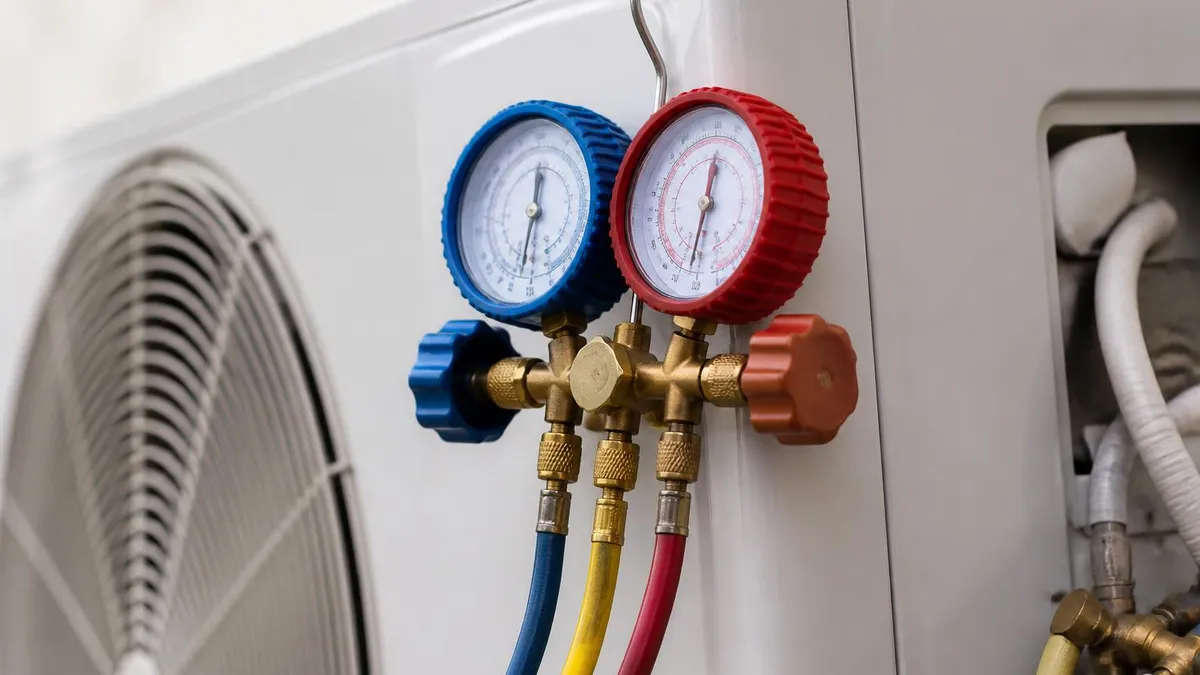
Key Factors for Evaluating HVAC System Brands
Compare SEER2, HSPF2, and AFUE ratings across brands to determine which manufacturers offer the greatest energy savings at each price tier. Higher ratings translate directly to lower monthly utility costs.
Evaluate compressor, parts, and labor warranty length and conditions. Top brands offer ten to twelve years on parts with registration, but exclusions and maintenance requirements vary significantly between manufacturers.
Review independent consumer reliability surveys and contractor feedback to identify brands with the fewest warranty claims and longest average service life before major component replacement becomes necessary.
Assess the availability of factory-certified installers in your local area. Brands with larger dealer networks provide more competitive pricing, faster service response, and easier access to genuine replacement parts.
Compare smart thermostat compatibility, Wi-Fi connectivity, mobile app functionality, and home automation features. Advanced integration enables remote monitoring, energy tracking, and proactive maintenance alerts to your phone.
When comparing top HVAC system brands head to head, three core metrics consistently distinguish the leaders: efficiency ratings, reliability track records, and warranty depth. Carrier, founded in 1915 by Willis Carrier, the inventor of modern air conditioning, remains one of the most recognized names in residential HVAC. Their Infinity series delivers SEER2 ratings up to twenty-four and integrates seamlessly with the Carrier Infinity smart thermostat for precise multi-zone temperature control throughout the home.
Trane has built its identity around durability, consistently emphasizing that their systems are engineered to operate reliably under the most demanding conditions. Their XV series heat pumps and air conditioners regularly earn top marks in independent reliability surveys, and the proprietary Climatuff compressor technology is designed to withstand extreme temperature fluctuations. Trane provides a registered limited warranty of up to twelve years on compressors and ten years on functional parts, offering strong long-term protection for reliability-focused homeowners.
Lennox occupies the premium tier of the residential HVAC market, with their SL series air conditioners achieving SEER2 ratings up to twenty-eight, among the highest in the industry. Lennox systems feature variable-speed inverter compressor technology that continuously modulates output to match the precise cooling or heating load, reducing energy consumption and maintaining exceptionally consistent indoor temperatures. The tradeoff is a higher purchase price and a somewhat smaller dealer network compared to Carrier or Trane in certain regions.
Rheem and its companion brand Ruud provide a compelling mid-range option for homeowners seeking quality equipment without premium pricing. The Rheem Prestige series delivers SEER2 ratings up to twenty and includes features such as EcoNet smart connectivity, variable-speed blower motors, and quiet operating modes. Manufacturing is concentrated in the United States, and the brand has earned strong loyalty among contractors who value straightforward installation procedures and consistent long-term performance across diverse climates.
Daikin, the world's largest HVAC manufacturer by global revenue, has expanded its North American presence through acquiring the Goodman and Amana brands. Daikin's premium ductless mini-split systems are widely considered best in class for homes without existing ductwork or for room-by-room zone control. Their ducted systems, including the Daikin Fit and DX series, feature inverter-driven compressors that reduce energy waste during partial-load conditions. Daikin provides twelve-year parts limited warranties on properly registered residential units.
Beyond the top five, brands like York, American Standard, Bryant, and Bosch each offer distinctive advantages. American Standard shares core engineering with Trane under the same parent company and delivers nearly identical performance at a modestly lower price point. Bryant, similarly connected to Carrier through shared technology, provides premium features with its own dealer network. Bosch has entered the residential market with competitively priced heat pumps featuring inverter technology and cold-climate ratings down to negative fifteen degrees Fahrenheit.
Understanding these brand distinctions requires examining real-world performance data from independent sources. Consumer reliability surveys, contractor feedback from industry publications, and testing from organizations like Consumer Reports provide insights that supplement manufacturer specifications. The most informed decisions combine thorough brand research with local market knowledge, ensuring your selected equipment is both high quality and well supported by trained installation professionals operating in your geographic area.
HVAC Practice Test Questions
Prepare for the HVAC - Heating Ventilation and Air Conditioning exam with our free practice test modules. Each quiz covers key topics to help you pass on your first try.
HVAC Air Conditioning
HVAC Exam Questions covering Air Conditioning. Master HVAC Test concepts for certification prep.
HVAC Code Compliance
Free HVAC Practice Test featuring Code Compliance. Improve your HVAC Exam score with mock test prep.
HVAC Electrical Controls
HVAC Test Prep for Electrical Controls. Practice HVAC Quiz questions and boost your score.
HVAC Energy Efficiency
HVAC Questions and Answers on Energy Efficiency. Free HVAC practice for exam readiness.
HVAC Heating Systems
HVAC Mock Test covering Heating Systems. Online HVAC Test practice with instant feedback.
HVAC Load Calculations
Free HVAC Quiz on HVAC Load Calculations. HVAC Exam prep questions with detailed explanations.
HVAC Tools and Equipment
HVAC Practice Questions for HVAC Tools and Equipment. Build confidence for your HVAC certification exam.
HVAC Refrigeration
HVAC Test Online for Refrigeration. Free practice with instant results and feedback.
HVAC Safety Practices
HVAC Study Material on Safety Practices. Prepare effectively with real exam-style questions.
HVAC System Design
Free HVAC Test covering System Design. Practice and track your HVAC exam readiness.
HVAC Thermodynamics
HVAC Exam Questions covering Thermodynamics. Master HVAC Test concepts for certification prep.
HVAC Brands by Budget Tier
Premium HVAC brands including Carrier Infinity, Trane XV, and Lennox SL series represent the highest level of residential comfort technology available. These product lines feature variable-speed inverter compressors, advanced smart thermostat integration, and SEER2 efficiency ratings from twenty-two to twenty-eight. Homeowners who select premium equipment benefit from whisper-quiet operation, precise temperature control within one degree of setpoint, and the most comprehensive manufacturer warranty packages in the residential HVAC industry today.
The investment for premium brands typically ranges from eight thousand to fifteen thousand dollars for complete installation, depending on capacity and regional labor costs. While upfront expense is significant, these systems deliver energy savings of thirty to fifty percent compared to minimum-efficiency equipment over their operating lifetime. Premium brands also enhance home resale value and attract experienced factory-certified dealers who specialize in precision installation techniques that maximize long-term system longevity and peak operating performance throughout the equipment's full service life.
Investing in a Premium HVAC Brand: Pros and Cons
- +Higher SEER2 and HSPF2 ratings deliver thirty to fifty percent energy savings compared to baseline equipment
- +Variable-speed inverter compressors provide quieter operation and more precise temperature control
- +Comprehensive warranty coverage of ten to twelve years protects against major repair expenses
- +Factory-certified dealer networks ensure proper installation that maximizes system lifespan
- +Advanced smart home integration with Wi-Fi thermostats, mobile apps, and energy monitoring
- +Better long-term home resale value when buyers see premium HVAC equipment installed
- −Upfront costs can be forty to sixty percent higher than mid-range or value-tier alternatives
- −Smaller dealer networks for some premium brands may limit service options in rural areas
- −Proprietary parts and components can be more expensive to replace outside warranty periods
- −Advanced electronic controls may require specialized technician training not all contractors have
- −The efficiency gap between premium and mid-range brands has narrowed as minimums increased
- −Return on investment through energy savings may take eight to twelve years in low-rate regions
Pros and Cons at a Glance
| Pros | Cons |
|---|---|
| Variable-speed inverter compressors provide quieter operation and more precise temperature control | Upfront costs can be forty to sixty percent higher than mid-range or value-tier alternatives |
| Comprehensive warranty coverage of ten to twelve years protects against major repair expenses | Smaller dealer networks for some premium brands may limit service options in rural areas |
| Factory-certified dealer networks ensure proper installation that maximizes system lifespan | Proprietary parts and components can be more expensive to replace outside warranty periods |
| Advanced smart home integration with Wi-Fi thermostats, mobile apps, and energy monitoring | Advanced electronic controls may require specialized technician training not all contractors have |
| Better long-term home resale value when buyers see premium HVAC equipment installed | The efficiency gap between premium and mid-range brands has narrowed as minimums increased |
HVAC Brand Selection Checklist
- ✓Verify the brand offers SEER2 and HSPF2 ratings appropriate for your climate zone and efficiency goals.
- ✓Confirm at least two factory-certified dealers for your chosen brand operate within your local service area.
- ✓Review full manufacturer warranty terms including registration deadlines, exclusions, and maintenance requirements.
- ✓Request a Manual J load calculation from each contractor to ensure proper system sizing for your home.
- ✓Compare at least three detailed written proposals from contractors representing different HVAC brands.
- ✓Check independent consumer reliability ratings and warranty claim rates for your shortlisted brands.
- ✓Verify that replacement parts for your selected brand are stocked at local HVAC supply houses.
- ✓Research available federal tax credits, state rebates, and utility incentives for your chosen efficiency tier.
- ✓Ask each contractor about their installation volume with your selected brand and request references.
- ✓Confirm the equipment uses current-generation refrigerant to avoid future retrofit costs from regulatory changes.
Installation Quality Matters More Than Brand Name
Industry research shows that installation quality accounts for up to thirty percent of an HVAC system's actual operating efficiency. A premium brand unit installed incorrectly can underperform a mid-range system installed by a skilled technician. Always prioritize finding an experienced, factory-certified installer over simply choosing the most expensive brand name. The contractor behind the installation is often more important than the label on the equipment itself.
Selecting the best HVAC system brand for your specific home requires moving beyond general rankings and evaluating how each manufacturer's products match your unique requirements. Climate zone is the single most important factor, as heating-dominant northern regions demand fundamentally different equipment than cooling-dominant southern markets. A homeowner in Minnesota needs strong heating performance at sub-zero temperatures, while a homeowner in Florida prioritizes maximum cooling efficiency and superior humidity management during long, hot summers.
Home size and layout directly influence which brands deliver the best results. Larger homes with multiple floors typically benefit from variable-speed technology and multi-zone capabilities, features most available from premium brands like Carrier, Trane, and Lennox. Smaller single-story homes may achieve excellent comfort with mid-range equipment from Rheem or York without requiring the advanced modulation technology that adds significant cost. Matching system capacity precisely to your home's calculated heating and cooling loads is essential regardless of which brand you ultimately select.
Existing ductwork condition significantly affects brand selection because some manufacturers offer better solutions for homes with suboptimal duct systems. If your ductwork is aging, undersized, or poorly sealed, a variable-speed system from a premium brand can compensate by adjusting airflow to work more effectively with imperfect ducts. Alternatively, homes with severely compromised ductwork may benefit most from Daikin or Mitsubishi ductless mini-split systems, which eliminate duct losses entirely and provide independent temperature control for each room.
Energy costs in your region should heavily influence your brand and efficiency tier selection. Homeowners in areas with high electricity rates, such as the Northeast or California, typically recover the premium cost of higher-efficiency equipment much faster than those in regions with lower utility costs. Calculating your estimated annual energy savings at different SEER2 and HSPF2 levels using local utility rates helps determine whether the price difference between a mid-range and premium brand is justified by actual dollar savings over the ownership period.
Indoor air quality priorities also differ among brands and can guide your decision. Carrier and Lennox both offer integrated whole-home air uv light hvac that work with their furnaces and air handlers to reduce airborne particles, volatile organic compounds, and pathogens. Trane's CleanEffects electronic air cleaner is another highly rated option for homeowners concerned about allergens and respiratory health. If indoor air quality is a top priority, choosing a brand with strong IAQ accessories provides meaningful health benefits beyond basic temperature control.
Future-proofing your investment means considering how each brand is positioned for upcoming regulatory changes and technology shifts. The refrigerant transition from R-410A to lower global warming potential alternatives like R-454B is reshaping the industry, and brands leading this transition will offer more current equipment that avoids potential future retrofit costs. Similarly, brands investing heavily in heat pump technology and smart grid connectivity are better positioned to deliver value as electrification incentives expand.
The best brand evaluation process combines online research with direct conversations with multiple local contractors who install different brand lines. Request detailed quotes from at least three installers, each representing different manufacturers, and ask specific questions about their experience with each brand, typical warranty claim rates, and customer satisfaction feedback. A contractor who installs hundreds of systems annually from one manufacturer can provide real-world insights that no amount of online research can replicate.

The HVAC industry is actively transitioning from R-410A refrigerant to R-454B and other lower-GWP alternatives. Equipment manufactured with older refrigerants may face higher service costs and limited refrigerant availability in coming years. When selecting a brand, confirm your chosen system uses current-generation refrigerant to avoid costly retrofits and ensure long-term parts and service availability throughout the full expected lifespan of your equipment.
Even the best HVAC system brand cannot deliver optimal performance if equipment is improperly installed. Industry studies consistently show that installation quality accounts for up to thirty percent of a system's actual operating efficiency, meaning a premium unit installed incorrectly can perform worse than a mid-range system installed by a skilled technician. This reality makes the relationship between brand and dealer network one of the most critical factors in your purchasing decision, often outweighing the equipment specifications themselves.
Each major HVAC brand maintains its own network of authorized dealers who receive factory training, access to proprietary diagnostic tools, and priority parts ordering. Carrier's Factory Authorized Dealer program, Trane's Comfort Specialist designation, and Lennox's Premier Dealer status all represent tiered certification systems where contractors must meet specific installation quality, customer satisfaction, and ongoing training requirements. Working with a brand-certified dealer typically ensures proper system sizing, correct refrigerant charging, and validated ductwork connections.
Warranty terms vary significantly among brands and deserve careful comparison before your final decision. Most major manufacturers offer base warranties of five years on parts, extendable to ten or twelve years through timely product registration usually required within sixty to ninety days of installation. Some brands also offer limited lifetime heat exchanger warranties on premium furnace lines, providing additional peace of mind for the most expensive component. Always read warranty exclusions and required maintenance conditions carefully before purchasing.
Labor warranties are separate from manufacturer equipment warranties and are provided by your installing contractor rather than the brand itself. Top dealers typically offer one to two years of labor coverage, while some premium programs extend labor warranties to five or ten years for an additional fee. When comparing total warranty protection, combine the manufacturer parts warranty with the dealer labor warranty to understand your complete coverage, including which failure scenarios are covered and which specific exclusions may apply to your situation.
Replacement parts availability in your area should influence your brand decision. Brands with larger market share, such as Carrier, Trane, and Goodman, generally have the most readily available parts at local supply houses, meaning shorter wait times when repairs are needed. Less common brands may require parts shipped from regional warehouses, potentially leaving you without heating or cooling for several additional days during a breakdown. Asking your contractor about parts availability before purchasing helps avoid this frustrating scenario.
Online reviews provide useful guidance but should be interpreted carefully when evaluating HVAC brands. Most negative reviews stem from installation errors or inadequate maintenance rather than genuine manufacturing defects, making it difficult to separate brand quality from dealer performance. Focus on patterns across many reviews rather than individual complaints, and pay attention to how the manufacturer or dealer responds to warranty claims and service issues, as this response quality often predicts your own future ownership experience accurately.
Financing options through brand dealer programs can also influence your selection. Most manufacturers partner with financial institutions to offer promotional financing, including zero-percent interest periods ranging from twelve to sixty months for qualified buyers. Carrier Credit, Trane Financing, and similar programs allow homeowners to invest in higher-efficiency equipment without paying the full amount upfront. Compare financing terms across brands, as more favorable conditions can effectively reduce total cost of ownership for your new system over time.
If you want the full picture, the best hvac system brand guide walks through it step by step.
Related reading: best hvac system brand covers the next step in more detail.
Before committing to any HVAC system brand, schedule in-home consultations with at least three qualified contractors, each representing different manufacturers. A thorough consultation should include a Manual J load calculation that determines the precise heating and cooling capacity your home requires based on square footage, insulation levels, window types, and local climate data. Contractors who skip this step and estimate size based on square footage alone are cutting corners that will compromise performance for the entire equipment lifespan.
Request detailed written proposals that break down equipment costs, labor charges, ductwork modifications, electrical upgrades, permit fees, and accessories like thermostats or air purifiers. This itemized approach allows you to compare bids meaningfully across brands rather than simply choosing the lowest total price. A bid that appears cheaper may exclude necessary work such as duct sealing, condensate drain modifications, or electrical panel upgrades that other contractors have properly included in their more comprehensive proposals.
Take advantage of seasonal pricing patterns when timing your HVAC purchase. The industry experiences peak demand during extreme weather months, particularly June through August for cooling and December through February for heating. Scheduling installation during shoulder seasons like spring or fall often yields better pricing, more flexible scheduling, and greater attention to detail from contractors who are not overwhelmed with emergency replacement calls. Some manufacturers also offer seasonal rebates providing additional savings of five hundred to two thousand dollars.
Research available utility rebates and federal tax credits before selecting your equipment. The Inflation Reduction Act continues to provide tax credits of up to two thousand dollars for qualifying high-efficiency heat pumps and up to six hundred dollars for qualifying furnaces and central air conditioners. Many state and local utilities offer additional rebates for equipment exceeding specific efficiency thresholds. These incentives can significantly close the price gap between mid-range and premium equipment, making higher-efficiency systems more financially accessible.
After installation, establish a regular maintenance schedule to protect your brand warranty and ensure peak performance. Most manufacturers require annual professional maintenance as a warranty condition, meaning skipping service can void your protection. A typical maintenance visit includes cleaning coils, checking refrigerant levels, inspecting electrical connections, lubricating moving parts, and testing safety controls, all of which contribute to maintaining the efficiency and reliability your chosen brand was designed to deliver throughout its operational lifetime.
Document everything related to your HVAC purchase for future reference. Keep copies of equipment serial numbers, installation date, warranty registration confirmation, contractor information, and all maintenance records in an accessible location. This documentation simplifies warranty claims and provides valuable information for future buyers if you sell the property. Many brands now offer digital registration and tracking through mobile applications, making it easier to maintain organized records of your complete system history and service timeline.
Remember that the best HVAC system brand is the one aligning with your specific combination of budget, climate requirements, efficiency goals, and available local dealer support. No single manufacturer is the universal best choice for every homeowner. By conducting thorough research, obtaining multiple competitive bids, verifying contractor credentials, and carefully evaluating warranty terms, you position yourself to make a decision that delivers reliable comfort, energy savings, and peace of mind for the next fifteen to twenty-five years of homeownership.
Sample HVAC Practice Questions
Try these questions from our free HVAC practice tests. The correct answer and an explanation follow each question.
What type of heat pump system is BEST suited for a home without ductwork?
- A. Packaged terminal heat pump
- B. Mini-split ductless heat pump
- C. Water-source heat pump
- D. Dual-fuel heat pump
Answer: B. Mini-split ductless heat pump
Mini-split ductless heat pumps deliver conditioned air directly to individual zones without requiring ductwork, making them ideal for homes without existing ducts.
Which type of ventilation system is most energy-efficient for a school gymnasium that is occupied only during daytime hours?
- A. Constant volume system with fixed outdoor air
- B. Dedicated outdoor air system (DOAS) with energy recovery
- C. 100% outdoor air system without heat recovery
- D. Recirculating system with HEPA filtration
Answer: B. Dedicated outdoor air system (DOAS) with energy recovery
A DOAS with energy recovery ventilates precisely to code minimums while recovering energy from exhaust air, making it highly efficient for spaces with variable and intermittent occupancy.
What is the function of a bypass humidifier in an HVAC system?
- A. It removes excess moisture from supply air
- B. It adds moisture to a portion of airflow diverted from the supply plenum across a water panel
- C. It measures relative humidity and signals the thermostat
- D. It filters biological contaminants from return air
Answer: B. It adds moisture to a portion of airflow diverted from the supply plenum across a water panel
A bypass humidifier diverts a portion of warm supply air through a moistened evaporator pad and returns it to the return plenum, adding humidity to the circulated air.
What condition results when a building's HVAC system creates a negative pressure differential relative to the outdoors?
- A. Stack effect reversal
- B. Backdrafting of combustion appliances
- C. Increased filtration efficiency
- D. Reduced volatile organic compound levels
Answer: B. Backdrafting of combustion appliances
Negative building pressure can cause combustion gases from furnaces or water heaters to be drawn back into the living space instead of exhausted outside.
HVAC Questions and Answers
HVAC Air Duct Sealing: The Complete Homeowner and Contractor Guide to Sealing Ductwork for Efficiency, Comfort, and Indoor Air Quality

HVAC Replacement Services: Complete Guide to System Replacement, Costs, and What to Expect
HVAC Repair Portland: The Complete 2026 Homeowner's Guide to Furnace, AC, and Heat Pump Service in the Rose City
HVAC Heating: The Complete Guide to Furnaces, Heat Pumps, Boilers, and Modern Home Heating Systems
HVAC Solutions: The Complete Guide to Heating, Cooling, and Indoor Air Quality Systems for Homes and Buildings
How this page was made: written with AI tools and published by Nathan Beja, founder of Practice Test Geeks, who is responsible for its content. We have not yet matched this exam's facts to an official source, so confirm fees, dates and rules with the exam body. Not reviewed by a subject-matter expert. Editorial policy