
Best Brands for HVAC: A Complete Guide to the Top Heating and Cooling Manufacturers in 2026 October
🔎 Discover the best brands for HVAC systems in 2026 October. Compare top manufacturers like Carrier, Trane, Lennox, and Rheem by reliability, efficiency, and value.
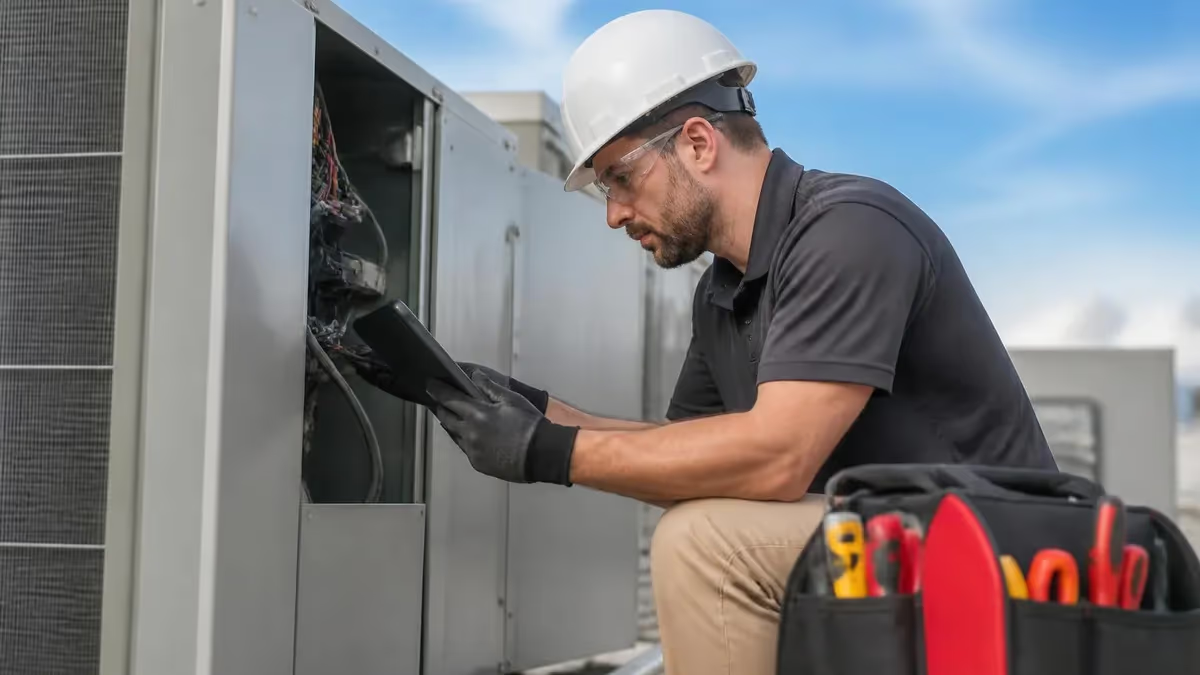
Choosing the best brands for HVAC systems is one of the most important decisions homeowners and contractors face when installing or replacing heating and cooling equipment. The manufacturer behind your system directly affects long-term reliability, energy efficiency, warranty coverage, and overall comfort inside your home. With dozens of HVAC brands competing for market share in 2026, understanding which companies consistently deliver quality products can save you thousands of dollars and many years of frustration down the road. The stakes are high because a central HVAC system represents one of the largest single investments most homeowners make.
The HVAC industry has evolved dramatically over the past decade, with manufacturers investing heavily in variable-speed compressor technology, smart thermostat integration, and environmentally friendly refrigerants that comply with tightening federal regulations. Legacy brands like Carrier, Trane, and Lennox continue to dominate the premium market segment, while value-oriented manufacturers such as Goodman and Rheem have closed the quality gap considerably. This competitive shift means consumers now have more viable options across every price point than at any previous time in the history of the heating and cooling industry.
Understanding what separates a top-tier HVAC brand from an average one requires looking beyond flashy marketing claims and focusing on measurable performance data. Factors like compressor warranty length, SEER2 rating ranges, dealer network density, and replacement parts availability all play critical roles in shaping the ownership experience. A system with a stellar efficiency rating means very little if the manufacturer has poor parts distribution channels or limited authorized service technicians operating in your geographic area. The best brands excel across multiple dimensions simultaneously.
Annual reliability data collected from consumer surveys and industry reports consistently show that certain manufacturers outperform their competitors in categories including fewer service calls, longer equipment lifespans, and higher customer satisfaction scores. Trane and Carrier routinely top these rankings year after year, but brands like Daikin, York, and American Standard also demonstrate strong performance track records. What makes these comparisons especially valuable is their reliance on real-world performance data collected from thousands of installed systems operating under diverse climate conditions across the entire United States.
Price is always a critical consideration, and the best HVAC brands offer product lines that span budget-friendly to ultra-premium tiers to accommodate different buyer profiles. A basic single-stage Carrier system might cost between $3,500 and $5,000 fully installed, while their top-tier Infinity series with variable-speed technology can easily exceed $12,000. Goodman and Amana provide solid performance at the lower end of the price spectrum, often costing 20 to 30 percent less than premium competitors while still delivering respectable efficiency ratings and reasonable warranty protection for cost-conscious buyers.
Warranty coverage varies significantly between manufacturers and often signals how confident a company is in the durability and longevity of their own products. Brands offering 10-year or even lifetime compressor warranties, like Goodman and Amana, demonstrate substantial faith in their equipment construction. Meanwhile, some premium brands require product registration within 60 to 90 days of installation to activate extended warranty terms. Understanding these nuances before making a purchase decision can prevent costly surprises when you need major component repairs years after the original installation date.
This comprehensive guide examines the leading HVAC manufacturers in the American market for 2026, comparing their product quality, efficiency ratings, warranty terms, price ranges, and real customer satisfaction scores. Whether you are a homeowner planning a complete system replacement, a contractor evaluating potential brand partnerships, or an HVAC student preparing for industry certification exams, this resource provides the detailed information you need to make a truly informed decision about which brands deserve your serious consideration and financial investment.
HVAC Industry by the Numbers
HVAC Brand Tiers: Premium, Mid-Range, and Value
Carrier, Trane, and Lennox lead the premium segment with the highest efficiency ratings, advanced smart home integration, extensive dealer networks, and comprehensive warranty programs. These brands command top pricing but deliver industry-leading performance and reliability backed by decades of engineering excellence.
Rheem, York, Daikin, and American Standard offer strong performance and competitive efficiency ratings at moderate price points. These manufacturers balance quality construction with accessible pricing, making them popular choices for homeowners seeking reliable equipment without paying premium brand surcharges on installation quotes.
Goodman, Amana, and Payne deliver dependable heating and cooling at the most affordable price points in the market. These brands provide solid warranty coverage including lifetime compressor warranties, making them attractive options for budget-conscious homeowners who still want reasonable quality and manufacturer backing.
Mitsubishi, Fujitsu, and Bosch specialize in ductless mini-split systems and heat pump technology. These manufacturers excel in specific applications like room additions, older homes without ductwork, and ultra-high-efficiency heating scenarios where traditional ducted systems are impractical or less cost-effective than targeted solutions.
Carrier holds a unique position in HVAC history as the company founded by Willis Carrier, who is widely credited with inventing modern air conditioning back in 1902. Today Carrier remains one of the most recognized and deeply trusted names in the heating and cooling industry, offering residential and commercial systems that consistently rank among the most efficient products available anywhere. Their Infinity series air conditioners achieve SEER2 ratings up to 26, placing them at the very top of the residential efficiency spectrum for central air conditioning systems sold in the United States.
Trane has built its entire reputation on the tagline "It's Hard to Stop a Trane," and decades of accumulated reliability data genuinely support that marketing claim. Trane systems are manufactured in the United States at facilities located in Tyler, Texas, and several other domestic production locations, which contributes to exceptionally strong parts availability and service network coverage nationwide. Their XV20i variable-speed air conditioner delivers up to 22 SEER2 efficiency, and their communicating system technology allows all indoor and outdoor components to operate in coordinated harmony for maximum comfort and energy savings.
Lennox distinguishes itself through industry-leading efficiency numbers that consistently surpass most competitors by meaningful margins. The Lennox SL28XCV air conditioner boasts a remarkable SEER2 rating of up to 28, making it one of the most efficient residential cooling systems ever manufactured by any company. Lennox also offers the iComfort smart thermostat ecosystem, which provides advanced zoning capabilities and comprehensive remote monitoring features. However, Lennox equipment typically commands premium pricing and requires installation by authorized Lennox dealers, which can unfortunately limit competitive bidding on installation project quotes.
Daikin, the Japanese manufacturing giant that acquired Goodman Industries in 2012, now operates the largest HVAC manufacturing facility in the world at its sprawling campus in Houston, Texas. This strategic acquisition gave Daikin immediate access to the massive North American market at scale while simultaneously bringing Japanese precision engineering standards to Goodman's already extensive product lineup. Daikin-branded systems target the mid-to-premium segment with strong efficiency ratings and innovative features like their proprietary variable-speed compressor technology, while Goodman continues serving the value-oriented market under Daikin's ownership umbrella.
Rheem and its closely related sister brand Ruud offer a compelling middle-ground option for homeowners seeking reliable everyday performance without premium-brand pricing attached. Rheem's Prestige series provides true variable-speed operation and achieves SEER2 ratings up to 20, representing genuinely strong value in the increasingly competitive mid-range market. Both brands are manufactured in the same production facilities and share identical internal components, with the primary meaningful difference being their respective dealer distribution networks. Rheem sells through independent HVAC contractors while Ruud products are typically distributed through plumbing and mechanical wholesale supply channels.
York and its parent company Johnson Controls bring extensive commercial HVAC expertise and manufacturing scale to the residential market, offering home systems that benefit from large-scale industrial manufacturing experience and supply chain advantages. York's YXV series features fully variable-capacity operation and achieves competitive efficiency ratings around 20 SEER2 in standard configurations. The brand has strengthened its residential product offerings considerably in recent years, and their close partnership with Johnson Controls provides valuable access to advanced building automation technology that increasingly influences residential smart home integration and whole-home energy management.
American Standard, which shares manufacturing facilities and many core component designs with Trane under the same parent company, delivers comparable quality and reliability performance at slightly lower retail price points than its sibling brand. This manufacturing relationship means American Standard systems directly benefit from the same rigorous engineering standards and extensive testing protocols as Trane products while maintaining their own distinct dealer network and consumer-facing branding. For budget-conscious consumers who genuinely want Trane-level quality, American Standard frequently provides the most practical path to premium performance without paying the premium name recognition surcharge.
HVAC Practice Test Questions
Prepare for the HVAC - Heating Ventilation and Air Conditioning exam with our free practice test modules. Each quiz covers key topics to help you pass on your first try.
HVAC Air Conditioning
HVAC Exam Questions covering Air Conditioning. Master HVAC Test concepts for certification prep.
HVAC Code Compliance
Free HVAC Practice Test featuring Code Compliance. Improve your HVAC Exam score with mock test prep.
HVAC Electrical Controls
HVAC Test Prep for Electrical Controls. Practice HVAC Quiz questions and boost your score.
HVAC Energy Efficiency
HVAC Questions and Answers on Energy Efficiency. Free HVAC practice for exam readiness.
HVAC Heating Systems
HVAC Mock Test covering Heating Systems. Online HVAC Test practice with instant feedback.
HVAC Load Calculations
Free HVAC Quiz on HVAC Load Calculations. HVAC Exam prep questions with detailed explanations.
HVAC Tools and Equipment
HVAC Practice Questions for HVAC Tools and Equipment. Build confidence for your HVAC certification exam.
HVAC Refrigeration
HVAC Test Online for Refrigeration. Free practice with instant results and feedback.
HVAC Safety Practices
HVAC Study Material on Safety Practices. Prepare effectively with real exam-style questions.
HVAC System Design
Free HVAC Test covering System Design. Practice and track your HVAC exam readiness.
HVAC Thermodynamics
HVAC Exam Questions covering Thermodynamics. Master HVAC Test concepts for certification prep.
Comparing HVAC Brands by Price Category
Carrier, Trane, and Lennox represent the gold standard in residential HVAC manufacturing with systems ranging from $8,000 to $15,000 fully installed. These premium manufacturers invest heavily in research and development, producing equipment with the highest available efficiency ratings, quietest operation levels, and most comprehensive warranty programs in the industry. Their authorized dealer networks require ongoing technician training and maintain strict installation quality standards that protect your investment from day one.
Premium brands justify their higher price tags through measurable advantages including variable-speed compressor technology that precisely matches output to real-time demand, advanced filtration and air purification systems integrated directly into the equipment platform, and sophisticated communicating controls that coordinate all system components for optimal performance. Homeowners who prioritize whisper-quiet operation, maximum energy savings, and seamless smart home integration typically find that premium brands deliver the best long-term ownership experience and satisfaction scores.

Premium vs. Budget HVAC Brands: Benefits and Trade-Offs
- +Higher SEER2 ratings on premium brands deliver 20-40% energy savings annually compared to minimum-efficiency budget models
- +Variable-speed compressor technology in premium systems provides precise temperature control and significantly reduced humidity levels
- +Premium brands maintain larger authorized dealer networks ensuring faster warranty service response times across more geographic locations
- +Advanced noise reduction engineering in premium outdoor units operates at 51-58 decibels versus 70-76 decibels for basic models
- +Integrated smart home compatibility with platforms like Alexa, Google Home, and Apple HomeKit comes standard on premium systems
- +Premium manufacturers typically offer longer track records of parts availability supporting equipment repair needs 15 or more years after installation
- −Premium brand systems cost 40-60% more upfront than comparable-capacity budget alternatives creating significant initial financial burden
- −Budget brands like Goodman offer lifetime compressor warranties that match or exceed warranty terms from some premium manufacturers
- −Mid-range and budget systems adequately heat and cool most homes without the advanced features many homeowners never actually use
- −Premium brand repairs cost more because specialized parts and authorized dealer labor rates exceed industry averages substantially
- −Authorized dealer installation requirements for some premium brands limit competitive bidding and may inflate installation labor costs
- −Technology features in premium systems add complexity creating more potential failure points compared to simpler budget equipment designs
Pros and Cons at a Glance
| Pros | Cons |
|---|---|
| Variable-speed compressor technology in premium systems provides precise temperature control and significantly reduced humidity levels | Budget brands like Goodman offer lifetime compressor warranties that match or exceed warranty terms from some premium manufacturers |
| Premium brands maintain larger authorized dealer networks ensuring faster warranty service response times across more geographic locations | Mid-range and budget systems adequately heat and cool most homes without the advanced features many homeowners never actually use |
| Integrated smart home compatibility with platforms like Alexa, Google Home, and Apple HomeKit comes standard on premium systems | Premium brand repairs cost more because specialized parts and authorized dealer labor rates exceed industry averages substantially |
HVAC Brand Selection Checklist
- ✓Research SEER2 efficiency ratings for specific model lines, not just brand averages, to compare actual equipment performance.
- ✓Verify that the brand has at least two authorized dealers within 30 miles of your home for warranty service access.
- ✓Compare compressor warranty terms and confirm whether product registration is required to activate extended coverage periods.
- ✓Check independent reliability surveys from J.D. Power and Consumer Reports for real-world customer satisfaction data.
- ✓Confirm the brand offers equipment compatible with next-generation R-454B refrigerant to future-proof your investment.
- ✓Request Manual J load calculations from contractors before accepting any brand or equipment size recommendation.
- ✓Obtain at least three itemized installation quotes specifying exact model numbers, efficiency ratings, and warranty terms.
- ✓Verify that all proposed system components are designed as a matched system by the same manufacturer.
- ✓Research available federal tax credits, utility rebates, and manufacturer financing promotions for your selected brand.
- ✓Ask each contractor about their specific installation experience and annual volume with the brand they recommend.
The Dealer Matters as Much as the Brand
Industry research consistently shows that installation quality accounts for up to 30% of an HVAC system's long-term performance and lifespan. Even the best HVAC brand will underperform if installed improperly. Always prioritize hiring a factory-authorized dealer with documented training and verifiable customer references over simply choosing the most prestigious brand name available at the lowest quoted price.
Selecting the right HVAC brand requires carefully matching your specific household needs with each manufacturer's particular strengths and areas of engineering focus. Climate plays a crucial role in this decision because certain brands engineer their systems to perform measurably better in extreme temperature conditions than others. Trane and Carrier, for example, maintain extensive testing programs that simulate harsh temperature extremes in controlled laboratory environments, ensuring their equipment maintains rated performance levels when outdoor temperatures drop below zero or exceed 115 degrees Fahrenheit. Homeowners living in severe climates should prioritize brands with documented performance data.
Installation quality matters every bit as much as brand selection itself, and the best HVAC brands recognize this fundamental truth by maintaining rigorous dealer certification programs with ongoing requirements. Carrier's Factory Authorized Dealer program, Trane's Comfort Specialist designation, and Lennox's Premier Dealer network all require participating contractors to meet specific training hours, customer satisfaction scores, and installation quality audit standards. Choosing a brand with a strong local dealer presence ensures you have reliable access to properly trained technicians who understand the specific nuances of that particular manufacturer's equipment and installation specifications.
Energy efficiency standards continue tightening under Department of Energy regulations, and the best HVAC brands consistently stay well ahead of these evolving requirements rather than simply meeting minimum compliance thresholds. The transition to SEER2 testing standards that took effect in January 2023 fundamentally changed how efficiency ratings are calculated and compared across product lines. Top manufacturers had already proactively designed their current product lines to exceed SEER2 minimums by significant margins, which means their equipment should remain fully compliant and competitively positioned for years to come as efficiency requirements increase through future regulatory updates.
Noise levels represent an often-overlooked yet critically important factor in brand comparison that significantly affects daily comfort and quality of life inside your home. Premium brands invest substantially in sound-dampening technology, including fully insulated compressor compartments, variable-speed fan motors with soft-start capabilities, and aerodynamically swept-wing fan blade designs. Carrier's proprietary Silencer System, Trane's composite base pan technology, and Lennox's SilentComfort engineering each demonstrate meaningful and measurable noise reduction compared to economy-tier models. Outdoor unit sound levels range from approximately 51 decibels for premium systems to over 75 decibels for basic equipment.
Smart home integration has become a key differentiator among HVAC brands as connected home technology continues its rapid expansion into mainstream American households. Most major manufacturers now offer Wi-Fi-enabled thermostats and dedicated smartphone applications for convenient remote monitoring, scheduling, and system control from anywhere. Carrier's Infinity Touch thermostat, Lennox's comprehensive iComfort platform, and Trane's XL824 controller each provide advanced scheduling options, detailed energy usage tracking dashboards, and proactive maintenance reminder notifications. Some advanced systems even support full integration with Amazon Alexa, Google Home, and Apple HomeKit platforms.
The availability of replacement parts five, ten, or even fifteen years after initial installation should heavily influence your brand decision because it directly affects future repair costs and downtime duration. Manufacturers with extensive domestic production facilities and large established dealer networks typically maintain significantly better parts inventories for older equipment models. Carrier, Trane, and Lennox all operate major manufacturing and distribution centers strategically located across the United States, which translates directly to faster parts delivery when critical repairs are needed. Smaller or primarily imported brands may have substantially longer lead times for specialty parts orders.
Financing options and rebate programs vary considerably between brands and can substantially affect total ownership costs in ways that meaningfully change the value equation between tiers. Many premium manufacturers partner with established financing companies to offer zero-interest promotional periods ranging from 12 to 72 months on qualifying equipment purchases. Additionally, high-efficiency systems from top brands frequently qualify for federal energy tax credits, local utility company rebates, and manufacturer incentive programs that can collectively reduce net purchase costs by $1,500 to $4,000 or more depending on system configuration and your geographic location.

The HVAC industry is actively transitioning from R-410A to R-454B and other low-GWP refrigerants under the AIM Act. Systems manufactured with legacy refrigerants may face increasing maintenance costs as R-410A production is phased down. When comparing brands in 2026, confirm whether the specific model you are considering uses next-generation refrigerant to protect your investment against future regulatory changes and rising refrigerant costs.
Understanding the total cost of ownership helps put brand comparisons in proper long-term financial perspective beyond the initial purchase price displayed on installation quotes. A system priced $2,000 less at the point of purchase but operating at noticeably lower efficiency could actually cost substantially more over its 15 to 20 year operational lifespan when monthly energy bills are carefully factored into the complete financial calculation.
The Department of Energy estimates that heating and cooling account for approximately 48 percent of total energy use in a typical American home, which means even small efficiency differences between brands translate to meaningful cumulative savings.
Warranty claim processes differ substantially between manufacturers and directly affect how convenient and affordable repairs are during the coverage period when components fail. Some brands require homeowners to work exclusively through authorized dealers for all warranty-covered repairs, while others allow any licensed HVAC contractor to perform covered work and submit claims on your behalf. Carrier and Trane both offer comprehensive ten-year parts warranties when systems are properly registered within 90 days of installation, but their claim processes and specific dealer requirements differ in important ways. Reading warranty fine print before purchasing prevents frustration later.
Customer satisfaction data from independent survey organizations reveals interesting and sometimes surprising patterns about how brand perception correlates with actual long-term ownership experience. J.D. Power's annual HVAC System Satisfaction Study consistently ranks Carrier, Trane, and Lennox among the top performers in overall customer satisfaction, with composite scores driven by system reliability metrics, energy cost savings, and service experience quality. Notably, several value-oriented brands like Rheem have improved their satisfaction scores dramatically in recent survey years, suggesting that the gap between premium and mid-range manufacturers is continuing to narrow.
The geographic availability of qualified installers and factory-trained service technicians varies significantly by brand and can meaningfully impact both initial installation quality and long-term maintenance convenience throughout ownership. Carrier and Trane maintain the largest authorized dealer networks in North America, with thousands of certified contractors spread across virtually every metropolitan, suburban, and many rural markets. Lennox and Rheem also offer substantial network coverage across most regions. Smaller or specialty brands may have limited dealer representation outside major metropolitan areas, which could complicate routine maintenance scheduling and emergency repair situations considerably.
Indoor air quality features have become increasingly important differentiators among HVAC brands, particularly following heightened public awareness of airborne health concerns that accelerated during recent years. Leading manufacturers now offer fully integrated air purification systems, advanced multi-stage filtration options, and precise humidity control technologies as standard parts of their system ecosystems. Carrier's Infinity Air Purifier captures and kills pathogens, Trane's CleanEffects provides whole-home electrostatic filtration, and Lennox's PureAir system delivers hospital-grade air cleaning when paired with compatible air handler models. These features add cost but provide meaningful health benefits.
Refrigerant compatibility represents another critical factor for future-proofing your substantial HVAC investment against evolving environmental regulations. The entire HVAC industry is actively transitioning from R-410A refrigerant to R-454B and other low global warming potential alternatives to comply with environmental regulations under the federal AIM Act. Top manufacturers including Carrier, Lennox, and Daikin have already introduced residential systems specifically designed and optimized for next-generation refrigerants. Purchasing a system designed exclusively for legacy refrigerants could mean significantly higher maintenance costs in future years as R-410A availability decreases.
Evaluating brand reputation also involves carefully examining how manufacturers handle product recalls, service bulletins, and known component defects when problems inevitably arise. Responsible companies proactively issue detailed service bulletins, voluntarily extend warranties on affected components, and actively work with their dealer networks to contact impacted customers directly. Checking the Consumer Product Safety Commission public database for past recalls and reading professional HVAC contractor forums for known recurring issues with specific model lines provides valuable insight into how each manufacturer truly responds when problems surface in the field.
Getting the most value from your HVAC brand selection process starts with obtaining multiple detailed installation quotes from different authorized dealers representing the brands you are seriously considering. Request at least three comprehensive proposals that specify exact model numbers, published efficiency ratings, complete warranty terms, and fully itemized labor costs for every aspect of the project. Comparing these quotes side-by-side reveals how different local dealers price the same equipment and whether certain brands offer measurably better installed value in your particular local market and geographic area.
Proper system sizing is absolutely essential regardless of which brand you ultimately select, and reputable contractors always perform Manual J load calculations before recommending specific equipment capacity for your home. An oversized system short-cycles repeatedly, causing persistent humidity problems, uneven temperatures, and premature mechanical component wear that shortens equipment lifespan. Meanwhile, an undersized system runs continuously without adequately heating or cooling your living space during peak demand periods. The best HVAC brands design their equipment to perform optimally only when correctly sized, and their dealer training programs emphasize proper load calculation methodology.
Maintenance requirements and manufacturer-recommended service intervals vary between brands and should factor meaningfully into your purchasing decision alongside upfront cost and efficiency comparisons. Most manufacturers explicitly require annual professional maintenance visits to maintain full warranty validity, typically including evaporator and condenser coil cleaning, refrigerant charge level verification, electrical connection inspection and tightening, and thermostat calibration checks. Some brands offer structured maintenance agreement programs through their dealer networks that bundle annual service visits together with priority emergency scheduling and meaningful repair cost discounts for participating homeowners.
Reading verified customer reviews provides invaluable real-world perspective that product specification sheets and marketing materials alone simply cannot offer prospective buyers. Focus specifically on detailed reviews from homeowners who have owned their systems for two or more years, as these reflect genuine long-term performance patterns rather than initial post-purchase impressions that fade quickly. Pay particular attention to specific comments about operational noise levels, temperature comfort consistency, repair call frequency, and overall dealer service quality and responsiveness. Negative reviews about a specific brand from homeowners in your climate zone are especially valuable information.
Consider the complete system ecosystem holistically rather than focusing exclusively on the outdoor condensing unit or indoor furnace as isolated purchases. The best HVAC brands deliberately design their thermostats, air handlers, evaporator coils, and accessory products to work as fully integrated systems that optimize performance and efficiency only when all components communicate with each other properly. Mixing brands across system components frequently voids certain manufacturer warranty provisions and typically prevents access to advanced features like communicating system diagnostics, variable-speed coordination, and whole-system efficiency optimization that matched components provide.
Timing your purchase strategically can yield significant savings regardless of which brand you ultimately select for your home comfort system. HVAC dealers and contractors typically offer their most aggressive and competitive pricing during spring and fall shoulder seasons when consumer demand is substantially lower than peak summer and winter periods. End-of-model-year closeout deals on outgoing equipment lines can save buyers 10 to 15 percent off standard retail pricing. Additionally, utility company rebate programs often operate on fixed annual budgets that deplete progressively as the calendar year advances, so applying early maximizes your rebate chances.
Ultimately, the single best HVAC brand for your specific situation depends on your available budget, local climate severity, nearby dealer options and their reputations, and your personal priorities regarding energy efficiency, noise levels, warranty comprehensiveness, and smart home integration capabilities. No single manufacturer excels equally in every performance category, which is precisely why informed comparison shopping remains absolutely essential for making a sound purchasing decision. Use the detailed information presented throughout this guide as a solid starting framework, then consult directly with licensed contractors in your area who can provide brand-specific recommendations based on years of hands-on installation experience.
Sample HVAC Practice Questions
Try these questions from our free HVAC practice tests. The correct answer and an explanation follow each question.
What does outdoor reset control do in a hydronic heating system?
- A. Shuts the boiler off when outdoor temps exceed the setpoint
- B. Lowers supply water temperature as outdoor temperature rises
- C. Increases pump speed during cold weather
- D. Resets zone valve positions based on outdoor conditions
Answer: B. Lowers supply water temperature as outdoor temperature rises
Outdoor reset reduces boiler supply water temperature proportionally as outdoor temperatures warm, improving efficiency and comfort by matching heat output to actual load.
What does HSPF (Heating Seasonal Performance Factor) measure for a heat pump?
- A. Peak heating capacity in BTU/hr
- B. Total heating output divided by total electrical energy input over a heating season
- C. Efficiency of the defrost control system
- D. Ratio of indoor to outdoor coil surface area
Answer: B. Total heating output divided by total electrical energy input over a heating season
HSPF is a seasonal efficiency rating for heat pumps in heating mode, calculated as total heating output (BTU) divided by total electricity consumed (Wh) over the heating season.
What is the primary function of an expansion tank in a closed-loop hydronic heating system?
- A. To increase system water pressure
- B. To accommodate the volume increase of water as it heats and expands
- C. To filter debris from the water
- D. To balance flow between multiple zones
Answer: B. To accommodate the volume increase of water as it heats and expands
As water heats it expands in volume. The expansion tank absorbs this expanded volume, preventing excessive pressure buildup.
In a Manual J calculation, what is the term for the maximum heat gain a building experiences, which determines the required cooling capacity?
- A. Design heating load
- B. Peak cooling load
- C. Infiltration load
- D. Ventilation load
Answer: B. Peak cooling load
The peak cooling load (design cooling load) represents the maximum rate of heat gain at the design outdoor conditions and governs the selection of cooling equipment.
HVAC Questions and Answers
HVAC Sales: The Complete Guide to Selling Heating and Cooling Systems, Building Customer Trust, and Closing More Deals
HVAC Technicians Near Me: The Complete Homeowner's Guide to Finding, Vetting, and Hiring Local Heating and Cooling Pros
HVAC Air Duct Sealing: The Complete Homeowner and Contractor Guide to Sealing Ductwork for Efficiency, Comfort, and Indoor Air Quality

HVAC Replacement Services: Complete Guide to System Replacement, Costs, and What to Expect
HVAC Solutions: The Complete Guide to Heating, Cooling, and Indoor Air Quality Systems for Homes and Buildings
About the Author

NATE Certified HVAC Technician & Licensing Exam Trainer
Universal Technical InstituteMike Johnson is a NATE-certified HVAC technician and EPA 608 universal-certified refrigerant handler with a Bachelor of Science in HVAC/R Technology. He has 19 years of commercial and residential HVAC installation and service experience and specializes in preparing technicians for NATE certification, EPA 608, A2L refrigerant safety, and state HVAC contractor licensing examinations.