
Questions for Home Inspector During Inspection: The Complete Buyer's Guide for 2026 October
Find home inspectors near me & learn the exact questions for home inspector during inspection. Salary, certification & what they check. ✅

Knowing the right questions for home inspector during inspection separates savvy buyers from those who get blindsided by costly repairs after closing. Whether you are searching for home inspectors near me or vetting a specialist in Chicago, the questions you ask before, during, and after the walkthrough determine how much use you carry to the negotiating table. A thorough inspection can uncover issues worth tens of thousands of dollars, so treating the process as a conversation rather than a formality is essential for every buyer in 2026.
Home inspectors are licensed professionals trained to evaluate the visible and accessible systems of a residential property. They examine structural components, roofing, electrical panels, plumbing, HVAC equipment, insulation, windows, and dozens of additional systems in a single visit that typically lasts two to four hours. Buyers who attend the inspection in person and ask targeted follow-up questions consistently report higher satisfaction with their purchase decisions compared to buyers who simply wait for the written report to arrive by email days later.
One of the first questions to ask any inspector is whether they carry both general liability coverage and home inspectors professional liability insurance. Errors and omissions coverage protects you financially if the inspector misses a defect that later requires expensive remediation. Reputable inspectors provide proof of insurance without hesitation, and skipping this verification is a mistake that buyers regret when disputes arise over missed mold, hidden water intrusion, or faulty wiring that was not flagged in the report.
Understanding what do home inspectors look for helps buyers craft smarter questions on-site. Inspectors prioritize safety hazards first, including improper electrical grounding, carbon monoxide risks, structural instability, and inadequate ventilation. They then document material defects that affect habitability or property value. Finally, they note maintenance items that are not urgent but will require attention within the next few years. When you understand this triage system, you can ask the inspector to elaborate specifically on which category each finding falls into rather than guessing from report language alone.
Regional factors matter enormously when evaluating inspection findings. Buyers working with chicago area home inspectors need to ask specifically about basement water intrusion given the clay-heavy soil in the region, freeze-thaw damage to foundations, and aging knob-and-tube wiring common in pre-1940 bungalows. Buyers in Minnesota should ask about heating system age and capacity, ice dam damage to roof sheathing, and crawlspace insulation adequacy given the extreme winter temperatures. Tailoring your questions to local climate and construction era dramatically improves the usefulness of the final report.
The inspector's written report is only as useful as your ability to interpret it. Ask the inspector during the walkthrough to distinguish between items that require immediate repair before you take occupancy, items that should be repaired within the first year, and items that represent normal wear for a home of this age and type.
Many buyers mistake every flagged item for a dealbreaker and walk away from fundamentally sound properties, while others dismiss legitimate red flags because the language in the report felt vague. A live conversation with the inspector clarifies nuance that a written checklist cannot convey on its own.
If you are preparing for a career in real estate inspections or studying for the national home inspector examination, practicing with real-world questions sharpens your readiness considerably. Understanding not just what to inspect but why each system matters, how failures present themselves, and what follow-up specialists are needed trains you to deliver the kind of thorough, articulate report that builds a loyal client base and protects you from liability claims throughout your career.
Home Inspection in the US by the Numbers

What Home Inspectors Examine: The 7 Core Systems
Inspectors evaluate the foundation, framing, load-bearing walls, floors, and roof structure for cracks, settlement, moisture damage, and signs of previous repairs. They look for evidence of structural movement that could indicate ongoing soil or drainage problems beneath the home.
The roof covering, flashing, gutters, downspouts, skylights, and ventilation are examined from ground level or by walking the roof when safe. Inspectors estimate remaining service life and identify active leaks, damaged shingles, improper flashing, and inadequate attic ventilation that accelerates sheathing deterioration.
The main service panel, branch circuits, outlets, switches, and visible wiring are tested and visually inspected. Inspectors flag double-tapped breakers, aluminum branch wiring, missing GFCI protection in wet areas, and Federal Pacific or Zinsco panels known for fire hazard risks.
Supply lines, drain lines, water heaters, fixtures, and shut-off valves are evaluated for leaks, corrosion, improper venting, low water pressure, and code violations. Inspectors run every fixture simultaneously to test flow and drain speed under realistic load conditions.
Heating and cooling equipment, ductwork, filters, thermostats, and flue connections are tested through normal operating cycles. Inspectors assess equipment age, maintenance condition, airflow balance across rooms, and whether the system is adequately sized for the square footage it serves.
Asking the right questions during the inspection walkthrough transforms a passive observation into an active learning experience about your prospective home. Begin by asking the inspector to explain each significant finding in plain language rather than the technical shorthand that appears in the written report. Inspectors deal with specialized terminology every day, but buyers may not know the difference between a hairline settlement crack and a structural fracture, so asking for plain explanations is not only reasonable but expected by experienced professionals.
One of the most valuable questions a buyer can ask is: "If this were your home, what would you prioritize fixing before moving in?" Inspectors are ethically prohibited from providing repair cost estimates or recommending specific contractors, but they can and will give you a frank assessment of relative urgency. This question cuts through the noise of a 50-page report and helps you focus your negotiating energy on the issues that genuinely matter for safety and habitability rather than minor cosmetic deficiencies.
Ask specifically about the age and expected remaining service life of major mechanical systems. Water heaters typically last 8 to 12 years, HVAC systems 15 to 20 years, and roofing materials 20 to 30 years depending on type and maintenance. If the water heater is nine years old and the HVAC compressor is 17 years old, you are likely facing several thousand dollars in replacement costs within the first few years of ownership.
Knowing this before closing allows you to negotiate a price reduction or seller credit that accounts for imminent capital expenditures. To understand how much do home inspectors charge for specialized add-on services like sewer scope or mold testing, ask during booking rather than at the inspection itself.
Buyers frequently overlook water and moisture questions, yet moisture intrusion is the root cause of the most expensive home repairs including mold remediation, wood rot, foundation damage, and pest infestations. Ask the inspector directly: "Do you see any evidence of past or present moisture intrusion anywhere in this home?" Follow up by asking where water currently drains on the exterior, whether the grading slopes away from the foundation, and whether the inspector recommends a separate moisture or mold assessment by a certified industrial hygienist.
For buyers purchasing older homes, ask specifically about the presence of hazardous materials. Standard home inspections do not include laboratory testing, so inspectors can only note the suspected presence of materials like asbestos-containing floor tiles, vermiculite attic insulation, lead paint on pre-1978 surfaces, or polybutylene plumbing. If the inspector suspects any of these materials, ask whether you should commission specialist testing before the inspection contingency deadline expires, as results can take several days to return from the laboratory.
Asking about the permit history of visible additions or modifications is another question buyers overlook at their peril. If the basement was finished, a deck was added, or a bathroom was added to the attic, ask the inspector whether the work appears to have been done to code and whether it likely required a permit. Unpermitted work can create legal liability for the new owner, complicate insurance claims, and require costly remediation if a municipality discovers the unpermitted improvement during a future sale or renovation project.
Finally, ask the inspector what they could not access or evaluate during the inspection. Standard inspections are visual and non-invasive, meaning that inspectors cannot see inside walls, under slab foundations, or behind finished ceilings. Understanding the limitations of the inspection helps you decide whether additional specialist evaluations are warranted, such as a structural engineer assessment, a chimney sweep inspection, a radon test, or a thermal imaging scan that can reveal hidden moisture and insulation gaps that are invisible to the naked eye during a standard walkthrough.
What Do Home Inspectors Look For by Property Type
For detached single-family homes, inspectors focus heavily on the roof, foundation, and exterior drainage because these are the most expensive systems to repair and the most vulnerable to long-term neglect. They evaluate every accessible room, crawlspace, attic, and garage, testing outlets, running faucets, and cycling heating and cooling equipment through full operating sequences to identify performance issues that only appear under real-world load conditions.
Buyers of single-family homes should also ask inspectors to evaluate the attached garage carefully, since garages harbor carbon monoxide risks from improper HVAC equipment placement, fire hazards from stored chemicals and unprotected penetrations between the garage and living space, and structural issues from vehicles and storage loads that exceed the original design capacity of the floor slab and framing system.

Attending the Inspection in Person: Pros and Cons
- +You hear the inspector's verbal explanations before the written report is finalized, giving you real-time context
- +You can ask follow-up questions on the spot when the inspector is standing in front of the defect
- +You learn the exact location of utility shut-offs, the panel, and the main water valve
- +You gain a more accurate sense of defect severity than report language alone conveys
- +You build a relationship with the inspector who may answer follow-up questions after closing
- +You can take your own photos and notes alongside the inspector's documentation for personal reference
- −Taking 2 to 4 hours off work or rearranging schedules can be difficult for busy buyers
- −Hovering too closely or asking too many questions can distract the inspector from their systematic process
- −Emotionally attached buyers may overreact to normal maintenance findings flagged during the walkthrough
- −Buyers without construction knowledge may misinterpret what they see without proper context
- −Traveling to a distant property for an inspection that may not result in a purchase is a real time cost
- −Sellers or listing agents who remain on-site can create an uncomfortable dynamic that limits open discussion
Pros and Cons at a Glance
| Pros | Cons |
|---|---|
| You hear the inspector's verbal explanations before the written report is finalized, giving you real-time context | Hovering too closely or asking too many questions can distract the inspector from their systematic process |
| You can ask follow-up questions on the spot when the inspector is standing in front of the defect | Emotionally attached buyers may overreact to normal maintenance findings flagged during the walkthrough |
| You learn the exact location of utility shut-offs, the panel, and the main water valve | Buyers without construction knowledge may misinterpret what they see without proper context |
| You gain a more accurate sense of defect severity than report language alone conveys | Traveling to a distant property for an inspection that may not result in a purchase is a real time cost |
| You build a relationship with the inspector who may answer follow-up questions after closing | Sellers or listing agents who remain on-site can create an uncomfortable dynamic that limits open discussion |
Complete Buyer Inspection Checklist: 10 Must-Ask Questions
- ✓Ask the inspector to confirm their license number and verify it is active in your state before the inspection begins.
- ✓Request proof of both general liability and errors and omissions insurance coverage before signing the inspection agreement.
- ✓Ask the inspector to identify every safety hazard discovered and explain whether each requires immediate action before occupancy.
- ✓Request an estimate of remaining service life for the roof, water heater, HVAC system, and any other major mechanical equipment.
- ✓Ask specifically whether there is any evidence of current or historical moisture intrusion anywhere inside or outside the home.
- ✓Request clarification on any items that are recommended for further evaluation by a specialist such as a structural engineer or electrician.
- ✓Ask which items the inspector was unable to evaluate due to access limitations, obstructions, or the scope of a standard inspection.
- ✓Confirm whether the inspector suspects the presence of any hazardous materials including asbestos, lead paint, mold, or polybutylene piping.
- ✓Ask whether any visible additions, finished spaces, or modifications appear to have been completed without the required building permits.
- ✓Request that the inspector walk you through the top three most significant findings before you leave the property and discuss next steps.
The Inspector Works for You — Use Them
Many buyers forget that the home inspector is the only professional in the transaction who has no financial interest in the deal closing. Your agent earns a commission on a successful sale, the seller wants to close, but the inspector's only job is to document what they find accurately. Ask hard questions, request plain-language explanations, and treat the walkthrough as your one opportunity to get an unbiased expert opinion about the largest purchase of your life before you commit.
If the home inspection experience sparks your interest in pursuing this career yourself, understanding how to become a home inspector is the logical next step. The path varies considerably by state but generally includes completing a pre-licensing education program, passing a state or national examination, completing a specified number of ride-along or supervised inspections, and maintaining continuing education credits to keep the license active. The national home inspector examination, known as the NHIE, is accepted as the qualifying exam in many states and tests candidates across multiple inspection domains including structural, roofing, electrical, plumbing, and HVAC systems.
Education requirements range from as few as 40 hours in some states to 200 hours or more in states with rigorous consumer protection mandates. Online programs offered by nationally recognized schools allow aspiring inspectors to complete coursework at their own pace while working in another profession. Field training components, which require completing a minimum number of inspections under the supervision of a licensed inspector, ensure that graduates can apply textbook knowledge to the chaotic, non-standardized conditions they will encounter in real homes where nothing is perfectly labeled and access is often limited.
The home inspector certification landscape includes both state-issued licenses and voluntary professional credentials from organizations such as the International Association of Certified Home Inspectors (InterNACHI) and the American Society of Home Inspectors (ASHI). These organizations maintain codes of ethics, standards of practice, and continuing education libraries that their members must adhere to as a condition of membership. Many buyers actively seek inspectors with ASHI or InterNACHI credentials because the certification signals a commitment to professional standards beyond the minimum required by state law.
Aspiring inspectors researching minnesota home inspectors pricing reddit and similar forums quickly learn that startup costs are a significant consideration in this career path. Beyond education and examination fees, new inspectors must invest in report writing software, professional liability insurance, general liability insurance, inspection tools including moisture meters, thermal cameras, gas detectors, and electrical testers, a reliable vehicle, and initial marketing to build a client base before steady referral business develops. Total first-year startup costs commonly range from $5,000 to $15,000 before writing a single paid inspection report.
The question of home inspector salary varies substantially based on geography, business model, and volume. Inspectors employed by large national franchise operations typically earn lower per-inspection fees but benefit from marketing support, scheduling systems, and group purchasing power on insurance and tools. Independent inspectors who build strong referral relationships with real estate agents and past clients can command premium pricing and earn substantially more per inspection. Understanding this distinction helps new entrants decide whether to launch independently or join an established franchise system before building their own reputation.
Experienced inspectors often expand their service menu with add-on inspections that command premium fees and differentiate their business from competitors who offer only the standard general inspection. Radon testing, sewer scope camera inspections, thermal imaging scans, wood-destroying insect inspections, air quality testing, pool and spa inspections, and septic system evaluations all represent profitable service extensions that buyers frequently request. Each specialty may require additional training or certification, but the investment typically pays for itself within a relatively small number of add-on inspections given the premium pricing these services command in competitive markets.
For those preparing for the licensing examination, understanding the national home inspector exam structure and content domains is essential for efficient study. The NHIE covers a broad range of technical topics weighted according to their frequency and importance in actual inspection practice. Candidates who treat preparation as a systematic process — working through practice questions, reviewing areas of weakness, and simulating timed exam conditions — consistently outperform those who rely solely on re-reading course materials without active retrieval practice to reinforce retention.

In competitive markets, buyers are sometimes pressured to waive the inspection contingency to make their offer more attractive to sellers. This is one of the riskiest decisions a buyer can make, as it eliminates your legal right to negotiate or withdraw based on inspection findings. Even in hot markets, many experienced buyers choose to complete a pre-offer inspection with seller permission rather than waiving the contingency entirely — this preserves your due diligence without weakening your offer timing relative to competing buyers.
Understanding the financial landscape of the home inspection profession helps buyers appreciate why quality inspectors invest so heavily in their craft. The question of how much do home inspectors make is closely tied to volume, market, and specialization. In high-cost-of-living metropolitan areas like Chicago, San Francisco, or New York, experienced inspectors regularly charge $500 to $800 for a standard single-family home inspection and supplement that with add-on services that push the average invoice to $650 or more. In rural or lower-cost markets, inspectors may charge $250 to $350 per inspection but compensate by completing more inspections per day.
The cost structure of running an inspection business creates natural incentives for inspectors to work efficiently and maintain high referral rates. Professional liability insurance, also called errors and omissions coverage, is one of the largest operating expenses for inspection businesses and can run $1,500 to $4,000 annually depending on coverage limits and claims history.
This cost is passed on to clients through inspection fees, which is why buyers should view the inspection fee not as an overhead expense but as a direct investment in having a professionally insured expert document the condition of a $300,000 to $1,000,000 asset on their behalf.
Inspectors working in home inspectors chicago markets face a particularly complex inspection environment because the city's building stock spans more than a century of construction methods, materials, and code evolution. Chicago's pre-war two-flats, coach houses, and bungalow belt homes represent a distinct inspection challenge compared to the post-war ranch homes and mid-century modern construction that dominates many suburban and Sunbelt markets. Inspectors who specialize in Chicago's historic housing stock develop nuanced expertise that justifies premium pricing and commands loyalty from real estate agents who serve buyers in these neighborhoods.
Buyers who receive their inspection report should read it carefully and flag any findings described with language like "recommend evaluation by a licensed contractor," "evidence of previous repair," or "unable to determine cause." These phrases signal that the inspector has identified something that warrants follow-up but cannot determine the full scope or cause from a visual inspection alone. Acting on these recommendations before the inspection contingency deadline expires preserves your negotiating position and prevents you from discovering expensive problems after you have already committed to the purchase without a price adjustment.
The negotiation phase following the inspection is where the questions you asked during the walkthrough pay their greatest dividend. Armed with a clear understanding of which findings are serious versus minor, which systems are nearing end of service life, and which issues the inspector specifically flagged as safety concerns, you can make targeted repair requests or price reduction demands that are proportionate to the actual cost and urgency of remediation. Generic requests to fix everything on the inspection report rarely succeed and can sour sellers on buyers who otherwise had strong offers and a straightforward transaction.
Buyers should also understand that sellers are under no legal obligation to make repairs identified in a buyer's inspection report, though they may be required by state law to disclose known material defects to subsequent buyers if the current transaction falls through. In practice, most sellers are willing to negotiate on significant findings, particularly safety hazards and items that other buyers are also likely to flag during future inspections. Understanding this dynamic helps buyers approach the post-inspection negotiation collaboratively rather than adversarially, which tends to produce better outcomes for all parties in the transaction.
Ultimately, the most important thing any buyer can do is hire a qualified, licensed, and insured inspector and then actually show up to the inspection. The questions you ask on-site, the notes you take, and the conversations you have with the inspector in the moment produce insights that no written report can fully replicate. Treat the inspection as an educational investment in your future home and use every minute of access to learn as much as possible about the property you are considering making your own.
Preparing strategically for the home inspector licensing exam requires the same mindset that makes a good inspector in the field: systematic, thorough, and focused on understanding why each rule or standard exists rather than memorizing facts in isolation. The NHIE and most state licensing exams test applied knowledge, meaning that questions are framed around real scenarios rather than abstract definitions.
A candidate who understands why GFCI protection is required within six feet of a water source will answer scenario-based questions correctly even when the exact wording is unfamiliar, while a candidate who only memorized the rule without understanding its purpose will struggle when the question is phrased differently than expected.
Time management during the inspection exam is a skill that benefits from deliberate practice. Most state and national exams allocate between two and a half and four hours for 120 to 200 questions, which means candidates have roughly 60 to 90 seconds per question. Taking full-length timed practice exams before test day reveals which domains consume disproportionate time, allowing focused review of weaker areas. Candidates who practice under timed conditions consistently report less anxiety and better performance on test day compared to those who only study without simulating actual exam pacing.
The domains tested on home inspector licensing exams typically mirror the systems covered in a standard home inspection: roofing, exterior, structural components, electrical, HVAC, plumbing, insulation and ventilation, interior finishes, fireplaces and fuel-burning appliances, and crawlspaces and basements. Each domain carries a different percentage weight based on the relative frequency and importance of those systems in actual inspection practice. Electrical and plumbing questions tend to be among the most heavily weighted because errors in those systems carry the highest safety consequence and the greatest liability exposure for practicing inspectors.
Study resources available to aspiring inspectors have expanded considerably in recent years. In addition to the textbooks and course materials provided by pre-licensing programs, candidates can access video libraries, flashcard decks, community forums, and hundreds of practice questions organized by domain and difficulty level. Online study communities where candidates share difficult questions and discuss the reasoning behind correct answers provide the kind of active engagement that dramatically accelerates retention compared to passive re-reading of course notes in isolation.
Experienced inspectors who have successfully passed the licensing exam frequently advise new candidates to read every answer choice carefully before selecting an answer, even when the first choice seems obviously correct. Home inspection exam questions are carefully worded to distinguish between answers that are partially correct and answers that are completely correct according to the applicable standard of practice. The difference between a correct and incorrect answer sometimes hinges on a single word like "always," "typically," or "when visible," so careful reading of every option is an exam skill worth developing through practice before test day arrives.
After passing the exam and obtaining your license, maintaining it requires ongoing continuing education in most states. The specific requirements vary, but inspectors typically need between 20 and 30 hours of approved continuing education per two-year renewal cycle. Professional organizations like InterNACHI offer free continuing education courses to their members, making it relatively easy and inexpensive to satisfy CE requirements while also staying current with changes in construction materials, building codes, and inspection technology.
Thermal imaging cameras, moisture meters with extended probe arrays, and drone-based roof inspections are examples of technologies that have become mainstream in the profession during the past decade and that inspectors benefit from understanding regardless of whether they invest in the equipment themselves.
Whether you are a buyer seeking to ask smarter questions at your next home inspection or an aspiring professional working toward your first license, the foundation of success is the same: genuine curiosity about how homes are built, how systems interact, and what early warning signs look like before they become expensive failures. The questions you ask — of the inspector, of the exam, and of yourself — determine how much value you extract from the process and how prepared you are for whatever the inspection reveals.
Sample Home Inspector Test Practice Questions
Try these questions from our free Home Inspector Test practice tests. The correct answer and an explanation follow each question.
During a home inspection, the inspector tests all drains and finds that the kitchen sink drains slowly while all other fixtures drain normally. What is the most likely cause?
- A. The main sewer line is partially blocked
- B. There is a localized blockage in the kitchen sink drain or trap
- C. The vent stack is completely blocked
- D. The kitchen drain pipe is undersized
Answer: B. There is a localized blockage in the kitchen sink drain or trap
A slow drain isolated to one fixture points to a local clog in that fixture's trap or branch drain rather than a main line or vent issue.
Please indicate what should NOT be done if an electrical issue is discovered during an electrical system inspection:
- A. One shouldn't identify the cause of the electrical problem.
- B. One shouldn't make a note of the electrical problem in your report.
- C. One shouldn't recommend the client contact a certified electrician.
- D. One shouldn't take a picture of the problem area
Answer: A. One shouldn't identify the cause of the electrical problem.
Home inspectors are generalists and are not typically qualified to diagnose the *cause* of complex electrical problems, which often requires specialized knowledge and tools. Their role is to identify the *presence* of an issue, report it, and recommend further evaluation by a licensed electrician. Attempting to identify the cause could exceed their scope of expertise and liability.
During a home inspection, you observe a kitchen sink drain that makes a 'gurgling' sound after water has been drained and a faint sewer gas odor is present. What is the MOST likely cause of these issues?
- A. A blocked or improperly installed vent stack.
- B. The drain line has an excessive slope.
- C. The P-trap is installed backward.
- D. The supply line water pressure is too high.
Answer: A. A blocked or improperly installed vent stack.
The vent stack's primary functions are to allow sewer gases to escape to the exterior and to introduce air into the DWV system to prevent a vacuum. Gurgling sounds and sewer odors are classic signs that the vent is blocked or improperly installed, causing negative pressure that siphons water from the P-trap, breaking the water seal that normally blocks sewer gas.
During a plumbing inspection, what does a 'trap' in a drain line primarily prevent?
- A. Pipe freezing in cold climates
- B. Sewer gases from entering the living space
- C. Debris clogs in main drain lines
- D. Water hammer in supply pipes
Answer: B. Sewer gases from entering the living space
A plumbing trap holds a water seal that blocks sewer gases, including potentially toxic methane and hydrogen sulfide, from entering the home.
Home Inspector Questions and Answers
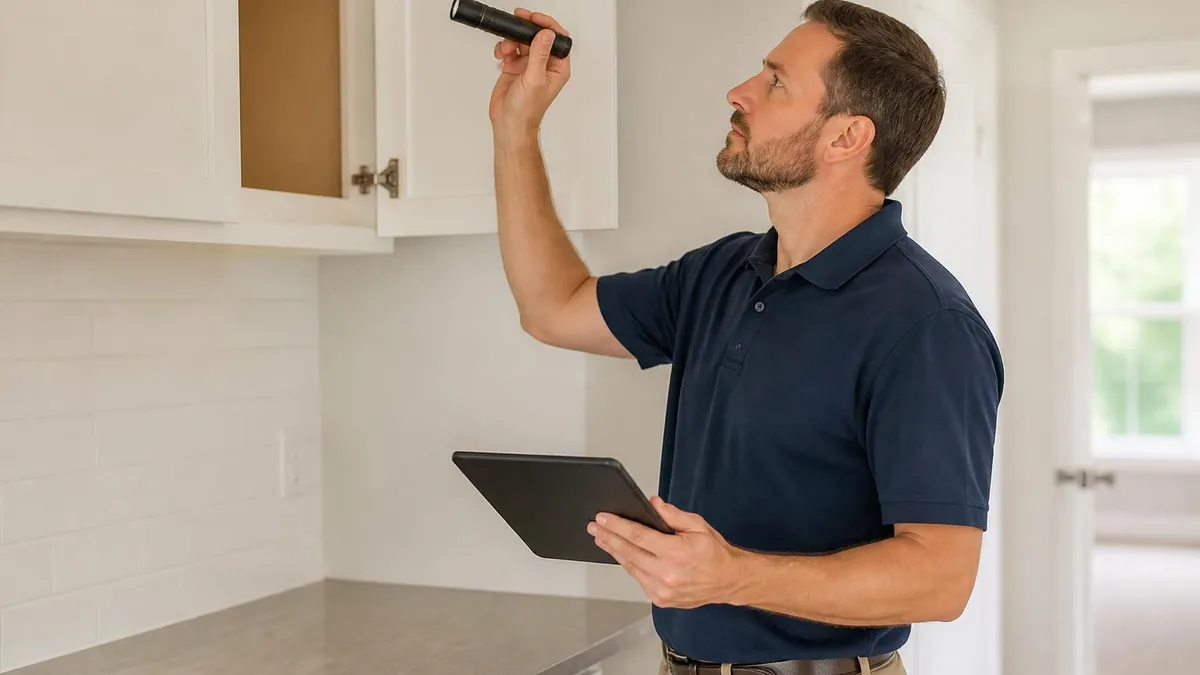
Home Inspector School: Complete 2026 Guide to Training Programs, Costs, Licensing & Career Launch
FREE Safety Home Inspector Questions and Answers
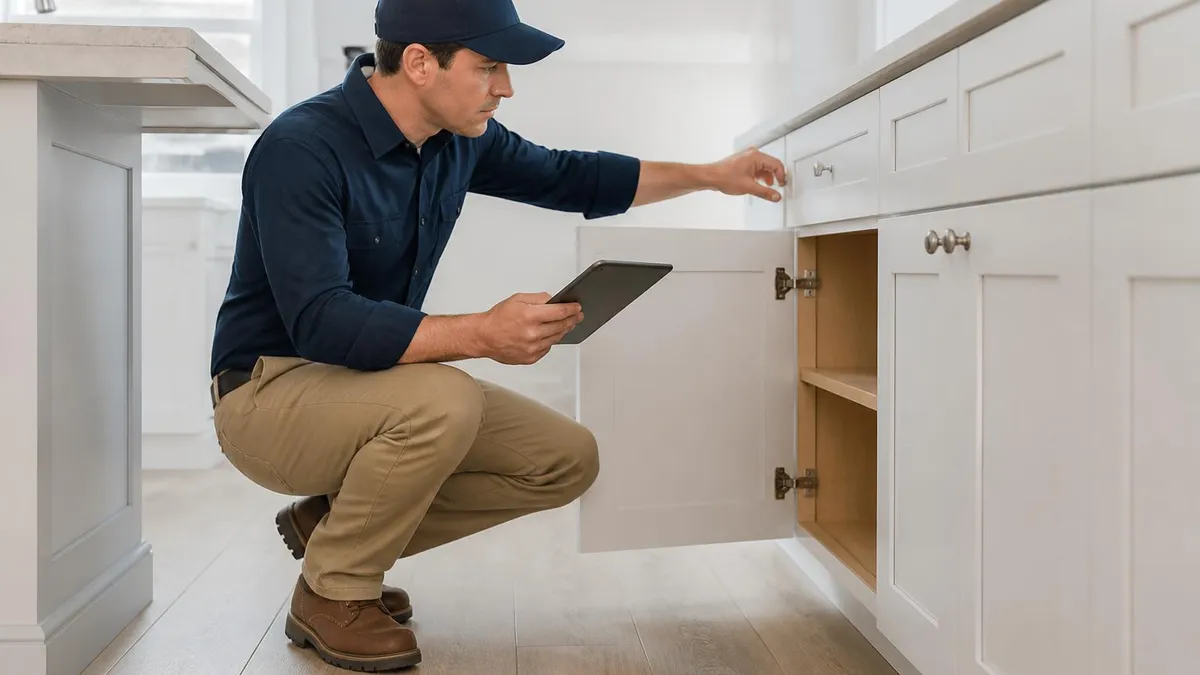
What Home Inspectors Look For: The Complete 2026 Buyer's Guide to Inspection Findings, Red Flags & Repair Negotiations

Home Inspector Certification Requirements by State: The Complete 2026 Guide

Home Inspectors Association: Everything You Need to Know About Certification, Salary, and Finding Inspectors Near You
About the Author

Licensed Real Estate Broker & Licensing Exam Specialist
University of Wisconsin School of BusinessSandra Taylor is a Graduate Realtor Institute (GRI) and Accredited Buyer's Representative (ABR) designee with an MBA in Real Estate from the University of Wisconsin School of Business. She has 18 years of residential and commercial real estate brokerage experience and coaches real estate license candidates through state salesperson and broker pre-license examinations across multiple states.