
Self Employed Home Inspector: Career Research Guide for 2026
Explore home inspector salary, certification, and how to become self employed. Real numbers, state requirements & career tips. 🎯

If you have been searching for home inspectors near me or considering launching a career as a self employed home inspector, you are entering one of the most resilient and rewarding trades in the real estate industry. Home inspectors evaluate the structural integrity, mechanical systems, and safety features of residential properties, giving buyers the information they need to make confident purchasing decisions. In a housing market where median home prices remain well above $300,000, the inspection report is one of the most consequential documents in any transaction.
The appeal of working as a self employed home inspector is easy to understand. You set your own schedule, control your client relationships, and build a business that scales with your reputation. Unlike many trades, the startup costs are relatively modest — a thorough tool kit, reliable transportation, and a laptop for writing reports can get you operational for under $10,000 in most states. Once established, inspectors in competitive metro areas routinely complete four to six inspections per week at fees ranging from $350 to $600 per visit.
Understanding what do home inspectors look for during a typical visit is foundational to your career research. A standard inspection covers the roof, foundation, exterior, attic, insulation, interior rooms, plumbing, electrical panels, HVAC systems, windows, and doors. The inspector follows a systematic checklist to document conditions without performing destructive testing. Reports typically run 40 to 80 pages with photographs and are delivered within 24 hours of the inspection. Buyers rely on these findings to negotiate repairs, request price reductions, or walk away from a deal entirely.
Career momentum in this field is closely tied to licensing requirements, which vary significantly by state. Some states require as few as 40 classroom hours before you can sit for the licensing exam, while others mandate 120 hours or more of pre-licensure education plus a supervised inspection period. Regardless of where you plan to work, most professionals eventually pursue the national home inspector examination to demonstrate competency beyond state minimums and to qualify for membership in nationally recognized professional associations.
Market demand for qualified inspectors remains strong. According to the National Association of Realtors, existing home sales have averaged roughly five million transactions per year over the past decade, and nearly every purchase transaction includes at least one professional inspection. New construction adds millions of additional inspection opportunities annually, including pre-drywall, final walkthrough, and warranty inspections that builders routinely commission. In high-growth markets like Austin, Phoenix, and the Carolinas, inspectors with strong reputations have waiting lists of several weeks.
The professional landscape is also evolving. Drones are now commonly used to inspect steep roofs safely. Thermal imaging cameras reveal moisture intrusion and insulation voids invisible to the naked eye. Software platforms have replaced paper checklists, enabling inspectors to generate polished digital reports on-site. Inspectors who invest in ongoing education and updated equipment consistently outperform competitors who rely on outdated methods, commanding higher fees and attracting referrals from top-producing real estate agents.
Whether you are a contractor thinking about pivoting careers, a recent college graduate exploring skilled trades, or a real estate professional looking to add inspection services to your offerings, this guide covers every dimension of the career — from education and home inspector certification pathways to salary expectations, business development strategies, and the professional liability considerations every independent inspector must understand before taking on their first client.
Home Inspector Career by the Numbers

Startup & Ongoing Costs for a Self Employed Home Inspector
Understanding how to become a home inspector starts with researching your state's specific licensing requirements, because the path from interested candidate to licensed professional differs dramatically depending on where you live. States like California, Arizona, and North Dakota have minimal state-level regulation, while states like New York, Texas, and Georgia require substantial pre-license education, proctored exams, and documented field experience before issuing a license. Begin by visiting your state real estate commission or home inspector licensing board website to download the current requirements document.
Pre-license education is the first concrete step for most candidates. Nationally accredited programs such as those offered by the American Society of Home Inspectors (ASHI), InterNACHI, and several community colleges provide self-paced online curricula that cover construction principles, building systems, inspection standards of practice, and report writing. Many programs include virtual walkthroughs and practice inspection scenarios. Online programs are particularly convenient for working adults who need to complete coursework around a full-time job or family obligations, and most can be finished in four to twelve weeks of dedicated study.
After completing your education, you will typically need to pass a state licensing exam, the national home inspector exam, or both. The National Home Inspector Examination (NHIE) is accepted in more than 25 states and is widely regarded as the industry benchmark for entry-level competency. It consists of 200 questions covering property and building inspection, site review, and professional responsibilities. Candidates who prepare thoroughly with practice tests and review materials typically report pass rates well above the national average of roughly 53 to 58 percent on the first attempt.
Field training requirements add another layer to the licensing process in many states. Texas, for example, requires candidates to complete a structured apprenticeship that includes a set number of ride-along inspections under the supervision of a licensed inspector before they can work independently. This hands-on phase is invaluable even in states where it is not mandatory — shadowing experienced inspectors teaches you how to manage client expectations, navigate difficult conversations about serious findings, and organize your workflow efficiently so you can complete a thorough inspection in two to three hours.
Once licensed, most inspectors pursue additional certifications to differentiate themselves in the market. The Certified Home Inspector (CHI) designation from ASHI and the Certified Professional Inspector (CPI) credential from InterNACHI are the two most widely recognized. Both require ongoing continuing education — typically 24 hours every two years — to maintain active status. Specialty certifications in areas like radon testing, mold assessment, pool and spa inspection, and commercial property inspection allow inspectors to offer ancillary services that meaningfully increase per-visit revenue without proportional increases in time.
Mentorship is an underutilized resource that dramatically shortens the learning curve. Most established inspectors are willing to allow qualified candidates to shadow them for a modest fee or in exchange for marketing assistance. Some franchise inspection companies — Pillar To Post, HouseMaster, WIN Home Inspection — offer structured training programs that combine brand recognition with mentored field experience, which can be an attractive alternative to starting a fully independent operation from scratch. The franchise route trades some profit margin for a ready-made marketing system, established vendor relationships, and ongoing corporate support.
To understand how much do home inspectors charge so you can benchmark your own pricing, research current rates in your target market by reviewing competitor websites, calling local inspection companies as a prospective buyer, and monitoring real estate agent referral networks. In most US markets, single-family home inspections range from $300 to $500, with larger homes, older construction, and add-on services like sewer scopes or radon tests pushing totals higher. Setting competitive but profitable prices from day one prevents the race-to-the-bottom pricing trap that undermines many new inspector businesses.
Home Inspector Salary & Earnings: What the Numbers Really Show
The Bureau of Labor Statistics places the median annual wage for home inspectors at approximately $64,000, but this figure masks enormous variation. Inspectors in the bottom quartile — often those just starting out or working part-time — earn under $40,000 annually, while top earners in high-volume markets consistently report gross revenues exceeding $120,000 per year. The difference almost always comes down to inspection volume, fee structure, and the quality of realtor referral relationships an inspector has built over time.
A self employed home inspector has income levers that a salaried employee simply does not. By adding ancillary services — radon testing ($150–$200 per test), sewer scope inspection ($200–$350), water quality testing ($100–$250), mold screening ($300–$500), and thermal imaging add-ons ($75–$150) — an inspector can routinely increase a base $400 inspection fee to $600 or $700 per appointment without extending the visit by more than 30 to 45 minutes. Inspectors who systemize these upsells into their booking process see revenue growth of 30 to 50 percent within the first year of implementation.

Is Becoming a Self Employed Home Inspector Right for You?
- +Set your own schedule and control how many inspections you take per week
- +Low startup costs compared to most skilled-trade businesses — under $10,000 to launch
- +Income scales directly with effort, volume, and ancillary service offerings
- +High demand driven by millions of annual real estate transactions nationwide
- +Intellectually engaging work — every property presents different systems and defects
- +Strong referral-driven business model that becomes self-sustaining over time
- −Income can be volatile, especially in the first 12 to 18 months before referrals build
- −Physically demanding — climbing ladders, crawling in tight spaces, working in extreme temperatures
- −Professional liability exposure requires maintaining E&O insurance at ongoing annual cost
- −Weekend and evening inspections are common because buyers have limited weekday availability
- −Building a referral network with real estate agents takes time and consistent effort
- −State licensing renewals, continuing education, and association dues add annual overhead costs
Home Inspector Certification Checklist: Steps to Get Licensed
- ✓Research your state's specific licensing requirements on the official licensing board website
- ✓Enroll in an accredited pre-license education program (40–120 hours depending on state)
- ✓Complete all required coursework and pass any program assessments or final exams
- ✓Register and prepare for the National Home Inspector Examination (NHIE) or state exam
- ✓Complete required field training or supervised inspection hours if mandated by your state
- ✓Submit your state license application with all required documentation and application fee
- ✓Purchase Errors & Omissions and General Liability insurance before performing any paid inspections
- ✓Invest in a professional inspection tool kit including moisture meter, gas detector, and flashlights
- ✓Select and learn your report writing software (Spectora, HomeGauge, or similar platform)
- ✓Join ASHI or InterNACHI for credibility, referral networks, and continuing education resources
Referral Networks Drive 70%+ of Inspection Revenue
Studies of established home inspection businesses consistently show that relationships with active real estate agents account for the majority of new client referrals. Prioritize introducing yourself to local agents during your first 90 days, deliver flawless reports on every early inspection, and follow up consistently — three strong agent relationships can sustain a full-time inspection practice in most markets.
Running a successful self-employed home inspection business requires more than technical competence — it demands the mindset of an entrepreneur. From the moment you decide to go independent, you are making decisions about branding, pricing, marketing, client communication, and financial management that will compound over years into either a thriving business or a frustrating grind. The inspectors who succeed long-term treat every client interaction as a reputation-building opportunity and every inspection report as a marketing document that demonstrates their professionalism to every future buyer, seller, and agent who reads it.
Business structure is the first decision to make before taking on paying clients. Most independent inspectors operate as a single-member LLC (Limited Liability Company), which separates personal assets from business liabilities and provides some protection in the event of a claim or lawsuit. Forming an LLC in most states costs $50 to $500 and takes less than a week online. Pair the LLC with a dedicated business checking account, a bookkeeping app like QuickBooks Self-Employed, and quarterly estimated tax payments to the IRS — the tax obligations of self-employment catch many new inspectors off guard in their first year.
Insurance is non-negotiable and warrants careful research before your first paid inspection. Home inspectors professional liability insurance — also known as Errors and Omissions (E&O) coverage — protects you if a client claims you missed a significant defect that later cost them money to repair. General Liability (GL) insurance covers bodily injury and property damage that might occur during an inspection, such as accidentally breaking a window or a client tripping on your equipment. Most carriers offer combined E&O and GL policies priced between $800 and $2,500 per year depending on your coverage limits, claims history, and volume of inspections.
Your online presence is your storefront. A clean, professional website with clear pricing, a booking form, sample inspection reports, and genuine client testimonials converts visitors into booked inspections far more effectively than a generic listing on a directory. Optimize your Google Business Profile with accurate service area information, recent photos, and a consistent stream of five-star reviews from satisfied clients. Reviews are the single most powerful trust signal for buyers searching for home inspectors near me in any local market — inspectors with 50 or more verified positive reviews consistently appear at the top of local search results.
Pricing strategy deserves deliberate thought. Many new inspectors undercut established competitors to win early business, but this creates problems: buyers and agents often associate very low prices with lower quality, your revenue per inspection is insufficient to invest in equipment and education, and raising prices later alienates early clients.
A better approach is to price at or slightly below mid-market from day one, compete on responsiveness and report quality rather than price, and raise fees incrementally as your review count and referral volume grow. Most markets can support a $25 to $50 price increase every 12 to 18 months for inspectors with strong reputations.
Managing the operational side of an inspection business efficiently is what separates inspectors who burn out from those who thrive for decades. Online scheduling platforms like Calendly integrated with your website allow clients and agents to book inspections 24 hours a day without requiring you to answer the phone. Automated appointment confirmation emails, inspection reminders, and post-report follow-up messages can all be templated in advance and triggered automatically. These systems reduce administrative overhead by hours per week, allowing you to focus your limited time on inspections, report writing, and relationship building rather than calendar management.
Scaling beyond solo operations is a path some inspectors choose after three to five years. Hiring an additional inspector doubles your capacity without proportionally increasing overhead, since marketing, software, insurance, and branding costs are largely fixed.
The key to successful expansion is training new inspectors to your exact standards — your reputation is built on the consistency of every report bearing your company's name, regardless of which inspector performed the visit. Many solo operators who scale successfully report that their income grows by 60 to 80 percent in the first year of adding a second inspector, even after accounting for wages, benefits, and equipment costs.

Performing even a single paid home inspection without active Errors and Omissions and General Liability insurance exposes your personal assets to significant legal risk. A missed defect — even a minor one — can generate a client claim worth thousands of dollars in repairs. Most states do not require proof of insurance to issue a license, but every major professional association and every experienced inspector considers it non-negotiable before the first inspection is completed.
Preparing for the home inspector certification exam is a process that rewards systematic study over cramming, and the inspectors who perform best on licensing exams are those who combine content review with active practice testing. The National Home Inspector Examination covers four broad domains: property and building inspection (the largest domain, covering structural components and all major building systems), site review (grading, drainage, driveways, walkways, and retaining walls), professional responsibilities (ethics, Standards of Practice, and report writing requirements), and general knowledge of construction principles and terminology.
Creating a structured 8 to 12 week study plan before your exam date is the single most effective preparation strategy. Divide your study sessions by domain, spending proportionally more time on property and building inspection since it represents approximately 60 to 65 percent of exam questions. Allocate at least one study session per week to actively reviewing inspection reports — either samples provided by your education program or real reports from the InterNACHI sample library — because the ability to recognize documented defects in context is a skill that purely textbook-based study does not develop.
Practice tests are essential, not optional. Research consistently shows that retrieval practice — the act of trying to recall information rather than simply re-reading it — strengthens long-term memory retention far more effectively than passive review. Taking a 50-question practice test, scoring it immediately, and carefully reviewing every incorrect answer teaches you where your knowledge gaps lie with a precision that self-assessment cannot match. Candidates who complete ten or more full-length practice tests before their exam date consistently pass at higher rates than those who rely primarily on re-reading course materials.
Understanding the exam format reduces test-day anxiety and improves time management. The NHIE consists of 200 questions administered over four hours, giving you an average of 72 seconds per question. Most questions are straightforward knowledge checks about building systems, inspection standards, or professional ethics. A smaller percentage are scenario-based questions that describe an inspection situation and ask what the correct inspector action or report notation would be. These scenario questions reward candidates who have shadowed actual inspections or completed field training because they test applied judgment rather than memorized facts.
On exam day, basic test-taking strategies make a measurable difference. Read every question carefully before looking at answer choices — the NHIE occasionally includes questions with subtle wording differences that change the correct answer. When you are uncertain, eliminate obviously wrong answers first and choose between the remaining options rather than guessing blindly. Flag questions you are unsure about and return to them after completing the rest of the section — sometimes later questions provide context clues that help you answer earlier flagged items more confidently.
After passing your exam and receiving your license, the learning process continues throughout your career. InterNACHI offers hundreds of free online courses covering specialty topics from thermal imaging to commercial inspection to environmental hazards. ASHI's online education portal provides courses that count toward both CE requirements and specialty certifications. The inspectors who become the most respected in their markets are those who never stop learning — they attend regional conference workshops, read trade publications like the ASHI Reporter, and participate in inspector forums where complex defect photos and edge-case scenarios are discussed and debated by practitioners with decades of experience.
For candidates ready to begin their formal preparation, structured practice testing aligned to actual exam content is the most efficient use of study time in the final weeks before your exam. The national home inspector examination covers a broad range of topics, and targeted practice under realistic timed conditions is the best predictor of exam-day success available to any candidate at any stage of preparation.
Building long-term career success as a self employed home inspector comes down to a handful of disciplines that the most successful practitioners execute consistently over years and decades. The first is radical reliability — showing up on time, delivering reports on schedule, answering client questions promptly, and never canceling a booked inspection without extraordinary cause.
Real estate transactions operate on tight timelines, and agents remember the inspectors who have made their clients' experience smooth as vividly as they remember those who created problems. A single no-show or significantly late report can cost you a referral relationship that would have been worth thousands of dollars annually.
Report quality is your most visible marketing asset. Every buyer who receives your report shares it with their agent, their lender, and sometimes their attorney. A report that is well-organized, clearly written, photographically documented, and free of typos signals professionalism that extends far beyond technical competence. Invest time in learning your report writing software thoroughly. Use the summary page — the section most clients read first and most carefully — to clearly distinguish between safety hazards, major defects, maintenance items, and minor observations so clients understand the relative severity of your findings without needing to read the entire document.
Continuing education in specialty areas dramatically expands your earning potential. Radon testing certification (from the National Radon Proficiency Program or the National Radon Safety Board) typically takes a weekend course and opens a service that many markets demand.
Sewer scope certification — operating a camera through the main drain line — addresses one of the most costly and hidden defects in older homes and commands fees of $200 to $350 for a 20-minute add-on service. Thermal imaging courses teach you to use infrared cameras to identify moisture intrusion, missing insulation, and electrical hot spots that are invisible during a standard visual inspection.
Managing client expectations before, during, and after the inspection prevents the vast majority of complaints and potential claims. During your pre-inspection agreement — which every client must sign before you begin — clearly explain what the inspection covers, what it does not cover (cosmetic issues, concealed systems, items outside the Standards of Practice), and what your report will look like.
Many inspectors walk clients through the summary section verbally at the end of the inspection before sending the written report, which gives clients an opportunity to ask clarifying questions while you are still on-site. This practice dramatically reduces anxious follow-up calls and misunderstandings about the significance of individual findings.
Building a referral network requires sustained, genuine relationship-building with real estate agents rather than a one-time marketing push. Attend local real estate association meetings, offer to do free continuing education presentations on inspection topics for brokerage offices, and send quarterly emails with useful home maintenance tips that agents can forward to their clients. The goal is to stay top-of-mind as a trusted expert, not to sell yourself aggressively — agents are sophisticated professionals who can detect transactional motives immediately and who value inspectors who focus on being helpful rather than promotional.
Financial discipline is what transforms a good year of inspections into long-term wealth. Self-employment taxes — the combined employee and employer share of Social Security and Medicare — add approximately 15.3 percent to your effective tax rate compared to salaried employment. Setting aside 28 to 32 percent of every inspection payment in a dedicated tax savings account prevents the painful surprise of a large tax bill in April. Beyond taxes, funding a SEP-IRA or Solo 401(k) allows self-employed inspectors to shelter up to $69,000 per year (2024 limit) from current taxation, building retirement security while reducing taxable income substantially.
The home inspection profession rewards those who combine technical mastery with business acumen and genuine commitment to protecting buyers from costly surprises. Inspectors who approach each inspection with the mindset that they are helping a family make the most significant financial decision of their lives — rather than simply completing a transaction for a fee — bring an energy and thoroughness to their work that clients feel, agents notice, and the market ultimately rewards with referrals, repeat business, and the kind of professional reputation that sustains a career for decades.
Home Inspector Questions and Answers
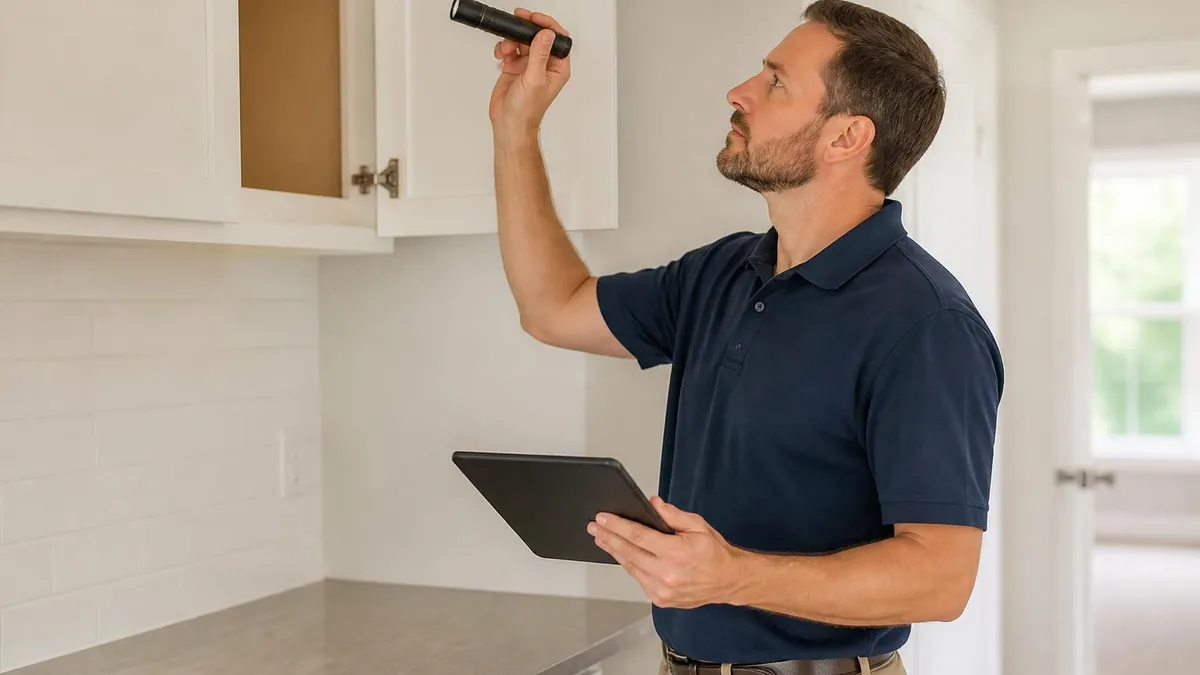
Home Inspector School: Complete 2026 Guide to Training Programs, Costs, Licensing & Career Launch
FREE Safety Home Inspector Questions and Answers
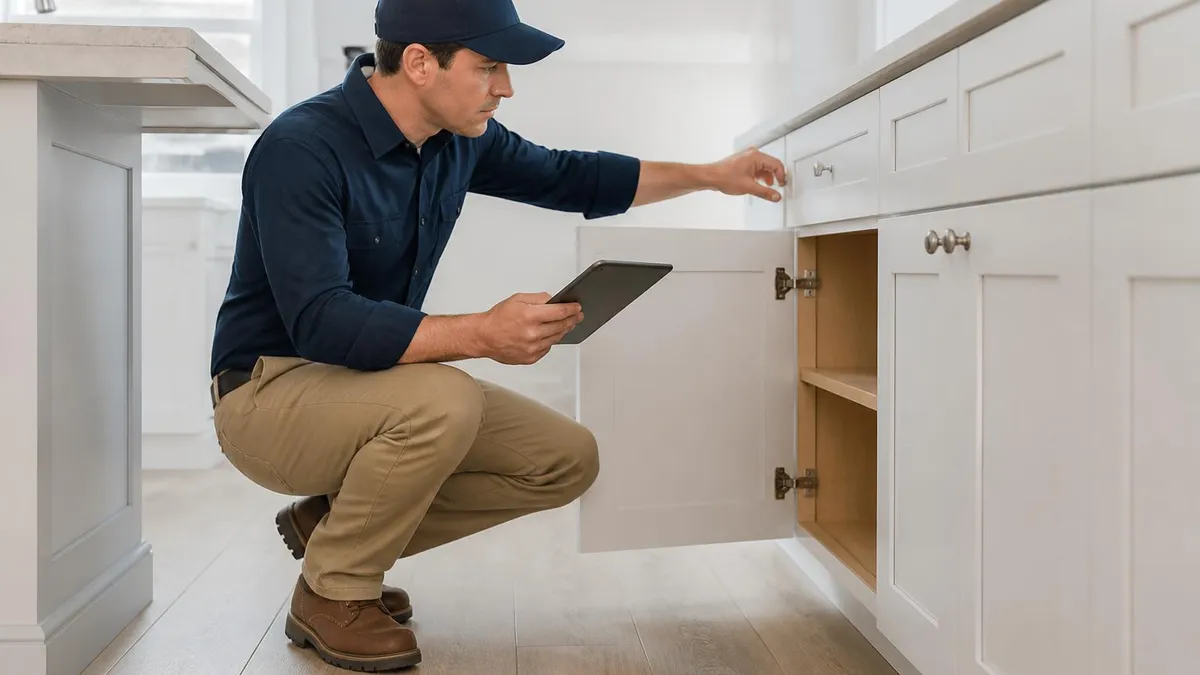
What Home Inspectors Look For: The Complete 2026 Buyer's Guide to Inspection Findings, Red Flags & Repair Negotiations

Home Inspector Certification Requirements by State: The Complete 2026 Guide

Home Inspectors Association: Everything You Need to Know About Certification, Salary, and Finding Inspectors Near You
About the Author

Licensed Real Estate Broker & Licensing Exam Specialist
University of Wisconsin School of BusinessSandra Taylor is a Graduate Realtor Institute (GRI) and Accredited Buyer's Representative (ABR) designee with an MBA in Real Estate from the University of Wisconsin School of Business. She has 18 years of residential and commercial real estate brokerage experience and coaches real estate license candidates through state salesperson and broker pre-license examinations across multiple states.