
HHA/PCA Certificate: Complete Training Guide & Certification Requirements 2026 October
Everything about HHA/PCA certificate requirements, home health aide training programs, costs, and HHA exchange login. 🎯 Start your career today.
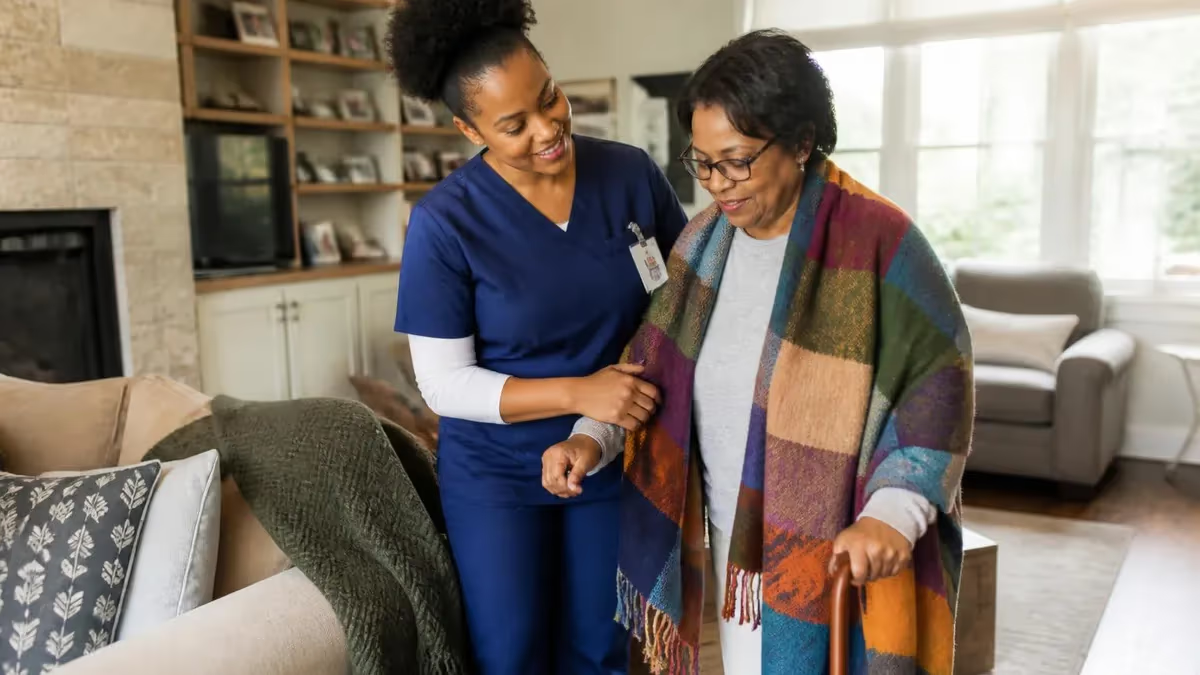
Earning your HHA/PCA certificate is the first major step toward a rewarding career in home health care. Whether you are exploring the hha exchange platform for job placement or enrolling in a state-approved home health aide training program, understanding exactly what the certification process involves will save you time, money, and frustration. This guide covers every requirement, cost, and timeline you need to know before you register for your first class.
The demand for certified home health care aides has never been stronger. According to the Bureau of Labor Statistics, home health aide employment is projected to grow 22 percent through 2032 — far faster than the average for all occupations. That growth translates directly into job openings across every state, and platforms like hha exchange login portals give newly certified aides immediate access to agency networks the moment they pass their competency evaluation.
Before you can work for any Medicare- or Medicaid-certified agency, federal law requires that you complete a minimum of 75 hours of approved training and pass a competency evaluation. Many states set their own, higher minimums — New York requires 116 hours, California requires 120 hours, and Massachusetts requires 75 hours of classroom plus 16 hours of hands-on clinical. Knowing your state's specific rules is critical because agencies will verify your hours before they hire you.
The hha certification process has two components: the written knowledge test and the practical skills demonstration. Both must be passed through a state-approved evaluator or testing vendor. Depending on your state, you may take these tests at your training school, at a local community college, or at a dedicated testing center. Some states allow remote proctoring for the written portion, but the skills demonstration always requires in-person evaluation with a live evaluator watching each technique.
Personal care aides (PCA) and home health aides (HHA) hold similar but distinct roles. A PCA focuses primarily on activities of daily living — bathing, grooming, meal preparation, and light housekeeping — while a certified home health care aide can also perform basic clinical tasks such as checking vital signs, assisting with prescribed exercises, and reporting health changes to a supervising nurse. The hha/pca certificate track you choose will determine which employers you are eligible to work for and what hourly rates you can command. You can review hha/pca certificate requirements in detail on our job requirements page.
This article is organized to take you from zero knowledge to fully prepared. We will walk through training program structures, state-by-state hour requirements, the competency exam format, costs you should budget for, and the fastest legitimate routes to get certified. We also cover how to use the hha login portal once you are credentialed so you can connect with agencies and start earning quickly. Each section includes practical tips drawn from real candidate experiences, not just the official rulebooks.
Whether you are a first-time job seeker, a caregiver looking to formalize your skills, or someone transitioning from another healthcare role, this guide gives you the roadmap. Read every section carefully — the difference between a smooth certification journey and a frustrating, repeated-test experience almost always comes down to knowing the details before you sit down to study.
HHA/PCA Certification by the Numbers
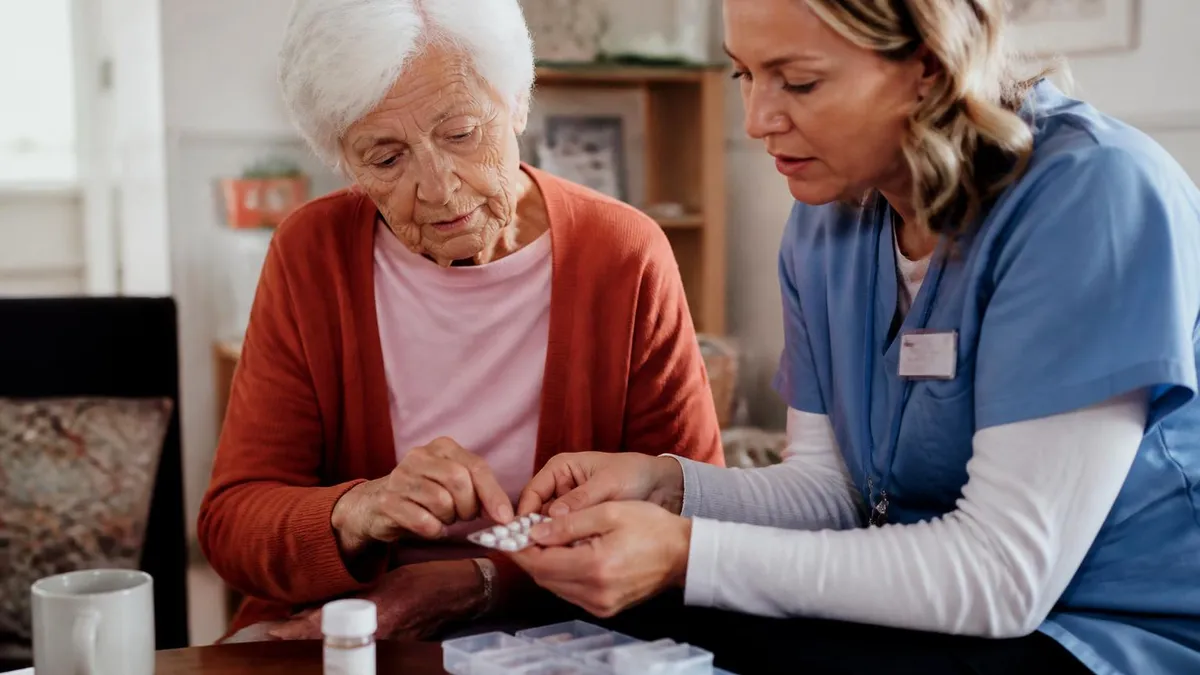
What Every HHA/PCA Training Program Must Cover
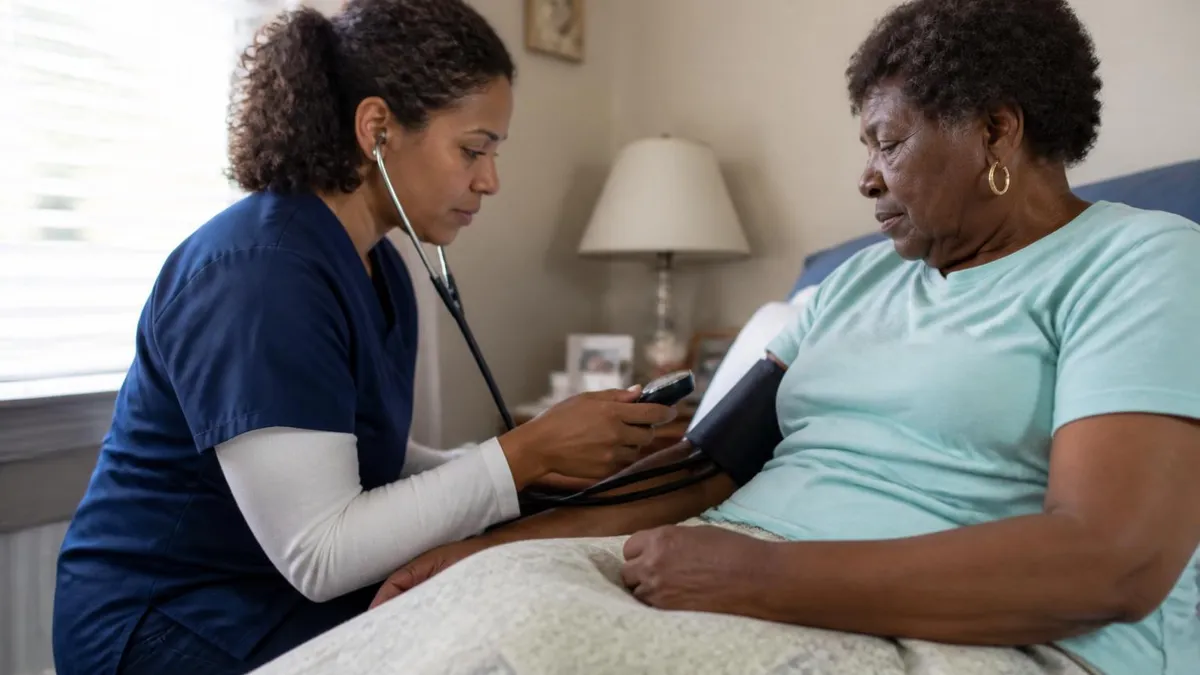
Students learn to measure and record vital signs, assist with repositioning, apply non-sterile dressings, and recognize early warning signs that must be reported to a supervising registered nurse or physician.
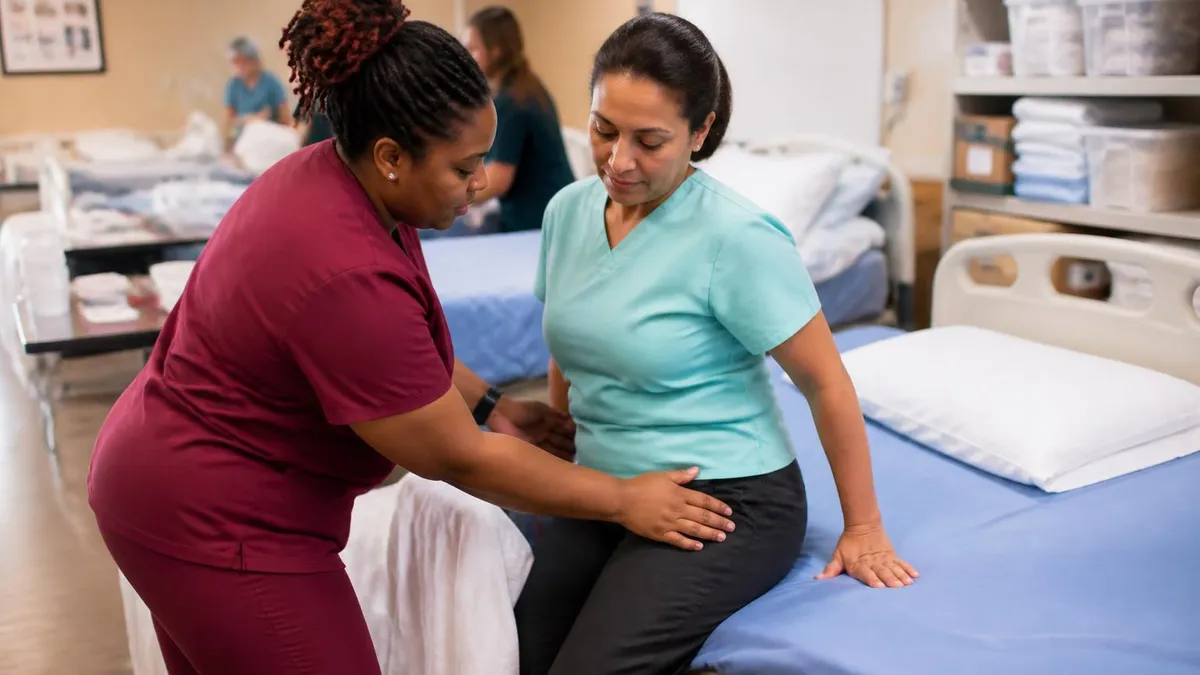
Training covers bathing, oral hygiene, grooming, dressing, toileting, and ambulation assistance. Aides practice proper body mechanics to prevent injury to both client and caregiver during transfers and mobility tasks.
Programs include reading diet orders, preparing therapeutic diets, recognizing signs of malnutrition or dehydration, and assisting clients with dysphagia or other feeding challenges under clinical supervision protocols.
Covers standard precautions, hand hygiene, proper use of personal protective equipment, safe medication reminders, fall prevention strategies, and emergency response procedures including basic first aid and CPR.
Aides learn therapeutic communication, mandatory reporting of abuse or neglect, HIPAA privacy rules, advance directive awareness, and how to interact professionally with family members and care team colleagues.
Once you complete your training program, the next phase is the home health aide certification competency evaluation. Most states use a two-part exam: a written or oral knowledge test and a hands-on skills demonstration. The written portion typically contains 50 to 70 multiple-choice questions covering the content areas from your training curriculum. The skills demonstration requires you to perform 3 to 5 randomly selected tasks in front of an evaluator, who scores you against a detailed checklist for each technique.
Scheduling your competency exam is usually handled through your training school or through the state-approved testing vendor. In many states, you must schedule within a specific window after completing training — often 60 to 120 days — or you may need to repeat coursework before you are eligible again. Check your state's Department of Health website for exact deadlines, because missing the window is one of the most common and most preventable reasons candidates delay their certification by months.
The skills demonstration portion is where many candidates run into trouble. Evaluators are looking for precise technique, not just approximate completion of a task. For example, when demonstrating hand washing, you must scrub for at least 20 seconds, clean under your nails, and avoid touching the faucet with clean hands when turning it off. A single step skipped or done out of order can result in a failing score for that entire task, even if everything else was performed correctly.
After passing both portions of the evaluation, your name is entered into your state's nurse aide or home health aide registry. This registry is what agencies check when they look up your credentials — it is the official proof that you are qualified to work. The home health aide training program you attended should provide you with a completion certificate, but the registry entry is the credential that carries legal weight for employment purposes.
Many candidates wonder whether their certification transfers across state lines. The short answer is: it depends. Some states have reciprocity agreements that allow you to transfer your HHA registry entry without repeating the full competency exam. Others require you to demonstrate competency again or complete additional state-specific training hours. If you are planning to move, contact the Department of Health in your destination state at least 60 days before your move date to understand exactly what you will need.
The hha login portal and similar agency platforms typically require you to upload a copy of your registry confirmation letter or certificate number during the onboarding process. Keep a digital copy saved in multiple locations. Some agencies also require a criminal background check, TB test, and CPR card before your first assignment — gather these documents during your training program so you are ready to work the week you pass your exam. For detailed guidance on meeting every agency requirement, visit our page on home health aide certificate opportunities.
Continuing education is also part of the picture. Federal law requires HHAs working for certified agencies to complete 12 hours of in-service training per year to maintain their credential. Many states require more. Topics rotate annually and may include dementia care, cultural competency, infection control updates, and fall prevention. Staying current is not optional — agencies routinely audit compliance records, and a lapse in continuing education can result in suspension from scheduling until the hours are made up.
Home Health Aide Training Program Options Compared
Community college HHA and PCA programs are among the most affordable and widely respected pathways to certification. Tuition typically ranges from $300 to $1,500 for the full program, and many schools offer financial aid, Pell Grant eligibility, and evening or weekend schedules designed for working adults. Class sizes are small, instructors are often licensed nurses with clinical experience, and the clinical practicum component is supervised in real healthcare settings.
The main drawback is schedule rigidity. Community college programs run on semester timelines, which means if you miss the enrollment window, you may wait 8 to 16 weeks for the next cohort to begin. However, the quality of instruction, access to campus resources like tutoring and simulation labs, and the credibility of a community college certificate often give graduates an edge when applying to higher-paying agency positions.
Pros and Cons of Pursuing an HHA/PCA Certificate
- +Fast entry to employment — most programs complete in 2 to 6 weeks
- +High job security with 22% projected growth through 2032
- +Meaningful work providing direct, visible impact on clients' daily lives
- +Multiple career advancement pathways including CNA, LPN, and RN ladders
- +Flexible scheduling options including part-time, live-in, and per-diem shifts
- +Many agencies offer free or reimbursed training in exchange for a work commitment
- −Starting wages average $14 to $18 per hour, which is modest in high-cost cities
- −Physically demanding work with risk of back injury if body mechanics are not practiced
- −Emotional toll of caring for clients with serious illness or cognitive decline
- −Certification does not automatically transfer across all state lines
- −Annual continuing education requirements add ongoing time commitments
- −Limited employer-sponsored benefits at some smaller home care agencies
HHA/PCA Certification Readiness Checklist
- ✓Confirm your chosen training school holds current state approval for HHA programs.
- ✓Verify your state's specific minimum training hour requirement before enrolling.
- ✓Schedule your competency exam within the allowed window after completing training.
- ✓Practice all required skills demonstrations using a checklist, not just informal review.
- ✓Obtain a current CPR/First Aid card from the American Red Cross or American Heart Association.
- ✓Complete a TB test or chest X-ray as required by your target employer.
- ✓Consent to and submit fingerprints for a criminal background check early in the process.
- ✓Create a digital and physical folder with all certification documents for fast agency onboarding.
- ✓Register on the HHA Exchange platform and complete your agency profile the day you receive your registry number.
- ✓Research your state's continuing education requirements and set calendar reminders for annual deadlines.
Skills Demonstration Accounts for Most First-Time Failures
More than 60 percent of candidates who fail their HHA competency evaluation fail the skills demonstration, not the written test. The most common reason is skipping infection-control steps — particularly hand washing procedure and gloving technique — that evaluators score with zero tolerance. Practice each required skill at least 10 times with a partner calling out the checklist before you sit for your exam.
Understanding the full cost of earning your home health aide certification helps you plan realistically and avoid financial surprises midway through your program. Total out-of-pocket costs for most candidates fall between $500 and $3,500, depending on the training school, state fees, and ancillary requirements. Breaking those costs into categories makes them easier to budget for and helps you identify where financial assistance might be available.
Tuition is the largest single expense. Community college programs typically charge $300 to $1,500 in total tuition. Private training schools range from $800 to $3,000. Free training programs do exist — many home health agencies offer paid or tuition-free training in exchange for a work commitment of six to twelve months after certification. These employer-sponsored programs are an excellent option if you are confident about your career choice and willing to commit to a specific agency for the initial period.
State testing fees for the competency evaluation typically run $100 to $200 for the initial attempt. Some states bundle both the written and skills portions into one fee; others charge separately. If you fail one or both portions on the first attempt, you will pay the testing fee again for each retake. Most states allow three attempts before requiring you to complete additional training, so treating each test date seriously from the start is the most cost-effective strategy.
Ancillary costs add up quickly. A CPR/First Aid certification through the American Red Cross typically costs $70 to $100. TB tests run $20 to $50 at most urgent care centers. Criminal background checks through state portals generally cost $30 to $75. Uniform scrubs, non-slip shoes, and a stethoscope add another $50 to $150 depending on what your employer requires. Some candidates also invest in exam prep materials — practice tests, study guides, or flashcard apps — which typically cost $20 to $80.
Financial assistance is more available than many candidates realize. The Workforce Innovation and Opportunity Act (WIOA) funds free or reduced-cost training for eligible adults, including HHA programs at approved schools. Many state workforce development agencies will cover the full cost of training, testing, and ancillary items for qualifying applicants. Apply through your local American Job Center, and be prepared to provide proof of income, residency, and employment history. Processing times vary, but approvals typically arrive within two to four weeks of a complete application.
Employer reimbursement programs are another underutilized resource. Even after you start working as an aide, many agencies will reimburse the cost of continuing education courses, advanced certifications, and specialty training modules. Ask about reimbursement policies during your job interview — agencies that invest in employee development tend to offer better working conditions overall, and this question signals that you are a serious, career-minded candidate rather than someone who will leave after the minimum commitment period.
Tax deductions may also offset some costs if you are self-employed as a private-pay caregiver. Training expenses that maintain or improve skills required in your current work are generally deductible as a business expense. Consult a tax professional for specific guidance, but keep receipts for tuition, testing fees, CPR classes, and any required equipment purchases throughout your certification process — these records are valuable whether you itemize or use standard deductions.
Most states require you to schedule and complete your competency evaluation within 60 to 120 days of finishing your training program. If you miss this deadline, your training hours may no longer count toward certification and you could be required to repeat the full program at your own expense. Mark your window end date on day one of training and schedule your exam before that date arrives.
Once you hold your HHA or PCA certificate and your registry number is active, your next step is connecting with employers efficiently. The hha exchange platform is the most widely used scheduling and compliance management system in home care — thousands of agencies across the country use it to manage aide rosters, track certification expiration dates, and post open shifts. Creating a complete, accurate profile on HHA Exchange on the day you receive your registry number positions you to receive job offers within 24 to 48 hours in most markets.
When setting up your hha exchange login, upload every document your state requires at the point of hire: your registry confirmation, CPR card, TB documentation, background check clearance, and any specialty training certificates. Agencies using the platform can see your compliance status in real time, and a fully green compliance dashboard is the single biggest factor in how quickly an agency will offer you your first assignment. Incomplete profiles sit in a pending queue while complete profiles go directly to schedulers.
Geographic flexibility dramatically increases your earnings potential. Aides who are willing to travel 20 to 30 miles beyond their immediate neighborhood consistently report 30 to 50 percent more weekly hours than aides who restrict themselves to a five-mile radius. Many HHA Exchange-connected agencies serve multiple counties, and opting into a broader service area in your profile settings is a simple toggle that can translate to hundreds of dollars in additional monthly income without requiring any additional credentials.
Specialization is the fastest route to higher pay. Aides who complete additional training in Alzheimer's and dementia care, ventilator care, pediatric home health, or bariatric care can command $2 to $6 per hour more than the standard HHA rate at most agencies. Many of these specialty modules are available through your agency's continuing education portal or through state-approved online providers and can be completed in eight to sixteen hours over a weekend. Stack two or three specializations within your first year and your earning trajectory looks very different from the standard starting wage.
Building a professional reputation within your agency's system is equally important. Aides who consistently accept shifts, arrive on time, document care thoroughly, and communicate proactively with supervisors are placed on preferred lists that give them first access to high-hour, high-pay client assignments. Small professional habits — submitting documentation before leaving a client's home, calling in potential health changes rather than waiting until the next scheduled visit, showing up in clean uniform — compound into a reputation that agencies fight to retain.
The broader home health aide career ladder is worth understanding from day one. Many RNs, LPNs, and CNAs began their healthcare careers holding a home health aid certificate. Agencies often provide tuition assistance for aides who wish to advance, and your HHA hours may count toward clinical experience requirements for LPN or RN programs at some institutions.
Think of your HHA certification not just as a credential for your current job but as the foundation of a decades-long healthcare career. Resources like the home health aide certificate guide can show you what that next step looks like in your local market.
Networking with other certified aides is also underrated as a career strategy. Online communities, agency orientation groups, and continuing education classes are full of experienced HHAs who know which agencies pay on time, which clients are ideal for long-term placements, and which specialty certifications are most in demand in your region. Relationships built in these spaces often lead to job referrals, schedule tips, and mentorship that no amount of online searching can replicate.
Preparing effectively for the HHA competency exam requires a strategy that goes beyond simply reviewing your class notes. The most successful candidates treat the written test and the skills demonstration as two separate preparation challenges, each requiring its own study approach. For the written portion, active recall through practice questions is consistently more effective than passive re-reading of textbook material. Research on test preparation consistently shows that answering practice questions — even before you feel ready — builds retention far better than reviewing the same material repeatedly in a linear way.
For the skills demonstration, physical repetition is everything. Set aside at least 30 to 45 minutes of daily hands-on practice during the week before your exam. Use a checklist for each required skill and have a study partner call out each step as you perform it. Common skills tested include hand washing, providing mouth care, measuring and recording blood pressure, assisting with ambulation using a gait belt, performing a partial bed bath, and positioning a client in bed using proper body alignment techniques. Each of these tasks has specific sequential steps, and evaluators are trained to notice omissions.
Time management on the written exam matters more than many candidates expect. With 50 to 70 questions and typically 90 minutes to complete them, you have more than a minute per question on average. Use the first pass to answer questions you know confidently, mark uncertain ones, and skip questions that require deeper thought. On the second pass, return to marked questions with fresh eyes. Never leave a question blank — there is no penalty for guessing, and an educated guess based on eliminating two wrong answers gives you at least a 50 percent chance on any remaining question.
Nutrition, sleep, and physical readiness on exam day are real performance factors. Studies on cognitive performance consistently show that sleep deprivation reduces working memory and increases error rates even in people who feel subjectively alert. Aim for a full seven to eight hours of sleep the night before your exam. Eat a protein-rich breakfast on exam day — avoid high-sugar options that produce an energy spike and crash. Arrive at the testing site 20 minutes early so you are not rushing, and bring a water bottle, a valid photo ID, and your scheduling confirmation number.
If you do not pass on the first attempt, do not interpret that as a sign you are not suited for the work. First-attempt pass rates for the HHA skills demonstration hover around 70 to 75 percent nationally, meaning roughly one in four candidates needs a second attempt. Review the evaluator's written feedback carefully — it will identify exactly which tasks you failed and which specific steps were scored as incomplete. Target those specific steps in your retake preparation rather than re-doing the entire curriculum from scratch.
Practice tests specifically designed for the HHA written exam are among the most efficient tools available for exam prep. The free practice sets on PracticeTestGeeks.com are built to mirror the actual competency exam format, covering all major content domains including basic care and comfort, safety, communication, and client rights. Working through multiple sets of practice questions exposes you to the range of question styles evaluators use and helps you identify knowledge gaps while there is still time to address them before your exam date.
Finally, approach the exam with confidence grounded in preparation rather than anxiety rooted in uncertainty. You have completed approved training, practiced your skills, and studied the content. The competency evaluation is designed to confirm readiness, not to trick qualified candidates. Trust your preparation, read each question carefully, and perform each skill exactly as you practiced it. That combination — solid preparation plus composed execution — is what separates first-time passers from those who need multiple attempts.
HHA Questions and Answers




About the Author

Registered Nurse & Healthcare Educator
Johns Hopkins University School of NursingDr. Sarah Mitchell is a board-certified registered nurse with over 15 years of clinical and academic experience. She completed her PhD in Nursing Science at Johns Hopkins University and has taught NCLEX preparation and clinical skills courses for nursing students across the United States. Her research focuses on evidence-based exam preparation strategies for healthcare certification candidates.
Join the Discussion
Connect with other students preparing for this exam. Share tips, ask questions, and get advice from people who have been there.
View discussion (8 replies)