
Philadelphia Home Health Aides: HHA Certification, Training & Career Guide
Philadelphia home health aides: HHA certification, training programs, hha exchange login, and career tips. Start your HHA journey today! ✅

Philadelphia home health aides are among the most in-demand healthcare workers in Pennsylvania, and understanding how to enter this field — from hha certification requirements to navigating the hha exchange portal — is essential for anyone considering a career in home-based patient care. The Philadelphia metro area employs thousands of certified home health care aide professionals across hundreds of agencies, and demand continues to outpace supply as the region's senior population grows year after year.
The hha exchange platform is a critical tool that nearly every Pennsylvania home health aide uses daily. This statewide electronic visit verification system tracks care visits, manages schedules, and documents patient interactions in real time. If you are new to the field or just completed your home health aide training, learning how the hha exchange login works will be one of the first practical skills your employer expects you to master before your first solo patient visit.
Becoming a certified home health care aide in Philadelphia requires completing a state-approved home health aide training program, passing both a written knowledge test and a skills competency evaluation, and registering with a licensed home care agency. Pennsylvania follows federal guidelines requiring at least 75 hours of training, though many Philadelphia-area programs exceed this minimum to give students a competitive advantage in the local job market. The investment of time pays off quickly given strong starting wages in the city.
Many prospective aides search for information on home health aide certification online free options to reduce upfront costs, but it is important to understand what free programs cover and what they do not. Some online modules handle the theory component of training, while hands-on clinical skills must be completed in person at an approved facility. Knowing the difference helps you plan your schedule and budget accurately from day one rather than discovering gaps mid-program.
Philadelphia's dense network of home health agencies — including large national chains and local nonprofits — means that freshly certified aides typically find placement within weeks of completing their competency evaluations. Many agencies actively recruit during training programs and may even offer paid orientation periods. Understanding the home health aide job description before you begin your training gives you a realistic picture of daily duties, physical demands, and the interpersonal skills that separate good aides from great ones.
This guide covers everything you need to know about becoming a home health aide in Philadelphia: the hha exchange system, training program requirements, certification steps, salary expectations, practical workplace tips, and how to use free practice tests to prepare for your competency exam. Whether you are brand new to healthcare or transitioning from another caregiving role, the information here will help you move forward with confidence and clarity.
From the first hha login session after onboarding to managing complex patient routines independently, the path from applicant to confident professional is more straightforward than many people expect. With the right preparation and a solid understanding of what agencies and patients need, Philadelphia home health aides can build stable, meaningful careers that make a real difference in people's lives every single day.
Philadelphia HHA Field by the Numbers

Philadelphia HHA Training Program Requirements
Pennsylvania requires at least 75 hours of state-approved home health aide training. Many Philadelphia programs offer 120 to 150 hours to improve job placement rates and prepare students for the full scope of real-world patient care duties.
Training splits between classroom instruction covering theory, safety protocols, and patient rights, and supervised clinical hours in a real care setting. Both components are mandatory — online-only programs cannot fulfill the hands-on clinical requirement under Pennsylvania law.
You must complete training through a Pennsylvania Department of Health-approved program. Many Philadelphia hospitals, community colleges, and licensed home care agencies run approved programs, some of which offer evening and weekend schedules for working adults.
After training, you must pass a written knowledge test and a hands-on skills evaluation. The skills test typically covers tasks like hand hygiene, vital signs, ambulation assistance, and personal care — all performed in front of a state-approved evaluator.
All Philadelphia-area home health aides must pass a Pennsylvania criminal history background check and, for Medicaid-funded care, a federal exclusion database check. Certain convictions can disqualify applicants, so it is worth researching eligibility before enrolling in training.
Completing a home health aide training program is only the first step toward certification in Philadelphia. Once you finish your required hours, you must schedule and pass both the written and practical portions of the Pennsylvania HHA competency evaluation. These tests are administered through state-approved testing organizations, and your training program coordinator will typically provide you with scheduling information and study resources as you near the end of your coursework. Understanding the testing process reduces anxiety and helps you prepare strategically.
The written portion of the home health aide certification exam usually consists of 50 to 75 multiple-choice questions covering topics such as infection control, patient safety, communication skills, nutrition, personal care procedures, and resident rights. You are expected to answer questions based on standard best practices, not agency-specific policies. This distinction matters: the exam tests foundational knowledge that applies across all home care settings, so your preparation should focus on universal protocols rather than memorizing one employer's internal handbook.
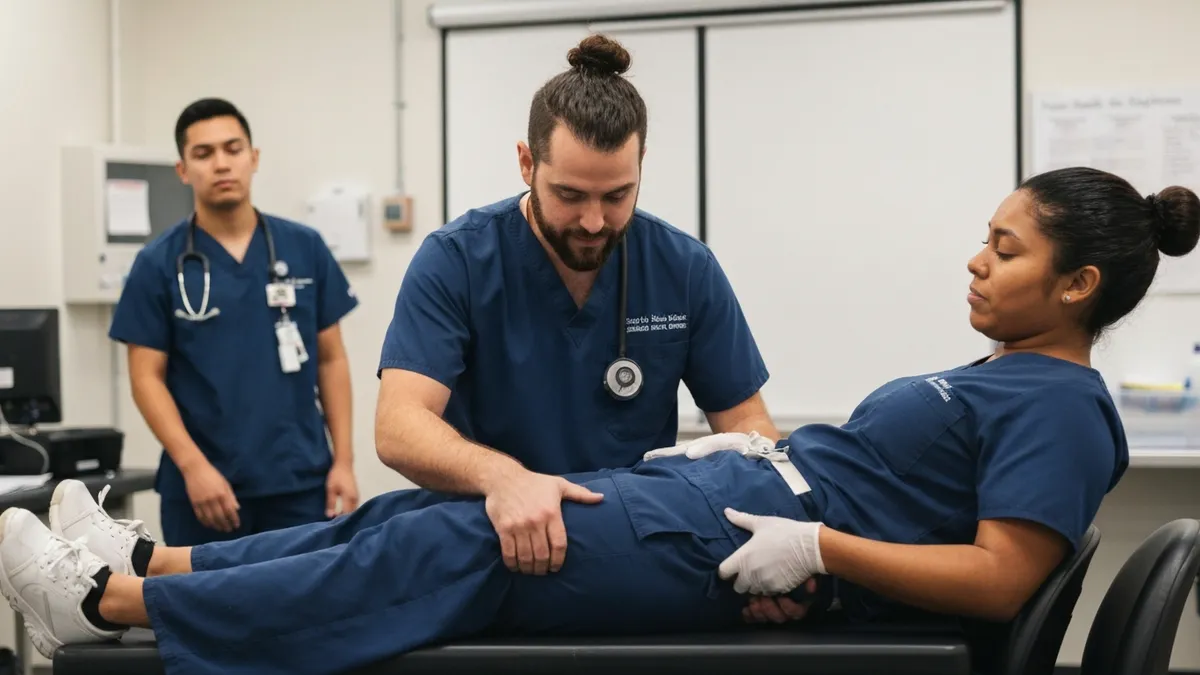
The skills component of the competency evaluation is where many candidates feel the most pressure. During this portion, you will be observed performing between three and five patient care tasks selected at random from a standardized list. Common tasks include proper hand washing technique, taking and recording vital signs, assisting a patient with ambulation using a gait belt, providing personal hygiene assistance, and demonstrating safe transfer techniques. You must perform each task correctly and in the proper sequence without coaching from the evaluator. Practicing these skills repeatedly under simulated conditions dramatically improves your pass rate.
Philadelphia has several testing centers and agency-based evaluation sites where candidates can schedule their competency exams. Wait times between training completion and testing availability can range from a few days to several weeks depending on the season and site capacity. Some larger Philadelphia-area agencies conduct in-house evaluations for their own trainees, which can speed up the process considerably. Ask your training program about affiliated testing options before you complete your final training hour.
Once you pass both portions of the evaluation, you will receive documentation of your competency status. In Pennsylvania, certified home health care aide status is tied to employment at a licensed agency — the agency maintains your records in the state registry rather than you holding an independent license. This means your certification is active as long as you are employed by a participating agency and complete required continuing education hours, typically 12 hours per year.
Continuing education requirements keep Philadelphia HHAs current on evolving care standards, new documentation procedures, and updates to state regulations. Many agencies offer free in-service training sessions to fulfill this requirement, and some even offer additional specialty certifications in areas like dementia care or hospice assistance that can increase your earning potential. Earning a home health aide certificate in a specialty area is one of the most effective ways to advance your career without returning to school full time.
For those considering the certification process, timing matters. Philadelphia's home care agencies tend to ramp up hiring in late summer and early fall as families plan winter care arrangements for elderly relatives. If you can align your training completion and testing dates with these hiring cycles, you may find yourself with multiple job offers to compare rather than waiting for a single opening. Planning your entry into the field with this seasonal pattern in mind is a smart move that many candidates overlook entirely.
HHA Exchange: Login, Features & Daily Use
HHA Exchange is a web-based electronic visit verification (EVV) and workforce management platform used by hundreds of Pennsylvania home care agencies, including most Philadelphia-area providers. It allows aides to clock in and out of patient visits using a smartphone or telephone, records GPS location data to verify visit authenticity, and transmits visit records directly to the agency and to state Medicaid billing systems in real time. For most Philadelphia home health aides, learning the hha exchange login process is one of the very first tasks completed during new-employee orientation.
Beyond basic visit verification, HHA Exchange offers scheduling management, secure messaging between aides and agency coordinators, patient care plan access, and compliance tracking. Agencies use the platform's reporting tools to monitor visit completion rates, flag missed visits, and generate documentation required for Medicaid reimbursement. From a practical standpoint, an aide who is comfortable navigating the platform makes their coordinator's job easier and builds a reputation for reliability — which translates directly into better schedule access, preferred client assignments, and faster advancement within the agency.
Pros and Cons of Working as a Philadelphia Home Health Aide
- +High and growing job demand across Philadelphia's aging population means steady work availability
- +Meaningful one-on-one patient relationships provide strong job satisfaction and emotional fulfillment
- +Entry-level certification takes only weeks, making it one of the fastest healthcare career entry points
- +Flexible scheduling options including days, evenings, nights, and weekend shifts at most agencies
- +Many agencies offer free or low-cost training programs to recruit and retain new aides
- +Career advancement paths into nursing, therapy assistance, and care coordination are accessible with experience
- −Starting wages in Philadelphia average $15 to $17 per hour, which may feel low for the physical demands involved
- −Work is physically demanding and includes lifting, transferring, and assisting patients with mobility throughout the day
- −Travel between multiple patient homes across Philadelphia neighborhoods adds unpaid commute time to the workday
- −Emotional burnout is a real risk when working closely with seriously ill, elderly, or cognitively declining patients
- −Benefits packages at smaller home care agencies can be limited, with inconsistent access to health insurance
- −Schedule instability can occur when patients are hospitalized or when agency census drops unexpectedly
Pros and Cons at a Glance
| Pros | Cons |
|---|---|
| High and growing job demand across Philadelphia's aging population means steady work availability | Work is physically demanding and includes lifting, transferring, and assisting patients with mobility throughout the day |
| Meaningful one-on-one patient relationships provide strong job satisfaction and emotional fulfillment | Travel between multiple patient homes across Philadelphia neighborhoods adds unpaid commute time to the workday |
| Entry-level certification takes only weeks, making it one of the fastest healthcare career entry points | Emotional burnout is a real risk when working closely with seriously ill, elderly, or cognitively declining patients |
| Flexible scheduling options including days, evenings, nights, and weekend shifts at most agencies | Benefits packages at smaller home care agencies can be limited, with inconsistent access to health insurance |
| Many agencies offer free or low-cost training programs to recruit and retain new aides | Schedule instability can occur when patients are hospitalized or when agency census drops unexpectedly |
Philadelphia HHA Certification Checklist
- ✓Research and enroll in a Pennsylvania Department of Health-approved home health aide training program in the Philadelphia area.
- ✓Complete all required training hours including both classroom instruction and supervised clinical hands-on sessions.
- ✓Gather required identification documents including government-issued photo ID and Social Security card for your agency application.
- ✓Submit to and clear a Pennsylvania criminal background check through the state's required screening system.
- ✓Schedule your HHA competency evaluation — both the written knowledge test and the skills performance portion.
- ✓Practice all required clinical skills repeatedly in simulated settings before your official evaluation date.
- ✓Pass the written portion of the competency exam covering safety, infection control, patient rights, and personal care.
- ✓Pass the skills evaluation by demonstrating correct technique on randomly selected patient care tasks.
- ✓Accept employment with a Pennsylvania-licensed home care agency to activate your certified status in the state registry.
- ✓Complete your new-employee onboarding including hha exchange login setup and EVV training before your first patient visit.
Many Philadelphia Agencies Pay for Your Training
A significant number of Philadelphia-area home care agencies offer sponsored or fully paid training programs in exchange for a short post-certification employment commitment, typically six to twelve months. This arrangement eliminates upfront training costs entirely and gets you earning faster. Ask prospective agencies about sponsored training options before paying out-of-pocket for an independent program.
Understanding the home health aide salary landscape in Philadelphia helps you negotiate confidently and plan your long-term financial trajectory. Entry-level certified home health care aide positions in the Philadelphia metro area typically start between $14.50 and $17.00 per hour, though this range varies significantly by agency type, shift differential, and patient population. Agencies serving primarily Medicaid patients often pay toward the lower end, while private-pay and veterans' services agencies can offer substantially higher rates. The home health aide salary ceiling rises noticeably with experience and specialty certifications.
Shift differentials are an important but often overlooked component of total compensation for Philadelphia home health aides. Evening shifts — typically defined as visits starting after 3:00 p.m. — may carry a $0.50 to $1.50 per hour premium at many agencies. Weekend differentials can be even more significant, sometimes adding $1.00 to $2.50 per hour above the base rate. For aides willing to take less desirable shifts, differential pay can push annual earnings meaningfully above the median and accelerate the path toward financial stability in an expensive city like Philadelphia.
Full-time home health aides in Philadelphia who work 35 to 40 billable hours per week can expect annual earnings ranging from roughly $30,000 to $38,000, depending on their agency, specialization, and ability to secure consistent caseloads. Some experienced aides who work for multiple agencies simultaneously — a practice known in the industry as "split scheduling" — report earnings above $45,000 annually, though this requires careful coordination to avoid conflicts and EVV compliance issues with both employers. Being employed by more than one agency is legal and common in Pennsylvania.
Benefits are another area where Philadelphia agencies vary widely. Larger regional and national agencies are more likely to offer health insurance, paid time off, and 401(k) plans to full-time employees. Smaller boutique agencies may offer higher base hourly rates but little in the way of formal benefits packages. When comparing job offers, factor in the full cost of independently purchasing health insurance if an agency does not offer it — this can add $200 to $600 per month to your effective living expenses and dramatically changes the attractiveness of a higher base rate from a benefits-light employer.
Geographic factors within Philadelphia itself also affect take-home pay in practical ways. Many home health aides in the city rely on SEPTA public transit to move between patient homes, and agencies in neighborhoods with poor transit access may reimburse mileage only to car-owning aides. If you use public transit, clarify whether your agency reimburses transit costs or builds them into your compensation package. Some agencies cluster their caseloads by neighborhood, which can make routes more manageable and reduce commute time between visits — a significant quality-of-life factor that does not show up in posted hourly rates.
Career advancement from home health aide in Philadelphia typically moves along two paths: clinical and administrative. On the clinical path, aides pursue additional certifications or return to school for nursing assistant (CNA), licensed practical nurse (LPN), or registered nurse (RN) credentials. Each step up the clinical ladder brings a substantial pay increase and expanded scope of practice.
On the administrative path, experienced aides move into scheduling coordinator, field supervisor, or client care manager roles within their agencies. These positions typically offer salaries between $40,000 and $55,000 annually and may come with benefits that exceed what is available to hourly field staff.
The long-term job security picture for Philadelphia home health aides is genuinely strong. The Bureau of Labor Statistics projects home health and personal care aide employment to grow approximately 25 percent nationally through 2032 — far faster than average across all occupations. Pennsylvania's older-than-average population and the ongoing shift from institutional to home-based care models suggest the Philadelphia market will track or exceed national growth rates. This structural demand means that certified aides who build strong professional reputations will have use in compensation negotiations for years to come.

Pennsylvania requires HHA competency evaluations to be completed within a specific timeframe after training. Most agencies expect certification testing to be completed within 90 to 120 days of training completion. Missing this window may require you to repeat portions of your training before retesting is permitted, costing time and money. Schedule your exam immediately upon finishing your training hours and do not wait until you feel fully ready — the structured preparation process works best when you test while the material is still fresh.
Preparing effectively for the HHA competency exam is the most important thing you can do between finishing your training and sitting for your evaluation. Many candidates underestimate the written portion, assuming that classroom attendance alone is sufficient preparation.
In reality, the multiple-choice format of the written test requires active recall — the ability to retrieve information under mild time pressure without access to your notes or textbook. Using free practice tests and structured review materials in the weeks before your exam date is the single most reliable way to strengthen active recall and identify gaps in your knowledge before they appear on the real test.
The skills evaluation requires a different kind of preparation: repetition and procedural memory. You need to be able to perform tasks like a two-person transfer, vital signs measurement, and peri care not just correctly but automatically and in the correct sequence, because the evaluator is checking both accuracy and adherence to protocol. Create a practice schedule that dedicates at least 30 minutes per day to physical skill rehearsal in the two weeks before your evaluation. If possible, practice with a partner who can observe your technique and catch procedural errors that are invisible from your own perspective during performance.
Understanding how the home health aide certification online free resources work best will help you allocate your study time wisely. Free practice tests are most valuable when you use them diagnostically — take a test, review every wrong answer in detail, understand WHY the correct answer is right rather than just memorizing it, and then re-test on the same content area a few days later to confirm retention. This spaced repetition approach is backed by decades of learning science research and dramatically outperforms a single cramming session the night before your exam.
Topic weighting on the written exam gives you a strategic starting point for prioritizing your study time. Infection control and patient safety questions are almost always the most heavily represented category, reflecting their central importance in real patient care settings. Personal care procedures, communication skills, and patient rights each typically account for a significant portion of the remaining questions.
Emergency procedures, nutrition, and documentation questions appear less frequently but are still tested. Spending the most time on infection control and safety — and making sure you are completely solid on those topics — gives you the highest return on your preparation investment.
Video-based study resources are particularly effective for the skills evaluation because they show correct technique in real time rather than describing it through text alone. Watching how a skilled aide performs a gait belt transfer or demonstrates proper hand washing technique gives you a mental model to replicate during your own practice sessions. Many candidates find that combining written practice questions with video demonstrations accelerates their skill acquisition faster than either resource alone. Several free platforms offer HHA skills demonstration videos that align with standard Pennsylvania competency evaluation criteria.
Time management during the written exam itself is a skill worth developing before test day. Most candidates find they have sufficient time to answer all questions without rushing, but anxiety can cause some people to second-guess correct answers and make unnecessary changes.
Research on multiple-choice testing consistently shows that first-instinct answers are correct more often than revised answers, except in cases where you identify a clear factual error in your initial choice. Unless you recall a specific piece of information that definitively changes your answer, trust your first response and move forward. Reviewing flagged questions in the final minutes is a better use of remaining time than revisiting answered items.
The days immediately before your competency evaluation should focus on rest, light review, and logistics preparation rather than intensive cramming. Confirm your testing location and arrival time, prepare your identification documents, and plan a comfortable route that accounts for Philadelphia traffic or transit delays. Arriving 15 minutes early gives you time to settle in and complete any check-in paperwork without feeling rushed. Physical readiness matters more than most candidates realize: adequate sleep, a good meal beforehand, and manageable anxiety levels all contribute meaningfully to the cognitive performance that determines your score.
Building a strong professional reputation as a Philadelphia home health aide begins on your very first patient visit and compounds with every interaction that follows. Patients and their family members are remarkably good at distinguishing aides who are genuinely engaged from those who are simply going through the motions, and this perception directly influences the quality of care you can provide.
Arriving on time, following the care plan precisely, communicating clearly with both patients and family members, and maintaining professional boundaries in emotionally intense situations are the behaviors that agencies notice and that lead to preferred case assignments and advancement opportunities.
Documentation discipline is another foundational professional skill that Philadelphia aides should develop early. Accurate, timely completion of visit notes through the hha exchange platform is not just an administrative requirement — it is a legal record that can be reviewed in the event of a patient complaint, care dispute, or insurance audit.
Vague documentation phrases like "patient tolerated well" or "no changes noted" provide less protection than specific, objective observations such as "patient ambulated 20 feet with gait belt assistance, no balance issues noted, vital signs within normal limits per care plan parameters." Specificity protects both the patient and the aide in situations that escalate to formal review.
Communicating effectively with supervisors is a skill that distinguishes reliable aides from exceptional ones. When you encounter a patient situation that deviates from the care plan — a new bruise, behavioral change, medication question, or environmental safety concern — your response protocol matters.
Document what you observed, notify your agency coordinator promptly, and follow the reporting chain your employer has established. Never make clinical decisions that fall outside your scope of practice as an HHA, and never delay reporting a concern because you are uncertain whether it is significant enough to mention. Reporting too much is never a professional mistake; reporting too little can be.
Building rapport with patients in Philadelphia's diverse neighborhoods requires cultural humility and active listening. The city's home care patient population reflects its broader demographics: patients and families from South Asian, African American, Puerto Rican, Vietnamese, and Eastern European backgrounds are common across different Philadelphia zip codes. Taking time to learn about a patient's cultural practices around food, personal hygiene, gender of caregiver, and privacy helps you provide care that respects their dignity and increases their cooperation with the care plan. Small investments in cultural understanding pay large dividends in patient satisfaction and in the quality of the therapeutic relationship.
Managing your own physical health as a home health aide is not optional — it is a professional responsibility. The lifting, bending, and physical assistance involved in HHA work creates real risk of musculoskeletal injury, particularly to the lower back, if proper body mechanics are not used consistently. Use the lift equipment provided by agencies whenever it is available. Apply gait belts correctly.
Ask for a second aide on visits requiring two-person transfers rather than attempting solo lifts that exceed safe limits. Many experienced Philadelphia aides who have remained in the field for ten or more years credit consistent body mechanics discipline as the single most important factor in their longevity and continued ability to work without chronic pain.
Financial planning is worth thinking about early in your HHA career, particularly given the variable nature of income from hourly caregiving work. Home health aides are typically W-2 employees rather than independent contractors, which means taxes are withheld automatically and you are generally entitled to workers' compensation coverage in the event of a work-related injury.
However, hours can fluctuate, and it is wise to build an emergency fund during periods of full caseload to cushion against weeks when patient hospitalizations or agency census drops reduce your scheduled hours. Many Philadelphia credit unions and community banks offer accounts and financial literacy programs specifically designed for healthcare workers in this income range.
Finally, staying connected to the broader HHA professional community in Philadelphia gives you access to information about job opportunities, policy changes, and advocacy efforts that affect your wages and working conditions. Pennsylvania's home care workers have been active in pushing for wage increases and improved benefits through both agency negotiations and legislative advocacy. Following organizations like the Pennsylvania Homecare Association and engaging with coworkers about industry trends helps you stay informed and ensures that your voice is part of the conversations that shape the future of home-based care work in this city.
Sample HHA Practice Questions
Try these questions from our free HHA practice tests. The correct answer and an explanation follow each question.
Mandatory reporting laws require home health aides to report:
- A. Only what is specified in the care plan
- B. Suspected abuse, neglect, or exploitation of patients to the appropriate state agency or supervisor
- C. Only incidents that the patient asks to be reported
- D. Financial concerns to the billing department only
Answer: B. Suspected abuse, neglect, or exploitation of patients to the appropriate state agency or supervisor
Home health aides are mandatory reporters in all US states. They must report suspected abuse, neglect, or exploitation even if they are not certain — suspicion is sufficient to trigger reporting.
When a home health aide arrives at a patient's home and finds the patient unresponsive, the first action is:
- A. Begin CPR immediately without checking for a pulse
- B. Call 911, check for responsiveness and breathing, begin CPR if patient is not breathing and has no pulse (unless a valid DNR exists)
- C. Call the aide's supervisor before doing anything else
- D. Wait 10 minutes to see if the patient wakes up
Answer: B. Call 911, check for responsiveness and breathing, begin CPR if patient is not breathing and has no pulse (unless a valid DNR exists)
In an unresponsive patient, activating emergency medical services and beginning the BLS algorithm (check—call—care) takes priority. Supervisor notification follows once emergency services are summoned.
In-service education for home health aides working in Medicare-certified agencies must be completed:
- A. Only during the initial training period
- B. A minimum of 12 hours annually, covering required competency areas per CMS regulations
- C. 24 hours every two years
- D. Only when a complaint has been filed against the aide
Answer: B. A minimum of 12 hours annually, covering required competency areas per CMS regulations
Federal regulations require a minimum of 12 hours of in-service training per year for HHAs in Medicare/Medicaid-certified home health agencies to maintain competency.
Which government agency establishes minimum standards for home health aides in Medicare-certified agencies?
- A. The Environmental Protection Agency (EPA)
- B. The Centers for Medicare & Medicaid Services (CMS) through the Conditions of Participation
- C. The Food and Drug Administration (FDA)
- D. The Occupational Safety and Health Administration (OSHA) exclusively
Answer: B. The Centers for Medicare & Medicaid Services (CMS) through the Conditions of Participation
CMS sets federal minimum training and competency standards (75 hours of training, including clinical skills) for HHAs in Medicare/Medicaid-certified agencies through the Conditions of Participation in 42 CFR Part 484.
HHA Questions and Answers



About the Author

Registered Nurse & Healthcare Educator
Johns Hopkins University School of NursingDr. Sarah Mitchell is a board-certified registered nurse with over 15 years of clinical and academic experience. She completed her PhD in Nursing Science at Johns Hopkins University and has taught NCLEX preparation and clinical skills courses for nursing students across the United States. Her research focuses on evidence-based exam preparation strategies for healthcare certification candidates.
Join the Discussion
Connect with other students preparing for this exam. Share tips, ask questions, and get advice from people who have been there.
View discussion (8 replies)