
HHA Meaning: What Is a Home Health Aide, Duties, Training, Certification, and Career Outlook
HHA meaning explained: Home Health Aide role, daily duties, training requirements (75-120 hours), certification, salary ($25-35K), career outlook. 💯

HHA stands for Home Health Aide. A Home Health Aide is a healthcare worker who provides in-home care to people who need assistance with daily activities — typically elderly individuals, people with disabilities, or those with chronic illnesses. The HHA role is one of the most accessible entry points into healthcare, requiring relatively short training (75-120 hours typically) and providing meaningful service to clients who want to remain in their homes rather than institutional settings.
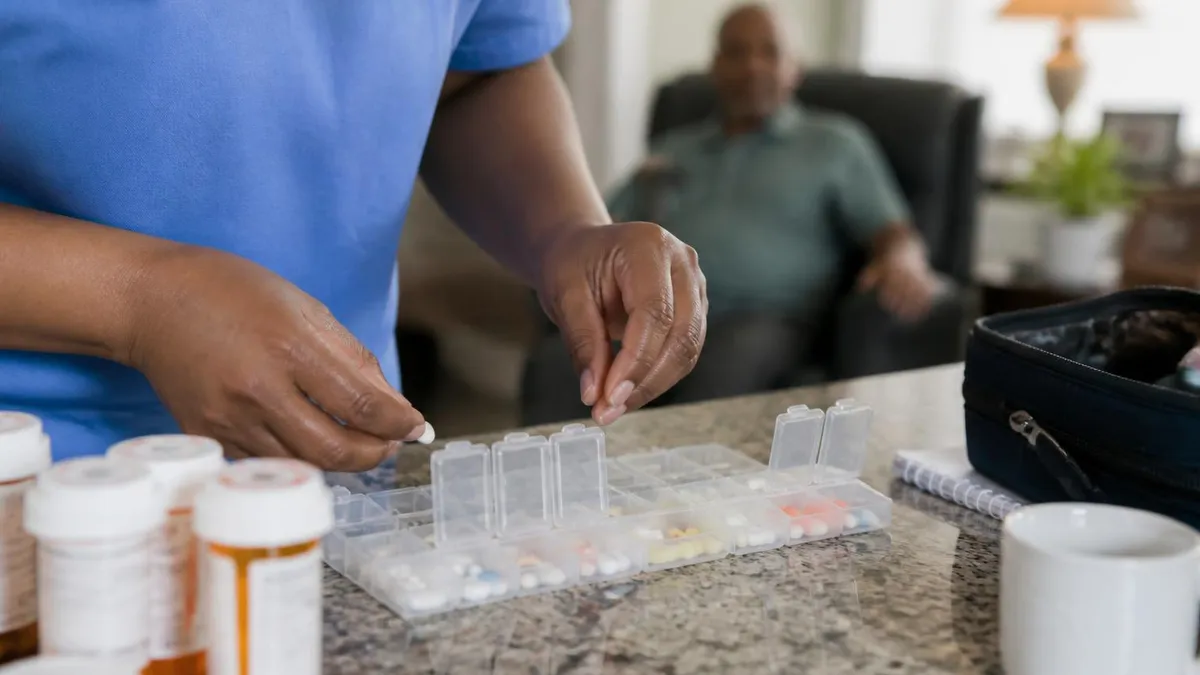
What HHAs do. Assist with activities of daily living (ADLs): bathing, dressing, grooming, eating, mobility, toileting. Monitor and report on client health status. Take and record vital signs (blood pressure, temperature, pulse). Administer medications under nurse supervision. Provide companionship and emotional support. Help with light housekeeping related to care (changing bed linens, preparing meals). Assist with personal hygiene tasks. Help with mobility (transferring from bed to chair, walking assistance).
HHA vs CNA. Home Health Aide (HHA) and Certified Nursing Assistant (CNA) are related but distinct roles. HHA: primarily works in clients' homes. CNA: primarily works in healthcare facilities (nursing homes, hospitals). HHA training: 75-120 hours typically. CNA training: 120-180 hours typically. CNAs can do more skilled tasks; HHAs are more limited in scope. Salary similar but slight CNA premium.
Training requirements. Federal regulations require minimum 75 hours of training for HHAs serving Medicare/Medicaid clients. Many states require 120 hours. Training typically includes classroom instruction (40-80 hours) and supervised practical experience. Certification requires passing a competency exam after training.
Why people become HHAs. Helping others — meaningful service work. Accessible entry into healthcare (short training). Flexible schedules (often). Foundation for advancement (CNA, LPN, RN). Personal satisfaction from supporting clients in their homes.
This guide covers the HHA role in detail — what HHA means, daily duties, training requirements, certification process, salary, career outlook, and how to start a career as a Home Health Aide. It's intended for anyone considering this career, current aides looking to advance, and family members trying to understand the home health support available.

Home Health Aide Information
- HHA stands for: Home Health Aide
- Primary role: In-home care for elderly, disabled, chronically ill
- Training: 75-120 hours typical (varies by state)
- Certification: Required, including competency exam
- Salary range: $25,000-35,000/year typical
- Per-hour rate: $12-18/hour typical
- Common employers: Home health agencies, hospice, private clients
- Work setting: Client's home (not facility)
- Schedule: Often flexible; some part-time, some full-time
- Career path: HHA → CNA → LPN/LVN → RN possible
- Job outlook: Strong; 9-22% growth projected
- Most positions: Aging US population drives demand
What HHAs do in detail. The daily work of a Home Health Aide.
Activities of Daily Living (ADLs) assistance. Bathing — bath, shower, or sponge bath as needed. Dressing — help client put on appropriate clothing. Grooming — hair care, oral care, skin care. Eating — feeding clients who can't feed themselves, ensuring proper nutrition. Toileting — assist with bathroom needs, manage incontinence. Mobility — help client move between bed, chair, walker, wheelchair.
Light medical tasks. Take vital signs: blood pressure, temperature, pulse, oxygen saturation. Monitor and record symptoms. Administer medications (under nurse supervision) — usually limited to non-injection medications, pills, eye drops, topical preparations. Apply prescribed treatments (compression bandages, dressings, etc.).
Personal care and hygiene. Assist with grooming and dressing. Help with bathroom needs and continence care. Manage skin care (especially preventing pressure sores). Maintain personal cleanliness for the client.
Light housekeeping. Change bed linens. Tidy client's bedroom and bathroom. Prepare or assist with meals. Clean up after meals. Some basic kitchen cleanup. Not whole-house cleaning — that's outside HHA scope in most cases.
Companionship and emotional support. Conversation with client. Engage in activities the client enjoys (reading, games, music). Provide emotional presence and reassurance. Especially valuable for elderly or isolated clients.
Reporting. Document client status, any changes, problems. Report to supervising nurse or family. Identify when the client may need additional medical care.
Common patient populations. Elderly clients (most common). Adults with chronic illness (diabetes, COPD, congestive heart failure, Alzheimer's, Parkinson's). Children with disabilities or chronic conditions. Post-surgery clients during recovery period. Hospice patients in end-of-life care.
What HHAs typically don't do. Inject medications (unless specifically trained and supervised). Diagnose medical conditions. Perform skilled nursing tasks (IV management, wound care that requires nursing skill). Manage the client's finances. Provide intensive medical care.
The work varies by client. Some clients need minimal help; some need extensive assistance. Some hours per visit, some live-in arrangements. Most HHAs have schedules of 4-8 hours per client visit, multiple clients per day, varying across days of the week.
HHA Daily Duties
Bath, shower, oral care, skin care. Maintain client cleanliness.
Help client dress. Assist moving between bed, chair, walker.
Feed clients who can't feed themselves. Ensure proper nutrition.
Take and record BP, temperature, pulse, oxygen. Report changes.
Change linens, tidy room, prepare meals. Not whole-house cleaning.
Conversation, activities, emotional support. Especially valued by isolated clients.
Training and certification requirements for HHAs.
Federal requirements. The Centers for Medicare & Medicaid Services (CMS) requires HHAs serving Medicare/Medicaid clients to complete: minimum 75 hours of training (16 hours of clinical practice). Competency examination. Background check. Specific topics covered (personal care, vital signs, body mechanics, emergency response, etc.).
State requirements. Many states require more than federal minimum. Texas: 60 hours. Florida: 75 hours. California: 75 hours. New York: 75 hours. New Jersey: 76 hours. Pennsylvania: 75 hours. Massachusetts: 75 hours. Some states (Hawaii, North Carolina) require 100-150 hours. Verify your specific state's requirement.
Where to get training. Community colleges. Career schools and vocational programs. Hospital and health system training programs. Online HHA training programs (with required clinical component). Non-profit organizations (Red Cross sometimes offers). Free or low-cost programs for those qualifying (unemployment, etc.).
Training curriculum. Communication and observation skills. Infection control and hand hygiene. Body mechanics and safe lifting. Vital signs and basic health assessment. Personal care techniques. Nutrition and meal preparation. Medication administration under supervision. Emergency response (first aid, choking, falls). Mental health awareness. Cultural competence and respect.
Cost of training. Community college HHA programs: $500-1,500 typical. Private vocational schools: $800-2,500. Online programs: $300-800. Some states have free programs for qualifying students.
Certification exam. After completing training, candidates take a competency exam. Multiple choice covering content from training. Practical/skills demonstration evaluating ability to perform tasks. Many states use Prometric or similar testing agencies.
Pass rates. First-attempt pass rates are typically 75-90%. Most candidates who fail and retake pass within 1-2 attempts. Retake fees apply.
State variations. Some states issue HHA-specific certifications. Some combine HHA with CNA certification (since the roles overlap). Some require renewal every 1-2 years; some are lifetime. Verify your state's specific requirements.
Continuing education. Most states require periodic continuing education (12-30 hours every 1-2 years). Topics include infection control updates, new procedures, regulatory changes. Maintained by working at active agency typically meets requirements.
HHA Training Components
Effective listening, talking with clients, families, supervisors.
Bathing, dressing, grooming, hygiene. Hands-on techniques.
Blood pressure, temperature, pulse, oxygen monitoring.
Hand hygiene, PPE use, preventing disease transmission.
Safe lifting, transferring clients, preventing back injury.
First aid, choking, falls, calling 911, basic crisis response.
HHA vs CNA — understanding the difference. The two roles are closely related but distinct.
HHA (Home Health Aide). Works in clients' homes. Provides personal care and limited medical assistance. Training: 75-120 hours typical. State-issued HHA certification. Salary: $25,000-35,000/year.
CNA (Certified Nursing Assistant). Works in healthcare facilities (nursing homes, hospitals, assisted living). Provides personal care plus more skilled clinical tasks. Training: 120-180 hours typical. State-issued CNA certification. Salary: $28,000-40,000/year. CNA can transition to home health work; some agencies prefer CNA-trained aides.
Key differences in practice. HHA: home setting; CNA: facility setting. HHA: more independent work; CNA: typically supervised by RN in facility. HHA: longer client relationships often; CNA: more rotating shifts and patients. HHA: more flexibility in schedule; CNA: facility-set schedules.
Scope of practice differences. CNA can perform more skilled tasks: more medication administration types, more wound care under nursing supervision, working with more complex medical equipment. HHA limitations more pronounced in some states. Verify specific scope of practice for your state.
Choosing between HHA and CNA. Choose HHA if: you prefer working in clients' homes, want flexibility in schedule, prefer one-on-one relationships, faster training to start working. Choose CNA if: you prefer facility work, want broader healthcare exposure, plan to advance further (LPN/RN), want slightly higher pay. Many people start as HHA, advance to CNA, then continue education.
Cross-training. Some training programs combine HHA and CNA curriculum. Graduates qualify for both. This requires longer training (typically 120+ hours) but provides flexibility.
Career advancement paths. HHA → CNA: complete additional CNA training (often 6-12 months while working). CNA → LPN/LVN: 12-15 months of practical nursing training. LPN → RN: bridge program 1-2 years. RN → BSN/MSN: continuing education while working. The pathway from HHA to RN takes 3-6 years total but is well-defined and supported.
HHA vs CNA Comparison
Setting: Client's home
Training: 75-120 hours
Scope: Personal care, light medical tasks
Salary: $25,000-35,000/year
Style: Independent, one-on-one client relationships
HHA salary and career outlook. The financial and demand picture for Home Health Aides.
Salary range. Entry-level HHA (0-2 years): $22,000-28,000/year. Mid-career HHA (2-5 years): $25,000-32,000. Experienced HHA (5+ years): $28,000-38,000. Range depends heavily on geography and specific employer.
Per-hour rate. Most HHAs are paid hourly. Range: $11-18 per hour typical. Live-in HHAs and 24-hour care HHAs paid differently — often per day or per week rates. Some HHAs work part-time at multiple agencies.
Geographic variation. Major metros pay more than rural areas. New York metro: $14-18/hour. California metro: $14-19/hour. Texas: $11-15/hour. Florida: $11-14/hour. Northeast generally higher than South. Cost of living affects real value of salary.
Employer variation. Home health agencies (largest employer): standard pay rates. Private duty / private pay: often higher pay but no benefits. Government/non-profit agencies: lower base pay but better benefits. Hospice agencies: similar to home health.
Benefits. Full-time HHAs typically receive: health insurance (varies by employer), paid time off, retirement contribution (some employers). Part-time HHAs typically receive: hourly wage only, sometimes flexible scheduling. Live-in HHAs receive: room and board plus hourly wage typically.
Demand. Bureau of Labor Statistics projects 22% job growth for home health aides through 2032 (much faster than average). Aging US population (baby boomers) drives this. Plus: cost pressure to keep people out of nursing homes; preference for aging-in-place. Total HHA job opportunities: substantial and growing.
Job security. Strong — demand consistently exceeds supply in most markets. Even during economic downturns, healthcare jobs remain stable. HHAs rarely face layoffs.
Career advancement income. HHA → CNA → LPN → RN trajectory: HHA $25-35K → CNA $28-40K → LPN $40-55K → RN $60-90K → BSN/specialty $70-100K+. Career advancement substantially increases income while working in the same field.
Why salaries are relatively low. HHA is entry-level work. The training time is short relative to other healthcare. Government-set rates for Medicare/Medicaid clients constrain pay. Significant supply of workers entering the field. Despite low salaries, the work is meaningful and career advancement paths exist.
HHA Career Statistics
How to become an HHA. Step-by-step path from interest to working aide.
Step 1: Meet basic requirements. Age 18+. High school diploma or GED (some programs accept students working toward this). Good health (TB test, background check). No criminal history relevant to client safety. Reliable transportation (most HHAs travel to clients).
Step 2: Choose training program. Community colleges: more affordable, often better-respected credentials. Private vocational schools: faster, more expensive. Online programs: convenient, lower cost, must include clinical hours. Compare: cost, schedule, location, reputation, certification exam pass rates.
Step 3: Complete training. 75-120+ hours depending on state. Mix of classroom instruction and supervised clinical practice. Full-time programs: 4-6 weeks. Part-time evening/weekend programs: 8-12 weeks. Most accept students with no prior healthcare experience.
Step 4: Pass certification exam. After training, take the state-required HHA exam (or CNA equivalent in some states). Computer-based, multiple choice + practical skills demonstration. Pass rates: 75-90% first attempt. Retake if needed.
Step 5: Apply for state certification. Submit application, fees, training documentation, background check, exam results. Receive HHA certification (or CNA in combined states). Now eligible to work as certified HHA.
Step 6: Find a job. Home health agencies are largest employers. Apply to multiple agencies (typically 3-5). Some hire continuously. Some have specific requirements (CPR certification, specific training, language skills). Demonstration of skills during interview may include simple tasks.
Step 7: Begin working. New HHAs typically work with experienced aides initially for orientation (1-2 weeks). Then assigned to clients independently. Schedule varies — some work day shifts only, some work overnight, some weekends.
Step 8: Continue education. Some HHAs continue to CNA, LPN, RN. Many find HHA satisfying as long-term career. Continuing education courses required for renewal (12-30 hours every 1-2 years).
Step 9: Build experience. After 1-2 years experience, HHAs may: specialize in specific care types (hospice, dementia, pediatric), become preferred HHAs for specific clients, mentor newer HHAs, advance to supervisory roles (some agencies have HHA supervisors).
Becoming an HHA
Month 1: Research & Apply
Months 1-3: Training
Month 3-4: Pass Exam
Month 4: State Certification
Month 4-5: Job Search
Month 5-6: Begin Working
Years 1+: Build Career

Common HHA challenges and how to handle them.
Challenge 1: Physical demands. Lifting and transferring clients is physically demanding. Risk of back injury. Solution: proper body mechanics (taught in training). Use of mechanical lifts when available. Two-person transfers for heavy clients. Regular strength training to maintain physical capacity.
Challenge 2: Emotional demands. Clients are often elderly, ill, or end-of-life. Difficult emotional situations. Solution: process emotions with supportive supervisor. Set healthy boundaries. Connect with other HHAs for peer support. Don't bring work home emotionally if possible.
Challenge 3: Travel. Multiple clients in different locations. Time and gas costs. Solution: most agencies reimburse mileage. Schedule efficiently. Use travel time for breaks between clients.
Challenge 4: Scheduling conflicts. Clients have specific needs and times. Sometimes overlapping requests. Solution: communicate clearly with agency about availability. Be flexible when possible. Don't overcommit.
Challenge 5: Difficult clients. Some clients are challenging — cognitive impairment, mental illness, difficult families. Solution: training prepares you for many situations. Don't take it personally. Communicate concerns with supervisor. Some clients require specific training (dementia care, behavioral health).
Challenge 6: Low pay relative to work demands. The salary is relatively low for physically and emotionally demanding work. Solution: career advancement to CNA/LPN/RN provides path to higher pay. Some HHAs combine private duty with agency work for higher income. Consider geography — metro areas pay more.
Challenge 7: Sometimes-isolated work. Working alone in clients' homes can feel isolating. Solution: maintain connection with agency. Use breaks to call colleagues. Join HHA-specific groups online. Build relationships with clients' families.
Challenge 8: Working with difficult families. Some family members are demanding, anxious, or unrealistic about care. Solution: communication and documentation. Set clear expectations. Involve supervising nurse for difficult interactions. Don't take it personally.
Challenge 9: Documentation requirements. HHAs must document client status, tasks performed, observations. Time-consuming. Solution: develop efficient documentation habits early. Some agencies use tablets or apps. Stay organized.
Challenge 10: Career stagnation if not advancing. Some HHAs stay HHA for years without progression. Solution: deliberate planning for advancement. Pursue CNA training while working. Build relationships with supervisors who can mentor advancement.
Back injury is the most common occupational injury for HHAs. The repeated lifting and transferring of clients takes a toll over time. Use proper body mechanics learned in training: bend at knees, not waist; keep load close to body; use legs to lift; turn entire body, not just back; ask for help with heavy clients. Use mechanical lifts when available — they're not weakness; they're best practice. Build strength outside work (core exercises help). HHAs who develop chronic back problems often can't continue in the field; protecting your back is protecting your career.
Common questions about HHA work.
Q: How long does it take to become an HHA? A: Training takes 4-12 weeks depending on program schedule. Plus 2-4 weeks for certification exam and state processing. Total: 6-16 weeks typically. Faster than most healthcare careers.
Q: Is HHA work stable? A: Very. Strong demand consistently exceeds supply. Rarely face layoffs even in recessions. The aging US population guarantees ongoing demand for at least the next 20+ years.
Q: Can I work part-time as an HHA? A: Yes. Part-time work is common. Many HHAs work 20-30 hours/week, often combining clients from different agencies. Flexible scheduling is a benefit of the role.
Q: Can I be an HHA without certification? A: For Medicare/Medicaid-funded care, no — certification is required. For private-pay (cash) care, requirements vary by state. Many private clients prefer certified aides regardless of legal requirement. Certification makes you employable.
Q: Do HHAs work weekends and holidays? A: Often, yes. Clients need care every day. Weekend and holiday shifts often have premium pay. Some HHAs prefer these for higher hourly rate.
Q: Can I work as an HHA with a felony record? A: Depends on the felony. Violent crimes or theft from vulnerable persons disqualify from most agencies. Other felonies may be considered on case-by-case basis. Background checks are part of certification.
Q: Do HHAs get tipped? A: Generally no. HHAs are paid by agencies, not directly by clients. Some private-pay clients tip but it's not expected. Don't count on tips as part of income.
Q: How is HHA different from caregiver? A: HHA is a certified, regulated role with specific training and standards. Caregiver is a broader term that may or may not include certification. Family caregivers (helping family members) are unpaid; professional caregivers may or may not have HHA certification.
HHA Specializations
Most common HHA work. Clients typically 70-90+. Range from active to bedbound. Many have multiple chronic conditions. Focus on supporting independence while ensuring safety. Long-term relationships often develop. Skills needed: patience, gentle handling, listening.
HHA Pros and Cons
- +HHA certification is recognized by employers as verified competency
- +Provides a structured knowledge framework beyond just the credential
- +Certified professionals report 10–20% salary increases on average
- +Maintenance requirements create ongoing professional development
- +Differentiates candidates in competitive hiring and promotion decisions
- −Certification fees, materials, and renewal costs add up over a career
- −Requirements change — delaying may mean facing updated content
- −Salary ROI varies significantly by geography and industry
- −Preparation requires significant time alongside existing responsibilities
- −Validates knowledge at a point in time, not ongoing real-world performance
Pros and Cons at a Glance
| Pros | Cons |
|---|---|
| HHA certification is recognized by employers as verified competency | Certification fees, materials, and renewal costs add up over a career |
| Provides a structured knowledge framework beyond just the credential | Requirements change — delaying may mean facing updated content |
| Maintenance requirements create ongoing professional development | Salary ROI varies significantly by geography and industry |
| Differentiates candidates in competitive hiring and promotion decisions | Preparation requires significant time alongside existing responsibilities |
Sample HHA Practice Questions
Try these questions from our free HHA practice tests. The correct answer and an explanation follow each question.
What is the primary role of a Home Health Aide (HHA) regarding a client's medications?
- A. Administer injections as needed
- B. Assist and remind clients to take their own medications as prescribed
- C. Adjust medication doses based on the client's condition
- D. Obtain prescription refills independently
Answer: B. Assist and remind clients to take their own medications as prescribed
HHAs are not licensed to administer medications independently; they assist and remind clients to self-administer as prescribed by the physician.
It is Mrs. Amos’s usual time for lunch, but she says she is not hungry yet. This is the first time that Mrs. Amos has made this type of statement. What should the home health aide do?
- A. Insist that Mrs. Amos eat at this time.
- B. Tell Mrs. Amos to let the aide know when she wants to eat, and remind her that it is important that she have lunch.
- C. Tell Mrs. Amos that if she does not eat by herself, she will have to be fed.
- D. Tell Mrs. Amos that it took a lot of time to prepare the food and that she should eat it while it is fresh.
Answer: B. Tell Mrs. Amos to let the aide know when she wants to eat, and remind her that it is important that she have lunch.
The home health aide should respect Mrs. Amos's preference while still ensuring her nutritional needs are met. By telling Mrs. Amos to let the aide know when she wants to eat and reminding her of the importance of lunch, the aide offers flexibility and maintains a client-centered approach. This balances the client's autonomy with the aide's responsibility for her health.
A client accuses a home health aide os taking ten dollars without permission. The aide has not taken the money but the client refuses to believe her. What should the health aide do?
- A. Notify the health aide's supervisor.
- B. Ask the client why the aide is being accused.
- C. Ask other aides who care for the client if they took the ten dollars.
- D. Offer to give the client ten dollars.
Answer: A. Notify the health aide's supervisor.
When accused of theft, even if innocent, a home health aide must immediately report the incident to their supervisor. This protects both the aide and the agency, allowing for a formal investigation and proper handling of the complaint according to established protocols, rather than attempting to resolve it independently.
A home health aide notices that a patient with diabetes has a small cut on their foot that appears red and warm. What is the most appropriate action?
- A. Clean the wound and apply a bandage without reporting it
- B. Report the wound to the supervising nurse immediately
- C. Soak the foot in warm water to reduce redness
- D. Apply an antibiotic ointment and monitor it for a week
Answer: B. Report the wound to the supervising nurse immediately
Diabetic patients have poor circulation and reduced sensation in their feet, making even minor wounds at high risk for serious infection or complications. Any wound, no matter how small, must be reported to the supervising nurse immediately.
HHA Questions and Answers
HHA work — Home Health Aide — represents one of the most accessible entry points into healthcare. The relatively short training (75-120 hours), affordable cost ($300-2,500), and immediate employment opportunities make it attractive for people wanting to enter healthcare quickly. The work itself is meaningful — providing direct care that helps people stay in their homes rather than institutional settings.
For people considering HHA work: the work is physically and emotionally demanding but rewarding. Salary is on the lower end of healthcare but career advancement to CNA, LPN, RN is well-defined. Demand is strong and growing. For people advancing from HHA: use the role to build healthcare experience and confirm interest before committing to longer training. For families considering HHA care: it's a regulated, certified profession with specific training standards; aides typically know what they're doing.
About the Author

Registered Nurse & Healthcare Educator
Johns Hopkins University School of NursingDr. Sarah Mitchell is a board-certified registered nurse with over 15 years of clinical and academic experience. She completed her PhD in Nursing Science at Johns Hopkins University and has taught NCLEX preparation and clinical skills courses for nursing students across the United States. Her research focuses on evidence-based exam preparation strategies for healthcare certification candidates.
Join the Discussion
Connect with other students preparing for this exam. Share tips, ask questions, and get advice from people who have been there.
View discussion (8 replies)