
How Much Do Home Health Aides Make? Real 2026 October Pay Numbers
Home health aide salary in 2026 October: BLS hourly median, NYC pay rates (CDPAP), state comparisons (NY, CA, TX, FL), private vs agency, overtime, CNA path. 📚

Ask three families paying for in-home care what their aide earns and you will hear three very different numbers. A new agency aide in rural Alabama might take home $11.50 an hour. A senior caregiver in Manhattan working through a CDPAP program can clear $22 an hour with overtime. A live-in private-duty aide in suburban Connecticut sometimes negotiates a flat $200 a day plus room and board. Same job title, same core duties — bathing, transferring, meal prep, medication reminders — and the pay range spans 3x.
You landed here for a direct answer to a direct question. How much do home health aides make? The honest version takes a few minutes to walk through, because the answer depends on five things: which state you work in, whether you go through an agency or work privately, whether you have HHA or CNA credentials, how much overtime your schedule allows, and whether your client is on Medicaid (which sets fixed reimbursement rates) or paying out of pocket.
This guide covers the most current Bureau of Labor Statistics median, the NYC pay rates that drive most of the search interest in this topic, state-by-state comparisons for New York, California, Texas, and Florida, the agency-versus-private trade-off, what overtime actually adds, and the realistic salary jump if you advance to CNA or LPN. By the end you will know what to expect at hire, what to negotiate for, and where the bigger paychecks actually live.
One thing up front. Home health aide pay rates are partly public information. The Centers for Medicare and Medicaid Services (CMS) sets reimbursement rates for Medicaid home care, and those rates flow directly into agency wages. Most states publish their HHA reimbursement rate per hour, and you can use that figure to estimate what an agency in that state can afford to pay. We will show you how that math works further down.
Home Health Aide Pay at a Glance

The BLS National Numbers
The U.S. Bureau of Labor Statistics groups home health aides and personal care aides together under SOC code 31-1120. The most recent BLS data puts the median hourly wage at about $16.12, which works out to roughly $33,530 a year at a standard 2,080-hour schedule. The bottom 10% of aides earn around $11.40 an hour ($23,710 annually) and the top 10% earn above $20.20 an hour ($42,000+ annually). Mean wages run slightly higher than medians because high-cost metros pull the average up.
Those nationwide figures hide a huge range. The same BLS dataset breaks the occupation into state-level tables and the spread is wide. The top-paying states are North Dakota, Washington, Alaska, Massachusetts, and New York, all clustering around $18-$21 per hour median. The lowest-paying states are Louisiana, West Virginia, Oklahoma, and Mississippi, where median wages sit at $11-$13 per hour. That is nearly a 2x gap for the same occupation code.
Two quirks in the BLS data are worth knowing. First, BLS combines home health aides (HHA, often Medicare-certified) with personal care aides (PCA, sometimes uncertified). HHAs typically earn $1-$2 more per hour than PCAs because the certification opens up Medicare-funded home care work, which reimburses at a higher rate than Medicaid personal care. If you are HHA-certified, your realistic pay sits in the upper half of the published range. Second, BLS counts only formally employed aides — independent caregivers paid directly by families are underrepresented in the data, and private-duty wages run noticeably higher than the BLS figure.
Why Hourly Matters More Than Annual
Most home health aides work irregular schedules — 25-32 hours one week, 45 the next, based on client needs and agency staffing. The annual salary figure is more theoretical than real for most aides. Hourly pay is the number that matters. At $16.12 per hour, a 35-hour week brings in $564 gross. A 45-hour week with five overtime hours at time-and-a-half adds another $90. Live-in shifts (24-hour care) often pay a flat daily rate of $200-$280 that may or may not include time-and-a-half for hours over 40. When comparing offers, ask for the hourly base, the overtime policy, and the typical weekly hours actually assigned — not the annualized salary number on the recruitment flyer.
NYC Pay Rates: Why New York Stands Out
New York City is the highest-volume home health aide market in the country and pays among the highest hourly wages. The reason is structural. New York's wage parity law requires home care agencies receiving Medicaid funding to pay a minimum total compensation (base wage plus benefits or wage supplement) that is significantly above the state minimum wage. As of the most recent rate-setting cycle, the NYC wage parity floor sits around $19.50-$21.50 per hour in total compensation for agency aides serving Medicaid clients.
Translated into take-home wages: NYC agency aides typically earn $17-$19 per hour base, plus a wage supplement of $2-$4 per hour that is either paid as cash or directed into a benefit fund (health insurance, paid time off, training). Overtime brings the effective hourly rate during a busy week to $25-$30. Senior aides with specialty experience (dementia care, hoyer lift transfers, tracheostomy care) sometimes negotiate a small premium on top.
The Consumer Directed Personal Assistance Program (CDPAP) changes the math further. Under CDPAP, the Medicaid client hires their own caregiver directly through a fiscal intermediary, and family members can be paid as caregivers. CDPAP rates in NYC currently run $16.50-$22 per hour depending on the fiscal intermediary, with overtime layered on top.
CDPAP recently went through a major restructuring with a single statewide fiscal intermediary contract, so check current rates with the active provider before counting on a specific number. Many NYC aides combine agency shifts during the day with CDPAP family-caregiver hours in the evening, stacking weekly hours up to 50-60.
NYC also has the strongest 1199SEIU presence in the country. Unionized agency aides participate in the 1199 Benefit Fund, which covers health insurance, training, and a pension. That benefit package adds roughly $4-$6 per hour in real value on top of the wage. When you compare a $19/hour NYC union aide job against a $22/hour Florida non-union aide job, the NYC role often comes out ahead in total compensation once benefits are counted.
Pay Tiers in Home Health Aide Work
New HHA graduates without prior experience typically earn the agency starting rate — $11-$14 per hour in lower-paying states (Louisiana, Mississippi, Oklahoma) and $16-$19 per hour in higher-paying states (New York, Washington, California, Massachusetts). Hours are often part-time during the first 6-12 months while you build a client list and the agency tests your reliability. Some agencies pay a slightly lower training wage for the first 30-90 days.
After a year of agency work, most aides move from new-hire wages to the standard agency scale, gaining $0.50-$2 per hour. Aides who pick up specialty skills (dementia care, hoyer transfers, peg tube feeding, wound observation) qualify for higher-paying clients. Senior aides in NYC and California commonly earn $18-$22 per hour base plus differential pay for weekend and overnight shifts.
Aides hired directly by families (no agency) earn $22-$30 per hour in major metros and $15-$22 per hour in smaller cities. The trade-off is fewer guaranteed hours and no agency-provided benefits, so private aides usually buy their own health insurance and pay self-employment tax. Live-in private duty often pays $200-$280 per day flat rate plus room and board, working out to roughly $14-$18 effective hourly when sleep hours are counted.
An HHA who completes a CNA bridge program (typically 40-80 additional training hours, depending on state) qualifies for nursing-home and hospital aide positions at $18-$24 per hour. An HHA who continues to LPN (12-18 months of LPN school) reaches $24-$32 per hour — roughly double an entry HHA wage. Most home care agencies pay $1-$3 more per hour for CNAs over HHAs on the same client because CNAs can perform additional medical tasks.
State-by-State Home Health Aide Pay
State-level pay variation comes from three factors. First, Medicaid reimbursement rates — set by each state — directly cap what agencies can afford to pay. Second, state minimum wage laws set the floor. Third, unionization levels determine whether wages get bargained above the floor. The combination produces a wide spread.
New York State HHA Salaries
Outside NYC, New York State agency rates are $15-$18 per hour base plus the wage parity supplement that adds $2-$4 of total compensation. Buffalo, Rochester, and Syracuse agency aides commonly earn $17-$20 per hour total compensation. The Hudson Valley and Long Island run higher because they fall under NYC-adjacent wage parity rates. New York State has the highest HHA training requirement in the country at 75 hours (vs the federal minimum of 75 hours), and most aides complete a state-approved program in 2-3 weeks before certification.
The 1199SEIU union covers most NYC agency aides and a smaller share of upstate aides. Union membership adds benefits worth $4-$6 per hour, plus access to the 1199 Benefit Fund's training program if you want to advance to CNA. The combination of wage parity, union benefits, and CDPAP flexibility makes New York the highest total-compensation state for home health aides in the country, even though the headline hourly wage looks lower than California's.
California HHA Pay
California's home care aide market is large but split between In-Home Supportive Services (IHSS, a state Medicaid program) and private home care agencies. IHSS pay varies by county and is set through county-level bargaining — Los Angeles County IHSS workers currently earn around $18 per hour, San Francisco IHSS around $20, and rural counties around $16-$17. Private home care agencies in major California metros pay $17-$22 per hour for HHAs. California's $16 minimum wage (higher in some cities) sets a strong floor, and the state has substantial home care worker advocacy.
Texas HHA Pay
Texas sits in the middle of the U.S. range. Houston, Dallas, San Antonio, and Austin agency aides earn $12-$16 per hour. Smaller Texas cities and rural counties pay $10-$13 per hour. Texas does not have wage parity or strong unionization, so wages closely track the Texas minimum wage and Medicaid reimbursement floor. Private-duty Texas aides charge $18-$25 per hour in major metros. The Texas HHA training requirement is 75 federal-minimum hours, often completed through community colleges or agency-sponsored programs.
Florida HHA Pay
Florida has one of the largest home care markets nationally due to its retirement population. Agency wages run $11-$15 per hour for HHAs in most of the state, rising to $14-$18 in Miami-Dade, Broward, and Palm Beach counties. Florida Medicaid reimbursement is on the lower end nationally, which holds wages down.
Private-duty rates in Florida snowbird markets (Naples, Sarasota, Palm Beach) commonly hit $20-$28 per hour because retirees often pay out of pocket and prefer experienced direct-hire caregivers over agency rotation. The Florida HHA certification process is shorter than New York's — 40-75 hours of training depending on the path — which means a faster entry but slightly lower pay ceiling.

HHA Pay by State (Top Four Comparisons)
New York is the highest total-compensation state for home health aides. NYC agency aides earn $17-$19 per hour base plus a wage parity supplement of $2-$4 per hour. Total NYC compensation including 1199SEIU union benefits commonly exceeds $25 per hour in real value. CDPAP self-directed care runs $16.50-$22 per hour with family caregivers eligible. Upstate New York agency rates are $15-$18 per hour plus wage parity supplements that apply outside NYC at slightly lower levels. The 75-hour training requirement is the same as the federal minimum, and 1199 covers the majority of NYC agency aides for health insurance, paid leave, and training.
Private Duty vs Agency: The Real Pay Difference
The single biggest pay decision a home health aide makes is whether to work through an agency or as a private-duty caregiver hired directly by families. Agency work pays $11-$19 per hour in most markets. Private duty pays $18-$30 per hour in the same markets. The gap is huge, and most new HHAs do not realize it exists.
Here is why the agency gap is so wide. A typical home care agency bills the client (or Medicare/Medicaid) $28-$40 per hour for an aide's time. Of that, the agency keeps roughly $12-$22 per hour to cover overhead — recruiting, scheduling, payroll taxes, workers' comp insurance, supervisor salaries, office rent. The aide gets the remainder. Private-duty arrangements skip the agency markup entirely, so the same client paying $25 per hour out of pocket pays the aide directly instead of the agency.
The trade-off is risk. Agency aides get scheduled hours, payroll W-2 income, workers' comp coverage if injured on a client's stairs, and (usually) some benefits. Private-duty aides typically work as 1099 contractors, meaning they pay self-employment tax (15.3% instead of the 7.65% employee FICA), buy their own health insurance, carry their own liability coverage, and have no recourse if a client cancels suddenly. The higher headline pay rate has to cover those costs to make the trade-off worthwhile.
A working rule of thumb: private-duty pay needs to be roughly 30%-40% above agency pay to break even on total compensation. If your local agency pays $16 per hour, the equivalent private-duty rate is $21-$23 per hour. If a family offers you $18 to leave the agency, it is probably a worse deal once you account for taxes and benefits — even though the headline number is higher.
Hybrid arrangements are common and often the best of both worlds. Many experienced HHAs work 25-30 hours a week through an agency to keep W-2 income, health insurance access, and worker protections, then add 10-20 hours a week of private-duty work with one or two regular clients. The private-duty hours pay more per hour and supplement the agency income without giving up the agency safety net.
Live-In vs Hourly Shifts
Some HHA assignments are live-in — the aide stays in the client's home for 24 hours at a time, providing care as needed throughout the day and night. Live-in pay is typically structured as a flat daily rate of $200-$280 in most markets, $250-$350 in NYC and California, plus room and board. The aide is expected to be available throughout the day but is allowed to sleep at night unless the client needs assistance.
The wage math on live-in shifts is contested. Technically the aide is on duty for 24 hours, which works out to roughly $8-$12 per hour for a $200-$280 day rate — well below the standard hourly wage. Federal labor law allows employers to exclude eight hours of sleep time and three hours of meal breaks from compensable hours under specific conditions, bringing the effective hourly rate up to $15-$21.
Some states (notably California) have tightened these rules, requiring live-in aides to be paid for all hours they cannot leave the premises. New York has had several court rulings on the 13-hour live-in rule that have changed payment expectations.
Practical advice: before accepting a live-in assignment, confirm in writing the daily rate, the sleep-hour deduction policy, the overtime threshold, and whether room and board is in addition to or part of the daily rate. Live-in work suits some aides who prefer concentrated schedules (3-4 days on, 3-4 days off) but it is not for everyone, and the pay math needs to be verified for your specific state.
Home care has a documented history of wage and hour violations — underpayment of overtime, off-the-clock travel time between clients, and unpaid documentation hours. Verify your paystubs carefully. Travel time between two clients in the same workday is compensable under federal law and most state laws — if you drive 30 minutes from one client to the next, those 30 minutes should appear on your timesheet and paystub. Documentation time (writing care notes after a shift) is compensable too. Overtime kicks in at 40 hours per week for most aides; some states use a daily overtime threshold instead. If your paystub does not match your timesheet, raise it with your supervisor first, then your state labor commissioner if not resolved. The federal Wage and Hour Division of the U.S. Department of Labor recovers millions of dollars in unpaid home care wages every year. Keep your own copies of timesheets — many wage-theft cases are won simply because the aide kept better records than the agency.
Overtime and Premium Pay Categories
Overtime is one of the biggest variables in real HHA earnings. The federal Fair Labor Standards Act (FLSA) requires time-and-a-half for hours over 40 per week for most home care workers — a rule that only took effect for the home care industry in 2015 after a long regulatory fight. Before then, home health aides were classified as companions exempt from overtime. Now they are not, which means a busy 50-hour week with 10 overtime hours adds roughly $90-$120 to gross pay over a straight-time week, depending on the base rate.
Premium pay categories layer on top of base wages in some agencies. Night-shift differential of $0.50-$2 per hour is common for overnight care (typically 10pm-6am). Weekend differential adds another $1-$2 per hour at some agencies. Holiday pay is often time-and-a-half or double-time. Specialty assignments — dementia care, hoyer lift transfers, tracheostomy or peg-tube care, hospice end-of-life care — sometimes carry a $1-$3 per hour premium because they require additional training and skill.
Mileage reimbursement is separate from wages but worth noting. Federal rules require employers to reimburse driving between client homes (not commuting from your own home to the first client). The IRS standard mileage rate is currently around $0.67 per mile — at typical 50-100 miles per week of inter-client driving, that adds $30-$70 per week in non-taxable reimbursement. Some agencies pay a flat travel allowance per shift instead, often $5-$15 per visit.
Benefits and Total Compensation
Agency aide benefits vary by employer. The strongest benefits in the home care industry come from union-covered jobs (1199SEIU in NY/NJ/PA, SEIU Local 2015 in California, several other state-level unions). Union aides typically have employer-paid health insurance through a benefit fund, paid time off accruals, pension or 401(k) contributions, and access to free training programs to advance to CNA or LPN. The lifetime value of these benefits often equals the hourly wage itself.
Non-union agency aides usually have fewer benefits. Some agencies offer a health insurance subsidy or access to a group plan with the aide paying a share of the premium. Paid sick leave is now required in many states (California, New York, Washington, and others) but the accrual rate is typically modest — one hour of sick leave per 30 hours worked. 401(k) plans are uncommon for hourly home care workers but increasingly offered by larger agency networks.
Private-duty 1099 caregivers receive no employer-provided benefits and must self-fund health insurance (typically $400-$800 per month through the ACA marketplace), retirement savings, and any time off. The higher hourly rate has to absorb all of these costs, which is why the rule of thumb is private duty needs to pay 30%-40% above agency to net the same total compensation.
What to Verify Before Accepting an HHA Job Offer
- ✓Confirmed the base hourly rate in writing and identified any training-period wage that applies before full-rate status begins
- ✓Asked about typical weekly hours actually assigned versus the maximum hours possible — many aides start at 25-30 hours a week and grow into 35-45 over months
- ✓Reviewed the overtime policy and confirmed the agency treats hours over 40 per week as time-and-a-half (federal FLSA standard for home care since 2015)
- ✓Verified mileage reimbursement rate for travel between clients and confirmed how documentation time is treated for pay purposes
- ✓Checked night-shift, weekend, and holiday differentials and asked which specialty assignments carry a pay premium at this specific agency
- ✓Asked about health insurance — employer-paid, employer-subsidized, or no benefit — and the cost share for adding family members to the plan
- ✓Confirmed whether the agency is union-covered (1199SEIU, SEIU Local 2015, or state equivalent) and what the union benefits include beyond hourly wages
- ✓Verified the wage supplement amount if working in a wage parity state (New York) and confirmed whether it is paid as cash, benefits, or directed to a fund
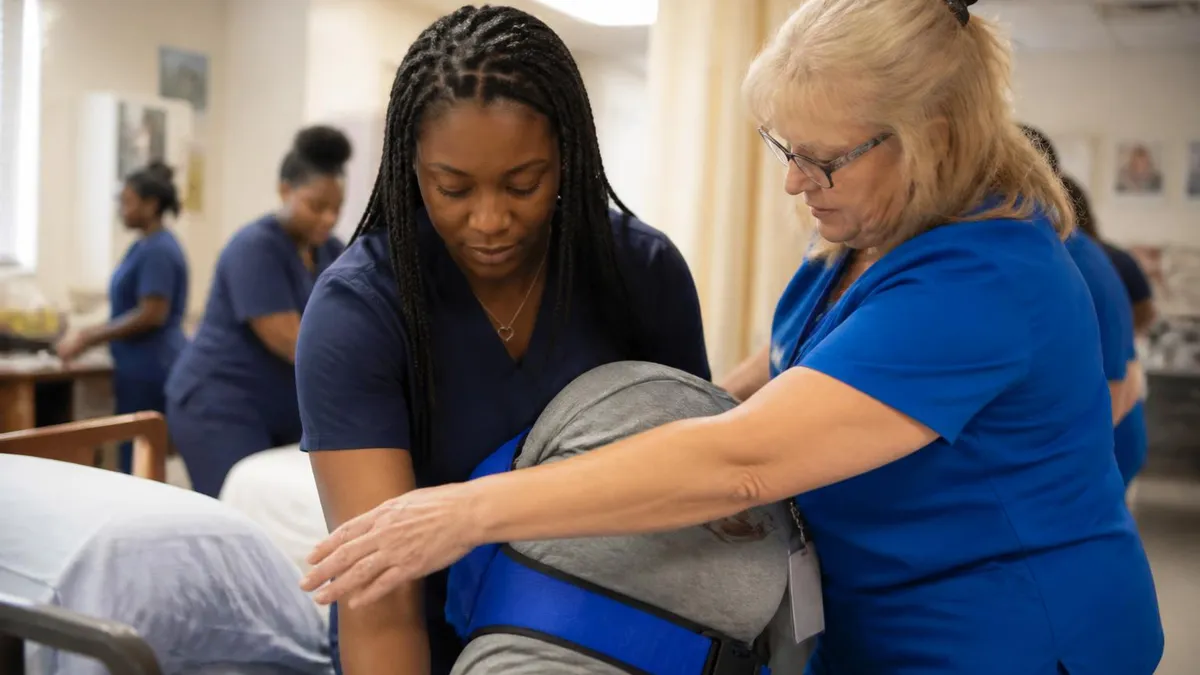
Advancing from HHA to CNA or LPN for Higher Pay
The fastest way to substantially raise HHA earnings is to advance to a higher credential. The two most common paths are CNA (Certified Nursing Assistant) and LPN (Licensed Practical Nurse). Each requires additional training but produces a meaningful pay jump that recovers the training cost within months.
The CNA bridge program is the easier of the two. Most states allow HHAs to complete a shortened CNA program — typically 40-80 hours of additional training plus a state competency exam — because the basic care content overlaps substantially. The cost is usually $300-$1,000 depending on the program, and many union benefit funds and some agencies cover the cost as a training benefit. Time to complete: 4-8 weeks part-time.
CNA pay typically runs $2-$5 per hour above HHA pay for the same client because CNAs can perform additional medical tasks (vital signs, range-of-motion exercises, more complex transfers) and qualify for nursing-home and hospital aide positions in addition to home care. A CNA in NYC earns $19-$23 per hour base. A CNA in California earns $19-$24 per hour. A CNA in Texas or Florida earns $14-$18 per hour. The bridge program pays for itself in roughly 2-3 months of regular work at the new rate.
The LPN path is longer and more expensive but produces a larger pay jump. LPN school is typically 12-18 months full-time at a community college or vocational program, costs $5,000-$20,000 depending on the institution, and culminates in passing the NCLEX-PN licensure exam. LPN home care pay runs $24-$32 per hour nationally, with private-duty LPN pay reaching $32-$45 per hour in major metros. The annual income jump from HHA ($33,000) to LPN ($55,000-$70,000) is substantial enough to justify the training investment for aides who want long-term career growth.
Some aides go further to RN (Registered Nurse) through associate's or bachelor's nursing programs. The investment is bigger — 2-4 years and $10,000-$60,000 — but RN home care pay reaches $35-$50 per hour, with case-management and supervisor positions paying $80,000-$110,000 annually. Many large home care agencies will pay for an aide's nursing school in exchange for a work commitment after licensure.
Working as an HHA vs Advancing to CNA
- + —
- + —
- + —
- + —
- − —
- − —
- − —
- − —
How to Find Your Local Pay Scale
You can estimate what home care agencies in your state can afford to pay you by looking up two public numbers. First, your state's Medicaid home care reimbursement rate — the amount the state pays an agency per hour of approved home care for a Medicaid client. Most states publish this rate annually. Search your state Medicaid website for "personal care services rate" or "home health aide reimbursement rate." The figure is usually $20-$30 per hour, with high-cost states (New York, California, Massachusetts) higher and low-cost states (Mississippi, Louisiana) lower.
Second, look up the state's wage parity or minimum compensation rule for home care workers if one exists. New York, California, and several other states have set minimum compensation floors above the regular state minimum wage. Subtract the wage parity floor from the Medicaid reimbursement rate, and the remainder is what the agency keeps for overhead — typically $8-$15 per hour. That math tells you how much room exists for negotiation. Agencies in tight reimbursement states have very little flexibility on wages because the state-set rate constrains them; agencies in higher-reimbursement states have more.
For private-duty work, the reference points are different. Look at what live-in private-duty agencies in your area charge clients — typically $25-$45 per hour, sometimes higher in luxury markets. The aide's share of an agency private-duty rate is usually 55%-65%, so an agency charging $35 per hour likely pays the aide $20-$22 per hour. Direct-hire private duty (skipping the agency) lets you negotiate close to the full client-paid rate, which is why direct-hire pays $22-$30 per hour while agency private-duty pays $15-$22 per hour.
Common Questions About HHA Pay
What is the HHA pay rate in NYC? NYC agency HHAs earn $17-$19 per hour base plus a wage parity supplement of $2-$4 per hour, totaling $19-$23 per hour in cash compensation. With 1199SEIU benefits the total compensation often exceeds $25 per hour. CDPAP rates run $16.50-$22 per hour depending on the fiscal intermediary.
How much does a private home health aide earn? Direct-hire private-duty aides earn $22-$30 per hour in major metros and $15-$22 per hour in smaller cities. The trade-off is no employer benefits and self-employment tax on 1099 income, so the higher headline rate has to offset roughly 30%-40% of additional costs compared to agency W-2 work.
What is the average home health aide salary in New York State? Statewide average is around $35,000-$45,000 annually at typical hours, with NYC and Long Island higher and rural upstate lower. Hourly wages run $15-$19 per hour base statewide, plus wage parity supplements that apply throughout the state at varying levels.
A Realistic Career Earnings Picture
Here is what a 20-year HHA career typically looks like. Year 1: $30,000-$36,000 in a major metro at 35 hours per week through an agency. Year 5: $38,000-$48,000 as an experienced aide with specialty skills picking up better-paying clients. Year 10: $42,000-$55,000, often with a mix of agency W-2 hours and private-duty 1099 hours. Year 15: $48,000-$65,000 if the aide has added CNA credentials and specialty experience.
For an aide who advances to CNA in years 3-4, the trajectory shifts upward by $4,000-$8,000 annually starting in year 4. For an aide who continues to LPN in years 8-10, the trajectory jumps by another $15,000-$25,000 annually after licensure. The cumulative effect over a 20-year career: an HHA who stays an HHA earns roughly $750,000-$950,000 over the period; an HHA who advances to LPN by year 10 earns roughly $1.1-$1.3 million.
The biggest income lever is not the credential — it is consistent hours. Most HHAs work fewer than 1,800 hours per year because of scheduling gaps between clients, cancellations, and the part-time structure of many home care assignments. Aides who maintain a steady 35-40-hour schedule through scheduling discipline, multiple agency affiliations, and one or two reliable private-duty clients earn 30%-50% more than aides who accept whatever hours the agency offers. The cumulative effect over 20 years is enormous — a difference of $200,000-$400,000 in total career earnings.
The other big lever is geography. Moving from a low-paying state (Mississippi, Oklahoma, Louisiana) to a higher-paying state (New York, Washington, Massachusetts) typically increases earnings by 60%-100% for the same hours of work. Cost-of-living differences absorb some of the gap, but high-paying states usually offer better benefits and more career-advancement support too. Aides who relocate early in their career generally come out ahead financially over a 15-20 year horizon, even after factoring in higher rent.
Ready to verify what you know about home health aide duties and ace your certification exam? The quizzes below cover every domain tested on the standard HHA written and skills tests, plus the safety, infection-control, and personal-care knowledge that gets you hired at higher-paying assignments.
Sample HHA Practice Questions
Try these questions from our free HHA practice tests. The correct answer and an explanation follow each question.
A patient is receiving oxygen therapy at home. Which action by the home health aide is most important for safety?
- A. Keep windows closed to maintain oxygen levels indoors
- B. Allow the patient to smoke as long as they are at least 5 feet from the equipment
- C. Ensure no open flames or smoking materials are near the oxygen equipment
- D. Turn up the oxygen flow rate if the patient complains of feeling short of breath
Answer: C. Ensure no open flames or smoking materials are near the oxygen equipment
Oxygen is highly flammable and accelerates combustion. Keeping all open flames, candles, and smoking materials away from oxygen equipment is critical to prevent fire or explosion.
Which professional is legally qualified to conduct the hands-on competency evaluation for a home health aide working in a Medicare-certified agency?
- A. A senior home health aide with five or more years of experience
- B. A licensed social worker employed by the agency
- C. A registered nurse or licensed therapist (PT, OT, or SLP)
- D. Any agency supervisor who has completed an 8-hour evaluator course
Answer: C. A registered nurse or licensed therapist (PT, OT, or SLP)
Federal regulations specify that the competency evaluation must be performed by a registered nurse or a licensed therapist (physical, occupational, or speech-language pathologist). Unlicensed personnel—regardless of experience—are not authorized to conduct or sign off on formal competency evaluations.
What is the primary role of a Home Health Aide (HHA) regarding a client's medications?
- A. Administer injections as needed
- B. Assist and remind clients to take their own medications as prescribed
- C. Adjust medication doses based on the client's condition
- D. Obtain prescription refills independently
Answer: B. Assist and remind clients to take their own medications as prescribed
HHAs are not licensed to administer medications independently; they assist and remind clients to self-administer as prescribed by the physician.
What are the rights of a patient in home health care?
- A. Patients have no rights if they are receiving home care.
- B. Patients have the right to safe, respectful care, including privacy
- C. Patients only have rights during hospital stays.
- D. Patients are only entitled to basic care.
Answer: B. Patients have the right to safe, respectful care, including privacy
In home health care, patients retain fundamental rights that ensure they receive safe, high-quality, and respectful care. These rights include the right to privacy, confidentiality of their health information, informed consent for all treatments, and the ability to participate in their care planning. These protections empower patients and ensure their dignity and well-being are prioritized within their own homes.
HHA Questions and Answers
About the Author

Registered Nurse & Healthcare Educator
Johns Hopkins University School of NursingDr. Sarah Mitchell is a board-certified registered nurse with over 15 years of clinical and academic experience. She completed her PhD in Nursing Science at Johns Hopkins University and has taught NCLEX preparation and clinical skills courses for nursing students across the United States. Her research focuses on evidence-based exam preparation strategies for healthcare certification candidates.
Join the Discussion
Connect with other students preparing for this exam. Share tips, ask questions, and get advice from people who have been there.
View discussion (8 replies)