
Home Health Aides: Career Guide, Pay, & Certification (HHA vs CNA) 2026 October
Home health aides help patients with daily living in their homes. Compare HHA vs CNA roles, pay $24k-$36k, the 75-hour federal training, and certification. 🎓
What Home Health Aides Actually Do
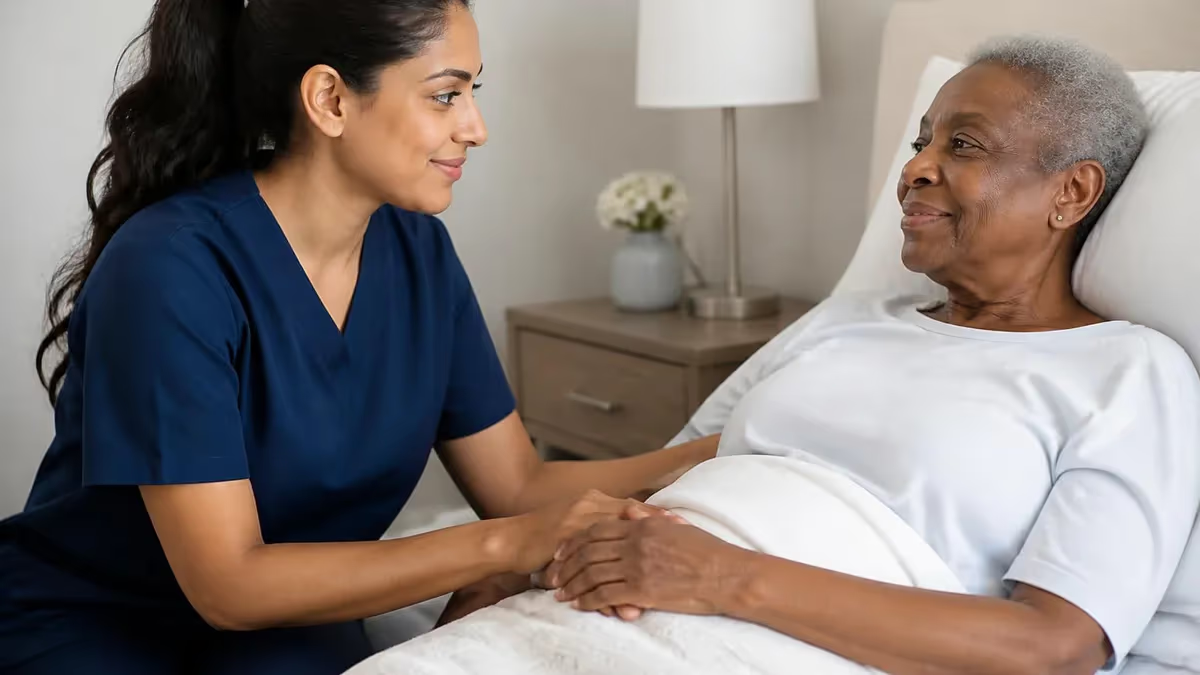
A home health aide spends most of the workday inside someone else's living room. That single fact shapes everything about the role, from the equipment you carry to the way you talk with a client.
You are not in a hospital wing. You are not surrounded by nurses, alarm buttons, and supply carts. You are one person in a house, and the patient is depending on you to get the basics right.
The basics in this job are called ADLs — activities of daily living. Bathing. Dressing. Toileting. Transferring from a bed to a wheelchair. Eating.
These are the things most people stop being able to do on their own as illness or age catches up. The home health aide steps in so the client can stay where they want to be: at home.
On top of the ADLs, aides handle a long list of small but essential tasks. Light housekeeping. Laundry. Grocery runs. Meal prep — and not just any meal, but meals that match a diabetic or low-sodium plan written by a dietitian.
You will record vital signs (temperature, pulse, blood pressure), help with prescribed exercises from a physical therapist, and watch for changes that mean something is wrong. If your client's ankles look puffier than yesterday, you note it and you call the nurse. That single observation can prevent a hospital trip.
There is also a piece of the job nobody quite advertises: companionship. Many home health aides spend their shift with a person who has not had a real conversation in days.
You become the friendly face, the steady presence, the one who notices that the lamp is unplugged or the cat hasn't been fed. That part of the work is hard to measure, but families remember it.
Home Health Aide Career By the Numbers
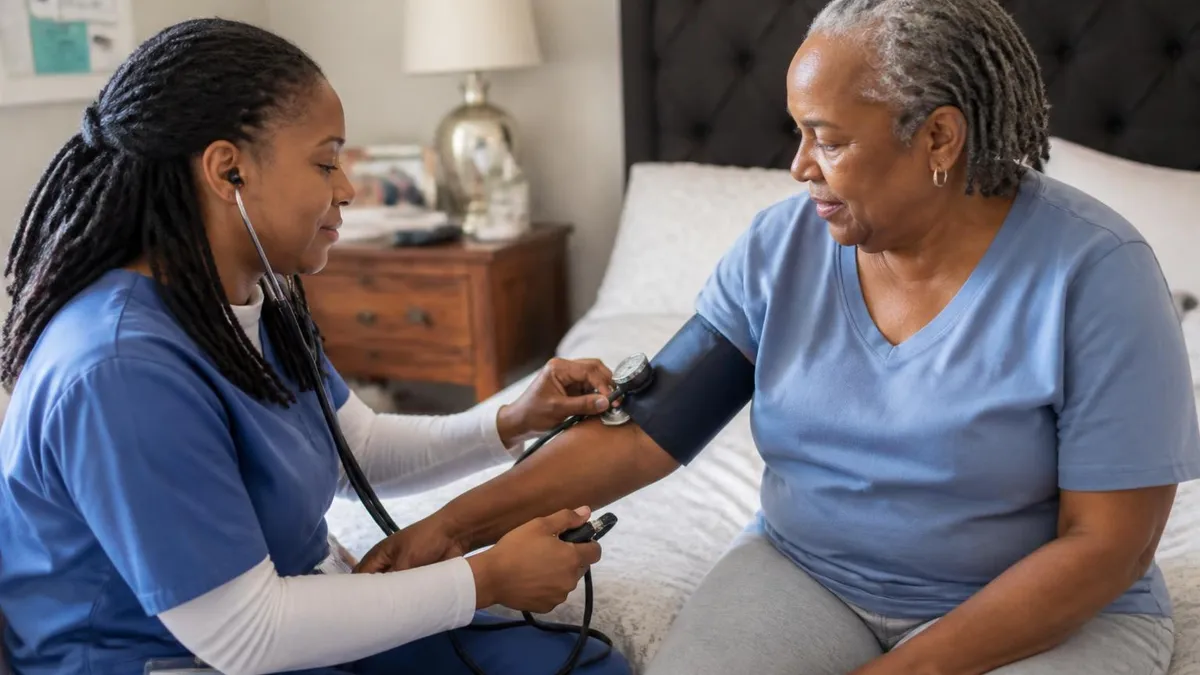
The job sits inside a regulated system. If the client is paying through Medicare, Medicaid, or most private long-term care insurance, the agency you work for has to be certified, your hours have to be documented, and your tasks must match a written care plan from a registered nurse or physician.
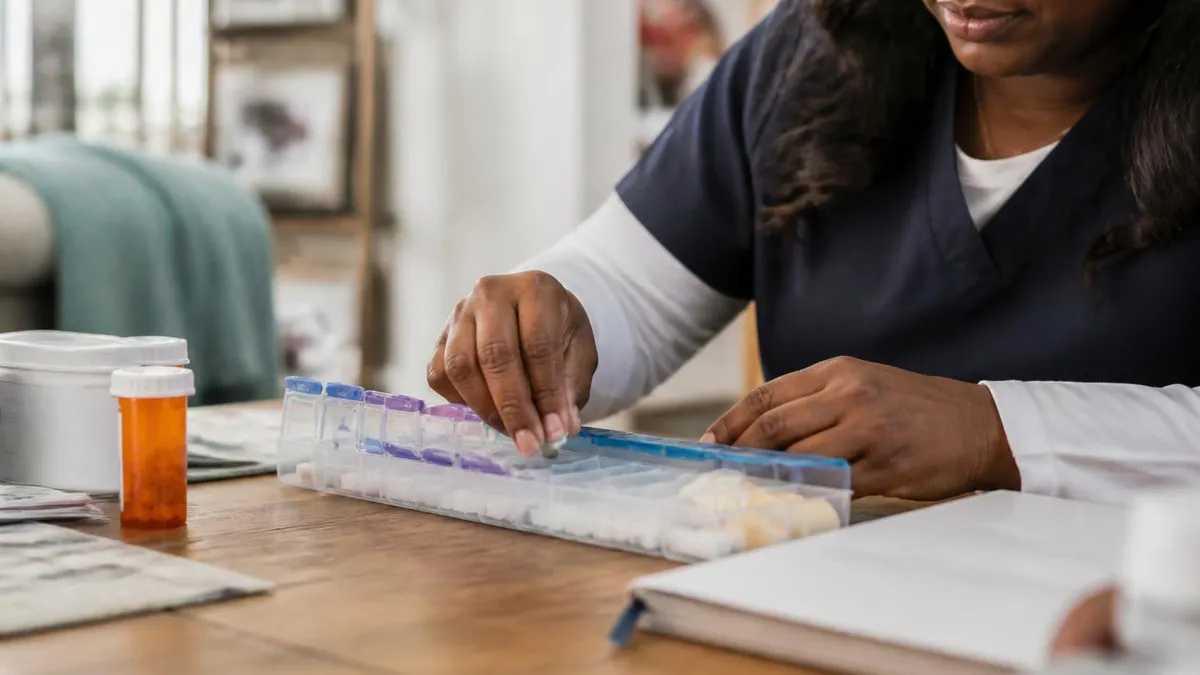
That plan is the rulebook for what you can do and what you cannot do. A home health aide cannot give injections, change sterile dressings, or administer medication beyond reminding the client to take what is already in the pillbox. Step outside the plan and you put your license — and the agency's certification — at risk.
Bottom Line
If you want to work one-on-one with patients in their homes, the HHA credential is the fastest legitimate entry point in healthcare. Seventy-five hours of training, a state exam, a clean registry entry — and you are working. From there, the ladder to CNA, LPN, and RN is wide open if you want it.
HHA vs CNA: Same Patient, Different Setting
Walk into any nursing home and you will see CNAs — certified nursing assistants — moving between rooms, hitting call lights, taking vitals, helping residents with the same ADLs an HHA covers. So what is the real difference?
The short answer is location and supervision. CNAs work in facilities — hospitals, nursing homes, assisted living, rehab centers — under direct supervision of an RN or LPN who is usually on the same floor. HHAs work in private homes under a care plan, with a supervising nurse who visits periodically but is not standing next to you while you work. You are alone most of the day with one client, sometimes two if you split shifts.
Training hours also differ. The federal minimum for an HHA is 75 hours (with 16 of those being supervised clinical practice). CNA programs run longer in most states — typically 75 to 150 hours — because facility care includes more clinical skills like catheter care and basic wound observation. A few states, like California, run their HHA programs at 120 hours, more than the federal floor. Florida and Texas keep close to the 75-hour minimum.
Pay is close but not identical. CNAs earn slightly more on average — roughly $36k median versus around $30k for HHAs — because facility work pays a shift differential and overtime tends to be available. HHAs, on the other hand, get something CNAs rarely have: one-on-one time. If the constant pace of a 30-bed unit drains you, home care can feel like a different planet.
HHA vs CNA at a Glance
HHA: private homes, one client at a time. CNA: nursing homes, hospitals, rehab — multiple residents per shift. Home work means independence and quieter days; facility work means a fast pace with constant call lights.
HHA: 75 federal minimum (up to 120 in California, New York, Alaska). CNA: 75 to 150 hours depending on state. The exam structure is similar — written plus skills demo.
HHA: a supervising nurse visits periodically and is on-call. CNA: RN or LPN on the floor at all times, with direct line-of-sight oversight on most tasks.
HHA: about $30,180 per year nationally. CNA: about $35,760 per year, plus shift differentials, hazard pay during outbreaks, and reliable overtime.
HHA: ADLs, light housekeeping, vitals, observation, range-of-motion. CNA: same plus catheter care, sterile dressing changes, and more clinical tasks under nurse delegation.
Both lead naturally to LPN and RN. HHA training hours often bridge into CNA programs with only 60–80 additional hours required for full CNA certification.
The 75-Hour Federal Training and What Comes After
Federal law (42 CFR §484.36) sets the floor: every home health aide working for a Medicare-certified agency must complete at least 75 hours of training, including 16 hours of supervised practical work, and pass a competency evaluation. That is the federal minimum. Plenty of states pile more on top.
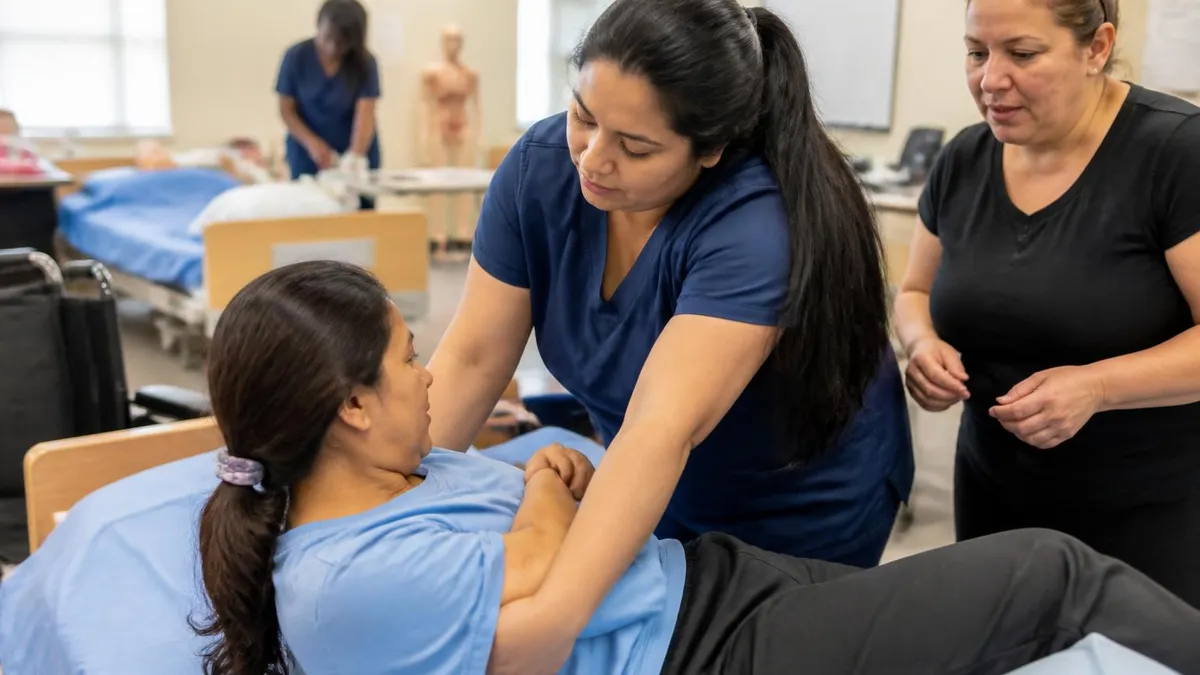
The 75 hours cover a defined curriculum. You will study communication, observation and reporting, infection control, basic body functions, ADL assistance, range-of-motion exercises, safe transfer techniques, nutrition, mental health, and dealing with cognitively impaired clients. Bloodborne pathogens (the OSHA piece) get their own block. So does emergency response — what to do when your client falls, has a seizure, or stops breathing.
After the hours come the test. The competency evaluation has a written portion and a skills demonstration. You will be asked to wash hands properly, take a blood pressure manually, transfer a patient using a gait belt, and perform a peri-care task on a mannequin or volunteer. It is not a trick exam, but it is graded by an RN, and missing a step on infection control will fail you. Practice the hand-washing sequence until it is automatic.
Inside the 75-Hour HHA Training Curriculum
State-by-State Extras
The federal 75-hour rule is the minimum — many states require more. California sits at 120 hours. New York requires 75 plus a separate state HHA exam. Alaska, Maine, and Oregon also stretch beyond the federal floor. A few states, like Texas and Mississippi, stay right at 75. If you train in one state and move to another, your hours may not fully transfer; check the receiving state's reciprocity rules before you pack the truck.
Every state also keeps a registry of certified aides. When you finish your program and pass the test, your name goes on that registry, and your employer is legally required to verify it before hiring you. The registry also tracks complaints — substantiated abuse or neglect findings stay on your record. A clean registry entry is your most portable credential.
You will see ads for fully online HHA certification — usually $99 to $299. Almost none of them satisfy state requirements, because the 16 supervised clinical hours cannot be done over Zoom. Always verify a program against your state's approved HHA training list before you pay.
Salary: What the Numbers Really Look Like
Federal data from the Bureau of Labor Statistics puts the median annual wage for home health and personal care aides at roughly $30,180. The bottom tenth percentile earns around $24,000, and the top tenth crosses $38,000. That is the national picture. Local pay varies sharply.
If you work in Massachusetts, Washington, or California, expect closer to the upper end — $36k to $40k is common, with overtime pushing higher. In the Midwest and the South, $25k–$28k is normal, with some rural counties paying $14 an hour or less. Big-city aides in New York and the Bay Area frequently clear $20 an hour for a 40-hour week, before live-in differentials. Night and weekend shifts pay a premium almost everywhere.
Two factors quietly drive your real take-home pay: travel time and case-load gaps. If you drive 25 minutes between clients and your agency pays only for the time you are inside a home, those drives eat into your earnings. Ask up front whether travel is paid, how gaps between cases are handled, and whether you can stack two or three clients in one neighborhood. Aides who plan their geography well can earn 15–20% more than aides who chase any open shift.
Before You Sign With an Agency
- ✓Confirm the agency is Medicare- or state-certified, not just licensed as a business in your state.
- ✓Ask whether travel time between clients is paid hourly, and at what rate versus client-facing hours.
- ✓Get the policy on case-load gaps in writing — what happens when a client is hospitalized or passes away?
- ✓Verify weekend, evening, holiday, and live-in shift differentials in writing before your first shift.
- ✓Check whether the agency reimburses CEUs (continuing education units) required for state license renewal.
- ✓Read at least 10 recent Glassdoor or Indeed reviews of the local office, not just the national brand.
- ✓Confirm the supervising nurse's availability — is there a 24/7 on-call line if your client falls at 2 a.m.?
- ✓Ask about scholarship or tuition support for CNA, LPN, or RN programs through employer partnerships.
- ✓Find out if the agency provides PPE (gloves, masks, hand sanitizer) or expects you to buy your own.
- ✓Get clarity on workers' comp coverage — home injuries are common and you need full coverage from day one.
Who's Hiring (And What They Pay)
The home care market in the United States is a mix of giant national agencies and tens of thousands of small local operators. The big names you will see on most job boards are BAYADA Home Health Care (one of the largest non-profit home health employers in the country), Maxim Healthcare Services, Right at Home, and Visiting Angels. Each runs its own internal training, often paid, and each pays close to the local median.
BAYADA is known for benefits — paid time off, scholarships, and a structured career ladder that moves aides into LPN and RN roles. Maxim runs a national footprint with frequent overtime. Right at Home and Visiting Angels are franchise networks, so pay and culture vary by the local office; the same brand can feel completely different in two cities. Always check the local franchise's Glassdoor reviews before you commit.
Outside the national brands, hospital-affiliated home health programs (think Mayo, Cleveland Clinic, large regional health systems) pay above the agency average and offer the cleanest career ladders into nursing. Medicaid waiver programs and Veterans Affairs contract jobs sit in the same band. If you have the option, applying to a hospital-affiliated home health agency is the most reliable way to land both a paycheck and a path forward.
Home Health Aide Career: Pros and Cons
- +Short training — you can be working in 3 to 8 weeks with a Medicare-certified employer.
- +One-on-one patient relationships, no overcrowded units, no constant call lights pulling you in five directions.
- +21% projected job growth through 2033 — among the highest growth rates in the entire labor market.
- +Flexible scheduling; many aides work around school, parenting, or another part-time job.
- +Clean stepping stone into CNA, LPN, and RN careers, often with employer-paid tuition support.
- +Strong demand means you can usually pick the geography and shift hours that fit your life.
- −Median pay still trails CNAs by about $5,000 a year on average across most U.S. states.
- −Unpaid travel time between clients can quietly eat 10 to 15 percent of your effective hourly wage.
- −Physically demanding work — patient transfers and lifting cause most home-care injuries, especially to the lower back.
- −Working alone in homes means slower help if something goes wrong with the client or with you personally.
- −Emotional load when long-term clients decline or pass away — many aides bond closely with their families.
- −Inconsistent case-load gaps can leave you without paid hours if your client is hospitalized for a week.
Pros and Cons at a Glance
| Pros | Cons |
|---|---|
| One-on-one patient relationships, no overcrowded units, no constant call lights pulling you in five directions. | Physically demanding work — patient transfers and lifting cause most home-care injuries, especially to the lower back. |
| Flexible scheduling; many aides work around school, parenting, or another part-time job. | Working alone in homes means slower help if something goes wrong with the client or with you personally. |
| Clean stepping stone into CNA, LPN, and RN careers, often with employer-paid tuition support. | Emotional load when long-term clients decline or pass away — many aides bond closely with their families. |
| Strong demand means you can usually pick the geography and shift hours that fit your life. | Inconsistent case-load gaps can leave you without paid hours if your client is hospitalized for a week. |
From HHA to CNA to LPN: The Career Ladder
The home health aide credential is almost always a starting point, not an ending point. Roughly half of working HHAs surveyed by industry groups say they intend to move into nursing within five years. Here is the typical path.
Step one is the CNA upgrade. Many states let you bridge HHA hours into a CNA program — sometimes you only need 60–80 additional hours to qualify for the CNA exam.
The CNA credential opens up hospital and nursing-home jobs at higher pay and brings access to tuition reimbursement programs through your employer.
Step two is the LPN or LVN — licensed practical or vocational nurse. LPN school runs 12–18 months and costs $5,000–$15,000, but median pay jumps to roughly $55,000.
Employers will often pay a chunk of the tuition if you commit to staying after graduation. That makes the LPN credential one of the highest-use moves in healthcare.
Step three, for those who want it, is the RN. Two-year associate degrees and accelerated bridge programs are everywhere. RN median pay in the U.S. crossed $80,000 in 2024.
The whole journey from HHA to RN can take three to five years if you keep working part-time during school. Many community colleges schedule classes specifically for working CNAs and HHAs.
You don't have to walk all three steps. Many HHAs settle happily into long careers in home care, becoming the trusted aide who has been with the same family for years.
Others use HHA work as flexible income while they finish unrelated degrees. The credential is portable and the work is in demand — the BLS projects 21% job growth for home health and personal care aides through 2033, faster than almost any other occupation.
What to Expect on Day One
First-day jitters are normal, even for aides who aced the competency exam. The shift will not look like the classroom. Houses are not built to clinical standards. The tub is too high. The bedroom is upstairs. The cat is in your bag. The client may be quiet, or anxious, or telling you the same story for the third time.
Your job is to slow down, follow the care plan, and ask the supervising nurse anything that feels off. Nobody expects you to be perfect — they expect you to be safe, observant, and honest. That is the floor of competence in this field, and it is also what keeps clients out of hospitals.
A final, practical note: study your state-specific rules before your first day, and practice the simulated questions until they feel routine. Pay attention to the infection control and observation modules — those are the two areas where new aides most often slip in the field, and where supervisors most often write people up. Once those become second nature, the rest of the job is the part you will actually enjoy.
Building a Safe Home Work Environment
Walk into the client's home on day one and do a quiet safety sweep before you start any care task. Check the bathroom for grab bars, the bedside for a clear path to the toilet, the kitchen for tripping hazards near the stove. Loose rugs cause more home-care falls than any other single thing. If you spot one, tell the family. If they refuse to move it, document the refusal in the daily note. That note will protect you when an injury happens later.
Your supply kit matters too. A good aide carries disposable gloves, a small thermometer, a basic blood-pressure cuff, hand sanitizer, plastic-coated wipes, and a notebook. Some agencies issue these, some don't. If yours doesn't, spend the $40 it costs to assemble your own. Showing up unprepared at a client's house is the fastest way to lose a placement.
Documentation: The Skill Nobody Teaches Well
The single thing that separates a confident home health aide from a struggling one is documentation. Every shift you note vitals, intake, output, mood, mobility, skin changes, and any deviations from the care plan.
The notes get sent to the supervising nurse, who decides what to escalate. Sloppy, vague notes — "patient fine, ate lunch" — make you invisible to the nurse and leave the client at risk.
Specific notes — "BP 138/82 sitting, 142/86 standing; refused 2 oz of supplement; right ankle edema 1+ unchanged" — make you a partner in the care team. Agencies promote and protect the aides who document like clinicians, even if the official scope is non-clinical.
Most agencies now use mobile EVV (electronic visit verification) apps that timestamp your arrival and departure with GPS. Learn the app cold during orientation.
If the app glitches and you cannot clock in, take a screenshot, photograph the GPS coordinates, and send your supervisor an email immediately. EVV disputes are one of the most common reasons aides lose pay, and a fast paper trail solves them every time.
Self-Care Is Part of the Job
Home health aides have one of the highest injury rates in the U.S. workforce — higher than warehouse workers in some states. The cause is almost always lifting.
A 180-pound client losing balance during a transfer can rip your lower back in a second, and back injuries are career-ending. Use the gait belt every single time. Refuse two-person transfers when no second person is on site.
If the client is bigger than you, ask the agency for a mechanical lift before something happens. Your body is your career.
Emotional self-care is the part nobody mentions in training. You will lose clients you have grown attached to. Many home health aides spend two or three years with the same family before the client passes.
Have a way to process that grief — a coworker check-in, a chaplain, even a journal — because stacking unresolved losses across years is what burns aides out of the field. The best agencies have free counseling programs; use them.
Sample HHA Practice Questions
Try these questions from our free HHA practice tests. The correct answer and an explanation follow each question.
Mandatory reporting laws require home health aides to report:
- A. Only what is specified in the care plan
- B. Suspected abuse, neglect, or exploitation of patients to the appropriate state agency or supervisor
- C. Only incidents that the patient asks to be reported
- D. Financial concerns to the billing department only
Answer: B. Suspected abuse, neglect, or exploitation of patients to the appropriate state agency or supervisor
Home health aides are mandatory reporters in all US states. They must report suspected abuse, neglect, or exploitation even if they are not certain — suspicion is sufficient to trigger reporting.
How should a home health aide assist with bathing a patient?
- A. By providing a bath in public areas.
- B. By ensuring privacy, comfort, and safety while assisting
- C. By leaving the patient alone during the bath.
- D. By ignoring the patient's preferences.
Answer: B. By ensuring privacy, comfort, and safety while assisting
The aide should ensure the patient’s privacy, comfort, and safety, while assisting with bathing if necessary and following the patient’s preferences and care plan.
What is the purpose of wearing gloves in home health care?
- A. To keep the hands clean.
- B. To prevent direct contact with potentially infectious materials
- C. To avoid getting the patient’s germs.
- D. To avoid touching surfaces.
Answer: B. To prevent direct contact with potentially infectious materials
Wearing gloves protects both the patient and the caregiver from exposure to harmful pathogens when handling bodily fluids or contaminated materials.
Why is skin care important in home health care?
- A. It is only necessary for elderly patients.
- B. It prevents infections and promotes comfort
- C. It is unnecessary for patients with no skin issues.
- D. It only affects the patient’s appearance.
Answer: B. It prevents infections and promotes comfort
Skin care is paramount in home health care to prevent serious health issues. Regular skin assessment and care help identify and prevent skin breakdown, pressure ulcers, and infections, which can lead to significant complications. Additionally, good skin hygiene promotes patient comfort and contributes to their overall sense of well-being.
HHA Questions and Answers
About the Author

Registered Nurse & Healthcare Educator
Johns Hopkins University School of NursingDr. Sarah Mitchell is a board-certified registered nurse with over 15 years of clinical and academic experience. She completed her PhD in Nursing Science at Johns Hopkins University and has taught NCLEX preparation and clinical skills courses for nursing students across the United States. Her research focuses on evidence-based exam preparation strategies for healthcare certification candidates.
Join the Discussion
Connect with other students preparing for this exam. Share tips, ask questions, and get advice from people who have been there.
View discussion (8 replies)