
HHA License Guide: Requirements, Training, and Certification Steps 2026 October
Complete HHA license guide: 💯 requirements, hha exchange login, training hours, certification exam, costs, and renewal steps for home health aides.
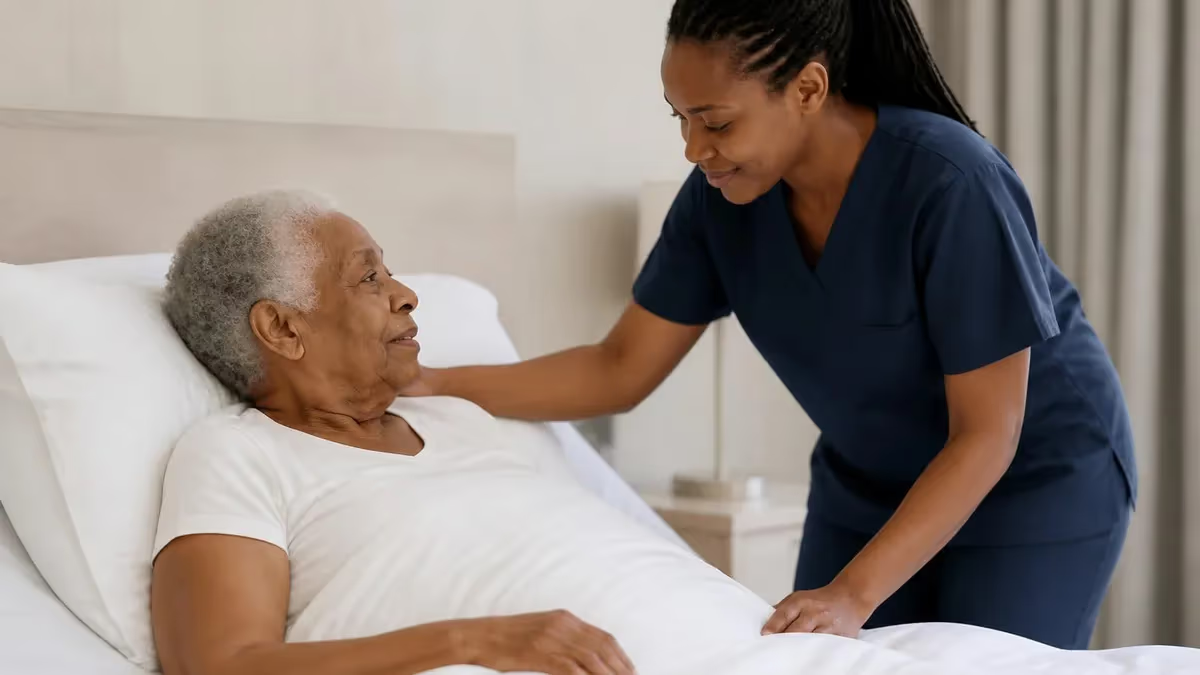
Earning your hha license is the single most important step toward a stable, in-demand caregiving career in the United States, and the process is far more structured than most newcomers expect when they first explore home health aide training. Whether you live in New York, Florida, Texas, or California, the federal baseline requires at least 75 hours of training, supervised clinical practice, and a competency evaluation before a state will list you on its registry as a certified home health care aide.
The phrase "hha license" is technically a misnomer in many states — most jurisdictions issue a certification, registry listing, or state credential rather than a traditional license — but employers, agencies, and patients all use the term interchangeably. Either way, the destination is the same: your name appears on the official state registry, your background check clears, and you can legally accept paid assignments through a Medicare-certified agency or private-duty employer near you.
This guide walks through every step in plain language, from picking an approved hha training program to passing the competency exam, registering on the state list, and keeping your credential active year after year. We'll cover federal rules under the Omnibus Budget Reconciliation Act of 1987, state-specific overlays that add hours or extra background checks, and the real costs you should budget for tuition, fingerprinting, TB tests, and CPR cards.
You'll also learn how the hha exchange platform fits into the daily life of a working aide — it's the electronic visit verification system most agencies use to confirm visits, log tasks, and process payroll, so understanding the hha exchange login workflow before day one will save you a lot of stress. We'll explain how the app talks to Medicaid billing, why GPS check-ins matter, and what to do when a visit fails to upload.
If you're comparing this credential to a CNA or LPN path, we'll show where the home health aide certification sits on the career ladder, how quickly you can finish (most students wrap up in four to twelve weeks), and what kinds of wages and shifts to expect after passing. The hha login you'll use for scheduling, time clocks, and paystubs is often your gateway to overtime and weekend differentials.
Pass rates on the state competency exam hover near 80 percent nationally, but candidates who use structured practice questions, video walkthroughs of skills, and short timed quizzes consistently beat that average. By the end of this article you'll have a realistic timeline, a clear cost breakdown, and a study plan you can start tonight to move from zero experience to a fully credentialed home health aid working with patients in your community.
Bookmark this page, because we'll reference it throughout the certification journey — from choosing a school to renewing every two years. The faster you understand the moving parts, the faster you can stop reading about caregiving and actually start doing it for real wages, with real patients, in a real home.
HHA License by the Numbers
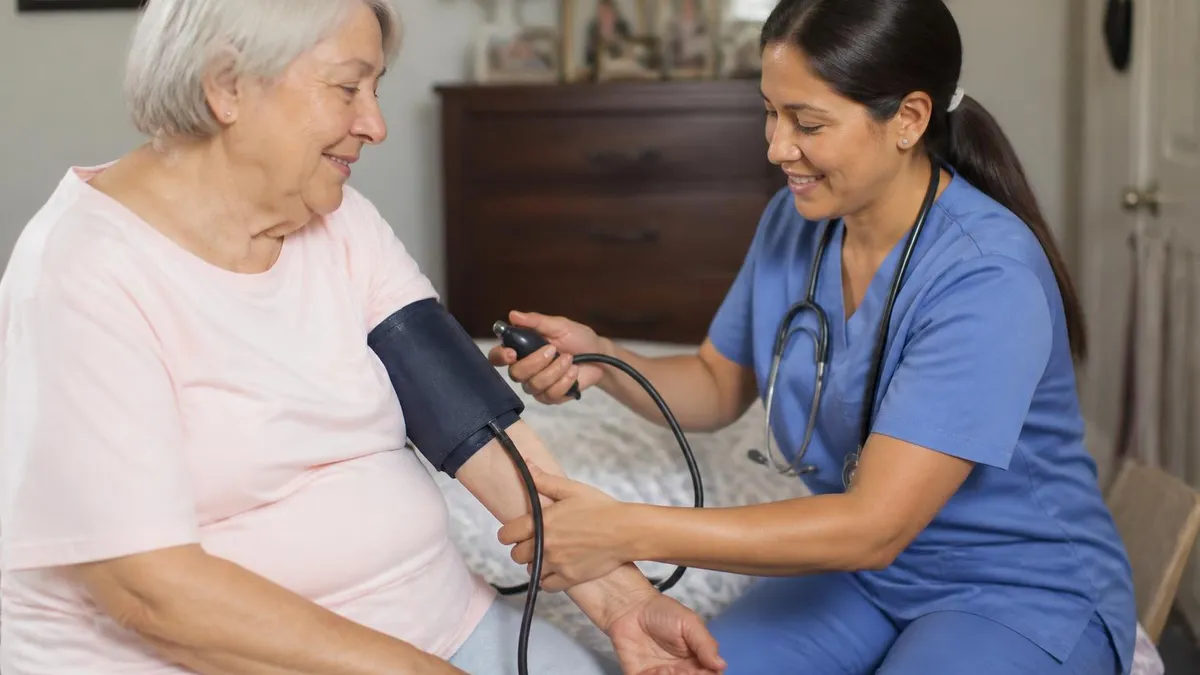
Your Path to an HHA License
Meet Basic Eligibility
Enroll in Approved Training
Complete Clinical Hours
Pass the Competency Exam
Register on State List
Maintain & Renew
Choosing the right training program is the foundation of every successful home health aide certification journey, and the quality of the school you pick will directly affect your competency exam pass rate, your job offers, and your starting pay. Start by visiting your state department of health website and downloading the official list of approved providers — never enroll in a program that isn't on that list, no matter how cheap or convenient the marketing looks online.
Approved schools fall into four broad categories: community colleges with formal credit-bearing programs, private vocational schools offering fast-track certificates, American Red Cross chapters running classic 75-hour curricula, and home health agencies that train students for free in exchange for an employment commitment. Each path has tradeoffs in cost, schedule flexibility, and post-graduation support, so it pays to call two or three before signing anything.
The federal home health aide training program standard requires at least 75 total hours, but states like New York demand 75 hours plus a separate Personal Care Aide upgrade, California requires 120 hours, and Washington asks for 85. Always confirm your state's exact number before paying tuition. Out-of-state hours don't automatically transfer — you may need supplemental training even if you're already certified somewhere else through a reciprocity application.
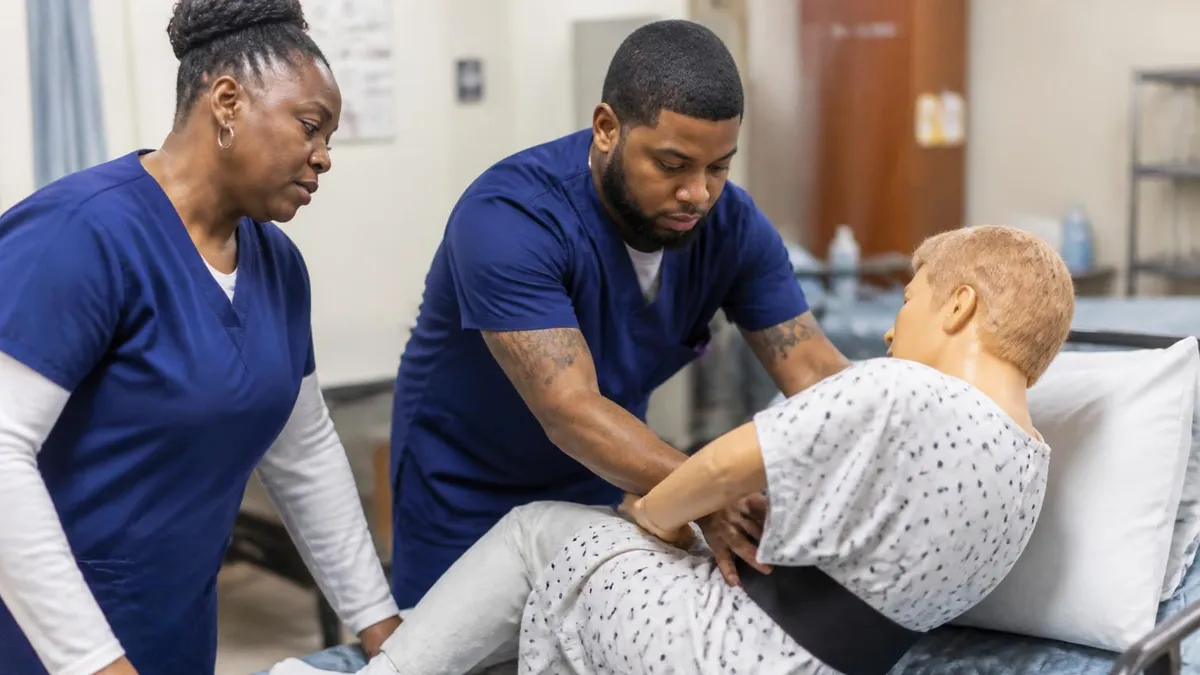
Look for programs that include hands-on lab time with mannequins, hospital beds, gait belts, and actual hygiene supplies. Pure online courses don't satisfy the clinical requirement anywhere in the U.S., so be skeptical of any provider promising a full credential through video lectures alone. Hybrid programs that combine virtual lectures with in-person skills labs are legitimate and increasingly popular, especially among working parents and second-career students.
Cost varies enormously. Free agency-sponsored programs cover everything but lock you into a 6–12 month employment agreement. Community colleges typically charge $400–$1,200. Private vocational schools can run $800–$2,500. Check whether your state's Workforce Innovation and Opportunity Act office, vocational rehabilitation department, or local hha exchange login agency partners offer grants or tuition reimbursement before you swipe a credit card.
Class size matters. Programs with more than 20 students per clinical instructor tend to rush skills check-offs, which hurts your readiness for the live skills exam. Ask the admissions office for the most recent state pass rate — reputable schools publish it openly, and anything under 70 percent is a red flag you should walk away from regardless of price or location.
Finally, look at job placement assistance. Strong programs maintain relationships with local agencies, hospitals, and hospice organizations, and they'll often coach you through resumes, interviews, and the hha exchange onboarding process. Graduates from connected schools typically land their first paying client within two weeks of certification, while students from low-touch programs may search for a month or longer.
HHA Practice Test Questions
Prepare for the HHA - Home Health Aide exam with our free practice test modules. Each quiz covers key topics to help you pass on your first try.
HHA Basic Care and Comfort
HHA Exam Questions covering Basic Care and Comfort. Master HHA Test concepts for certification prep.
HHA Basic Care and Comfort Questions and A...
Free HHA Practice Test featuring Basic Care and Comfort Questions and Answers. Improve your HHA Exam score with mock test prep.
HHA Communication and Interpersonal Skills
HHA Mock Exam on Communication and Interpersonal Skills. HHA Study Guide questions to pass on your first try.
HHA Communication and Interpersonal Skills...
HHA Test Prep for Communication and Interpersonal Skills Questions and Answers. Practice HHA Quiz questions and boost your score.
HHA Infection Control and Safety
HHA Questions and Answers on Infection Control and Safety. Free HHA practice for exam readiness.
HHA Infection Control and Safety Questions...
HHA Mock Test covering Infection Control and Safety Questions and Answers. Online HHA Test practice with instant feedback.
HHA Mental and Emotional Support
Free HHA Quiz on Mental and Emotional Support. HHA Exam prep questions with detailed explanations.
HHA Mental and Emotional Support Questions...
HHA Practice Questions for Mental and Emotional Support Questions and Answers. Build confidence for your HHA certification exam.
HHA Mobility and Transfer Techniques
HHA Test Online for Mobility and Transfer Techniques. Free practice with instant results and feedback.
HHA Mobility and Transfer Techniques Quest...
HHA Study Material on Mobility and Transfer Techniques Questions and Answers. Prepare effectively with real exam-style questions.
HHA Nutrition and Hydration
Free HHA Test covering Nutrition and Hydration. Practice and track your HHA exam readiness.
HHA Nutrition and Hydration Questions and ...
HHA Exam Questions covering Nutrition and Hydration Questions and Answers. Master HHA Test concepts for certification prep.
HHA Observation and Reporting
Free HHA Practice Test featuring Observation and Reporting. Improve your HHA Exam score with mock test prep.
HHA Observation and Reporting Questions an...
HHA Mock Exam on Observation and Reporting Questions and Answers. HHA Study Guide questions to pass on your first try.
HHA Patient Rights and Ethics
HHA Test Prep for Patient Rights and Ethics. Practice HHA Quiz questions and boost your score.
HHA Patient Rights and Ethics Questions an...
HHA Questions and Answers on Patient Rights and Ethics Questions and Answers. Free HHA practice for exam readiness.
HHA Personal Care and Hygiene
HHA Mock Test covering Personal Care and Hygiene. Online HHA Test practice with instant feedback.
HHA Personal Care and Hygiene Questions an...
Free HHA Quiz on Personal Care and Hygiene Questions and Answers. HHA Exam prep questions with detailed explanations.
HHA Home Health Aide Certification Practic...
HHA Practice Questions for Home Health Aide Certification Practice Test. Build confidence for your HHA certification exam.
HHA Home Health Aide Certification Practic...
HHA Test Online for Home Health Aide Certification Practice Test #1. Free practice with instant results and feedback.
HHA Home Health Aide Certification Practic...
HHA Study Material on Home Health Aide Certification Practice Test #2. Prepare effectively with real exam-style questions.
HHA Home Health Aide Certification Practic...
Free HHA Test covering Home Health Aide Certification Practice Test #3. Practice and track your HHA exam readiness.
HHA Home Health Aide Certification Practic...
HHA Exam Questions covering Home Health Aide Certification Practice Test #4. Master HHA Test concepts for certification prep.
HHA HOME HEALTH AIDE COMPETENCY TEST
Free HHA Practice Test featuring HOME HEALTH AIDE COMPETENCY TEST. Improve your HHA Exam score with mock test prep.
HHA HOME HEALTH AIDE COMPETENCY TEST #1
HHA Mock Exam on HOME HEALTH AIDE COMPETENCY TEST #1. HHA Study Guide questions to pass on your first try.
HHA Home Health Aide Competency Test
HHA Test Prep for Home Health Aide Competency Test. Practice HHA Quiz questions and boost your score.
HHA Home Health Aide Competency Test #2
HHA Questions and Answers on Home Health Aide Competency Test #2. Free HHA practice for exam readiness.
Inside the HHA Certification Exam
The written section of the home health aide certification exam typically contains 60 to 100 multiple-choice questions covering infection control, patient rights, communication, body mechanics, nutrition, vital signs, observation, and emergency response. You'll have 90 minutes to two hours depending on your state, and the passing score is usually 75 percent or higher.
Questions are scenario-based rather than memorization-driven. Expect short patient vignettes followed by "what would you do first?" choices that test prioritization and safety judgment. Reading the question stem twice and eliminating obviously wrong answers boosts most candidates' scores by five to ten points instantly.
Is an HHA License Worth It?
- +Short training timeline — most students finish in 4 to 12 weeks and start earning quickly
- +Low upfront cost compared to nursing degrees, with frequent free or employer-sponsored programs
- +21 percent job growth projected through 2032, far outpacing the national average
- +Flexible schedules including weekend, overnight, and live-in shifts to fit your life
- +Direct stepping stone toward CNA, LPN, or RN credentials with stackable coursework
- +Meaningful patient relationships and the satisfaction of helping people stay home safely
- −Physically demanding work involving lifting, transfers, and long hours on your feet
- −Median wages remain modest compared to other allied health roles requiring more training
- −Exposure to infectious illness, difficult family dynamics, and emotional end-of-life situations
- −Some agencies pay only for face-to-face visit minutes, not for travel time between clients
- −Recertification rules vary by state, and a long gap without paid work can void your credential
- −Variable client schedules can make hitting full-time hours unpredictable in slower markets
Pros and Cons at a Glance
| Pros | Cons |
|---|---|
| Low upfront cost compared to nursing degrees, with frequent free or employer-sponsored programs | Physically demanding work involving lifting, transfers, and long hours on your feet |
| Flexible schedules including weekend, overnight, and live-in shifts to fit your life | Median wages remain modest compared to other allied health roles requiring more training |
| Direct stepping stone toward CNA, LPN, or RN credentials with stackable coursework | Exposure to infectious illness, difficult family dynamics, and emotional end-of-life situations |
| Meaningful patient relationships and the satisfaction of helping people stay home safely | Some agencies pay only for face-to-face visit minutes, not for travel time between clients |
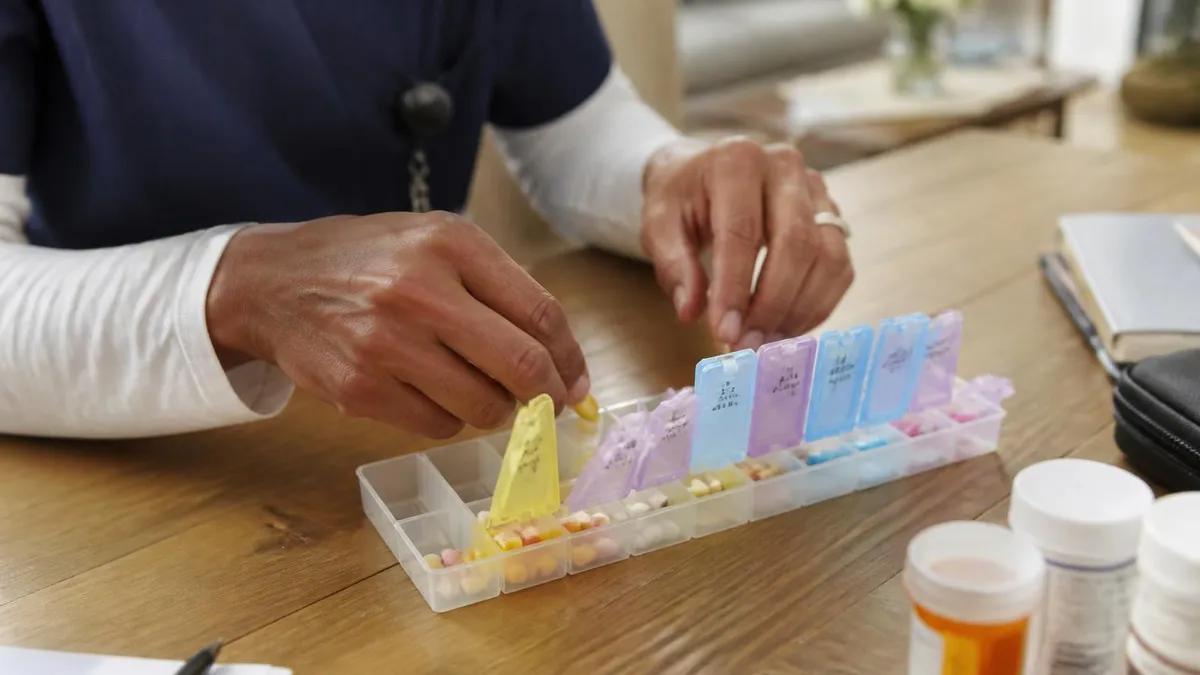
HHA License Application Checklist
- ✓Confirm you are at least 18 and have a valid government-issued photo ID
- ✓Obtain proof of high school diploma, GED, or equivalent transcript if your state requires it
- ✓Complete a state-approved 75+ hour home health aide training program in person or hybrid
- ✓Pass a two-step TB skin test or chest X-ray within the last 12 months
- ✓Submit fingerprints for state and FBI criminal background checks
- ✓Earn a current American Heart Association or Red Cross CPR/BLS card
- ✓Score 75 percent or higher on both written and skills portions of the competency exam
- ✓Gather two professional or instructor references on your training school's letterhead
- ✓Pay the state nurse aide registry application fee — typically $20 to $130 depending on state
- ✓Verify your name appears on the official state registry before accepting any paid assignments
Your 24-Month Work Clock Starts at Certification
Federal regulations require every HHA to complete at least one paid, nursing-supervised shift every 24 consecutive months to keep certification active. If you certify and then take a long break, your name will be removed from the registry and you'll have to repeat the full 75-hour training program. Always log at least a few hours through a Medicare-certified agency each year — even a single weekend shift is enough to reset the clock and protect your credential.
Let's talk dollars, because the financial reality of becoming a certified home health care aide shapes whether the credential makes sense for your household. Tuition is typically the smallest expense — most students spend more on ancillary requirements than on the course itself, and budgeting for the full picture before you enroll prevents nasty surprises three weeks into class when you discover you owe another $150 for fingerprints.
The total upfront investment for most candidates lands between $400 and $1,800. That figure includes tuition ($0 to $1,200), scrubs and shoes ($60 to $150), a physical exam and TB test ($50 to $200), CPR certification ($60 to $120), fingerprinting and background check ($35 to $100), exam fees ($75 to $130), and the state registry application ($20 to $130). Many employers reimburse some or all of these costs after your first 90 days.
On the income side, the Bureau of Labor Statistics reported a 2024 median wage of $16.12 per hour or $33,530 annually for home health and personal care aides. Top earners — typically in California, Massachusetts, Washington, and New York metro areas — exceed $42,000. Live-in aides, specialized hospice aides, and aides who pick up overnight differentials routinely add another $3,000 to $6,000 per year through shift premiums and overtime.
Return on investment is exceptional. Most students recoup tuition within their first three to five weeks of full-time work, then begin banking real income. Compared to a four-year degree carrying $30,000+ in student loans, the home health aide certification path delivers earning power within months rather than years, which is why second-career adults, immigrants, and parents returning to work disproportionately choose it.
Beyond base pay, look at the stackability of the credential. Many hha login portals also serve as gateways to continuing education modules that count toward CNA bridges or LPN prerequisites. Some employers fully fund the next rung — earn a CNA in six months while working as an HHA, then an LPN in another 12 to 18 months while working as a CNA. Each step typically adds $4 to $10 per hour.
Tax-wise, mileage between client homes is deductible if your employer doesn't reimburse it, uniforms and required equipment qualify as unreimbursed business expenses in many cases, and continuing education courses can lower your federal tax bill. Keep a simple mileage log app on your phone from day one — most aides leave $400 to $1,200 on the table each year by failing to track miles driven between visits.
Finally, factor in benefits. Larger agencies offer health insurance, dental, paid time off, retirement matching, and tuition reimbursement that effectively add 15 to 25 percent to your hourly compensation. Smaller agencies and private clients pay higher cash rates but rarely include benefits. Run the math both ways before accepting an offer, because a $17/hour W-2 job with full benefits often beats a $22/hour 1099 gig with zero coverage.
Every year, hundreds of aspiring aides pay thousands of dollars to unaccredited online schools that promise an HHA certification through video lectures alone. These credentials are not recognized by any state registry and cannot be used to get hired by a Medicare-certified agency. Always verify your program is listed on your state department of health's approved provider page before paying any tuition, and walk away from any school that won't show you their state approval number in writing.
Keeping your hha license active is just as important as earning it in the first place, and far too many newly minted aides lose their credential not because they failed a renewal exam but because they simply forgot a deadline or didn't log enough paid hours. Understanding the renewal landscape before your first shift saves you from having to repeat the 75-hour training program two years from now over a paperwork miss.
The federal baseline rule is straightforward: complete at least one paid, nurse-supervised home health visit every 24 consecutive months. If you go a full two years without billable patient work, your name is removed from the active registry and you must repeat full home health aide training to reinstate. This rule trips up aides who take parental leave, move out of state for a year, or transition to a non-clinical job temporarily.
On top of the federal rule, most states layer 12 hours of in-service continuing education annually. Topics typically include infection control updates, abuse and neglect identification, HIPAA refreshers, medication reminders, and dementia care best practices. Employers usually provide these trainings for free during paid shifts, but freelance aides and 1099 contractors are responsible for sourcing their own — budget about $50 to $150 per year if you're not employed by an agency.
Reciprocity between states exists but is uneven. Some states accept your existing credential outright if you've worked recently and your record is clean. Others — notably California and New York — require additional hours, a state-specific competency exam, or a separate fingerprint card before they'll add you to their registry. Always apply for reciprocity at least 60 days before your planned move, because processing times can stretch from four to twelve weeks.
CPR certification is a frequent stumbling block. Most agencies require current American Heart Association BLS or Red Cross CPR for the Professional Rescuer, and these cards expire every two years on a different calendar than your state registry. Set two separate calendar reminders — one for your registry renewal and one for your CPR renewal — to avoid the awkward situation of being suspended from shifts mid-week.
Background check refreshes happen on different cycles by state and employer. Some agencies re-run fingerprints every two years, others rely on a continuous monitoring service that flags any new arrests in real time. Even a minor offense like a DUI or shoplifting charge can trigger an automatic suspension while the state board reviews your file, so disclose any incidents to your employer immediately rather than letting them surface through the system.
If your credential lapses, don't panic — most states offer a 60 to 90 day grace period during which you can pay a late fee, complete missed in-service hours, and resume work without retesting. Beyond the grace window you'll likely need to retake the competency exam, and beyond 24 months without paid hours you'll repeat full training. Keep digital copies of every certificate, evaluation, and pay stub in a cloud folder so you can document continuous practice instantly.
Now for the practical tips that separate aides who breeze through certification from those who struggle — these are the small habits and study moves that consistently produce first-attempt passes and strong first-year careers. Start with a one-page study calendar the day you enroll in training. Block 45 minutes daily for review, 90 minutes twice a week for skills practice, and one full Saturday morning before exam week for a complete simulated test.
Build a study group of two or three classmates within the first week of class. Groups of four or more tend to drift into socializing, but trios stay focused. Rotate roles each session — one person plays the patient, one performs the skill, one acts as the evaluator with a clipboard. This three-way drill mirrors the actual exam structure and surfaces your weak spots faster than solo studying ever will.
Memorize the indirect care steps that every skill requires: knock and identify yourself, wash hands, gather supplies, provide privacy, explain the procedure, ensure the call light is in reach, and document afterward. Examiners pass or fail candidates on these wrapper steps more often than on the actual technical skill, because they reveal whether you'll be safe in a real patient's home.
Take at least 300 practice questions before exam day. Spread them across multiple sources — your textbook, free online quizzes, your school's question bank, and timed practice tests. Track which content areas you miss most often (usually nutrition, vital signs ranges, or emergency response) and spend extra time on those before broad review. Repetition under timed conditions builds the speed you'll need on the real test.
On exam day, eat a real breakfast, bring water, arrive 30 minutes early, and dress in plain scrubs with closed-toe shoes and your hair pulled back. Examiners notice professionalism from the parking lot onward. Leave jewelry, long nails, and strong perfume at home — these are explicit deductions in many state rubrics and an easy way to lose points before you've even washed your hands.
After certification, get on the hha exchange platform immediately and complete the onboarding modules your agency assigns. The faster you understand electronic visit verification, the smoother your first month of paid work will be. Practice clocking in and out at a fake address from your couch so you're not fumbling with the app in front of a real client on day one.
Finally, treat your first 90 days as paid training. Ask every nurse, every senior aide, and every case manager you meet to show you one new thing — a better transfer technique, a faster way to document, a tip for dementia communication. Aides who actively learn during their probation period typically earn raises, preferred shifts, and specialty assignments within their first year on the job.
Sample HHA Practice Questions
Try these questions from our free HHA practice tests. The correct answer and an explanation follow each question.
At the end of a home health competency training program, a trainee who fails the performance skill evaluation:
- A. Is automatically certified after completing the written portion
- B. Must complete additional training and remediation, then pass a re-evaluation before providing care independently
- C. May work with patients under minimal supervision while awaiting results
- D. Is permanently banned from working in home health
Answer: B. Must complete additional training and remediation, then pass a re-evaluation before providing care independently
Competency evaluation failure requires documented remediation and successful re-evaluation. Patient safety standards do not permit aides to practice independently until all competencies are satisfactorily demonstrated.
The "return demonstration" method in competency training means:
- A. The trainer watches a video of the aide performing a skill
- B. The aide performs the skill in front of the evaluator after instruction, demonstrating actual proficiency rather than just knowledge
- C. The aide takes a written test about the skill
- D. The evaluator performs the skill twice for the aide to observe
Answer: B. The aide performs the skill in front of the evaluator after instruction, demonstrating actual proficiency rather than just knowledge
Return demonstration is the gold standard for skill competency assessment — it evaluates actual performance ability in a controlled setting, not merely theoretical knowledge.
When observing a client's skin, the HHA notices a new reddened area over the client's tailbone. This should be reported because it may indicate:
- A. A normal skin variation
- B. The beginning of a pressure injury
- C. An allergic reaction to soap
- D. Bruising from a fall
Answer: B. The beginning of a pressure injury
Persistent redness over a bony prominence is an early sign of a pressure injury and must be reported promptly.
Which of these statements describes good body mechanics?
- A. Carry heavy objects as far away from the body as possible.
- B. Bend the knees when lifting an object off the floor or when kneeling to pick up objects.
- C. Bend over at the waist when lifting an object from the floor.
- D. Lift rather than push a heavy object
Answer: B. Bend the knees when lifting an object off the floor or when kneeling to pick up objects.
Bending the knees and keeping your back straight when lifting is a fundamental principle of good body mechanics. This technique utilizes the strong leg muscles to bear the load, protecting the back from strain and potential injury. It ensures proper alignment and distributes weight safely.
HHA Questions and Answers
HHA Agencies Near Me: How to Find, Vet, and Choose the Right Home Health Aide Employer
HHA Practice Test Video Answers

HHA Jobs Near Me — How to Find, Train, and Start Your Career
HHA Video Questions and Answers — What You'll Actually Face
What Is a HHA? Complete Career Overview, Duties, and Path to Certification
About the Author

Registered Nurse & Healthcare Educator
Johns Hopkins University School of NursingDr. Sarah Mitchell is a board-certified registered nurse with over 15 years of clinical and academic experience. She completed her PhD in Nursing Science at Johns Hopkins University and has taught NCLEX preparation and clinical skills courses for nursing students across the United States. Her research focuses on evidence-based exam preparation strategies for healthcare certification candidates.
Join the Discussion
Connect with other students preparing for this exam. Share tips, ask questions, and get advice from people who have been there.
View discussion (8 replies)