
Ham Radio Crash Course: Complete Training Guide for the Technician License
🟢 Master your ham radio crash course with our complete training guide. Learn frequencies, equipment, bands, and ace the ham radio license test in 2026 October.

If you have been searching for a ham radio crash course that actually prepares you for the real exam, you have landed in the right place. The ham radio license is the gateway to one of the most rewarding hobbies and emergency communication networks in the United States. Earning your Technician class license means passing a 35-question exam administered by volunteer examiners across the country, and the best candidates combine structured study with hands-on practice from the very first day.
Ham radios have evolved far beyond the bulky units of the 1970s. Modern transceivers are compact, packed with digital features, and capable of communicating locally, regionally, and even globally through repeater networks and satellite links. Whether your goal is emergency preparedness, contesting, public service events, or simply connecting with a worldwide community of operators, the Technician license is your starting point and this training guide will take you through every critical concept you need to master.
Understanding what is a ham radio goes far deeper than pressing a transmit button. The hobby encompasses electronics theory, federal regulations, antenna design, propagation physics, and operating procedures. Each of those domains appears on the Technician exam, which means a well-rounded study plan covers all of them systematically. This guide is built around that exact structure, breaking the material into digestible segments so that even a complete beginner can pass on the first attempt.
The Federal Communications Commission (FCC) regulates amateur radio in the United States under Part 97 of the Code of Federal Regulations. These rules exist to ensure amateur operators share spectrum responsibly, maintain station safety, and provide genuine public benefit. The Technician exam tests your knowledge of these rules alongside basic electronics and operating practices, so you cannot skip the regulatory sections no matter how technically inclined you already are.
One common misconception is that you need an extensive engineering background to earn your ham radio license. In reality, thousands of people with zero electronics experience pass the Technician exam every year with four to six weeks of dedicated study averaging roughly an hour per day. The question pool is publicly available, the material is well-documented, and free practice resources — including the quizzes on PracticeTestGeeks.com — make preparation more accessible than ever before in the hobby's long history.
Throughout this guide you will find explanations of ham radio frequencies, ham radio bands, antenna fundamentals, and the equipment categories that show up on the exam. We will also walk through study schedules, test-day logistics, and what to do immediately after you pass so that you can start transmitting as quickly as possible. Consider this your complete roadmap from curious newcomer to licensed amateur radio operator.
Ham Radio License by the Numbers
Key Facts at a Glance
| Item | Value | Details |
|---|---|---|
| Exam Questions | 35 | Must answer 26 correctly to pass |
| Minimum Pass Score | 74% | 26 out of 35 questions correct |
| Question Pool Size | 412 | Official FCC Technician question pool |
Technician Exam Format & What to Expect
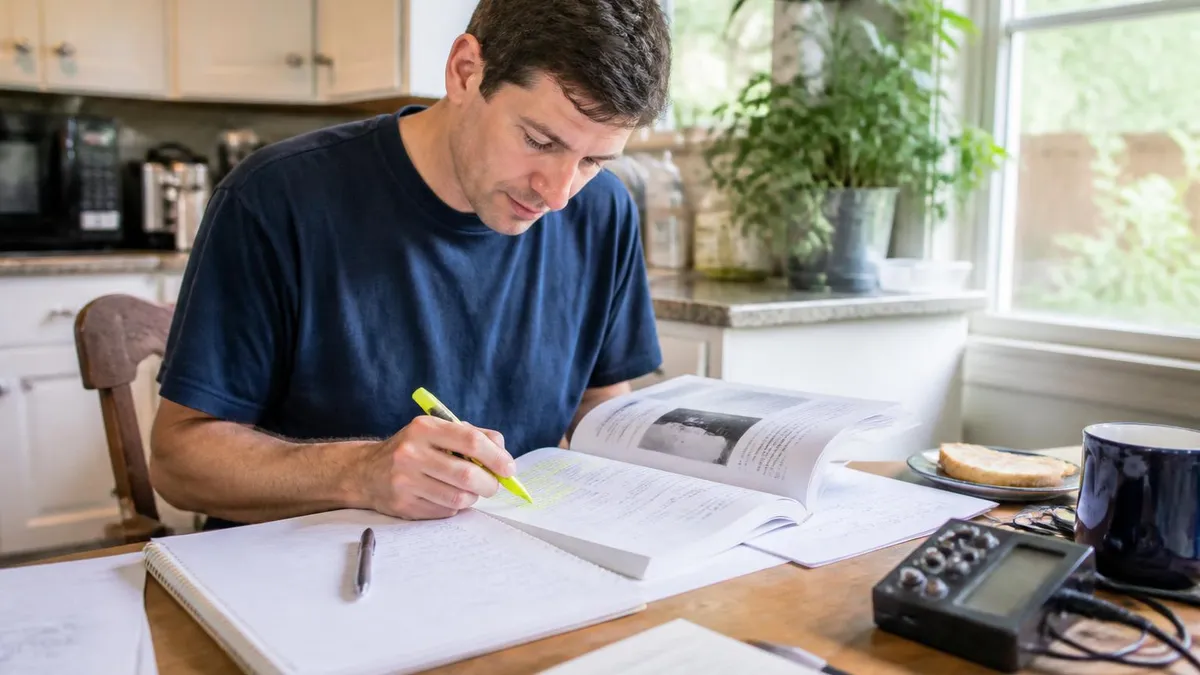
The FCC-approved Technician question pool contains 412 questions divided into ten subelements. Your 35-question exam draws a set number of questions from each subelement, so every section of the syllabus is represented. Knowing the pool distribution helps you allocate study time strategically.
Exams are administered by FCC-accredited Volunteer Examiner Coordinators (VECs) at in-person sessions held in libraries, community centers, and club meetings nationwide. Many clubs now offer online remote exams, letting you test from home with a proctor monitoring via webcam — a major convenience for rural applicants.
As of 2022, the FCC charges a $35 application fee for new licenses and upgrades, separate from the modest VEC session fee (typically $15 or less). You register through a VEC such as the ARRL, W5YI, or GLAARG, and bring a valid government-issued photo ID plus your FCC Registration Number (FRN) to the session.
After passing, your information is submitted electronically to the FCC. Most new licenses appear in the Universal Licensing System (ULS) database within two to five business days. Once your license shows as 'Active,' you may legally transmit on amateur frequencies — you do not need to wait for a physical license document to arrive.
A Technician class license is valid for ten years from the grant date. The FCC sends renewal reminders to your address of record, and renewal is free online through the ULS. Failing to renew on time puts your license in a two-year grace period during which you cannot transmit, so calendar reminders well in advance are strongly recommended.
Understanding ham radio frequencies is essential not only for passing the exam but for making real contacts once you are licensed. The radio spectrum is divided into bands identified by their approximate wavelength in meters. As a Technician, you receive full operating privileges on all amateur bands above 50 MHz, which includes the popular 2-meter (144–148 MHz) and 70-centimeter (420–450 MHz) bands. You also get limited privileges on several HF bands, including voice on 10 meters (28.3–28.5 MHz) and CW (Morse code) on 15, 40, and 80 meters.
The 2-meter band is the workhorse of local and regional communication for Technician operators. It supports FM voice, digital modes, and repeater access. Repeaters extend the range of handheld transceivers dramatically by receiving a signal on one frequency and simultaneously retransmitting it on another, typically with a 600 kHz offset. A handheld 2-meter radio with only five watts of power can reach a well-placed mountain-top repeater dozens of miles away, giving new operators surprisingly wide coverage from day one.
Explore ham radio bands in detail and you will quickly discover that each band has its own propagation characteristics, typical uses, and operating culture. The 70-centimeter band supports more bandwidth than 2 meters, making it popular for data links, ATV (amateur television), and satellite uplinks. Higher microwave bands require specialized equipment but open the door to spread-spectrum experiments and high-speed digital networking between stations separated by line of sight.
Propagation — the way radio waves travel through and around the Earth — varies dramatically by frequency. VHF and UHF signals (above 30 MHz) are primarily line-of-sight, meaning terrain and buildings can block them, but they are less susceptible to atmospheric interference. HF signals (3–30 MHz) can travel thousands of miles by bouncing off the ionosphere, which is why General and Extra class operators prize their expanded HF privileges. As a Technician, you will mostly operate line-of-sight VHF/UHF, but sporadic-E and tropospheric ducting events occasionally let 2-meter operators make contacts hundreds of miles away without a repeater.
The exam tests specific frequency boundaries, so memorize the Technician privileges precisely. For 2 meters: 144.0–148.0 MHz. For 70 centimeters: 420–450 MHz. For 1.25 meters: 219–220 MHz (only for fixed digital stations) and 222–225 MHz. For 10 meters (HF voice): 28.300–28.500 MHz. These numbers appear directly in exam questions, and getting them wrong costs easy points. Flashcards, repeated practice quizzes, and mnemonic associations are all effective memorization strategies for frequency boundaries.
Operating practices on ham radio frequencies are governed by both FCC rules and community convention. Technicians quickly learn to listen before transmitting, identify their station with their callsign at the beginning and end of each contact (and every ten minutes during extended contacts), and avoid interfering with ongoing communications. The FCC prohibits broadcasting to the general public, transmitting music, using the radio for commercial purposes, and deliberately interfering with other stations. These prohibitions are tested on the exam and enforced in practice by the self-policing amateur radio community.
Digital modes have exploded in popularity over the past decade, and Technicians can use them extensively on VHF and UHF. Modes like FT8, APRS (Automatic Packet Reporting System), and D-STAR allow data, position tracking, and voice-over-IP linking between repeater systems. APRS in particular is widely used by emergency management agencies to track resource locations during disasters, giving Technician-class volunteers an immediately practical application for their new license from the very first weekend after passing their exam.
Ham Radio Prep: Three Study Strategies That Work
The most direct path to passing the Technician exam is systematic practice with the official question pool. Begin by taking a full 35-question timed practice test to establish your baseline score, then review every wrong answer immediately while the reasoning is fresh. Repeat this process daily, rotating through different random draws of the 412-question pool until you consistently score 30 or higher — well above the 26-correct passing threshold required by the FCC.
Spaced repetition is the key to efficient question-pool drilling. Flag questions you miss and see them again the next day, then again two days later, then weekly. Free platforms like PracticeTestGeeks.com automatically track your weak areas by subelement, so you can concentrate your remaining study time on regulatory rules, electrical principles, or whichever domain your practice scores reveal as your lowest. Most candidates need two to four weeks of daily drilling at this pace to reach a comfortable passing score.

Ham Radio License: Benefits vs. Challenges for New Operators
- +Access to hundreds of frequencies from VHF local repeaters to HF long-distance bands
- +Legitimate emergency communicator role with ARES, RACES, and CERT teams
- +Active global community with clubs, contests, and mentorship opportunities everywhere
- +No Morse code requirement since 2007 — voice and digital modes only for Technician
- +Equipment ranges from $30 handheld radios to sophisticated home stations — any budget works
- +License is valid for ten years with simple free online renewal through FCC ULS system
- −FCC $35 application fee added in 2022 on top of volunteer examiner session costs
- −Technician HF privileges are limited — General or Extra class needed for full HF access
- −Radio interference from neighbors, appliances, and infrastructure can be frustrating to diagnose
- −Antenna restrictions in HOA communities and apartments require creative workarounds
- −Equipment quality varies widely — budget radios may lack features needed for emergency nets
- −Keeping up with evolving digital modes and software tools requires ongoing self-education
Technician License Exam: Complete Preparation Checklist
- ✓Register for an FCC FRN (FCC Registration Number) at the ULS portal before your exam session.
- ✓Locate an accredited exam session through ARRL, W5YI, or GLAARG — in-person or online remote.
- ✓Study all ten subelements of the current Technician question pool systematically.
- ✓Complete at least 10 full 35-question timed practice exams and review every incorrect answer.
- ✓Memorize Technician frequency privileges on 2 meters, 70 cm, 1.25 meters, and 10 meters HF.
- ✓Learn and memorize the phonetic alphabet (Alpha, Bravo, Charlie...) for proper on-air identification.
- ✓Study FCC Part 97 rules covering prohibited transmissions, third-party traffic, and station ID requirements.
- ✓Practice Ohm's Law calculations and power formula (P = IE) until they are second nature.
- ✓Review basic antenna theory including the formula for calculating quarter-wave length (234 / frequency in MHz).
- ✓Bring a government-issued photo ID and your FRN to the exam session — no ID means no exam.
You Can Look Up the Question Pool — But You Must Understand It
The complete Technician question pool is publicly available, and every exam question is drawn verbatim from it. However, the answer choices are sometimes shuffled, so candidates who only memorized answer position ("always B") frequently fail. Study for understanding, drill for speed, and you will pass with confidence rather than luck on exam day.
Selecting your first ham radio equipment is one of the most enjoyable parts of entering the hobby, but it can also feel overwhelming given the sheer variety of options. Ham radio equipment falls into several broad categories: handheld transceivers (HTs), mobile radios designed for vehicle mounting, and base station radios for home use. For most new Technicians, a handheld VHF/UHF radio is the recommended starting point because it requires no installation, costs between $25 and $200, and provides immediate access to local repeaters and simplex frequencies within your first week of operation.
The Baofeng UV-5R and its variants are enormously popular among new hams because their street price is under $30. However, experienced operators often caution beginners about the UV-5R's frequency stability, spurious emissions, and menu complexity. Radios from Yaesu, Kenwood, and Icom cost more but offer better build quality, more intuitive controls, and manufacturer support. If budget allows, the Yaesu FT-60R or the Icom IC-V86 are durable, reliable handhelds that new operators routinely keep for ten or more years.
When you are ready for a home base station or a more powerful mobile setup, dual-band mobile radios in the 50-watt range open up significantly more range on both 2 meters and 70 centimeters. Popular models include the Kenwood TM-V71A and the Yaesu FT-7900R.
These radios connect to an external antenna mounted on your vehicle or home, which is where the real range gains come from. A good ham radio antenna installation almost always matters more than upgrading from a 5-watt HT to a 50-watt mobile — antenna height and gain dwarf the benefit of raw power increases in most real-world scenarios.
Feedlines — the coaxial cables connecting your radio to your antenna — are another critical equipment consideration the Technician exam specifically tests. Higher-frequency signals lose more power to coax resistance per unit length, which is why 70-centimeter installations benefit more from low-loss cables like LMR-400 than 2-meter installations at the same cable run length. The key specifications to understand are impedance (50 ohms for most amateur applications), attenuation per 100 feet at your operating frequency, and power handling capacity, which matters if you ever run amplified output levels.
Test equipment is another exam topic that new operators often overlook until it becomes relevant. A multimeter measures voltage, current, and resistance, and every ham shack should have at least a basic one. An SWR (Standing Wave Ratio) meter measures how efficiently your antenna system accepts power from the transmitter — a 1:1 SWR is ideal, while anything above 3:1 indicates a significant mismatch that wastes power and can potentially damage your transceiver's output stage over time. Many modern radios include a built-in SWR meter, but a dedicated external meter remains useful for diagnosing antenna system problems during initial installation.
Power supplies are required for any base station radio, since home transceivers run on 12–13.8 volts DC rather than 120-volt AC house current. A regulated 20–30 amp power supply is appropriate for most 100-watt HF transceivers. For mobile installations, the vehicle's electrical system provides 12 volts directly, but running high-power radio equipment continuously while the engine is off can drain a standard car battery in under an hour, so mobile operators learn quickly to monitor battery voltage during extended operations.
HF transceivers represent the equipment category most new Technicians aspire to as they plan their path toward a General class upgrade. Modern all-band transceivers from manufacturers like Icom (IC-7300), Yaesu (FT-991A), and Kenwood (TS-590SG) cover the full HF spectrum plus VHF and sometimes UHF in a single unit. While these radios are beyond Technician operating privileges for most HF use, purchasing one before upgrading means you only need to buy the radio once — a pragmatic approach for operators who know they plan to pursue their General license within the next year or two.
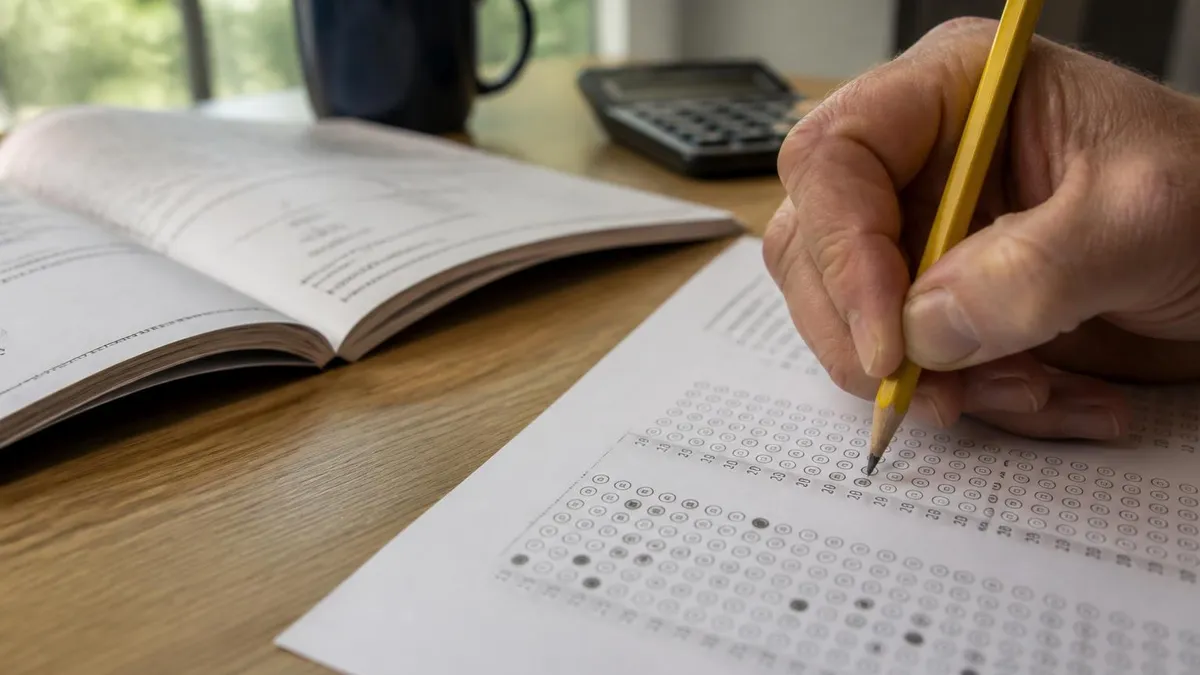
The FCC began charging a $35 application fee in April 2022 for new amateur licenses and upgrades. This fee is separate from any VEC session fee and is paid directly to the FCC online after you pass your exam. Failing to pay within ten days of your session causes your application to be dismissed, so have your payment method ready immediately after you receive your Certificate of Successful Completion (CSCE).
Passing your Technician exam is a genuine achievement, but the learning curve continues well after you receive your callsign. Many new hams describe the first year on the air as more educational than any study session because real operating situations present challenges that no question pool can fully anticipate. You will encounter repeater access tones (CTCSS and DCS) that vary by system, net schedules with specific protocols, and the unwritten etiquette of local amateur radio culture — all of which become second nature within a few months of regular operating activity.
Getting involved with your local amateur radio club accelerates your development as an operator more than almost any other activity. Clubs host license exam sessions, field trips to repeater sites, antenna building projects, and participation in public service events like marathons, parades, and disaster drill exercises. The relationships you build within a club also provide access to a network of experienced operators — sometimes called Elmers — who can troubleshoot your station setup, loan you equipment to try before you buy, and guide you through the upgrade process when you are ready for General class.
The General class upgrade is the logical next milestone for most Technicians and typically requires two to four months of additional study. The General exam adds 35 more questions and unlocks the majority of the HF spectrum, enabling worldwide communication on bands like 40 meters (7.0–7.3 MHz) and 20 meters (14.0–14.35 MHz). Many clubs offer formal upgrade study groups, and the question pool for General is also publicly available, meaning the same practice-exam approach that worked for Technician applies directly.
Some motivated operators pass both Technician and General in the same exam session, which is permitted and saves the separate FCC application fees.
Emergency communication is one of the most valued contributions licensed amateurs make to their communities. Organizations like the Amateur Radio Emergency Service (ARES) and Radio Amateur Civil Emergency Service (RACES) coordinate with local emergency management agencies to provide communication backup when commercial infrastructure fails during hurricanes, tornadoes, wildfires, and other disasters. Technician-class operators can participate fully in most ARES activities since the 2-meter and 70-centimeter bands are the primary emergency communication frequencies used by most served agencies and hospitals.
Many operators also find great satisfaction in the popular activity known as Parks on the Air (POTA) and Summits on the Air (SOTA), which involve making contacts while operating portable stations from designated parks and mountain summits. These activities are excellent for Technicians because they require minimal equipment — a handheld or a small portable 2-meter radio plus a simple antenna — and they provide a natural motivation to get outside and operate regularly.
A surprisingly did ed gein talk to ilse on a ham radio level of pop-culture curiosity sometimes brings new people to amateur radio research, and POTA and SOTA are among the aspects of the hobby that keep them engaged long term.
Contesting is another dimension of the hobby that becomes accessible to Technicians through VHF contests sponsored by the ARRL. Events like the January VHF Contest and the June VHF Contest encourage operators to make as many contacts as possible over a weekend using 2 meters and higher bands. While HF contesting requires a General or Extra license for most bands, VHF contests level the playing field completely — a well-positioned Technician with a good antenna system can compete on equal footing with any Extra class operator during sporadic-E and meteor scatter propagation events.
The path from Technician through General to Extra class generally takes two to five years for operators who study consistently, though some ambitious individuals complete all three license classes within a single calendar year. Extra class privileges include exclusive sub-bands at the bottom of each HF band — prime real estate for contesting and DXing — and the right to administer all three classes of amateur radio exams as a Volunteer Examiner. Each step up the license ladder opens new capabilities, new communities, and new technical challenges that keep the hobby fresh for operators who have been licensed for decades.
Effective final preparation for the Technician exam in the last week before your session date should focus on consolidation rather than new material. Take a full practice exam each day, targeting a score of 31 or higher (89%) to give yourself a comfortable buffer above the 74% passing threshold. Review any subelements where your practice scores remain inconsistent — typically electrical principles, antenna theory, or the specific frequency allocations that require rote memorization rather than conceptual understanding.
The night before your exam, avoid cramming new information. Instead, review your notes, verify the exam session location and arrival time, and prepare your materials: government-issued photo ID, your FCC Registration Number written down or easily accessible on your phone, and any fees required by the VEC coordinator. Some sessions are cash-only for the VEC fee, so check the specific instructions when you register. Arriving 15 minutes early allows you to fill out paperwork calmly and settle your nerves before the actual test begins.
During the exam itself, read each question carefully and eliminate obvious wrong answers before committing to a choice. The Technician exam allows you to flag questions and return to them, so do not spend more than 60 seconds on any single question during your first pass. Most candidates complete the 35-question exam in 20 to 30 minutes, leaving ample time for review.
If a question references a specific number — a frequency, a voltage, a resistance value — cross-reference it carefully against the answer choices, since many distractors differ from the correct answer by only a small increment designed to catch memorization errors.
Ham radio prep extends beyond the exam into your first weeks on the air. Program your radio before you legally transmit by entering local repeater frequencies, access tones, and offsets while you are still studying. Having your radio already configured means you can make your very first contact on the same day your license appears in the FCC database — a milestone that almost every new ham remembers vividly.
Join the local club net as a listener while you are still unlicensed so that the format, pacing, and net control procedures feel familiar when you finally key up and give your callsign for the first time.
Building your first antenna is a rite of passage that reinforces more exam material than any study session. A simple half-wave dipole for 2 meters costs under $10 in materials and can be assembled in an afternoon using online dimension calculators. Connecting it to your transceiver and watching your SWR meter drop toward 1:1 as you trim the element lengths makes abstract exam concepts about antenna resonance and feedline impedance immediately tangible and memorable. The ARRL Antenna Book and numerous online tutorials provide detailed construction guidance for beginners at every budget level.
The ham radio outlet — whether a dedicated hobby retailer, an online seller, or a local club's equipment table — represents the final practical step in your journey from exam candidate to active operator. Reputable dealers like Ham Radio Outlet (HRO) and DX Engineering offer knowledgeable staff who can help match your operating goals to the right equipment within your budget. Used equipment markets on platforms like QRZ.com's classifieds and the ARRL's Hamfest listings frequently offer excellent values, particularly for older but fully functional base station equipment that original owners are upgrading or downsizing from their shacks.
Remember that the Technician license is a beginning, not a destination. The amateur radio community welcomes operators at every skill level, from the first-year Technician learning to access a local repeater to the seasoned Extra class operator building moonbounce (EME) stations. Every contact you make, every problem you solve, and every skill you develop adds to a lifelong technical education that costs less than almost any comparable hobby while connecting you to a genuinely global network of curious, helpful, and innovative people. Start your crash course today, and you could be on the air inside of six weeks.
Sample Ham Radio Technician Test Practice Questions
Try these questions from our free Ham Radio Technician Test practice tests. The correct answer and an explanation follow each question.
Which document serves as proof of a Technician license while waiting for the physical license to arrive?
- A. The ARRL membership card
- B. A letter from the Volunteer Examiner
- C. The FCC ULS license query printout showing grant status
- D. The CSCE (Certificate of Successful Completion of Examination)
Answer: C. The FCC ULS license query printout showing grant status
Once the FCC grants the license in ULS, an official printout from the ULS database serves as valid proof of licensure.
What is the minimum age to obtain a Technician Class amateur radio license?
- A. 16
- B. 18
- C. 21
- D. No age limit
Answer: D. No age limit
There is no minimum age limit to obtain a Technician Class amateur radio license in the United States. Anyone, regardless of age, who can pass the required written examination is eligible to become a licensed amateur radio operator.
What is the Technician class license privilege regarding 60-meter (5 MHz) channels?
- A. Full phone and CW privileges on all five channels
- B. No operating privileges
- C. CW only on the 5.332 MHz channel
- D. USB phone on 15 watts PEP
Answer: B. No operating privileges
Technician class licensees have no operating privileges on the 60-meter band; those channels require at minimum a General class license.
How long is an amateur radio license valid once issued?
- A. 5 years
- B. 7 years
- C. 10 years
- D. 15 years
Answer: C. 10 years
Once issued, an amateur radio license in the United States is valid for a period of 10 years. Operators must renew their license before it expires, or within a two-year grace period, to maintain their operating privileges.
Ham Radio Technician Questions and Answers
Ham Radio Test Online: Complete Study Guide for the Technician License Exam
Ham Radio License Online: The Complete Guide to Getting Licensed in 2026
Ham Radio Technician
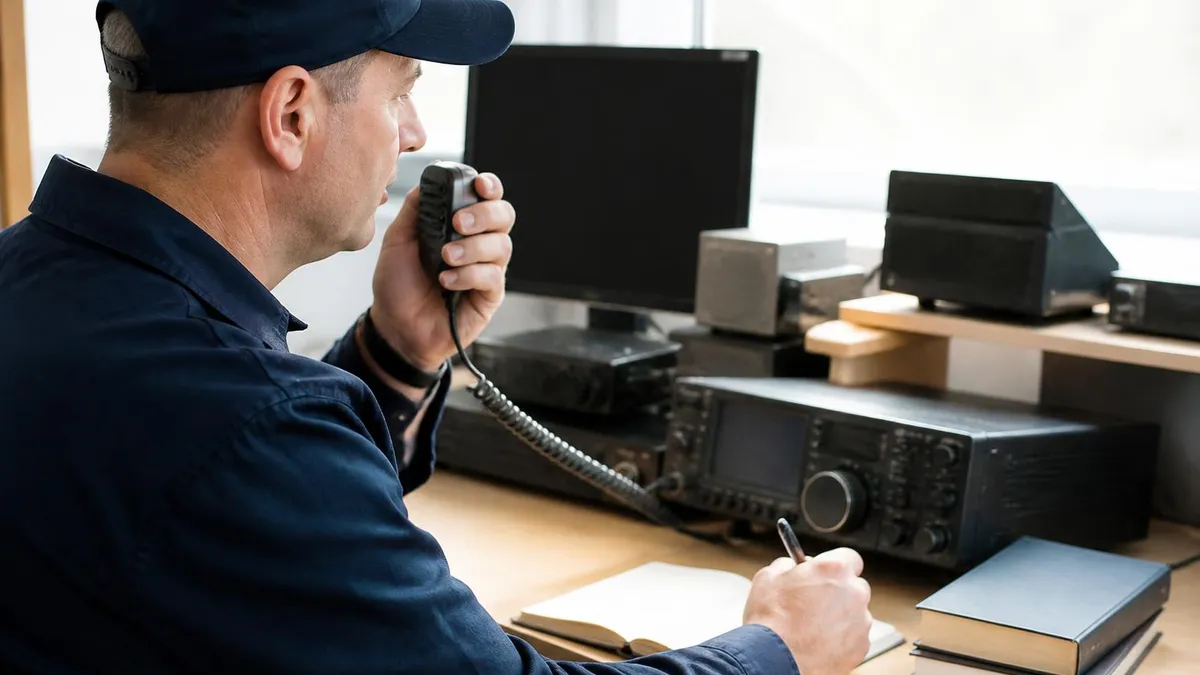
Ham Radio Repeaters: Complete Guide for Technician License Holders
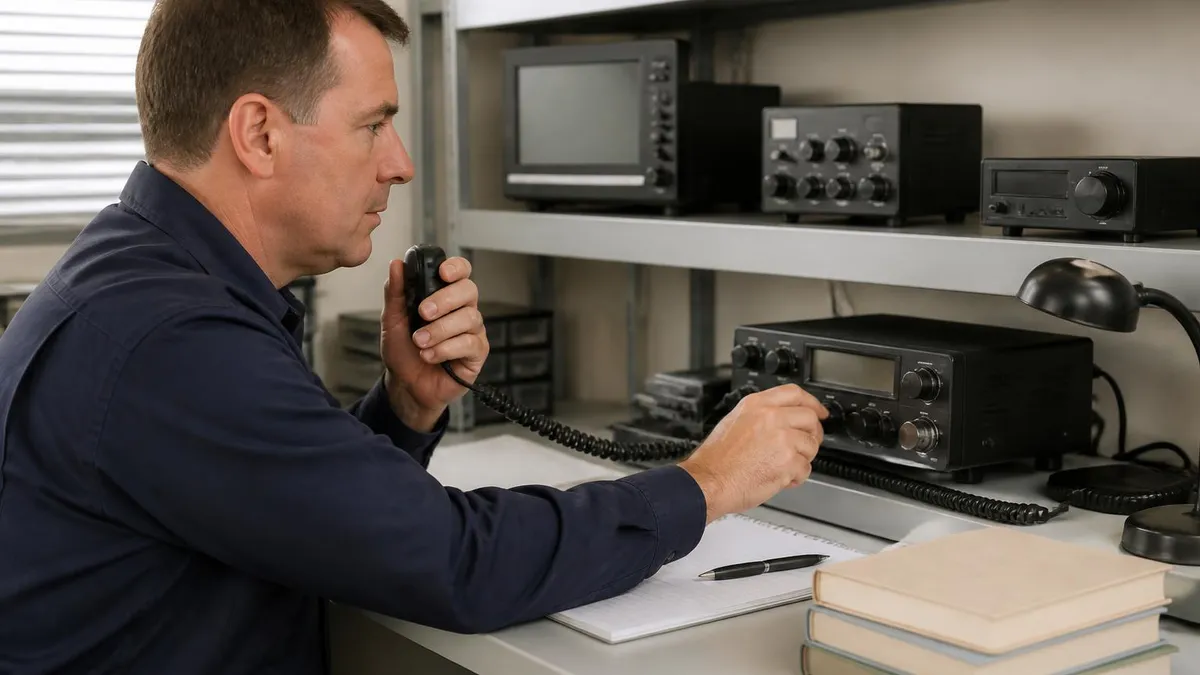
Ham Radio Stores: Where to Buy Ham Radio Equipment, Gear, and Get Your License
About the Author

Educational Psychologist & Academic Test Preparation Expert
Columbia University Teachers CollegeDr. Lisa Patel holds a Doctorate in Education from Columbia University Teachers College and has spent 17 years researching standardized test design and academic assessment. She has developed preparation programs for SAT, ACT, GRE, LSAT, UCAT, and numerous professional licensing exams, helping students of all backgrounds achieve their target scores.
Join the Discussion
Connect with other students preparing for this exam. Share tips, ask questions, and get advice from people who have been there.
View discussion (3 replies)