
Is a Forklift Street Legal? Equipment Knowledge Every Operator Needs 2026
🎯 Is a forklift street legal? Learn US road rules, operator certification, and forklift rental, electric and stand up forklift basics before you drive or buy.

Is a forklift street legal? In almost every US state, the short answer is no. A standard forklift is built as an off-highway industrial truck, and it lacks the equipment that state motor vehicle codes demand for public roads. Headlights, brake lights, turn signals, mirrors, a traffic-rated horn, a vehicle identification number, and registration are all missing. Rental yards, warehouses, and buyers still ask this question constantly, so this guide explains exactly where the legal line sits and why.
The confusion is understandable. Forklifts are motorized, they have steering wheels and pedals, and many cross loading dock aprons and parking lots every day. Yet being motorized does not make a machine roadworthy. Federal rules from OSHA govern how forklifts operate inside workplaces, while state and local traffic laws govern public streets. These two systems rarely overlap, so a machine can be fully compliant at work and still illegal the moment its tires cross a curb.
Understanding this topic is part of broader forklift equipment knowledge, the foundation every operator needs before touching the controls. Knowing how a lift truck is classified, how it is powered, how fast it travels, and what it may legally do outside the building helps you avoid fines, insurance denials, and accidents. It also helps when you compare a forklift rental against a purchase, because transport rules affect delivery costs for both options.
Here is what you will learn below. We cover the legal status of forklifts on public roads, the equipment gaps that keep them off highways, and the narrow exceptions that exist for crossing short stretches of road. We also compare electric forklift and internal combustion models, explain stand up forklift designs, clarify what people mean by a cherry picker forklift, and outline what forklift training and certification require under federal law.
Costs matter too. A daily forklift rental often runs between $150 and $400 depending on capacity and region, and delivery on a flatbed trailer can add $100 to $300 each way. A used forklift for sale might cost $8,000 to $25,000, while a new unit can exceed $40,000. Because none of these machines can simply drive to your site, transport planning belongs in every budget, and ignoring it is a common and expensive mistake.
Whether you are a new hire, a small business owner shopping for equipment, or a student preparing for an operator exam, the goal is the same: make informed, lawful decisions. Search results about forklifts often mix commercial listings with half-answers, so we focus on practical detail, real numbers, and edge cases. Read the sections in order, or use the table of contents to jump ahead, then test yourself with the free practice questions linked throughout.
One last note on scope. This article is educational and reflects general US practice as of 2026, not legal advice. State statutes, local ordinances, and insurance policies change, and your employer's safety program may be stricter than the minimum required by law. When in doubt, ask your supervisor, your equipment dealer, or your state transportation agency, and keep written confirmation of any answer you receive for your records.
Forklift Road Rules and Safety by the Numbers

What Makes a Vehicle Street Legal?
A road vehicle needs a vehicle identification number, a title, and current registration with the state. Most forklifts carry only a serial number on a data plate, and many states exempt them from titling entirely because they are classed as industrial equipment.
Public roads require headlights, brake lights, turn signals, reflectors, and often hazard flashers. Warehouse forklifts typically have work lights, a backup alarm, and perhaps a blue safety light, none of which satisfy state lighting codes for highway travel.
Road-legal vehicles need DOT-approved tires, a service brake plus parking brake, and rearview mirrors. Many forklifts use solid cushion tires, drum brakes tuned for low speed, and no mirrors, which limits safe stopping and visibility at traffic speeds.
Driving on public roads requires a valid driver's license and liability insurance for the vehicle. Workplace forklift certification does not replace either one, and commercial policies for forklifts commonly exclude losses that occur on public streets.
Why Forklifts Are Not Street Legal
State vehicle codes define a motor vehicle by its design and purpose. Most statutes carve out special mobile equipment or implements of industry that are not designed primarily for carrying loads on highways. Forklifts fall squarely into that category. Because they are exempt from registration in many states, they are also exempt from the equipment standards that registration enforces. That sounds like permission, but in practice it means you cannot legally operate one on public roads without special authorization.
Think about what a road-legal vehicle needs. Federal Motor Vehicle Safety Standards call for DOT-approved tires, windshield wipers, a parking brake, two headlights, stop lamps, turn signals, reflectors, rearview mirrors, and a speedometer. Most forklifts have industrial tires, a rear-wheel steering system that swings the tail wide, and a top speed of only 8 to 12 miles per hour. Many lack a horn loud enough for traffic or any mirrors at all.
Design itself is another barrier. A forklift counterbalances its load with a heavy rear end, giving it a short wheelbase and a high center of gravity when the mast is raised. The steering axle is at the back, so a sudden swerve can tip the truck. NIOSH identifies tipovers as the leading cause of forklift fatalities, and public road speeds, curves, and potholes magnify that danger. Lawmakers have little reason to approve these machines for general traffic.
There are narrow exceptions. Some states allow a forklift to cross a public road between two parts of the same property, or to travel a short distance at low speed, usually with a flashing amber light, a slow-moving vehicle emblem, and a spotter. Others require a permit from the local municipality or highway department. These rules differ widely, so contact your state DMV or department of transportation before assuming that a quick crossing is acceptable.
Truck-mounted forklifts, often called piggyback units, are a special case. The lift attaches to the back of a delivery truck, and the entire assembly is registered and equipped as a commercial vehicle. The truck is street legal, and the forklift rides along as cargo equipment. Operators still need forklift training for the attachment itself, and the driver must hold the correct commercial license class for the truck and its gross vehicle weight rating.
Penalties for driving an unregistered forklift on a public road can include traffic citations, fines that commonly reach several hundred dollars, and possible charges for operating an unsafe vehicle. If an accident occurs, insurance carriers may deny coverage because the machine was used outside its intended purpose. Employers can also face OSHA scrutiny when workers are directed to move equipment illegally. The cheap alternative is a flatbed or lowboy trailer with proper tie-downs, which costs far less than a claim.
The practical takeaway is to plan transport before you commit. If you are weighing a forklift for sale listing from a private seller, ask where it sits and how it will reach you. Budget for a hauler, confirm the trailer's rating exceeds the machine's weight, which is often 6,000 to 12,000 pounds for a standard unit, and verify that mast height fits under bridges on the route. Lower the forks and secure the mast before loading.
Forklift Rental, Forklift for Sale, and Forklift Training Options
Renting suits short projects, seasonal peaks, and businesses that want to avoid maintenance costs. Search forklift rental near me to compare local dealers, then request quotes for the exact capacity and mast height you need. Typical terms include daily, weekly, four-week, and monthly rates. Delivery by flatbed is standard because the unit cannot legally drive to your site, so confirm the delivery window and who will unload it safely.
Before signing, read the agreement for damage waivers, hour limits, fuel and propane responsibilities, and after-hours charges. Ask whether the dealer provides operator familiarization at delivery and whether a technician responds to breakdowns within 24 hours. Inspect the unit on arrival, photograph existing scratches or leaks, and complete a pre-shift checklist so you are not billed for previous damage when the machine is picked up.

Is Forklift Rental Better Than Buying?
- +Low upfront cost compared with a $20,000 to $40,000 purchase
- +Maintenance and repairs are usually handled by the rental dealer
- +Flexible terms from one day to several months
- +You can test different capacities, masts, and power types
- +No long-term storage, depreciation, or resale hassle
- +Easy to scale up for seasonal peaks and special projects
- −Long-term rental can cost more than owning over several years
- −Delivery and pickup fees add $100 to $300 each way
- −Availability can be limited during busy seasons
- −Hour limits and overage charges may apply
- −You may be billed for damage you did not cause without careful inspection
- −Rental fleets may not match your exact attachment or capacity needs
Forklift Operator Checklist Before You Start a Shift
- ✓Confirm you are trained and evaluated on this truck type.
- ✓Read the data plate for rated capacity and load center.
- ✓Inspect forks for cracks, bends, and worn tips.
- ✓Check mast, chains, and hydraulic hoses for leaks.
- ✓Test the horn, lights, and backup alarm.
- ✓Inspect tires for cuts, chunking, or low pressure.
- ✓Test the service brake, parking brake, and steering.
- ✓Check battery charge or fuel and propane cylinder mounting.
- ✓Fasten the seat belt or operator restraint before moving.
- ✓Tag out any defective forklift and report it right away.
Not street legal by default
Unless a forklift is registered, equipped, and approved under your state's vehicle code, it should never be driven on a public road. Even a short trip across a street may require a permit, warning lights, and a spotter, so haul the machine on a trailer whenever possible.
Electric Forklift, Stand Up Forklift, and Cherry Picker Types
OSHA and the Industrial Truck Association group lift trucks into seven classes. Class I covers electric motor rider trucks, Class II electric narrow aisle trucks, Class III electric hand and hand-rider trucks, Class IV internal combustion trucks with cushion tires, Class V internal combustion trucks with pneumatic tires, Class VI electric and internal combustion tractors, and Class VII rough terrain trucks. Knowing the class tells you the power source, the intended surface, and the training a facility expects.
An electric forklift runs on a lead-acid or lithium-ion battery pack. Electric models produce no tailpipe emissions, run quietly, and cost less to maintain because they have fewer moving parts. They suit indoor warehouses, food storage, and anywhere air quality matters. Typical battery runtime is 6 to 8 hours per charge, and lead-acid packs need watering and cooling routines. Lithium-ion batteries allow opportunity charging during breaks and often last thousands of cycles.
Internal combustion forklifts burn propane, gasoline, or diesel. They offer higher lifting capacity for heavy loads, faster refueling, and better performance on rough pavement, gravel, and ramps. Pneumatic-tired Class V trucks handle outdoor lumber yards and construction sites well. The tradeoffs include exhaust emissions, higher noise, and more frequent engine service. Propane cylinders require training for safe exchange, and diesel units may need ventilation planning if used in semi-enclosed spaces.
Operating costs differ. Electricity per shift is generally cheaper than propane or diesel, and electric models skip oil changes, spark plugs, and exhaust repairs. However, the upfront price of an electric forklift is often 20 to 40 percent higher, and the battery plus charger can add $5,000 to $15,000. Many businesses find that total cost of ownership favors electric after three to five years of heavy indoor use in a single facility.
A stand up forklift, commonly a Class I or Class II reach truck, lets the operator ride standing sideways or forward on a platform. These trucks are compact, have tight turning radii, and work in narrow aisles around 8 to 10 feet wide. The operator can step on and off quickly, which boosts productivity in order-fulfillment centers. Stand up models require specific training, since the operator's body position, restraint system, and braking differ from a sit-down truck.
The term cherry picker forklift causes confusion. In warehouses it usually refers to an order picker, a Class II truck whose operator platform rises with the forks so the person can pick individual items from racking up to 30 feet or higher. Outside warehouses, cherry picker means a boom lift used for aerial work. Order pickers require fall protection, typically a harness tied to an anchor point, and operators should confirm which equipment their employer means.
Choosing between types is about matching the machine to the job. Evaluate load weight, lift height, aisle width, floor surface, indoor or outdoor use, and shift length. A forklift rental lets you test a model before buying, and short-term rentals cover seasonal peaks. Ask the dealer for the data plate capacity, the load center, and attachment limits, because adding a side shifter or fork positioner reduces the rated capacity shown on the original plate.

State and municipal rules on forklifts crossing or traveling on public roads vary, and insurers may exclude coverage off your property. Confirm requirements with your state DMV or transportation agency, and get any permit in writing before the machine leaves private ground.
Forklift Operator Training, Certification, and Rental Rules
Federal law is clear about who may drive a forklift at work. OSHA standard 29 CFR 1910.178 requires employers to train and evaluate every powered industrial truck operator before assigning independent operation. Operators must be at least 18 years old. Training combines formal instruction, practical hands-on exercises, and a workplace evaluation. Only after all three parts are complete may an employer certify the person. This is why searches for certification of forklift operators keep climbing every year.
Many people believe a forklift license is issued by a state agency like a driver's license. In reality, OSHA does not issue a card at all. The employer certifies the operator, and the certification is specific to the employer, the truck type, and the workplace. A card from a previous job does not automatically transfer. A new employer must evaluate your skills again and document that evaluation before allowing you to operate its equipment.
Forklift training typically covers truck types, controls and instrumentation, the data plate, load capacity, the stability triangle, pre-shift inspection, refueling or battery charging, and workplace hazards such as ramps, wet floors, and pedestrian traffic. Online courses usually cost $50 to $100 for the classroom portion, while in-person programs at training centers can run $150 to $400. Online coursework alone is not enough, because the hands-on evaluation must occur at the workplace.
Recertification matters. OSHA requires an evaluation of each operator's performance at least once every three years. Refresher training is also required after an accident or near miss, when the operator is seen driving unsafely, when assigned to a different type of truck, or when workplace conditions change. Keeping records of these events protects both worker and employer, since inspectors often ask to see training documentation during site visits.
Renting changes the picture slightly. When you search forklift rental near me, expect the dealer to ask for proof of operator training before releasing the machine. Many rental companies require a certification record, a certificate of insurance, a driver's license for delivery paperwork, and a deposit. Some offer on-site operator training for an added fee. The rental customer, not the dealer, typically bears responsibility for safe operation during the term.
Compare rental pricing carefully. Daily rates for a 5,000-pound capacity electric forklift commonly fall between $150 and $300, weekly rates between $500 and $1,000, and monthly rates between $1,500 and $3,500. Delivery and pickup, fuel or propane, damage waivers, and after-hours fees are often separate. Ask whether the rate includes maintenance and a safety inspection, and whether hours are metered, since overage charges can quickly erase an apparent bargain.
If you plan to buy, approach forklifts for sale with the same discipline. Request service records, check the hour meter, inspect the mast chains, forks, tires, and hydraulic hoses, and verify the data plate is legible. A pre-purchase inspection from a qualified mechanic costs a few hundred dollars and can prevent thousands in repairs. Confirm the seller has clear title or a bill of sale, and never accept a machine whose plate has been removed or altered.
Practical Tips Before You Operate, Rent, or Buy
Start every shift with a pre-operation inspection. Check the forks for cracks and bent tips, the mast for leaks and loose chains, tires for cuts or missing chunks, the horn, lights, and backup alarm, the brakes and steering, and the seat belt. For electric trucks, inspect the battery connectors and fluid levels, and for propane trucks check the cylinder mounting. Tag any defective truck out of service immediately and report it to your supervisor.
Learn the stability triangle until it is second nature. The truck's three support points, the two front wheels and the pivot of the rear axle, form a triangle, and the combined center of gravity of truck and load must stay inside it. Raising the load high, turning sharply, or braking hard while loaded shifts that center toward the edge. Travel with the forks four to six inches off the floor and the mast tilted slightly back.
Protect pedestrians constantly. Sound the horn at intersections and blind corners, make eye contact before proceeding, keep to the speed limit set by the facility, and never allow riders on the forks. A blue spotlight or red zone light projected on the floor warns people of approaching trucks. Forklift accidents kill roughly 85 workers each year in the US, and many involve pedestrians struck or crushed, so treat every walkway as a hazard zone.
Handle loads with care. Know the rated capacity on the data plate and never exceed it, center the load between the forks, and insert the forks fully under the pallet. Drive loaded trucks in reverse when the load blocks forward visibility, and keep the load on the uphill side of any ramp, both climbing and descending. Never turn on a slope, and never lift a person on the forks unless an approved platform and harness are used.
Prepare for your written test with focused practice. Review the seven classes, the parts of a forklift, the stability triangle, load center calculations, and OSHA operating rules. Take timed practice questions, note the topics you miss, and revisit them the next day. Most employers use a written test of 20 to 50 questions with a passing score of 70 to 80 percent, so repeated practice builds both recall and confidence before the hands-on evaluation.
Plan transport legally. Never drive a forklift to the next lot without confirming the route is private or permitted. Use a trailer rated above the machine's weight, chain the frame at the designated tie-down points, lower the mast, and set the parking brake. Check bridge heights and state oversize rules, because a mast-up machine may exceed legal height. Keep the rental agreement and insurance certificate in the cab for roadside inspections.
Finally, think about your career path. Operators who add skills such as reach truck, order picker, and rough terrain certification qualify for higher-paying roles in distribution and construction. Many warehouse jobs pay $17 to $26 an hour depending on region and equipment. Keep your training records organized, ask for cross-training, and renew evaluations before the three-year deadline expires. Solid equipment knowledge makes you safer, more employable, and more valuable to any employer.
Forklift Questions and Answers
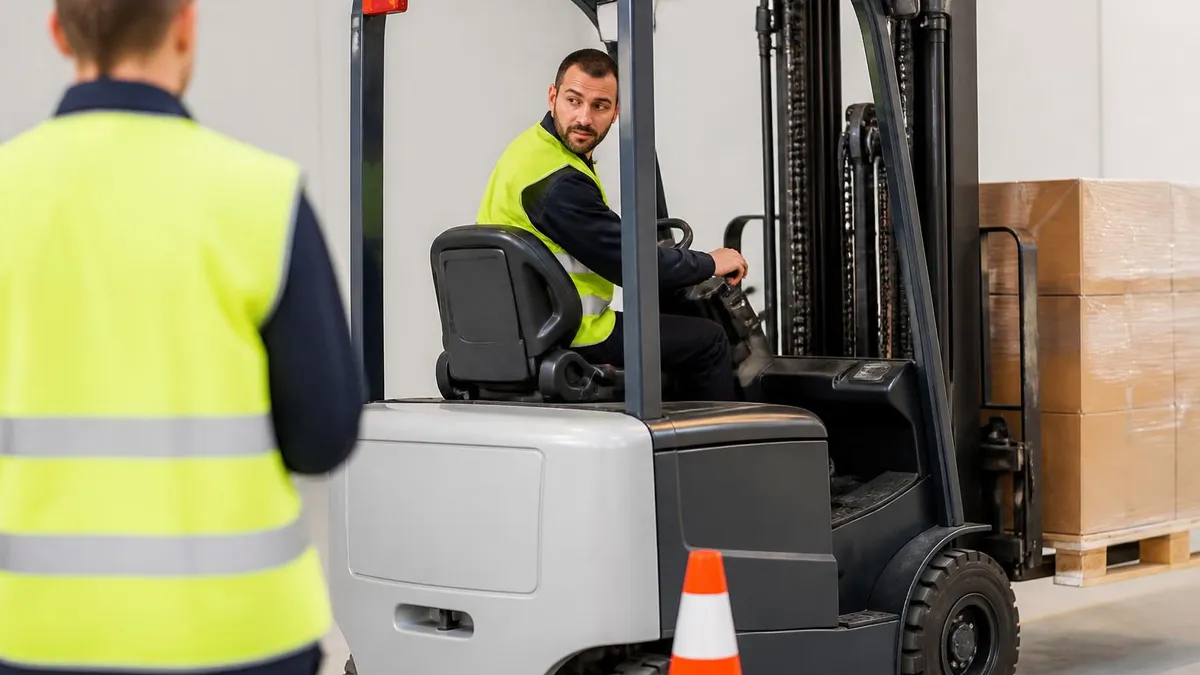
Forklift License vs Certification: OSHA Requirements, Cost, and Training
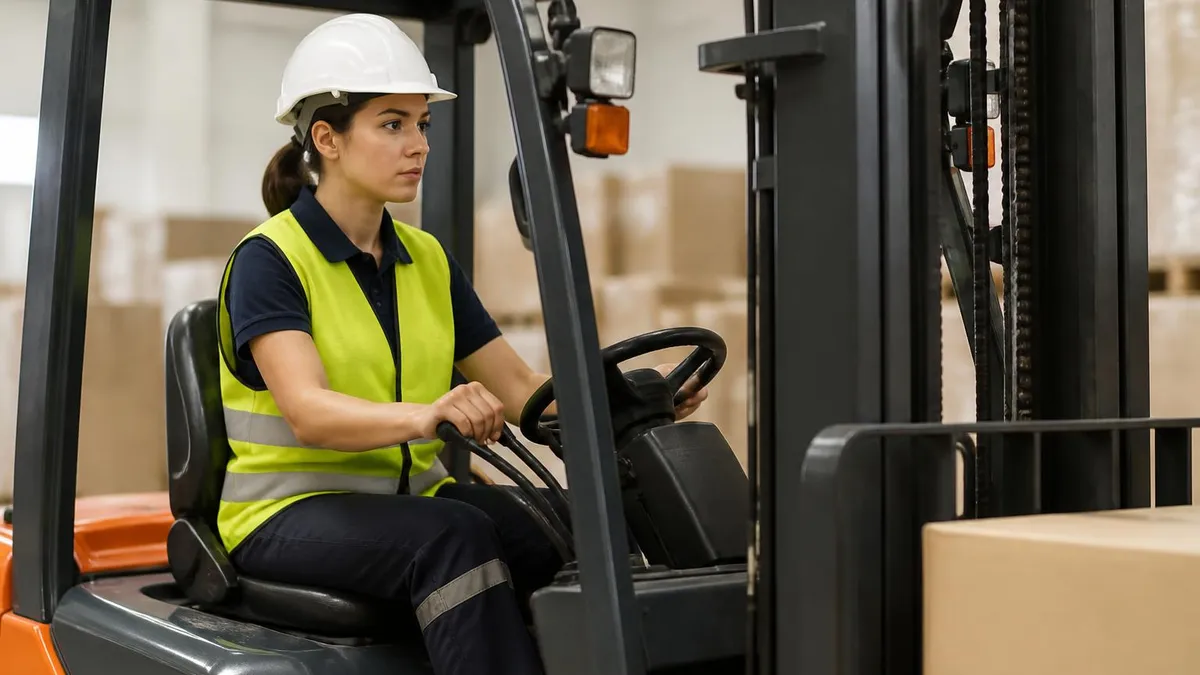
Forklift Price Guide 2026: New, Used, Rental, and Total Cost of Ownership Breakdown

Blue Forklift Light Guide: How Warning Lights and Other Forklift Safety Equipment Protect Pedestrians

Forklift Salary 2026: Complete Guide to Operator Pay, Certifications, and Career Growth

Forklift Maintenance Services: Complete Guide to Costs, Schedules, and Choosing the Right Provider for 2026
How this page was made: written with AI tools and published by Nathan Beja, founder of Practice Test Geeks, who is responsible for its content. Exam facts are checked against the official sources listed below. Not reviewed by a subject-matter expert. Editorial policy
Sources & references
Exam facts on this page (fees, format, dates, passing scores) are checked against these official sources; the date is our last check. Editorial policy
- osha.gov — Test delivery, eligibility, renewal · verified Oct 2026