
FDNY Ranks Explained: The Complete Chain of Command in the Fire Department of New York
❓ FDNY ranks explained from probationary firefighter to Chief of Department. Learn insignia, pay, promotion paths, and EMS ranks in the FDNY hierarchy.
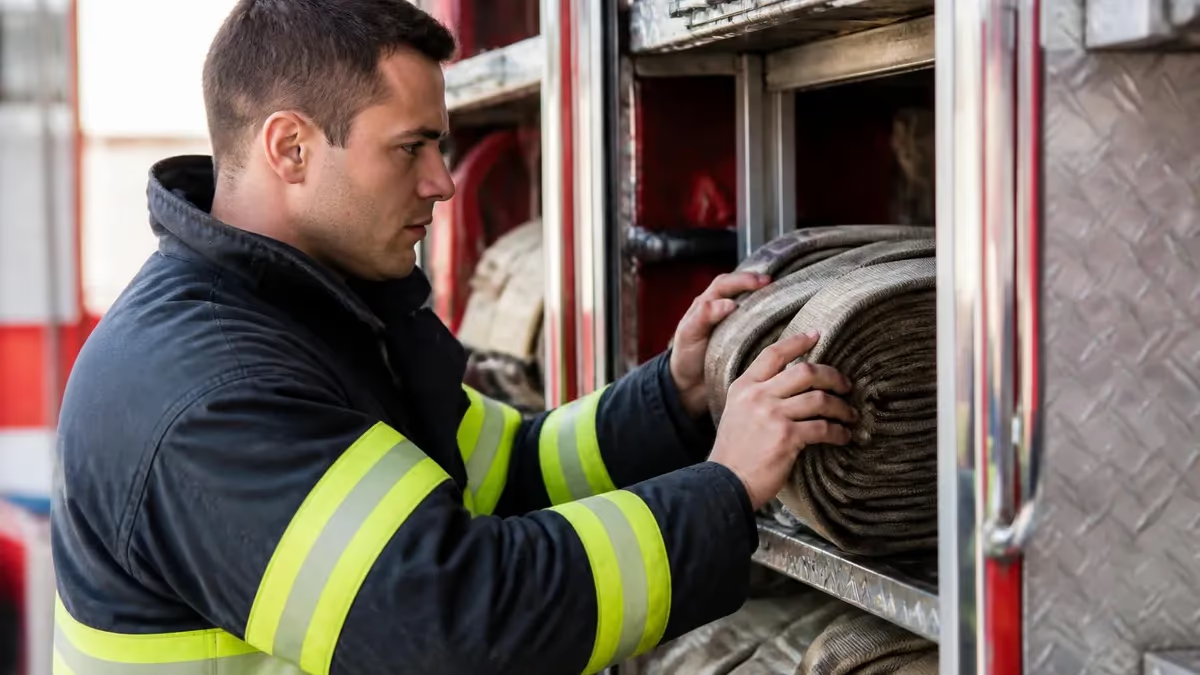
The FDNY ranks form one of the most recognizable command structures in American public safety, stretching from the newest probationary firefighter to the Chief of Department who oversees roughly 11,000 uniformed members. Understanding the FDNY ranks matters whether you are studying for the entrance exam, aiming for a promotion, or simply curious about how the Fire Department of New York organizes its people. Each rank carries specific authority, distinct insignia, and a defined place in the daily flow of orders that keeps the city protected around the clock.
At its foundation, the department divides into two broad professional tracks: the firefighting and officer track and the Emergency Medical Service track. Both follow a paramilitary model, meaning authority flows downward in a clear, predictable line. A firefighter answers to a company officer, that officer answers to a battalion chief, and the chain continues upward through divisions, bureaus, and ultimately the commissioner's office. This structure removes ambiguity during emergencies when seconds matter and a single decision can save lives.
The ranks are not merely titles. Each level reflects accumulated experience, passage of competitive civil service examinations, and a measurable increase in responsibility. A newly appointed lieutenant supervises a single company of five or six members, while a deputy chief may direct an entire division covering several neighborhoods and dozens of units. As members climb, their work shifts gradually from hands-on tactical firefighting toward strategic planning, personnel management, and policy enforcement across the organization.
For exam candidates, the rank system is more than trivia. Promotional examinations test knowledge of building construction, department procedures, supervisory law, and incident command — the same material reflected in the responsibilities of each rank. Knowing what a captain does differently from a lieutenant, or how a battalion chief coordinates multiple companies at a fire, helps you anticipate the kinds of scenarios examiners present and the leadership reasoning they expect from candidates.
The visual language of rank is equally important inside the firehouse. Collar insignia, helmet colors, and uniform trim instantly communicate who holds authority on a scene. A white helmet signals a chief officer, while bugles — the curled horn symbols borrowed from 19th-century fire service tradition — indicate officer grade. These symbols allow firefighters arriving from different boroughs to immediately recognize the incident commander without a single word being spoken.
This guide walks through every tier of the FDNY ranks in order, covering firefighter grades, company officers, chief officers, and the parallel EMS hierarchy. It explains how promotions work, what each rank earns, and how the entire chain of command connects to the city's broader emergency response system. By the end, you will understand not just the names of the ranks but the logic that binds them into a single coordinated force.
FDNY Ranks by the Numbers
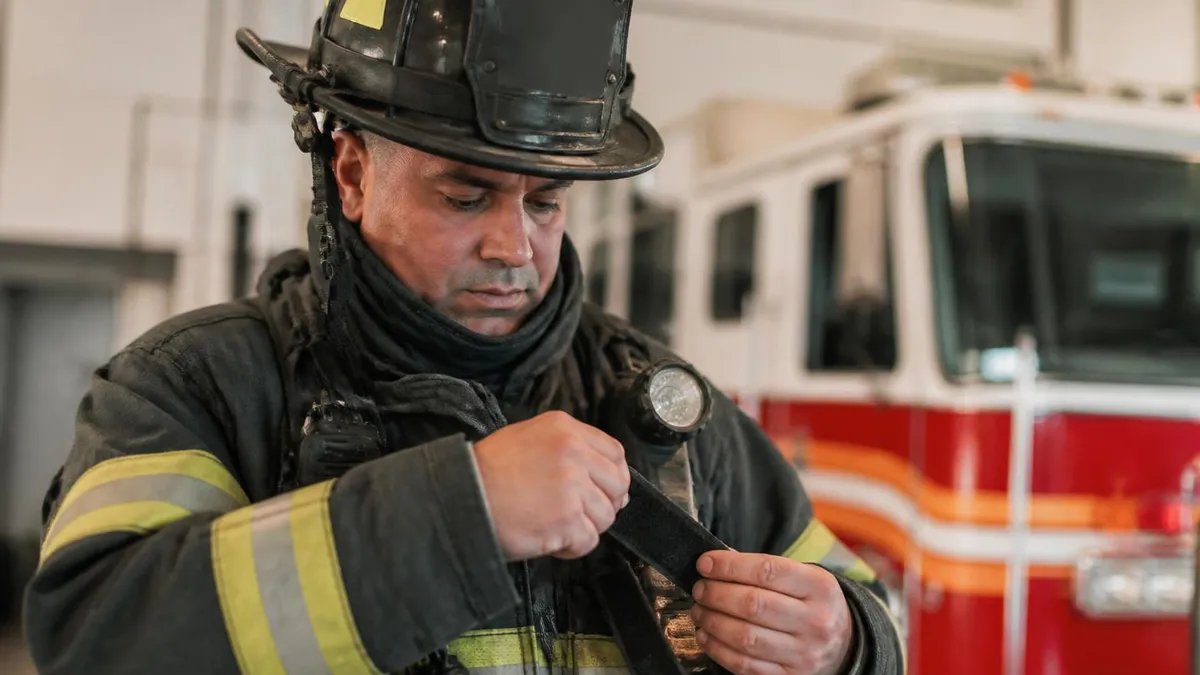
FDNY Rank Structure Overview
The foundation of the department, beginning with probationary firefighters and advancing through pay grades over five years until reaching top firefighter salary. These members perform direct firefighting and rescue work.
Lieutenants and captains lead individual engine, ladder, and rescue companies. They supervise five to six firefighters per tour, manage the firehouse, and command tactical operations at incidents.
Battalion chiefs, deputy chiefs, and assistant chiefs direct multiple companies, divisions, and entire operations. They serve as incident commanders at large fires and oversee strategic deployment.
The Chief of Department and staff chiefs sit atop the uniformed hierarchy, reporting to the civilian Fire Commissioner who is appointed by the Mayor of New York City.
The firefighting side of the FDNY ranks begins with the probationary firefighter, universally known inside the department as a "probie." These recruits complete an intensive program at the Fire Academy on Randall's Island, often called "The Rock," where they master ladders, hose operations, forcible entry, and emergency medical fundamentals. The probationary period typically lasts about 18 months, during which performance is closely monitored. Only after satisfactory completion does a probie advance to full firefighter status and begin earning the standard career salary progression.
A full firefighter, sometimes formally titled Firefighter First Grade once top pay is reached, represents the operational backbone of the department. These members ride the rigs, stretch hose lines, force doors, perform searches, and carry out rescues. The salary climbs through scheduled steps over roughly five years, rewarding accumulated experience. Within this rank, specialized assignments exist, including members of elite rescue companies and squad companies who handle the most technically demanding incidents the city faces.
Above the firefighter sits the lieutenant, the first true officer rank and the entry point into supervisory leadership. A lieutenant commands a single company during a tour, directing the engine or ladder crew at fires, accidents, and medical calls. They are responsible for the safety of their members, the readiness of apparatus, and accurate documentation of every run. Earning the rank requires passing a competitive promotional examination and demonstrating sound tactical judgment under pressure.
The captain ranks one step above the lieutenant and serves as the permanent commanding officer of a fire company. While lieutenants rotate through tours, the captain bears overall accountability for the unit's training, discipline, equipment, and administrative records. Captains often mentor newer officers and act as the institutional memory of the firehouse. At larger incidents, a captain may command several companies before a chief officer arrives to assume control of the scene.
Promotion between these ranks is governed by New York's civil service system, which emphasizes objective testing and seniority rather than favoritism. Candidates study department regulations, building construction, hydraulics, and supervisory principles, then sit for written examinations that determine their place on a promotional list. When vacancies open, the department promotes from the top of the list, ensuring a transparent and merit-based path upward through the FDNY ranks.
Understanding these distinctions helps clarify how the daily directives that govern the department actually reach the firehouse floor. The structure connects directly to how FDNY department orders filter from headquarters down through chiefs and company officers to every firefighter on duty, ensuring that policy changes, safety bulletins, and operational adjustments are implemented uniformly across all five boroughs without confusion or delay.
Specialized units add further texture to the firefighter ranks. Rescue companies, squad companies, marine units, and hazardous materials teams all draw from experienced firefighters and officers who pursue additional training. While their titles remain the same, the expertise required to serve in these units sets their members apart and often positions them well for future promotional opportunities within the broader department hierarchy.
FDNY Practice Test Questions
Prepare for the FDNY - Fire Department New York exam with our free practice test modules. Each quiz covers key topics to help you pass on your first try.
FDNY Building Construction
FDNY Exam Questions covering Building Construction. Master FDNY Test concepts for certification prep.
FDNY Community Engagement and Public Educa...
Free FDNY Practice Test featuring Community Engagement and Public Education. Improve your FDNY Exam score with mock test prep.
FDNY Emergency Medical Response
FDNY Mock Exam on Emergency Medical Response. FDNY Study Guide questions to pass on your first try.
FDNY Emergency Medical Services
FDNY Test Prep for Emergency Medical Services. Practice FDNY Quiz questions and boost your score.
FDNY Hazardous Materials Response
FDNY Questions and Answers on FDNY Hazardous Materials Response. Free FDNY practice for exam readiness.
FDNY Technical Rescue Operations
FDNY Mock Test covering FDNY Technical Rescue Operations. Online FDNY Test practice with instant feedback.
FDNY Fire Behavior
Free FDNY Quiz on Fire Behavior. FDNY Exam prep questions with detailed explanations.
FDNY Firefighting Operations and Equipment
FDNY Practice Questions for Firefighting Operations and Equipment. Build confidence for your FDNY certification exam.
FDNY Ranks: Insignia and Identification
The bugle, or speaking trumpet, is the traditional symbol of fire service authority dating to the 1800s when officers used actual horns to shout commands. In the FDNY, a single bugle on collar insignia denotes a lieutenant, while crossed bugles indicate higher officer grades. The number and arrangement of bugles increases with rank, giving a quick visual cue of who holds command authority at any scene.
Captains display two crossed bugles, battalion chiefs show two bugles arranged in parallel, and the count rises through the chief grades. This system, shared by fire departments across the United States, lets firefighters from different companies instantly recognize the relative seniority of an officer they have never met, which is essential during multi-unit responses.

Pursuing Promotion Through the FDNY Ranks
- +Significant salary increases accompany each rank advancement
- +Greater influence over operations, training, and strategy
- +Civil service testing creates a transparent, merit-based path
- +Leadership experience builds a strong professional legacy
- +Pension calculations improve with higher final salary grades
- +Opportunities to specialize in command and incident management
- −Promotional exams require months of demanding study
- −Higher ranks carry heavier accountability for life safety
- −Officers may be reassigned away from a preferred firehouse
- −Administrative duties reduce hands-on firefighting time
- −Limited vacancies can stall advancement for years
- −Command decisions bring intense scrutiny after incidents
Promotion Readiness Checklist for FDNY Ranks
- ✓Confirm you meet the time-in-grade requirement for the target rank.
- ✓Register for the relevant promotional civil service examination.
- ✓Master building construction principles and fire behavior.
- ✓Study department regulations and standard operating procedures.
- ✓Review incident command and supervisory leadership concepts.
- ✓Practice hydraulics and water-supply calculations.
- ✓Complete required training courses and certifications.
- ✓Document your operational experience and key incidents.
- ✓Take timed practice exams under realistic conditions.
- ✓Maintain a clean disciplinary and performance record.
Your exam list number determines everything
In the FDNY, promotions are made strictly from the top of the civil service list. Two candidates with identical experience can wait very different lengths of time based solely on their exam score and list position. A higher score on the promotional test can mean the difference between advancing in months versus years, which is why disciplined exam preparation is the single most controllable factor in your career trajectory.
Above the company officers stand the chief officers, the members who command large-scale operations and direct the strategic deployment of the department's resources. The first chief rank is the battalion chief, who oversees a battalion typically containing several engine and ladder companies within a defined geographic area. At a working fire, the battalion chief usually serves as the initial incident commander, establishing command, coordinating attack and search assignments, and calling for additional alarms when the situation demands more units.
The battalion chief works from a command vehicle and relies on a dedicated firefighter aide to manage communications, track companies, and document the operation. This rank demands a deep understanding of building construction, fire dynamics, and tactical coordination, because the chief is responsible for the safety of every member operating at the scene. A single misjudgment about a building's stability or fire spread can have catastrophic consequences, making this one of the most demanding positions in the department.
Above the battalion chief is the deputy chief, who commands a division composed of multiple battalions. At major incidents, the deputy chief assumes command from the battalion chief, taking over the broader strategic picture while battalion chiefs manage specific sectors of the operation. Deputy chiefs balance field command responsibilities with administrative oversight of the units within their division, ensuring consistent training, staffing, and readiness across a large swath of the city.
The assistant chief, sometimes structured within borough command, oversees firefighting operations across an entire borough or major functional area. These officers translate the department's overall strategy into regional execution, managing dozens of companies and thousands of personnel. They coordinate with other city agencies, plan for large public events, and prepare contingency responses for major emergencies that could overwhelm normal staffing levels.
At the executive level sit the staff chiefs and ultimately the Chief of Department, the highest-ranking uniformed member of the FDNY. The Chief of Department advises the Fire Commissioner on all operational matters, sets department-wide tactical doctrine, and represents the uniformed force in major decisions. This individual has typically risen through every preceding rank over decades of service, accumulating the institutional knowledge required to lead one of the world's largest and busiest fire departments.
Sitting above the entire uniformed structure is the Fire Commissioner, a civilian appointed by the Mayor. The commissioner is not a firefighting rank but rather the administrative head of the agency, responsible for budget, policy, and accountability to the public. This separation of civilian leadership from uniformed command mirrors the broader structure of municipal government and ensures democratic oversight of the department's substantial authority and resources.
The chief officer ranks also intersect with the department's most specialized assets. Coordinating the deployment of elite units, including the fireboats and harbor response teams described in coverage of the FDNY marine units, falls to chief officers who must understand the unique capabilities each resource brings to an incident. Their breadth of knowledge spans land, water, and air operations across all five boroughs.

On any fireground, the white helmet identifies the chief officer who holds command authority. If you respond to a multi-alarm fire, control passes upward as higher-ranking chiefs arrive — from battalion chief to deputy chief and beyond. Always confirm who currently holds command before taking independent action at a scene.
Parallel to the firefighting hierarchy runs the Emergency Medical Service, which operates its own distinct ladder of FDNY ranks. The FDNY absorbed the city's EMS system in 1996, and today its members respond to far more calls than fires — handling millions of medical emergencies each year. The EMS track begins with the Emergency Medical Technician, or EMT, who provides basic life support, including CPR, bleeding control, and rapid transport to hospitals across the city's neighborhoods.
Above the EMT is the paramedic, who delivers advanced life support. Paramedics undergo substantially more training and are authorized to administer medications, interpret cardiac rhythms, perform advanced airway management, and carry out interventions that an EMT cannot. Paramedics often respond in advanced life support ambulances or as part of specialized units, bringing hospital-level care directly to the patient during the critical first minutes of a medical emergency.
The supervisory EMS ranks mirror the firefighting structure in concept. EMS lieutenants oversee crews and respond to multi-patient or complex incidents, providing on-scene coordination and ensuring protocols are followed. EMS captains command stations and larger operational areas, managing personnel, scheduling, and quality assurance. These officers ensure that the enormous daily volume of medical calls is handled efficiently and that field providers have the support and oversight they need.
Higher still are the EMS deputy chiefs and division chiefs, who direct operations across boroughs and citywide functions. They manage mass-casualty planning, coordinate with hospitals and other agencies, and oversee the deployment of resources during major emergencies, public events, and disasters. Their role becomes especially critical during events that strain the system, when rapid scaling of medical response can save dozens or even hundreds of lives.
Career mobility exists within and sometimes between the tracks. Many members begin as EMTs, advance to paramedic, and pursue supervisory ranks, while others use EMS experience as a stepping stone before testing for firefighter positions. The medical knowledge gained in EMS is invaluable on the fireground, where firefighters routinely provide emergency care. Those interested in this path can explore how FDNY EMS recruits, trains, and promotes its members through a structured progression.
The EMS ranks carry their own insignia and uniforms that distinguish them from the firefighting side while maintaining the department's overall identity. Collar devices, badges, and uniform colors signal rank and function, allowing coordination at scenes where both fire and medical units operate together. This integration is one of the FDNY's greatest strengths, blending two professions into a unified emergency response system.
Both tracks ultimately answer to the same executive leadership and the Fire Commissioner, reinforcing that despite their different daily missions, firefighters and EMS members serve under one organizational umbrella. Understanding the full breadth of the FDNY ranks — from the newest EMT to the Chief of Department — reveals a sophisticated organization built to respond to virtually any emergency the nation's largest city can produce, at any hour, in any borough.
If you are preparing to advance through the FDNY ranks, the most important practical step is building a disciplined, exam-focused study routine well before the test date. Promotional examinations reward depth, not cramming. Start by obtaining the official source list published for your exam, which identifies the exact textbooks, regulations, and bulletins the questions will draw from. Reading directly from these sources, rather than secondhand summaries, ensures you absorb the precise terminology and procedures that examiners expect candidates to know cold.
Building construction is consistently one of the highest-weighted and most challenging subject areas. Invest serious time understanding how different building types behave under fire — from ordinary construction and wood frame to fireproof high-rises. Learn collapse indicators, fire-load concepts, and how construction influences tactics. This knowledge is not abstract; it is what allows an officer to predict danger and protect members, which is exactly why the exams emphasize it so heavily across every promotional level.
Practice questions are your best diagnostic tool. Working through realistic items under timed conditions reveals weak areas long before exam day and trains you to manage the clock. Review every question you miss, then return to the source material to close the gap. Over weeks, this cycle of testing and review builds the deep recall needed to answer quickly and confidently, freeing mental energy for the harder reasoning questions that separate top scorers from the rest.
Do not neglect the supervisory and leadership portions of the exam. As you move from firefighter to officer ranks, the tests increasingly probe how you would manage people, enforce policy, and make command decisions. Study the principles of incident command, accountability, and personnel supervision. Think through realistic scenarios and how a sound officer would respond, balancing aggressive firefighting with the overriding priority of member safety in every decision you make.
Physical and mental readiness matter as much as content knowledge. The demands of higher rank include long hours, high-stakes decisions, and sustained focus. Maintain your fitness, manage stress, and protect your sleep during the study period. A rested, healthy candidate performs measurably better on exam day and adapts more smoothly to the added responsibilities that come with promotion through the ranks of the Fire Department of New York.
Finally, seek mentorship from officers who already hold the rank you are pursuing. Their firsthand insight into the realities of the position, the common exam pitfalls, and the unwritten expectations of leadership is invaluable. Many successful candidates credit a mentor with sharpening their judgment and confidence. Combine that guidance with consistent practice testing and disciplined source-material study, and you will give yourself the strongest possible position on the promotional list.
Remember that advancement honors a tradition of sacrifice. The legacy reflected in accounts of FDNY firefighter death in the line of duty underscores the gravity of command. Every rank you earn increases your responsibility to send members home safely, making thorough preparation not just a career goal but a profound professional obligation to those you will lead.
FDNY Questions and Answers
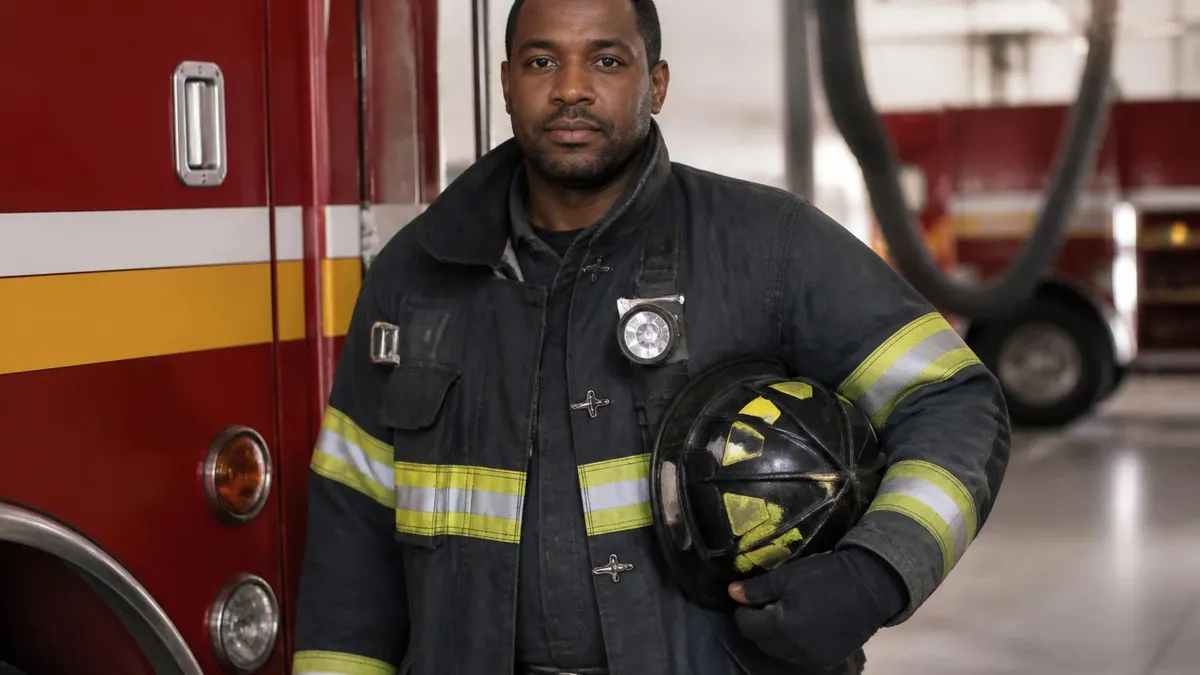
FDNY Marine Units: Inside the Fire Department of New York's Fireboat Fleet and Marine 6
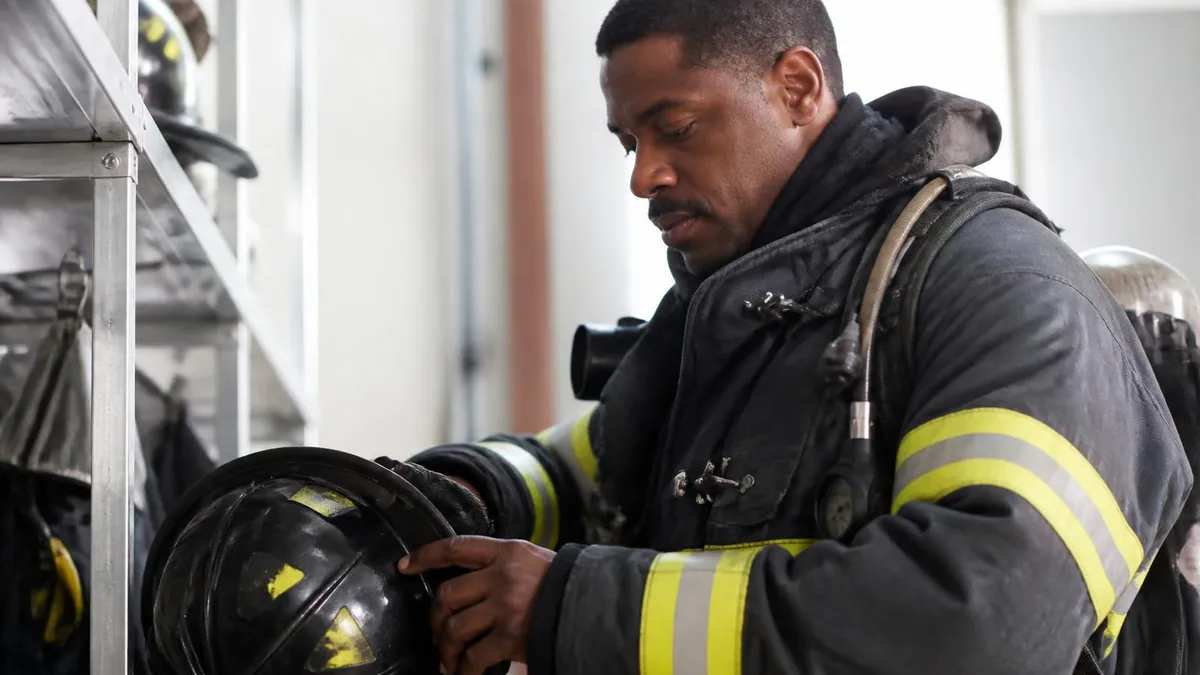
FDNY Firefighter Death: Line of Duty Sacrifice, Memorials, and the Legacy of New York's Bravest
FDNY Rescue 2: Inside Brooklyn's Elite Rescue Company
FDNY EMS — How New York City's Emergency Medical Service Works and How to Become an FDNY EMT or Paramedic
FDNY Department Orders: How Daily Directives Run the Fire Department of New York
About the Author

Law Enforcement Trainer & Civil Service Exam Specialist
John Jay College of Criminal JusticeMarcus B. Thompson earned his Master of Arts in Criminal Justice from John Jay College of Criminal Justice and served 12 years as a law enforcement officer before transitioning to full-time academy instruction. He is a POST-certified instructor who has prepared candidates for police entrance exams, firefighter assessments, and civil service examinations across dozens of agencies.
Join the Discussion
Connect with other students preparing for this exam. Share tips, ask questions, and get advice from people who have been there.
View discussion (9 replies)