
EEG Test for Seizures: What It Is, How It Works, and What to Expect
What is an EEG test for seizures? Learn how it works, how long it takes, cost, side effects, and what results mean. 🧠 Full guide for patients.

An EEG test for seizures is one of the most important diagnostic tools in neurology, giving doctors a real-time window into the electrical activity of your brain. EEG stands for electroencephalography, and during the procedure, small metal electrodes are attached to your scalp to detect and record the tiny electrical signals that neurons produce as they communicate.
When seizures are suspected, an EEG medical test can reveal abnormal patterns — such as spikes, sharp waves, or bursts of unusual rhythm — that point directly to epileptic or non-epileptic activity. For millions of Americans affected by seizure disorders, this painless, non-invasive test is often the first critical step toward an accurate diagnosis.
Understanding exactly what an EEG test involves can help reduce anxiety and ensure you arrive well-prepared. The procedure itself is straightforward: a trained EEG technologist applies 19 to 25 electrodes to your scalp using a conductive gel or paste, connects them to an amplifier, and records your brain waves over a period typically ranging from 20 minutes to more than an hour.
The resulting waveform readout — the electroencephalogram — shows distinct frequency bands including delta, theta, alpha, and beta waves. In patients with seizure disorders, the EEG often captures epileptiform discharges even between seizure events, which neurologists use to classify the seizure type and plan treatment accordingly.
One question patients commonly ask is how long is an eeg test — and the answer depends on the clinical situation. A routine outpatient EEG typically runs 20 to 40 minutes of actual recording time, though the entire appointment including electrode setup and removal can take 60 to 90 minutes.
If your doctor needs more information — for example, if a routine EEG is inconclusive — you may be referred for a prolonged EEG, a sleep-deprived EEG, or a 24-hour ambulatory recording. Each extended format increases the probability of capturing the abnormal electrical activity that confirms or rules out a seizure disorder.
The EEG brain test does not hurt, and there are no needles, radiation, or injections involved. Patients remain awake and reclined during a routine study, though they may be asked to breathe rapidly (hyperventilation) or look at a flickering strobe light as part of activation procedures designed to provoke latent abnormalities. These provocative maneuvers can bring out epileptiform patterns that might otherwise remain hidden during a resting recording. Children and adults with significant anxiety or intellectual disabilities may require mild sedation in rare cases, but for the vast majority of patients the procedure is entirely comfortable from start to finish.
From a diagnostic standpoint, no single EEG result tells the full story. A normal EEG does not rule out epilepsy — studies show that approximately 50 percent of individuals with confirmed epilepsy have a normal first routine EEG. Conversely, some healthy individuals display unusual waveforms that are benign variants rather than indicators of disease. That is why neurologists always interpret EEG findings in the context of a patient's full clinical history, symptom description, neurological examination, and sometimes additional imaging like MRI or CT scans. The EEG is a powerful piece of the diagnostic puzzle, not the puzzle itself.
For those studying to become EEG technologists or preparing for the ABRET R.EEG.T. credentialing examination, understanding the clinical application of EEG in seizure evaluation is foundational knowledge. The exam tests your ability to recognize abnormal epileptiform patterns, understand the significance of various waveform morphologies, and know how to conduct activation procedures safely and effectively. Whether you are a patient trying to understand your upcoming test or a technologist building your clinical skills, this guide will walk you through everything you need to know about EEG testing for seizures — from preparation through results interpretation.
This article covers the full scope of the EEG test experience: what the procedure involves step by step, how much it costs and what insurance typically covers, what the different types of EEG tests are used for seizure detection, and what the results actually mean for your care plan. We also address common patient concerns, including whether the test has any side effects, what to do before and after the study, and how to find qualified testing centers near you.
EEG Test for Seizures — By the Numbers

Types of EEG Tests Used to Evaluate Seizures
The standard first-line study, lasting 20 to 40 minutes of recording. Electrodes are applied in clinic and the patient remains awake. Activation procedures such as hyperventilation and photic stimulation are typically included to increase the chance of detecting epileptiform abnormalities.
The patient stays awake all night before the test to promote drowsiness and sleep during recording. Sleep is a powerful activator of seizure-related discharges, making this format significantly more sensitive than a routine waking study for detecting interictal epileptiform activity.
Electrodes are connected to a small portable recorder worn for 24 to 72 hours during normal daily activities. Ambulatory EEG dramatically increases the chance of capturing spontaneous events and is ideal for patients whose symptoms are infrequent or unpredictable.
Simultaneous video and EEG recording in a hospital epilepsy monitoring unit, often lasting several days. This gold-standard evaluation correlates clinical behavior with electrical brain activity and is essential for surgical candidacy evaluation and classifying non-epileptic events.
Continuous EEG monitoring performed in surgical suites or intensive care units to detect subclinical seizures, assess depth of anesthesia, or monitor brain function after severe neurological events such as stroke or traumatic brain injury.
The step-by-step process of an EEG test for seizures follows a consistent protocol designed to maximize diagnostic yield while keeping the patient as comfortable as possible. When you arrive for your appointment, a certified EEG technologist will take a brief clinical history and explain the procedure in detail.
You will be asked to sit or lie back in a reclined chair while the technologist measures your head using a tape measure and marks specific scalp sites according to the internationally standardized 10-20 electrode placement system. These marks ensure that electrodes are placed in reproducible, anatomically consistent locations every time, allowing meaningful comparison between studies and between institutions.
Electrode application typically takes 20 to 30 minutes. The technologist gently abrades each marked site with a mild exfoliating paste to reduce skin impedance, then applies the electrode using conductive gel. In most modern labs, electrode caps — pre-fitted with embedded electrodes — can speed up this process considerably.
Once all electrodes are in place and impedance values are verified to be within acceptable range (generally below 5 kilohms), recording begins. You will be asked to relax with your eyes closed for a baseline recording, then open them briefly on command so the technologist can observe the normal alpha wave suppression that occurs with eye opening.
Activation procedures are a critical part of any EEG evaluation for seizures. Hyperventilation — breathing deeply and rapidly for three minutes — lowers carbon dioxide levels in the blood, causing cerebral vasoconstriction that can trigger or augment seizure-related waveforms. This maneuver is especially useful for activating absence seizures, which often appear as characteristic three-per-second spike-and-wave discharges during hyperventilation.
Photic stimulation involves flashing a strobe light at frequencies ranging from 1 to 30 Hz to test for photoparoxysmal responses, a hallmark of certain generalized epilepsy syndromes. For more details on sleep activation techniques and their clinical implications, see our guide on eeg test side effects and what patients can expect during different study formats.
Throughout the recording, the technologist documents any patient movements, eye blinks, muscle artifacts, or clinical events using a keyboard annotation system. These notations are invaluable during interpretation because many biological and environmental artifacts can mimic epileptiform waveforms on the raw tracing. An experienced technologist recognizes and annotates these artifacts in real time, helping the interpreting neurologist accurately distinguish true brain-generated signals from spurious noise. Common sources of artifact include electrode movement, electrocardiographic contamination, muscle tension, and environmental electrical interference from nearby equipment.
After recording is complete, the technologist removes all electrodes and cleans the gel from the patient's scalp and hair. Most patients can wash their hair normally at home after the test. The raw EEG data is then reviewed and reported by a board-certified neurologist or clinical neurophysiologist, typically within 24 to 72 hours for routine outpatient studies.
Urgent inpatient EEGs are often read within one to two hours. The written report describes the dominant background rhythm, the presence or absence of epileptiform discharges, any ictal patterns (actual seizure activity captured during recording), and an overall clinical impression that addresses the referring physician's specific question.
A key concept for both patients and technologists to understand is the difference between ictal and interictal findings. Ictal activity refers to the actual electrical changes occurring during a seizure — these are dramatic, evolving patterns that are unambiguous when captured on EEG. Interictal discharges, by contrast, are the abnormal spikes and sharp waves that occur between clinical seizure events.
While interictal discharges do not represent active seizures, their presence, morphology, distribution, and frequency provide essential information about the underlying seizure focus and epilepsy syndrome classification. A focal interictal spike over the left temporal region, for example, suggests a very different diagnosis and treatment approach than a generalized burst of 3 Hz spike-and-wave discharges.
For EEG technologists preparing for the ABRET credentialing exam, this clinical knowledge forms the backbone of the examination content. The R.EEG.T. exam tests candidates on electrode placement, artifact identification, recognition of normal and abnormal waveform patterns, understanding of activation procedures, and patient safety protocols. Building a deep, clinically grounded understanding of how EEG relates to seizure evaluation — not just memorizing waveform names — is what separates candidates who pass on their first attempt from those who need to retake the exam.
What Is an EEG Medical Test? Results, Waveforms, and Diagnosis
A normal EEG shows well-organized background rhythms appropriate for the patient's age and state of alertness. In awake adults, the dominant rhythm is alpha activity — sinusoidal waves at 8 to 13 Hz — best seen over the occipital regions with eyes closed. When an EEG is read as normal, it means no clearly abnormal patterns were detected during the recording window, though it does not exclude epilepsy. Neurologists estimate that a single routine EEG captures epileptiform activity in only about 50 percent of patients with known epilepsy.
Abnormal EEG results for seizure evaluation include epileptiform discharges such as spikes (under 70 milliseconds), sharp waves (70 to 200 milliseconds), spike-and-wave complexes, and polyspike bursts. These patterns can be focal, indicating a localized seizure origin, or generalized, suggesting diffuse cortical involvement. Slow-wave abnormalities may indicate structural lesions or encephalopathy rather than epilepsy. The interpreting neurologist weighs all findings alongside clinical information to formulate a diagnostic conclusion that guides treatment decisions.

Pros and Cons of EEG Testing for Seizure Diagnosis
- +Non-invasive and painless — no needles, injections, or radiation involved
- +Real-time detection of abnormal brain electrical activity during and between seizures
- +Essential for accurate epilepsy syndrome classification, which guides medication choice
- +Can capture subclinical (non-obvious) seizures that patients are unaware of
- +Multiple formats available — routine, ambulatory, video-EEG — to match clinical needs
- +Widely available at hospitals, neurology clinics, and outpatient imaging centers across the US
- −A normal result does not rule out epilepsy — sensitivity of a single routine EEG is only about 50 percent
- −Electrode application is time-consuming and requires scalp preparation that can leave temporary residue in hair
- −Cannot image the brain structurally — MRI is needed to detect lesions that may cause seizures
- −Results require expert interpretation by a board-certified neurologist or neurophysiologist
- −Activation procedures like hyperventilation may be uncomfortable or risky for some patients
- −Prolonged or inpatient monitoring studies can be costly and require time away from normal activities
How to Prepare for Your EEG Test for Seizures
- ✓Wash your hair the night before or the morning of the test — do not apply conditioner, hair spray, or styling products.
- ✓Ask your doctor whether to continue or temporarily stop anti-seizure medications before the test.
- ✓Avoid caffeine for at least 8 to 12 hours before the appointment to prevent excess alertness that can suppress abnormal patterns.
- ✓If ordered a sleep-deprived EEG, stay awake the entire night before and arrange a driver, as you will be too tired to drive safely after.
- ✓Eat a normal meal before your EEG — low blood sugar can cause EEG changes that are not related to seizures.
- ✓Arrive 10 to 15 minutes early to complete paperwork and allow extra setup time if the lab is busy.
- ✓Wear comfortable, loose-fitting clothing and avoid wearing earrings or other head jewelry that may interfere with electrode placement.
- ✓Bring a list of all current medications, including over-the-counter drugs and supplements, for the technologist to document.
- ✓Let the technologist know about any scalp conditions, skin allergies, or prior reactions to electrode gels or adhesives.
- ✓During the test, try to relax and remain still — muscle tension and movement create artifacts that can make the recording harder to interpret.
A Normal EEG Does Not Mean You Do Not Have Epilepsy
Up to 50 percent of people with confirmed epilepsy have a completely normal first routine EEG. This is because brief interictal discharges may not occur during the 20 to 40 minutes of recording, especially in patients with infrequent seizures. If your EEG is normal but your symptoms are still concerning, ask your neurologist about sleep-deprived or ambulatory EEG options before concluding the diagnosis is ruled out.
The cost of an EEG test for seizures in the United States varies considerably depending on the type of study, the facility performing it, and the patient's insurance coverage. For a routine outpatient EEG, the typical billed charge ranges from approximately $200 to $900 before insurance adjustments. However, the amount a patient actually pays out of pocket depends heavily on their insurance plan's deductible, co-insurance, and whether the ordering physician and interpreting neurologist are both in-network. Patients with high-deductible plans may find that the full billed amount applies until their deductible is met for the year.
Prolonged and inpatient EEG studies carry substantially higher costs. A 24-hour ambulatory EEG may run $500 to $1,500, while a multi-day video-EEG monitoring stay in a hospital epilepsy unit can cost $5,000 to $20,000 or more when facility fees, nursing care, and neurologist interpretation charges are all included. Most major insurance plans — including Medicare and Medicaid — cover EEG testing when it is medically indicated, meaning there is a documented clinical reason such as a new seizure, suspected epilepsy, or evaluation for epilepsy surgery candidacy. Prior authorization is increasingly required by insurers before scheduling prolonged or inpatient studies.
For uninsured or underinsured patients, several strategies can help reduce the financial burden. Community health centers and federally qualified health centers (FQHCs) often provide diagnostic testing on sliding-scale fees based on income. Hospital financial assistance programs — sometimes called charity care — are available at most nonprofit hospitals and can cover a significant portion of EEG costs for qualifying patients. Additionally, comparing prices between hospital-based outpatient labs and independent neurology clinics or freestanding imaging centers often reveals meaningful price differences, with community-based facilities frequently charging significantly less for the same technical procedure.
It is worth noting that the EEG test price includes both a technical component (the electrode application, recording, and equipment) and a professional component (the neurologist's interpretation fee). These are sometimes billed separately, which can confuse patients who receive two different bills for a single appointment. When shopping for EEG services or checking insurance coverage, make sure to ask about both components and confirm whether both the facility and the interpreting physician are in your insurance network. An out-of-network interpretation fee on an otherwise in-network test can still result in significant unexpected expense.
Medicare Part B covers routine diagnostic EEGs under CPT code 95816 (awake and drowsy) and 95819 (awake and asleep) when ordered by a physician for a covered indication. The Medicare reimbursement rate for a routine outpatient EEG interpretation is approximately $35 to $75 depending on geographic location, with the technical component reimbursed separately. Medicaid coverage varies by state but generally covers EEG testing for medically necessary indications. Veterans receiving care through the VA healthcare system have EEG testing covered as part of their comprehensive benefits package, including prolonged and inpatient monitoring when clinically indicated.
For professionals in the EEG field, understanding the billing and reimbursement landscape is increasingly important. EEG technologists who work in outpatient settings often interact with patients who have questions about what their insurance will cover, and being able to provide basic guidance — or direct patients to the appropriate billing department — is part of excellent patient care. The eeg brain test cost guide on this site provides a detailed breakdown of costs by study type, insurance scenarios, and cost-saving strategies that both patients and technologists will find useful.
Beyond direct testing costs, patients undergoing seizure evaluation should also consider indirect costs such as transportation to appointments, time off work for multi-day monitoring stays, and the potential need for additional follow-up imaging or specialist consultations. Epilepsy is a chronic condition, and the diagnostic workup — while essential — represents only the beginning of an ongoing relationship with the healthcare system. Understanding the full financial landscape from the outset helps patients plan appropriately and make informed decisions about where to pursue their evaluation and care.

Some physicians ask patients to taper or stop anti-seizure medications before a video-EEG monitoring stay to increase the chance of capturing a seizure during recording. This should only be done under direct medical supervision in a monitored setting. Never stop or reduce your seizure medications on your own before a routine outpatient EEG — doing so can significantly increase your risk of a serious or prolonged seizure outside of a controlled environment.
For those considering a career as an EEG technologist, the field offers a rewarding combination of technical skill, patient interaction, and clinical impact. EEG technologists — also called electroneurodiagnostic (END) technologists — are the healthcare professionals responsible for performing EEG tests, including those used in seizure evaluation. They work in hospitals, outpatient neurology clinics, epilepsy monitoring units, sleep labs, intensive care units, and operating rooms. The role requires a deep understanding of neuroanatomy, electrode placement, artifact recognition, and patient safety, as well as strong interpersonal skills for working with patients who are often anxious or medically vulnerable.
Becoming a credentialed EEG technologist in the United States typically involves completing an accredited END technology training program, which may be offered at community colleges, technical schools, or hospital-based programs. These programs range from one to two years in length and combine classroom instruction with hands-on clinical experience. After completing an approved program, graduates are eligible to sit for the ABRET (American Board of Registration of Electroencephalographic and Evoked Potential Technologists) R.EEG.T. examination, which is the gold standard credential in the field. Maintaining the credential requires ongoing continuing education to stay current with evolving technology and clinical standards.
The demand for qualified EEG technologists is growing steadily, driven by an aging population with increased rates of seizure disorders, stroke, and neurodegenerative disease, as well as expanding use of continuous EEG monitoring in intensive care units.
According to the Bureau of Labor Statistics, the broader category of cardiovascular technologists and technicians — which includes END technologists — is projected to grow at a rate comparable to or faster than the average for all occupations. Entry-level EEG technologists typically earn between $45,000 and $55,000 annually, while experienced technologists with specialty credentials in long-term monitoring or intraoperative neurophysiology can earn $65,000 to $85,000 or more.
One particularly exciting career path for EEG professionals is travel technology, where technologists take short-term contract assignments at hospitals and clinics across the country. Travel EEG positions typically offer higher pay rates, housing stipends, and travel reimbursements in addition to the base hourly wage. For technologists who enjoy variety, flexibility, and the opportunity to work in diverse clinical settings, a travel career can be financially and professionally rewarding. To explore this pathway further, see our guide on eeg test near me and how to find qualified testing centers and travel opportunities in your area.
Specialization is another avenue for career advancement in EEG technology. Technologists who develop expertise in pediatric EEG, neonatal monitoring, intraoperative neurophysiology monitoring (IONM), or quantitative EEG analysis are highly sought after in academic medical centers and specialty practices. The ABRET offers additional credentials beyond the base R.EEG.T., including the CLTM (Certified Long-Term Monitoring Technologist) and the CNIM (Certified Neurophysiologic Intraoperative Monitoring) designations for technologists who want to demonstrate advanced expertise in these subspecialty areas.
From an educational standpoint, candidates preparing for the R.EEG.T. exam should focus heavily on the clinical applications of EEG in seizure evaluation, since this content area represents a significant portion of the examination. Understanding the full spectrum of epileptiform abnormalities, normal variants that mimic epileptic patterns, the clinical significance of different seizure types, and the technical requirements for high-quality recording are all essential knowledge domains. Practice questions that present realistic clinical scenarios — including recognition of abnormal patterns, artifact identification, and activation procedure protocols — are the most effective preparation strategy for the credentialing examination.
Professional organizations such as ASET — The Neurodiagnostic Society play an important role in supporting EEG technologists throughout their careers. ASET provides educational resources, national conference programming, online learning modules, and advocacy for the neurodiagnostic profession. Membership in ASET gives technologists access to a community of peers, the latest clinical practice guidelines, and professional networking opportunities that can support career growth at every stage — from new graduate through senior leadership positions in clinical neurophysiology departments.
Practical preparation for the R.EEG.T. examination requires a structured study approach that goes well beyond simply reading a textbook. The most successful candidates combine multiple learning modalities: reading core reference texts such as the Ebersole and Pedley clinical EEG handbook, reviewing real EEG tracing examples to build pattern recognition skills, working through practice question banks that mirror the format and difficulty of actual exam questions, and participating in study groups or online communities where candidates can discuss difficult concepts and share learning resources.
Time management during the exam is also a critical skill to develop during preparation. The R.EEG.T. examination consists of 225 questions administered over a set testing period, meaning candidates must maintain a steady pace throughout without spending excessive time on any single question. Practicing with timed question sets helps candidates calibrate their speed and identify which content areas require additional review. For EEG pattern identification questions in particular, the ability to quickly recognize key morphological features — spike duration, field distribution, frequency, and clinical context — is built through repeated exposure to a wide variety of normal and abnormal examples.
Understanding the technical and patient safety aspects of EEG testing is equally important for both the credentialing exam and real-world clinical practice. Electrode impedance management, amplifier calibration, digital EEG recording parameters, and the appropriate response to patient emergencies — including breakthrough seizures during recording — are all tested on the R.EEG.T. exam and are directly relevant to daily work in a clinical EEG lab.
Technologists who approach their certification preparation with a genuine interest in understanding the clinical significance of what they are recording, rather than just memorizing isolated facts, will be better prepared both for the exam and for a successful career in the field.
For patients, the practical takeaway from understanding how EEG technology works and how technologists are trained is that the quality of your EEG recording depends significantly on the skill and experience of the technologist performing it. A well-trained, credentialed technologist will apply electrodes precisely, recognize and correct artifacts in real time, perform activation procedures properly, and document clinical observations accurately — all of which directly impact the quality of information available to the interpreting neurologist. When possible, choosing a facility staffed by R.EEG.T.-credentialed technologists is a meaningful quality indicator when selecting where to have your EEG performed.
Another practical consideration for patients is what to expect after the EEG test is complete. Most patients experience no lingering effects after a routine EEG beyond the need to wash the electrode gel out of their hair. However, sleep-deprived EEG patients are often extremely tired after the test and should not drive or operate heavy machinery until they have slept.
Patients who had a seizure captured during the recording may be kept under observation for a period afterward, especially if the seizure was prolonged or if they required any intervention. The clinical staff will provide specific post-test instructions based on what occurred during your individual recording.
Following up on your results promptly is important, particularly if you are awaiting a diagnosis that will influence major life decisions such as whether it is safe to drive. Most states have legal requirements mandating that people with uncontrolled seizures refrain from driving for a specified period — typically three to twelve months seizure-free, depending on the state.
Your neurologist will discuss these requirements with you after reviewing your EEG results and full clinical picture. If your EEG reveals significant abnormalities, a follow-up appointment is usually scheduled within a few weeks to discuss results, start or adjust treatment, and plan any additional diagnostic workup that may be indicated.
In summary, the EEG test remains an indispensable tool in the evaluation and management of seizure disorders more than 90 years after its introduction into clinical medicine. Whether you are a patient navigating a new diagnosis, a caregiver supporting a loved one through the diagnostic process, or an EEG technologist building the knowledge and skills needed to excel in this rewarding field, understanding the EEG test in depth — how it works, what it measures, how results are interpreted, and how to prepare — will help you get the most out of this powerful diagnostic technology.
EEG Questions and Answers
EEG Electroencephalography Practice Test PDF (Free Printable 2026)
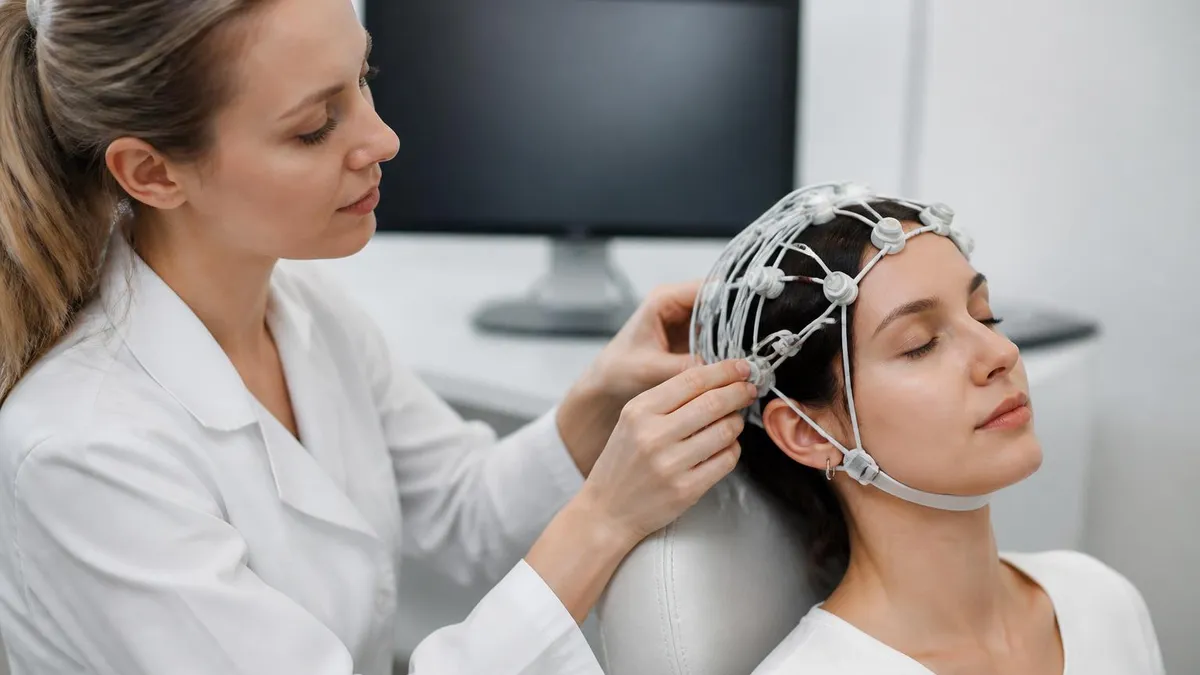
Sleep EEG: How Overnight Brain Wave Testing Works and What Your Results Mean
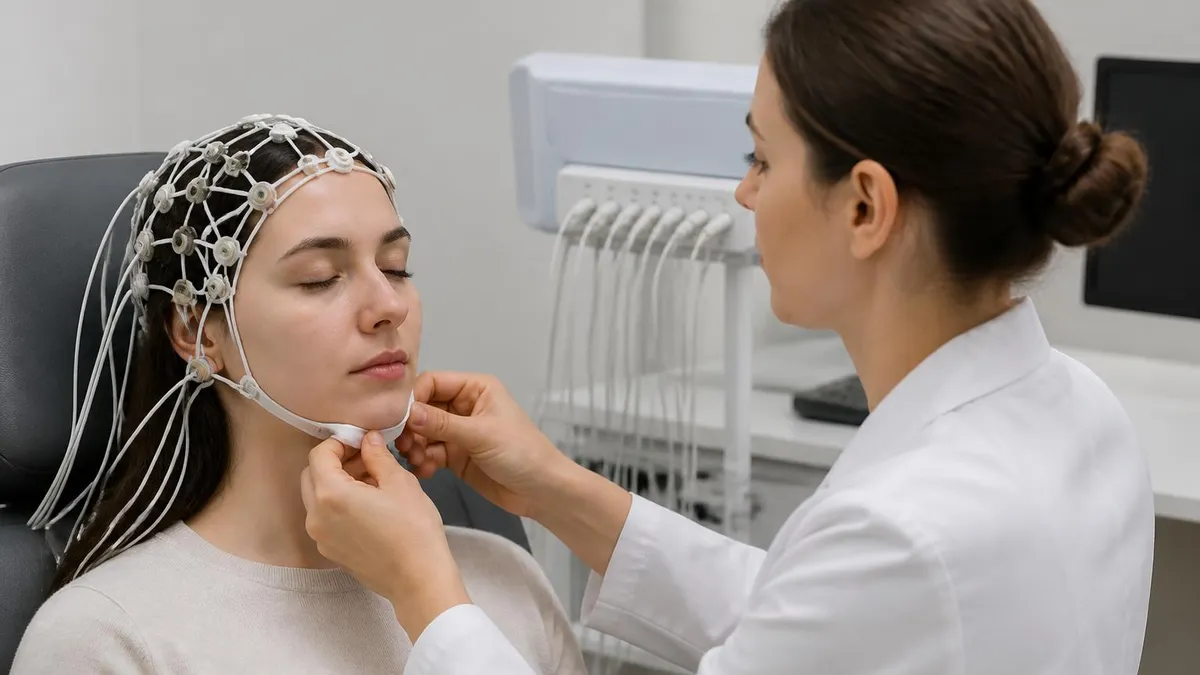
EEG Test Cost in 2026: Prices, Insurance Coverage, and How to Save

Travel EEG Tech Jobs: The Complete Guide to Working as a Mobile Electroencephalography Technologist

EEG Test: What Is Mapping EEG, How It Works, and What to Expect
About the Author

Educational Psychologist & Academic Test Preparation Expert
Columbia University Teachers CollegeDr. Lisa Patel holds a Doctorate in Education from Columbia University Teachers College and has spent 17 years researching standardized test design and academic assessment. She has developed preparation programs for SAT, ACT, GRE, LSAT, UCAT, and numerous professional licensing exams, helping students of all backgrounds achieve their target scores.