
Travel EEG Tech Jobs: The Complete Guide to Working as a Mobile Electroencephalography Technologist
Explore travel EEG tech jobs: salary ranges, certifications, daily duties & how the EEG test works on the road. 🎯 Start your travel career today.

The demand for skilled EEG technologists who are willing to travel has surged dramatically over the past decade, creating a rewarding niche within the allied health profession. A travel EEG tech performs the same electroencephalography procedures as a hospital-based technologist — attaching electrodes, monitoring brainwave activity, and producing recordings that neurologists use for diagnosis — but does so at different healthcare facilities across the country, typically on 13-week contracts. Understanding what an travel eeg tech jobs entails is the first step toward building a flexible, high-earning career in neurodiagnostics.
An EEG test is a non-invasive neurological procedure that measures the electrical activity of the brain using small metal discs called electrodes placed on the scalp. The signals captured during an EEG medical test appear as wavy lines on a computer screen, representing different brain rhythms such as alpha, beta, theta, and delta waves. Neurologists interpret these patterns to diagnose conditions like epilepsy, sleep disorders, encephalopathies, and brain injuries. Travel EEG technologists must master these interpretive fundamentals to flag critical findings immediately and notify the reading physician without delay.
Many technologists wonder what is an EEG test compared to other neurological studies. Unlike an MRI or CT scan, an EEG does not use radiation or magnetic fields. It is a purely electrophysiological measurement that captures real-time brain function rather than anatomical structure. How long is an EEG test? A routine outpatient EEG typically runs 20 to 40 minutes, while a prolonged video-EEG monitoring session in an epilepsy monitoring unit can span several days. Travel techs are often assigned to short-term monitoring units precisely because local staff cannot cover extended hours consistently.
EEG test cost and EEG test price vary widely depending on the facility type, geographic region, and payer mix. An outpatient routine EEG may range from roughly $200 to $900 after insurance, while inpatient long-term monitoring can cost several thousand dollars per day. Understanding these billing realities helps travel techs communicate with facility administrators about the value they bring, particularly in rural or underserved areas where access to trained neurodiagnostic staff is limited and unfilled slots translate directly into lost revenue and delayed patient care.
Travel EEG tech jobs exist across virtually every healthcare setting: academic medical centers, community hospitals, freestanding epilepsy monitoring units, pediatric facilities, inpatient rehabilitation centers, and even correctional healthcare programs. The variety of placements means that travel techs accumulate clinical experience far more rapidly than their staff counterparts. Within a single year, a motivated travel technologist might rotate through a Level 4 comprehensive epilepsy center, a stroke belt community hospital, and a pediatric neurology program, building a depth of expertise that commands higher pay and stronger job security.
EEG test side effects are essentially nonexistent, which is one reason the modality has remained central to neurological diagnosis for nearly a century. Patients occasionally report mild scalp irritation from electrode paste, and sleep-deprived patients may feel groggy after an activation study, but there are no risks of radiation exposure, contrast reactions, or significant discomfort. For travel techs, this benign safety profile means the job focuses primarily on technical skill, patient rapport, and artifact recognition rather than managing procedural complications — making it an accessible specialty even for newer graduates willing to invest in solid foundational training.
Whether you are a seasoned neurodiagnostic professional considering your first travel assignment or a recent graduate of an EEG technology program exploring career options, understanding the full landscape of travel opportunities is essential. This guide covers everything from credentialing requirements and compensation packages to daily workflow expectations and strategies for negotiating your first contract, giving you the complete picture needed to launch or advance a successful career in travel EEG technology.
Travel EEG Tech Jobs by the Numbers

Core Requirements for Travel EEG Tech Positions
Most travel agencies require completion of an accredited neurodiagnostic technology program (associate or bachelor's degree) or equivalent documented clinical training hours. Programs accredited by CAAHEP are most widely recognized.
The R.EEG T. (Registered EEG Technologist) from ABRET is the gold-standard credential. Many facilities also value the CLTM (Continuous Long-Term Monitoring) credential for ICU and epilepsy monitoring unit placements.
Agencies typically require 1–2 years of hands-on EEG experience before placing candidates in travel roles. Some accept new graduates for mentored programs, but independent assignments require demonstrated competence.
Some states require additional licensure beyond national credentials. Travel techs must complete facility-specific orientation, BLS certification, and health screenings for every new assignment.
Proficiency with multiple EEG acquisition systems (Natus, Cadwell, Nihon Kohden, Compumedics) is a major advantage. Familiarity with LTMS software and digital artifact recognition accelerates onboarding at new facilities.
Compensation for travel EEG tech jobs is structured differently than traditional staff employment, and understanding the components of a travel pay package is essential before signing any contract. Base hourly rates for travel EEG technologists typically range from $28 to $48 per hour depending on specialty, geographic location, facility type, and the urgency of the staffing need. However, the total compensation picture extends well beyond the base rate, incorporating tax-free stipends for housing and meals that can substantially increase take-home pay compared to equivalent staff salaries in the same market.
Housing stipends are perhaps the most valuable component of the travel EEG tech pay package. The IRS allows tax-free reimbursements for lodging and meals when a healthcare worker maintains a permanent tax home and is traveling away from that home for work purposes. A typical housing stipend ranges from $1,200 to $2,500 per month depending on the cost of living in the assignment city. Savvy travel techs research rental markets before accepting an assignment and seek furnished apartments or extended-stay hotels that cost less than the stipend amount, effectively banking the difference as additional tax-free income.
Meal and incidental expense (M&IE) stipends add another $250 to $500 per week to the compensation package, again tax-free for qualified workers. When you add housing and meal stipends to the base taxable hourly rate, total effective compensation for an experienced travel EEG technologist in a high-cost market like New York, San Francisco, or Boston can exceed $95,000 annualized. Even in lower-cost rural markets where EEG test cost and hospital reimbursements are lower, the combination of stipends and competitive hourly rates typically puts travel techs well ahead of local staff compensation.
Benefits vary considerably by travel agency. Most reputable agencies offer health, dental, and vision insurance — though the employee premium contribution varies. Some agencies offer 401(k) plans with modest employer matching, while others provide completion bonuses (typically $500 to $2,000) for finishing an assignment without cancellation. Continuing education allowances and credentialing exam reimbursements are increasingly common as agencies compete for experienced EEG techs. Always request a written breakdown of the complete benefits package before comparing offers, since a higher hourly rate at one agency may be offset by inferior benefits at another.
Overtime and on-call pay are important considerations for hospital-based EEG roles, particularly in epilepsy monitoring units where emergent studies may be required outside normal business hours. Federal law requires overtime pay (1.5× the regular rate) for hours worked beyond 40 per week, but the calculation method differs between agencies. Some agencies blend the base rate and stipends for overtime calculations, which is legally problematic; others calculate overtime only on the taxable base rate. Understanding how your agency handles overtime ensures you are fairly compensated during high-census weeks without unexpected tax complications at year-end.
Contract terms deserve careful scrutiny before any travel assignment begins. The standard contract period is 13 weeks with options to extend, cancel with notice (typically 2 to 4 weeks), or convert to a permanent staff role at the facility. Cancellation clauses protect both the traveler and the facility: most contracts specify that the facility must provide two weeks' notice before canceling, and the traveler must give the same.
Some contracts include guaranteed hours clauses ensuring a minimum number of paid hours per week regardless of census, which provides important income security during slow periods when the EEG medical test volume drops unexpectedly.
Negotiating effectively requires knowing your market value. Research salary data from the Bureau of Labor Statistics (BLS), ABRET salary surveys, and travel-specific platforms before each contract renewal. Experienced R.EEG T. credentialed techs with CLTM and pediatric EEG experience command premium rates, particularly at academic centers with complex patient populations. Do not hesitate to share competing offers with your recruiter — most agencies have rate flexibility they do not advertise publicly, and demonstrating you have options is the single most effective negotiation strategy available to travel healthcare professionals.
What Is an EEG Test? Procedures Travel Techs Perform Daily
A routine EEG test is the most common procedure travel technologists perform. The tech applies 21 or more electrodes to the scalp according to the International 10-20 System, records resting brain activity for 20 to 40 minutes, and incorporates activation procedures such as hyperventilation and photic stimulation to provoke latent abnormalities. Artifact recognition — distinguishing true brain signals from muscle, eye, and cardiac interference — is the core technical skill evaluated during every routine study.
Travel EEG techs performing routine studies at new facilities must quickly adapt to different acquisition software platforms, electrode application materials (gel vs. paste), and departmental documentation workflows. Competency in multiple vendor systems — Natus Xltek, Cadwell Sierra, and Nihon Kohden EEG-1200 — dramatically shortens orientation time and increases the tech's value to facilities that have invested in a specific platform. Most outpatient EEG test prices reflect the relatively brief procedure time, making throughput efficiency an important metric at busy outpatient neurology practices.

Travel EEG Tech Career: Pros and Cons
- +Significantly higher total compensation than most staff EEG technologist positions, especially when tax-free stipends are factored in
- +Rapid accumulation of clinical experience across diverse patient populations, facility types, and EEG acquisition platforms
- +Geographic flexibility allows you to explore different cities and regions while advancing your neurodiagnostic career
- +Professional networking across multiple institutions creates long-term career opportunities and strong references
- +Short-term contract commitments provide freedom to take breaks between assignments or pivot to new specialties
- +High demand and low supply of credentialed travel EEG techs means strong job security and consistent placement opportunities
- −Frequent relocation is stressful and logistically demanding, particularly for technologists with families or property ownership
- −Benefits like retirement matching, paid time off, and tuition assistance are generally weaker than permanent staff positions
- −Each new assignment requires a learning curve for facility-specific protocols, EHR systems, and team dynamics
- −Income variability between contracts — particularly during slow assignment periods — requires careful financial planning and emergency reserves
- −Maintaining a permanent tax home (required for stipend eligibility) adds housing cost complexity that demands financial discipline
- −Limited mentorship and professional development support compared to academic medical center staff positions with structured education programs
Pros and Cons at a Glance
| Pros | Cons |
|---|---|
| Significantly higher total compensation than most staff EEG technologist positions, especially when tax-free stipends are factored in | Frequent relocation is stressful and logistically demanding, particularly for technologists with families or property ownership |
| Rapid accumulation of clinical experience across diverse patient populations, facility types, and EEG acquisition platforms | Benefits like retirement matching, paid time off, and tuition assistance are generally weaker than permanent staff positions |
| Geographic flexibility allows you to explore different cities and regions while advancing your neurodiagnostic career | Each new assignment requires a learning curve for facility-specific protocols, EHR systems, and team dynamics |
| Professional networking across multiple institutions creates long-term career opportunities and strong references | Income variability between contracts — particularly during slow assignment periods — requires careful financial planning and emergency reserves |
| Short-term contract commitments provide freedom to take breaks between assignments or pivot to new specialties | Maintaining a permanent tax home (required for stipend eligibility) adds housing cost complexity that demands financial discipline |
| High demand and low supply of credentialed travel EEG techs means strong job security and consistent placement opportunities | Limited mentorship and professional development support compared to academic medical center staff positions with structured education programs |
Travel EEG Tech Contract Negotiation Checklist
- ✓Verify the taxable base hourly rate separately from the total blended package rate before comparing offers.
- ✓Confirm that housing and meal stipends are clearly documented as tax-free reimbursements in your contract.
- ✓Request a guaranteed-hours clause ensuring minimum weekly pay regardless of facility census or scheduling changes.
- ✓Ask whether the agency carries professional liability (malpractice) insurance covering you during the assignment.
- ✓Clarify the cancellation policy — both facility-initiated and traveler-initiated — and any associated financial penalties.
- ✓Confirm which EEG acquisition systems are in use at the facility so you can complete any required platform training before arrival.
- ✓Verify that your R.EEG T. credential and any state-specific licensure requirements are met before the contract start date.
- ✓Negotiate a completion bonus for successfully finishing the full 13-week contract without cancellation or attendance issues.
- ✓Confirm overtime pay calculation method — it should be based on your total compensation rate, not just the base taxable wage.
- ✓Ask about extension terms and the facility's history of extending travel tech contracts so you can plan your next assignment transition.
The R.EEG T. Credential Doubles Your Placement Options
Travel staffing data consistently shows that ABRET-credentialed EEG technologists receive placement offers approximately twice as fast as non-credentialed candidates and command 15–25% higher hourly rates. If you are considering a travel career, earning your R.EEG T. before your first assignment is the single highest-return investment you can make in your professional future.
A typical day for a travel EEG technologist varies considerably based on the assignment setting, but most hospital-based positions follow a predictable rhythm built around the EEG test schedule. The day begins with reviewing the order queue, verifying patient demographics and clinical indications, and gathering supplies. Electrode application — the most time-consuming hands-on component of any EEG study — requires careful scalp preparation, precise electrode placement according to the 10-20 system, and impedance verification to ensure signal quality meets recording standards. A skilled tech can complete electrode application for a cooperative adult patient in 20 to 30 minutes.
During the recording itself, the travel tech monitors the live EEG signal continuously, watching for artifacts and making real-time adjustments to electrode placement, filter settings, and sensitivity. Patient coaching is equally important: the tech guides the patient through hyperventilation (breathing deeply and rapidly for three minutes to provoke latent epileptiform activity) and photic stimulation (exposure to a strobe light at frequencies ranging from 1 to 30 Hz to test for photoparoxysmal responses). Clear, calm communication with patients who may be anxious, sleep-deprived, or cognitively impaired is a non-technical skill that separates exceptional EEG techs from adequate ones.
After recording, the tech annotates the study with clinical notes documenting patient behavior, level of cooperation, medications, and any events that occurred during the session. The annotated file is then uploaded to the neurologist's reading queue. In facilities where same-day reads are routine, the tech may field immediate questions from the interpreting neurologist about technical quality or patient behavior during specific segments of the recording. This direct communication loop between the tech and neurologist is one of the most professionally rewarding aspects of the role, as it highlights the technologist's contribution to the diagnostic process.
Long-term monitoring assignments create a substantially different daily experience. In an epilepsy monitoring unit, the travel tech arrives each shift to a bank of monitors displaying continuous recordings from four to eight patients simultaneously. The primary tasks include checking electrode integrity, troubleshooting impedance problems without disturbing sleeping patients, reviewing seizure detection alarms, and escalating genuine ictal events to the nursing team and neurologist. During high-census periods, a single tech may be responsible for monitoring an entire unit, requiring exceptional multitasking ability and clinical judgment to prioritize which alarms warrant immediate bedside response.
ICU assignments add another layer of clinical complexity because patients are often intubated, sedated, or pharmacologically paralyzed, making clinical correlation of EEG findings more challenging and more critical. The travel tech in a neurological ICU must be comfortable communicating directly with intensivists, neurologists, and bedside nurses about concerning EEG patterns — periodic discharges, burst suppression, or electrographic seizures — that require urgent clinical response. This level of integration with the critical care team is professionally demanding but builds a depth of clinical experience that significantly advances the travel tech's long-term career trajectory.
Documentation standards vary between facilities, and adapting quickly to different electronic health record systems is one of the practical challenges of travel EEG work. Most academic medical centers use Epic, while community hospitals may use Cerner, Meditech, or facility-specific legacy systems. Travel techs who are fluent across multiple EHR platforms reduce the administrative burden on the facilities that host them and reduce their own orientation time, which directly translates to better performance reviews and stronger invitations to extend or return for subsequent contracts.
Patient diversity on travel assignments is one of the most professionally enriching aspects of the work. Over the course of a career, a travel EEG tech accumulates experience with neonates in the NICU, children with genetic epilepsy syndromes, adults with new-onset seizure disorders, and elderly patients with encephalopathy — populations that a single-facility staff tech may encounter less frequently. This breadth of experience not only makes the travel tech more clinically versatile but also demonstrates a level of adaptability and professionalism that is highly valued in the competitive neurodiagnostic job market.

To legally receive tax-free housing and meal stipends, you must maintain a bona fide permanent tax home and be traveling away from it for work. The IRS scrutinizes travel healthcare worker stipends, and failing to maintain a legitimate tax home — or staying in one location too long (generally over 12 months) — can result in significant back taxes and penalties. Consult a tax professional who specializes in travel healthcare workers before your first assignment.
Certification is the foundation of a successful travel EEG tech career, and understanding the credentialing landscape fully prepares you for both initial qualification and ongoing professional development. The primary credential in neurodiagnostic technology is the Registered EEG Technologist (R.EEG T.) offered by ABRET Neurodiagnostic Credentialing and Accreditation.
To sit for the R.EEG T. examination, candidates must meet specific educational and clinical experience requirements, including a minimum number of supervised EEG recordings across various patient ages and clinical presentations. The exam itself tests knowledge of electrode application, neurophysiology, artifact recognition, activation procedures, and EEG pattern interpretation — all skills that travel techs use daily.
Beyond the R.EEG T., ABRET offers several specialty credentials that enhance a travel tech's marketability and earning potential. The Certified Long-Term Monitoring Specialist (CLTM) validates expertise in prolonged EEG monitoring, including both ambulatory and inpatient applications. The Registered Evoked Potential Technologist (R.EP T.) extends the tech's scope to include brainstem auditory evoked potentials, visual evoked potentials, and somatosensory evoked potentials — modalities increasingly requested at facilities seeking versatile neurodiagnostic staff. Holding multiple ABRET credentials positions a travel tech to negotiate premium contracts and access a broader range of assignment types across different clinical specialties.
Preparing for ABRET credentialing examinations requires a structured study approach that covers both theoretical knowledge and practical application. Many candidates find that working through practice questions in exam-format conditions — timed, randomized, with immediate feedback — is the most efficient preparation strategy. The R.EEG T. exam covers domains including instrumentation, digital EEG technology, electrode placement, normal EEG patterns across the lifespan, abnormal EEG patterns, artifacts, activation procedures, and clinical correlations. Dedicating study time proportional to the weight of each domain on the actual exam maximizes preparation efficiency.
Continuing education is required to maintain ABRET credentials beyond initial certification. R.EEG T. holders must earn continuing education credits through approved providers within each renewal cycle, demonstrating ongoing professional development. Travel EEG techs have access to a wide range of continuing education resources, including online modules, professional conferences such as those organized by the American Clinical Neurophysiology Society (ACNS), and facility-based in-services during each assignment. Tracking CEU completion throughout the renewal cycle, rather than scrambling at the deadline, ensures credential maintenance without disruption to active assignments.
State-specific requirements add another layer of complexity to the travel EEG tech's credentialing portfolio. While most states do not require separate licensure for EEG technologists, a growing number have enacted or are considering allied health practice acts that may affect electroneurodiagnostic professionals. California, for example, has historically had specific healthcare worker regulations that affect credentialing and scope of practice. Travel techs should verify state requirements for each assignment location well in advance of the contract start date, as obtaining additional documentation after arrival can delay clinical onboarding and create unnecessary stress during an already transition-heavy period.
Professional networking through organizations like the American Society of Electroneurodiagnostic Technologists (ASET) and ABRET provides invaluable resources for career development. ASET publishes the American Journal of Electroneurodiagnostic Technology, hosts annual educational conferences, and maintains a job board that includes travel positions. Active participation in these professional communities — even during demanding travel assignments — keeps tech professionals informed about evolving clinical standards, new credentialing opportunities, and emerging technologies that are reshaping neurodiagnostic practice. Staying current is not just a career asset; it is an ethical obligation when working in a rapidly evolving clinical specialty.
For technologists who eventually want to exit the road and settle into a permanent role, the credentials and experience accumulated during travel assignments are extraordinarily competitive. Many travel EEG techs transition into leadership roles — lead tech, chief EEG technologist, neurodiagnostic department manager — at facilities where they completed successful assignments. Others use their multi-platform experience and credentialing expertise to transition into vendor education roles, teaching other techs on commercial EEG systems. The travel EEG tech career, even when pursued for just two to five years, builds a professional profile that opens doors well beyond the immediate clinical setting.
Succeeding in travel EEG tech jobs requires more than clinical proficiency — it demands a professional mindset oriented toward rapid adaptation, proactive communication, and consistent self-advocacy. The single most impactful habit you can develop before your first assignment is building a comprehensive skills checklist that honestly documents your proficiency with specific EEG systems, patient populations, monitoring modalities, and clinical settings. Sharing this checklist with your recruiter ensures you are matched to appropriate assignments and prevents the frustration of being placed in a role that exceeds your current skill set or fails to challenge you professionally.
Building strong relationships with your travel agency recruiter is another foundational success strategy. Your recruiter is your advocate within the agency, the person who negotiates on your behalf with the facility when issues arise, and your first point of contact when you need to find your next assignment quickly. Treating this relationship with the same professionalism you would extend to a clinical supervisor — communicating proactively about issues, honoring your commitments, and expressing appreciation for strong placements — pays dividends in the form of priority access to high-paying assignments before they are posted publicly.
Arrive at each new assignment prepared to make a strong first impression during the orientation period. Bring your own electrode supplies, reference materials, and a list of questions about facility-specific protocols so your supervisor sees you as a prepared, self-directed professional from day one.
Ask for a shadow shift with the outgoing tech or a senior staff member before working independently, even if the facility does not formally require one. This voluntary investment of time signals competence and conscientiousness while giving you critical workflow information that reduces errors and builds rapport with permanent staff who may initially be skeptical of travelers.
Managing the personal and logistical demands of constant travel requires deliberate planning. Research your assignment city's housing market before accepting a contract, identifying neighborhoods that offer reasonable rents, safe environments, and manageable commutes to the facility. Apps and platforms designed for travel healthcare workers — including TravelNurseHousing.com and Furnished Finder — can connect you with furnished housing options specifically vetted for short-term healthcare professional rentals. Building a travel kit with your own scrubs, clinical reference materials, and professional essentials reduces setup time at each location and ensures you are fully functional from the first day of the assignment.
Financial planning is a non-negotiable skill for travel healthcare professionals. The combination of variable income between contracts, complex tax situations involving stipends, and the temptation to spend more freely when earning at travel pay rates creates financial risk for technologists who do not plan deliberately.
Build an emergency fund covering at least three to six months of fixed expenses before beginning travel work. Contribute consistently to a Roth IRA or other retirement vehicle, since many travel agencies offer minimal retirement benefits. Consult a CPA specializing in travel healthcare workers annually to ensure your tax strategy is optimized and compliant with current IRS guidance on stipend eligibility.
Continuing education during active travel assignments can feel challenging, but it is essential for credential maintenance and professional growth. Identify online CEU providers that offer self-paced modules compatible with irregular shift schedules, and block dedicated study time in your schedule just as you would for any professional obligation.
ASET's online education portal, the ACNS annual meeting (available in hybrid format), and facility-sponsored grand rounds are all viable CEU sources even during demanding contracts. Travel techs who maintain an active learning posture — reading the current literature, attending webinars, and engaging with professional communities — consistently outperform peers who coast on existing knowledge during their travel years.
Finally, document your accomplishments systematically throughout every assignment. Keep a professional portfolio that includes supervisor evaluations, records of complex cases you managed, CEU certificates, and metrics like patient throughput and study quality scores where available. This portfolio becomes the evidence base for salary negotiations, credential applications, and eventually the transition to leadership or advanced roles. The travel EEG tech who arrives at a permanent job with documented evidence of high performance across 10 different facilities in 5 years is a uniquely compelling candidate — and one who will command compensation reflecting that exceptional professional investment.
Sample EEG - Electroencephalography Practice Questions
Try these questions from our free EEG - Electroencephalography practice tests. The correct answer and an explanation follow each question.
A parent refuses to sign consent for their 8-year-old child's medically necessary EEG. Which step should the technologist take first?
- A. Perform the EEG anyway because the child's welfare supersedes parental refusal
- B. Immediately seek a court order to override the parent
- C. Notify the ordering physician so that the clinical team can address the refusal and explore alternatives
- D. Document the refusal and reschedule without further action
Answer: C. Notify the ordering physician so that the clinical team can address the refusal and explore alternatives
The technologist's role is to document and escalate to the physician, who leads the discussion with the parent and determines next steps.
A patient wearing an ambulatory EEG recorder reports the device became wet after showering despite instructions. The technologist's FIRST concern should be:
- A. Data corruption of the entire recording
- B. Patient electrical safety and device integrity
- C. Re-scheduling the study from the beginning
- D. Increasing the recording sensitivity
Answer: B. Patient electrical safety and device integrity
Patient safety is the primary concern; water ingress into recording equipment can create electrical hazards, and device integrity must be assessed before continuing.
An EEG technologist is asked by a pharmaceutical company representative to share de-identified EEG recordings for research. What must occur before any sharing?
- A. The technologist may share de-identified data freely since there is no PHI involved
- B. Written approval from the facility's IRB or privacy officer and a data use agreement must be in place
- C. Verbal approval from the ordering physician is sufficient
- D. The technologist can share data if the patient's name is removed from the file header
Answer: B. Written approval from the facility's IRB or privacy officer and a data use agreement must be in place
Sharing patient data for research, even de-identified, requires institutional oversight through an IRB and a formal data use agreement.
Which principle of biomedical ethics requires the EEG technologist to provide adequate information before obtaining consent for photic stimulation?
- A. Justice
- B. Non-maleficence
- C. Autonomy
- D. Beneficence
Answer: C. Autonomy
Autonomy requires that patients receive sufficient information to make an informed decision about procedures such as photic stimulation.
EEG Questions and Answers
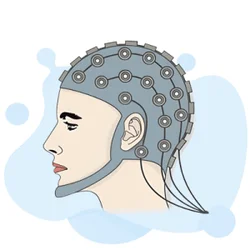
EEG Electroencephalography Practice Test PDF (Free Printable 2026)
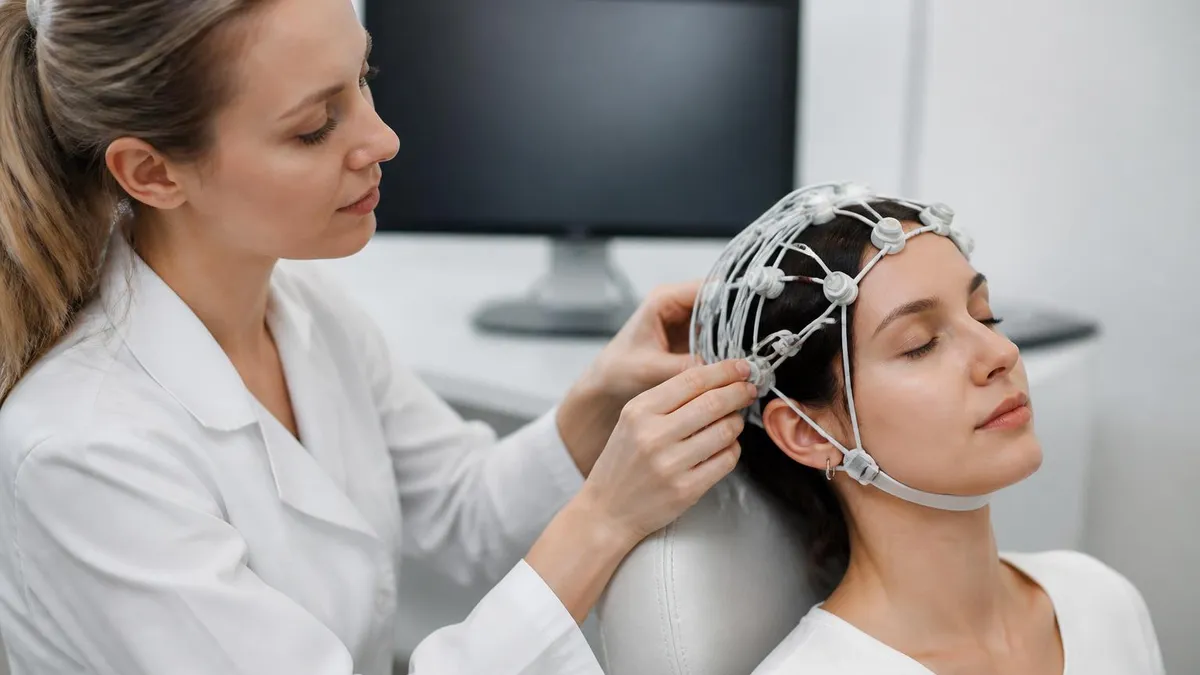
Sleep EEG: How Overnight Brain Wave Testing Works and What Your Results Mean
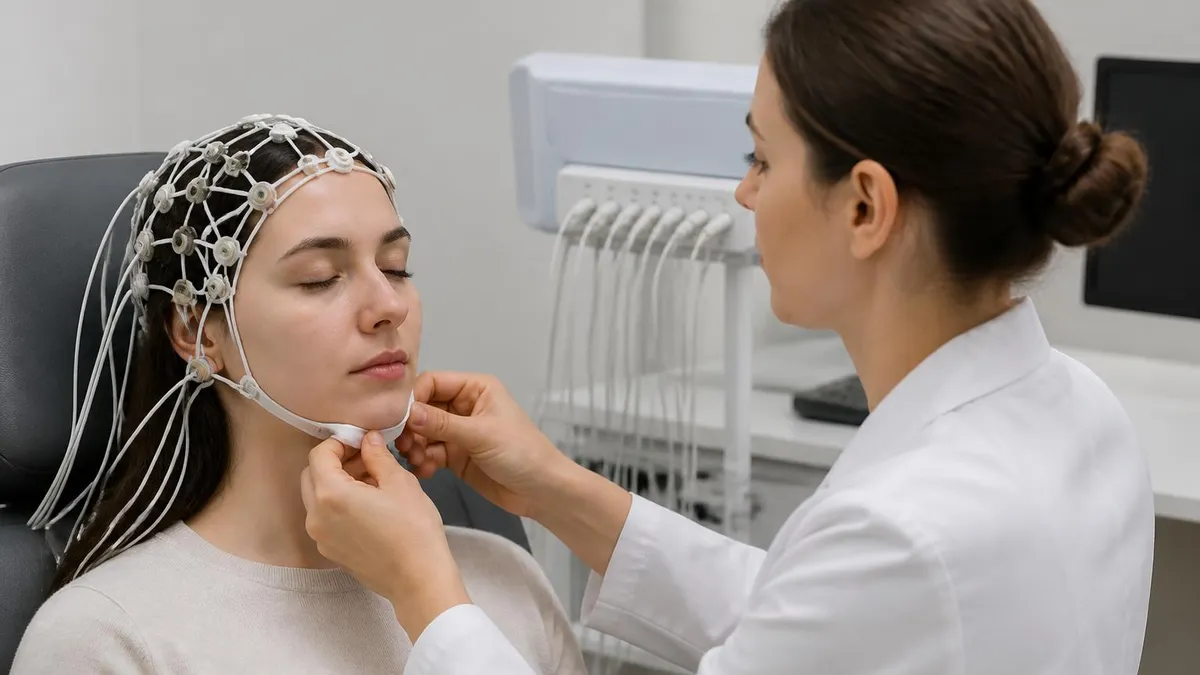
EEG Test Cost in 2026: Prices, Insurance Coverage, and How to Save
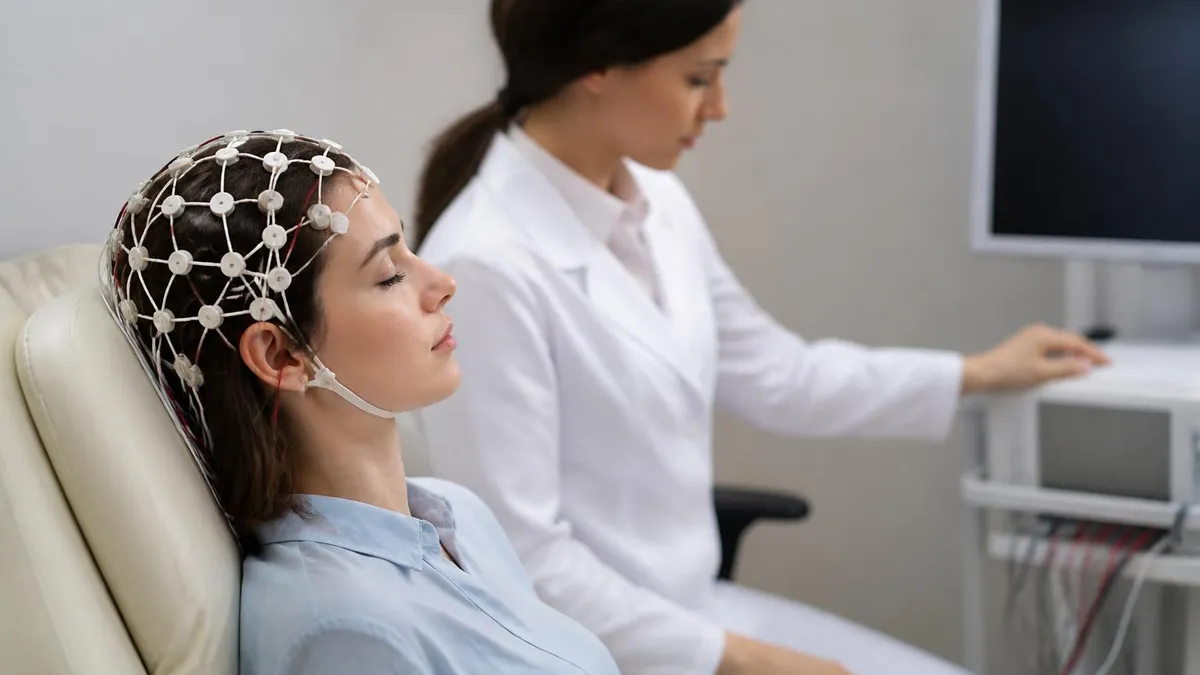
EEG vs ECG vs EKG: Brain and Heart Test Differences

EEG Pronunciation, Meaning, and Everything You Need to Know About the EEG Test
About the Author

Educational Psychologist & Academic Test Preparation Expert
Columbia University Teachers CollegeDr. Lisa Patel holds a Doctorate in Education from Columbia University Teachers College and has spent 17 years researching standardized test design and academic assessment. She has developed preparation programs for SAT, ACT, GRE, LSAT, UCAT, and numerous professional licensing exams, helping students of all backgrounds achieve their target scores.