
How Many Minors in Driving Test: Complete Guide to Fault Limits 2026 September
How many minors in driving test? You can get up to 15 minor faults and still pass. 🧠 Learn exactly how faults are counted and what examiners look for.
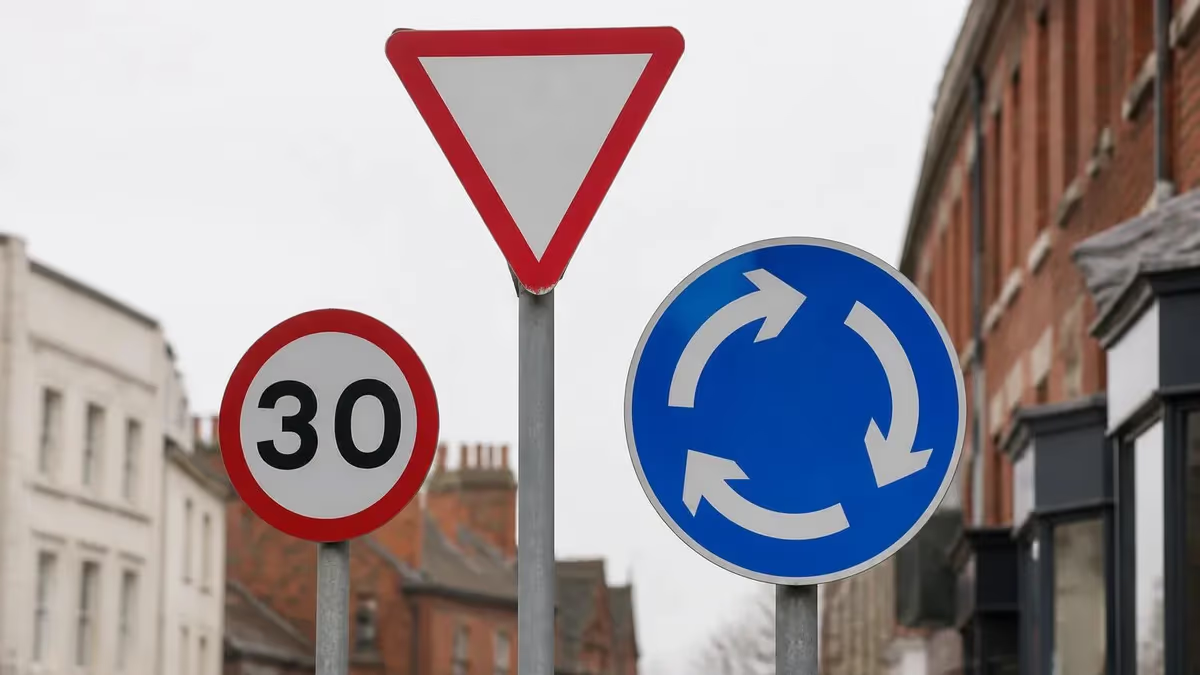
Understanding how many minors in driving test scenarios are allowed is one of the most important pieces of knowledge any UK learner driver can have before sitting their practical examination. The DVSA allows candidates to accumulate up to 15 minor faults — also called driving faults — during a standard car practical test and still receive a pass certificate. However, the moment you collect 16 or more minor faults, the examiner will mark you as a failure, regardless of how well you drove in every other aspect of the test.
Minor faults are recorded when you make a small mistake that does not pose an immediate or potential danger to yourself, other road users, or pedestrians. These faults are distinct from serious faults and dangerous faults, both of which result in an automatic failure of the test no matter how few other mistakes you have made. This three-tier fault system is designed to reflect the reality of driving — everyone makes small errors, but only unsafe driving should lead to an outright failure.
It is worth understanding that the 15-minor limit is not simply a quota you are trying to fill — it is a ceiling you want to stay well below. Most candidates who pass their driving test do so with far fewer than 15 minor faults, often accumulating between 3 and 7 on a clean drive. The limit exists to provide a safety buffer, but consistently making the same minor error throughout a test can itself escalate into a serious fault if the examiner judges it to represent a pattern of unsafe behaviour.
The DVSA driving test lasts approximately 40 minutes and covers a variety of road conditions, including residential streets, dual carriageways, roundabouts, and sometimes motorways for learners accompanied by an approved driving instructor. During this time, the examiner uses a structured marking sheet to record every fault observed. Understanding the difference between minor, serious, and dangerous faults will help you approach your test with the right mindset and preparation.
Many learner drivers worry unnecessarily about minor faults, which can ironically lead to over-caution and an increased likelihood of making serious errors. If you check your mirrors excessively at every junction because you are anxious about recording a mirror fault, you may end up hesitating at a roundabout and creating a genuine hazard. The key is to drive naturally, applying the skills your instructor has taught you, and trusting that a small number of minor faults is entirely acceptable to the examiner.
Preparation is the single most effective way to reduce fault accumulation during your practical test. Candidates who have completed a thorough programme of lessons, practised on a wide variety of road types, and used quality revision resources to reinforce theory knowledge consistently outperform those who rely on minimum preparation. Knowing the fault thresholds before test day removes a significant source of anxiety and allows you to focus on the driving itself rather than worrying about whether each small mistake has cost you a pass.
This guide covers everything you need to know about driving test fault limits: how minor, serious, and dangerous faults differ, how examiners apply the marking system, which manoeuvres generate the most faults, and how you can prepare effectively to keep your fault count as low as possible on test day.
UK Driving Test Faults by the Numbers
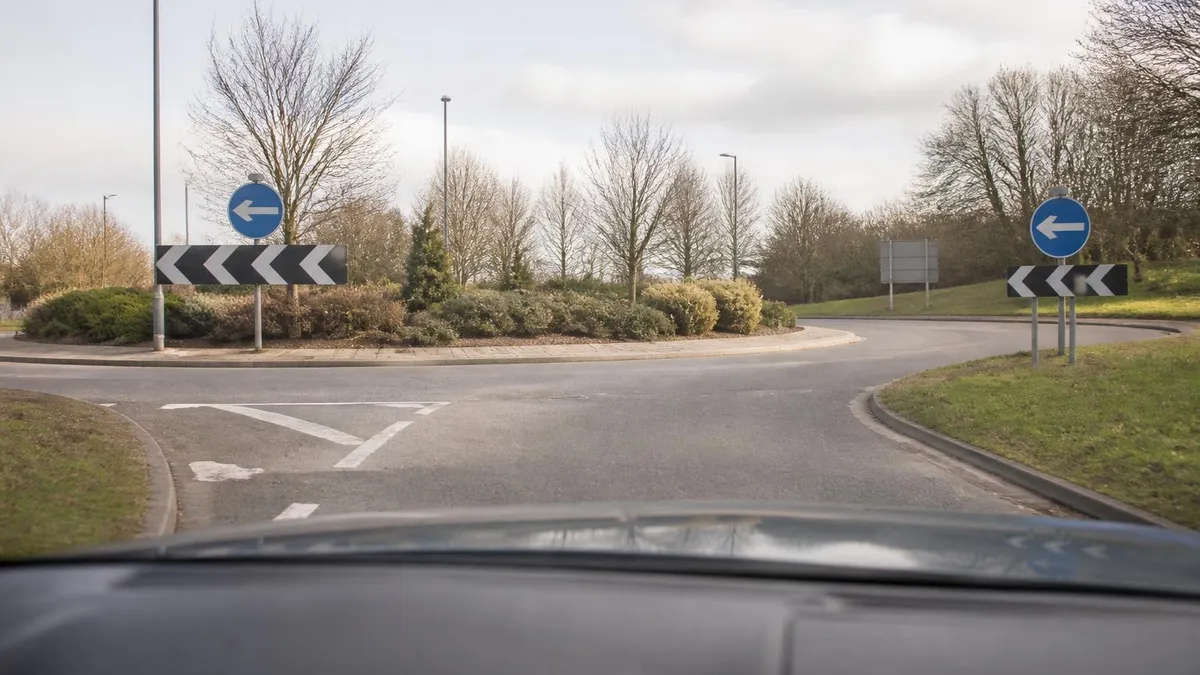
Types of Driving Test Faults Explained
A small mistake that does not create immediate danger. You may collect up to 15 of these and still pass. Examples include a brief hesitation at a junction, a slightly wide turn, or a late mirror check that did not affect another road user.
An error that has the potential to cause danger, even if nothing actually happened as a result. A single serious fault means an automatic test failure. Examples include pulling out at a junction without adequate observation or unsafe lane changing on a dual carriageway.
The most severe category — a mistake that puts you, the examiner, another road user, or a pedestrian in actual danger. This always results in immediate failure. The examiner may also intervene physically to prevent an accident from occurring.
Repeated minor faults in the same category can be upgraded to a serious fault by the examiner. If you fail to check mirrors at five consecutive junctions, that pattern demonstrates a consistent lack of safe observation rather than a one-off lapse.
When you sit in the car with your DVSA examiner, they will have a standardised marking sheet in front of them that covers 24 separate driving competencies. These categories include use of mirrors, signals, junctions, road positioning, speed, steering, and response to road markings, among many others. For each category, the examiner can record a minor fault tick, a serious fault mark, or a dangerous fault mark. Understanding how this sheet works helps you appreciate why certain behaviours are scrutinised more heavily than others.
The examiner is not trying to catch you out or waiting for you to make mistakes. They are trained to observe your driving objectively and record what they see against defined DVSA criteria. Each fault is assessed in the context of the road conditions at the time — a hesitation that is minor on a quiet residential street might be serious on a busy roundabout during rush hour. This contextual assessment is one reason why two candidates can make superficially similar errors but receive different fault classifications.
Mirrors are among the most frequently faulted categories on the practical test. The DVSA expects candidates to use the mirror-signal-manoeuvre (MSM) routine consistently before changing speed or direction. A minor mirror fault is typically recorded when you checked but perhaps a little late, or when your check was not as thorough as it should have been given the circumstances. A serious mirror fault arises when you changed lanes or turned without checking at all and another vehicle had to adjust its speed or position as a result.
Junctions represent another high-frequency fault zone. The DVSA marking criteria for junctions cover approach speed, observation before emerging, turning position, and correct use of the give-way rule. A candidate who approaches a T-junction slightly too fast but stops safely will likely receive a minor fault. One who rolls through without stopping to check adequately will receive a serious or dangerous fault depending on whether another vehicle was present and had to react.
The reverse parking and parallel parking manoeuvres — along with the bay park and the pull-up-on-the-right exercise — are evaluated for accuracy, observation, and control. Candidates frequently accumulate minor faults during these manoeuvres for slight inaccuracy in final position or insufficient all-round observation during the reversing phase. These rarely escalate to serious unless the candidate reverses into a kerb or fails to notice a pedestrian walking behind the vehicle.
Speed management is another area that generates minor faults. Driving slightly below the speed limit on a clear dual carriageway or being a little slow in accelerating away from a roundabout can attract minor faults for undue hesitation or failure to make progress. Conversely, exceeding the speed limit even briefly is almost always recorded as a serious fault. The examiner understands that maintaining exactly the speed limit throughout a 40-minute test is challenging, and small deviations below the limit — especially in complex or unfamiliar road situations — are assessed leniently.
After your test, whether you pass or fail, the examiner will provide a debrief explaining each fault recorded. This debrief is extremely valuable: even if you passed, understanding what caused your minor faults helps you become a safer driver on the roads. Candidates who fail are encouraged to review the marking sheet carefully with their instructor before booking their next test, as patterns in the fault types often reveal specific skill areas that require further targeted practice.
DVSA Practice Test Questions
Prepare for the DVSA - UK Driving Theory Test exam with our free practice test modules. Each quiz covers key topics to help you pass on your first try.
DVSA Eco-Friendly Driving and Vehicle Loading
DVSA Exam Questions covering Eco-Friendly Driving and Vehicle Loading. Master DVSA Test concepts for certification prep.
DVSA Hazard Awareness
Free DVSA Practice Test featuring Hazard Awareness. Improve your DVSA Exam score with mock test prep.
DVSA Incidents, Accidents and First Aid
DVSA Mock Exam on Incidents, Accidents and First Aid. DVSA Study Guide questions to pass on your first try.
DVSA Motorway Rules and Smart Motorways
DVSA Test Prep for Motorway Rules and Smart Motorways. Practice DVSA Quiz questions and boost your score.
DVSA Rules of the Road (Highway Code)
DVSA Questions and Answers on Rules of the Road (Highway Code). Free DVSA practice for exam readiness.
DVSA - UK Driving Theory Hazard Awareness ...
DVSA Mock Test covering - UK Driving Theory Hazard Awareness and Perception. Online DVSA Test practice with instant feedback.
DVSA - UK Driving Theory Motorway Rules an...
Free DVSA Quiz on - UK Driving Theory Motorway Rules and Regulations. DVSA Exam prep questions with detailed explanations.
DVSA - UK Driving Theory Road and Traffic ...
DVSA Practice Questions for - UK Driving Theory Road and Traffic Signs. Build confidence for your DVSA certification exam.
DVSA - UK Driving Theory Rules of the Road
DVSA Test Online for - UK Driving Theory Rules of the Road. Free practice with instant results and feedback.
Most Common Minor Faults in the UK Driving Test
Observation-related minor faults are the most frequently recorded category on UK practical driving tests. These include failing to check the interior mirror before braking, not using door mirrors when pulling away from the kerb, and inadequate all-round observation when completing a reversing manoeuvre. Candidates who develop a checklist mentality — consciously cycling through mirror checks as part of every speed or direction change — significantly reduce observation faults during their test.
The examiner pays particular attention to whether mirror checks are genuine and timely rather than a superficial glance performed too late to influence the driving decision. A mirror check that happens after you have already committed to changing lanes provides no safety benefit and will be recorded as a fault. Practice checking mirrors early enough that the information gathered could actually change your decision — this is what the examiner is looking for throughout the test.

Should You Aim for Zero Minor Faults or Focus on Avoiding Serious Faults?
- +Aiming for zero faults motivates thorough preparation and skill development
- +Clean drives build strong safe-driving habits that benefit you long after passing
- +Low fault counts give you greater confidence when reviewing your debrief
- +Practising for perfection means you will still pass comfortably even if nerves cost you a few faults
- +Instructors can target remaining weaknesses more precisely when fault counts are low
- +Candidates with consistently low fault counts in lessons typically book fewer re-tests
- −Over-focusing on zero faults can create anxiety that increases your overall fault count
- −Hesitating at junctions to guarantee a clean observation check can itself generate undue hesitation faults
- −Trying to achieve perfection may cause you to delay your test booking beyond your readiness level
- −Minor fault obsession can distract attention from the more important task of avoiding serious faults
- −Overchecking mirrors every few seconds looks unnatural and can actually attract attention from the examiner
- −Perfectionism after a minor fault can cause loss of focus for the remainder of the test route
Test Day Fault Reduction Checklist
- ✓Complete a full mirror check before every change of speed or direction throughout the test.
- ✓Signal in good time before every junction, lane change, and manoeuvre — not as an afterthought.
- ✓Choose a safe, legal, and appropriate speed for every road type and driving condition encountered.
- ✓Apply the MSM routine (Mirror, Signal, Manoeuvre) consistently on every approach to a hazard.
- ✓Maintain a safe following distance of at least a two-second gap behind the vehicle in front.
- ✓Keep both hands on the steering wheel at all times except when changing gear or operating controls.
- ✓Look into the space you want to occupy before turning, not just at the road immediately ahead.
- ✓Respond to the examiner's directions promptly but never rush — take the next safe opportunity to comply.
- ✓If you stall, apply the handbrake calmly, restart safely, and continue without dwelling on the error.
- ✓Perform all-round observation before and during every reversing and parking manoeuvre.
15 Minors Pass — But Repeated Errors in One Category Do Not
Even if your total minor fault count stays below 15, the examiner can upgrade a repeated minor fault to a serious fault if it occurs consistently in the same category. For example, five minor mirror faults at consecutive junctions demonstrates a pattern of inadequate observation that the DVSA considers more dangerous than five isolated minor faults across different categories. Always correct errors immediately rather than repeating them throughout the test.
Reducing your fault count on the practical driving test is primarily a function of preparation quality rather than luck. Candidates who invest in a structured learning programme — working through the DVSA's recommended syllabus with an approved driving instructor — consistently achieve lower fault counts than those who prepare informally. Understanding which manoeuvres and driving scenarios generate the most faults in national statistics allows you to prioritise your practice time in the weeks before your test date.
According to DVSA data, the most faulted competencies in UK practical tests are consistently mirrors at junctions, junctions observation generally, control at junctions and roundabouts, positioning on approach to turns, and reverse parking accuracy. If you are in the final stages of your preparation, asking your instructor to focus a significant portion of your remaining lessons on these five areas will give you the highest return on your practice time and is likely to reduce your test day fault count meaningfully.
The reverse parking exercise — whether you choose parallel parking or bay parking — deserves particular attention. Many candidates accumulate two or three minor faults during this single manoeuvre for slight inaccuracy in final position, not using the full range of their mirrors, or not making observations over their shoulder at key moments. Practising the manoeuvre in different car parks and streets until it feels fully automatic removes the cognitive load of executing it correctly under test conditions.
Independent driving — a section of the practical test where you follow either a sat-nav or traffic signs without turn-by-turn guidance from the examiner — is another area where minor faults accumulate. Candidates unfamiliar with following a sat-nav often make late decisions about lane selection or miss a turn entirely. Practising with a sat-nav during lessons before the test eliminates this as a source of fault accumulation and helps you focus on the driving rather than the navigation during the test itself.
Dual carriageway driving, where it is included in your test route, requires confident speed management and safe lane discipline. Minor faults in this context often arise from hesitation when joining from a slip road or from unnecessary braking on a clear stretch of road. The examiner expects you to drive at or close to the 70 mph national speed limit on a clear dual carriageway — driving significantly below the limit without good reason is assessed as failure to make progress and recorded as a fault.
One of the most underrated preparation strategies is to drive the roads around your test centre as part of your lesson programme. While the examiner will take you on a route that is not pre-published, most test routes use the same local road network. Familiarity with the junctions, roundabouts, speed limit changes, and traffic light sequences near your test centre reduces the cognitive load of the drive and allows your practised driving skills to operate more naturally under examination conditions.
Finally, rest and mental preparation on the day before and morning of your test are genuinely important. Fatigue impairs reaction time and decision-making, both of which affect your fault count directly. Arriving at the test centre early, having eaten and hydrated adequately, and completing a brief mental rehearsal of the test format will help you start the drive in a calm and focused state — which is the single most effective foundation for a low-fault, first-time pass.
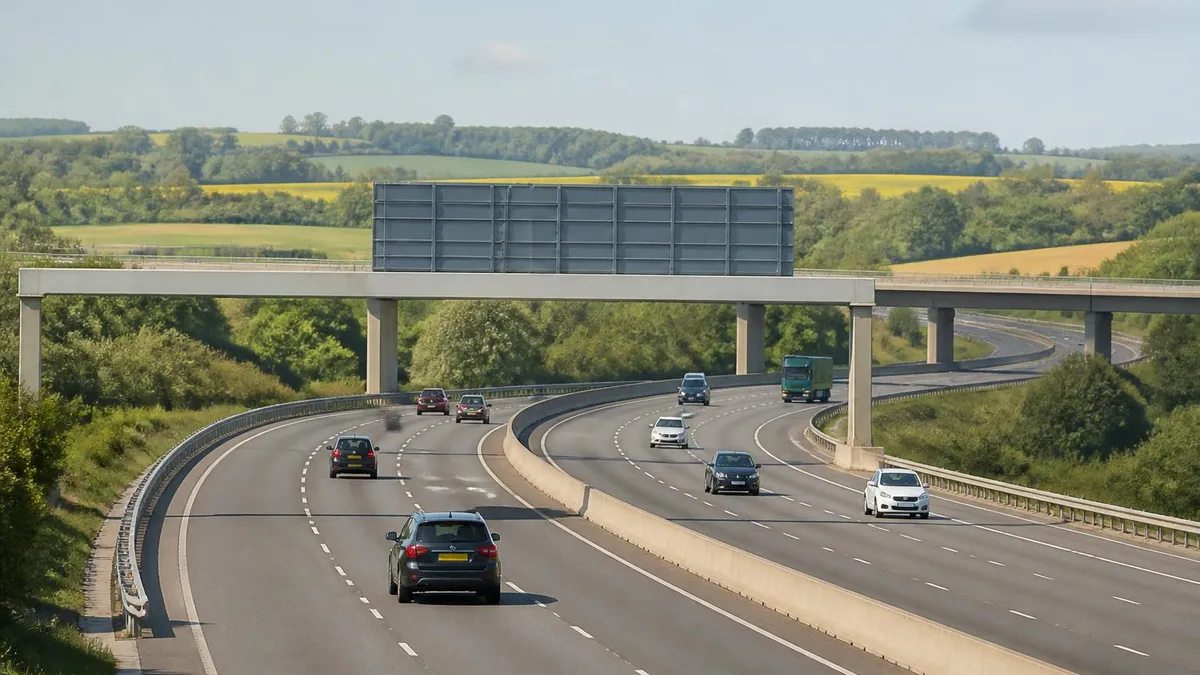
The 15-minor-fault allowance is not an invitation to drive sloppily. Each minor fault still represents a departure from ideal driving behaviour, and accumulating 14 minor faults means one more small error will result in failure. Additionally, any single serious or dangerous fault causes an automatic fail regardless of your minor fault total, so the most important goal on test day is always to avoid unsafe driving rather than to manage your minor fault count.
Preparing comprehensively for your DVSA practical driving test requires a multi-layered approach that goes beyond simply accumulating hours behind the wheel. The most effective candidates combine structured lessons with an approved driving instructor, independent practice with a supervising driver, theory revision to reinforce road law knowledge, and mock tests that simulate the real examination conditions as closely as possible. Each of these elements addresses a different aspect of the skills the examiner will assess on test day.
Your driving instructor is your primary resource for identifying fault patterns before your test. A good instructor keeps notes on your performance across lessons and can tell you which competency categories you most frequently drop marks in during lesson simulations. Ask your instructor directly how many minor faults you typically accumulate in a mock test — if the answer is consistently above eight or nine, you should consider additional targeted practice in your weak areas before booking a test date.
Theory knowledge directly supports your practical test performance. Understanding the Highway Code rules on priorities, speed limits, road markings, and signalling requirements means you are never uncertain about what the correct action is in a given situation. Uncertainty leads to hesitation, and hesitation on a practical test is one of the most common causes of both minor and serious faults. Keeping your theory knowledge sharp right up to your practical test date pays dividends in decision confidence during the drive itself.
Mock tests — full 40-minute drives conducted by your instructor as if they were the DVSA examiner — are the single most effective preparation tool available to candidates. These sessions expose you to the psychological pressure of being assessed, help you identify which scenarios trigger errors under test conditions, and allow your instructor to give you feedback on fault patterns in a realistic context. Candidates who complete at least two or three full mock tests before their real examination consistently report feeling more prepared and less anxious on test day.
Independent practice with a qualified supervising driver (someone who has held a full UK licence for at least three years) should focus on roads and scenarios you find most challenging. If roundabouts generate most of your minor faults, spend a dedicated practice session driving through different roundabout configurations at varying times of day. If dual carriageway joins are a weakness, find a safe local stretch to practise joining and leaving at appropriate speeds. Targeted practice is far more efficient than general driving mileage.
Using online practice resources, including the official DVSA theory test materials and high-quality third-party practice tests, keeps your road law knowledge current and helps you spot gaps in your understanding of hazard perception and the Highway Code. These resources are particularly valuable in the final two weeks before your test when you want to reinforce knowledge rather than introduce new material. Keeping revision sessions short and consistent — 20 to 30 minutes daily — is more effective than long infrequent cramming sessions for most learners.
On the day of your practical test, remember that the examiner's role is to assess your driving fairly against the DVSA standard — they want you to pass just as much as you do. Treat the test as an opportunity to demonstrate the skills you have genuinely developed rather than as an adversarial examination. If you make a minor error, acknowledge it mentally and move on immediately. The ability to recover from a small mistake without losing composure is itself a demonstration of the mature, resilient driving attitude that the DVSA test is designed to reward.
The practical driving test is structured to assess your ability to drive safely and independently on a variety of real UK roads. The 40-minute examination begins with a short eyesight check — you must read a number plate from 20 metres — followed by two vehicle safety questions (the 'show me, tell me' section). The main drive then covers a range of road types, including at least 20 minutes of independent driving, and includes one or two set-piece manoeuvres such as parallel parking, bay parking, or pulling up on the right and reversing back.
Understanding the structure of the test helps you allocate mental energy appropriately. The show-me-tell-me questions are straightforward to prepare for and should not cost you any faults — there are only 19 possible questions and the DVSA publishes them all. The manoeuvres section is a predictable element where deliberate practice translates directly into clean execution. The independent driving section tests your ability to navigate safely without guidance, which is addressed by practising with a sat-nav and building confidence on unfamiliar roads.
Your examiner will not penalise you for asking them to repeat directions or for taking a moment to position correctly before a manoeuvre. The test is designed to assess driving safety, not memory or speed of response to instructions. If you miss a turning during independent driving, do not panic — simply continue safely and follow the sat-nav or signs to the next opportunity to redirect. Taking an incorrect route does not automatically generate a fault unless the action of taking that route involved unsafe driving.
Post-test, whether you pass or fail, the debrief is a valuable professional assessment of your current driving standard. Take notes or ask the examiner if you can photograph the marking sheet, as the detailed fault record will guide your next steps more effectively than a general impression of how you felt the drive went. Many candidates are surprised to find they passed with fewer faults than they expected, or failed for a reason they had not anticipated — the marking sheet removes all ambiguity and provides a clear evidence-based picture of your performance.
If you fail your first attempt, the minimum waiting period before retaking the test is 10 working days. Use this period productively: review the marking sheet with your instructor, focus additional lessons on the specific fault categories recorded, and consider whether your preparation for the next attempt needs to be more structured. Most candidates who fail their first test pass on their second attempt when they address the specific weaknesses identified in the first debrief rather than simply repeating the same preparation approach.
The UK pass rate for the car practical driving test hovers around 47%, meaning roughly half of all first-time candidates do not pass on their first attempt. This statistic should be reassuring rather than alarming — it confirms that the test has a meaningful standard and that passing it represents a genuine achievement. Candidates who prepare thoroughly and systematically, addressing specific fault areas with targeted practice, consistently perform above the average pass rate and reduce both their number of test attempts and their overall training cost.
Whether you are taking your first attempt or returning after a previous failure, the fundamentals remain the same: drive to the standard you have trained for, apply the MSM routine consistently, manage your speed appropriately for every road condition, and treat every minor fault as a single isolated event rather than evidence of a broader problem. The driving test is designed to be passable by any candidate who has reached the required standard — and with thorough preparation, that standard is well within your reach.
DVSA Questions and Answers
DVLA Theory Test Booking: Complete Step-by-Step Guide for UK Learners
Driving Theory Test App: The Complete Study Guide for UK Learners
How to Book Your DVSA Practical Driving Test: Complete UK Guide

Learn to Drive in the UK: Complete Beginner's Guide to Getting Your Licence

DVSA Car Practical Test: Complete Guide to Passing First Time
About the Author

Licensed Driving Instructor & DMV Test Specialist
Penn State UniversityRobert J. Williams graduated from Penn State University with a degree in Transportation Management and has spent 20 years as a certified driving instructor and DMV examiner consultant. He has personally coached thousands of applicants through written knowledge tests, skills assessments, and commercial driver licensing programs across more than 30 states.