
Government Driving Test UK: Everything You Need to Know to Pass 2026 September
Everything about the UK government driving test — ❓ theory, hazard perception, practical test, costs, and top tips to pass first time.
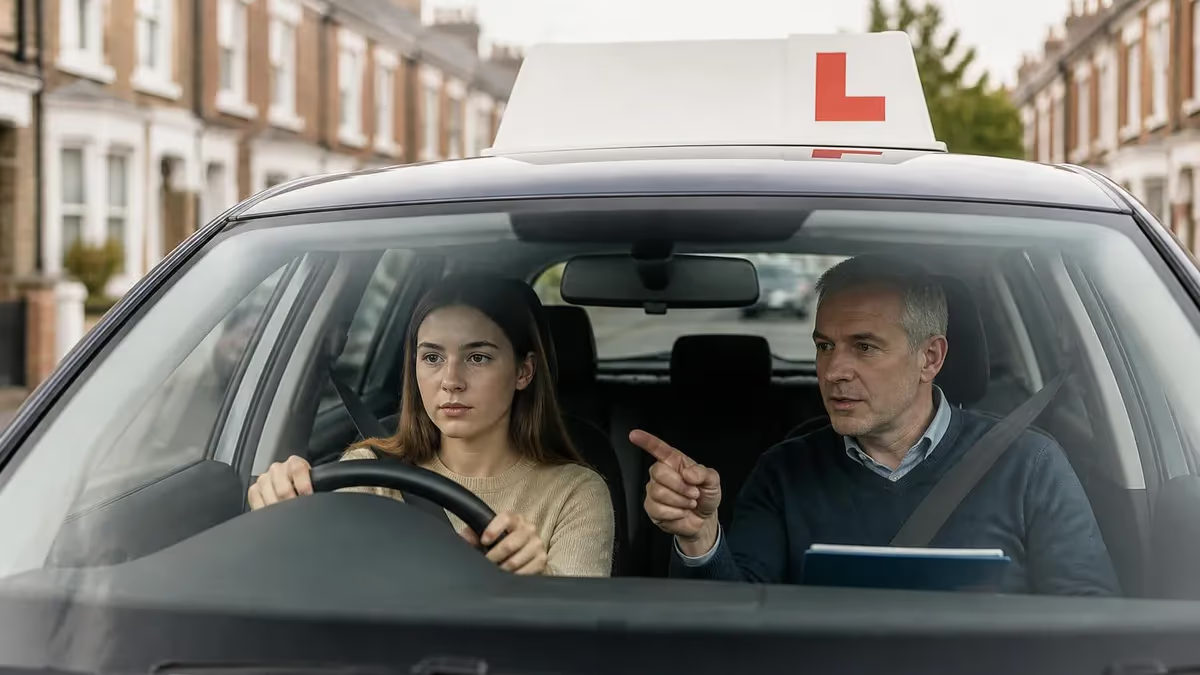
The government driving test is the official licensing process administered by the Driver and Vehicle Standards Agency (DVSA) in the United Kingdom. It is the legal gateway through which every learner driver must pass before they can hold a full UK driving licence. The test is divided into two distinct stages — the theory test and the practical driving test — both of which must be passed in order to drive independently on public roads. Understanding how this process works is the first step to approaching it with confidence.
The theory test itself consists of two parts: a multiple-choice section covering the Highway Code, road safety rules, and vehicle knowledge, and a hazard perception section where you watch video clips and click whenever you spot a developing hazard. Both parts are completed in the same sitting at an official DVSA test centre. You must pass both parts on the same day for the theory test result to count, and the certificate you receive remains valid for two years from the date you pass.
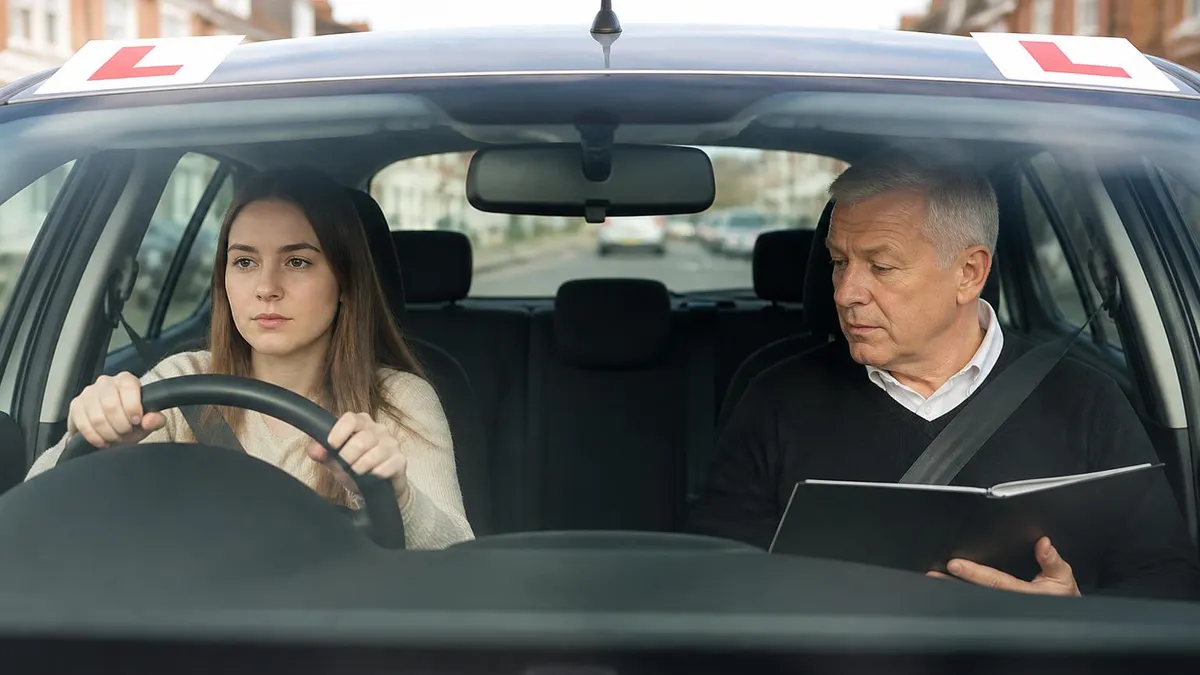
Once you hold a valid theory test pass certificate, you can book your practical driving test. The practical test is conducted by a DVSA examiner on public roads and typically lasts between 38 and 40 minutes. During this time, you will be assessed on your ability to drive safely and independently, follow verbal directions, respond correctly to road signs and markings, and carry out set driving manoeuvres. The examiner will record any faults on a standard marking sheet throughout the test.
Faults in the practical test are classified as either minor (driving faults) or serious and dangerous (major faults). You are allowed up to 15 minor driving faults before failing. However, a single serious or dangerous fault results in an immediate fail regardless of how well you have driven otherwise. Serious faults indicate that you made a potentially hazardous error, while dangerous faults mean the examiner had to intervene to prevent an accident. Knowing this distinction helps candidates understand exactly how the test is marked.
The DVSA sets the standards for driving tests across England, Scotland, and Wales. In Northern Ireland, the same function is carried out by the Driver and Vehicle Agency (DVA). The underlying principles are broadly the same across the UK, but there are minor differences in test routes and regional traffic conditions. Most learner drivers will encounter the DVSA system, and this guide focuses primarily on DVSA-administered tests for car drivers, which is by far the most common category.
Preparation is absolutely central to your chances of success. Research consistently shows that candidates who take sufficient professional driving lessons, practise regularly with qualified instructors, and study the Highway Code thoroughly have significantly higher pass rates than those who do not. The DVSA publishes official practice materials and recommends dedicated study time. Using practice tests, mock hazard perception exercises, and structured revision plans will all help you approach test day with the knowledge and road skills that examiners expect.
This comprehensive guide walks you through every aspect of the government driving test process — from the initial eligibility requirements, through the theory and practical tests, to what happens after you pass. Whether you are just starting your driving journey or preparing to retake after a previous attempt, you will find clear, accurate information to help you succeed.
UK Government Driving Test by the Numbers
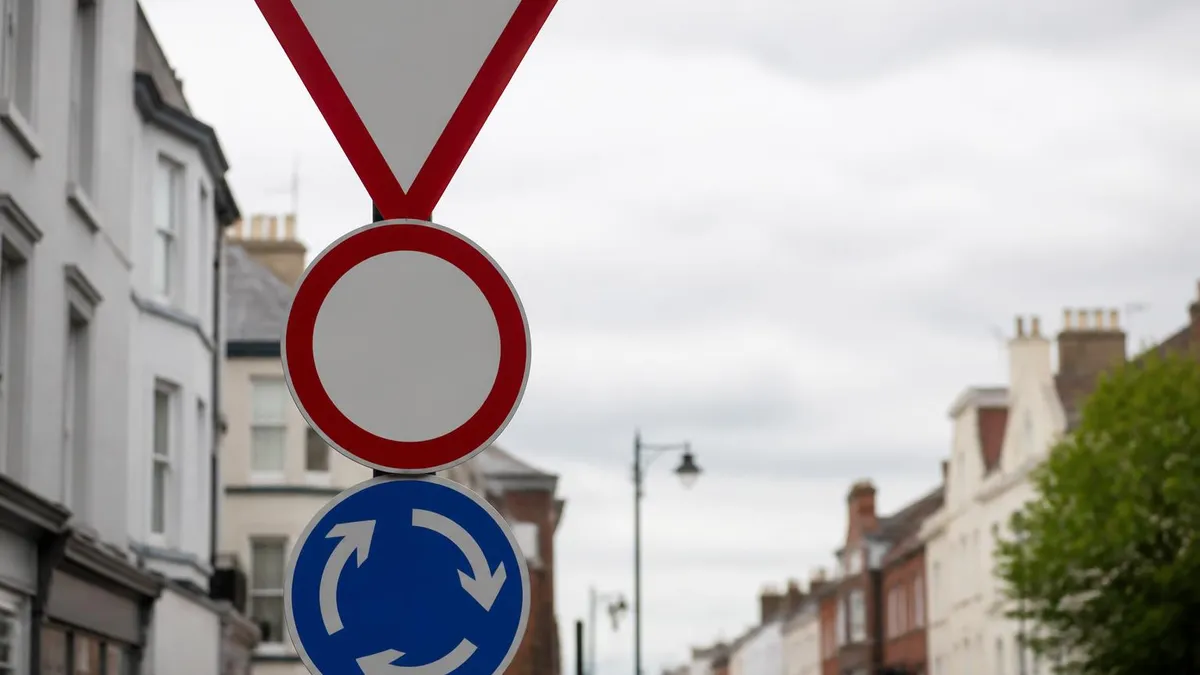
Theory Test Format Explained
| Section | Questions | Time | Weight | Notes |
|---|---|---|---|---|
| Multiple Choice | 50 | 57 min | Pass/Fail | Pass mark: 43 out of 50 |
| Hazard Perception | 75 | Continuous | Pass/Fail | Pass mark: 44 out of 75; clips include one with 2 hazards |
| Total | 125 | 57 minutes | 100% |
The practical driving test is the second and final stage of the government driving test process and is taken after you have passed the theory test. It is conducted by a trained DVSA driving examiner on public roads near a designated test centre. The test begins with an eyesight check — you must read a number plate from 20 metres away. If you fail this check, the test cannot proceed and you will receive an automatic failure. Candidates who require glasses or contact lenses must wear them throughout the test.
After the eyesight check, the examiner will ask you one or two 'show me, tell me' vehicle safety questions. The 'tell me' question is asked before you get in the car, and you must explain verbally how you would carry out a safety check — for example, how to check the tyre pressure is correct. The 'show me' question is asked while you are driving, and you must demonstrate a safe action such as using the rear windscreen demister. Each incorrect answer counts as one minor fault.
During the driving element of the test, the examiner will give you verbal directions to follow. For approximately 20 minutes of the test, you will also be asked to drive independently, either by following a sat-nav (provided by the examiner) or by following road signs to a destination. This independent driving section assesses whether you can make driving decisions safely without relying on every instruction being given to you — a key skill for real-world driving.
You will be asked to perform one or two of four possible reversing manoeuvres during the test. These include parallel parking on the road, parking in a bay (either driving in and reversing out, or reversing in and driving out), and pulling up on the right side of the road, then reversing two car lengths, and rejoining traffic. Examiners assess accuracy, observation, and control throughout each manoeuvre. Being asked to do a manoeuvre does not mean you have made a mistake earlier in the test.
The examiner also carries out an emergency stop exercise on roughly one in three tests. If selected, you will be told in advance that at some point in the drive the examiner will give you a signal to stop as quickly and safely as possible, as if a child had run out in front of you. This is not something to fear — it simply tests your ability to react swiftly while keeping the vehicle under control. Practising emergency stops regularly with your driving instructor will make this feel routine by test day.
At the end of the test, the examiner will return to the test centre and park the vehicle. They will then tell you whether you have passed or failed. If you pass, you will receive a pass certificate. If you fail, the examiner must provide a debrief explaining the faults recorded on your DL25 marking sheet, which you can keep. You should review every fault carefully with your driving instructor before booking your next attempt, as understanding the precise reason for each failure is the most efficient route to improvement.
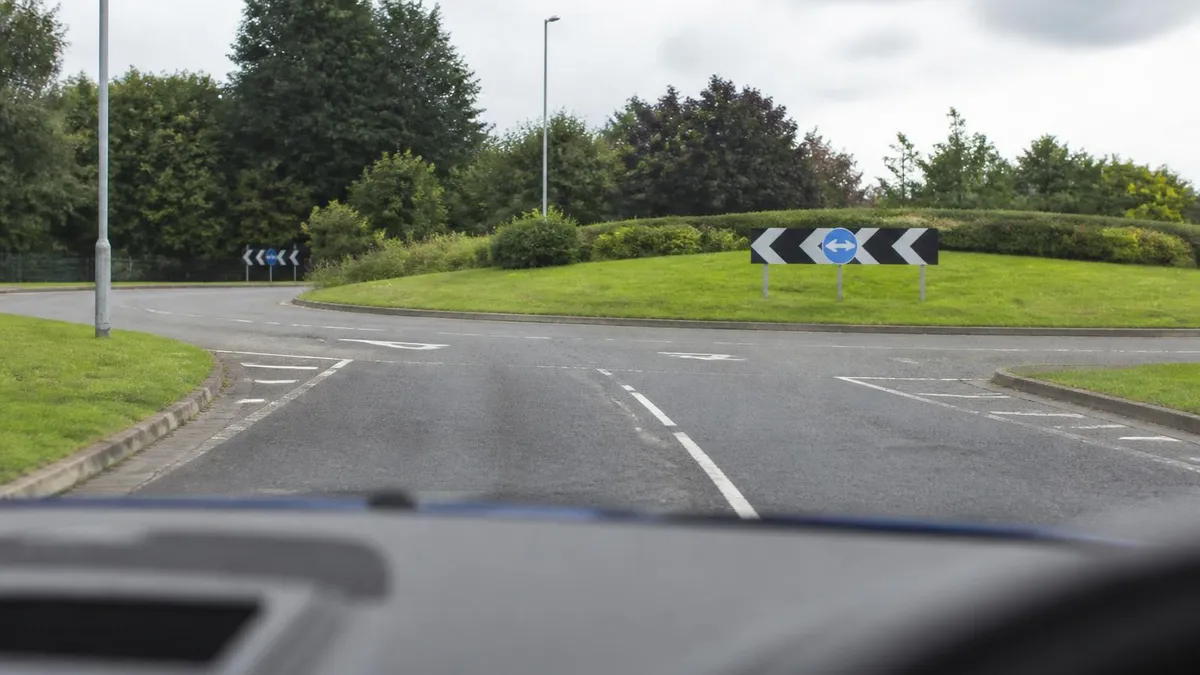
There is no limit to the number of times you can retake the practical test, although each attempt requires a new booking and payment. Most candidates who fail do so for avoidable reasons such as not checking mirrors sufficiently, poor junction observations, or hesitation at roundabouts. Targeted practice in these specific areas dramatically increases the likelihood of passing on the next attempt.
DVSA Practice Test Questions
Prepare for the DVSA - UK Driving Theory Test exam with our free practice test modules. Each quiz covers key topics to help you pass on your first try.
DVSA Eco-Friendly Driving and Vehicle Loading
DVSA Exam Questions covering Eco-Friendly Driving and Vehicle Loading. Master DVSA Test concepts for certification prep.
DVSA Hazard Awareness
Free DVSA Practice Test featuring Hazard Awareness. Improve your DVSA Exam score with mock test prep.
DVSA Incidents, Accidents and First Aid
DVSA Mock Exam on Incidents, Accidents and First Aid. DVSA Study Guide questions to pass on your first try.
DVSA Motorway Rules and Smart Motorways
DVSA Test Prep for Motorway Rules and Smart Motorways. Practice DVSA Quiz questions and boost your score.
DVSA Rules of the Road (Highway Code)
DVSA Questions and Answers on Rules of the Road (Highway Code). Free DVSA practice for exam readiness.
DVSA - UK Driving Theory Hazard Awareness ...
DVSA Mock Test covering - UK Driving Theory Hazard Awareness and Perception. Online DVSA Test practice with instant feedback.
DVSA - UK Driving Theory Motorway Rules an...
Free DVSA Quiz on - UK Driving Theory Motorway Rules and Regulations. DVSA Exam prep questions with detailed explanations.
DVSA - UK Driving Theory Road and Traffic ...
DVSA Practice Questions for - UK Driving Theory Road and Traffic Signs. Build confidence for your DVSA certification exam.
DVSA - UK Driving Theory Rules of the Road
DVSA Test Online for - UK Driving Theory Rules of the Road. Free practice with instant results and feedback.
How to Prepare for Your Government Driving Test
Effective theory test preparation starts with the official DVSA study materials — the Highway Code, Know Your Traffic Signs, and the Official DVSA Theory Test Kit for Car Drivers. These publications cover every topic that appears in the multiple-choice section. Aim to study for at least 30 to 45 minutes per day over several weeks, focusing on areas you find difficult rather than only reviewing topics you already know well. Use spaced repetition to consolidate your memory of rules, distances, and legal requirements.
Practice tests are essential. The DVSA official app and reputable third-party platforms offer thousands of practice questions that mirror the real test format. Timed mock tests help you build exam stamina and teach you to manage the 57-minute time allowance confidently. For hazard perception, watch the practice clips repeatedly to learn the timing of clicks — clicking too early, too late, or in a pattern suggesting you are clicking at random will score zero for that clip. Aim to identify hazards the moment they begin to develop, not after they have fully formed.
Advantages and Challenges of the UK Government Driving Test
- +Sets a clear, nationally recognised standard of driving competency for all UK roads
- +Theory test covers the Highway Code comprehensively, producing safer, better-informed drivers
- +Hazard perception training measurably improves candidates' awareness of developing road risks
- +Independent driving section assesses real-world decision-making, not just instructor dependency
- +Pass certificates are recognised across England, Scotland, and Wales without re-examination
- +Online booking system is straightforward and allows test centre selection by location
- −First-time practical pass rate is under 50%, meaning many candidates need multiple attempts
- −Test fees add up quickly if candidates require retakes across both theory and practical
- −Theory pass certificate expires after two years, which disadvantages slower learner drivers
- −High demand at popular test centres can result in long waiting times for available slots
- −Practical test routes are not published officially, creating an uneven advantage for those with local knowledge
- −Nerves on test day can cause candidates to underperform relative to their actual driving ability
Government Driving Test Day Checklist
- ✓Bring your valid UK provisional photocard driving licence to both the theory and practical tests.
- ✓Check your theory test pass certificate is still within its two-year validity period before booking the practical.
- ✓Confirm your test centre address and planned travel route the day before your appointment.
- ✓Arrive at least 10 minutes before your test start time to complete check-in procedures calmly.
- ✓Wear your corrective glasses or contact lenses if you need them for the eyesight check.
- ✓Review the 'show me, tell me' vehicle safety questions with your instructor the morning of the test.
- ✓Ensure the car you use for the practical test is roadworthy, insured, and has valid MOT and tax.
- ✓Practise the four reversing manoeuvres at least once in the days immediately before your test.
- ✓Get a full night's sleep before test day — fatigue impairs reaction time and concentration.
- ✓Avoid discussing the test anxiously with others just before it starts; stay calm and focused.

Minor Faults Don't Mean Failure — Major Faults Do
Many candidates fail their practical driving test not because they drive badly overall, but because they accumulate more than 15 minor faults or commit a single serious or dangerous fault. Understanding this distinction allows you to drive safely and confidently rather than trying to achieve an impossible standard of perfection on every minor action throughout the test.
Understanding the cost structure of the government driving test process helps candidates plan their learning journey financially as well as practically. The DVSA charges set fees for both the theory test and the practical driving test, and these fees apply each time you book a test regardless of whether it is your first attempt or a retake. The theory test currently costs £23 for car drivers when booked online through the official DVSA booking service. The practical driving test costs £62 on weekdays and £75 in the evenings, at weekends, or on bank holidays.
These figures represent only the direct DVSA booking fees. The broader cost of learning to drive includes driving lessons with an approved driving instructor, which vary significantly across the UK. In London and major urban centres, lessons typically cost between £35 and £60 per hour. In more rural areas, prices may be closer to £25 to £35 per hour. Given that the average candidate takes around 45 professional lessons before passing, the total investment in lessons alone can reach £1,500 to £2,700 for many learners — a significant financial commitment that rewards thorough preparation.
It is worth noting that paying for additional lessons beyond the average is often more cost-effective than rushing to test and failing. Each failed practical test requires another booking fee of at least £62. If a candidate takes the test three times before passing, they will have spent at least £186 on practical test fees alone, in addition to the cost of any lessons needed between attempts. Investing time and money in solid preparation upfront is nearly always the more economical strategy in the long run.
There are also costs associated with the car used for the practical test. If you use your driving instructor's car — which the majority of candidates do — there will typically be a fee for the time the instructor spends accompanying you to and from the test centre. This is usually charged at the instructor's standard hourly rate and covers the full duration of the test appointment. Some instructors include one test accompaniment in their lesson packages, while others charge separately, so it is worth clarifying this arrangement in advance.
DVSA test fees are subject to change, so always check the official GOV.UK website for the most current pricing before booking. The same website also allows you to check test centre availability, compare waiting times at different centres, and manage your existing bookings. You can reschedule or cancel a booking online up to three clear working days before the test without losing your fee — any later cancellation forfeits the payment. This cancellation policy applies to both the theory and practical tests.
Some local councils and charities offer financial support to low-income learner drivers through driving lesson grants and subsidised test fee programmes. These vary significantly by region and availability, but they can meaningfully reduce the financial barrier to obtaining a driving licence for eligible candidates. Searching for driving grant schemes through your local authority or Citizens Advice Bureau is worthwhile if cost is a significant concern for your learning journey.
Beyond the financial dimension, the time investment in learning to drive should not be underestimated. Many learner drivers spend six months to a year working through professional lessons while also finding time for private practice. Treating the government driving test as a serious, worthwhile commitment — both financially and in terms of time — is the mindset that produces the best outcomes. Candidates who approach the process with patience and structured effort consistently achieve better results than those who rush to test before they are genuinely ready.
Your theory test pass certificate is only valid for two years from the date you passed. If you do not pass your practical driving test within this two-year window, your theory test result expires and you must take and pass the theory test again before you can sit the practical. Always factor this deadline into your learning timeline, especially if you have had a gap in lessons or delayed booking your practical test.
Passing the government driving test opens up a range of important next steps that every new driver should understand clearly. The most immediate priority is obtaining your full driving licence. After passing the practical test, your examiner will ask whether you want to send your provisional licence away to be upgraded automatically.
If you agree, the DVSA will contact the DVLA on your behalf, and your full photocard licence will arrive in the post within three weeks. You can drive unsupervised immediately after passing — you do not need to wait for the licence to arrive, provided you have your pass certificate.
New drivers should be aware of the probationary period that applies for the first two years after passing their test. During this period, if you accumulate six or more penalty points on your licence, it will be revoked automatically and you must start the learning process again from scratch — including passing both the theory and practical tests. This rule is stricter than the standard for experienced drivers, who can hold up to 12 points before facing disqualification. New drivers must therefore be especially careful about speeding, mobile phone use, and other traffic offences.
Insurance is an essential consideration immediately after passing. Young newly qualified drivers typically face the highest insurance premiums of any demographic in the UK. Comparing policies carefully, opting for a black box (telematics) policy that rewards safe driving, adding an experienced named driver to the policy, and choosing a vehicle in a low insurance group are all practical strategies for managing these costs.
Never be tempted to drive without valid insurance — doing so carries a minimum of six penalty points, a fine of up to £5,000, and potential disqualification, which under the two-year probationary rule means losing your new licence immediately.
Consider taking Pass Plus training after passing your test. Pass Plus is a practical training scheme developed by the DVSA and delivered by approved instructors to help new drivers build skills and experience in situations not always covered during standard lessons — including motorway driving, driving at night, in poor weather, and on rural roads. Completing Pass Plus can reduce insurance premiums with some providers and significantly boosts the confidence and safety of newly qualified drivers during the vulnerable first months of independent driving.
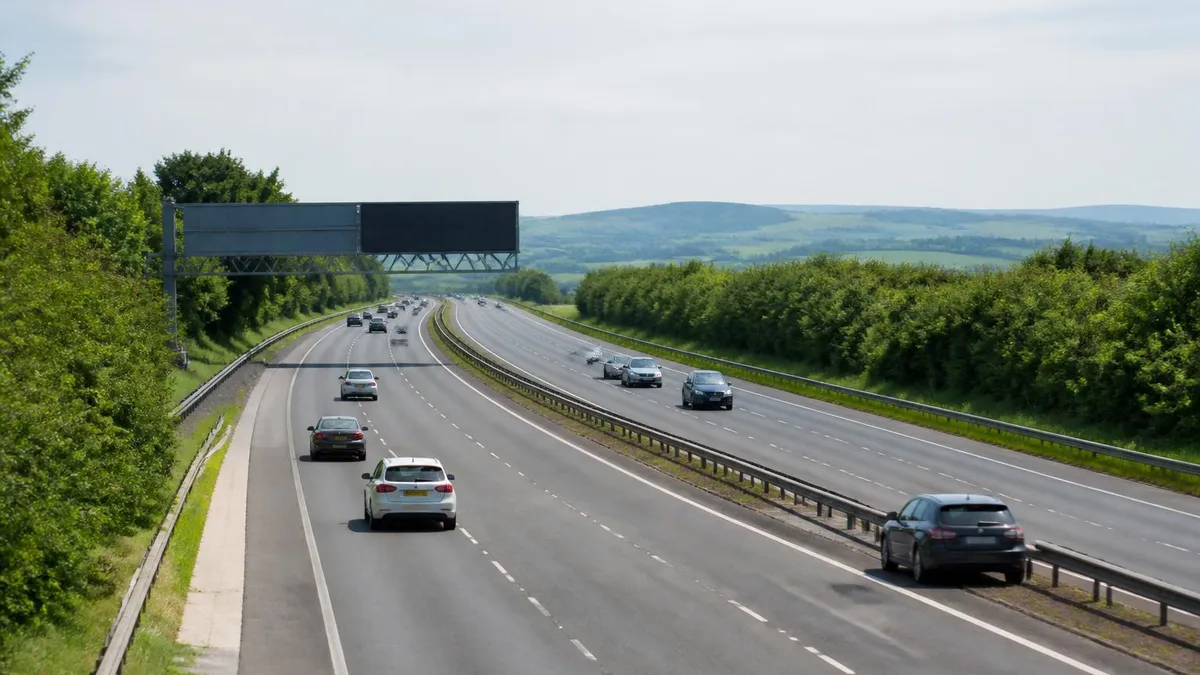
If you plan to drive on motorways, remember that learner drivers with a provisional licence may now practise on motorways with an approved driving instructor in a car fitted with dual controls. Taking advantage of this provision before your test means you will already have motorway experience when you pass. Many new drivers find their first motorway experience after passing stressful if they have never driven at 70 mph in multi-lane traffic before. Incorporating motorway lessons into your pre-test training is strongly recommended for those who anticipate needing motorway access after qualifying.
International drivers who have passed a foreign driving test and moved to the UK may be required to take the UK theory and practical tests to exchange their licence, depending on their country of origin. The DVLA maintains a list of countries whose licences can be exchanged for a full UK licence without re-testing. If your country is not on this list, you will need to apply for a UK provisional licence and complete the full government driving test process. The DVLA website provides up-to-date guidance on licence exchange eligibility by country.
Finally, remember that passing the driving test is not the end of your development as a driver — it is just the beginning. Safe, confident, and efficient driving is a skill that continues to develop over years of experience. Staying engaged with road safety updates, refreshing your knowledge of the Highway Code periodically, and driving attentively every time you get behind the wheel will serve you well throughout your driving life. The government driving test sets the standard; maintaining and exceeding that standard is a lifelong responsibility for every driver on UK roads.
Developing strong practical habits in the lead-up to your driving test is one of the most reliable predictors of success. Research by the DVSA and road safety organisations consistently shows that candidates who combine professional instruction with meaningful private practice outperform those who rely solely on formal lessons. If you have access to a supervising driver — a parent, guardian, or friend who has held a full UK licence for at least three years — structured private practice in varied conditions will accelerate your progress significantly and help lessons stick.
When practising privately, focus on the skills that lessons identify as your weakest areas rather than only driving in comfortable, familiar settings. If roundabout observations are flagging in lessons, seek out busy roundabouts during private practice. If clutch control on hill starts is inconsistent, find quiet sloped roads and repeat the manoeuvre until it becomes automatic. Targeted practice in specific weak areas is far more productive per hour than generalised driving. Keep a simple log of what you practise so your instructor can see where you have been spending time between lessons.
Hazard perception is an area where many candidates underperform relative to their actual on-road awareness. The key insight is that the DVSA video clips require you to identify developing hazards — situations that are going to require you to take action, such as slowing down or changing direction — as early as possible.
A parked car with its indicator on, a pedestrian stepping towards the kerb, or a cyclist approaching a side road are all developing hazards. Clicking the moment you notice the situation beginning to develop, rather than waiting until it is obvious, is what earns full marks for each clip.
Manage your test booking timeline carefully. Test centre waiting lists vary dramatically by location and time of year. In busy urban centres such as London, Birmingham, or Manchester, waiting times for practical tests can extend to eight or twelve weeks or more. In rural test centres, availability is often much more immediate.
If you are exam-ready but cannot get an early appointment at your preferred centre, consider whether a nearby centre with shorter waiting times would be a practical option — even if it is slightly further to travel. Your driving licence is not tied to the centre where you test.
Do not neglect the 'show me, tell me' vehicle safety questions in your preparation. These questions trip up a surprising number of candidates who have otherwise driven excellently throughout the test. There are 19 possible questions in total, and your instructor should walk you through all of them. Knowing how to correctly describe checking engine oil, coolant level, windscreen washer fluid, tyre tread depth, and headlamp functionality takes only a few hours to master thoroughly and eliminates an easy source of minor fault accumulation on test day.
Stay on top of current Highway Code updates as you prepare. The Highway Code was updated significantly in January 2022, introducing important changes to the hierarchy of road users, priority rules at junctions, and guidance for cyclists and pedestrians. These updates are reflected in modern theory test questions, so candidates preparing from older editions of the Highway Code may encounter questions based on rules they have not revised. Always use the most current edition of the Highway Code and DVSA official materials to ensure your knowledge is fully up to date for the test.
Finally, approach the test with a realistic and positive mindset. The UK national first-time practical pass rate sits at around 47%, which means that failing on a first attempt is statistically normal, not exceptional. Many successful, confident drivers took two or three attempts before passing.
What matters is not how many attempts it takes, but that you pass to a genuine standard and emerge as a safe driver. Take every test attempt as valuable learning experience, review your DL25 marking sheet honestly with your instructor, address the identified faults systematically, and approach each subsequent test having genuinely improved in those specific areas.
DVSA Questions and Answers
DVLA Theory Test Booking: Complete Step-by-Step Guide for UK Learners
Driving Theory Test App: The Complete Study Guide for UK Learners
How to Book Your DVSA Practical Driving Test: Complete UK Guide

Learn to Drive in the UK: Complete Beginner's Guide to Getting Your Licence

DVSA Car Practical Test: Complete Guide to Passing First Time
About the Author

Licensed Driving Instructor & DMV Test Specialist
Penn State UniversityRobert J. Williams graduated from Penn State University with a degree in Transportation Management and has spent 20 years as a certified driving instructor and DMV examiner consultant. He has personally coached thousands of applicants through written knowledge tests, skills assessments, and commercial driver licensing programs across more than 30 states.