
CPR Renewal Near Me: Complete 2026 September Guide to Recertification Locations, Costs, and Requirements
Find CPR renewal near me options for 2026 September. Compare costs, 🧠 online vs in-person, AHA vs Red Cross, and recertify your BLS, ACLS, or PALS fast.
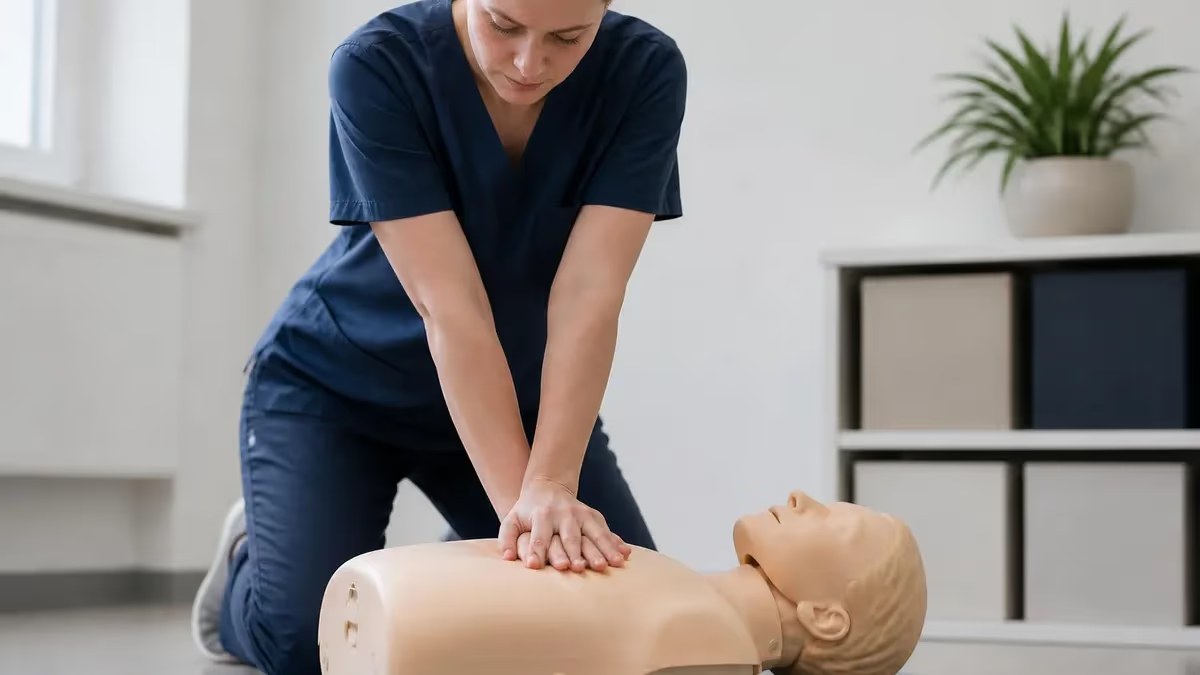
Searching for CPR renewal near me is one of the most common queries among healthcare workers, teachers, daycare providers, lifeguards, and corporate safety officers whose certifications expire every two years. Whether you let your card lapse last month or you have a renewal coming up in 90 days, finding a fast, affordable, and accredited recertification option is essential for staying compliant with employer requirements, state licensing boards, and clinical privileges.
The good news in 2026 is that you have more options than ever, ranging from same-day in-person skills checks to fully online blended courses approved by the American Heart Association and Red Cross.
CPR renewal differs from initial certification in scope, length, and price. Renewal courses assume you already understand the fundamentals of compressions, ventilations, and AED use, so they focus on refreshing your skills, updating you on the latest guideline changes, and verifying competency through a hands-on skills test. Most renewal courses run 2 to 4 hours instead of the 4 to 8 hours required for initial certification, and they typically cost 20 to 40 percent less. That said, you still need to choose the right provider, the right course level, and a delivery format that matches your learning style.
The most popular renewal pathways include the AHA Heartsaver renewal for laypeople, BLS Provider renewal for healthcare professionals, ACLS renewal for nurses and physicians who manage cardiac emergencies, and PALS renewal for pediatric care providers. Each of these has different prerequisites, different skill checks, and different fee structures. Knowing which one matches your job description before you book is the single biggest time-saver in the renewal process. Booking the wrong level can mean retaking the course and paying twice.
Beyond the AHA, many learners use the national cpr foundation, American Red Cross, Health and Safety Institute (HSI), American Safety and Health Institute (ASHI), and ProTrainings for renewals. While not every employer accepts every provider, the AHA and Red Cross dominate hospital and clinical credentialing, while OSHA-compliant providers like HSI and ASHI are widely accepted in workplace, childcare, and education settings. Confirm with your employer before paying — a certification card you cannot use is the most expensive mistake in this entire process.
Renewal pricing in 2026 ranges from about $25 for basic Heartsaver online refreshers to $250 or more for in-person ACLS or PALS courses with skills verification. Geographic location matters too: urban training centers in cities like New York, Chicago, Los Angeles, Houston, and Atlanta tend to run $20 to $50 higher than suburban or rural classrooms, but they also offer more daily schedules. If you need to learn what is aed use updates or simply review compression depth, you have many local options to choose from.
This guide walks you through every step of finding, booking, and completing a CPR renewal near you in 2026. You'll learn how to verify accreditation, what to bring to a skills check, how to handle expired cards, the differences between blended and instructor-led courses, and how to avoid the diploma-mill providers that issue cards employers reject. By the end, you'll have a clear plan for renewing the right credential at the right price within the next two weeks.
We'll also cover practical exam topics that show up on virtually every renewal skills check, including infant cpr techniques, the modern acls algorithm steps, life support priorities during the first two minutes of arrest, normal respiratory rate parameters, and the pals certification airway tree. Skim the table of contents below to jump to the section most relevant to your situation, or read straight through for a full overview of the 2026 renewal landscape.
CPR Renewal Near Me by the Numbers

Where to Find CPR Renewal Near You
Most large hospitals operate AHA-aligned training centers open to outside healthcare workers. Expect BLS, ACLS, and PALS renewal classes weekly with strict skills testing and immediate eCard issuance through the AHA Atlas system.
Local community colleges and EMS academies run frequent evening and weekend renewals at lower rates than hospitals. They are ideal for first responders, nursing students, and CNAs needing accepted, accredited credentials at $50 to $90.
American Red Cross chapters and partner facilities offer renewal classes for adult, child, and infant cpr with AED use. The Red Cross digital certification is widely accepted in schools, daycares, fitness centers, and corporate workplaces nationwide.
Independent AHA-aligned instructors run flexible local classes — often in offices, churches, or fire stations. Search instructor-locator tools to find weekend slots within 10 miles and verify their training-center affiliation before paying.
Blended renewal lets you complete didactic work online via AHA HeartCode or Red Cross Simulation Learning, then complete a 30-minute in-person skills check at a partner site. Fastest path for busy clinicians and shift workers.
CPR renewal pricing in 2026 varies more than most people expect, and understanding the cost structure helps you avoid both overpaying at premium training centers and underpaying at non-accredited mills. The cheapest legitimate renewals are AHA Heartsaver online refreshers at $25 to $40, which work for laypeople in non-clinical roles. The next tier is BLS Provider renewal at $55 to $95, which covers most nurses, medical assistants, CNAs, dental staff, and respiratory therapists. ACLS renewal runs $150 to $225, and PALS renewal lands in the same range. Specialty renewals like NRP or ACLS-EP cost more.
Geographic differences are significant. A BLS renewal in Manhattan or San Francisco can cost $110 to $135, while the same course in suburban Texas, Ohio, or Florida runs $55 to $75. Hospital-based courses tend to charge $20 to $30 more than independent instructors, but they include eCard processing fees and provide on-site mannequins, AED trainers, and bag-valve-mask devices for every learner. Independent instructors sometimes pass mannequin-sanitation fees or rental costs to students, so always ask whether the quoted price is all-inclusive.
Blended online courses split the fee between the online portion (often $30 to $50 through HeartCode BLS or Red Cross Simulation Learning) and the in-person skills check ($50 to $90). The combined total is usually identical to a fully in-person class, but blended saves you 2 to 3 hours of classroom time. Many blended-eligible providers offer same-week skills appointments, which is invaluable if your card already expired and your employer has placed you on a 30-day grace period.
If you need help looking up an old card or you're worried your normal average respiratory rate in adults training certificate is missing, AHA eCards and Red Cross digital certificates are searchable online through provider portals. Confirm the issuing instructor's name and training-center ID before booking the renewal so you don't get scheduled into a course your employer won't accept. Always screenshot the renewal class confirmation and forward it to your supervisor.
Many employers reimburse renewal fees if you submit a paid receipt and a copy of the new card. Hospitals, surgery centers, dialysis clinics, and large dental offices often reimburse 100 percent of BLS, ACLS, and PALS within 30 days of completion. Smaller workplaces — independent dentists, chiropractors, gyms — usually reimburse only if you ask in advance and bring a written quote. Build the cost into your annual continuing-education budget so it never catches you off guard.
Watch for hidden fees. Some training sites charge separate processing fees for eCards ($5 to $10), reprint fees for lost cards ($25 to $50), and rescheduling fees ($15 to $35) if you no-show your skills check. Diploma-mill websites that promise instant cards for $14.99 with no skills test are almost always rejected by employers and state licensing boards. The IRS and state nursing boards both consider these cards invalid for clinical practice.
Finally, group discounts can dramatically lower per-student pricing. If you can gather 4 to 8 coworkers, most local instructors will travel to your office or clinic for an on-site renewal at $40 to $65 per person — often cheaper than scheduling everyone individually. Group renewals also build team cohesion and ensure everyone holds the same expiration date, which simplifies your facility's compliance tracking and Joint Commission survey readiness.

CPR Practice Test Questions
Prepare for the CPR Cardiopulmonary Resuscitation Practice exam with our free practice test modules. Each quiz covers key topics to help you pass on your first try.
CPR Basic CPR
CPR Exam Questions covering Basic CPR. Master CPR Test concepts for certification prep.
CPR and First Aid
Free CPR Practice Test featuring and First Aid. Improve your CPR Exam score with mock test prep.
CPR (Cardiopulmonary Resuscitation) Adult ...
CPR Mock Exam on (Cardiopulmonary Resuscitation) Adult CPR and AED Usage. CPR Study Guide questions to pass on your first try.
CPR (Cardiopulmonary Resuscitation) Airway...
CPR Test Prep for (Cardiopulmonary Resuscitation) Airway Obstruction and Choking. Practice CPR Quiz questions and boost your score.
CPR (Cardiopulmonary Resuscitation) Cardio...
CPR Questions and Answers on (Cardiopulmonary Resuscitation) Cardiopulmonary Emergency Recognition. Free CPR practice for exam readiness.
CPR (Cardiopulmonary Resuscitation) Child ...
CPR Mock Test covering (Cardiopulmonary Resuscitation) Child and Infant CPR. Online CPR Test practice with instant feedback.
CPR (Cardiopulmonary Resuscitation) High-P...
Free CPR Quiz on (Cardiopulmonary Resuscitation) High-Performance Team Dynamics. CPR Exam prep questions with detailed explanations.
CPR (Cardiopulmonary Resuscitation) Legal ...
CPR Practice Questions for (Cardiopulmonary Resuscitation) Legal and Ethical Considerations. Build confidence for your CPR certification exam.
CPR for Specific Populations
CPR Test Online for for Specific Populations. Free practice with instant results and feedback.
CPR Airway & Breathing Management
CPR Exam Questions covering Airway & Breathing Management. Master CPR Test concepts for certification prep.
CPR Assessment & Recognition of Cardiac Ar...
Free CPR Practice Test featuring Assessment & Recognition of Cardiac Arrest. Improve your CPR Exam score with mock test prep.
CPR Chest Compressions & Defibrillation
CPR Mock Exam on Chest Compressions & Defibrillation. CPR Study Guide questions to pass on your first try.
CPR Post-Resuscitation Care & Recovery
CPR Test Prep for Post-Resuscitation Care & Recovery. Practice CPR Quiz questions and boost your score.
BLS, ACLS, PALS, and Heartsaver Renewal: Which One Do You Need?
BLS Provider renewal is the most common CPR renewal in the US, required for nurses, medical assistants, dental hygienists, EMTs, CNAs, and most clinical roles. The renewal class runs 2 to 3 hours and covers adult, child, and infant cpr, AED use, bag-valve-mask ventilation, and team-based resuscitation. You'll do skills tests on adult and infant mannequins, plus a 25-question written exam with a 84 percent pass threshold under AHA rules.
What is a bls certification really verifying? It confirms you can deliver high-quality compressions at 100-120 per minute, ventilate without overinflation, and integrate AED use within 60 seconds of arrival. Renewals reinforce the chest compression fraction goal of greater than 60 percent and the 2-minute rotation cycle. Expect the instructor to evaluate hand placement, recoil, and switching efficiency in real time.
In-Person vs Online Blended Renewal: Pros and Cons
- +Blended courses cut classroom time from 4 hours to under 1 hour
- +Online modules can be paused, replayed, and reviewed at your pace
- +Skills checks are usually available within 3-5 business days
- +Self-paced video lets you re-watch infant CPR and AED segments
- +Same eCard validity as fully in-person — universally accepted
- +Lower total cost when factoring in commute and parking
- +Available 24/7 — fits night-shift and rotating-schedule clinicians
- −You still must attend a live skills test — fully online is not valid for clinical jobs
- −Hands-on practice time is shorter and more rushed
- −Technology issues (slow internet, browser bugs) can stall completion
- −Less interaction with peers and instructor questions
- −Some employers require fully in-person renewal regardless of AHA policy
- −Skills sites may book out 2-3 weeks during renewal peak seasons

CPR Renewal Pre-Class Checklist
- ✓Confirm which certification level your employer requires (BLS, ACLS, PALS, Heartsaver)
- ✓Verify the provider is AHA-aligned, Red Cross, or another employer-accepted brand
- ✓Check that your current card has not expired more than 30 days ago
- ✓Print or save your existing card to show the instructor at check-in
- ✓Review the latest AHA guidelines summary (compression depth, rate, ratios)
- ✓Practice 2 minutes of continuous compressions before class to build stamina
- ✓Bring a photo ID and the confirmation email or receipt to the testing site
- ✓Wear loose clothing and closed-toe shoes for floor-based skills testing
- ✓Complete any required online module at least 24 hours before the skills check
- ✓Download the AHA eCard app or Red Cross digital certificate app to receive your new card
You have a 30-day grace period after expiration
The American Heart Association allows BLS, ACLS, and PALS holders to renew within 30 days after the card's expiration date without retaking the full initial course. Miss that 30-day window and you'll be required to enroll in a full provider class — which costs more and takes nearly twice as long. Set a calendar reminder 60 days before your expiration and book your renewal at the 45-day mark to leave room for rescheduling.
The renewal skills test is where most candidates feel anxious, but the bar is lower than initial certification because instructors assume baseline competency. Walking in with a clear mental model of the acls algorithm (or the BLS adult cardiac arrest algorithm) makes the megacode feel familiar rather than overwhelming. The instructor wants to see decisive team leadership, closed-loop communication, and accurate timing of compressions, defibrillation, and medication administration — not perfect recitation of every line.
For BLS, expect to perform two minutes of adult one-rescuer CPR with AED, then two minutes of two-rescuer CPR with bag-valve-mask ventilation, and finally infant CPR with two-thumb encircling technique. Compression depth must be at least 2 inches in adults, about 2 inches in children, and 1.5 inches in infants. You must allow full chest recoil and minimize compression interruptions — keep the cpr compression rate between 100 and 120 per minute throughout. Instructors use metronomes and depth feedback devices on most modern mannequins.
For ACLS, the megacode scenarios typically include ventricular fibrillation transitioning to PEA, an unstable bradycardia requiring atropine and transcutaneous pacing, and a stable or unstable tachycardia where you must decide between adenosine and synchronized cardioversion. Memorize the energy levels: biphasic defibrillation at 120-200 J, synchronized cardioversion at 50-100 J for narrow regular tachycardias, and 120-200 J for unstable atrial fibrillation. Know that epinephrine 1 mg is repeated every 3 to 5 minutes during arrest.
For PALS, drug doses are weight-based and tested rigorously: epinephrine at 0.01 mg/kg IV/IO, amiodarone at 5 mg/kg IV/IO bolus during pulseless VT/VF, and atropine at 0.02 mg/kg with a minimum dose. Defibrillation starts at 2 J/kg and escalates to 4 J/kg, then up to 10 J/kg if needed. Pediatric respiratory rate norms differ by age — newborns at 30 to 60, infants 25 to 40, toddlers 20 to 30 — and recognizing tachypnea is often more critical than identifying tachycardia in early shock.
Many renewal candidates underestimate the recovery chest compression fraction standard. The AHA expects a CCF greater than 60 percent during resuscitation, meaning more than 60 percent of the code time should involve active compressions. Instructors evaluate this through pause time during rhythm checks, defibrillation, and rescuer switches. Aim to keep every pause under 10 seconds. Practice clean handoffs by having one rescuer in position and ready to compress before the current rescuer disengages.
Written exams accompany every renewal. BLS uses 25 questions with a passing score around 84 percent; ACLS and PALS use 50 questions with the same threshold. Questions test ECG rhythm recognition, algorithm steps, medication doses, post-arrest management, and team dynamics. Free practice question banks — like the ones linked throughout this guide — dramatically improve first-attempt pass rates. Aim to score 90 percent on practice tests before walking into the renewal room.
Finally, do not underestimate fatigue. Two minutes of compressions feels much longer than expected, especially after a long shift. The week before your renewal, do 2 to 3 short practice sessions on a firm surface — a stack of books or yoga block works — to build the muscle memory and stamina needed to pass without rescuer rotation issues.
Hospitals, surgery centers, dialysis units, and nursing boards routinely reject CPR cards from non-accredited online-only providers that skip skills testing. Before paying, verify the provider's instructor or training-center ID through the AHA Atlas portal or call your HR compliance office to confirm the brand is approved. A $25 card you cannot use is worse than a $90 card that gets you back on the schedule immediately.
Selecting the right renewal provider is the single decision that determines whether your card will be accepted at work, by state licensing boards, and during Joint Commission or DNV survey audits. The American Heart Association and American Red Cross dominate clinical credentialing. AHA cards are standard at hospitals, EMS agencies, and most nursing programs. Red Cross is widely accepted in schools, daycares, fitness centers, and corporate settings, and many hospitals also accept Red Cross BLS-equivalent cards for non-clinical staff.
OSHA-compliant providers like the Health and Safety Institute (HSI), American Safety and Health Institute (ASHI), and Medic First Aid are accepted in most workplace, industrial, and education settings. They follow ECC/ILCOR science and meet OSHA requirements, but a small minority of hospitals still require AHA-only cards. Always confirm with HR. ProTrainings and EMSA-approved providers fill the childcare and California-specific niches, and the what is aed training they provide aligns with state requirements for daycare licensure.
Beware of providers offering 100-percent-online cards with no skills check. The AHA explicitly states that no card is valid without an in-person skills verification component. Several states — including California, New York, Florida, and Texas — have begun cracking down on diploma-mill cards used for nursing license renewal. If a provider offers a card for less than $25 with no instructor verification, treat it as a red flag and look elsewhere.
Check your provider's reputation through Google reviews, Better Business Bureau ratings, and instructor location directories. AHA-aligned training centers must list current instructors and class schedules through the official AHA Class Connector tool. Red Cross courses appear on RedCross.org with verified locations. Cross-reference the instructor's name on your final card with the training-center registry to confirm legitimacy if your employer ever questions the credential.
Plan ahead for state-specific quirks. Illinois requires AHA-aligned BLS for many clinical positions. Florida nursing renewals accept AHA, Red Cross, and ASHI but reject several lesser-known online-only brands. Texas allows broad provider acceptance but requires hands-on skills for any patient-care role. California's EMSA program adds requirements for childcare workers beyond standard Heartsaver. Search your state nursing or EMS board's website for the specific approved-provider list before scheduling.
If your card has already expired by more than 30 days, you cannot renew under AHA rules — you must take the full initial provider course. Several Red Cross courses offer slightly more generous reactivation windows, so if you're 31 to 60 days past expiration, check Red Cross before paying for a full AHA reinstatement. Either way, do not let the lapse stretch further: most employers will pull you from the schedule once expiration is documented in your compliance file.
Once you complete renewal, screenshot or PDF your eCard the same day, email a copy to your supervisor, upload it to your hospital's credentialing portal, and save a backup in cloud storage. Set a 22-month calendar reminder so you start the next renewal cycle with at least 60 days of runway. Building this discipline once means you'll never face the panic of a last-minute search for CPR renewal near me again.
The final stretch before your renewal class should focus on small, high-yield prep tasks that compound into a confident pass. Spend 20 to 30 minutes the night before walking through the algorithms aloud. For BLS, talk through the adult chain of survival: recognize arrest, call 911, start compressions, attach AED, deliver shock if indicated, resume compressions, rotate every 2 minutes. For ACLS, recite the cardiac arrest algorithm from VF/VT through the H's and T's. Saying it out loud activates a different memory pathway than silent reading.
Make sure your manikin technique is mechanically efficient. Lock your elbows, stack your shoulders directly above your hands, use the heel of your dominant hand on the lower half of the sternum, and let your body weight do the work. People who fail compression depth almost always rely on arm strength alone, which fatigues within 90 seconds. Practice on a low surface — a couch cushion on the floor is great — so you find the ergonomic position that lets you sustain two full minutes without dropping rate or depth.
Brush up on AED basics: turn it on, attach pads to bare dry chest in the upper-right and lower-left positions, allow the device to analyze, clear the patient verbally and visually, deliver the shock, and resume compressions immediately. For pediatric AED use, switch to pediatric pads or the pediatric key if available; if not, adult pads are acceptable for children over one year, placing one pad on the chest and one on the back if the pads risk overlapping.
Review respiratory rate norms because they appear on virtually every renewal exam. Normal adult respiratory rate is 12 to 20 per minute; anything sustained above 24 is a red flag for sepsis, shock, or impending respiratory failure. For ventilation during CPR, deliver one breath every 6 seconds (10 per minute) in an advanced airway scenario or 30:2 in the basic adult algorithm. In infants and children with a pulse but inadequate breathing, deliver one breath every 2 to 3 seconds.
Hydrate, eat a real meal, and sleep well the night before your class. Skills testing on an empty stomach or after a poor night's sleep is a recipe for technique errors. Arrive 15 minutes early to find parking, check in, and warm up your arms with a few gentle stretches. Make small talk with classmates — many courses use peer pairing for two-rescuer scenarios, and rapport helps the simulation feel smoother and more natural.
If you struggle on the written exam, ask the instructor to clarify any question you missed. Most renewals allow up to two written-exam attempts, and instructors often re-teach the missed concept on the spot. Demonstrate willingness to learn — instructors are far more flexible with engaged learners than with candidates who appear bored or impatient. Bring a positive attitude, take notes if it helps you focus, and do not be afraid to admit knowledge gaps in a debrief.
After you pass, your eCard typically arrives within 24 to 72 hours via email. Open the AHA eCard or Red Cross digital certificate app, claim the card, and verify the expiration date and provider level. If the card never arrives, contact the training center directly — most issues are simple typos in your email address. Save a PDF copy and add the expiration date to your phone calendar with a 60-day, 30-day, and 7-day reminder.
CPR Questions and Answers
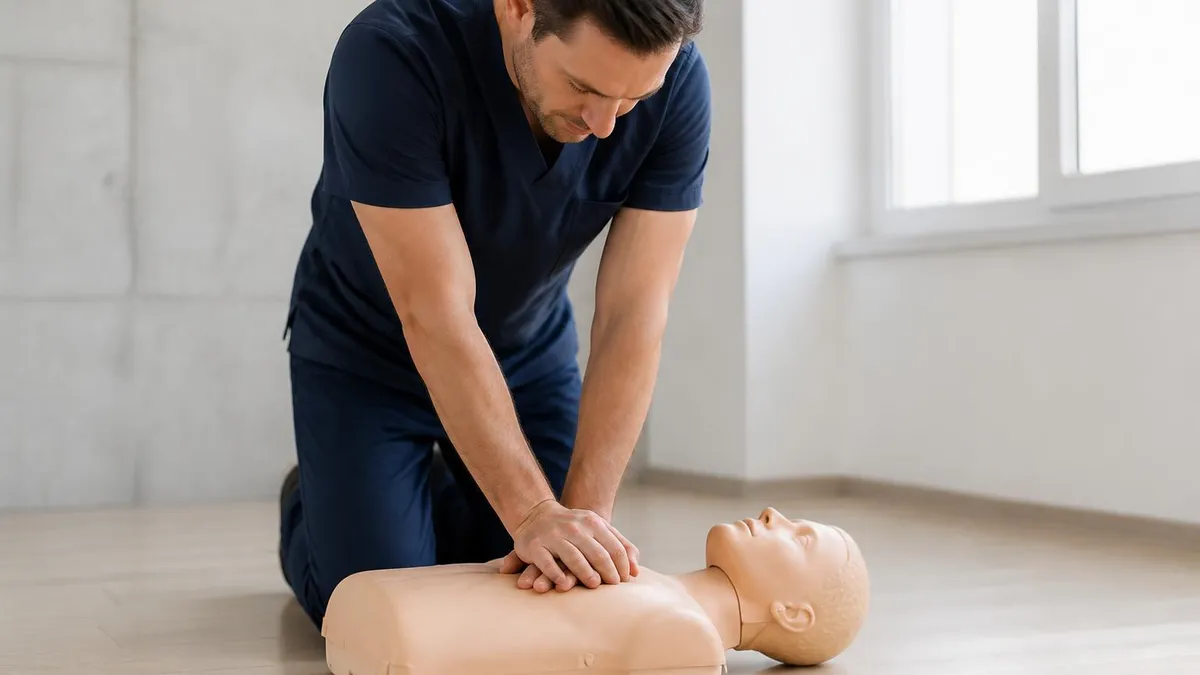
CPR vs BLS: Complete Comparison Guide for 2026 — Which Certification Do You Need?
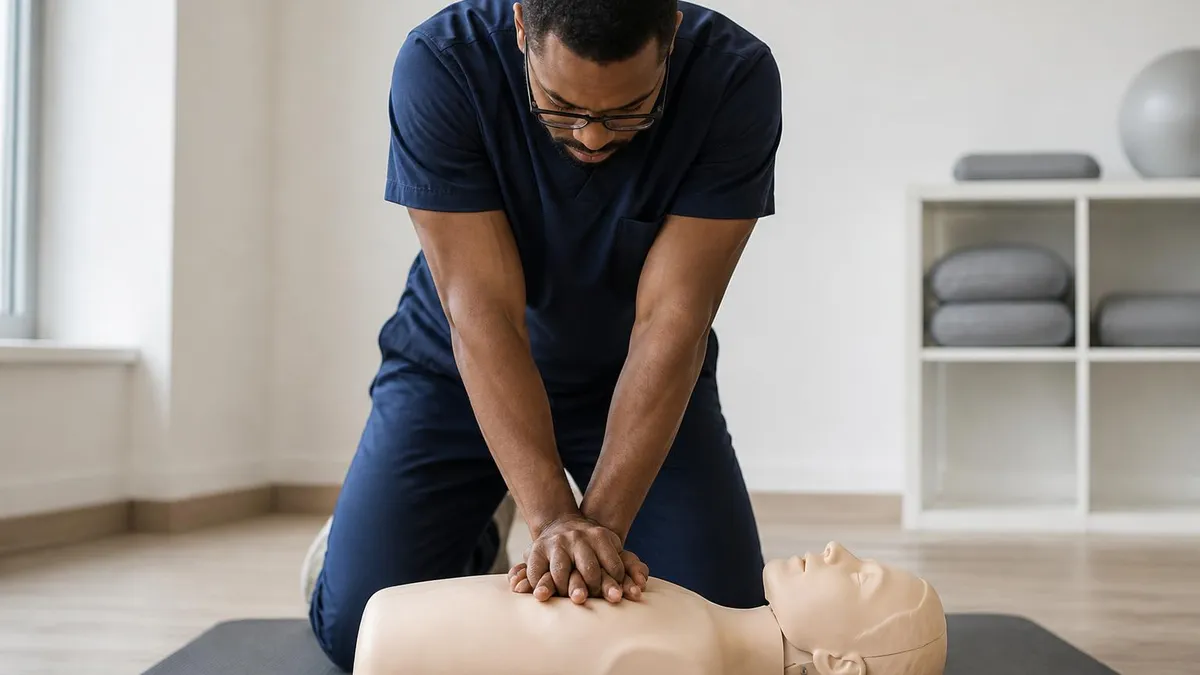
CPR Card Lookup: How to Verify, Replace, and Access Your CPR Certification in 2026
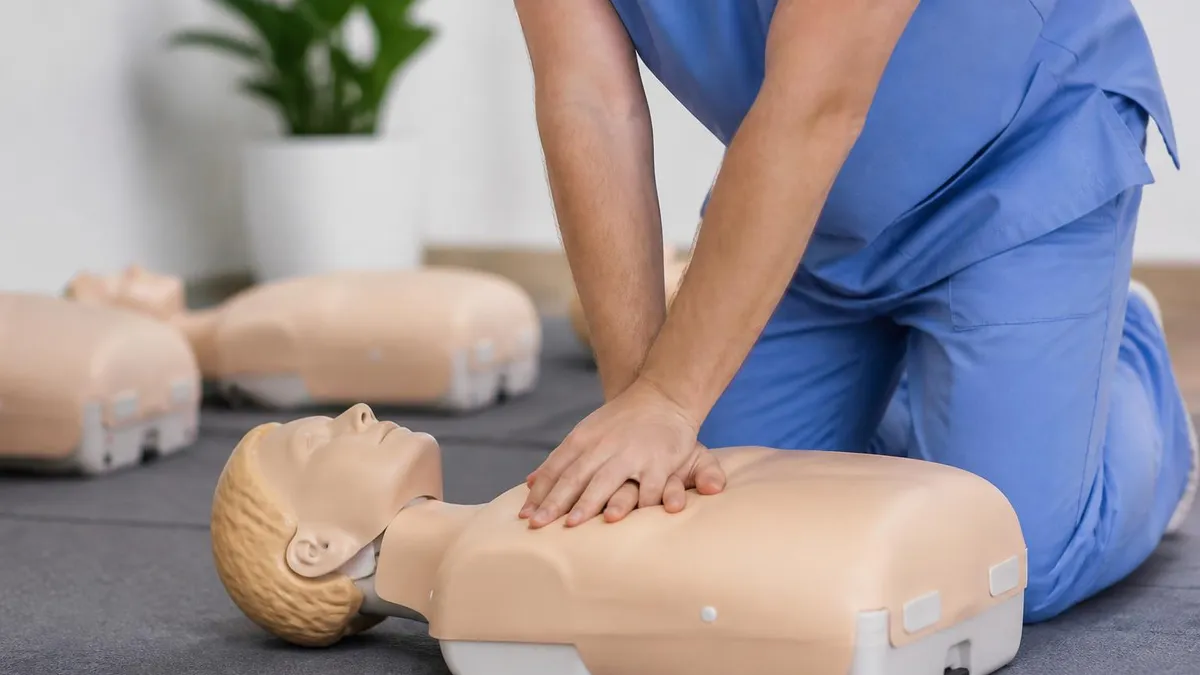
AHA CPR: What It Is, Which Course You Need, and How to Get Certified
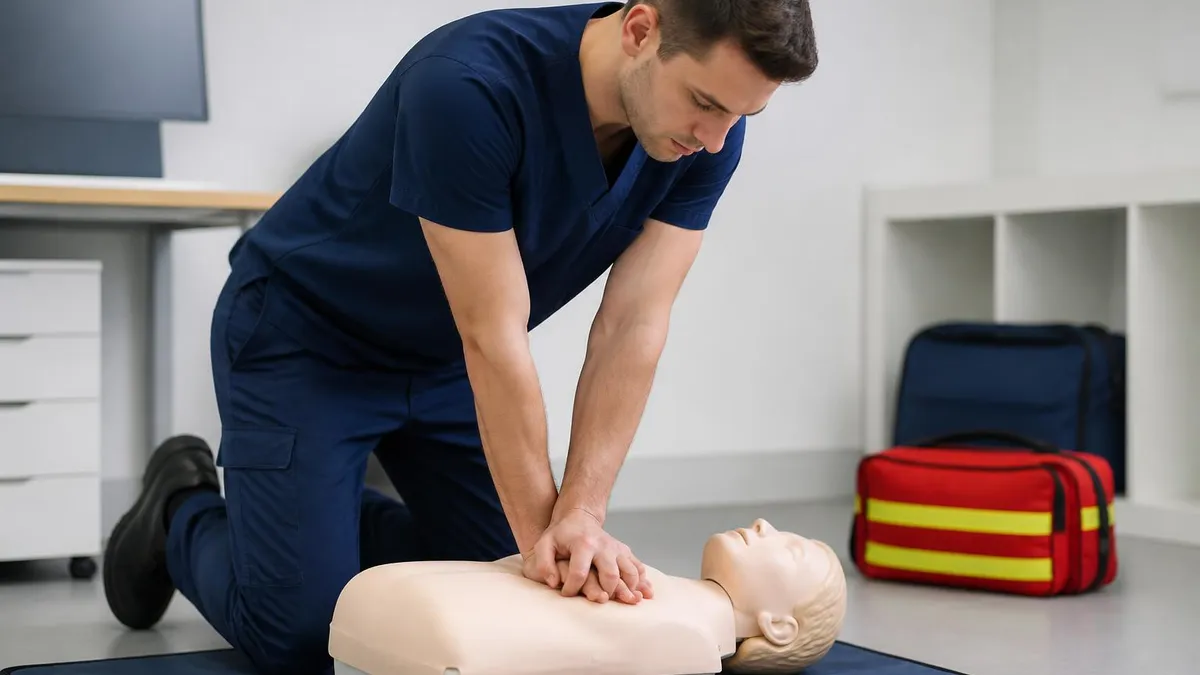
Adult CPR: Complete Step-by-Step Guide to Hands-Only and Standard CPR in 2026
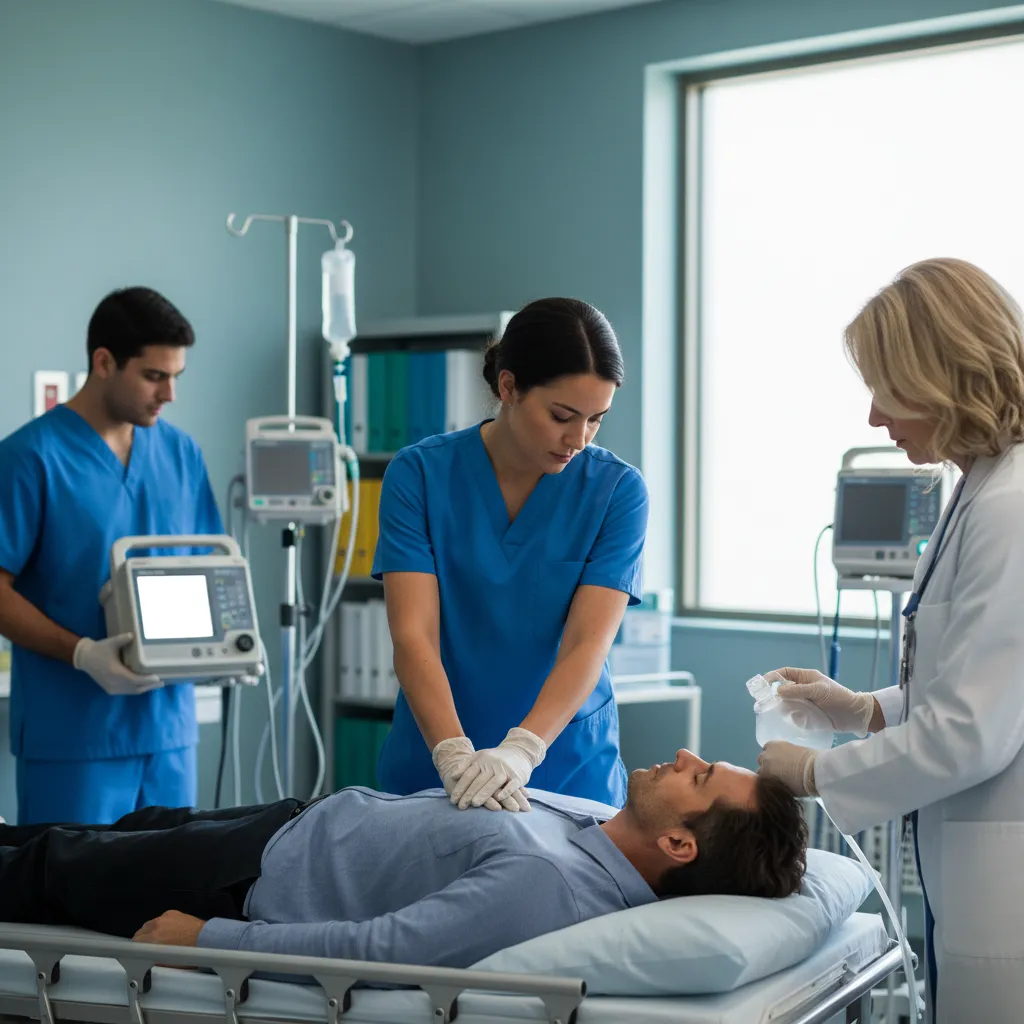
CPR - Cardiopulmonary Resuscitation: Complete Study Guide 2026
About the Author

Registered Nurse & Healthcare Educator
Johns Hopkins University School of NursingDr. Sarah Mitchell is a board-certified registered nurse with over 15 years of clinical and academic experience. She completed her PhD in Nursing Science at Johns Hopkins University and has taught NCLEX preparation and clinical skills courses for nursing students across the United States. Her research focuses on evidence-based exam preparation strategies for healthcare certification candidates.
Join the Discussion
Connect with other students preparing for this exam. Share tips, ask questions, and get advice from people who have been there.
View discussion (5 replies)