
CPR Classes Lewisville TX: Complete Guide to Certification, ACLS, PALS, and Life-Saving Training
Find CPR classes in Lewisville TX covering ACLS algorithm, PALS certification, infant CPR & AED training. 🎯 Get certified fast with our free practice tests.
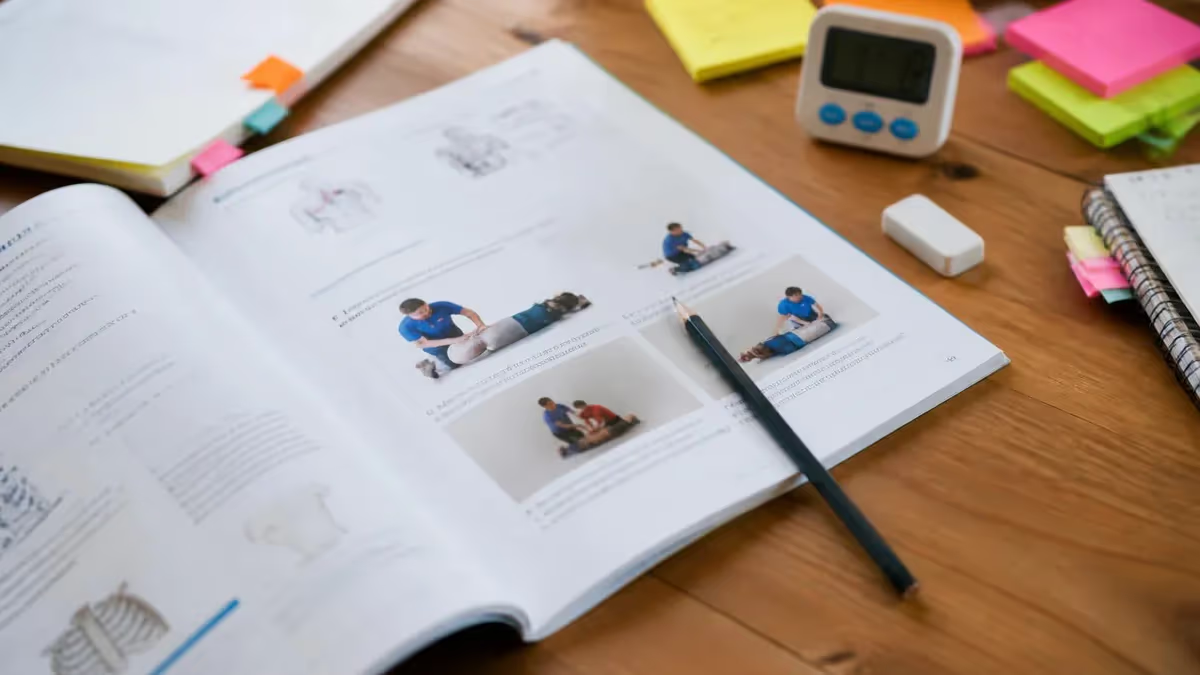
The ACLS algorithm is one of the most critical frameworks any healthcare provider or layperson can master, and if you're searching for CPR Lewisville TX training options, you're already taking a step that could save someone's life. Lewisville, Texas, sits in the heart of the Dallas–Fort Worth metroplex, a region served by dozens of accredited training centers offering everything from basic CPR to advanced life support courses.
Whether you're a parent wanting to protect your child, a workplace safety officer meeting OSHA requirements, or a nurse maintaining hospital credentials, understanding what Lewisville's CPR landscape looks like is the essential first step.
CPR — cardiopulmonary resuscitation — remains the single most important bystander intervention during sudden cardiac arrest. The American Heart Association estimates that effective bystander CPR can double or even triple survival rates, yet fewer than half of all out-of-hospital cardiac arrest victims receive it before emergency services arrive. Lewisville residents have access to a robust ecosystem of local classes, and knowing which certification fits your needs — Basic Life Support, PALS certification, or advanced provider courses — saves you time and ensures your credentials are accepted by employers and accrediting bodies alike.
One major decision point is choosing between in-person and blended-learning formats. Traditional classroom courses remain the gold standard for hands-on skill validation, particularly when an instructor evaluates your compression depth, rate, and recoil technique in real time. Blended formats pair online video modules with a shorter in-person skills check, reducing total class time while preserving the critical hands-on component. Both formats produce equivalent certifications when delivered by accredited organizations, so your schedule and learning style should guide the choice.
Lewisville's healthcare corridor along I-35E and the Medical Center of Lewisville service area creates strong demand for credentialed providers. Hospitals, outpatient clinics, dental offices, and fitness centers across Denton County regularly require staff to hold current BLS, ACLS, or PALS cards. Knowing that your certification comes from an organization recognized by your employer — such as the American Heart Association, American Red Cross, or the National CPR Foundation — is non-negotiable before you register.
This guide covers everything from choosing the right course level and understanding what the ACLS algorithm actually tests, to learning what AED stands for, how infant CPR differs from adult technique, and what the typical cost and renewal cycle looks like. You'll also find free practice quiz tiles embedded throughout to help you test your knowledge before, during, or after your official class — because arriving prepared makes both the skills stations and the written examination significantly less stressful.
If you've already held a certification before, don't assume your old card is still valid. CPR certification typically expires every two years, and the renewal process often requires a full-length skills session rather than a simple online refresher. Check out our detailed resource on cpr classes lewisville tx renewal timelines to understand exactly when your card expires and what the recertification process involves so you're never caught with a lapsed credential when your employer audits compliance records.
Throughout this article we'll use real numbers, concrete examples, and step-by-step breakdowns so you leave with an actionable plan. From understanding respiratory rate guidelines during rescue breathing to mastering position recovery technique for unconscious adults, every section is designed to move you from awareness to readiness as efficiently as possible.
CPR in Lewisville TX: Key Numbers

CPR Course Levels Available in Lewisville, TX
Designed for healthcare providers including nurses, EMTs, and medical assistants. Covers single- and two-rescuer adult CPR, infant CPR technique, AED use, and bag-mask ventilation. Typically 4–5 hours; recognized by hospitals across Denton County.
Ideal for parents, teachers, coaches, and workplace safety teams. Covers adult and infant CPR, AED operation, and choking relief. Shorter format (2–3 hours) and accepted for non-clinical workplace compliance requirements in Lewisville.
Required for physicians, nurses, and advanced practice providers working in emergency, ICU, or OR settings. Centers on the ACLS algorithm for shockable and non-shockable rhythms, megacode scenarios, and pharmacology during resuscitation.
Targets pediatric nurses, pediatricians, and emergency providers. Covers infant and child resuscitation algorithms, respiratory emergencies, shock recognition, and post-cardiac-arrest care specific to the pediatric population.
Blended course combining wound care, splinting, allergic reaction response, and full CPR/AED training. Popular with school districts, daycare centers, and corporate wellness programs across the Lewisville ISD service area.
The ACLS algorithm is the backbone of advanced resuscitation training, and understanding it before you walk into a Lewisville ACLS class will dramatically reduce the cognitive load on the day. The algorithm is organized around two main branches: shockable rhythms — ventricular fibrillation (VF) and pulseless ventricular tachycardia (pVT) — and non-shockable rhythms — pulseless electrical activity (PEA) and asystole. For shockable rhythms, the cycle is CPR, shock delivery, CPR, medication, repeat. For non-shockable rhythms, the focus shifts immediately to high-quality CPR and identifying reversible causes using the classic H's and T's mnemonic.
During any resuscitation scenario governed by the ACLS algorithm, team roles matter just as much as individual technique. A well-functioning resuscitation team assigns a compressor, a ventilator, a medication administrator, a monitor/defibrillator operator, and a team leader who communicates clearly and tracks time between shocks and drug intervals. Lewisville ACLS courses use megacode stations — simulated cardiac arrest scenarios — to evaluate whether providers can execute these roles under realistic time pressure while maintaining situational awareness.
The National CPR Foundation offers online ACLS certification pathways that some Lewisville-area providers use for convenience, though it's critical to verify that your specific employer accepts the issuing organization. Many hospitals in the DFW metroplex specify American Heart Association certification by name in their credentialing policies, while outpatient and non-acute settings may accept a broader range of accredited providers. Always confirm before purchasing any course to avoid the expense of repeating training with a different organization.
Monitoring respiratory rate is an essential but frequently underemphasized component of advanced life support. During CPR, rescuers delivering ventilations should target one breath every 6 seconds — equivalent to 10 breaths per minute — when an advanced airway such as an endotracheal tube or supraglottic device is in place. Over-ventilation is a common error that increases intrathoracic pressure, reduces venous return, and worsens cardiac output during resuscitation. ACLS courses in Lewisville explicitly test this timing during simulated scenarios because it's one of the highest-yield correctable errors in real arrest management.
Post-cardiac-arrest care is the often-overlooked third phase of the ACLS algorithm that begins after return of spontaneous circulation (ROSC). Goals include targeted temperature management when indicated, avoiding hypoxia and hypotension, obtaining a 12-lead ECG to rule out STEMI, and considering coronary angiography. Lewisville-area providers working in the cardiac care unit at Medical Center of Lewisville will encounter these protocols regularly, making a thorough understanding of post-ROSC management as valuable as mastering the arrest algorithms themselves.
PALS certification takes a parallel but pediatric-specific approach. Whereas ACLS focuses on arrhythmia-driven arrest, PALS emphasizes that children most commonly arrest due to respiratory failure or shock rather than primary cardiac events. This means the PALS approach prioritizes aggressive airway management and fluid resuscitation earlier in the deteriorating child's care pathway. Lewisville pediatric providers — including those working in urgent care, school-based health clinics, and general pediatrics offices — benefit enormously from PALS training because it sharpens pattern recognition for the child who is sick but not yet in arrest.
Whether you're pursuing BLS, ACLS, or PALS, arriving at your Lewisville training center with solid foundational knowledge will help you perform better at skills stations and score higher on the written examination. Use the free practice resources embedded throughout this article to reinforce your understanding of core concepts, from compression ratios to drug dosing windows within the algorithm.
Infant CPR, What Does AED Stand For, and PALS Certification Explained
Infant CPR differs meaningfully from adult technique in several key ways that every Lewisville parent, daycare worker, and pediatric nurse should understand. Compressions on an infant are delivered using two fingers centered on the chest just below the nipple line, or both thumbs with hands encircling the chest in the two-thumb encircling technique preferred during two-rescuer infant CPR. Compression depth should be approximately 1.5 inches — about one-third of the infant's chest diameter — and the rate remains the same 100–120 compressions per minute used for adults.
Rescue breathing for infants uses a gentle puff of air just large enough to see the chest rise — over-inflating an infant's lungs is a common error that causes gastric distension and reduces the effectiveness of ventilation. The compression-to-ventilation ratio for a lone rescuer is 30:2, identical to adult single-rescuer CPR, while two-rescuer infant CPR switches to a 15:2 ratio. Lewisville BLS and PALS courses practice these distinctions extensively because the psychomotor differences between adult and infant technique require deliberate repetition to become automatic under stress.

In-Person vs. Online Blended CPR Classes in Lewisville
- +Hands-on instructor feedback corrects compression depth, rate, and hand position errors in real time
- +Immediate access to training manikins, AED trainers, and bag-mask devices for realistic practice
- +Team-based scenarios build communication and role-assignment skills essential for ACLS and PALS
- +Instructors can answer course-specific and employer-specific credentialing questions on the spot
- +In-person format is universally accepted by DFW-area hospitals and credentialing bodies without question
- +Networking with local healthcare peers creates community and professional support beyond the class
- −Requires traveling to a Lewisville or DFW training site on a fixed schedule, reducing flexibility
- −Full-length BLS or ACLS classes can occupy an entire workday or multiple evenings
- −Higher upfront cost compared to blended or skills-only renewal formats
- −Class sizes can limit individualized attention at busy training centers
- −Rescheduling after a missed session may require waiting weeks for the next available cohort
- −Blended online-first formats cover the same material and often cost less while still requiring an in-person skills check
CPR Certification Checklist: What to Prepare Before Your Lewisville Class
- ✓Confirm your chosen training center is accredited by the AHA, Red Cross, or National CPR Foundation before registering.
- ✓Verify with your employer or school that they accept the specific issuing organization's certification card.
- ✓Review the ACLS algorithm H's and T's mnemonic if you're enrolling in an advanced provider course.
- ✓Practice the 30:2 compression-to-ventilation ratio on a home training manikin or pillow before class day.
- ✓Understand the difference between infant CPR and adult CPR technique, especially compression depth and two-finger placement.
- ✓Memorize what AED stands for and the three universal steps: power on, attach pads, follow prompts.
- ✓Know your target respiratory rate during CPR with an advanced airway in place: 10 breaths per minute.
- ✓Bring a valid government-issued photo ID to your skills session for certification card issuance.
- ✓Wear comfortable, layered clothing — you'll be on your knees performing compressions on manikins for extended periods.
- ✓Arrive 15 minutes early to complete any intake paperwork and receive your course materials without rushing.
Depth and Full Recoil Matter More Than Speed
The most common CPR error documented in resuscitation research is incomplete chest recoil — leaning on the chest between compressions reduces venous return and significantly cuts coronary perfusion pressure. Lewisville instructors consistently flag this during manikin evaluations. Aim for at least 2 inches of compression depth on adults, allow the chest to fully recoil after each compression, and minimize interruptions to less than 10 seconds whenever possible.
Understanding the cost structure of CPR training in Lewisville helps you budget appropriately and avoid paying more than necessary. BLS for Healthcare Providers courses through AHA-authorized training centers in the DFW area typically range from $55 to $85 per person for group sessions, while individual or small-group scheduling can push costs to $100–$130. ACLS courses cost significantly more — typically $175 to $300 — reflecting the longer course duration, simulation equipment overhead, and the higher level of instructor expertise required to run megacode scenarios effectively.
PALS certification courses carry a similar price range to ACLS, generally $200 to $325 for a full initial certification course. Renewal courses for both ACLS and PALS are usually priced 20–30% lower than initial certification since they run on a condensed schedule. Many Lewisville-area hospitals negotiate discounted group rates for their staff, so if you're employed by a healthcare system, check with your education department before paying retail pricing at a public training center.
The National CPR Foundation offers online-based certification courses at lower price points — sometimes as low as $19.95 for a basic certification card — but it's essential to check whether your employer accepts their credentials. While the National CPR Foundation is an accredited provider, some hospital systems and Joint Commission-accredited facilities specifically require AHA certification. The cost savings are only real if the card you receive is actually accepted where you work or volunteer.
Scheduling in Lewisville is relatively flexible due to the city's proximity to the larger DFW metroplex. Training centers in nearby Flower Mound, Denton, and Irving offer additional options if Lewisville-specific dates don't fit your calendar. Weekend courses are particularly popular with working healthcare providers who can't spare a weekday, and many training centers now offer early morning cohorts starting at 7:00 AM to accommodate hospital shift schedules. Blended learning options let you complete the didactic portion online at your own pace before attending a 2–3 hour in-person skills check, further reducing the scheduling burden.
Corporate and group training is another cost-effective avenue for Lewisville businesses. Many CPR training organizations offer on-site instruction where a certified instructor travels to your workplace, eliminating travel time for your entire team. For organizations with 10 or more employees needing certification, on-site group training often costs less per person than individual class registration while also meeting OSHA and workplace safety compliance requirements in one coordinated session. Industries with particularly strong demand for on-site Lewisville CPR training include construction, manufacturing, childcare, and fitness and wellness.
It's worth noting that some Lewisville community organizations — including the local fire department and community education programs through Lewisville ISD — periodically offer low-cost or free CPR awareness events, particularly during Heart Month in February and community health fairs. These events typically cover Hands-Only CPR technique for laypersons and do not result in a formal certification card, but they are an excellent gateway for community members who want to build confidence before investing in a full certification course.
When comparing training options, also factor in the value of practice resources you can access independently. Free online practice quizzes allow you to study the written examination content at no cost, reinforcing your understanding of compression ratios, AED operation protocols, recognition of shockable rhythms, and the ACLS algorithm structure before you pay for and attend your formal class. Using these resources beforehand consistently correlates with better first-attempt pass rates on both the written and skills evaluations.

Many Lewisville-area employers — especially hospitals, outpatient surgery centers, and school districts — require a valid CPR card on file at all times. If your certification lapses even by a single day, you may be pulled from the schedule until your renewal card is issued, which can take 1–3 business days after completing your renewal course. Build in at least 60 days of lead time before your expiration date to avoid scheduling gaps.
The recovery position — sometimes called the position recovery or lateral recumbent position — is an essential but often undertaught skill that bridges the gap between active CPR and ongoing monitoring of an unconscious patient who is breathing.
When a victim has been resuscitated or is unconscious but breathing adequately on their own, placing them in the recovery position prevents the tongue from occluding the airway and allows fluid or vomit to drain from the mouth rather than being aspirated into the lungs. Lewisville first aid and CPR courses typically dedicate 10–15 minutes to practicing this technique because it's one of the most commonly needed real-world skills.
To place an adult in the recovery position, kneel beside the victim, extend the arm nearest you at a right angle to the body with the elbow bent and palm facing upward. Bring the far arm across the chest and hold the back of that hand against the victim's near cheek.
Use your other hand to pull the far knee up so the foot is flat on the floor, then gently roll the victim toward you onto their side, using the bent knee as a lever. The bent knee and the arm position together prevent the victim from rolling onto their face, maintaining a stable lateral posture without the rescuer needing to hold them in place continuously.
Understanding life support in the broader sense means recognizing that CPR is just one component of a chain of survival that includes early recognition of cardiac arrest, early access to emergency services via 911, early CPR, early defibrillation, and advanced medical care. Each link in that chain must be strong for a victim to survive neurologically intact. Lewisville's location within the DFW metroplex means that advanced cardiac life support from paramedic units is typically available within 6–8 minutes of a 911 call, making the bystander CPR window critical but also relatively brief in the best-case scenario.
The question of what constitutes adequate life support varies by context. For the layperson, Hands-Only CPR — continuous chest compressions without rescue breaths — is now endorsed by the AHA as an appropriate and effective response for adult cardiac arrest, removing the barrier of mouth-to-mouth contact that causes many bystanders to hesitate. For healthcare providers, the full 30:2 cycle with rescue breathing remains the standard because bag-mask ventilation skills are expected and the provider is equipped to deliver it safely and effectively.
CPR phone repair — a completely different service sharing the acronym — is sometimes a source of confusion when Lewisville residents search online for cpr phone repair or cpr cell phone repair locations. CPR Cell Phone Repair is a national franchise with locations throughout the DFW metroplex that specializes in screen replacements, battery swaps, and water damage repair for smartphones and tablets. If you're searching for CPR and finding device repair results, adding terms like "certification," "training," or "class" to your search will quickly filter results to the medical training providers you're looking for.
For healthcare students in Lewisville — nursing students at North Central Texas College or medical students rotating through DFW-area hospitals — CPR and BLS certification is typically required before beginning clinical rotations. Most nursing programs specify the exact issuing organization (almost always AHA) in their clinical placement agreements, and students who arrive at a clinical site with a non-approved card face administrative delays. Start the certification process at least six weeks before your clinical rotation begins to ensure you have your physical card in hand, as digital cards are not accepted at all facilities.
Finally, remember that certification is a starting point, not an endpoint. The most effective CPR practitioners are those who refresh their mental models and physical technique regularly — not just every two years at renewal time. Using free practice quizzes, watching updated algorithm videos, and periodically reviewing the skills with a colleague or training partner will keep your technique sharp and your confidence high in the moments when it matters most. Your investment in training today could be the single decision that determines whether someone you love survives a cardiac emergency tomorrow.
Maximizing your performance in a Lewisville CPR class comes down to deliberate preparation and the right mindset on the day. One of the highest-leverage things you can do before attending any CPR or ACLS course is to review the published AHA guidelines summary, available as a free download on the AHA website. These summaries distill the algorithm decision trees, drug dosing tables, and key changes from the most recent guidelines update into a compact reference that will orient you before you encounter the material in a classroom setting.
Practice compression technique at home using a firm pillow or a commercially available CPR training manikin. The goal is to develop accurate depth perception — 2 to 2.4 inches on an adult, 2 inches on a child, and 1.5 inches on an infant — because over-compression and under-compression are both surprisingly common among first-time CPR students. Instructors at Lewisville training centers consistently note that students who arrive having practiced their hand placement and compression motion complete the skills stations faster and with fewer correction cycles, leaving more time for questions and scenario work.
During the class itself, don't be reluctant to ask questions when an algorithm step or skill technique isn't clear. Lewisville CPR instructors understand that the material can feel overwhelming, particularly at the ACLS level where you're simultaneously managing team dynamics, tracking time intervals, and making pharmacology decisions under simulated pressure. The classroom is the safest place to make mistakes and get corrected — the skills you solidify there are the ones you'll recall accurately under the far higher stress of a real resuscitation event.
Pay close attention to the AED operation stations in your BLS or Heartsaver class. While modern AEDs are designed to be intuitive, differences between device models — electrode pad placement on pediatric vs. adult victims, semi-automatic vs. fully automatic shock delivery, and the visual prompts displayed during rhythm analysis — can create hesitation if you've only ever practiced on one model.
Ask your instructor to demonstrate at least two different AED models if the training center has them available, and make note of where your workplace or gym's specific AED model is located so you can locate and operate it without any search delay.
After completing your Lewisville CPR certification, store your card in a safe but accessible location and add your expiration date to your phone's calendar with a 60-day advance reminder. Photograph both sides of your card and store the image in a cloud-accessible folder so you can share proof of certification immediately with an employer even before your physical card arrives. Some AHA training centers now issue digital eCards through a portal, which are generally accepted as equivalent to physical cards by most DFW-area healthcare employers.
Continue your education beyond the mandatory renewal cycle. Consider adding a First Aid certification to your BLS card, exploring the AHA's Heartsaver Pediatric First Aid CPR AED course if you work with children in Lewisville schools or childcare settings, or advancing to ACLS if your career trajectory is moving toward clinical environments. Each additional credential expands your ability to respond effectively to a wider range of emergencies and positions you as a more valuable team member in high-acuity healthcare environments.
Use the quiz tiles throughout this article as an ongoing study tool. Even after your certification class, returning periodically to practice questions keeps the algorithm steps, compression ratios, and AED protocols sharp between renewal cycles. The time investment is minimal — 10 minutes of focused quiz practice reinforces more retention than passively reading a textbook chapter — and the confidence that comes from consistently answering correctly is its own form of preparation for real-world emergencies.
CPR Questions and Answers
How Long Does CPR Certification Last? 2026 Renewal Guide
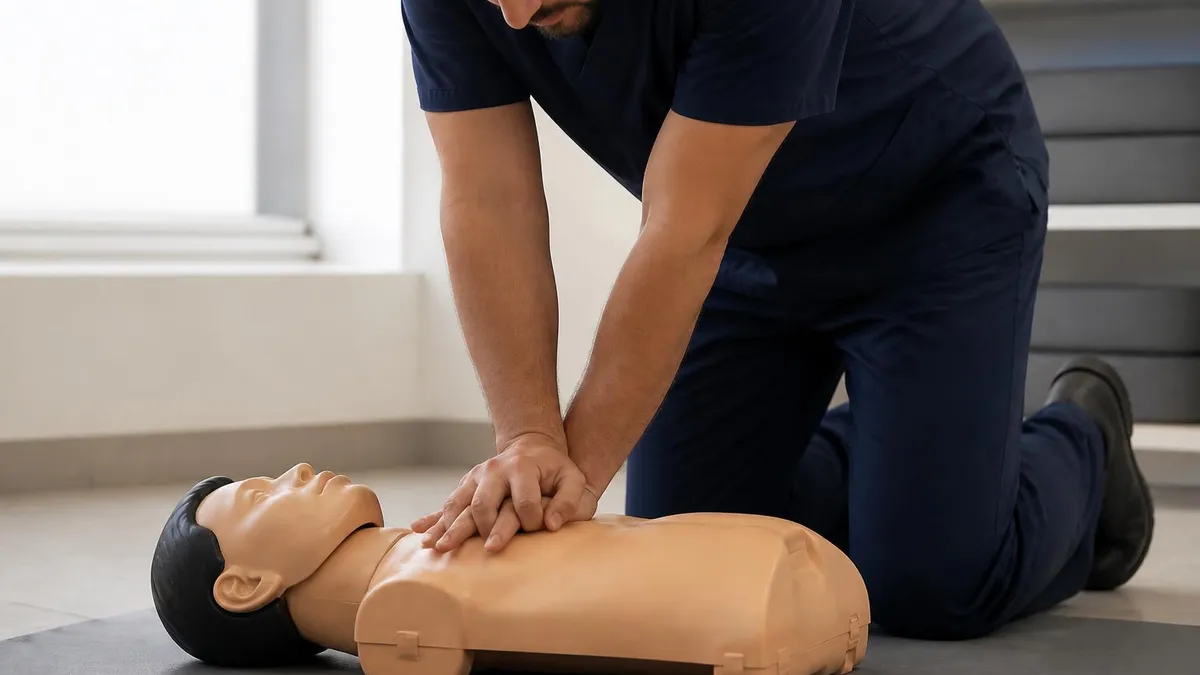
Extracorporeal CPR (ECPR): Complete Guide to Mechanical Circulatory Support During Cardiac Arrest in 2026
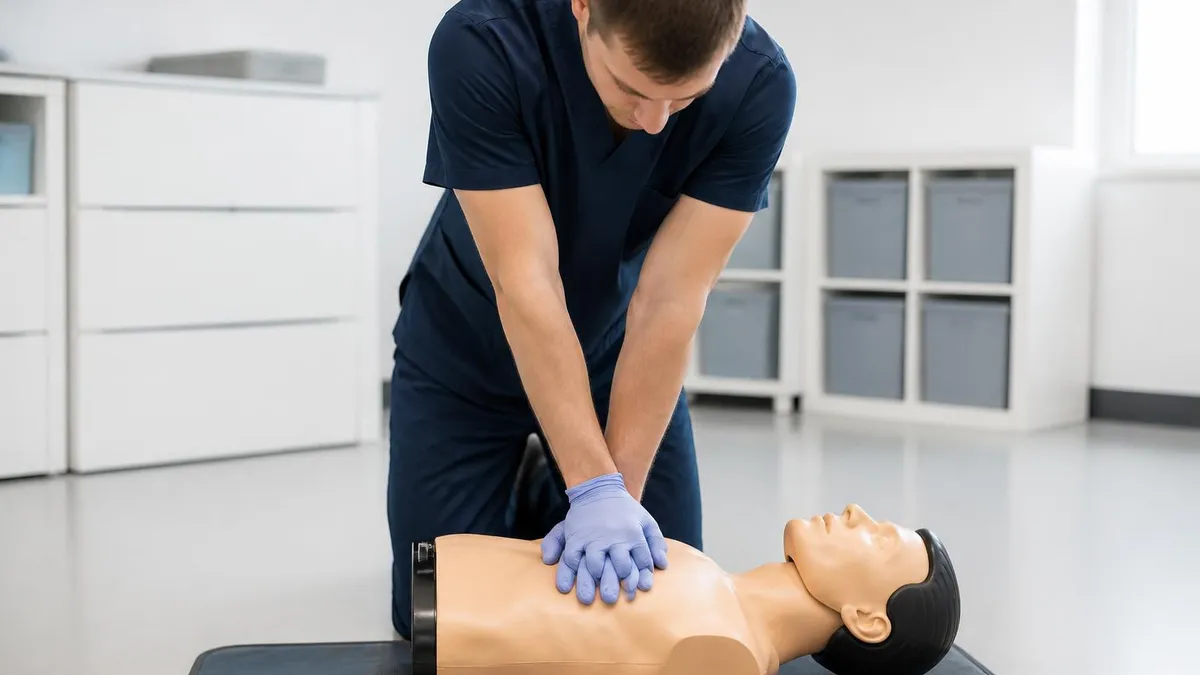
Free Online CPR Certification: Complete Guide to Legitimate Courses, Costs, and Workplace Acceptance in 2026
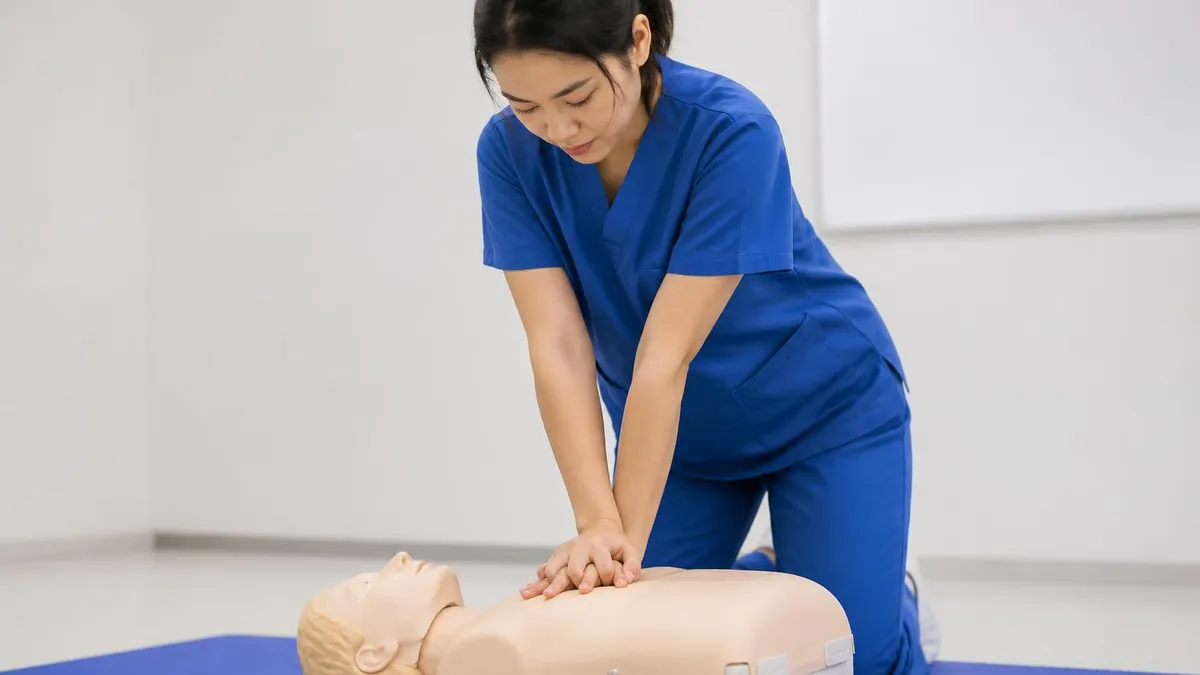
CPR Instructor Certification 2026: Complete Path to Teaching CPR

CPR AED Training Classes: Complete Guide to Certification, Courses, and Life-Saving Skills
About the Author

Registered Nurse & Healthcare Educator
Johns Hopkins University School of NursingDr. Sarah Mitchell is a board-certified registered nurse with over 15 years of clinical and academic experience. She completed her PhD in Nursing Science at Johns Hopkins University and has taught NCLEX preparation and clinical skills courses for nursing students across the United States. Her research focuses on evidence-based exam preparation strategies for healthcare certification candidates.
Join the Discussion
Connect with other students preparing for this exam. Share tips, ask questions, and get advice from people who have been there.
View discussion (5 replies)