
National CPR Week: History, Events, and How to Get Involved 2026 October
National CPR Week is the perfect time to learn CPR. Discover history, events, certification options & why awareness saves lives. ✅

National CPR Week is observed every year during the first full week of June, and it represents one of the most important public health campaigns in the United States. Established to encourage more Americans to learn cardiopulmonary resuscitation, this annual observance has helped train millions of bystanders who can act during a cardiac emergency. When someone's heart stops beating, every second counts — and knowing CPR can mean the difference between life and death before paramedics arrive. CPR awareness campaigns like this one drive communities toward life-saving action.
Sudden cardiac arrest affects more than 356,000 people outside of a hospital setting in the United States every year, according to the American Heart Association. Tragically, fewer than 12 percent of those individuals survive. One of the biggest contributing factors to that low survival rate is a lack of bystander CPR — meaning no one nearby knew what to do or felt confident enough to act. Studies consistently show that when a bystander initiates CPR immediately, survival rates can double or even triple compared to waiting for emergency medical services to arrive on the scene.
National CPR Week was created with a straightforward mission: close the gap between who knows CPR and who needs it. The campaign is supported by major organizations including the American Heart Association, the American Red Cross, and thousands of hospitals, fire departments, and community health groups across the country. Each year, these organizations host free or reduced-cost CPR training classes, community demonstrations, social media drives, and public awareness events timed to coincide with the week-long observance. Participation has grown steadily since the campaign's inception.
One of the most powerful arguments for learning CPR during National CPR Week is the statistical reality of where cardiac arrests actually happen. Approximately 70 percent of all out-of-hospital cardiac arrests occur in homes, meaning the most likely victim of a cardiac emergency near you is a family member, roommate, or neighbor. When you consider that statistic, learning CPR stops being just a professional credential and becomes a personal responsibility — something every adult in America has a compelling reason to pursue regardless of their occupation or background.
The timing of National CPR Week in early June is also intentional. Summer brings outdoor activities, athletic events, swimming, and community gatherings — all settings where cardiac emergencies and drowning incidents are more likely. Getting certified just before summer ensures that more Americans are prepared during the season when their knowledge is most likely to be tested in real-world scenarios. Many local YMCAs, recreation centers, and community pools schedule their annual certification drives specifically to align with National CPR Week for this reason.
Modern CPR training has also become more accessible than ever before. Hands-only CPR — which eliminates the rescue breathing component and focuses entirely on chest compressions — has made it easier for reluctant bystanders to step in during an emergency. The American Heart Association endorses hands-only CPR for adult cardiac arrest victims and has integrated this technique into its National CPR Week outreach materials. This simplified approach has removed one of the biggest psychological barriers to bystander intervention, encouraging far more people to act when it matters most.
Whether you are a first-time learner, someone looking to renew an expired certification, or a healthcare professional brushing up on the latest guidelines, National CPR Week offers resources for every skill level. Understanding the history, significance, and specific actions associated with this campaign empowers you to participate meaningfully — and potentially save a life in your own community. The sections below break down everything you need to know about CPR awareness, training options, and how to make the most of this annual opportunity.
CPR Awareness by the Numbers

History and Evolution of National CPR Week
1960 — Modern CPR Is Born
1974 — AHA Publishes First CPR Standards
1981 — Community CPR Training Expands
2008 — Hands-Only CPR Endorsed
2013 — National CPR and AED Awareness Week
2020–Present — Virtual Training Goes Mainstream
The story of National CPR Week cannot be separated from the broader history of emergency medicine in the United States. Before the 1960s, cardiac arrest was considered an unsurvivable event outside of a hospital setting — there was simply no established technique for keeping blood circulating when the heart stopped. The groundbreaking research of the early 1960s changed everything, and within a decade, CPR had become the foundational emergency response technique taught to healthcare providers across the country. What began as medical knowledge slowly became community knowledge.
The American Heart Association played a central role in popularizing CPR among the general public. Its early training programs in the 1970s were designed primarily for medical professionals, but by the 1980s, the AHA had launched mass CPR training initiatives targeting ordinary Americans. These campaigns recognized a critical insight: most cardiac arrests happen at home, not in hospitals, which means most first responders are not paramedics — they are spouses, children, coworkers, and neighbors. Training medical professionals alone would never be enough to meaningfully improve survival rates nationally.
The designation of a formal national awareness week gave the CPR training movement a powerful annual focal point. Congress's recognition of National CPR and AED Awareness Week created a coordinated platform for hospitals, nonprofits, schools, and fire departments to align their outreach efforts. Instead of scattered, year-round campaigns that competed for public attention, advocates now had a single week when media coverage, community events, and social media campaigns could amplify each other's impact. The result was a measurable increase in certification rates during and immediately following the awareness week each year.
AED integration into National CPR Week has been one of the most important developments in the campaign's history. Automated External Defibrillators are now found in airports, shopping malls, schools, stadiums, and office buildings across the United States, yet surveys consistently show that most bystanders do not know how to use them — or even that they are present. National CPR Week has increasingly focused on closing this awareness gap, with training courses that combine CPR technique with hands-on AED practice so that bystanders feel confident using the devices they are most likely to encounter during a real emergency.
The evolution of CPR guidelines has also been a recurring theme of National CPR Week campaigns. The American Heart Association updates its CPR and Emergency Cardiovascular Care guidelines approximately every five years, and these updates occasionally involve meaningful changes to compression rates, depth, the role of rescue breaths, and the use of AEDs. National CPR Week provides an ideal platform for communicating these updates to previously trained individuals who may be operating under outdated protocols. Recertification is strongly encouraged during the awareness week precisely because guidelines evolve and muscle memory from old training can diverge from current best practices.
Corporate and workplace participation has become a defining feature of modern National CPR Week campaigns. Many large employers now sponsor on-site CPR training events during the first week of June, recognizing that a CPR-trained workforce is both a safety asset and a competitive benefit.
Organizations like the Occupational Safety and Health Administration (OSHA) and the National Safety Council have partnered with CPR awareness campaigns to encourage businesses to adopt CPR training as a standard employee benefit. Some states have gone further, passing legislation that provides liability protection to bystanders who administer CPR — removing one of the most commonly cited reasons people hesitate to act.
Perhaps the most encouraging development in recent years has been the incorporation of CPR training into school curricula. Several states now require CPR education as part of high school graduation requirements, meaning millions of young Americans are entering adulthood with at least a basic understanding of how to respond to cardiac emergencies.
National CPR Week advocacy groups have lobbied for these requirements in state legislatures across the country, arguing that a generation of CPR-trained young people could fundamentally change the survival rate of out-of-hospital cardiac arrest over the coming decades. The data from states with mandatory school CPR programs suggests this optimism is well-founded.
How to Participate in National CPR Week
The most direct way to participate in National CPR Week is to sign up for a CPR certification class. The American Heart Association and American Red Cross both offer Basic Life Support (BLS) courses, Heartsaver CPR/AED courses, and hands-only CPR workshops during the first week of June. Many local hospitals, fire stations, and community centers offer free or heavily discounted classes specifically timed to the awareness week. Registration fills quickly, so bookmark your preferred provider's website in May and sign up the moment slots open.
Online blended learning formats have made certification more flexible than ever. You can complete the knowledge portion of your certification course at home through video modules and digital assessments, then attend a brief in-person skills session — often just 1 to 2 hours — to demonstrate your compression and AED technique to an instructor. This format works especially well for busy adults who want to earn a recognized certification card without committing to a full half-day classroom course. Both the AHA and Red Cross accept blended course completions for full certification.

Is CPR Awareness Week Worth Your Time?
- +Free and discounted training events make certification highly accessible during this specific week
- +Coordinated media coverage creates strong social motivation and reduces the activation energy needed to sign up
- +AED awareness training is bundled with CPR in most awareness week events, improving overall emergency readiness
- +Workplace-sponsored events often allow employees to get certified on company time at no personal cost
- +School-age and youth training programs reach populations who are otherwise unlikely to seek out CPR education
- +Annual recertification reminders help previously trained individuals keep skills sharp before they deteriorate significantly
- −High demand during the awareness week means popular class times fill up quickly and require advance registration
- −One-time training without practice repetition leads to skill decay within months for many participants
- −Not all free events result in recognized certification cards — some are awareness demonstrations only
- −Online-only CPR content does not substitute for hands-on practice with a mannequin and trained instructor
- −Participants may develop false confidence from training without realistic stress-inoculation scenarios
- −Awareness week momentum does not always translate to long-term community CPR readiness without ongoing reinforcement
Pros and Cons at a Glance
| Pros | Cons |
|---|---|
| Free and discounted training events make certification highly accessible during this specific week | High demand during the awareness week means popular class times fill up quickly and require advance registration |
| Coordinated media coverage creates strong social motivation and reduces the activation energy needed to sign up | One-time training without practice repetition leads to skill decay within months for many participants |
| AED awareness training is bundled with CPR in most awareness week events, improving overall emergency readiness | Not all free events result in recognized certification cards — some are awareness demonstrations only |
| Workplace-sponsored events often allow employees to get certified on company time at no personal cost | Online-only CPR content does not substitute for hands-on practice with a mannequin and trained instructor |
| School-age and youth training programs reach populations who are otherwise unlikely to seek out CPR education | Participants may develop false confidence from training without realistic stress-inoculation scenarios |
| Annual recertification reminders help previously trained individuals keep skills sharp before they deteriorate significantly | Awareness week momentum does not always translate to long-term community CPR readiness without ongoing reinforcement |
Your National CPR Week Action Checklist
- ✓Register for a CPR and AED certification class during the first week of June through the AHA or Red Cross website.
- ✓Check your current CPR certification expiration date and renew if it expires within the next six months.
- ✓Complete an online pre-course module before your in-person session to maximize your hands-on practice time.
- ✓Practice compression rate and depth on a CPR feedback app or training mannequin before your class.
- ✓Locate the nearest AED in your workplace, school, or frequently visited public spaces and note its exact location.
- ✓Share a National CPR Week social media post to encourage at least three people in your network to get certified.
- ✓Ask your employer about sponsoring a workplace CPR training day during National CPR Week this year.
- ✓Review the current American Heart Association CPR guidelines to ensure you are following the 2025–2026 protocols.
- ✓Enroll a family member or household adult in a CPR class alongside you so your home has two certified responders.
- ✓Sign up for a CPR newsletter or annual reminder so you are notified when your certification is due for renewal.
Every Minute Without CPR Reduces Survival by 10%
Research shows that for every minute a cardiac arrest victim goes without CPR, survival odds drop by approximately 7 to 10 percent. Since the average emergency medical services response time in the United States is 8 to 12 minutes, a bystander who starts CPR immediately can single-handedly bridge the gap between collapse and defibrillation — and potentially double the victim's chance of survival.
Understanding the correct technique for performing CPR is just as important as knowing when to use it. The 2025–2026 American Heart Association guidelines for adult CPR specify a compression rate of 100 to 120 compressions per minute, with a depth of at least 2 inches but no more than 2.4 inches for the average adult. Rescuers should allow full chest recoil between compressions, meaning they must completely release pressure after each push to allow the heart to refill with blood. Maintaining proper technique under stress is one of the most challenging aspects of real-world CPR performance.
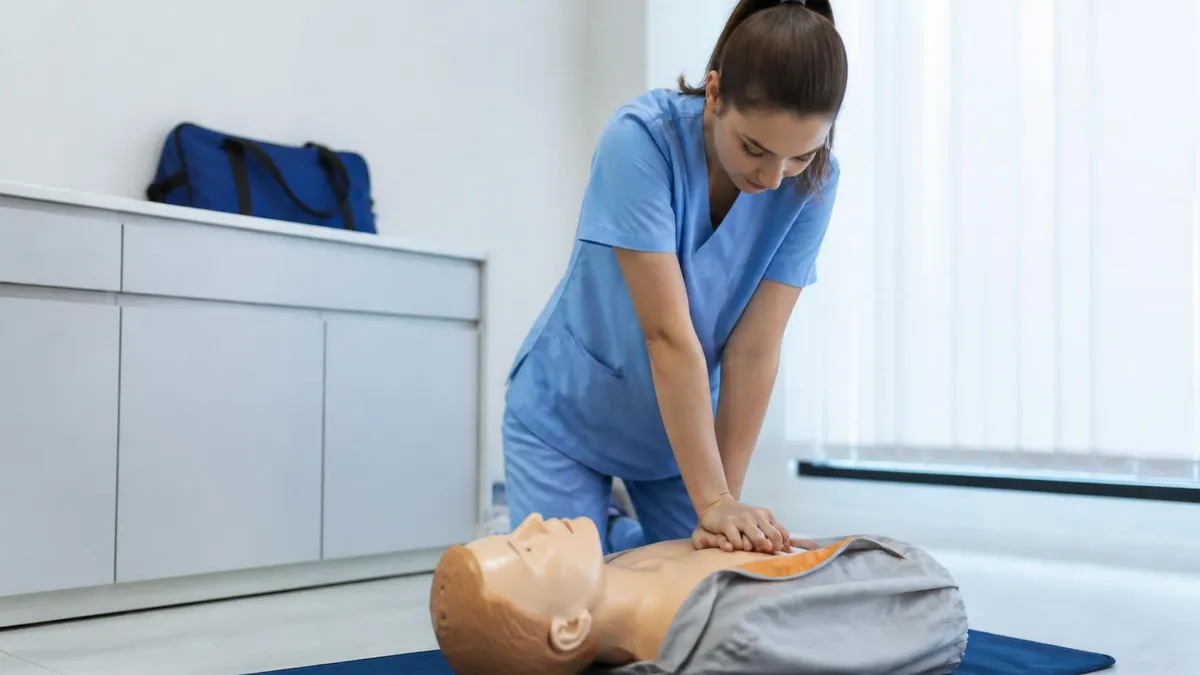
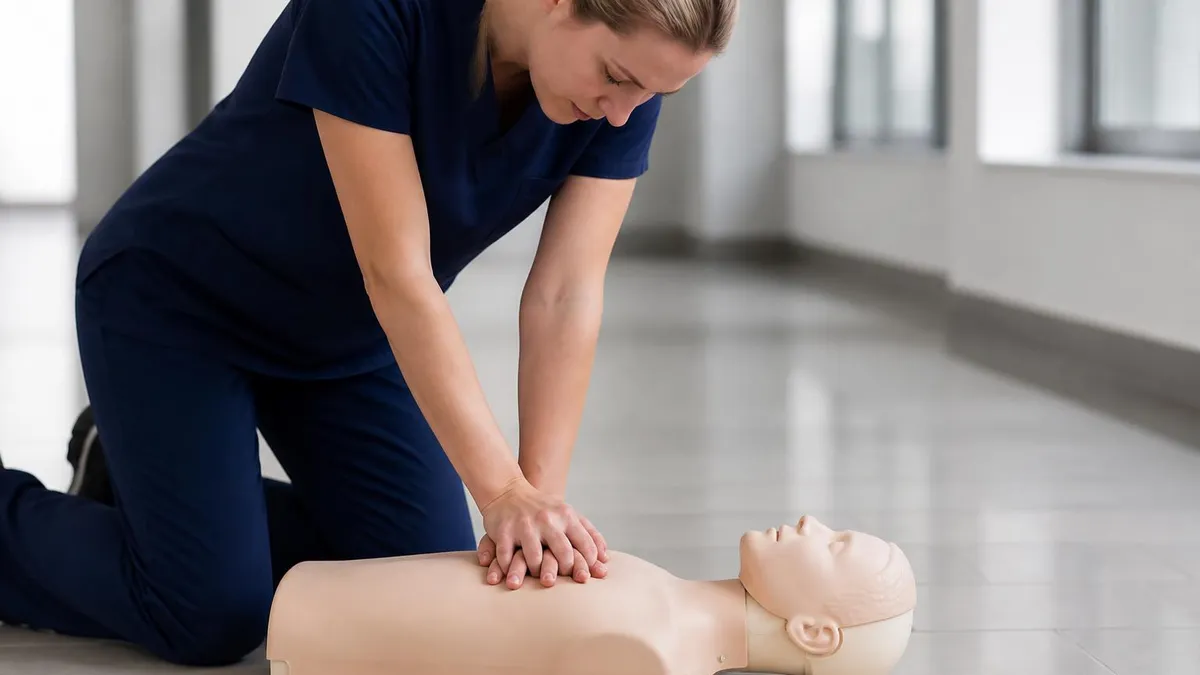
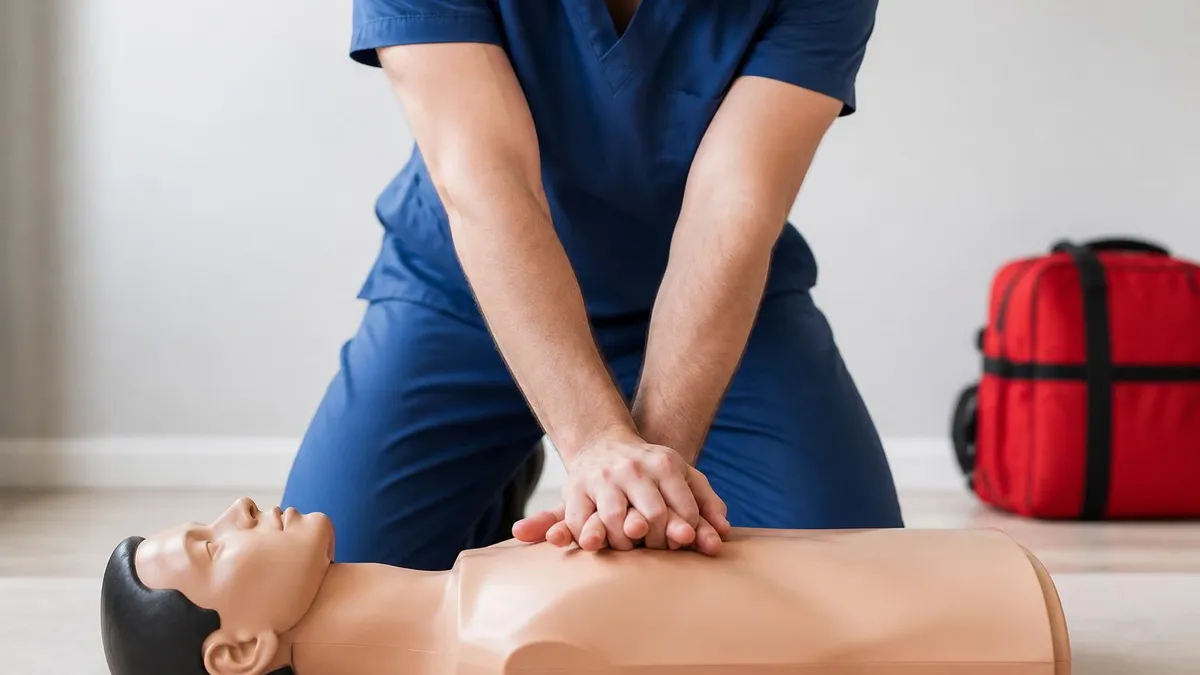
Hand placement is a foundational element of effective CPR technique. Rescuers should position the heel of one hand on the center of the victim's chest — specifically on the lower half of the sternum — and place the second hand on top with fingers interlaced. Arms should be kept straight, and rescuers should compress using their body weight rather than just arm strength. This ergonomic approach reduces rescuer fatigue during extended resuscitation efforts and ensures that compressions reach the required depth consistently throughout the event.
For rescuers trained in conventional CPR with rescue breaths, the current AHA ratio is 30 compressions followed by 2 rescue breaths for single-rescuer adult CPR. Each rescue breath should be delivered over approximately one second and should produce visible chest rise. Rescuers should avoid excessive ventilation, which can increase intrathoracic pressure, reduce venous return to the heart, and actually worsen patient outcomes. If the victim's airway cannot be opened or rescue breaths are not possible, hands-only CPR at 100 to 120 compressions per minute is an equally valid and recommended approach.
AED integration into CPR has become a standard part of adult cardiac arrest response. When an AED is available, rescuers should apply it as quickly as possible without stopping CPR for more than the minimum time necessary to attach pads and allow the device to analyze the rhythm. Modern AEDs are designed for lay rescuers and provide clear audio and visual instructions for every step. The devices will not deliver a shock unless a shockable rhythm is detected, making them extremely safe for untrained or minimally trained bystanders to use without fear of causing harm to the victim.
Two-rescuer CPR represents a significant upgrade over single-rescuer performance, both in terms of compression quality and sustainability. When two trained responders are present, one performs compressions while the other manages the airway and provides ventilations. Rescuers should switch roles approximately every two minutes — aligned with the AED's analysis cycles — to prevent fatigue-related compression quality degradation. Research consistently shows that compression fraction (the percentage of time compressions are occurring during a resuscitation) is one of the strongest predictors of patient survival, and two-rescuer teams maintain higher compression fractions than single rescuers.
Special situations require modified CPR approaches that National CPR Week training often addresses. Pregnant patients should have a left lateral uterine displacement applied — meaning someone tilts the patient slightly left or manually displaces the uterus — to prevent aortocaval compression during resuscitation. Obese patients may require modified hand placement and increased compression force.
Patients with implanted devices such as pacemakers or defibrillators should receive standard CPR, but AED pads should be placed at least one inch away from any visible device. These nuanced scenarios are covered in most full-day certification courses and are worth seeking out if your professional or personal environment involves higher-risk populations.
Pediatric CPR differs meaningfully from adult technique in ways that every certified responder should understand. For children aged 1 to puberty, the compression depth should be approximately 2 inches, and single rescuers use the heel of one or two hands depending on the child's size. For infants, two fingers or the two-thumb encircling technique is used, with compressions approximately 1.5 inches deep.
The compression-to-ventilation ratio remains 30:2 for single rescuers and shifts to 15:2 for two-rescuer pediatric CPR. National CPR Week often offers dedicated pediatric first aid and CPR courses for parents, teachers, and childcare workers — a high-value option for anyone who regularly works with children.

CPR certifications from the American Heart Association and American Red Cross expire after two years. However, skill decay research suggests that hands-on CPR performance begins deteriorating within 3 to 6 months of training. If your certification was issued more than 12 months ago, consider a skills refresher class during National CPR Week — even if your card is technically still valid. Outdated technique in a real emergency can reduce effectiveness when it matters most.
Choosing the right CPR certification course for your needs is an important step that many first-time learners overlook. The American Heart Association offers multiple distinct course formats: Heartsaver CPR/AED is designed for lay rescuers and workplace responders, Basic Life Support (BLS) is the standard for healthcare providers and professionals, and Advanced Cardiovascular Life Support (ACLS) is the advanced credential for clinical staff managing complex resuscitation scenarios. Understanding which certification your employer, school, or professional licensing board requires before you enroll will save you from completing a course that does not satisfy your specific credential requirements.
Course duration varies significantly by format and provider. A Heartsaver CPR/AED classroom course typically runs 3 to 4 hours and includes both adult and pediatric CPR plus AED training. A BLS for Healthcare Providers course runs approximately 4 to 5 hours and includes more rigorous skills testing, two-rescuer CPR scenarios, and bag-valve mask ventilation practice. Blended learning formats, which combine online coursework with abbreviated in-person skills sessions, can reduce your in-person time to as little as 60 to 90 minutes while still resulting in a full certification card — an option increasingly preferred by working adults with busy schedules.
Cost is a frequently cited barrier to CPR certification, and National CPR Week specifically addresses this by creating a concentrated window of discounted and free training opportunities. Standard CPR certification courses typically cost between $30 and $80 for lay rescuer formats and $60 to $120 for BLS-level courses. During National CPR Week, many hospitals, fire departments, and community health organizations offer free community classes funded by grants or sponsorships. The American Red Cross also periodically offers promotional pricing during the awareness week, and many employers will reimburse the cost of CPR certification as a professional development expense.
Certification card processing and delivery has modernized significantly in recent years. Both the AHA and Red Cross now issue digital certification cards that can be downloaded immediately after course completion, eliminating the wait time associated with physical cards mailed by post.
Digital cards can be stored in your phone's wallet app, emailed to employers, and easily verified by credentialing departments using QR codes. If your employer requires a physical card, most providers can print one on request, though processing times vary. Always confirm your provider's card delivery process before completing your course if you need proof of certification by a specific deadline.
For those who want to go beyond basic certification, National CPR Week is also a good time to explore instructor certification pathways. The American Heart Association trains CPR instructors through a structured program that includes completing a discipline-specific provider course, attending an instructor essentials course, and completing monitored training sessions under the supervision of an AHA Training Center coordinator.
Becoming a certified instructor allows you to teach CPR to others in your workplace, community, or school — multiplying your impact far beyond what a single certification can accomplish. Instructor certification is particularly valuable for HR professionals, PE teachers, athletic trainers, and community health workers.
Geographic access to CPR training has improved dramatically through telehealth and blended course formats, but rural communities still face real challenges. Some rural counties have no AHA or Red Cross training center within 30 miles, making in-person certification difficult for residents without reliable transportation.
National CPR Week advocacy organizations are actively working to address this gap through mobile CPR training units, rural community partnerships, and expanded online certification options. If you live in an underserved area, contacting your county health department or local fire station during National CPR Week may surface training opportunities that are not widely advertised through commercial channels.
Finally, maintaining your certification over the long term requires a deliberate renewal strategy. Setting calendar reminders 90 days before your certification expires, identifying your preferred renewal provider in advance, and budgeting for renewal costs annually are all straightforward habits that ensure you are never caught with a lapsed credential.
For healthcare professionals whose employment depends on continuous BLS certification, building renewal into your annual performance review cycle or professional development planning process creates institutional accountability alongside personal motivation. National CPR Week is a convenient annual checkpoint — even if your certification does not expire this year, the first week of June is an ideal time to verify your expiration date, practice your skills, and encourage others in your network to do the same.
Preparing for a CPR certification exam requires a combination of hands-on practice and knowledge review. The written or digital knowledge assessment component of most CPR courses covers topics including the chain of survival, compression rate and depth, rescue breath delivery, AED operation, special population considerations, and the legal framework around Good Samaritan laws. While most CPR courses are designed to have high pass rates, arriving with a foundational understanding of these concepts significantly reduces test anxiety and ensures you pass on your first attempt without needing remediation.
Practice tests are one of the most effective tools for CPR exam preparation. Working through practice questions exposes knowledge gaps before your actual exam, reinforces the specific terminology used in AHA and Red Cross curricula, and helps you recognize the structure of scenario-based questions that ask you to choose the correct next action during a cardiac emergency. Many examinees who struggle with CPR written assessments find that their challenge is not a lack of practical skill but rather unfamiliarity with how questions are phrased — a problem that targeted practice test review directly addresses in a short amount of time.
Scenario-based questions represent the most challenging format on CPR exams. These questions present a multi-step emergency situation and ask you to identify either the correct immediate action or the error in a rescuer's response. Common scenarios include a victim who is unresponsive but breathing, a victim who requires CPR but has a do-not-resuscitate order, a two-rescuer team switching roles during active compressions, and an AED that advises no shock for a victim in cardiac arrest. Familiarity with these scenarios through practice dramatically improves performance on the actual exam and builds the pattern recognition needed for real-world decision-making.
Time management during the knowledge assessment is rarely a significant issue for most candidates, as the assessments are not heavily time-constrained. However, review questions you feel uncertain about carefully rather than rushing to your first instinct. AHA and Red Cross exam questions often include distractors — plausible-sounding wrong answers — that reflect common misconceptions about CPR technique.
Reading each answer choice fully before selecting reduces the likelihood of falling for a distractor that sounds correct but contradicts current guidelines. This careful reading habit is especially important for questions about compression depth, rate, and the appropriate use of rescue breaths versus hands-only CPR.
The skills assessment component of CPR certification is where many candidates experience the most anxiety. Instructors evaluate your compression rate, depth, hand placement, recoil, and — for full CPR courses — rescue breath delivery and AED operation. The key to performing well under evaluation is to practice enough repetitions that the technique becomes automatic rather than deliberate. Most CPR courses include adequate practice time within the class itself, but candidates who arrive having practiced even 10 to 15 minutes on a mannequin or compression feedback pillow beforehand typically demonstrate noticeably better technique during the skills check.
Post-certification, real-world performance is the ultimate goal of everything National CPR Week represents. Studies of bystander behavior during cardiac emergencies consistently identify two primary barriers to action: uncertainty about whether the victim actually needs CPR and fear of performing the technique incorrectly. Certification addresses both by teaching clear recognition criteria — unresponsiveness plus absent or abnormal breathing — and by building enough muscle memory that performance under stress is possible. If you are ever in a situation where CPR is needed, remember that imperfect CPR performed immediately is far more valuable than perfect CPR started too late.
National CPR Week is ultimately a reminder that community resilience is built one trained individual at a time. When you earn your CPR certification, you join a national network of potential lifesavers whose combined presence in homes, workplaces, schools, and public spaces represents the most powerful cardiac emergency response system that any community can build.
The investment of a few hours and a modest certification fee during National CPR Week is one of the highest-return decisions an individual can make — not for their own benefit, but for the people around them who may one day need exactly what you learned.
CPR Questions and Answers
About the Author

Registered Nurse & Healthcare Educator
Johns Hopkins University School of NursingDr. Sarah Mitchell is a board-certified registered nurse with over 15 years of clinical and academic experience. She completed her PhD in Nursing Science at Johns Hopkins University and has taught NCLEX preparation and clinical skills courses for nursing students across the United States. Her research focuses on evidence-based exam preparation strategies for healthcare certification candidates.