
CNA Programs 2026 September
Free CNA Programs practice test with questions and answer explanations. Prepare for the 2026 September exam with instant scoring. 🟢
CNA Program Overview: What to Expect in 2026
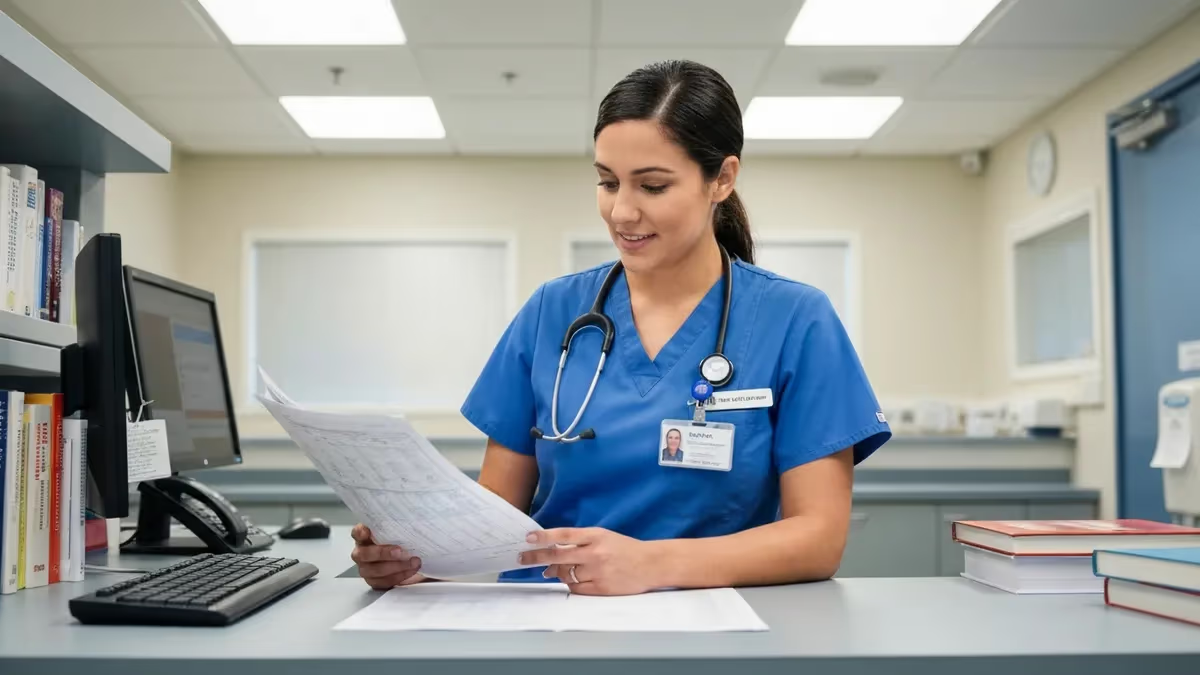
A CNA program trains students to perform essential patient care tasks — taking vital signs, assisting with activities of daily living, documenting observations, and communicating with nursing staff — that form the foundation of bedside healthcare delivery. Every state requires CNA candidates to complete a state-approved training program before sitting for the certification exam.
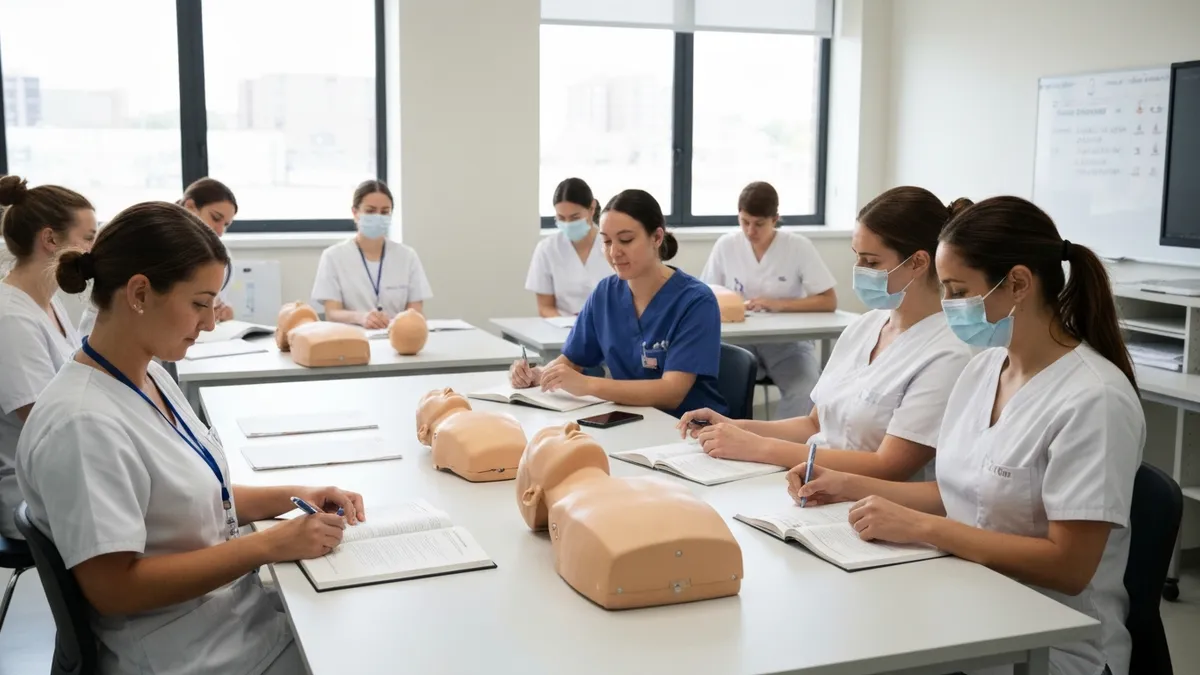
Most CNA programs combine classroom instruction with supervised clinical rotations in a healthcare facility. The federal minimum under OBRA (Omnibus Budget Reconciliation Act) is 75 hours of training, but 35 states now require more, with some mandating up to 180 hours. Programs accredited by state nursing boards or the National League for Nursing maintain the highest exam pass rates and employer recognition.
If you are exploring how long the process takes from enrollment to working as a CNA, our how long does it take to become a CNA guide breaks down every timeline scenario.
Each program type leads to the same state certification exam. The key differences are cost, speed, and whether the credits transfer toward higher nursing degrees. If cost is your primary concern, explore free CNA classes — many employers and community organizations sponsor no-cost training in exchange for a short work commitment.
Cna Programs Online Certified Nursing Assistant Near Me Detailed Breakdown
Western U.S. CNA Programs
California requires 150 hours of state-approved training. Top programs include Los Angeles Trade-Tech Community College, Bay Area Medical Academy in San Francisco, Kash Career College in Sacramento, and California Medical College in San Diego. Many California programs qualify for WIOA workforce funding.
Oregon mandates 155 training hours. The Caregiver Training Institute in Portland (503-257-0117) and community colleges across the state offer OSBN-approved programs.
Washington requires 85 hours minimum. Everett Community College and Bellingham Technical College run popular programs with 90%+ pass rates.
Arizona programs require 120 hours. Gateway Community College in Phoenix, Pima Medical Institute in Tucson, and Mesa Community College all offer accredited tracks.
Montana programs are available at Miles Community College (2715 Dickinson St, Miles City, 406-874-6100) with both in-person and hybrid options.

Program cost is only one factor in your total investment. Factor in scrubs, textbooks, a stethoscope, CPR certification ($25–$75), background check ($30–$50), and the state exam fee. Many students offset these costs through CNA scholarships or employer tuition reimbursement. For a complete breakdown of earning potential after graduation, see our CNA salary guide — median annual pay reached $38,270 in 2026.
Cna Programs Online Certified Nursing Assistant Near Me Essential Checklist
- ✓Verify the program is approved by your state Board of Nursing — unapproved programs will not qualify you for the certification exam
- ✓Compare total cost including tuition, textbooks, scrubs, CPR certification, background check, and state exam fee
- ✓Check the program's first-time exam pass rate — accredited programs typically achieve 85–95%
- ✓Confirm clinical rotation hours meet or exceed your state's minimum requirement (ranges from 75 to 180 hours)
- ✓Ask whether clinical rotations are at hospitals, skilled nursing facilities, or both — diverse settings improve your resume
- ✓Evaluate scheduling: evening, weekend, and online hybrid formats exist for students who work or have family obligations
- ✓Research job placement rates and whether the program has employer partnerships for guaranteed interviews
- ✓Verify that college credits earned will transfer toward LPN or RN programs if you plan to advance your nursing career
- ✓Read student reviews and speak with recent graduates about their experience with instructors and clinical sites
- ✓Check financial aid eligibility — Pell Grants, WIOA funding, state workforce programs, and employer sponsorship can reduce or eliminate cost
Cna Programs Online Certified Nursing Assistant Near Me Advantages and Disadvantages
- +Enter the workforce and start earning in as little as one month after enrollment
- +Concentrated schedule means fewer total weeks away from work or family responsibilities
- +Ideal for career changers who already have healthcare experience or related education
- +Many employer-sponsored and hospital-based programs use the accelerated format
- +Faster return on investment — start recouping tuition costs within weeks of completion
- −More time for complex topics like pharmacology basics, chronic disease management, and dementia care
- −Lower daily time commitment allows students to work part-time during training
- −Community college programs often include transferable credits toward LPN or RN degrees
- −Extended clinical rotation time provides broader exposure to different patient populations
- −Students consistently report feeling more exam-ready with additional practice time
Pros and Cons at a Glance
| Pros | Cons |
|---|---|
| Enter the workforce and start earning in as little as one month after enrollment | More time for complex topics like pharmacology basics, chronic disease management, and dementia care |
| Concentrated schedule means fewer total weeks away from work or family responsibilities | Lower daily time commitment allows students to work part-time during training |
| Ideal for career changers who already have healthcare experience or related education | Community college programs often include transferable credits toward LPN or RN degrees |
| Many employer-sponsored and hospital-based programs use the accelerated format | Extended clinical rotation time provides broader exposure to different patient populations |
| Faster return on investment — start recouping tuition costs within weeks of completion | Students consistently report feeling more exam-ready with additional practice time |
What Comes After Your CNA Program
Completing a CNA program is the first step in a healthcare career with multiple advancement paths. Many certified nursing assistants use their CNA experience as a launchpad:
- CNA to RN bridge programs let experienced CNAs earn their registered nursing license through accelerated coursework
- CNA to LPN programs require 12–18 months and significantly increase earning potential
- Specialty certifications in pediatric CNA, geriatric care, or hospice and palliative care open higher-paying roles
- Travel CNA positions offer the highest total compensation — $1,200–$1,800 per week with housing stipends
For a complete map of every career path available to CNAs, visit our CNA careers guide.
Essential CNA Program Resources
Whether you are researching programs or already enrolled, these resources cover every aspect of the CNA journey:
- CNA certification — Complete requirements guide by state
- CNA training — What to expect during your training program
- CNA requirements — Age, education, background check, and health requirements
- CNA schooling — Comparing all education pathways
- CNA classes — Find approved programs in your area
- CNA courses near me — Online and local course directory
- How to pass the CNA exam — Study strategies and test-day tips
- CNA 30-day study plan — Structured daily study schedule
- CNA CEU credits — Continuing education requirements after certification
- CNA license renewal — How to renew and verify your license
- CNA registry — State registry lookup and verification
- CNA interview questions — Prepare for your first job interview
- CNA resume examples — Templates and writing tips
- CNA jobs near me — Find open positions in your area
- What is a CNA — Complete role overview for newcomers
Start your exam preparation today with the free CNA practice test — 175+ questions covering every exam domain, completely free. Learn more in our CNA arizona guide. Learn more in our CNA florida guide.
About the Author

Registered Nurse & Healthcare Educator
Johns Hopkins University School of NursingDr. Sarah Mitchell is a board-certified registered nurse with over 15 years of clinical and academic experience. She completed her PhD in Nursing Science at Johns Hopkins University and has taught NCLEX preparation and clinical skills courses for nursing students across the United States. Her research focuses on evidence-based exam preparation strategies for healthcare certification candidates.
Join the Discussion
Connect with other students preparing for this exam. Share tips, ask questions, and get advice from people who have been there.
View discussion (8 replies)