
CNA to LPN Career Paths: Programs, Salary Growth & Next Steps 2026 September
Pass your CNA to LPN Career Paths: Programs, exam on the first attempt. Practice questions with detailed answer explanations, hints, and instant scoring. ✏️
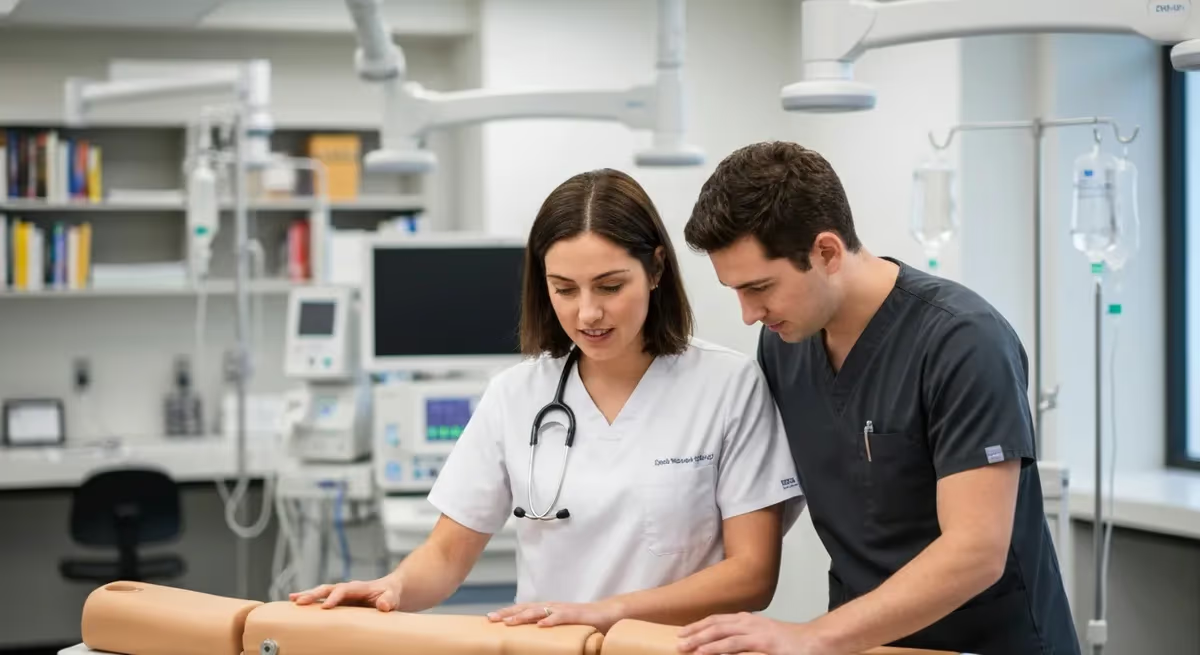
You've earned your CNA certification. Now what? The CNA to LPN career paths open up faster than most people expect — some bridge programs take as little as four months if you've already logged clinical hours. That's not a typo. Four months from bedside aide to licensed practical nurse, with a salary bump that often doubles your hourly rate.
Plenty of CNAs stay put, and that's fine. But if you're eyeing growth, the nursing career ladder has real rungs you can grab. Hospital front desk careers and direct patient care roles both serve as launchpads. UNC careers in their health system alone list dozens of CNA-to-LPN transition positions every quarter. Remote RN careers are growing too — telehealth opened doors that didn't exist five years ago, and former CNAs who bridged to RN fill those seats daily.
This guide walks you through bridge programs, pay expectations, and the different directions your certification can take you. Whether you want bedside nursing, insurance work, or something entirely different — there's a path. Let's break it down.

Remote RN careers aren't just for seasoned nurses anymore. CNAs who complete bridge programs and pass the NCLEX-PN can pivot into telehealth triage, insurance case review, and virtual patient education — all from home. The nursing career trajectory from CNA to LPN to RN is one of the most practical upward paths in American healthcare. No PhD required. No decade-long residency.
Here's what makes bridge programs different from traditional LPN school: they give you credit for skills you already have. Vitals, patient transfers, infection control — you've done all of it. A bridge program skips the basics and drops you straight into pharmacology, IV therapy, and supervised clinical rotations at a higher level. Most programs run 4 to 12 months depending on whether you go full-time or part-time.
Cost varies wildly. Community colleges might charge $4,000 to $8,000 total. Private vocational schools can hit $15,000 or more — but many offer payment plans, and some employers reimburse tuition entirely if you commit to working for them after graduation. Check with your facility's HR department before you enroll anywhere.
One thing most CNA-to-LPN guides skip: entrance exams. Programs typically require the TEAS or HESI — standardized tests covering reading, math, science, and English. You don't need perfect scores. Most programs set minimum cutoffs around the 50th to 60th percentile. Free prep resources exist online, and your local library probably has TEAS study guides you can borrow. Spend two weeks reviewing before test day and you'll be fine.
CNA careers branch in more directions than people realize. You're not locked into nursing homes. Hospital systems, urgent care clinics, home health agencies, schools, correctional facilities — they all hire CNAs, and each setting teaches you something different. Hospital front desk careers overlap with patient intake roles where CNA experience gives you an edge over applicants with zero clinical background.
The pay gap matters. A CNA earns roughly $35,000 per year nationally. An LPN pulls in $55,860. That's a $20,000 jump for less than a year of additional schooling. In high-demand states like California, New York, and Massachusetts, LPN salaries push past $65,000. Travel LPN assignments pay even more — sometimes $1,500 to $2,000 per week with housing included.
CNA careers in specialty areas like dialysis, oncology, or rehabilitation often pay $2 to $5 more per hour than general med-surg positions. If you're planning to bridge to LPN anyway, picking a specialty CNA role first can strengthen your application and give you clinical experience that stands out.
Shift differentials add up quickly too. Evening shifts typically pay $1 to $3 extra per hour. Overnight shifts bump that to $2 to $5. Weekends stack on top. A CNA working Friday and Saturday nights in a specialty unit can earn $22 to $30 per hour — competitive with entry-level LPN pay in some markets. That extra income accelerates your tuition savings timeline considerably.
CNA to LPN Bridge Program Types
Community college bridge programs are the most affordable option — usually $4,000 to $8,000 for the entire program. They're accredited, widely accepted by state boards, and most offer evening or weekend schedules for working CNAs. Clinical rotations happen at local hospitals and long-term care facilities. Completion time is typically 9 to 12 months part-time, or as short as 4 to 6 months full-time. Financial aid and Pell Grants apply.
CNA insurance careers are a hidden gem in the nursing world. Health insurance companies hire former CNAs and LPNs for utilization review, prior authorization, and claims assessment. You read patient charts all day. No bedside work. No lifting. The pay starts around $45,000 and climbs quickly with experience. CNA insurance careers appeal to nurses who love clinical knowledge but want out of the physical grind.
LPN careers near me — that's what thousands of CNAs type into Google every month. The answer depends on your state, but most metro areas have dozens of openings at any given time. Long-term care facilities are the biggest employers, followed by physician offices, home health services, and hospitals. Rural areas often pay signing bonuses of $2,000 to $5,000 because they can't fill positions fast enough.
Don't overlook government jobs. The VA system, state psychiatric hospitals, and county health departments all hire LPNs with competitive benefits — pension plans, tuition reimbursement, and union protections that private employers rarely match. Worth a look if job stability matters to you.
Networking matters more than you'd expect. Join your state's practical nursing association — dues are usually $50 to $100 per year. Attend local healthcare job fairs, even if you're not ready to transition yet. Hospital recruiters remember faces. When you do complete your bridge program, those connections turn into interviews faster than cold applications ever will. LinkedIn works too — set your headline to "CNA transitioning to LPN" and recruiters will find you.
CNA careers near me searches spike every January and June — hiring cycles follow nursing school graduation schedules. Smart move: apply in October or April, when competition is lower and facilities are pre-hiring for upcoming turnover. CNA career opportunities expand dramatically once you add specialty certifications like phlebotomy, EKG tech, or medication aide to your resume.
Medication aide certification deserves special attention. In 38 states, CNAs can earn this add-on credential in 2 to 6 weeks. It lets you administer oral medications under nurse supervision — a skill that makes you more valuable immediately and more prepared for LPN coursework later. Some employers pay the training cost.
Staffing agencies are another angle. They don't get much love, but travel CNA and per diem assignments pay $18 to $28 per hour depending on location and shift. Night shifts and weekends command premiums. If you're saving for bridge program tuition, agency work for 3 to 6 months can cover the full cost at a community college. That's a real CNA career opportunity most people overlook.
State workforce development programs offer another funding source. Many states have programs that cover healthcare training costs for residents meeting income thresholds. WIOA (Workforce Innovation and Opportunity Act) grants can pay for your entire bridge program including books, scrubs, and testing fees. Contact your local American Job Center — they'll tell you within one appointment whether you qualify. Free money that most CNA candidates never apply for.
CNA to LPN Transition: Pros and Cons
- +Salary increase from ~$35K to ~$56K annually
- +Bridge programs take 4-12 months — faster than starting from scratch
- +LPNs can administer medications and start IVs
- +More job settings: clinics, schools, home health, telehealth
- +Stepping stone to RN and BSN degrees
- +Your CNA clinical hours give you credit in bridge programs
- −Bridge program tuition ranges $4,000-$18,000
- −Must pass NCLEX-PN — about 85% pass rate on first attempt
- −Clinical rotations require time off from current CNA job
- −LPNs have more liability and documentation responsibility
- −Some states are phasing out LPN roles in hospital settings
- −Night and weekend classes can be exhausting while working full-time
Medical center careers for CNAs and LPNs look different depending on the system. Large academic medical centers — think university-affiliated hospitals — tend to pay more but require stricter credentialing. Community medical centers offer faster hiring and more flexible scheduling. NHC careers (National HealthCare Corporation) are worth mentioning specifically because they operate 75+ skilled nursing facilities across the Southeast and actively recruit CNA-to-LPN bridge graduates.
NHC careers come with tuition reimbursement programs that cover up to $5,250 per year for employees pursuing nursing degrees. That's the IRS maximum for tax-free employer educational assistance, and NHC maxes it out. If you're in Tennessee, Virginia, South Carolina, or Florida — where NHC has the densest presence — this is one of the most financially practical paths from CNA to LPN.
Medical center careers also introduce you to specialties you might not encounter in long-term care: operating room support, emergency department triage assistance, labor and delivery, and outpatient surgery centers. Each specialty builds clinical skills that make your bridge program coursework easier and your NCLEX-PN preparation stronger. Experience matters more than GPA in nursing. Hiring managers consistently rank clinical hours and specialty exposure above academic transcripts when evaluating LPN candidates — a 3.2 GPA with 1,000 hours of ICU support experience beats a 4.0 with no hospital time, every single time. That's the advantage you carry as a working CNA.
CNA to LPN Application Checklist
- ✓Verify CNA license is active and current in your state
- ✓Gather proof of at least 6-12 months CNA work experience
- ✓Request official transcripts from any prior college coursework
- ✓Complete prerequisite courses (anatomy, math, English if required)
- ✓Submit TEAS or HESI entrance exam scores
- ✓Complete background check and drug screening
- ✓Obtain current CPR/BLS certification
- ✓Secure proof of immunizations and TB test results
- ✓Apply for financial aid (FAFSA) and scholarships
- ✓Confirm clinical site placement and uniform requirements
The different types of nursing careers available after your CNA certification might surprise you. It's not just bedside care. Nurse educators, infection control nurses, case managers, school nurses, forensic nurses, legal nurse consultants — the list runs long. Each starts with a foundation in patient care. Your CNA experience is that foundation.
Baptist Medical Center careers span multiple states and dozens of facilities. Baptist Health systems in Arkansas, Florida, Kentucky, and Alabama employ thousands of CNAs and LPNs. Their internal mobility programs let you start as a CNA, bridge to LPN on their dime, and continue to RN or BSN while working. That's a career arc from $15/hour to $35/hour without ever leaving the organization.
The different types of nursing careers also include non-traditional roles that most CNAs don't consider. Pharmaceutical sales reps with nursing backgrounds earn six figures. Clinical research coordinators manage drug trials. Health informatics specialists work with electronic medical records. All of these require nursing licensure as a starting credential — and LPN counts as the entry ticket for many of them.
Access Careers CNA programs — including their Islanda location — provide state-approved training that feeds directly into LPN bridge pathways. If you're in the New York City area, Access Careers CNA Islanda is one of several vocational schools offering accelerated CNA certification with job placement assistance. Graduates from these programs can transition to LPN bridge programs at BOCES, community colleges, or private nursing schools across the five boroughs.
All healthcare careers CNA practice test preparation matters whether you're staying as a CNA or bridging upward. The clinical knowledge tested on CNA exams — body mechanics, nutrition, patient rights, infection control — forms the base layer for LPN and RN licensure exams. Students who scored well on their CNA certification exam consistently perform better on the NCLEX-PN. That correlation holds across every study published in the last decade.
Practice tests do more than prepare you for exams. They expose knowledge gaps before they become clinical errors. If you can't remember the normal range for blood glucose or the signs of aspiration pneumonia, you want to discover that in a practice test — not during a real patient encounter. Build the habit now. It'll carry you through every certification you pursue.
Timing your study sessions matters. Research on spaced repetition shows that short daily practice — 20 to 30 minutes — beats marathon weekend cram sessions for long-term retention. Use practice tests to identify your three weakest topic areas, then focus your bridge program study time there. CNAs who enter bridge programs already strong in anatomy and pharmacology basics complete coursework faster and score higher on clinical evaluations.
You can continue preparing with the cna training near me, which includes answer explanations for every question.
You can continue preparing with the cna charting, which includes answer explanations for every question.
You can continue preparing with the cna test, which includes answer explanations for every question.
You can continue preparing with the cna program, which includes answer explanations for every question.
LPN bridge program requirements vary by state. Some states require 6 months of CNA experience, others require 12 months. A few states — including California — don't recognize the LPN title at all (they use LVN instead). Always verify your state board of nursing's specific prerequisites, approved program list, and NCLEX-PN eligibility rules before committing tuition money.
Types of nursing careers worth exploring go beyond the hospital floor. Home health nursing is booming — Medicare expansion and aging baby boomers drive demand that outpaces supply in most states. School nursing offers summers off and predictable hours. Correctional nursing pays well and provides loan forgiveness in some federal programs. Occupational health nurses work in corporate settings, managing employee wellness and workers' comp cases.
Healthcare operations careers pull nurses into the administrative side. Quality assurance coordinators, compliance officers, patient safety managers, utilization review nurses — these roles require clinical backgrounds but involve zero direct patient care. They pay well. LPNs with 3 to 5 years of experience can move into these positions, especially at smaller facilities where clinical staff wear multiple hats.
The key question isn't whether CNA-to-LPN is worth it. It is — the math doesn't lie. The real question is timing. If you're under 30, bridge now. The compounding salary increase over 30+ working years is massive. If you're over 40, the calculation still works but the urgency shifts toward specialization — pick a niche, get certified, and become the expert that employers can't easily replace.
CNA Practice Test Questions
Prepare for the CNA - Certified Nursing Assistant exam with our free practice test modules. Each quiz covers key topics to help you pass on your first try.
CNA Activities of Daily Living
CNA Exam Questions covering Activities of Daily Living. Master CNA Test concepts for certification prep.
CNA Aging Process
Free CNA Practice Test featuring Aging Process. Improve your CNA Exam score with mock test prep.
CNA Anatomy and Physiology Basics
CNA Mock Exam on Anatomy and Physiology Basics. CNA Study Guide questions to pass on your first try.
CNA Assisting with Daily Living
CNA Test Prep for Assisting with Daily Living. Practice CNA Quiz questions and boost your score.
CNA Assisting with Range of Motion Exercises
CNA Questions and Answers on Assisting with Range of Motion Exercises. Free CNA practice for exam readiness.
CNA Basic Human Anatomy and Age-Related Ch...
CNA Mock Test covering Basic Human Anatomy and Age-Related Changes. Online CNA Test practice with instant feedback.
CNA Basic Nursing Skills
Free CNA Quiz on Basic Nursing Skills. CNA Exam prep questions with detailed explanations.
CNA Basic Nursing Skills 10
CNA Practice Questions for Basic Nursing Skills 10. Build confidence for your CNA certification exam.
CNA Basic Nursing Skills 11
CNA Test Online for Basic Nursing Skills 11. Free practice with instant results and feedback.
CNA Basic Nursing Skills 1
CNA Study Material on Basic Nursing Skills 1. Prepare effectively with real exam-style questions.
CNA Basic Nursing Skills 12
Free CNA Test covering Basic Nursing Skills 12. Practice and track your CNA exam readiness.
CNA Basic Nursing Skills 13
CNA Exam Questions covering Basic Nursing Skills 13. Master CNA Test concepts for certification prep.
CNA Basic Nursing Skills 14
Free CNA Practice Test featuring Basic Nursing Skills 14. Improve your CNA Exam score with mock test prep.
CNA Basic Nursing Skills 15
CNA Mock Exam on Basic Nursing Skills 15. CNA Study Guide questions to pass on your first try.
CNA Basic Nursing Skills 16
CNA Test Prep for Basic Nursing Skills 16. Practice CNA Quiz questions and boost your score.
CNA Basic Nursing Skills 17
CNA Questions and Answers on Basic Nursing Skills 17. Free CNA practice for exam readiness.
CNA Basic Nursing Skills 18
CNA Mock Test covering Basic Nursing Skills 18. Online CNA Test practice with instant feedback.
CNA Basic Nursing Skills 19
Free CNA Quiz on Basic Nursing Skills 19. CNA Exam prep questions with detailed explanations.
CNA Basic Nursing Skills 20
CNA Practice Questions for Basic Nursing Skills 20. Build confidence for your CNA certification exam.
CNA Basic Nursing Skills 21
CNA Test Online for Basic Nursing Skills 21. Free practice with instant results and feedback.
CNA Basic Nursing Skills 2
CNA Study Material on Basic Nursing Skills 2. Prepare effectively with real exam-style questions.
CNA Basic Nursing Skills 3
Free CNA Test covering Basic Nursing Skills 3. Practice and track your CNA exam readiness.
CNA Basic Nursing Skills 4
CNA Exam Questions covering Basic Nursing Skills 4. Master CNA Test concepts for certification prep.
CNA Basic Nursing Skills 5
Free CNA Practice Test featuring Basic Nursing Skills 5. Improve your CNA Exam score with mock test prep.
CNA Basic Nursing Skills 6
CNA Mock Exam on Basic Nursing Skills 6. CNA Study Guide questions to pass on your first try.
CNA Basic Nursing Skills 7
CNA Test Prep for Basic Nursing Skills 7. Practice CNA Quiz questions and boost your score.
CNA Basic Nursing Skills 8
CNA Questions and Answers on Basic Nursing Skills 8. Free CNA practice for exam readiness.
CNA Basic Nursing Skills 9
CNA Mock Test covering Basic Nursing Skills 9. Online CNA Test practice with instant feedback.
CNA Basic Restorative Services
Free CNA Quiz on Basic Restorative Services. CNA Exam prep questions with detailed explanations.
CNA Basic Restorative Services 1
CNA Practice Questions for Basic Restorative Services 1. Build confidence for your CNA certification exam.
CNA Bathing and Dressing
CNA Test Online for Bathing and Dressing. Free practice with instant results and feedback.
CNA Body Mechanics
CNA Study Material on Body Mechanics. Prepare effectively with real exam-style questions.
CNA Career Advancement and Opportunities
Free CNA Test covering Career Advancement and Opportunities. Practice and track your CNA exam readiness.
CNA Career Opportunities and Benefits
CNA Exam Questions covering Career Opportunities and Benefits. Master CNA Test concepts for certification prep.
CNA Care for Residents with Cognitive Impa...
Free CNA Practice Test featuring Care for Residents with Cognitive Impairment. Improve your CNA Exam score with mock test prep.
CNA Care of Cognitively Impaired Residents
CNA Mock Exam on Care of Cognitively Impaired Residents. CNA Study Guide questions to pass on your first try.
CNA Care of Cognitively Impaired Residents 1
CNA Test Prep for Care of Cognitively Impaired Residents 1. Practice CNA Quiz questions and boost your score.
CNA Care Of Cognitively Impaired Residents 4
CNA Questions and Answers on Care Of Cognitively Impaired Residents 4. Free CNA practice for exam readiness.
CNA Common Medical Terms and Abbreviations
CNA Mock Test covering Common Medical Terms and Abbreviations. Online CNA Test practice with instant feedback.
CNA Communication and Interpersonal Skills
Free CNA Quiz on Communication and Interpersonal Skills. CNA Exam prep questions with detailed explanations.
CNA Communication and Interpersonal Skills 1
CNA Practice Questions for Communication and Interpersonal Skills 1. Build confidence for your CNA certification exam.
CNA Communication And Interpersonal Skills 4
CNA Test Online for Communication And Interpersonal Skills 4. Free practice with instant results and feedback.
CNA Eligibility and Qualifications
CNA Study Material on Eligibility and Qualifications. Prepare effectively with real exam-style questions.
CNA Emergency Procedure
Free CNA Test covering Emergency Procedure. Practice and track your CNA exam readiness.
CNA Ethics and Professionalism
CNA Exam Questions covering Ethics and Professionalism. Master CNA Test concepts for certification prep.
CNA Exam Structure and Content
Free CNA Practice Test featuring Exam Structure and Content. Improve your CNA Exam score with mock test prep.
CNA Feeding and Hydration
CNA Mock Exam on Feeding and Hydration. CNA Study Guide questions to pass on your first try.
CNA Infection Control
CNA Test Prep for Infection Control. Practice CNA Quiz questions and boost your score.
CNA Infection Control and Safety
CNA Questions and Answers on Infection Control and Safety. Free CNA practice for exam readiness.
CNA Isolation Precautions
CNA Mock Test covering Isolation Precautions. Online CNA Test practice with instant feedback.
CNA Legal & Ethical Behaviours
Free CNA Quiz on Legal & Ethical Behaviours. CNA Exam prep questions with detailed explanations.
CNA Legal & Ethical Behaviours 1
CNA Practice Questions for Legal & Ethical Behaviours 1. Build confidence for your CNA certification exam.
CNA Legal & Ethical Behaviours 4
CNA Test Online for Legal & Ethical Behaviours 4. Free practice with instant results and feedback.
CNA Mental Health and Social Services Needs
CNA Study Material on Mental Health and Social Services Needs. Prepare effectively with real exam-style questions.
CNA Mental Health and Social Services Needs 1
Free CNA Test covering Mental Health and Social Services Needs 1. Practice and track your CNA exam readiness.
CNA Mental Health And Social Services Needs 4
CNA Exam Questions covering Mental Health And Social Services Needs 4. Master CNA Test concepts for certification prep.
CNA Nutrition and Hydration Management
Free CNA Practice Test featuring Nutrition and Hydration Management. Improve your CNA Exam score with mock test prep.
CNA Patient Care Procedure
CNA Mock Exam on Patient Care Procedure. CNA Study Guide questions to pass on your first try.
CNA Personal Care Skills
CNA Test Prep for Personal Care Skills. Practice CNA Quiz questions and boost your score.
CNA Personal Care Skills 1
CNA Questions and Answers on Personal Care Skills 1. Free CNA practice for exam readiness.
CNA Personal Care Skills 4
CNA Mock Test covering Personal Care Skills 4. Online CNA Test practice with instant feedback.
CNA Personal Care Skills 5
Free CNA Quiz on Personal Care Skills 5. CNA Exam prep questions with detailed explanations.
CNA Personal Hygiene and Grooming
CNA Practice Questions for Personal Hygiene and Grooming. Build confidence for your CNA certification exam.
CNA Practice Test - Basic Nursing Skills #2
CNA Test Online for Practice Test - Basic Nursing Skills #2. Free practice with instant results and feedback.
CNA Practice Test - Basic Nursing Skills #2 1
CNA Study Material on Practice Test - Basic Nursing Skills #2 1. Prepare effectively with real exam-style questions.
CNA Preventing Patient Falls and Injuries
Free CNA Test covering Preventing Patient Falls and Injuries. Practice and track your CNA exam readiness.
CNA Promoting Resident Independence and Ch...
CNA Exam Questions covering Promoting Resident Independence and Choice. Master CNA Test concepts for certification prep.
CNA Proper Hand Hygiene and PPE Usage
Free CNA Practice Test featuring Proper Hand Hygiene and PPE Usage. Improve your CNA Exam score with mock test prep.
CNA Resident Rights and Communication
CNA Mock Exam on Resident Rights and Communication. CNA Study Guide questions to pass on your first try.
CNA Resident’s Rights
CNA Test Prep for Resident’s Rights. Practice CNA Quiz questions and boost your score.
CNA Resident's Rights 1
CNA Questions and Answers on Resident's Rights 1. Free CNA practice for exam readiness.
CNA Resident's Rights 4
CNA Mock Test covering Resident's Rights 4. Online CNA Test practice with instant feedback.
CNA Roles and Responsibilities
Free CNA Quiz on Roles and Responsibilities. CNA Exam prep questions with detailed explanations.
CNA Safety and Emergency Procedures
CNA Practice Questions for Safety and Emergency Procedures. Build confidence for your CNA certification exam.
CNA Safety and Emergency Procedures 1
CNA Test Online for Safety and Emergency Procedures 1. Free practice with instant results and feedback.
CNA Safety And Emergency Procedures 4
CNA Study Material on Safety And Emergency Procedures 4. Prepare effectively with real exam-style questions.
CNA Safety and Infection Control
Free CNA Test covering Safety and Infection Control. Practice and track your CNA exam readiness.
CNA Scope of Practice
CNA Exam Questions covering Scope of Practice. Master CNA Test concepts for certification prep.
CNA Skills and Competencies
Free CNA Practice Test featuring Skills and Competencies. Improve your CNA Exam score with mock test prep.
CNA Supporting Rehabilitation Activities
CNA Mock Exam on Supporting Rehabilitation Activities. CNA Study Guide questions to pass on your first try.
CNA The Nurse Aide's Role and Responsibili...
CNA Test Prep for The Nurse Aide's Role and Responsibilities. Practice CNA Quiz questions and boost your score.
CNA Time Management and Prioritization
CNA Questions and Answers on Time Management and Prioritization. Free CNA practice for exam readiness.
CNA Toileting and Elimination
CNA Mock Test covering Toileting and Elimination. Online CNA Test practice with instant feedback.
CNA Using Adaptive Devices
CNA Practice Questions for Using Adaptive Devices. Build confidence for your CNA certification exam.
CNA insurance company careers are a hidden gem in the nursing world. Companies like UnitedHealth Group, Anthem, Cigna, and Humana hire thousands of nurses for roles that never involve a stethoscope. Claims review, prior authorization, care coordination, member education — all done from a desk or home office. CNA insurance company careers typically start at $40,000 to $48,000 and climb to $60,000+ for experienced utilization review nurses with LPN or RN credentials.
Baptist South careers — referring to Baptist Health South Florida and Baptist Medical Center South in Jacksonville — represent two of the largest healthcare employers in the Southeast. Both systems run CNA-to-LPN advancement programs with structured mentorship, clinical preceptors, and guaranteed job placement upon licensure. Baptist South careers are competitive but worth the application effort because of the built-in career ladder.
Bottom line: your CNA certification isn't a ceiling. It's a floor. Every shift you work builds clinical judgment that no classroom can replicate. Bridge programs convert that experience into licensure. LPN licensure converts into higher pay, more autonomy, and career options that multiply from there. The path is clear. The only variable is when you start walking it. Don't wait for perfect conditions — they don't exist. Start seriously researching local programs today.
CNA Questions and Answers
Restorative CNA: Duties, Training, Salary & How to Get Started

CNA Hospital Jobs Near Me: How to Find, Apply & Get Hired in 2026

Goodwill CNA Program: Free Classes, Costs, and How to Enroll

Hospice CNA: Duties, Salary, Per Diem Work & How to Get Started
4-Week CNA Program: Online Options, State Programs & How to Enroll
About the Author

Registered Nurse & Healthcare Educator
Johns Hopkins University School of NursingDr. Sarah Mitchell is a board-certified registered nurse with over 15 years of clinical and academic experience. She completed her PhD in Nursing Science at Johns Hopkins University and has taught NCLEX preparation and clinical skills courses for nursing students across the United States. Her research focuses on evidence-based exam preparation strategies for healthcare certification candidates.
Join the Discussion
Connect with other students preparing for this exam. Share tips, ask questions, and get advice from people who have been there.
View discussion (8 replies)