
CNA License Renewal, Lookup & Verification: State-by-State Guide 2026 September
Free CNA License Renewal, Lookup & practice test with 💯 instant feedback and detailed answer explanations. Prepare for your exam.
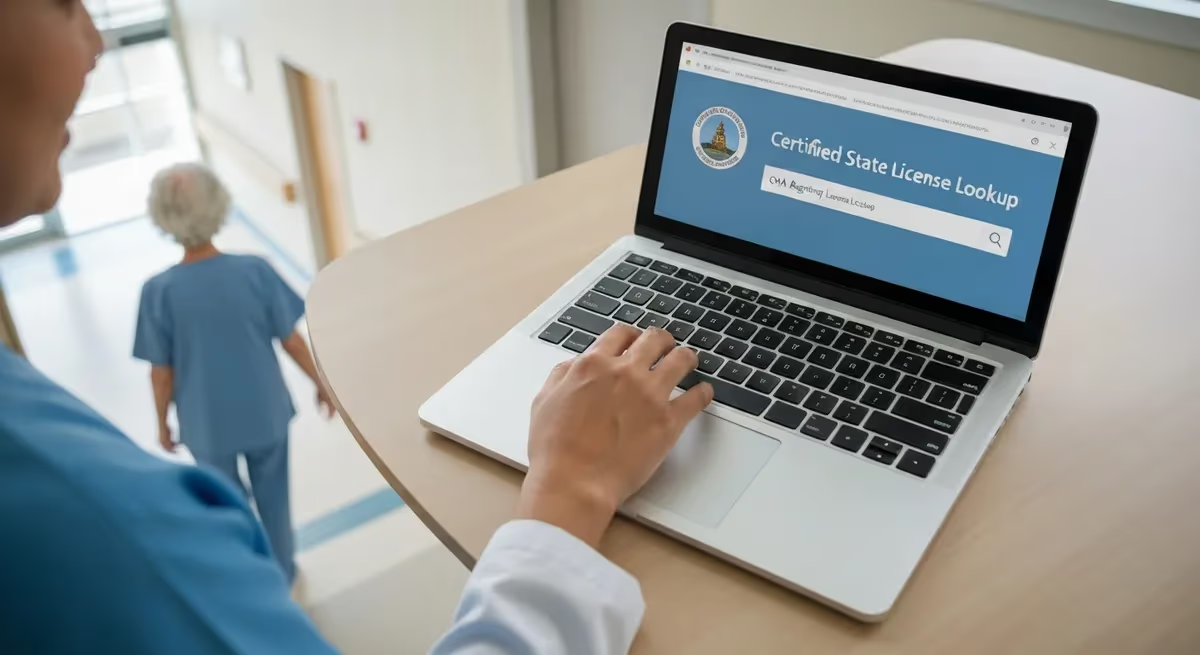
Your CNA license is the single document that proves you're qualified to work as a certified nursing assistant. Losing track of it — or letting it lapse — can stall your career overnight. Whether you need a CNA license renewal lookup verification for a new employer, a state transfer, or a routine renewal, the process starts with knowing where to look and what each state requires. Every state maintains a public nurse aide registry, and most offer free online search tools. The catch? Each state's portal works differently, asks for different information, and runs on its own timeline.
If you've been putting off your renewal or can't find your certification number, you're not alone. Thousands of CNAs lose access to their credentials every year — not because they failed an exam, but because they missed a deadline or didn't realize their state changed its renewal portal. An RN license lookup process works similarly to CNA verification, so if you've done one, the other will feel familiar. The key difference is which registry you're searching: the Nurse Aide Registry for CNAs, and the Board of Nursing database for RNs.
This guide walks you through every step — finding your license number, verifying your status, understanding renewal requirements by state, and avoiding the common mistakes that cause certifications to expire. We'll cover the major state portals in detail, break down what employers actually check during verification, and give you a clear checklist so nothing falls through the cracks. Your CNA certification took real work to earn. Don't let paperwork be the reason you can't use it.

The first step in any RN license lookup or CNA verification is identifying which agency holds your record. For CNAs, that's your state's Nurse Aide Registry — not the Board of Nursing (though some states combine them). For RNs, it's the state Board of Nursing directly. The MBON license lookup portal in Maryland, for example, handles both CNA and RN searches from a single interface. Other states separate them entirely. You need to know which database to search before you start typing your name into random government websites.
Most state registries let you search by name alone. Some require your date of birth or the last four digits of your Social Security number. A handful — like New York and California — use separate certification number searches that won't pull results from a name-only query. If you can't find your record, it doesn't mean your certification is gone. It usually means you're searching the wrong portal, misspelling your name as it appears on file, or looking in a state where you're no longer registered.
Here's a tip most people miss: your CNA certification number stays the same even if you renew, move states, or change your name. The number itself is permanent. What changes is the status — active, expired, or revoked. Employers don't just want the number. They want to see 'active' next to it. That's what verification actually confirms.
Running a CNA license lookup takes about two minutes once you know which portal to use. Go to your state's Nurse Aide Registry website, enter the required information (usually your full legal name), and submit. Your record should appear with your certification number, status, expiration date, and any findings on file. If you see a clean record with an 'active' status, you're good. If you see 'expired,' you'll need to check whether your state allows late renewal or requires you to retake the competency exam.
RN license verification follows the same pattern but uses a different database. The National Council of State Boards of Nursing (NCSBN) operates Nursys — a centralized verification system that covers RN and LPN licenses across participating states. CNAs don't have an equivalent national system. Each state's registry is independent, which is why transferring your CNA certification across state lines requires contacting both the origin and destination states separately.
Employers run verification checks constantly. When you apply for a CNA position, HR will search the registry before your first shift. If your certification has lapsed or your record shows an unresolved finding, you won't get cleared. Don't wait until a job offer is on the table to check your status. Run the search yourself first so you know exactly what employers will see.
State-by-State CNA Registry Lookup
The largest states process the most CNA verifications daily. Here's where to look:
| State | Registry Portal | Search Method |
|---|---|---|
| California | CDPH Nurse Aide Registry | Name + certification number |
| Texas | Texas HHSC Nurse Aide Registry | Name or certification number |
| Florida | FL DOH CNA Verification | Name + DOB |
| New York | NY DOH Nurse Aide Registry | Certification number only |
| Illinois | IL Health Care Worker Registry | Name or registry number |
| Pennsylvania | PA Nurse Aide Registry | Name or SSN last 4 |
California and New York require specific ID numbers — name-only searches may not return results in those states.
If you're in Florida, the nursing license Florida search portal handles both RN and CNA verification through the Department of Health website. You'll enter your name and date of birth, and the system returns your certification status, number, and expiration date. Florida processes over 100,000 CNA verifications annually — it's one of the busiest registries in the country.
The state requires renewal every two years, with a 90-day grace period for late renewals (though you'll pay extra fees). Your certified nursing aide license must show at least eight hours of paid nursing-related work during the renewal period, plus completion of any state-mandated continuing education.
Florida's registry also flags findings. If a CNA has a substantiated finding of abuse, neglect, or misappropriation of property, it appears on their record permanently. Employers check for this specifically — a clean record isn't just about having an active license. It's about having no negative findings attached to your name. If you've had a finding reported against you, the registry will show it regardless of how long ago it occurred.
For CNAs working in Florida's massive long-term care sector — nursing homes, assisted living facilities, home health agencies — verification happens at every job change. Don't assume your current employer's verification covers you at a new facility. Each employer runs their own check independently. Keep your record clean, keep it current, and check it yourself at least once a year.
The Florida Board of Nursing license lookup is where RNs and LPNs check their status — it's separate from the CNA registry but often confused with it. CNAs in Florida use the Department of Health's CNA Registry, not the Board of Nursing portal. This distinction trips up a lot of people. If you're searching the Board of Nursing site for your CNA number and getting no results, that's why. Wrong database. CNA license verification in Florida specifically requires the DOH portal, not the BON portal.
Other states handle this differently. In Maryland, the MBON (Maryland Board of Nursing) manages all nursing personnel — CNAs, LPNs, and RNs — from one portal. In Texas, the Health and Human Services Commission runs the Nurse Aide Registry independently from the Board of Nursing. There's no national standard for how states organize these databases. You have to learn your state's specific structure.
What if your certification expired? In most states, if it's been less than two years since expiration, you can late-renew by paying fees, proving work hours, and completing CE requirements. If it's been more than two years, many states require you to retake the competency exam — both written and skills portions. California offers no grace period at all. Texas gives you a one-year window. Know your state's rules before your certification lapses, because the re-certification path is significantly more time-consuming than a simple renewal.
Online vs Phone/Mail CNA License Verification
- +Online lookups return results in seconds — no hold times or processing delays
- +Most state portals are free to use and available 24/7
- +You can screenshot your verification result for employer documentation
- +Online portals show real-time status — phone reps may reference outdated records
- +Multiple searches are easy when verifying across states for reciprocity
- +Some portals let you download printable verification letters directly
- −Not all states have fully functional online registries — some are outdated or unreliable
- −Name changes, typos, or maiden names can cause false 'not found' results online
- −Phone verification lets you explain complex situations (name changes, state transfers)
- −Some employers require official verification letters that only phone/mail requests generate
- −Online portals may not show pending renewals — phone reps can check processing status
- −Rural states with smaller registries sometimes have limited online search functionality
A registered nurse license lookup works through your state's Board of Nursing — or through Nursys, the NCSBN's national nurse license verification system. Nursys covers RN and LPN licenses across 50+ jurisdictions, making it the fastest way to verify nursing licenses across state lines. CNAs don't have an equivalent national system, which is one reason CNA reciprocity is slower and more manual than RN license transfers. The MD license lookup through Maryland's MBON is one of the smoothest state-level systems — it returns results instantly and covers CNAs, LPNs, and RNs in a single search.
If you're an RN running a license lookup, Nursys charges a small fee for official verification but offers free basic status checks. For CNAs, every lookup is state-specific and free. The tradeoff is convenience: RNs can verify across all 50 states from one website, while CNAs need to visit each state's individual registry. If you've worked as a CNA in multiple states, you may have active certifications in each — and you'll need to renew each one independently unless you've formally let some lapse.
Medical doctor license lookups — what people search as 'MD license lookup' — go through state medical boards, which are entirely separate systems from nursing registries. Don't confuse the abbreviation 'MD' (Maryland) with 'MD' (medical doctor) when searching. Context matters. If you're in Maryland looking up your CNA, use the MBON portal. If you're trying to verify a physician, use the Maryland Board of Physicians instead.
CNA License Renewal Checklist
- ✓Set a calendar reminder 90 days before your certification expiration date
- ✓Log into your state's Nurse Aide Registry to confirm your current status and expiration
- ✓Gather proof of paid nursing-related work during the renewal period (pay stubs or employer letter)
- ✓Complete all required continuing education hours — check your state's specific CE requirements
- ✓Update your name and address on the registry if anything has changed since last renewal
- ✓Pay the renewal fee through your state's official portal — avoid third-party sites that charge extra
- ✓Download or screenshot your updated verification page showing 'active' status after renewal
- ✓If transferring states, contact the new state's registry to begin the reciprocity application
- ✓Check for any findings or flags on your record — dispute errors before they affect employment
- ✓Keep a physical copy of your certification card in addition to your digital registry record
Nursing license verification is a broad term that covers CNAs, LPNs, RNs, and advanced practice nurses — each through different databases. For CNAs specifically, verification means confirming your name appears on the state Nurse Aide Registry with an active status and no adverse findings. The California state nursing license verification system is actually two separate portals: the Board of Registered Nursing (BRN) handles RN lookups, while the California Department of Public Health (CDPH) handles CNA certification searches. Mixing them up is the #1 reason California CNAs can't find their records online.
California's CNA registry requires your certification number for searches — name-only queries don't work reliably. If you've lost your number, you'll need to call the CDPH directly at their Licensing and Certification Division. They can look you up by Social Security number and provide your certification number over the phone. Once you have it, bookmark the portal and save the number somewhere accessible. You'll need it every time you change jobs, renew, or apply for reciprocity in another state.
The verification process itself is instantaneous online. But the renewal process? That takes longer. California requires proof of 48 hours of continuing education plus eight hours of paid nursing-related work during each two-year renewal cycle. There's no grace period — if your certification expires, you can't work as a CNA in California until you either renew (if recently expired) or re-certify (if more than two years have passed). Don't let it lapse.
The PT license lookup process — for physical therapists — runs through state physical therapy boards, which are entirely separate from nursing registries. If you're a CNA searching for 'PT license lookup,' make sure you're not accidentally landing on a physical therapy board website when you need the Nurse Aide Registry. Similarly, the Illinois nursing license lookup through the Illinois DFPR handles RN and LPN verification, while CNA searches go through the Illinois Health Care Worker Registry — a different system entirely.
Illinois is worth highlighting because its Health Care Worker Registry is one of the most thorough in the country. It tracks not just CNAs but also home health aides, developmental disabilities aides, and other direct care workers. The registry flags disqualifying convictions in addition to abuse/neglect findings, which means your background check results are partially visible through the same portal. If you've had any legal issues, check your Illinois HCW Registry listing before job hunting.
For CNAs working across the Illinois-Wisconsin-Indiana tri-state area, reciprocity is relatively straightforward but not automatic. Each state requires a separate application, proof of active certification in your home state, and sometimes additional training hours. Illinois-to-Indiana transfers are the fastest — usually processed within two to three weeks. Illinois-to-Wisconsin can take four to six weeks depending on volume. Start the reciprocity process before you need to work in the new state, not after you've already accepted a position.
If your CNA certification expires and you don't renew within your state's grace period, you'll likely need to retake both the written and skills portions of the competency exam. In California, there's no grace period at all — expiration means re-certification from scratch. In Texas, you get a one-year window for late renewal. Set reminders, complete your CE hours early, and log your paid work hours throughout the renewal period. Prevention is far easier than re-certification.
A medical doctor license lookup and a doctor license lookup both route through state medical boards — completely separate systems from the Nurse Aide Registry. The confusion usually arises from search engine queries where 'license lookup' returns mixed results across professions. If you're a CNA, ignore the medical board results and look specifically for your state's Nurse Aide Registry or Department of Health CNA verification portal. The naming isn't consistent across states, which makes it frustrating. But the registry itself is always there — every state is federally required to maintain one under OBRA '87.
The Omnibus Budget Reconciliation Act of 1987 (OBRA) is what created the national requirement for nurse aide registries in the first place. Before OBRA, there was no standardized system for tracking CNA certifications. Now, every state must maintain a registry, conduct criminal background checks, and record any findings of abuse, neglect, or misappropriation. This federal mandate is why your CNA certification has legal weight — it's backed by federal law, not just state regulation.
Understanding this context matters because it explains why CNA verification is taken so seriously by employers. It's not optional compliance — it's a federal requirement. Facilities that hire CNAs without verifying registry status face federal penalties, including loss of Medicare/Medicaid certification. When an employer asks for your CNA number and runs a verification check, they're not being overly cautious. They're following the law. Make it easy for them: keep your certification active, your information current, and your record clean.
You can continue preparing with the cna renewal, which includes answer explanations for every question.
You can continue preparing with the cna training programs, which includes answer explanations for every question.
You can continue preparing with the cna license renewal, which includes answer explanations for every question.
CNA Practice Test Questions
Prepare for the CNA - Certified Nursing Assistant exam with our free practice test modules. Each quiz covers key topics to help you pass on your first try.
CNA Activities of Daily Living
CNA Exam Questions covering Activities of Daily Living. Master CNA Test concepts for certification prep.
CNA Aging Process
Free CNA Practice Test featuring Aging Process. Improve your CNA Exam score with mock test prep.
CNA Anatomy and Physiology Basics
CNA Mock Exam on Anatomy and Physiology Basics. CNA Study Guide questions to pass on your first try.
CNA Assisting with Daily Living
CNA Test Prep for Assisting with Daily Living. Practice CNA Quiz questions and boost your score.
CNA Assisting with Range of Motion Exercises
CNA Questions and Answers on Assisting with Range of Motion Exercises. Free CNA practice for exam readiness.
CNA Basic Human Anatomy and Age-Related Ch...
CNA Mock Test covering Basic Human Anatomy and Age-Related Changes. Online CNA Test practice with instant feedback.
CNA Basic Nursing Skills
Free CNA Quiz on Basic Nursing Skills. CNA Exam prep questions with detailed explanations.
CNA Basic Nursing Skills 10
CNA Practice Questions for Basic Nursing Skills 10. Build confidence for your CNA certification exam.
CNA Basic Nursing Skills 11
CNA Test Online for Basic Nursing Skills 11. Free practice with instant results and feedback.
CNA Basic Nursing Skills 1
CNA Study Material on Basic Nursing Skills 1. Prepare effectively with real exam-style questions.
CNA Basic Nursing Skills 12
Free CNA Test covering Basic Nursing Skills 12. Practice and track your CNA exam readiness.
CNA Basic Nursing Skills 13
CNA Exam Questions covering Basic Nursing Skills 13. Master CNA Test concepts for certification prep.
CNA Basic Nursing Skills 14
Free CNA Practice Test featuring Basic Nursing Skills 14. Improve your CNA Exam score with mock test prep.
CNA Basic Nursing Skills 15
CNA Mock Exam on Basic Nursing Skills 15. CNA Study Guide questions to pass on your first try.
CNA Basic Nursing Skills 16
CNA Test Prep for Basic Nursing Skills 16. Practice CNA Quiz questions and boost your score.
CNA Basic Nursing Skills 17
CNA Questions and Answers on Basic Nursing Skills 17. Free CNA practice for exam readiness.
CNA Basic Nursing Skills 18
CNA Mock Test covering Basic Nursing Skills 18. Online CNA Test practice with instant feedback.
CNA Basic Nursing Skills 19
Free CNA Quiz on Basic Nursing Skills 19. CNA Exam prep questions with detailed explanations.
CNA Basic Nursing Skills 20
CNA Practice Questions for Basic Nursing Skills 20. Build confidence for your CNA certification exam.
CNA Basic Nursing Skills 21
CNA Test Online for Basic Nursing Skills 21. Free practice with instant results and feedback.
CNA Basic Nursing Skills 2
CNA Study Material on Basic Nursing Skills 2. Prepare effectively with real exam-style questions.
CNA Basic Nursing Skills 3
Free CNA Test covering Basic Nursing Skills 3. Practice and track your CNA exam readiness.
CNA Basic Nursing Skills 4
CNA Exam Questions covering Basic Nursing Skills 4. Master CNA Test concepts for certification prep.
CNA Basic Nursing Skills 5
Free CNA Practice Test featuring Basic Nursing Skills 5. Improve your CNA Exam score with mock test prep.
CNA Basic Nursing Skills 6
CNA Mock Exam on Basic Nursing Skills 6. CNA Study Guide questions to pass on your first try.
CNA Basic Nursing Skills 7
CNA Test Prep for Basic Nursing Skills 7. Practice CNA Quiz questions and boost your score.
CNA Basic Nursing Skills 8
CNA Questions and Answers on Basic Nursing Skills 8. Free CNA practice for exam readiness.
CNA Basic Nursing Skills 9
CNA Mock Test covering Basic Nursing Skills 9. Online CNA Test practice with instant feedback.
CNA Basic Restorative Services
Free CNA Quiz on Basic Restorative Services. CNA Exam prep questions with detailed explanations.
CNA Basic Restorative Services 1
CNA Practice Questions for Basic Restorative Services 1. Build confidence for your CNA certification exam.
CNA Bathing and Dressing
CNA Test Online for Bathing and Dressing. Free practice with instant results and feedback.
CNA Body Mechanics
CNA Study Material on Body Mechanics. Prepare effectively with real exam-style questions.
CNA Career Advancement and Opportunities
Free CNA Test covering Career Advancement and Opportunities. Practice and track your CNA exam readiness.
CNA Career Opportunities and Benefits
CNA Exam Questions covering Career Opportunities and Benefits. Master CNA Test concepts for certification prep.
CNA Care for Residents with Cognitive Impa...
Free CNA Practice Test featuring Care for Residents with Cognitive Impairment. Improve your CNA Exam score with mock test prep.
CNA Care of Cognitively Impaired Residents
CNA Mock Exam on Care of Cognitively Impaired Residents. CNA Study Guide questions to pass on your first try.
CNA Care of Cognitively Impaired Residents 1
CNA Test Prep for Care of Cognitively Impaired Residents 1. Practice CNA Quiz questions and boost your score.
CNA Care Of Cognitively Impaired Residents 4
CNA Questions and Answers on Care Of Cognitively Impaired Residents 4. Free CNA practice for exam readiness.
CNA Common Medical Terms and Abbreviations
CNA Mock Test covering Common Medical Terms and Abbreviations. Online CNA Test practice with instant feedback.
CNA Communication and Interpersonal Skills
Free CNA Quiz on Communication and Interpersonal Skills. CNA Exam prep questions with detailed explanations.
CNA Communication and Interpersonal Skills 1
CNA Practice Questions for Communication and Interpersonal Skills 1. Build confidence for your CNA certification exam.
CNA Communication And Interpersonal Skills 4
CNA Test Online for Communication And Interpersonal Skills 4. Free practice with instant results and feedback.
CNA Eligibility and Qualifications
CNA Study Material on Eligibility and Qualifications. Prepare effectively with real exam-style questions.
CNA Emergency Procedure
Free CNA Test covering Emergency Procedure. Practice and track your CNA exam readiness.
CNA Ethics and Professionalism
CNA Exam Questions covering Ethics and Professionalism. Master CNA Test concepts for certification prep.
CNA Exam Structure and Content
Free CNA Practice Test featuring Exam Structure and Content. Improve your CNA Exam score with mock test prep.
CNA Feeding and Hydration
CNA Mock Exam on Feeding and Hydration. CNA Study Guide questions to pass on your first try.
CNA Infection Control
CNA Test Prep for Infection Control. Practice CNA Quiz questions and boost your score.
CNA Infection Control and Safety
CNA Questions and Answers on Infection Control and Safety. Free CNA practice for exam readiness.
CNA Isolation Precautions
CNA Mock Test covering Isolation Precautions. Online CNA Test practice with instant feedback.
CNA Legal & Ethical Behaviours
Free CNA Quiz on Legal & Ethical Behaviours. CNA Exam prep questions with detailed explanations.
CNA Legal & Ethical Behaviours 1
CNA Practice Questions for Legal & Ethical Behaviours 1. Build confidence for your CNA certification exam.
CNA Legal & Ethical Behaviours 4
CNA Test Online for Legal & Ethical Behaviours 4. Free practice with instant results and feedback.
CNA Mental Health and Social Services Needs
CNA Study Material on Mental Health and Social Services Needs. Prepare effectively with real exam-style questions.
CNA Mental Health and Social Services Needs 1
Free CNA Test covering Mental Health and Social Services Needs 1. Practice and track your CNA exam readiness.
CNA Mental Health And Social Services Needs 4
CNA Exam Questions covering Mental Health And Social Services Needs 4. Master CNA Test concepts for certification prep.
CNA Nutrition and Hydration Management
Free CNA Practice Test featuring Nutrition and Hydration Management. Improve your CNA Exam score with mock test prep.
CNA Patient Care Procedure
CNA Mock Exam on Patient Care Procedure. CNA Study Guide questions to pass on your first try.
CNA Personal Care Skills
CNA Test Prep for Personal Care Skills. Practice CNA Quiz questions and boost your score.
CNA Personal Care Skills 1
CNA Questions and Answers on Personal Care Skills 1. Free CNA practice for exam readiness.
CNA Personal Care Skills 4
CNA Mock Test covering Personal Care Skills 4. Online CNA Test practice with instant feedback.
CNA Personal Care Skills 5
Free CNA Quiz on Personal Care Skills 5. CNA Exam prep questions with detailed explanations.
CNA Personal Hygiene and Grooming
CNA Practice Questions for Personal Hygiene and Grooming. Build confidence for your CNA certification exam.
CNA Practice Test - Basic Nursing Skills #2
CNA Test Online for Practice Test - Basic Nursing Skills #2. Free practice with instant results and feedback.
CNA Practice Test - Basic Nursing Skills #2 1
CNA Study Material on Practice Test - Basic Nursing Skills #2 1. Prepare effectively with real exam-style questions.
CNA Preventing Patient Falls and Injuries
Free CNA Test covering Preventing Patient Falls and Injuries. Practice and track your CNA exam readiness.
CNA Promoting Resident Independence and Ch...
CNA Exam Questions covering Promoting Resident Independence and Choice. Master CNA Test concepts for certification prep.
CNA Proper Hand Hygiene and PPE Usage
Free CNA Practice Test featuring Proper Hand Hygiene and PPE Usage. Improve your CNA Exam score with mock test prep.
CNA Resident Rights and Communication
CNA Mock Exam on Resident Rights and Communication. CNA Study Guide questions to pass on your first try.
CNA Resident’s Rights
CNA Test Prep for Resident’s Rights. Practice CNA Quiz questions and boost your score.
CNA Resident's Rights 1
CNA Questions and Answers on Resident's Rights 1. Free CNA practice for exam readiness.
CNA Resident's Rights 4
CNA Mock Test covering Resident's Rights 4. Online CNA Test practice with instant feedback.
CNA Roles and Responsibilities
Free CNA Quiz on Roles and Responsibilities. CNA Exam prep questions with detailed explanations.
CNA Safety and Emergency Procedures
CNA Practice Questions for Safety and Emergency Procedures. Build confidence for your CNA certification exam.
CNA Safety and Emergency Procedures 1
CNA Test Online for Safety and Emergency Procedures 1. Free practice with instant results and feedback.
CNA Safety And Emergency Procedures 4
CNA Study Material on Safety And Emergency Procedures 4. Prepare effectively with real exam-style questions.
CNA Safety and Infection Control
Free CNA Test covering Safety and Infection Control. Practice and track your CNA exam readiness.
CNA Scope of Practice
CNA Exam Questions covering Scope of Practice. Master CNA Test concepts for certification prep.
CNA Skills and Competencies
Free CNA Practice Test featuring Skills and Competencies. Improve your CNA Exam score with mock test prep.
CNA Supporting Rehabilitation Activities
CNA Mock Exam on Supporting Rehabilitation Activities. CNA Study Guide questions to pass on your first try.
CNA The Nurse Aide's Role and Responsibili...
CNA Test Prep for The Nurse Aide's Role and Responsibilities. Practice CNA Quiz questions and boost your score.
CNA Time Management and Prioritization
CNA Questions and Answers on Time Management and Prioritization. Free CNA practice for exam readiness.
CNA Toileting and Elimination
CNA Mock Test covering Toileting and Elimination. Online CNA Test practice with instant feedback.
CNA Using Adaptive Devices
CNA Practice Questions for Using Adaptive Devices. Build confidence for your CNA certification exam.
For RN lookup purposes, Nursys remains the gold standard — it's fast, covers most states, and provides official verification letters that employers accept nationwide. CNAs don't have this luxury. If you're a CNA looking to verify your credentials for an out-of-state employer, you'll need to direct them to your state's individual registry portal or request an official verification letter by mail. Some states charge $10-25 for mailed verification letters. Others provide them free through their online portal.
The Wisconsin nursing license lookup system, run through the Wisconsin Department of Safety and Professional Services, covers RNs, LPNs, and CNAs from a single portal — one of the few states that does this well. You can search by name, license number, or credential type. Wisconsin also publishes disciplinary actions prominently, so any CNA with a finding or suspension will see it displayed alongside their certification record. The transparency is helpful for employers but can feel invasive if you're on the wrong side of a finding.
Wisconsin's renewal process is every two years, with a minimum of 12 continuing education contact hours required. The state accepts online CE courses, which makes compliance relatively painless. If you're renewing in Wisconsin, complete your CE hours at least 30 days before your expiration date to avoid any processing delays. The state processes renewals faster than most — typically within 5-7 business days of receiving a complete application. Keep your confirmation email as proof of renewal until your updated status appears on the registry.
CNA Questions and Answers

Restorative CNA: Duties, Training, Salary & How to Get Started

CNA Hospital Jobs Near Me: How to Find, Apply & Get Hired in 2026

Goodwill CNA Program: Free Classes, Costs, and How to Enroll

Hospice CNA: Duties, Salary, Per Diem Work & How to Get Started
4-Week CNA Program: Online Options, State Programs & How to Enroll
About the Author

Registered Nurse & Healthcare Educator
Johns Hopkins University School of NursingDr. Sarah Mitchell is a board-certified registered nurse with over 15 years of clinical and academic experience. She completed her PhD in Nursing Science at Johns Hopkins University and has taught NCLEX preparation and clinical skills courses for nursing students across the United States. Her research focuses on evidence-based exam preparation strategies for healthcare certification candidates.
Join the Discussion
Connect with other students preparing for this exam. Share tips, ask questions, and get advice from people who have been there.
View discussion (8 replies)