
What Is a CNA? Duties, Training, Salary & Career Path 2026 September
Get ready for your What Is a CNA? Duties, Training, Salary certification. Practice questions with step-by-step answer explanations and instant scoring. ⏳
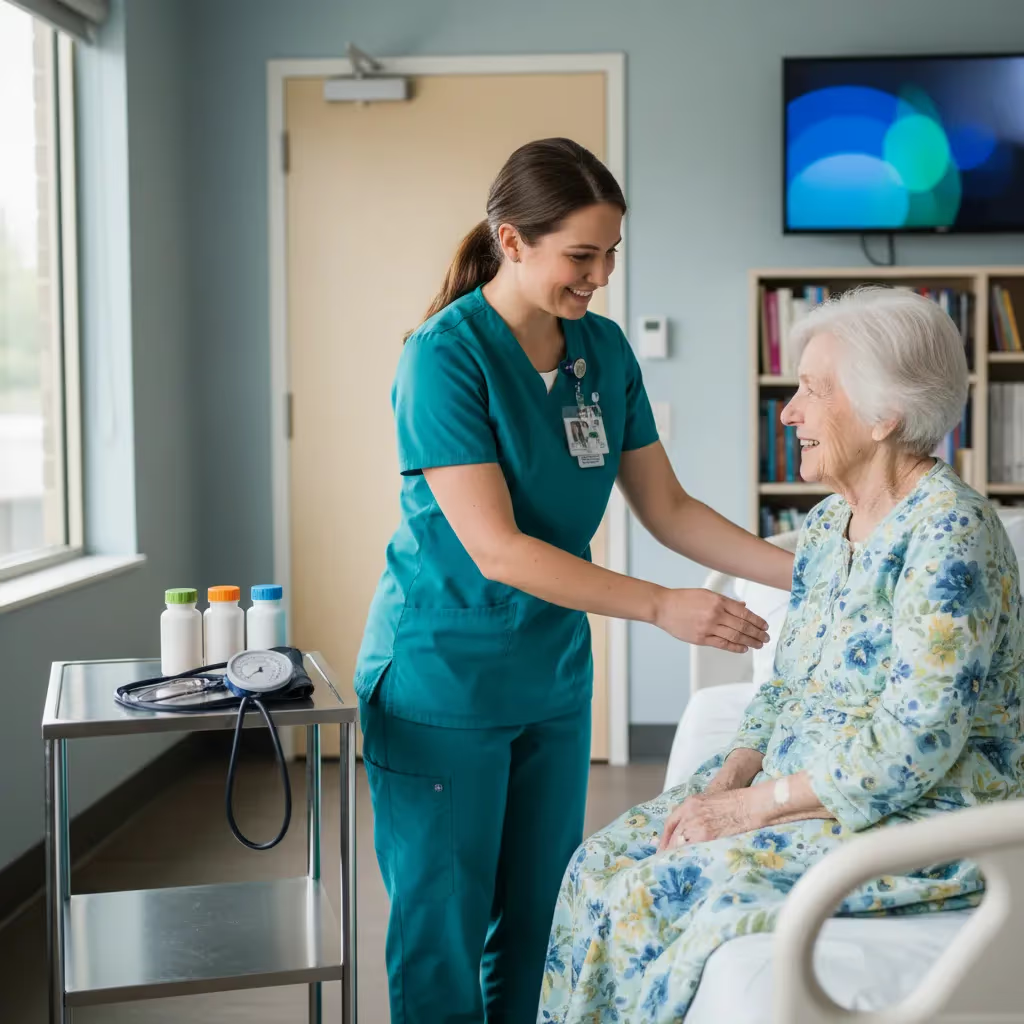
So what is a CNA, exactly? A Certified Nursing Assistant — sometimes called a nurse aide — is the healthcare worker who spends the most time at a patient's bedside. CNAs handle the hands-on care that keeps people fed, clean, mobile, and comfortable. They're the first to notice when something's off — a fever spiking, a patient refusing food, skin breaking down. Hospitals, nursing homes, and home health agencies all depend on them.
If you've ever wondered whats a CNA or why these workers matter so much, here's a number that puts it in perspective: the U.S. currently employs over 1.4 million certified nursing assistants. That makes CNAs one of the largest workforces in healthcare — bigger than physical therapists, pharmacists, and paramedics combined. And the Bureau of Labor Statistics projects another 73,000 openings per year through 2032, driven by an aging population that needs more direct care.
Training takes between 4 and 12 weeks depending on your state. You don't need a college degree. You don't need years of prerequisite coursework. Most programs cost under $1,500, and some — through community colleges, the Red Cross, or employer-sponsored options — are completely free. After training, you pass a two-part state competency exam (written knowledge test plus a clinical skills demonstration) and you're certified.
The median salary sits around $36,000 per year nationally, with higher-paying states like Alaska, New York, and California pushing above $42,000. Night shifts and weekend differentials can bump that further. But money isn't the only draw. A CNA position is one of the fastest entry points into healthcare — many registered nurses started exactly here. It's a stepping stone, a proving ground, and for plenty of people, a career they genuinely love.
This page breaks down what CNAs actually do, how you get certified, what the job pays across different settings, and whether this career path fits your goals. You'll find practice quizzes below to test your knowledge if you're prepping for the certification exam.

People search for whats a CNA more than almost any other nursing-related career question. The answer is straightforward — but the abbreviation trips some folks up. So what does CNA stand for? It stands for Certified Nursing Assistant. The "certified" part is key. You can't just walk into a hospital and start working as a nurse aide. Every state requires you to complete an approved training program and pass a competency exam before you touch a patient.
The CNA definition in medical contexts is specific: a paraprofessional who provides basic nursing care under the supervision of a registered nurse (RN) or licensed practical nurse (LPN). That supervision requirement matters. CNAs don't diagnose conditions, administer most medications, or create care plans. They execute the plan — and they report what they observe. A good CNA catches problems before they escalate.
What does CNA stand for in different settings? Same thing everywhere — Certified Nursing Assistant — but the day-to-day tasks shift depending on where you work. In a nursing home, you might help twenty residents with morning routines. In a hospital ICU, you're assisting two or three critically ill patients with vitals every fifteen minutes. Home health CNAs work one-on-one, often becoming a lifeline for elderly clients living alone. The title stays constant. The work varies dramatically.
Some states use slightly different titles — Patient Care Technician (PCT), State Tested Nursing Aide (STNA), or Nurse Aide — but they all describe the same role with the same core responsibilities. If you see a job listing for any of those titles, it's the same certification, same scope of practice, same career track.
What do CNA do on a typical shift? More than most people realize. The cna definition covers a wide scope of direct patient care — everything from measuring vital signs (blood pressure, pulse, temperature, respiratory rate) to helping patients bathe, dress, eat, and move safely between their bed, wheelchair, and bathroom. You're tracking fluid intake and output. You're repositioning bedridden patients every two hours to prevent pressure ulcers. You're changing linens, emptying catheter bags, and documenting everything in the medical chart.
But here's what the textbook cna definition doesn't capture: the emotional labor. You'll hold the hand of a dying patient when their family can't be there. You'll calm a confused Alzheimer's resident at 3 AM who thinks they're lost. Short answer — this job requires physical endurance and genuine compassion in roughly equal measure. Not everyone can do both.
A typical shift runs 8 to 12 hours. Night shifts are common, especially early in your career. You'll be on your feet most of that time, lifting and transferring patients who may outweigh you significantly. Back injuries are the number-one occupational hazard, which is why proper body mechanics training matters more than anything else you'll learn in your CNA program. Use the gait belt. Every single time.
Documentation takes up a surprising chunk of the shift too. Every vital sign, every meal intake percentage, every skin observation — it all gets recorded. Nurses rely on your notes to make clinical decisions. Sloppy documentation can delay treatment or cause medication errors downstream. Write clearly. Be specific.
CNA Work Settings Compared
Long-term care facilities employ about 37% of all CNAs nationally. You'll typically be assigned 8 to 15 residents and handle morning care routines — wake-ups, hygiene, breakfast assistance, and vitals. The pace is steady but physically demanding. Relationships with residents run deep because you're caring for the same people daily, sometimes for years. Pay tends to be lower than hospital settings but schedules are more predictable.
The definition of CNA extends beyond just a job title — it's a legally defined scope of practice that varies by state. Each state's nurse aide registry maintains a list of approved tasks that CNAs can and cannot perform. In most states, CNAs cannot administer oral medications (though some allow it with additional training), start IVs, perform sterile procedures, or provide any form of medical assessment. The CNA meaning medical professionals use is precise: assistive personnel who function under direct or indirect nursing supervision.
Understanding the cna meaning medical context is critical if you're deciding between a CNA role and other entry-level healthcare positions. Medical assistants, for example, work in outpatient clinics and can draw blood, give injections, and perform EKGs — tasks outside a CNA's scope. Phlebotomists specialize in blood draws. Patient care technicians (PCTs) in hospitals sometimes perform EKGs and blood glucose monitoring on top of standard CNA duties, but they hold a CNA certification as their foundation.
The hierarchy matters for career planning. A CNA certification is the floor, not the ceiling. Many CNAs pursue LPN programs (12 to 18 months) or associate-degree RN programs (2 years) while working. Some hospitals offer tuition reimbursement specifically for CNAs who want to advance. That's the real value proposition — you're earning a paycheck, gaining clinical experience, and building relationships with nurses who can mentor you through nursing school. All at once.
One thing to watch: scope creep. Facilities sometimes ask CNAs to perform tasks beyond their legal scope — hanging IV bags, adjusting oxygen flow rates, removing sutures. Refuse politely but firmly. Your certification is on the line, and so is the patient's safety. Know your state's nurse practice act backward and forward.
What does CNA stand for on a resume? Certified Nursing Assistant — and it's one of the most recognizable healthcare credentials in hiring. But the cna description on your resume needs to go beyond the title. Hiring managers want to see specific patient counts, facility types, and specialized skills. "Provided ADL assistance to 12 residents per shift in a 120-bed skilled nursing facility" tells them exactly what you can handle. Generic descriptions get skipped.
The cna stand for question comes up constantly in job interviews too, usually phrased as "Tell me what being a CNA means to you." They're not asking for the acronym — they want to know if you understand the weight of the role. The best answers focus on patient advocacy, attention to detail, and teamwork with the nursing staff. Rehearse it, but don't memorize a script. Authenticity reads better than perfection in healthcare interviews.
A strong cna description for career purposes emphasizes three things: clinical competence, reliability, and emotional intelligence. You need all three. A CNA who takes perfect vitals but calls out every other weekend isn't valuable. A CNA who shows up every day but misses a declining patient's symptoms is dangerous. And a CNA who does both but treats patients like tasks instead of people will burn out inside a year. The trifecta matters.
Building your professional profile starts during training. Volunteer for extra clinical hours. Ask your instructor for specific feedback. Get certified in CPR and BLS before you graduate — most employers require it, and having it ready shows initiative. Some programs also offer phlebotomy or EKG add-ons that expand your employability without adding much time.
Pros and Cons of Being a CNA
- +Fast entry into healthcare — training takes just 4 to 12 weeks with no degree required
- +High demand nationwide — 73,000+ openings projected annually through 2032
- +Direct patient care builds clinical skills that transfer to LPN and RN careers
- +Flexible scheduling with day, evening, night, and weekend shift options available
- +Tuition reimbursement programs at many hospitals if you pursue nursing school
- +Deep personal fulfillment from helping vulnerable patients with daily needs
- −Physically demanding — heavy lifting, long shifts on your feet, high injury risk
- −Median pay of $36K is modest for the workload and emotional toll involved
- −Emotional burnout from patient deaths, dementia care, and understaffed shifts
- −Limited scope of practice — you can't perform many clinical tasks without advancing
- −Mandatory overtime is common in understaffed facilities, especially nights and weekends
- −Exposure to infectious diseases, bodily fluids, and aggressive or confused patients
Pros and Cons at a Glance
| Pros | Cons |
|---|---|
| Direct patient care builds clinical skills that transfer to LPN and RN careers | Physically demanding — heavy lifting, long shifts on your feet, high injury risk |
| Flexible scheduling with day, evening, night, and weekend shift options available | Emotional burnout from patient deaths, dementia care, and understaffed shifts |
| Tuition reimbursement programs at many hospitals if you pursue nursing school | Limited scope of practice — you can't perform many clinical tasks without advancing |
| Deep personal fulfillment from helping vulnerable patients with daily needs | Mandatory overtime is common in understaffed facilities, especially nights and weekends |
What does CNA mean when people talk about career advancement? It means you've got options. The meaning of CNA goes beyond bedside care — it's a credential that opens doors to specialized roles, higher-paying positions, and nursing school. Travel CNA assignments can pay $22 to $30 per hour with housing stipends. Hospice CNAs earn premium rates for end-of-life care. Restorative CNAs focus on rehabilitation exercises and typically earn $1 to $3 more per hour than standard aides.
The meaning of CNA also shifts depending on your long-term goals. If you're planning to become an RN, your CNA experience gives you a massive advantage in nursing school. You already understand patient flow, medical terminology, vital sign interpretation, and team dynamics on a hospital floor. Nursing students without CNA backgrounds often struggle with clinical rotations because everything feels foreign. You'll walk in already comfortable.
What does cna mean for your earning potential over time? Starting salaries average $28,000 to $32,000 in most states, but experienced CNAs in high-demand metro areas can earn $40,000 to $48,000. Specialty certifications — medication aide, geriatric care, wound care — push your pay higher. And if you transition to an LPN role after 12 to 18 months of additional schooling, your salary jumps to a median of $54,000. RNs with a CNA background commonly earn $75,000 or more.
Worth knowing: some states allow CNAs to take on expanded duties with additional training modules. These are sometimes called CNA II or Advanced CNA certifications. They typically add medication administration, blood glucose monitoring, and wound care to your legal scope. The extra training is usually 40 to 80 hours and can add $2 to $4 per hour to your base pay.
Steps to Become a CNA
- ✓Meet your state's minimum age requirement — typically 16 or 18 years old
- ✓Complete a background check and health screening including TB test and immunizations
- ✓Enroll in a state-approved CNA training program (75 to 180 hours depending on state)
- ✓Attend all classroom instruction covering anatomy, infection control, patient rights, and safety
- ✓Complete required clinical hours (minimum 16 hours in most states) at a healthcare facility
- ✓Apply for and schedule your state competency exam through the testing provider (Prometric or Pearson VUE)
- ✓Pass the written knowledge test — usually 60 to 100 multiple-choice questions
- ✓Pass the clinical skills evaluation — demonstrate 3 to 5 randomly selected nursing procedures
- ✓Submit your application to the state nurse aide registry once both exam parts are passed
- ✓Maintain your certification through required continuing education and renewal every 1 to 2 years
What does CNA training actually look like week by week? What does a CNA learn that prepares them for the realities of patient care? The answer depends on your program's length, but the structure follows a predictable pattern. Weeks one and two cover fundamentals — medical terminology, anatomy basics, infection control, patient rights, and HIPAA regulations. You'll spend most of this time in a classroom or watching demonstrations.
Weeks three and four shift to hands-on skills in a simulation lab. You'll practice on mannequins first — taking blood pressure, performing range-of-motion exercises, transferring patients from bed to wheelchair, making occupied beds, and providing perineal care. The skills test at your state exam will draw from this exact list, so repetition matters. Practice each skill until the steps feel automatic.
What does a CNA do during clinical rotations? You're placed in a real healthcare facility — usually a nursing home — and assigned to work alongside an experienced CNA or nurse. You'll perform actual patient care under supervision. This is where theory meets reality. The mannequin doesn't resist when you try to reposition it. Real patients do. The mannequin doesn't cry. Real patients sometimes do. Clinical hours are where you discover whether this career fits you.
After training, you schedule your state competency exam. Most states use Prometric or Pearson VUE as their testing vendor. The exam has two parts: a written or oral knowledge test (60 to 100 questions) and a clinical skills demonstration where you perform 3 to 5 randomly selected procedures in front of an evaluator. Pass both parts and your name goes on the state nurse aide registry. That registry listing is your license to work.
The medical cna definition you'll encounter in textbooks and on certification exams uses precise clinical language. A CNA is a "nurse aide who has successfully completed a state-approved training program and competency evaluation, and whose name appears on the state nurse aide registry." That's the legal definition. But what is cna mean in practice? It means you're the eyes and ears of the nursing team — the person who spends the most one-on-one time with each patient and catches changes that nurses reviewing charts from a station might miss.
The medical cna definition also specifies that CNAs work under nursing supervision — but "supervision" doesn't mean someone watches you constantly. In most facilities, especially during night shifts, you might be the only care provider on your hall for stretches of time. The RN is available by phone or down the corridor, but you're making real-time judgment calls about whether a patient's condition warrants an immediate call or can wait until scheduled rounds. That responsibility is heavier than the textbook definition suggests.
What is cna mean for patient safety specifically? Data from the Centers for Medicare and Medicaid Services shows that facilities with higher CNA staffing ratios have fewer falls, fewer pressure ulcers, fewer urinary tract infections, and lower hospitalization rates. When CNAs are stretched thin — caring for 15 or more residents per shift — quality metrics decline measurably. Adequate staffing isn't just a labor issue. It's a patient safety issue. Full stop.
If you're studying for the certification exam, understand that the medical cna definition appears in some form on virtually every state test. Know the scope. Know the limitations. Know when to act and when to report. The exam tests judgment as much as knowledge — expect scenario-based questions where the correct answer is "notify the nurse immediately" rather than attempting an intervention beyond your scope.
CNAs must never perform tasks outside their state-approved scope of practice — even if asked by a supervisor. Common violations include administering medications without proper certification, adjusting oxygen flow rates, inserting or removing catheters, and performing wound assessments. Violations can result in removal from the state nurse aide registry, fines, and potential criminal liability if a patient is harmed.
So what do CNA's do that makes the career worthwhile despite the challenges? For many people, the answer comes down to purpose. You're not filing spreadsheets or answering phones — you're helping someone eat their first meal after surgery, walk to the bathroom without falling, or maintain their dignity during the most vulnerable moments of their life. That's not abstract feel-good language. It's Tuesday at 7 AM on a med-surg floor.
If you're Googling "CNA what does it mean," the answer shapes your future. What do CNA's do to advance beyond the bedside role? Plenty. Some specialize in areas like dialysis, operating room assistance, or rehabilitation. Others pursue leadership positions — charge aide, CNA instructor, or unit coordinator. And a significant number use the role as a bridge to nursing school, earning their LPN or RN while continuing to work per diem shifts. The American Nurses Association reports that roughly 15% of current RNs started their healthcare careers as CNAs.
The question isn't really what do CNA's do — it's whether the work fits your personality, your physical capacity, and your goals. If you can handle 12-hour shifts on your feet, stay calm when a patient is agitated or in pain, document observations accurately under time pressure, and still treat every person with kindness at 4 AM — this career will reward you. If any of those sound like dealbreakers, better to discover that now than three weeks into your first job.
One more thing. The CNA shortage isn't theoretical. Facilities across the country are offering sign-on bonuses of $1,000 to $5,000, tuition assistance, and accelerated scheduling to attract new hires. If you're considering this path, the job market hasn't been this favorable in decades. Training programs are enrolling now, and most can get you certified within two months.
CNA Practice Test Questions
Prepare for the CNA - Certified Nursing Assistant exam with our free practice test modules. Each quiz covers key topics to help you pass on your first try.
CNA Activities of Daily Living
CNA Exam Questions covering Activities of Daily Living. Master CNA Test concepts for certification prep.
CNA Aging Process
Free CNA Practice Test featuring Aging Process. Improve your CNA Exam score with mock test prep.
CNA Anatomy and Physiology Basics
CNA Mock Exam on Anatomy and Physiology Basics. CNA Study Guide questions to pass on your first try.
CNA Assisting with Daily Living
CNA Test Prep for Assisting with Daily Living. Practice CNA Quiz questions and boost your score.
CNA Assisting with Range of Motion Exercises
CNA Questions and Answers on Assisting with Range of Motion Exercises. Free CNA practice for exam readiness.
CNA Basic Human Anatomy and Age-Related Ch...
CNA Mock Test covering Basic Human Anatomy and Age-Related Changes. Online CNA Test practice with instant feedback.
CNA Basic Nursing Skills
Free CNA Quiz on Basic Nursing Skills. CNA Exam prep questions with detailed explanations.
CNA Basic Nursing Skills 10
CNA Practice Questions for Basic Nursing Skills 10. Build confidence for your CNA certification exam.
CNA Basic Nursing Skills 11
CNA Test Online for Basic Nursing Skills 11. Free practice with instant results and feedback.
CNA Basic Nursing Skills 1
CNA Study Material on Basic Nursing Skills 1. Prepare effectively with real exam-style questions.
CNA Basic Nursing Skills 12
Free CNA Test covering Basic Nursing Skills 12. Practice and track your CNA exam readiness.
CNA Basic Nursing Skills 13
CNA Exam Questions covering Basic Nursing Skills 13. Master CNA Test concepts for certification prep.
CNA Basic Nursing Skills 14
Free CNA Practice Test featuring Basic Nursing Skills 14. Improve your CNA Exam score with mock test prep.
CNA Basic Nursing Skills 15
CNA Mock Exam on Basic Nursing Skills 15. CNA Study Guide questions to pass on your first try.
CNA Basic Nursing Skills 16
CNA Test Prep for Basic Nursing Skills 16. Practice CNA Quiz questions and boost your score.
CNA Basic Nursing Skills 17
CNA Questions and Answers on Basic Nursing Skills 17. Free CNA practice for exam readiness.
CNA Basic Nursing Skills 18
CNA Mock Test covering Basic Nursing Skills 18. Online CNA Test practice with instant feedback.
CNA Basic Nursing Skills 19
Free CNA Quiz on Basic Nursing Skills 19. CNA Exam prep questions with detailed explanations.
CNA Basic Nursing Skills 20
CNA Practice Questions for Basic Nursing Skills 20. Build confidence for your CNA certification exam.
CNA Basic Nursing Skills 21
CNA Test Online for Basic Nursing Skills 21. Free practice with instant results and feedback.
CNA Basic Nursing Skills 2
CNA Study Material on Basic Nursing Skills 2. Prepare effectively with real exam-style questions.
CNA Basic Nursing Skills 3
Free CNA Test covering Basic Nursing Skills 3. Practice and track your CNA exam readiness.
CNA Basic Nursing Skills 4
CNA Exam Questions covering Basic Nursing Skills 4. Master CNA Test concepts for certification prep.
CNA Basic Nursing Skills 5
Free CNA Practice Test featuring Basic Nursing Skills 5. Improve your CNA Exam score with mock test prep.
CNA Basic Nursing Skills 6
CNA Mock Exam on Basic Nursing Skills 6. CNA Study Guide questions to pass on your first try.
CNA Basic Nursing Skills 7
CNA Test Prep for Basic Nursing Skills 7. Practice CNA Quiz questions and boost your score.
CNA Basic Nursing Skills 8
CNA Questions and Answers on Basic Nursing Skills 8. Free CNA practice for exam readiness.
CNA Basic Nursing Skills 9
CNA Mock Test covering Basic Nursing Skills 9. Online CNA Test practice with instant feedback.
CNA Basic Restorative Services
Free CNA Quiz on Basic Restorative Services. CNA Exam prep questions with detailed explanations.
CNA Basic Restorative Services 1
CNA Practice Questions for Basic Restorative Services 1. Build confidence for your CNA certification exam.
CNA Bathing and Dressing
CNA Test Online for Bathing and Dressing. Free practice with instant results and feedback.
CNA Body Mechanics
CNA Study Material on Body Mechanics. Prepare effectively with real exam-style questions.
CNA Career Advancement and Opportunities
Free CNA Test covering Career Advancement and Opportunities. Practice and track your CNA exam readiness.
CNA Career Opportunities and Benefits
CNA Exam Questions covering Career Opportunities and Benefits. Master CNA Test concepts for certification prep.
CNA Care for Residents with Cognitive Impa...
Free CNA Practice Test featuring Care for Residents with Cognitive Impairment. Improve your CNA Exam score with mock test prep.
CNA Care of Cognitively Impaired Residents
CNA Mock Exam on Care of Cognitively Impaired Residents. CNA Study Guide questions to pass on your first try.
CNA Care of Cognitively Impaired Residents 1
CNA Test Prep for Care of Cognitively Impaired Residents 1. Practice CNA Quiz questions and boost your score.
CNA Care Of Cognitively Impaired Residents 4
CNA Questions and Answers on Care Of Cognitively Impaired Residents 4. Free CNA practice for exam readiness.
CNA Common Medical Terms and Abbreviations
CNA Mock Test covering Common Medical Terms and Abbreviations. Online CNA Test practice with instant feedback.
CNA Communication and Interpersonal Skills
Free CNA Quiz on Communication and Interpersonal Skills. CNA Exam prep questions with detailed explanations.
CNA Communication and Interpersonal Skills 1
CNA Practice Questions for Communication and Interpersonal Skills 1. Build confidence for your CNA certification exam.
CNA Communication And Interpersonal Skills 4
CNA Test Online for Communication And Interpersonal Skills 4. Free practice with instant results and feedback.
CNA Eligibility and Qualifications
CNA Study Material on Eligibility and Qualifications. Prepare effectively with real exam-style questions.
CNA Emergency Procedure
Free CNA Test covering Emergency Procedure. Practice and track your CNA exam readiness.
CNA Ethics and Professionalism
CNA Exam Questions covering Ethics and Professionalism. Master CNA Test concepts for certification prep.
CNA Exam Structure and Content
Free CNA Practice Test featuring Exam Structure and Content. Improve your CNA Exam score with mock test prep.
CNA Feeding and Hydration
CNA Mock Exam on Feeding and Hydration. CNA Study Guide questions to pass on your first try.
CNA Infection Control
CNA Test Prep for Infection Control. Practice CNA Quiz questions and boost your score.
CNA Infection Control and Safety
CNA Questions and Answers on Infection Control and Safety. Free CNA practice for exam readiness.
CNA Isolation Precautions
CNA Mock Test covering Isolation Precautions. Online CNA Test practice with instant feedback.
CNA Legal & Ethical Behaviours
Free CNA Quiz on Legal & Ethical Behaviours. CNA Exam prep questions with detailed explanations.
CNA Legal & Ethical Behaviours 1
CNA Practice Questions for Legal & Ethical Behaviours 1. Build confidence for your CNA certification exam.
CNA Legal & Ethical Behaviours 4
CNA Test Online for Legal & Ethical Behaviours 4. Free practice with instant results and feedback.
CNA Mental Health and Social Services Needs
CNA Study Material on Mental Health and Social Services Needs. Prepare effectively with real exam-style questions.
CNA Mental Health and Social Services Needs 1
Free CNA Test covering Mental Health and Social Services Needs 1. Practice and track your CNA exam readiness.
CNA Mental Health And Social Services Needs 4
CNA Exam Questions covering Mental Health And Social Services Needs 4. Master CNA Test concepts for certification prep.
CNA Nutrition and Hydration Management
Free CNA Practice Test featuring Nutrition and Hydration Management. Improve your CNA Exam score with mock test prep.
CNA Patient Care Procedure
CNA Mock Exam on Patient Care Procedure. CNA Study Guide questions to pass on your first try.
CNA Personal Care Skills
CNA Test Prep for Personal Care Skills. Practice CNA Quiz questions and boost your score.
CNA Personal Care Skills 1
CNA Questions and Answers on Personal Care Skills 1. Free CNA practice for exam readiness.
CNA Personal Care Skills 4
CNA Mock Test covering Personal Care Skills 4. Online CNA Test practice with instant feedback.
CNA Personal Care Skills 5
Free CNA Quiz on Personal Care Skills 5. CNA Exam prep questions with detailed explanations.
CNA Personal Hygiene and Grooming
CNA Practice Questions for Personal Hygiene and Grooming. Build confidence for your CNA certification exam.
CNA Practice Test - Basic Nursing Skills #2
CNA Test Online for Practice Test - Basic Nursing Skills #2. Free practice with instant results and feedback.
CNA Practice Test - Basic Nursing Skills #2 1
CNA Study Material on Practice Test - Basic Nursing Skills #2 1. Prepare effectively with real exam-style questions.
CNA Preventing Patient Falls and Injuries
Free CNA Test covering Preventing Patient Falls and Injuries. Practice and track your CNA exam readiness.
CNA Promoting Resident Independence and Ch...
CNA Exam Questions covering Promoting Resident Independence and Choice. Master CNA Test concepts for certification prep.
CNA Proper Hand Hygiene and PPE Usage
Free CNA Practice Test featuring Proper Hand Hygiene and PPE Usage. Improve your CNA Exam score with mock test prep.
CNA Resident Rights and Communication
CNA Mock Exam on Resident Rights and Communication. CNA Study Guide questions to pass on your first try.
CNA Resident’s Rights
CNA Test Prep for Resident’s Rights. Practice CNA Quiz questions and boost your score.
CNA Resident's Rights 1
CNA Questions and Answers on Resident's Rights 1. Free CNA practice for exam readiness.
CNA Resident's Rights 4
CNA Mock Test covering Resident's Rights 4. Online CNA Test practice with instant feedback.
CNA Roles and Responsibilities
Free CNA Quiz on Roles and Responsibilities. CNA Exam prep questions with detailed explanations.
CNA Safety and Emergency Procedures
CNA Practice Questions for Safety and Emergency Procedures. Build confidence for your CNA certification exam.
CNA Safety and Emergency Procedures 1
CNA Test Online for Safety and Emergency Procedures 1. Free practice with instant results and feedback.
CNA Safety And Emergency Procedures 4
CNA Study Material on Safety And Emergency Procedures 4. Prepare effectively with real exam-style questions.
CNA Safety and Infection Control
Free CNA Test covering Safety and Infection Control. Practice and track your CNA exam readiness.
CNA Scope of Practice
CNA Exam Questions covering Scope of Practice. Master CNA Test concepts for certification prep.
CNA Skills and Competencies
Free CNA Practice Test featuring Skills and Competencies. Improve your CNA Exam score with mock test prep.
CNA Supporting Rehabilitation Activities
CNA Mock Exam on Supporting Rehabilitation Activities. CNA Study Guide questions to pass on your first try.
CNA The Nurse Aide's Role and Responsibili...
CNA Test Prep for The Nurse Aide's Role and Responsibilities. Practice CNA Quiz questions and boost your score.
CNA Time Management and Prioritization
CNA Questions and Answers on Time Management and Prioritization. Free CNA practice for exam readiness.
CNA Toileting and Elimination
CNA Mock Test covering Toileting and Elimination. Online CNA Test practice with instant feedback.
CNA Using Adaptive Devices
CNA Practice Questions for Using Adaptive Devices. Build confidence for your CNA certification exam.
What cna means to the broader healthcare system is hard to overstate. Without certified nursing assistants, hospitals would need to hire significantly more RNs to cover basic care tasks — at three to four times the labor cost. Nursing homes couldn't function at all. The entire long-term care infrastructure in America rests on the shoulders of CNAs who earn a median of $17.40 per hour. That disconnect between importance and compensation drives much of the staffing crisis plaguing the industry.
What is the role of a CNA in a healthcare team? Think of it as a pyramid. Physicians diagnose and prescribe. RNs assess, plan, and manage complex care. LPNs administer medications and perform skilled procedures. And CNAs provide the foundational direct care that keeps patients safe, comfortable, and stable between those higher-level interventions. Remove any layer and the whole structure wobbles — but remove the CNAs and it collapses entirely.
What is the role of a CNA going forward? The job is evolving. Electronic health records mean more documentation on tablets instead of paper. Telehealth consultations require CNAs to position patients, set up cameras, and relay information to remote providers. Some facilities are introducing lifting equipment and transfer robots that reduce physical strain. The core mission stays the same — direct, compassionate patient care — but the tools and expectations keep shifting. Staying current with technology gives you an edge over candidates who resist change.
What cna means five years from now will likely include expanded scope in many states, higher minimum staffing ratios driven by federal regulation, and better compensation as the shortage intensifies. If you're entering the field today, you're joining at a moment when the profession's political visibility and advocacy power are at an all-time high. CNA unions are growing. State legislatures are debating mandatory staffing ratios. The role is being recognized — finally — as essential rather than entry-level. That shift benefits everyone who holds the certification.
CNA Questions and Answers
About the Author

Registered Nurse & Healthcare Educator
Johns Hopkins University School of NursingDr. Sarah Mitchell is a board-certified registered nurse with over 15 years of clinical and academic experience. She completed her PhD in Nursing Science at Johns Hopkins University and has taught NCLEX preparation and clinical skills courses for nursing students across the United States. Her research focuses on evidence-based exam preparation strategies for healthcare certification candidates.
Join the Discussion
Connect with other students preparing for this exam. Share tips, ask questions, and get advice from people who have been there.
View discussion (8 replies)