
How Long Does It Take to Become a CNA? Complete Timeline Guide 2026 September
❓ Free How Long Does It Take to practice test with instant feedback and detailed answer explanations. Prepare for your exam.
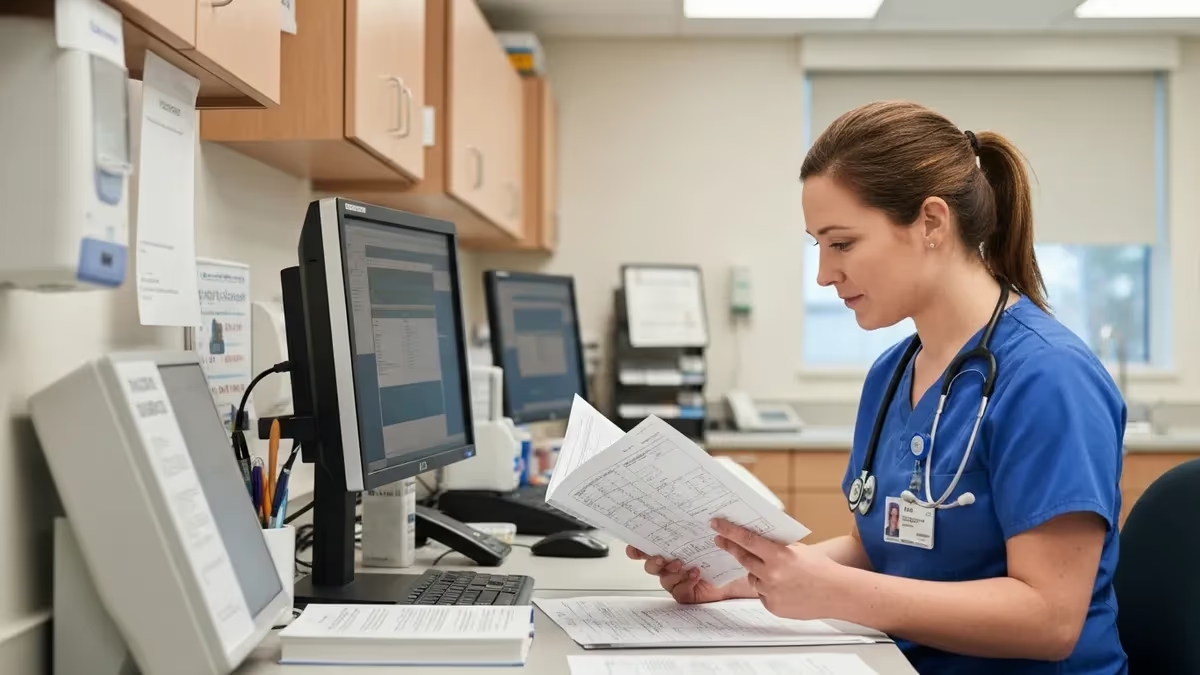
If you're wondering about cna how long does it take to become a cna, the short answer is 4 to 12 weeks — but the real answer depends on your state, your schedule, and the type of program you choose. How long does it take to become a cna varies more than most people expect. Some accelerated programs can have you exam-ready in 28 days. Traditional community college tracks may take three months. The key variable isn't just training length — it's whether you pick a program that matches your timeline and lifestyle.
You also need to factor in the time between finishing your program and actually sitting the state exam. Most states schedule exams within 2–4 weeks of program completion, but waitlists vary by testing center and season. So realistically, how long does it take to be a cna from decision to first paycheck? Count on 6–14 weeks total, start to finish, depending on your state's exam scheduling and your program choice.
This guide covers the full timeline in detail — including training hours by state, exam scheduling, the difference between accelerated and standard programs, and how to compress the timeline without cutting corners. Whether you're switching careers or just starting out, you'll know exactly what to expect before you enroll.

Let's start with the actual training timeline. How long does it take to be a cna in a standard program? Most approved programs run between 120 and 180 hours total — split between classroom theory and supervised clinical time. If you're enrolled full-time, that translates to roughly 4–6 weeks. Part-time evening or weekend programs stretch the same content over 8–12 weeks to accommodate students who are working while training.
How long does it take to get a cna license after you finish training? That depends on your state's testing queue. After program completion, you submit your authorization to test, get scheduled, and sit the two-part competency exam. Most states turn around an authorization within 5–10 business days. From program end to license in hand, budget 3–5 additional weeks including exam prep and results processing.
The fastest path for many candidates is employer-sponsored training through a nursing home or hospital. These programs are often free, run on an accelerated schedule, and frequently include a job offer contingent on passing the state exam. How long to become a cna through this route? Sometimes as fast as 3–4 weeks of intensive training followed by an exam the following week.
One of the most common questions is: how long does it take to get a cna license vs. how long it takes to get certified? They're the same thing — in most states, passing the competency exam and getting added to the state nurse aide registry IS the license. There's no separate application process in most cases. You pass, you're registered, and employers can verify your status immediately online.
So how long does it take to get a cna certified in a clinical setting? Your hands-on clinical hours — which federal law mandates at a minimum of 16 hours before you can work with real patients — must be completed in a licensed nursing facility or other approved clinical site. Depending on your program schedule, these clinical shifts may be compressed into two or three intensive days, or spread over several weeks of once-weekly rotations.
Bottom line: if speed is your priority, look specifically for accelerated programs with back-to-back clinical rotations rather than weekly blocks. Ask programs directly how many calendar weeks it takes from first class day to exam-eligible status — that number is the clearest way to compare timelines across programs.
CNA Training: Program Types Compared
Accelerated CNA programs typically run 4 weeks full-time, combining classroom theory and clinical rotations in an intensive format. Most are offered through hospitals or nursing homes that need staff quickly. Hours are long — often 8+ hours per day — but the compressed timeline means you're earning faster. Many include guaranteed job interviews upon passing the state exam. Ideal for candidates who can commit full-time and need income quickly.
Many candidates wonder: how long does it take for cna training to actually stick — and when will they feel confident taking care of real patients? The honest answer is that clinical confidence builds over the first 2–4 weeks of actual work after getting certified, not during training alone. Training gives you the foundation; supervised floor time gives you the skill. Don't let nerves about readiness hold you back from enrolling — every CNA starts as a beginner, and good facilities know how to onboard new staff effectively.
A key milestone is understanding: how long does it take to get your cna certification completed once you've submitted your exam application? In most states, Pearson VUE administers the CNA competency exam and typically offers test dates within 2–3 weeks of your authorization. Some high-demand testing centers have longer waits, especially in densely populated metro areas. If you finish training in a batch with many other graduates, you may all be competing for the same limited exam slots in the same month — another reason to book early.
Pro tip: as soon as your program director submits your training completion documentation to the state, get on the Pearson VUE website immediately and book your exam date. Don't wait for them to notify you. Candidates who book same-day get the earliest slots and move to employment faster than those who wait for an email prompt. This one step can shave 2–3 weeks off your total timeline.
One important detail candidates often miss: how long does it take to get your cna license to actually show up on your state's nurse aide registry — which is what employers check? Once you pass both parts of the state exam, registry updates typically take 3–7 business days. Some states update in real time; others batch updates weekly. Ask your testing center how long their registry processing takes so you can set employer expectations correctly.
If you're fast-tracking, you may finish training, pass the exam, and have your registry entry confirmed all within 5–6 weeks. That's the realistic minimum for most states. Understanding how long does it take to get cna license recognition means factoring in this final registry step — which isn't the same as passing the exam. You need both: the pass confirmation AND the registry listing before you can legally start work as a CNA.
Want to avoid delays? Make sure your program submits training documentation to the state on your last day of class, not later. Some programs batch submissions at the end of each cohort, which can add 1–2 weeks to your timeline unnecessarily. Ask your program director directly: when exactly does training completion get reported to the state? Their answer tells you a lot about how organized the program is.
Fast-Track vs Standard CNA Programs
- +Accelerated programs get you working in 4–6 weeks
- +Employer-sponsored programs cover 100% of tuition costs
- +Fast completion means faster income — especially important for career changers
- +Intensive formats build skills quickly through repeated practice
- +Many fast-track programs include guaranteed job placement
- +Quick entry into healthcare allows earlier career advancement toward LPN/RN
- −Accelerated programs offer less time to absorb complex material
- −Intensive daily schedules are difficult to manage with family or work
- −Fast-track programs may have limited cohort availability near you
- −Employer-sponsored programs require multi-month work commitments
- −Part-time programs take 12+ weeks — slower for those needing income now
- −Online hybrid programs require strong self-discipline to complete on schedule
Here's a question that trips up a lot of people: how long does a cna license last before it expires? In most states, CNA certification is valid for 2 years. Some states set it at 1 year. Renewal requires proof of paid employment as a CNA — typically a minimum of 8 hours in a qualifying care role during the renewal period — plus completion of state-required continuing education hours. Miss the renewal window and you may have to retake the competency exam from scratch, so don't let it lapse.
If you want to know how long to be a cna before advancing to LPN or RN, most nursing school advisors recommend 1–2 years of CNA experience before applying. That's not a formal requirement for most programs, but the floor experience gives you clinical confidence and patient care skills that make nursing school significantly easier. Many registered nurses credit their CNA years as the most important foundation for their clinical judgment and bedside manner.
Don't wait until the last minute to renew your license either. Start tracking your employment hours from day one. Keep paycheck stubs, shift records, or employer verification letters — you'll need documentation when renewal comes around. Some states have online portals where you can track your hours in real time, which makes the renewal process much less stressful when the deadline arrives.
Your CNA Certification Timeline Checklist
- ✓Research state-approved CNA programs in your area
- ✓Compare accelerated, community college, and hybrid options
- ✓Ask programs: how many calendar weeks from day 1 to exam-eligible?
- ✓Check employer-sponsored programs at nearby hospitals and nursing homes
- ✓Enroll and confirm your program is on the state-approved list
- ✓Complete all theory and clinical hours as scheduled
- ✓Submit exam application immediately on program completion
- ✓Book your Pearson VUE exam date the same day you're authorized
- ✓Prepare with CNA practice tests before your exam date
- ✓Track your post-hire hours for CNA license renewal from day one
If you've been researching online options specifically, you should know: how long does it take to get cna certified through a hybrid program is typically 6–10 weeks — slightly longer than full-time in-person programs because online learners control their own pacing. The upside is that hybrid programs are often cheaper than private vocational schools and far more flexible. The downside is that self-discipline is non-negotiable; falling behind on online modules creates a bottleneck at the clinical rotation phase.
Wondering about how long does it take to become a cna online — like a fully virtual program? No U.S. state allows fully online CNA certification. The clinical hours are non-negotiable and must be completed in person at an approved facility. Any program advertising a 100% online CNA certification is misrepresenting what they're selling. You'll do theory online, but you will have in-person clinical hours no matter which legitimate program you choose.
The best way to maximize speed is to start with a clear goal: find an employer-sponsored program at a local SNF or hospital, commit to the work agreement, and you can be licensed and earning within 5–6 weeks. That's the fastest realistic path to CNA certification for most candidates in most states. How long does it take to get your cna license when you follow this route? Often less than 6 weeks start to finish.
A question you'll see on forums constantly: how long cna certification takes versus how long it actually takes to feel competent on the floor. The certification timeline and the confidence timeline are different. You'll be legally certified — and employable — within weeks of passing your exam. Feeling truly confident with complex patients takes 3–6 months of hands-on floor experience after that. That's completely normal. Every new CNA goes through that adjustment period.
The key is understanding how long to become cna certified doesn't mean how long to become an expert. You're entering the field as a beginner with a license — that's fine. Healthcare employers expect new CNAs to need orientation and mentoring. Most facilities assign preceptors to new hires for the first 2–4 weeks. Use that time aggressively: ask questions, observe everything, and build your skills faster than your orientation schedule requires. The nurses around you want you to succeed — they need you to.
That growth mindset is what separates CNAs who advance quickly — into specialty roles, supervisory positions, or nursing school — from those who plateau. The certification is the starting line, not the finish line. Every day on the floor teaches you something that no classroom can replicate, and those experiences compound quickly in the first year of your career. Many CNAs find the work deeply rewarding in ways they didn't anticipate when they first enrolled.
The single biggest timeline delay for CNA candidates isn't the training — it's waiting too long to book the state exam. As soon as your program submits your training completion, log into Pearson VUE immediately and book your date. Candidates who wait a week to schedule routinely end up 3–4 weeks behind peers who booked on day one.
If someone asks how long does cna certification last before expiring, you can tell them: typically 2 years, with most states requiring renewal every 24 months. The renewal process is straightforward if you've been working — you document your employment hours, complete any required continuing education, submit your renewal application, and pay a small fee. Most state registries accept online renewals now. The process takes about 30 minutes if your documentation is organized. It's far easier than the original certification process.
When candidates ask cna how long does it take to get their first job after certification, the answer is usually fast — often within 1–2 weeks of getting the registry listing. Healthcare hiring timelines are short compared to corporate jobs. Many SNFs will interview and extend conditional offers to candidates even before the state exam date, contingent on passing. Start applying to positions the week before your exam — don't wait for the official registry listing before you submit applications.
The entire path from "I want to be a CNA" to "I have my first shift scheduled" typically runs 8–14 weeks for most candidates following a standard program. Accelerated paths push that to 5–7 weeks. Either way, it's one of the fastest routes into a regulated healthcare profession available — and the demand on the other end is completely genuine. Healthcare facilities are actively competing for CNAs right now, which means competitive wages and often sign-on bonuses for newly certified candidates.
If you want more targeted practice, the cna license verification page covers the same material with additional questions and explanations.
If you want more targeted practice, the cna meaning page covers the same material with additional questions and explanations.
If you want more targeted practice, the cna renewal page covers the same material with additional questions and explanations.
If you want more targeted practice, the cna verification page covers the same material with additional questions and explanations.
CNA Practice Test Questions
Prepare for the CNA - Certified Nursing Assistant exam with our free practice test modules. Each quiz covers key topics to help you pass on your first try.
CNA Activities of Daily Living
CNA Exam Questions covering Activities of Daily Living. Master CNA Test concepts for certification prep.
CNA Aging Process
Free CNA Practice Test featuring Aging Process. Improve your CNA Exam score with mock test prep.
CNA Anatomy and Physiology Basics
CNA Mock Exam on Anatomy and Physiology Basics. CNA Study Guide questions to pass on your first try.
CNA Assisting with Daily Living
CNA Test Prep for Assisting with Daily Living. Practice CNA Quiz questions and boost your score.
CNA Assisting with Range of Motion Exercises
CNA Questions and Answers on Assisting with Range of Motion Exercises. Free CNA practice for exam readiness.
CNA Basic Human Anatomy and Age-Related Ch...
CNA Mock Test covering Basic Human Anatomy and Age-Related Changes. Online CNA Test practice with instant feedback.
CNA Basic Nursing Skills
Free CNA Quiz on Basic Nursing Skills. CNA Exam prep questions with detailed explanations.
CNA Basic Nursing Skills 10
CNA Practice Questions for Basic Nursing Skills 10. Build confidence for your CNA certification exam.
CNA Basic Nursing Skills 11
CNA Test Online for Basic Nursing Skills 11. Free practice with instant results and feedback.
CNA Basic Nursing Skills 1
CNA Study Material on Basic Nursing Skills 1. Prepare effectively with real exam-style questions.
CNA Basic Nursing Skills 12
Free CNA Test covering Basic Nursing Skills 12. Practice and track your CNA exam readiness.
CNA Basic Nursing Skills 13
CNA Exam Questions covering Basic Nursing Skills 13. Master CNA Test concepts for certification prep.
CNA Basic Nursing Skills 14
Free CNA Practice Test featuring Basic Nursing Skills 14. Improve your CNA Exam score with mock test prep.
CNA Basic Nursing Skills 15
CNA Mock Exam on Basic Nursing Skills 15. CNA Study Guide questions to pass on your first try.
CNA Basic Nursing Skills 16
CNA Test Prep for Basic Nursing Skills 16. Practice CNA Quiz questions and boost your score.
CNA Basic Nursing Skills 17
CNA Questions and Answers on Basic Nursing Skills 17. Free CNA practice for exam readiness.
CNA Basic Nursing Skills 18
CNA Mock Test covering Basic Nursing Skills 18. Online CNA Test practice with instant feedback.
CNA Basic Nursing Skills 19
Free CNA Quiz on Basic Nursing Skills 19. CNA Exam prep questions with detailed explanations.
CNA Basic Nursing Skills 20
CNA Practice Questions for Basic Nursing Skills 20. Build confidence for your CNA certification exam.
CNA Basic Nursing Skills 21
CNA Test Online for Basic Nursing Skills 21. Free practice with instant results and feedback.
CNA Basic Nursing Skills 2
CNA Study Material on Basic Nursing Skills 2. Prepare effectively with real exam-style questions.
CNA Basic Nursing Skills 3
Free CNA Test covering Basic Nursing Skills 3. Practice and track your CNA exam readiness.
CNA Basic Nursing Skills 4
CNA Exam Questions covering Basic Nursing Skills 4. Master CNA Test concepts for certification prep.
CNA Basic Nursing Skills 5
Free CNA Practice Test featuring Basic Nursing Skills 5. Improve your CNA Exam score with mock test prep.
CNA Basic Nursing Skills 6
CNA Mock Exam on Basic Nursing Skills 6. CNA Study Guide questions to pass on your first try.
CNA Basic Nursing Skills 7
CNA Test Prep for Basic Nursing Skills 7. Practice CNA Quiz questions and boost your score.
CNA Basic Nursing Skills 8
CNA Questions and Answers on Basic Nursing Skills 8. Free CNA practice for exam readiness.
CNA Basic Nursing Skills 9
CNA Mock Test covering Basic Nursing Skills 9. Online CNA Test practice with instant feedback.
CNA Basic Restorative Services
Free CNA Quiz on Basic Restorative Services. CNA Exam prep questions with detailed explanations.
CNA Basic Restorative Services 1
CNA Practice Questions for Basic Restorative Services 1. Build confidence for your CNA certification exam.
CNA Bathing and Dressing
CNA Test Online for Bathing and Dressing. Free practice with instant results and feedback.
CNA Body Mechanics
CNA Study Material on Body Mechanics. Prepare effectively with real exam-style questions.
CNA Career Advancement and Opportunities
Free CNA Test covering Career Advancement and Opportunities. Practice and track your CNA exam readiness.
CNA Career Opportunities and Benefits
CNA Exam Questions covering Career Opportunities and Benefits. Master CNA Test concepts for certification prep.
CNA Care for Residents with Cognitive Impa...
Free CNA Practice Test featuring Care for Residents with Cognitive Impairment. Improve your CNA Exam score with mock test prep.
CNA Care of Cognitively Impaired Residents
CNA Mock Exam on Care of Cognitively Impaired Residents. CNA Study Guide questions to pass on your first try.
CNA Care of Cognitively Impaired Residents 1
CNA Test Prep for Care of Cognitively Impaired Residents 1. Practice CNA Quiz questions and boost your score.
CNA Care Of Cognitively Impaired Residents 4
CNA Questions and Answers on Care Of Cognitively Impaired Residents 4. Free CNA practice for exam readiness.
CNA Common Medical Terms and Abbreviations
CNA Mock Test covering Common Medical Terms and Abbreviations. Online CNA Test practice with instant feedback.
CNA Communication and Interpersonal Skills
Free CNA Quiz on Communication and Interpersonal Skills. CNA Exam prep questions with detailed explanations.
CNA Communication and Interpersonal Skills 1
CNA Practice Questions for Communication and Interpersonal Skills 1. Build confidence for your CNA certification exam.
CNA Communication And Interpersonal Skills 4
CNA Test Online for Communication And Interpersonal Skills 4. Free practice with instant results and feedback.
CNA Eligibility and Qualifications
CNA Study Material on Eligibility and Qualifications. Prepare effectively with real exam-style questions.
CNA Emergency Procedure
Free CNA Test covering Emergency Procedure. Practice and track your CNA exam readiness.
CNA Ethics and Professionalism
CNA Exam Questions covering Ethics and Professionalism. Master CNA Test concepts for certification prep.
CNA Exam Structure and Content
Free CNA Practice Test featuring Exam Structure and Content. Improve your CNA Exam score with mock test prep.
CNA Feeding and Hydration
CNA Mock Exam on Feeding and Hydration. CNA Study Guide questions to pass on your first try.
CNA Infection Control
CNA Test Prep for Infection Control. Practice CNA Quiz questions and boost your score.
CNA Infection Control and Safety
CNA Questions and Answers on Infection Control and Safety. Free CNA practice for exam readiness.
CNA Isolation Precautions
CNA Mock Test covering Isolation Precautions. Online CNA Test practice with instant feedback.
CNA Legal & Ethical Behaviours
Free CNA Quiz on Legal & Ethical Behaviours. CNA Exam prep questions with detailed explanations.
CNA Legal & Ethical Behaviours 1
CNA Practice Questions for Legal & Ethical Behaviours 1. Build confidence for your CNA certification exam.
CNA Legal & Ethical Behaviours 4
CNA Test Online for Legal & Ethical Behaviours 4. Free practice with instant results and feedback.
CNA Mental Health and Social Services Needs
CNA Study Material on Mental Health and Social Services Needs. Prepare effectively with real exam-style questions.
CNA Mental Health and Social Services Needs 1
Free CNA Test covering Mental Health and Social Services Needs 1. Practice and track your CNA exam readiness.
CNA Mental Health And Social Services Needs 4
CNA Exam Questions covering Mental Health And Social Services Needs 4. Master CNA Test concepts for certification prep.
CNA Nutrition and Hydration Management
Free CNA Practice Test featuring Nutrition and Hydration Management. Improve your CNA Exam score with mock test prep.
CNA Patient Care Procedure
CNA Mock Exam on Patient Care Procedure. CNA Study Guide questions to pass on your first try.
CNA Personal Care Skills
CNA Test Prep for Personal Care Skills. Practice CNA Quiz questions and boost your score.
CNA Personal Care Skills 1
CNA Questions and Answers on Personal Care Skills 1. Free CNA practice for exam readiness.
CNA Personal Care Skills 4
CNA Mock Test covering Personal Care Skills 4. Online CNA Test practice with instant feedback.
CNA Personal Care Skills 5
Free CNA Quiz on Personal Care Skills 5. CNA Exam prep questions with detailed explanations.
CNA Personal Hygiene and Grooming
CNA Practice Questions for Personal Hygiene and Grooming. Build confidence for your CNA certification exam.
CNA Practice Test - Basic Nursing Skills #2
CNA Test Online for Practice Test - Basic Nursing Skills #2. Free practice with instant results and feedback.
CNA Practice Test - Basic Nursing Skills #2 1
CNA Study Material on Practice Test - Basic Nursing Skills #2 1. Prepare effectively with real exam-style questions.
CNA Preventing Patient Falls and Injuries
Free CNA Test covering Preventing Patient Falls and Injuries. Practice and track your CNA exam readiness.
CNA Promoting Resident Independence and Ch...
CNA Exam Questions covering Promoting Resident Independence and Choice. Master CNA Test concepts for certification prep.
CNA Proper Hand Hygiene and PPE Usage
Free CNA Practice Test featuring Proper Hand Hygiene and PPE Usage. Improve your CNA Exam score with mock test prep.
CNA Resident Rights and Communication
CNA Mock Exam on Resident Rights and Communication. CNA Study Guide questions to pass on your first try.
CNA Resident’s Rights
CNA Test Prep for Resident’s Rights. Practice CNA Quiz questions and boost your score.
CNA Resident's Rights 1
CNA Questions and Answers on Resident's Rights 1. Free CNA practice for exam readiness.
CNA Resident's Rights 4
CNA Mock Test covering Resident's Rights 4. Online CNA Test practice with instant feedback.
CNA Roles and Responsibilities
Free CNA Quiz on Roles and Responsibilities. CNA Exam prep questions with detailed explanations.
CNA Safety and Emergency Procedures
CNA Practice Questions for Safety and Emergency Procedures. Build confidence for your CNA certification exam.
CNA Safety and Emergency Procedures 1
CNA Test Online for Safety and Emergency Procedures 1. Free practice with instant results and feedback.
CNA Safety And Emergency Procedures 4
CNA Study Material on Safety And Emergency Procedures 4. Prepare effectively with real exam-style questions.
CNA Safety and Infection Control
Free CNA Test covering Safety and Infection Control. Practice and track your CNA exam readiness.
CNA Scope of Practice
CNA Exam Questions covering Scope of Practice. Master CNA Test concepts for certification prep.
CNA Skills and Competencies
Free CNA Practice Test featuring Skills and Competencies. Improve your CNA Exam score with mock test prep.
CNA Supporting Rehabilitation Activities
CNA Mock Exam on Supporting Rehabilitation Activities. CNA Study Guide questions to pass on your first try.
CNA The Nurse Aide's Role and Responsibili...
CNA Test Prep for The Nurse Aide's Role and Responsibilities. Practice CNA Quiz questions and boost your score.
CNA Time Management and Prioritization
CNA Questions and Answers on Time Management and Prioritization. Free CNA practice for exam readiness.
CNA Toileting and Elimination
CNA Mock Test covering Toileting and Elimination. Online CNA Test practice with instant feedback.
CNA Using Adaptive Devices
CNA Practice Questions for Using Adaptive Devices. Build confidence for your CNA certification exam.
Let's address the full timeline one more time with clarity. How long does the cna certification last once you've earned it? Two years in most states, one year in a few. After that, renewal is mandatory or you lose your active status. Some states have a 90-day grace period; others are strict about the cutoff. Mark your renewal date in your calendar the day you receive your initial certification letter.
If you're asking how long to get cna certified as someone completely new to healthcare, here's your full roadmap: pick a program (2–3 hours of research), enroll (same week), complete training (4–12 weeks depending on program), pass the state exam (1–2 weeks after authorization), get your registry listing confirmed (3–7 business days), and start work. Total timeline: 6–14 weeks, realistically. Nothing about this process is mysterious or complicated — it just requires consistent commitment.
The healthcare field is genuinely welcoming to career changers and first-time workers alike. Your age, your background, and your previous industry don't matter on the floor — what matters is how you care for patients and how reliably you show up. The CNA certification is your entry ticket. Everything else you build through experience, and that experience starts the moment you walk through the doors of your first facility as a licensed certified nursing assistant.
CNA Questions and Answers
Restorative CNA: Duties, Training, Salary & How to Get Started

CNA Hospital Jobs Near Me: How to Find, Apply & Get Hired in 2026

Goodwill CNA Program: Free Classes, Costs, and How to Enroll

Hospice CNA: Duties, Salary, Per Diem Work & How to Get Started

4-Week CNA Program: Online Options, State Programs & How to Enroll
About the Author

Registered Nurse & Healthcare Educator
Johns Hopkins University School of NursingDr. Sarah Mitchell is a board-certified registered nurse with over 15 years of clinical and academic experience. She completed her PhD in Nursing Science at Johns Hopkins University and has taught NCLEX preparation and clinical skills courses for nursing students across the United States. Her research focuses on evidence-based exam preparation strategies for healthcare certification candidates.
Join the Discussion
Connect with other students preparing for this exam. Share tips, ask questions, and get advice from people who have been there.
View discussion (8 replies)